Monday Roundup

Monday Roundup

Photo by Sven Read on Unsplash

The President released his Administration’s fiscal year 2023 proposed budget today. Here are links to OMB’s budget website and a Roll Call overview of the proposal.

Here is OPM’s budget wishlist (Budget at 130):

  • Amend administration of tribal FEHB enrollment system
  • Expand family member eligibility under FEDVIP (presumably increasing the age limit for eligible children from 22 to 26)
  • Expand FEDVIP to tribal employees
  • Expand FEHB to tribal colleges and universities.

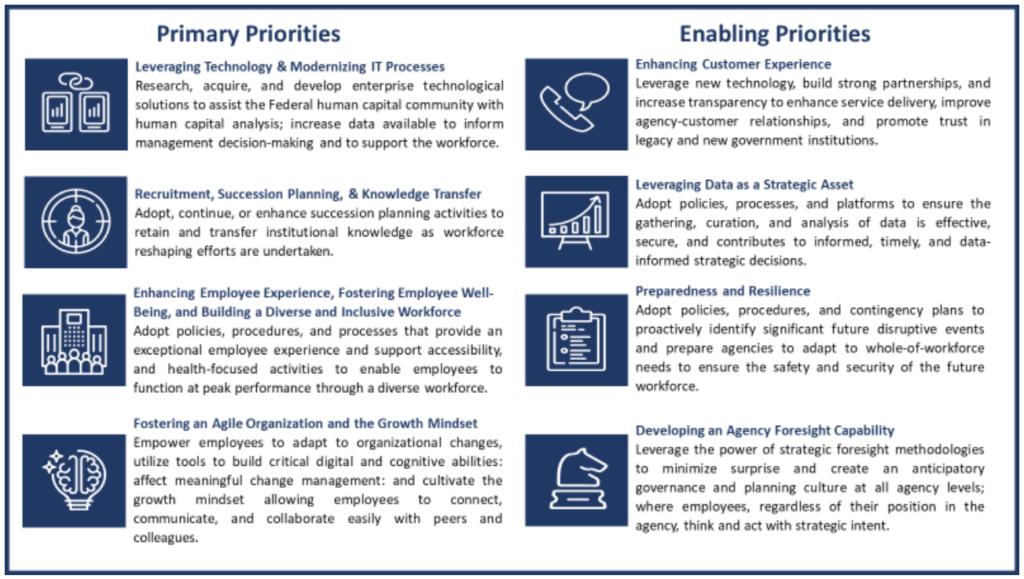
OPM also released the agency’s FY 2022 to FY 2026 strategic plan today. Here is a link to OPM’s lookbook on that plan. The lookbook (p. 9) identifies one current agency priority goal related to the FEHBP (out of six in total)

Improve customer experience by making it easier for Federal employees, annuitants, and other eligible persons to make more informed health insurance plan selection. By September 30, 2023, complete user-centered design and develop a minimum viable product for a new, state-of-the-art FEHBP Decision Support Tool that will give eligible individuals the necessary information to compare plan benefits, provider networks, prescription costs, and other health information important to them and their families.

In other government reports, the Centers for Medicare and Medicaid Services issued

the 2021-2030 National Health Expenditure (NHE) report, prepared by the CMS Office of the Actuary, that presents health spending and enrollment projections for the coming decade. The report notably shows that despite the increased demand for patient care in 2021, the growth in national health spending is estimated to have slowed to 4.2%, from 9.7% in 2020, as supplemental funding for public health activity and other federal programs, specifically those associated with the COVID-19 pandemic, declined significantly.

From the Omicron and siblings front —

  • The Centers for Disease Control posted a new “Quarantine and Isolation Calculator — A tool to help determine how long you need to isolate, quarantine, or take other steps to prevent spreading COVID-19.”
  • The Institute for Clinicial and Economic Review issued an evidence report on four Covid outpatient treatments, including the Pfizer and Merck Covid pills.

This Evidence Report will be reviewed at a virtual public meeting of the Midwest CEPAC (Midwest England CEPAC) on April 12, 2022. The Midwest England CEPAC is one of ICER’s three independent evidence appraisal committees comprising medical evidence experts, practicing clinicians, methodologists, and leaders in patient engagement and advocacy.
Register here to watch the live webcast of the virtual meeting.

ICER’s evidence ratings for the treatments reviewed include:

Sotrovimab delivers at least a small net health benefit when compared to no active treatment, with the possibility of a substantial net health benefit (“B+”).

[Merck’s] Molnupiravir is at least comparable to no active treatment, with the potential of a small net health benefit (“C+”).

[Pfizer’s] Paxlovid delivers at least a small net health benefit when compared to no active treatment, with the possibility of a substantial net health benefit (“B+”).

Fluvoxamine is at least comparable to no active treatment, with the potential of a small net health benefit (“C+”).

From the health equity front, Health Leaders Media reports

Despite willingness to address social drivers of health, two-thirds of physicians report inadequate time or ability to act, according to a new survey report.

KEY TAKEAWAYS

Nearly all physicians reported that at least one social driver of health affected the health outcomes of all or some their patients.

Financial instability (34% of patients) and transportation problems (24% of patients) were the top two social drivers of health experienced by physicians’ patients.

A solid majority of physicians (80%) reported that addressing social drivers of health is essential to improve health outcomes and decrease healthcare costs.

From the Rx coverage front, the FEHBlog noticed today that GoodRx has added a telehealth option to its website.

Tuesday’s Tidbits

Photo by Patrick Fore on Unsplash

From the government employment front,

Performance.gov informs us that OPM Director Kiran Ahuja is one of three Leads on implementing Priority One of the President’s Management Agenda — “Strengthen and Empower the Federal Workforce.” Good luck, Director Ahuja.

FedSmith identifies “ten steps federal employees should take at least a decade before retiring to ensure they are prepared to head into their golden years.”

Step 2 of 10 is “Enroll or Stay in FEHB.”

If you plan to continue your federal health benefits in retirement, you must be entitled to retire on an immediate annuity and:

be enrolled for the 5 years immediately before retiring or, during all your federal employment since your first opportunity to enroll if less than 5 years.

Coverage under FEHB, Tricare, or the Civilian Health and Medical Program of Uniformed Services (CHAMPUS) all count toward the 5 year requirement.

In yesterday’s post, the FEHBlog pointed out a Fierce Healthcare interview with the CEO of dialysis heavyweight, Davita. Today, Fierce Healthcare reports

Three big players in kidney care—Fresenius Health Partners, Cricket Health, and InterWell Health—plan to form a new value-based care company focused on services for the earlier stages of kidney disease.

The deal, announced Monday morning, will create a company valued at $2.4 billion, according to the companies.

The merger brings together expertise in value-based kidney care contracting of Fresenius Health Partners, a division of Fresenius Medical Care North America, InterWell Health’s network of more than 1,600 nephrologists and startup Cricket Health’s technology-enabled care model and patient engagement platform. Fresenius Medical Care is the world’s largest operator of dialysis centers.

Healthcare Dive delves into the case for hybrid care models, meaning the marriage of hospital systems and telehealth vendors.

Though the pandemic greatly accelerated the use of telehealth, use of pure-play virtual care has waned as COVID-19 cases drop off across the U.S. But telehealth is increasingly being woven into hospitals’ digital roadmaps, and some are even upping their investments in the modality despite moderating visits, experts said at the annual HIMSS healthcare conference.

That’s giving hope to proponents of hybrid care models, who point to the value of meeting patients where they are to lower costs and improve outcomes.

Intriguing.

Health Payer Intelligence reports

The National Committee for Quality Assurance (NCQA) has awarded [health insurer] Centene the Innovation Award for Health Equity for the company’s Health Equity Improvement model.

“Advancing health equity has a real and positive impact on the health of our members across the country,” said Sarah Bezeredi, senior vice president and chief quality officer for Centene. * * *

At its core, the model uses qualitative and quantitative data to target certain health equity gaps. Centene engaged communities and activated community coalitions in order to empower its strategy. The company’s approach included carefully selecting leaders who would help create and promote the model as well as soliciting community feedback.

In Arizona, Centene sent HbA1c at-home testing kits, which became a common method of chronic disease prevention during the pandemic. The kits were outfitted with a range of delivery modalities to cover the spectrum of members’ needs. Members also received telehealth and telemonitoring tools. The payer incentivized compliance with certain diabetes care measures.

The model tackled patient education in addition to delivering access to care interventions. Centene mailed qualifying members resources about the HbA1c test and comprehensive diabetes care measures.

The payer tracked progress using its Health Equity Dashboard, which leverages HEDIS data and other social determinants of health and demographic data to assess care disparities.

“By using a data-driven process, we are identifying disparity reduction opportunities and tracking performance and success year-over-year,” Bezeredi added. 

Mazaal Tov, Centene.

Thursday Miscellany

From Capitol Hill, the Hill reports

The Senate has locked in a deal to quickly pass a massive government funding bill that includes $13.6 billion in Ukraine aid.

The agreement, announced by Senate Majority Leader Charles Schumer (D-N.Y.), puts the funding bill on a glide path to pass on Thursday night, capping off hours of would-they-won’t-they drama. 

Mazaal tov to Congress.

Also on Capitol Hill today, the Senate Homeland Security and Governmental Affairs Committee held a confirmation hearing for Krista Boyd, the President’s nominee to serve as OPM Inspector General. Fedweek notes that “Ms. Boyd is a senior staff member of the House Oversight and Reform Committee with long experience on Capitol Hill in federal workplace matters.”

From the Omicron front, Becker’s Hospital Review informs us “The rate of new COVID-19 cases involving the omicron subvariant BA.2 appears to be slowing in the U.S., according to variant proportion estimates from the CDC.”

Also, the Justice Department announced “Effective immediately, Associate Deputy Attorney General Kevin Chambers will serve as the Director for COVID-19 Fraud Enforcement.”

From the litigation front, Reuters reports “The judge overseeing Purdue Pharma’s bankruptcy on Wednesday approved a $6 billion opioid settlement funded by its Sackler family owners, overruling objections from the Department of Justice and 20 states that opposed the deal.”

From the healthcare business front

Healthcare Dive tells us

Anthem plans to change its name to Elevance Health, if the move is approved by shareholders, the company said Thursday.

The new name is meant to reflect the company’s offerings beyond traditional health insurance. “Elevance Health’s companies will serve people across the entire care journey, connecting them to the care, support, and resources they need to lead healthy lives,” Anthem CEO Gail Boudreaux said in a statement.

Elevance was chosen as a combination of the words “elevate” and “advance.” There will not be any changes to leadership or organizational structure accompanying the new name.

If approved, the Elevance name will start being used at the end of the second quarter of this year. Anthem Blue Cross and Blue Shield plans will still use the Anthem name.

From the telehealth front, Healthcare Dive reports

[Virtual care vendor] Amwell and LG Electronics are teaming up to jointly develop new digital health devices and tools, starting with hospital care in the U.S., the companies announced Wednesday.

South Korea-based LG, which manufactures a wide range of devices from refrigerators to computer monitors, already provides smart TVs for inpatient rooms.

Now, through the partnership, LG will also create devices that can host services from Amwell’s virtual care platform, Converge.

PYMTS.com reports this electronic health records news from the Vive conference being held in Miami

Electronic health records containing some of the most guarded personal data about people are making headlines again as a consortium of players join forces to create a universal single sign-in, allowing patients secure access to unified health data via digital identity.

Coming out of the ViVE health technology conference happening this week in Miami Beach, the effort is led by consumer-directed healthcare advocacy group the CARIN Alliance, working together with the Department of Health and Human Services (HHS) and other stakeholders.

On Tuesday (Mar. 8), Politico reported that HHS “is working with several health systems, insurers and health tech groups to roll out a single way for patients to log in and access their medical records across multiple systems. The launch later this month will set up a test environment for integrating the technology, said Ryan Howells, principal at Leavitt Partners and program manager at the CARIN Alliance, which is spearheading the efforts.”

CARIN is working with the Office of the National Coordinator for Health Information Technology and the Centers for Medicare and Medicaid Services (CMS), which will act as “government observers.”

From the FEHB front, benefits consultant Tammy Flanagan writes in Govexec about the Postal Service Health Benefits Program which will launch in 2025 as part of the Postal Reform Act of 2022. She observes

The version of the postal bill that eventually passed balances the risk pools, and the Office of Personnel Management now estimates premiums should go down for postal and non-postal employees and retirees alike.

The new law keeps all postal workers in FEHB, in their own group. All workers will be able to keep their current plans and avail themselves of the annual open season to choose other options within FEHB. 

Future postal retirees will be required to enroll in Medicare A and B at 65. Retiree health coverage will then become a combination of Medicare and FEHB. 

The question now is whether that requirement will eventually be extended to all federal employees, and what effect that would have on the premiums retirees pay. If that happens, at least federal employees will face one less tough decision at the time of retirement.

The FEHBlog expects that PSHBP premiums will be materially lower than FEHB premiums because PSHBP will accept Medicare funding for prescription drug benefits in the form of Part D EGWPs. Federal law has permitted the FEHB to offer premium-reducing Part D EGWPs for nearly twenty years. Nevertheless, OPM and a string of Administrations from George W. Bush to Joe Biden have refused to implement that law. Implementing that law in 2005 when it first took effect likely would have avoided the balkanization of the FEHB that we will soon experience with the PSHBP.

The FEHBlog does not expect the FEHB to adopt the mandatory Part B approach being taken by the PSHBP. Fewer retiring federal employees are picking up Part B because of the income-adjusted Part B premiums. As basic and income-adjusted Part B premiums continue to climb and climb, the FEHBlog expects that the PSHBP will liberalize, and then do away with, mandatory Part B. Meanwhile, the PSHBP’s undoubtedly favorable experience with Medicare funding of prescription drugs will lead OPM to allow FEHB the same opportunity.

With both branches of the Program using Part D EGWPs and integrated Medicare Advantage plans, everyone will enjoy reasonable premiums for high-quality healthcare. That in turn could lead to a reunion of the two branches. Hopefully, the PSHBP will be a relatively brief experiment that leaves the FEHB Program stronger.

The saving grace of the FEHB Program is that everyone in a plan option pays the same premium and the premiums are pooled to cover all plan option enrollees. That’s the bedrock principle of group health insurance that the FEHB Program has shown to work.

Tuesday’s Tidbits

From Capitol Hill, the Senate approved a motion to proceed to a vote on the Postal Reform Act of 2022 (HR 3076) by a voice vote. This vote suggests to the FEHBlog that the Senate will approve the bill this week.

Roll Call discusses the status of the Consolidated Appropriations Act for Fiscal Year 2022. Congress has a week and half to finish cobbling together this law before it needs a fourth continuing resolution.

From the Omicron vaccine front, the American Hospital Association tells us

The Centers for Disease Control and Prevention today released a study examining the effectiveness of the Pfizer COVID-19 vaccine at preventing emergency department and urgent care visits by children aged 5-11 and 12-17. Among children aged 5-11, effectiveness 14-67 days after dose 2 (the longest interval in this age group) was 46%, significantly lower than overall estimates for adolescents aged 12-17. However, most encounters among children aged 5-11 occurred during omicron predominance, when the vaccine’s effectiveness also significantly declined for adolescents, suggesting that the lower effectiveness for children aged 5-11 was likely driven by the predominant variant rather than differences in effectiveness across age groups, the authors said. During omicron predominance, there was no evidence 2 doses protected adolescents after 150 days; however, a booster dose restored effectiveness to 81% in this age group, the authors said.

Another study released today by the CDC looks at reactions to the Pfizer booster in adolescents aged 12-17, which were generally mild to moderate and transient. Myocarditis was less frequently reported after a booster dose than a second primary dose, the authors said.

From the Omicron masking and testing front —

Federal agencies can relax their mask and testing protocols in the wake of new public health guidance. 

The Centers for Disease Control and Prevention’s released on Friday a “new framework” that “moves beyond just looking at cases and test positivity to evaluate factors that reflect the severity of disease, including hospitalizations and hospital capacity, and helps to determine whether the level of COVID-19 and severe disease are low, medium, or high in a community,” Dr. Rochelle Walensky, the agency’s director, said on a call with reporters. Guidance from the Biden administration’s Safer Federal Workforce Task Force on Monday reflects this new framework. 

“This document provides federal agencies with initial implementation guidance they should follow in utilizing the CDC’s COVID-19 Community Levels to determine the appropriate mask-wearing and screening testing requirements for each federal facility at a given time,” said the guidance. 

Nearly half of the 500 million free COVID-19 tests the Biden administration recently made available to the public still have not been claimed as virus cases plummet and people feel less urgency to test.

Wild demand swings have been a subplot in the pandemic, from vaccines to hand sanitizer, along with tests. On the first day of the White House test giveaway in January, COVIDtests.gov received over 45 million orders. Now officials say fewer than 100,000 orders a day are coming in for the packages of four free rapid tests per household, delivered by the U.S. Postal Service.

It would be a good idea for the federal government to tell health plans to refer their members to the federal site if they are interested in receiving test kits.

To sum it up from the Omicron front, check out the lead article from the NIH Director’s blog titled “How Covid immunity holds up over time.”

From the tidbits department —

  • The CDC discusses the unholy connection between diabetes and chronic kidney disease.
  • Fierce Healthcare discusses telehealth provider Amwell’s fourth quarter results.
  • Beckers Payer Issues notes

UnitedHealth Group is beginning to act on its November promise to shore up its sustainability efforts by halting its mailing paper of prior authorization and clinical decisions to providers, according to a Feb. 25 post on the California Medical Association website. 

The first move — a nationwide shift to digital clinical decision letters — is effective March 4 for most UnitedHealthcare Medicare Advantage and commercial plan members. Instead of receiving a mail appeal decision, providers can view the decisions digitally immediately after they are made. 

President Joe Biden is calling for more federal employees to return to the office, saying “significant progress” fighting the COVID-19 pandemic has made it safer to do so.

Ahead of his State of the Union address, Biden issued a letter Tuesday thanking the federal workforce for its “tireless work this past year” confronting the pandemic and leading economic recovery efforts.

A return to the office, however, doesn’t necessarily mean a return to the pre-pandemic status quo.

Biden urged agencies to “build on the innovations and technologies that we put to work serving the American people throughout the pandemic, making our government more efficient, resilient, and effective.”

Good luck, OPM.

Weekend Update

Congress is back in session this week for Committee business and floor voting. The Senate calendar notes the cloture motion on the Postal Reform Act of 2022 ripens tomorrow February 28 at 5:30 pm. This means that the Senate can hold a cloture vote on the bill later that evening or the following business day. A cloture vote requires 60 votes in favor.

We are eleven days away from the end of the current continuing resolution funding the federal government. That deadline will grab Congress’s attention.

The President will give his State of the Union address on Tuesday, March 1.

From the No Surprises Act (NSA) front, Prof. Katie Keith breaks down the Texas Medical Association decision rendered last Wednesday in the federal district court for the Eastern District of Texas. At stake were the provisions in the second interim final rule implementing the NSA that the independent dispute resolution entity acting as the arbitrator to resolve payment disputes between health plans and certain out-of-network provider accept the plan’s statutory payment known as the Qualifying Payment Amount “unless a party submits credible information that clearly demonstrates that the QPA is materially different from the appropriate out-of-network rate.”

On February 23, Judge Kernodle * * * issued a decision and final judgment vacating provisions of the interim final rule related to the “rebuttable presumption.” He held that the plaintiffs had standing to challenge the rule, that the rule is inconsistent with the NSA, that the federal agencies should not have bypassed notice and comment procedures, and that the challenged provisions should be vacated and remanded to the agencies for revisions. The vacated provisions, listed here, are:

— The requirement that the IDR entity select the offer closest to the QPA unless there is credible information to demonstrate that this is not the appropriate rate;

— The requirement that “additional information” clearly demonstrate that the QPA is materially different from the out-of-network rate;

— The definition of “material difference;”

— All four examples on how IDR entities should choose between competing offers; and

— The requirement that the IDR entity explain why it chose an offer not closest to the QPA.

As you can see, this is a relatively surgical approach; these are the only provisions in the rule that have been invalidated. But these are important provisions designed to ensure a well-functioning, predictable IDR process and help hold down health care costs and premiums.

Professor Keith adds

Judge Kernodle rejected [the federal government’s] requests for limited relief. Instead, he vacated the challenged provisions on a nationwide basis with a sweeping assertion that “there is nothing the Departments can do on remand to rehabilitate or justify the challenged portions of the Rule as written. * * *

From here, DOJ will presumably appeal Judge Kernodle’s decision to the Fifth Circuit and perhaps request a stay while the case is on appeal. If a stay is not granted, the court’s decision remains in effect, meaning the IDR provisions noted above are unlawful and set aside. The IDR process will still be available and is expected to begin in earnest in March 2022. But the ruling increases the risk that some providers will try to leverage the federal IDR process to obtain higher rates than are warranted, potentially leading to higher health care costs and premiums. 

What’s more,

Federal officials have already indicated that they will issue a final IDR rule by May 2022 and will likely be reviewing Judge Kernodle’s decision with an eye towards whether the final rule can include provisions that are similar to those in the interim final rule—as well as whether to rescind or replace the challenged provisions. The final rule will likely affect the timeline of current litigation and perhaps trigger future lawsuits.

It’s not a pretty picture for health plans at this point.

From the Omicron front, the Wall Street Journal discusses the steps that government agencies and public health organizations are taking to make rapid at home Covid tests available and understandable to the most vulnerable of us, “including low-income areas, rural parts of the country and some communities of color.”

From the behavior health care front, Health Payer Intelligence tells us

AHIP called on providers and policymakers to join payers in their efforts to integrate behavioral healthcare and physical healthcare in an issue brief on the subject.

The payer organization laid out three critical strategies for integrating behavioral healthcare. 

The collaborative care model (CoCM) uses care management to facilitate patient-centered care, and many of its services are recognized and reimbursed by CMS. 

The expanded and integrated care management model uses care management to support individuals with chronic conditions, specifically behavioral healthcare conditions. The model leans on screening tools in the primary care environment to identify conditions earlier.

Finally, the value-based purchasing and alternative payment models incentivize whole-person care financially. However, outcomes-based payment is challenging to measure in behavioral healthcare.

This is straight path to federal mental health parity compliance. Thanks AHIP.

From the OPM front —

  • Fedscoop lists the important links on the OPM website for federal and Postal employees considering retirement or about to retire.
  • Govexec discusses a recent GAO report on an OPM information technology project to overhauls it financial system for managing the government’s fringe benefit programs, including the FEHB.

From the good works department, Fierce Healthcare reports

Health Care Service Corporation [a Blue Cross licensee] is teaming up with the National Fitness Campaign to open outdoor fitness centers in Illinois and Texas.

The insurer will invest $850,000 to open 35 Fitness Courts across both states, according to an announcement. Construction is set to begin this summer, with the goal of opening the first locations in the fall. 

Thursday Miscellany

From Capitol Hill, Govexec reports that “The Senate on Thursday cleared 65-27 a three-week stopgap bill to avoid a government shutdown, sending the measure to President Biden with just one day before the deadline.”

From the Omicron front, the American Hospital Association provides us with its most recent Covid snapshot

From the Covid treatment front, The American Medical Association reports

Efforts to boost production of [Covid] therapeutics are underway, a Food and Drug Administration (FDA) official said during an episode of the AMA-sponsored webinar series, “COVID-19: What Physicians Need to Know.” 

Recommended usage in therapeutics is an important step in counseling patients and providing the most timely and relevant information about defeating this virus, said AMA President Gerald E. Harmon, MD, who moderated the webinar. Physicians facing supply issues of hard-to-get antivirals such as Paxlovid (PDF) also want to know about the timeline of any new antivirals or antibody treatments, he said.

For doctors and other health professionals, “it’s been a very difficult winter and it’s not over yet,” acknowledged John Farley, MD, MPH, director of FDA’s Office of Infectious Diseases in the Center for Drug Evaluation and Research’s Office of New Drugs. Monitoring the situation with these drugs is a complex process that involves FDA, the Centers for Disease Control and Prevention and several branches of government, he added.

Distribution of therapeutics should improve over time. However, at least for the combination of antiviral nirmatrelvir and ritonavir tablets marketed as Paxlovid, “we have a period of continued short supply ahead,” said Dr. Farley, who joined two other FDA experts to discuss the efficacy of the treatments.

In the FEHBlog’s view, Pfizer’s Paxlovid appears to offer the best opportunity for lowering Covid hospital admissions which have been a major cost for health plans over the past year which has seen three major Covid surges.

Speaking of innovations, Cleveland.com tells us

The next generation of mRNA vaccines, as well as treatments for type 2 diabetes and postpartum depression are among the innovations that earned spots on the Cleveland Clinic’s Top 10 Medical Innovations for 2022.

The list of breakthrough technologies, chosen by a committee of Clinic experts, was announced Wednesday.

These medical advancements have the potential to transform healthcare in the coming year, the Clinic said. The committee considered technologies developed by the Clinic as well as other research centers.

From the Federal Trade Commission front, Healthcare Dive reports

The Federal Trade Commission will not launch a study into pharmacy benefit managers’ pricing and contractual practices after a 2-2 vote at a Thursday meeting. The measure needed a simple majority to commence the investigation, which would have compelled large PBMs to turn over information and documents to the agency.

The two commissioners appointed by former President Donald Trump, Noah Phillips and Christine Wilson, voted against the study after raising concerns about its design and whether the current draft asks the proper questions for the answers the agency is seeking. Phillips also complained about receiving a “substantially revised” draft from staff “just hours” before the meeting.

FTC Chair Lina Khan said she was disappointed with Thursday’s vote, and said this is an area the agency has “a real moral imperative” to act upon.

From the Rx coverage front, Fierce Healthcare informs us

Optum has launched a new solution for specialty drugs that aims to lower costs and improve care management for people with complex conditions.

Specialty Fusion arms payers and providers with real-time insights into which specialty therapies are the most effective for the patient at the lowest cost. The platform leads to quicker treatment approvals for patients as well as a similar experience for providers at the point of care, Optum said in an announcement.

Internal analysis of the solution suggests it can drive cost savings of 17%.

From the healthcare business front, Healthcare Dive notes

Pharmacy giant Walgreens and value-based medical network VillageMD are on pace to open more than 200 co-branded primary care practices by the end of the year.

On Wednesday, the companies opened their first clinic in a new Florida market, Jacksonville, bringing their total markets in the state up to three, including Orlando and Tampa. Walgreens and VillageMD plan to open five new Village Medical at Walgreens primary care practices in total in the Jacksonville area through this summer.

With the Jacksonville openings, Walgreens and VillageMD have now opened more than 80 primary care practices across 12 markets in Arizona, Florida, Texas, Kentucky and Indiana.

Last but not least FedWeek explains how to guard against losing FEHB coverage in retirement.

Midweek Update

From Capitol Hill, Roll Call informs us

House and Senate Appropriations Committee leaders said Wednesday they have a deal on a “framework” that will allow them to start writing compromise spending bills for the fiscal year that began Oct. 1.

Senate Appropriations Chairman Patrick J. Leahy, D-Vt., and House Appropriations Chair Rosa DeLauro, D-Conn., put out statements Wednesday afternoon announcing the pact. A spokeswoman for Senate Appropriations ranking member Richard C. Shelby confirmed Republicans also view what the Alabama senator described earlier in the day as “an understanding” as an official agreement. 

Neither side revealed any details of what the framework entails.

A source familiar with the negotiations said the agreement is to have “parity,” or equal increases for defense and nondefense spending, and to start further negotiations leaving current law policy riders in place. All four committee leaders would have to agree to remove or add any other riders, the source said.

That means the longstanding Hyde amendment barring federal funding for abortion in most cases will likely be in the final package, since Republicans would object to removing it as Democrats have proposed.

From the Omicron front, the Wall Street Journal reports

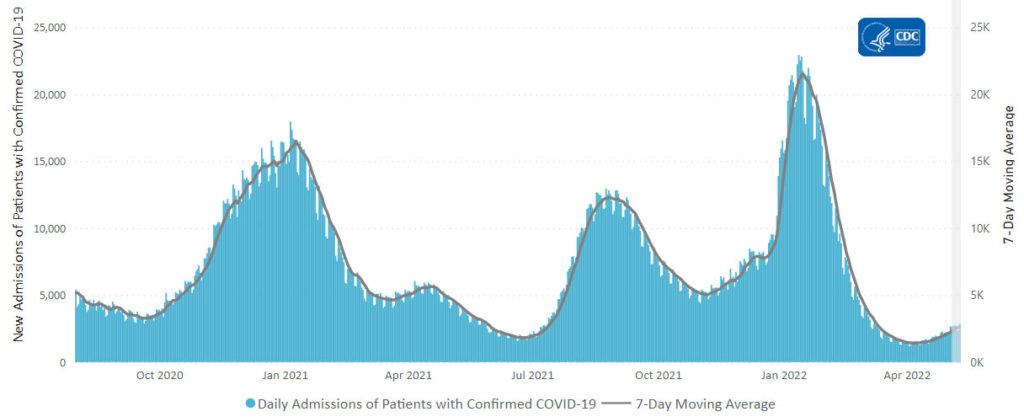
Hospitalizations continued tracking downward in the U.S., with the seven-day average of patients with confirmed or suspected Covid-19 falling to about 111,000, down 30% from a peak in January, according to data from the Department of Health and Human Services. * * *

U.S. deaths are holding steady, with the seven-day average standing at 2,531 on Monday, according to data from Johns Hopkins University. Though there is growing evidence that the Omicron variant is less likely to cause severe illness than earlier strains of the virus, particularly among people who have been fully vaccinated, the number of infections means that deaths—a lagging indicator—remain high, public-health experts say. Omicron’s rapid spread means it is reaching people with other illnesses, and Covid-19 wasn’t the cause of death in some of these cases.

From the plan design front —

  • Banner Health and Aetna announced that its joint venture

Banner|Aetna [has created] a strategic relationship with type 2 diabetes reversal leader Virta Health. The collaboration brings Virta’s innovative diabetes care approach to the insurer’s eligible members of fully insured and Administrative Services Only groups. Virta’s first-of-its-kind diabetes treatment helps people actually reverse their condition: combining personalized nutrition and virtual care, patients can achieve normal blood sugar without medications.

  • Fierce Healthcare tells us

Anthem will make virtual primary care available to eligible members of its commercial health plans in 11 states, the insurer announced Tuesday.

The expansion will roll out the offering to fully insured plans and select large group administrative services clients in Colorado, Connecticut, Georgia, Indiana, Kentucky, Missouri, Nevada, New York, Ohio, Virginia and Wisconsin, the company said. Eligible members can access a virtual care team that will conduct an initial health check-in and then craft a personalized care plan.

The insurer is expecting a significant number of its administrative services clients to adopt the platform over the course of this year.

From the healthcare business front, Healthcare Dive reports

Lower COVID-19 costs in CVS’s payer business coupled with a sharp increase in vaccine administration from booster shots that benefited its drugstores drove the Rhode Island-based healthcare behemoth to revenue of $76.6 billion in the fourth quarter, up more than 10% year over year. That helped drive CVS, which beat Wall Street expectations on both earnings and revenue in the quarter, to a profit of $1.3 billion, up 33% compared to the fourth quarter of last year.

and

Dallas-based hospital operator Tenet will continue its strategy of acquiring ambulatory surgery centers to drive long-term growth and plans to buy 30 more facilities from SurgCenter Development this year, the company said Tuesday. That’s in addition to 16 it has purchased so far this year, executives said on an earnings call Tuesday. Tenet and its subsidiary United Surgical Partners International last year completed a $1.1 billion acquisition of SCD, giving it an ownership stake in 86 surgery centers and related support services. That deal also gave USPI exclusivity on developing a minimum of 50 new centers with SCD during a five-year period.

From the federal employment front, OPM announced

The White House Task Force on Worker Organizing and Empowerment yesterday publicly released its report detailing nearly 70 recommendations, approved by President Biden, that promote worker organizing and collective bargaining for public and private sector employees. The U.S. Office of Personnel Management is leading several of these recommendations, which focus on improving the ability of federal employees to exercise their right to organize and activate their labor rights.

Weekend Update

Photo by JOSHUA COLEMAN on Unsplash

Both the House and the Senate will be in session this week for Committee business and floor voting. The FEHBlog will be keeping an eye on the House Rules Committee hearing on the Postal Reform Act (HR 3706) scheduled for tomorrow at 2 pm ET.

Roll Call reports

The House could take up a three-week stopgap funding extension through March 11 as soon as Tuesday to buy more time for appropriators to write final fiscal 2022 spending bills, according to sources who spoke on condition of anonymity because details haven’t been made public.

The temporary spending bill under discussion would only move to the floor if an agreement on topline funding allocations for defense and nondefense programs is reached first. But there was enough apparent progress behind the scenes to warrant talk of a short-term extension rather than a longer continuing resolution that could delay needed funds for the Pentagon, infrastructure programs and more. * * *

It wasn’t immediately clear whether the Senate would be on board with a three-week extension, and the length was still under discussion, according to sources. During the weekly House floor colloquy on the chamber’s schedule, [House] Majority Whip James E. Clyburn, D-S.C., wouldn’t comment on timing or specifics but said he hopes it will be a “short, short-term CR” if negotiators can’t write an omnibus before Feb. 18.

From the COVID vaccine front, the Wall Street Journal’s excellent Saturday Essay concerns efforts to extend mRNa vaccines beyond Covid. The FEHBlog just finished reading Wall Street Journal reporter Gregory Zuckerman’s book “A Shot to Save the World” which offers an inside look at the development of the various COVID vaccines. Moderna and BioNTech among other drug manufacturers were working on mRNA vaccines for many years before Covid struck. Their preparation led them to rapidly develop mRNA vaccines against Covid. The BioNTech and Moderna mRNA vaccines against Covid were the first mRNA vaccines approved by the Food and Drug Administration. Researchers in those companies and others now are continuing their work on the development of mRNA vaccines for the flu, cancer, HIV, among other diseases. Hope springs eternal.

The Wall Street Journal also provides an overview of the cases in which federal courts are considering the legality of the Biden administration’s Covid vaccination mandates for federal employees and federal government contractor employees in the wake of two recent U.S. Supreme Court rulings on other vaccine mandates.

Sean Marotta, a partner with law firm Hogan Lovells, said the rulings, taken together, send a message about the federal government’s power: “A vaccine mandate that targets problems specific to a federal regulatory program will likely be upheld. A mandate that is simply an attempt to get as many people vaccinated as possible, or is a workaround for the government not having a general power of vaccination, will probably be struck down

Well put, sir.

From the federal employment front, Federal News Network tells us

The Biden administration wants to give federal employees their largest pay raise in 15 years.

Federal News Network has learned that the White House will propose a 4.6% pay increase for federal employees as part of its fiscal 2023 budget request. The budget request is expected to go to Congress after the State of the Union, which is on March 1,  Shalanda Young, the nominee to be director of the Office of Management and Budget, told the Senate Budget Committee on Feb. 1.

Midweek update

Happy Groundhog Day! The Pittsburgh Post Gazette informs us that “There will be six more weeks of winter, Punxsutawney Phil predicted as he emerged from his burrow Wednesday morning to perform his Groundhog Day duties.”

From the White House, we have the President’s fact sheet on his Cancer Moonshot initiative. Federal Times also has a report on today’s announcement.

A STAT News article on cancer markers suggests that the President’s timing may be right

Back in 2000, when President Clinton called a tie in the race to map the human genome, scientists forecasted a medicinal revolution, one in which scientists could ferret out the genetic roots of every known cancer and match patients with personalized treatments.

That did not happen, for reasons of biological complexity, technological immaturity, and perhaps a little scientific hubris. But after two decades of mapping the kaleidoscopic details of human DNA, researchers believe they finally have the tools and techniques to live up to those lofty promises.

“It’s almost like back to the future,” said Anna Barker, an oncologist who serves as chief strategy officer at the Ellison Institute for Transformative Medicine of USC. “Where we would like to have been 21 years ago is where we are now.” * * *

But many cancers don’t fit neatly into the field’s existing paradigm, said Suzanne Topalian, professor of surgery and oncology at Johns Hopkins University School of Medicine. Improving outcomes for those tumors will rely on multidimensional biomarkers, measurements that can take a systematic look at how cancer evolves rather than providing a snapshot.

To Barker, the field’s next major challenge is to find better biomarkers for “the big killers,” diseases including pancreatic cancer and glioblastoma.

“These are the cancers that — what are the unknown unknowns here? What are we missing?” she said. “We can’t seem to detect them early enough to stop them.”

From the opioid epidemic front, the National Institutes of Health informs us that

A new study of intentional drug overdose deaths, or suicides by an overdose of a medication or drug, found an overall decline in recent years in the United States, but an increase in young people aged 15-24, older people aged 75-84, and non-Hispanic Black women. The study also found that women were consistently more likely than men to die from intentional drug overdoses, with the highest rates observed in women ages 45 to 64. In addition, factors such as time of year, length of day, and day of the week appeared to be associated with intentional overdose death rates. The study published today in the American Journal of Psychiatry and was led by investigators at the National Institute on Drug Abuse (NIDA), part of the National Institutes of Health.

Nearly 92,000 people died from drug overdoses overall in the U.S. in 2020. This represents the largest increase ever recorded in a calendar year and reflects a nearly five-fold increase in the rate of overdose deaths since 1999. About 5% to 7% of these overdose deaths are recorded as intentional. Because it can be difficult to determine whether overdose deaths are intentional, the actual numbers are likely even higher. Many people who have a substance use disorder also develop other mental illnesses, such as mood and anxiety disorders, which are independently associated with increased suicide risk. In addition, many people who are diagnosed with other mental illnesses are often diagnosed with a substance use disorder, emphasizing the need to address co-occurring mental health conditions holistically. 

“The distinction between accidental and intentional overdose has important clinical implications, as we must implement strategies for preventing both,” said Nora Volkow, M.D., senior author on the study and director of NIDA. “To do so requires that we screen for suicidality among individuals who use opioids or other drugs, and that we provide treatment and support for those who need it, both for mental illnesses and for substance use disorders.”

From the antibiotic resistance (“AR”) front, we learn that the CDC has updated its AR investment map.

“Highlights of this year’s AR Investment Map release include:

  • An interactive map showcasing CDC’s antibiotic resistance funding to support activities in every U.S. health department and across hundreds of public health partners
  • An updated fact sheet featuring CDC’s global investments with partners in more than 50 countries to improve detection, prevention, and response to AR threats internationally
  • An updated fact sheet showing how CDC’s COVID-19 efforts have also worked to address antibiotic resistance, including investments in infection prevention and control, training, surveillance, and public health personnel.”

Obviously, this is an important government initiative.

From the healthcare business front —

Anthem is betting on a different strategy than some of its competitors as it looks to transition to value-based care.

The payer is partnering with many value-based clinical platforms like Privia and CareMax to bring physicians into alternative payment models aiming to reimburse for the quality of care delivered, as opposed to pure volume. That’s a different tack on value-based primary care than its peers like UnitedHealth and Humana, which have mostly acquired and built their own clinical networks.

But Anthem is betting its capital-light strategy is more sustainable and flexible as the payer looks to push deeper into capitation to really bend the cost curve.

  • Health Payer Intelligence tells us that

Walmart has partnered with a healthcare machine intelligence company to offer a personalized provider recommendation tool to associates who receive healthcare coverage through the retail giant’s health plan.

The company, Health at Scale, will provide the technology that Walmart intends to integrate into its health plan administrator’s search engine and virtual care referrals, according to the press release.

Associates and their families who are enrolled in Walmart’s health plan and work at select locations will have access to the resource, which aims to facilitate the process of finding a healthcare provider that fits a member’s health needs.

From the Rx coverage front, the always thought provoking Drug Channels opines that

The boffins at the Centers for Medicare & Medicaid Services (CMS) recently dropped the latest National Health Expenditure (NHE) data, which measures all U.S. spending on healthcare. (See links below.) These data provide our first official look at how the pandemic has affected U.S. healthcare spending.

Today, I examine the key insights from these latest figures.

As you will see, outpatient drug spending remains a small—and shrinking—share of the $4.1 trillion spent on U.S. healthcare. What’s more, drug spending again grew more slowly than overall healthcare spending.

Meanwhile, consumers shoulder a much higher portion of this spending compared with their share of hospital spending.

Speaking of CMS that agency today released “the Calendar Year (CY) 2023 Advance Notice of Methodological Changes for Medicare Advantage (MA) Capitation Rates and Part C and Part D Payment Policies (the Advance Notice). CMS will accept comments on the CY 2023 Advance Notice through Friday, March 4, 2022, before publishing the final Rate Announcement by April 4, 2022.” Here’s a link to the CMS fact sheet.

The FEHBlog wishes that OPM would release a draft call letter for carrier comment before finalizing it. In fairness OPM does solicit carrier input before it draft the call letter. Nevertheless, it would be more collaborative for OPM to seek carrier comment before drafting and then on the first draft.

From the HR front, Federal News Network reports that

A new memo from the Office of Personnel Management released today, offers them performance management tips for a hybrid workplace.

“Effective performance management requires engagement and commitment from individuals at all
levels of an agency,” the memo says. “As such, these performance management tips have been uniquely tailored to assist Non-supervisory Employees, Supervisors, and Leadership throughout the various phases of the performance management cycle.”

And now with agencies expected to begin returning employees to the office in the coming months, OPM wants to make sure managers are “equipped to manage employee performance equitably and effectively—regardless of whether the employees are in the office or not.”

Friday Stats and More

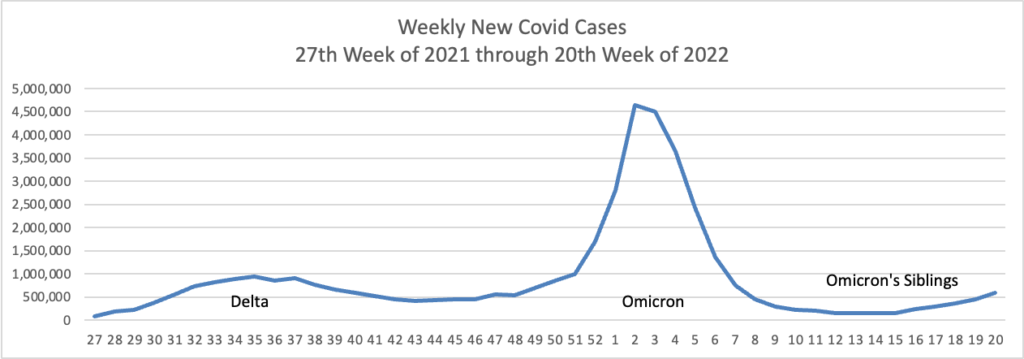
Based on the CDC’s Covid Data Tracker and using Thursday as the first day of the week, here is the FEHBlog’s weekly chart of new Covid cases from the 27th week of 2021 through the third week of 2022:

My word, could that be a cresting of the Omicron surge as discussed in this week’s posts?

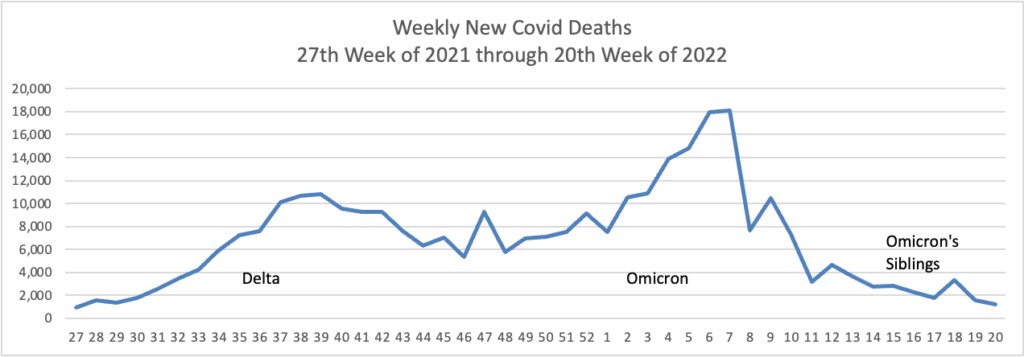
The FEHBlog’s weekly chart of new Covid deaths has bounced up and down after climbing to just over 10,000 weekly deaths during the Delta surge. .

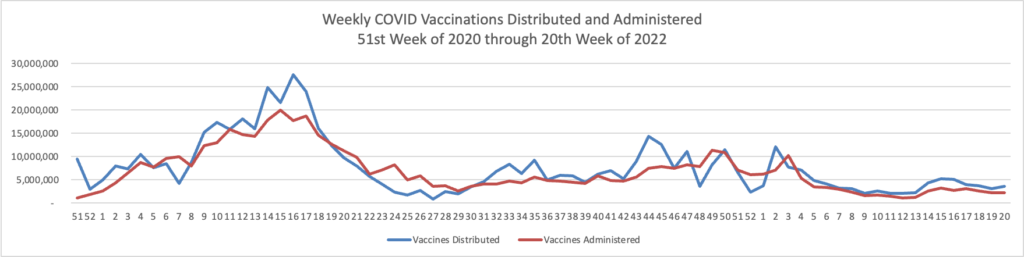
Last but not least here is the FEHBlog’s weekly chart of new Covid vaccinations distributed and administered from the 51st week of 2020 through the third week of 2022.

Here are links to the CDC’s Covid data tracker weekly review and its weekly Fluview.

In other COVID vaccination news —

  • The Wall Street Journal reports that

Vaccines and booster shots offer superior protection from the Delta and Omicron variants, according to three new studies released by the Centers for Disease Control and Prevention.

The data back up earlier findings supporting booster shots and offer the first comprehensive insight into how vaccines fare against the Omicron variant. In one of the studies published Friday, a CDC analysis found that a third dose of either the vaccine from Pfizer Inc.and BioNTech SE or Moderna Inc. was at least 90% effective against preventing hospitalization from Covid-19 during both the Delta and Omicron periods.

The American Hospital Association adds

According to data from 25 state and local health departments, adults who were unvaccinated against COVID-19 as the omicron variant emerged in December had nearly three times higher risk of infection than adults fully vaccinated against COVID-19 and five times higher risk than adults who had received a booster, the Centers for Disease Control and Prevention reported today. The highest impact of COVID-19 booster doses compared with full vaccination was recorded among persons aged 50 and older. Because of reporting lags, the influence of the omicron variant on COVID-19-associated deaths could not be evaluated by vaccination status in December, the authors note.

The FDA could authorize Pfizer’s COVID-19 vaccine for children under age 5 in the next month, Anthony Fauci, MD, director of the National Institute of Allergy and Infectious Diseases, said Wednesday.

“My hope is that it’s going to be within the next month or so and not much later than that, but I can’t guarantee that because I can’t out-guess the FDA,” he said during an interview with Blue Star Families, a nonprofit group that supports military families.

The younger age group will likely need three vaccine doses, he said, since two shots didn’t provide enough of an immune response during Pfizer’s clinical trials for kids ages 2-4.

In Covid vaccine mandate news, Govexec tells us

A federal court in Texas has issued an injunction against President Biden’s COVID-19 vaccine mandate for the federal workforce, pausing implementation of a requirement for more than 2 million civilian servants. 

The Biden administration has already had sweeping success with the mandate, as most agencies have seen virtually their entire workforces come into compliance. Still, federal offices across the country were just beginning to move forward with suspensions—which could eventually result in firings—for those who did not meet the requirements. Biden issued the mandate by executive order in September.    

Judge Jeffrey Brown, appointed by President Trump to the U.S. Court for the Southern District of Texas, said the case was not about whether individuals should be vaccinated or even about federal power generally. 

“It is instead about whether the president can, with the stroke of a pen and without the input of Congress, require millions of federal employees to undergo a medical procedure as a condition of their employment,” Brown wrote. “That, under the current state of the law as just recently expressed by the Supreme Court, is a bridge too far.” 

The Justice Department has appealed the decision to the U.S. Court of Appeals for the Fifth Circuit. The FEHBlog expects that the Fifth Circuit will lift the stay as soon as this weekend. The Society for Human Resource Management offers a helpful article for employers trying to keep track of the vaccine mandate decisions from the courts.

In other COVID vaccine mandate news, the Labor Department’s Wage and Hour Division announced today that

Employees [who are not exempt from the Fair Labor Standards Act] must be paid for time spent going to, waiting for, and receiving medical attention required by the employer or on the employer’s premises during normal working hours. Therefore, if an employer requires an employee to obtain a COVID-19 vaccine dose, undergo a COVID-19 test, or engage in a COVID-19 related health screening or temperature check during the employee’s normal working hours, the time that the employee spends engaged in the activity is compensable. Employees must be paid for such time during normal working hours, regardless of where the activity occurs. This is true regardless of whether the employer is subject to the OSHA Vaccination and Testing ETS.

In Covid treatment news, the Food and Drug Administration announced today that the agency “took two actions to expand the use of the antiviral drug Veklury (remdesivir) to certain non-hospitalized adults and pediatric patients for the treatment of mild-to-moderate COVID-19 disease. This provides another treatment option to reduce the risk of hospitalization in high-risk patients. Previously, the use of Veklury was limited to patients requiring hospitalization.”

From the Covid OTC testing coverage mandate department, the Kaiser Family Foundation has surveyed the coverage approaches of 13 large health insurers. Don’t blame the insurers on this one because health insurers don’t typically cover OTC products and the government only allow four days to implement the mandate.

From the and more department

  • In telehealth news, mHealth Intelligence tells us that

Telehealth utilization peaked in the first half of 2020 and decreased as the year came to a close, with providers predicting that virtual care use would continue to decline in upcoming years, according to the 2021 Medical Group Telehealth Survey.

AMGA Consulting conducted the survey and gathered responses from 56 medical groups representing more than 38,000 healthcare providers.

The majority of the participants (86 percent) were part of multispecialty groups with primary care, while the remaining were either multispecialty without primary care, primary care, or single-specialty groups. * * *

The survey results suggest that although telehealth use skyrocketed during the COVID-19 pandemic, virtual care may see the most success with patients who prefer the modality over in-person care or whose health concerns can be easily addressed virtually.

The FEHBlog remains a strong proponent of hub and spoke telehealth for mental health care because every televisit is in network.

  • The American Hospital Association informs us that “The Department of Health and Human Services’ Office of the National Coordinator for Health Information Technology seeks comments through March 25 to inform potential future rulemaking on how the ONC Health IT Certification Program could incorporate standards, implementation specifications and certification criteria to reduce the burden of prior authorization.”
  • The Congressional Budget Office released a report titled “The Prices That Commercial Health Insurers and Medicare Pay for Hospitals’ and Physicians’ Services.”

CBO examined potential explanations for why the prices paid by commercial insurers are higher and more variable than those paid by Medicare FFS. CBO’s analysis and literature review suggest the following conclusions:

— Greater market power among providers consistently leads to prices for commercial insurers that are higher than Medicare FFS’s prices and that vary more widely, both among and within areas. Hospitals and physicians’ groups may have market power because they have a dominant share of the market in an area or because an insurer sees them as essential to its network of providers.

— Some of the variation in the prices that commercial insurers pay for hospitals’ and physicians’ services is explained by differences in the prices of inputs needed to deliver those services.

— Higher hospital quality is associated with higher prices paid by commercial insurers, although whether there is a causal link between quality and prices, and the direction of any such link, is not clear.

— The share of providers’ patients who are covered by Medicare and Medicaid is not related to higher prices paid by commercial insurers. That finding suggests that providers do not raise the prices they negotiate with commercial insurers to offset lower prices paid by government programs (a concept known as cost-shifting).

IBM is selling the data and analytics assets of its Watson Health business to a private equity firm as it looks to refocus on its core cloud business.

The sale, which is expected to close in the second quarter this year has been anticipated for quite some time, and comes following the limited success of Watson Health, despite a spate of high-profile acquisitions of health information companies to bolster the enterprise.

Financial terms of the deal were not disclosed.

[F]ederal civilian employees in the U.S. will now be paid at least $15 per hour.

OPM issued a memorandum for heads of Executive departments and agencies that provides implementing guidance for how agencies should adjust pay rates for General Schedule (GS) and Federal Wage System (FWS) employees stationed in the U.S., and how to use administrative authority for other pay systems to lift the pay of federal employees who currently make less than $15 per hour. In total, these changes will impact 67,000 out of 2.2 million federal employees. The largest share of these workers, over 56,000 of them, currently work at the Department of Defense. OPM’s guidance directs agencies to implement these changes by January 30, 2022

  • To tide you over the weekend, here is a link to Healthcare Dive’s Deep Dive on four 2022 key trends for providers and payers.