Tuesday Tidbits

Tuesday Tidbits

From the Federal Employee Benefits Open Season front, OPM released its Open Season press announcement today. Its lede is

Thousands of Enrollees Are Leaving Valuable Savings on the Table During Open Season
Enrollees should use Open Season as a period to conduct a wellness or financial check-up and reassess their health needs and coverage

Among other guidance, OPM recommends

Below we’ve provided sample questions to help you assess how you can utilize Open Season to review your benefits and needs to make an informed decision on coverage:

What are my and/or my family’s expected health care needs for 2023? 

* Questions while reviewing your FEHB plan: Am I expecting a new baby? Do I need surgery? Will my medication need change? Does my plan provide a pharmacy mail order option for prescriptions?

* Questions while reviewing FEDVIP: Do I want coverage for my routine dental care? Will I need a crown or root canal? Does my child need braces? Do I need glasses and/or contact lenses? Am I considering laser vision correction surgery?

* Questions while reviewing FSAFEDS: Do I have out-of-pocket expenses I need to consider, such as deductibles, copays, day care, elder care, or over-the-counter drugs and medicines? Do I have medical expenses that may not be covered by my FEHB plan? Do I plan to send my children (under 13) to in-home care or summer camp? 

OPM does not mention the availability of the FEHB plan’s summary of benefits and coverage (“SBC”), an Affordable Care Act requirement. The FEHBlog recalls visiting friends in Denver who were preparing for their employers’ open season by comparing these short but comprehensive SBCs. For example, the SBCs include a broken-out estimate of the plan’s cost-sharing for having a baby, receiving diabetes treatment for a year, and fixing a broken bone. In addition, the federal government consumer tested the SBCs.

FEHB plans update their SBCs annually in advance of Open Season and post them on their websites, usually on the page with forms and brochures.

The Washington Post has an article on the 2023 Open Season, and Federal News Network offers “a few” other expert views on the 2023 Open Season. Fierce Healthcare adds

Open enrollment is coming soon, and foremost on everybody’s mind as these windows draw nearer is just how much health insurance will cost, according to a survey by Gravie and Wakefield Research.

“Consumers are concerned about the high costs of health coverage impacting their access to healthcare, increasing medical debt and the lack of mental health coverage,” according to a press release from the two companies.

From the Omicron and siblings’ front —

  • Beckers Hospital Review tells us

The CDC revised its “up to date” COVID-19 vaccination term Sept. 30 to include the primary series and the recently authorized omicron-targeting booster.  * * *

The CDC’s website still deems people who are not immunocompromised as “fully vaccinated” two weeks after their second dose of Moderna or Pfizer’s series or two weeks after receiving J&J’s COVID-19 vaccine. 

[However, last Friday’s] decision could update the “fully vaccinated” term that experts have urged regulators to update.

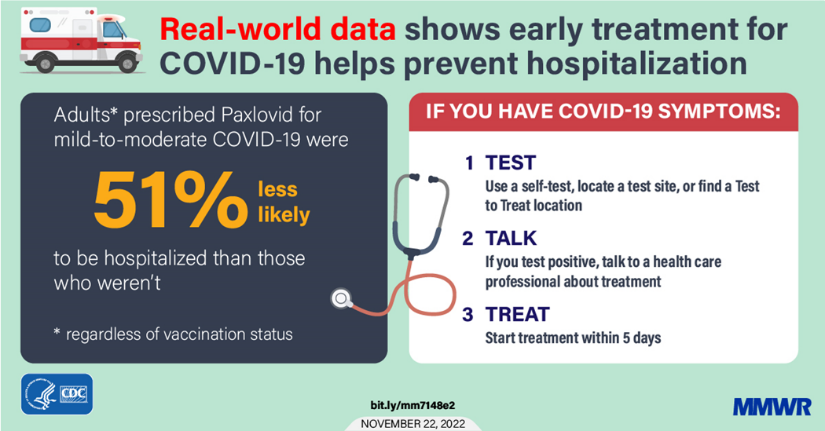
  • HealthLeaders Media reports “Treating COVID-19 patients with Paxlovid significantly reduces hospitalizations and deaths, according to a recent large-scale study by Epic Research.”

AstraZeneca’s Covid-19 pre-exposure prophylactic Evusheld has managed to remain relevant for immunocompromised and other patients when many of its therapeutic peers haven’t with each new Omicron subvariant.

But that win streak may slowly come to a close as the FDA told healthcare providers on Monday that one of the emerging subvariants, BA.4.6, renders Evusheld almost completely useless.

Nationally, BA.4.6 currently makes up about 13% of new cases, compared to just 1% of cases at the beginning of July, according to the CDC. But in some regions, like in Iowa, Missouri, Kansas and Nebraska, the BA.4.6 subvariant makes up more than 20% of all Covid-19 cases.

  • David Leonhardt writing in the New York Times Morning column discusses “A Public Health Success Story; We revisit the subject of Covid and racial inequities”. Check it out.
  • The NIH Directors Blog considers “Understanding Long-Term COVID-19 Symptoms and Enhancing Recovery.”

From the mental healthcare front, MedPage Today reports

Suicide risk was higher in people recently diagnosed with dementia, especially younger patients, a case-control study in England showed.

Compared with people who didn’t have dementia, suicides rose in people who received a dementia diagnosis in the past 3 months (adjusted OR 2.47, 95% CI 1.49-4.09), according to Danah Alothman, BMBCh, MPH, of the University of Nottingham in England, and colleagues.

For people under age 65, suicide risk within 3 months of diagnosis was 6.69 times (95% CI 1.49-30.12) higher than in patients without dementia, the researchers reported in JAMA Neurology

From the U.S. healthcare business front, Bloomberg reports on giant drug manufacturer Pfizer’s future

Pfizer Inc. emerged from the Covid-19 pandemic as the world’s most visible drugmaker, but its success has left investors impatient for an encore.

The windfall from the pharmaceutical giant’s Covid vaccine almost doubled its revenue in just one year. And now the shot, coupled with Pfizer’s Covid antiviral pill, is poised to make up more than half of its expected $100 billion of sales in 2022. That’s left Pfizer flush with cash — $28 billion it could spend on the kinds of deals that for decades fueled its growth into an American colossus.

The pressure is clearly on for Pfizer to show that the muscle it built during the pandemic won’t atrophy. Big Pharma companies don’t normally double revenue so quickly, and nobody expects that kind of growth to continue. But one thing’s clear: Pfizer can’t go back to the sluggish path it was on for years.

The American Hospital Association informs us

Operating margins for U.S. hospitals and health systems were down 24% in August compared to a year ago, driven in large part by a 7.2% increase in labor expenses, according to data from over 900 hospitals reported yesterday by Kaufman Hall.

“Nine months into a challenging year, margins have fluctuated wildly,” the report notes. “Although most metrics improved from July to August, organizations are still operating with negative margins and well below pre-pandemic levels.”

From the Medicare front, the American Hospital Association adds

Effective Oct. 1 for five years, the Centers for Medicare & Medicaid Services will pay average sales price plus 8%, rather than ASP plus 6%, for biosimilars whose average sales price does not exceed the price of the reference biological product. The payment increase was included in the Inflation Reduction Act of 2022. For new biosimilars that qualify, the five-year period will begin on the first day of the calendar quarter for which ASP payment for that biosimilar begins under Medicare Part B.

From the electronic health records front, STAT News reports

Epic Systems has revamped its widely criticized sepsis prediction model in a bid to improve its accuracy and make its alerts more meaningful to clinicians trying to snuff out the deadly condition.

Corporate documents obtained by STAT show that Epic is now recommending that its model be trained on a hospital’s own data before clinical use, a major shift aimed at ensuring its predictions are relevant to the actual patient population a hospital treats. The documents also indicate Epic is changing its definition of sepsis onset to a more commonly accepted standard and reducing its reliance on clinician orders for antibiotics as a way to flag the condition.

The changes follow the publication of a series of investigations by STAT that found an earlier version of Epic’s tool resulted in high rates of false alarms at some hospitals and failed to reliably flag sepsis in advance. One of the investigations found that the model’s use of antibiotics as a prediction variable was particularly problematic, resulting in late alarms to physicians who had already recognized the condition and taken action to treat it.

Fierce Healthcare looks into “How Google, Mayo Clinic and Kaiser Permanente tackle AI bias and thorny data privacy problems.”

From the telehealth front, Healthcare Dive reports

Telehealth utilization varied by region from June to July of 2022 and rose 1.9% nationally, according to Fair Health’s monthly tracker data out Monday. 

In the West, Midwest and South, telehealth utilization rose 5.7%, 2.5% and 4.9%, respectively, from June to July. In the Northeast, telehealth use fell 3.3% during that period.

Mental health conditions remained the top diagnoses nationally, and psychiatrists also delivered more virtual care in some regions.

Thursday Miscellany

Photo by Josh Mills on Unsplash

From Capitol Hill, the American Hospital Association reports

The Senate today voted 72-25 to pass and send to the House a continuing resolution that would extend current federal funding levels for health care and other programs through Dec. 16. Current government funding expires at midnight Sept. 30.

The legislation also would extend through Dec. 16 two expiring programs that help maintain access to care in rural communities: the Medicare-dependent Hospital and enhanced Low-volume Adjustment programs. AHA will continue to advocate for long-term extension of these programs. Among other provisions, the continuing resolution would reauthorize the Food and Drug Administration’s user fee programs, and provide emergency funding for Ukraine and disaster assistance.

A proposal dealing with energy-permitting plans was dropped from the measure on Tuesday, speeding passage of the legislation. The House is expected to pass the measure by Friday. 

Roll Call provides more background on the CR.

The American Hospital Association also tells us

The House voted 220-205 today to pass legislation to hold employer-based health plans more accountable for improper denials of mental health and substance use benefits. The Mental Health Matters Act (H.R.7780) would give the Department of Labor more authority to enforce plan requirements under the Mental Health Parity and Addiction Equity Act and Employee Retirement Income Security Act, ban forced arbitration agreements when plans improperly deny benefits and ensure a fair standard of review by the courts. The bill also would provide grants to develop, recruit and retain school-based mental health professionals and link schools with local mental health systems, among other provisions.

Fierce Healthcare provides more color on this troubling bill.

The ERISA Industry Committee (ERIC)—which represents large employer plan sponsors—wrote a letter Monday to all House members calling for them to oppose (PDF) the Mental Health Matters Act when it comes up for a vote later this week. The letter comes as Congress is considering how to improve pay parity between behavioral and physical health amid reports of some insurers not following requirements in the Affordable Care Act. 

“This bill includes provisions that weaponize the Department of Labor (DOL) to sue employers rather than helping them come into compliance,” the letter said. * * *

[I]t remains unclear whether the Senate will take it up. The Senate Finance Committee is considering action to tackle pay parity but so far has not released any legislation. Chairman Ron Wyden, D-Oregon, previously told Fierce Healthcare that he is still working on legislation to tackle the issue, including taking aim at “ghost networks” where providers listed in directories don’t take new patients.

Earlier this month, Healthcare Dive reported that

The Senate Finance Committee released a bipartisan-supported discussion draft bill that aims to increase mental health access and improve mental health workforce shortages.

The draft bill proposes to fill the gap in mental healthcare worker shortages by funding training for 400 additional Medicare Graduate Medical Education psychiatric slots for residencies per year beginning Oct. 1, 2024. Over a decade, 4,000 psychiatric residencies would be supported by the funding, according to the bill.

The Senate’s focus on access to care makes much more sense than the House’s punitive approach, particularly considering the unnecessary complexity of the federal mental health parity law.

From the Omicron and siblings front, MedPage Today discusses nasally administered Covid vaccines now under development. “The idea is that mucosal vaccines could bolster immunity at these viral entry points, stopping the pathogen from implanting, multiplying, and transporting itself throughout the body.” Finger crossed.

From the monkeypox front, CNBC reports

A single dose of the two-dose monkeypox vaccine provides some protection against the virus, according to CDC data.

People at risk of monkeypox who have not received a shot are 14 times more likely to get infected, the preliminary data found.

These are the first real-world findings on how well the vaccine is working in the current outbreak.

 The CDC is still recommending that everyone at risk receive two doses of the vaccine.

From the Food and Drug Administration front —

STAT News informs us

The Food and Drug Administration approved a new medicine for ALS from Amylyx Pharmaceuticals on Thursday, providing a desperately-needed new treatment option for a devastating disease.

The medicine, to be sold as Relyvrio, is not a cure for ALS but proved to moderately slow the progression of the neurological disease, which causes the destruction of neurons in the brain and spinal cord, resulting in weakened muscles, paralysis, and death.

Amylyx did not immediately disclose how much it will charge for Relyvrio. “Amylyx’s goal is that every person who is eligible for Relyvrio will have access as quickly and efficiently as possible,” the company’s co-CEOs said in a statement, “as we know people with ALS and their families have no time to wait.”

Healio relates

The FDA approved bevacizumab-adcd for the treatment of six cancer types, according to a press release from the biosimilar’s manufacturer.

Bevacizumab-adcd (Vegzelma, Celltrion USA), a biosimilar to bevacizumab (Avastin, Genentech), is a recombinant humanized monoclonal antibody that binds to vascular endothelial growth factor (VEGF) and prohibits it from binding to VEGFR-1 and VEGFR-2 on the surface of endothelial cells.

FDA approved bevacizumab-adcd for metastatic colorectal cancer; recurrent or metastatic nonsquamous non-small cell lung cancer; metastatic renal cell carcinoma; recurrent glioblastoma; persistent, recurrent or metastatic cervical cancer; and epithelial ovarian, fallopian tube or primary peritoneal cancer.

In medical research news, STAT News tells us

After a steep drop in its stock price and with mounting competition from rivals, genomics giant Illumina on Thursday launched a new line of high-powered DNA sequencers, ratcheting up the race to read genetic information accurately and cheaply.

The new instruments, dubbed the NovaSeq X Series, can churn out up to 20,000 human genomes in a year, 2.5 times the max output of the company’s current machines, executives announced. The cost of generating this data has dropped, too, from about $5 per billion DNA bases on Illumina’s last line of high-end sequencers to as low as $2 on the new products.

That will bring the cost of reading a whole human genome on the company’s equipment from about $600 to $200, which could help make sequencing more mainstream in everyday medicine. While the price of sequencing isn’t the only obstacle to using genomics to improve human health, it remains a major factor.

Intriguing.

From the Medicare front, the Centers for Medicare and Medicaid Services (CMS) announced 2023 Medicare Advantage plan and Part D prescription drug plan premiums in advance of the Medicare Open Enrollment, which runs from October 15 through December 7, 2022.

The projected average premium for 2023 Medicare Advantage plans is $18 per month, a decline of nearly 8% from the 2022 average premium of $19.52. Medicare Advantage plans will continue to offer a wide range of supplemental benefits in 2023, including eyewear, hearing aids, preventive and comprehensive dental benefits, access to meals (for a limited duration), over-the-counter items, and fitness benefits.

[T]he average basic monthly premium for standard Part D coverage is projected to be $31.50, compared to $32.08 in 2022. 

To view the premiums and costs of 2023 Medicare Advantage and Part D plans, please visit: https://www.cms.gov/medicare/prescription-drug-coverage/prescriptiondrugcovgenin. Select the various 2023 landscape source files in the downloads section of the webpage. 

For state-by-state information, important dates and enrollment resources for Medicare Advantage and Part D in 2023, please visit: https://www.cms.gov/files/document/2023-medicare-advantage-and-part-d-state-state-fact-sheets.pdf

For more information on the Medicare Advantage Value-Based Insurance Design Model, including plan participation, please visit: https://innovation.cms.gov/innovation-models/vbid.

From the telehealth front, the Wall Street Journal reports a tragic story —

Cerebral treated a 17-Year-Old without His parents’ consent. They found out the day he died.
Telehealth startup didn’t use software to flag minors, according to employees and documents; company says it complies with state rules and the case is an outlier.

Anthony Kroll signed up for Cerebral in December and uploaded his Missouri intermediate driver’s license showing he was 17. Missouri law prohibits clinicians from providing mental-health treatment to people under 18 without parental consent. 

Anthony told a Cerebral clinician he had suicidal thoughts, and she prescribed him an antidepressant that carries a warning label for adolescents, according to medical records reviewed by the Journal. Cerebral didn’t notify his family. 

His parents, Wendi and Todd Kroll, said they didn’t know their son was suicidal or was seeking mental-health treatment. “I had no idea he was even on [medication] until the day he died,” Mrs. Kroll said, adding that she found the pill bottle at their home a few hours before her son died by suicide.

A Cerebral spokesman said Anthony misrepresented his age, the company regrets he received care without parental consent, and the treatment he received was appropriate. “This case is an unfortunate outlier,” the spokesman said. “Any loss of life is tragic, and we extend our deepest condolences to the family.” 

From the miscellany department

  • The GAO released a report titled “Artificial Intelligence in Health Care: Benefits and Challenges of Machine Learning Technologies for Medical Diagnostics.” ” Machine learning technologies can help identify hidden or complex patterns in diagnostic data to detect diseases earlier and improve treatments. We identified such technologies in use and development, including some that improve their own accuracy by learning from new data. But developing and adopting these technologies has challenges, such as the need to demonstrate real-world performance in diverse clinical settings.”
  • Federal News Network tells us

Agencies may soon get some more specific guidance on how best to implement President Joe Biden’s sweeping executive order on diversity, equity, inclusion and accessibility in the federal workforce.

The Chief Diversity Officers Executive Council, a governmentwide panel composed of agencies’ chief diversity officers and led by the Office of Personnel Management, held its first-ever meeting on Sept. 29.

“This has been a really long time coming,” OPM Director Kiran Ahuja said in an exclusive interview with Federal News Network.

Thursday Miscellany

Photo by Josh Mills on Unsplash

Yesterday, the FEHBlog welcomed the first day of autumn when the autumnal equinox was at 9:04 pm today. To compound his error, the FEHBlog overlooked that yesterday was World Gratitude Day. The FEHBlog is grateful for his readers.

From Capitol Hill, Roll Call reports on the state of the continuing resolution to fund the federal government into mid-December.

Congressional leaders and appropriators are expected to spend the weekend haggling over the last details of the text Schumer is aiming to unveil Tuesday [following the Jewish New Year holiday], which he would offer as a substitute amendment.

On Thursday, authorizing committees agreed on a five-year reauthorization of FDA user fee programs, which could potentially be attached to the continuing resolution. Numerous other authorizations, funding “anomalies” and a supplemental aid package for Ukraine and other purposes were still being negotiated. 

The House of Representatives is capable of acting quickly.

From the Omicron and siblings’ front

  • Beckers Hospital Review reports, “Retooled COVID-19 booster shots that target omicron subvariants could be authorized and available for children to receive within a month, the CDC said in a vaccination planning guide released Sept. 20.”

In other public health news, STAT News tells us

As some of us wonder how we’ll know when the coronavirus pandemic is over, a new report from the WHO called “Invisible Numbers” reminds us that noncommunicable diseases take more lives than infectious diseases (and make Covid-19 worse). To wit: Cardiovascular diseases including heart disease and stroke, cancer, diabetes, chronic respiratory diseases, and mental illness cause nearly three-quarters of deaths in the world and kill 41 million people every year. Some of the more striking findings:

* Every year 17 million people under age 70 die of noncommunicable diseases, 86% of whom live in low- or middle-income countries.

* Preventable risk factors include tobacco use, unhealthy diets, harmful use of alcohol, physical inactivity, and air pollution.

* NCDs cause 74% of all deaths, but interventions known to work could avert at least 39 million NCD deaths by 2030.

In that regard, ABC News reports

Cancer deaths in the United States are continuing to decline, according to a new report from the American Association for Cancer Research.

The report, published Wednesday, found that deaths from cancer have decreased by 2.3% every year between 2016 and 2019.

Overall, there has been a 32% reduction in the U.S. cancer death rate since 1991, which translates into approximately 3.5 million lives being saved, the report said.

Additionally, in 2022, there are more than 18 million cancer survivors living in the U.S., equivalent to 5.4% of the population, the report found. Fifty years earlier, there were just 3 million cancer survivors.

That’s remarkable.

In related medical research news,

Medscape reports

New results from a large prospective trial give a better idea of how a blood test that can detect multiple cancers performs in a “real-life” setting.

“As this technology develops, people must continue with their standard cancer screening, but this is a glimpse of what the future may hold,” commented study investigator Deborah Schrag, MD, MPH, chair, Department of Medicine, Memorial Sloan Kettering Cancer Center, New York City.

STAT News relates

The National Institutes of Health on Thursday announced more than $600 million in fresh funding for an expansive and ongoing push to unravel the mysteries of the human brain, bankrolling efforts to create a detailed map of the whole brain, and devise new ways to target therapeutics and other molecules to specific brain cell populations.

Scientists across the country are involved, from teams at the Salk Institute to Duke University to the Broad Institute of MIT and Harvard, among other places. If successful, they will help answer fundamental questions about the body’s most complex organ. What are all the cell types in the brain? How are they connected to one another? How do the workings of the brain change during disease, and what can we do about that?

So far, those questions have proven easier to ask than to answer, with researchers gleaning bits of information from individual studies, but the hope is that a broad-based effort will jump-start new revelations.

Hope springs eternal.

From the mental healthcare front —

Health Payer Intelligence explains

CVS Health is making progress toward its behavioral health goal of decreasing the suicide rate among Aetna members by 20 percent by 2025, but progress among adolescent members is lagging, the healthcare organization announced.

“Our members are not immune to the national suicide crisis reported by the CDC. Though we are on track lowering suicide attempts in adults, our goal will not be reached until we can say the same for adolescents,” said Sree Chaguturu, MD, executive vice president and chief medical officer at CVS Health.

The organization has been working toward this goal since 2017, its work running parallel to that of the American Foundation for Suicide Prevention (AFSP) which had the same goal.

As of March 2022, CVS Health saw suicide attempts among Aetna members drop by 15.7 percent when compared to the company’s 2019 rate.

CVS Health broke down the overall rate by age and found that the reductions were largely driven by decreases among members ages 18 and older. For individuals in this age range, suicide attempts dropped by 17.5 percent in 2021 and dropped another 34.1 percent through March 2022.

Having made progress toward the goal, however, the organization does not intend to slow down.

“We are doubling down on efforts to prevent suicide in teens by identifying those most at-risk and in need of intervention, reaching out to those discharged from the ER after a suicide attempt with resources and supporting parents and loved ones in prioritizing the mental health of their kids,” Chaguturu explained.

Specifically, Aetna saw an upward trend in suicide attempts among its adolescent members.

Members between the ages of 13 and 17 saw increases in suicide attempts. In 2021, the suicide rate among this population grew 43 percent. In the first three months of 2022, the suicide rate jumped another 32 percent.

“We are implementing evidence-based therapies and outreach programs to prevent suicidal ideation before it starts and get adolescents the clinical care they need when they are at risk,” said Cara McNulty, president of behavioral health and mental well-being at CVS Health. “Every suicide attempt prevented, life saved, and mental health resource sought is an important step to reducing death by suicide in the United States.”

Mazaal Tov to CVS Health for those successful and ongoing efforts.

The Society for Human Resources offers guidance on suicide prevention in the workplace.

From the No Surprises Act litigation front, STAT News explains

During a hearing yesterday, the Association of Air Medical Services indicated it was following in the footsteps of AHA and AMA and would likewise dismiss its claims now that the final rules are out. But the AAMS also said it was deliberating whether it would file a different lawsuit in a different court, while attorneys for AMA and AHA backpedaled and said they have no intentions of filing any new lawsuits anywhere.

Today we got some clarity when the Texas Medical Association filed a new lawsuit challenging the revised final independent dispute resolution rule issued in the summer. In addition, the American Hospital Association and the American Medical Association have announced that they are joining the case as friends of the court in support of the Texas Medical Association. The lawsuit was filed in the U.S. District Court for the Eastern District of Texas. And the beat goes on.

From the U.S. healthcare business front, the Wall Street Journal reports

Humana Inc. HUM 0.67%▲ and CVS Health Corp. CVS 0.06%▲ are circling Cano Health Inc., CANO 32.17%▲ according to people familiar with the situation, as healthcare heavyweights scramble to snap up primary-care providers.

The talks are serious and a deal to purchase Cano could be struck in the next several weeks, assuming the negotiations don’t fall apart, some of the people said. Cano shares, which had been down nearly 7%, turned positive and closed up 32% after The Wall Street Journal reported on the talks with Humana and other unnamed parties, giving the company a market value of roughly $4 billion.

Bloomberg subsequently reported CVS’s interest.

It couldn’t be learned which other potential buyers might be in the mix, but Cano could be Humana’s to lose as the health insurer has a right of first refusal on any sale, part of an agreement that was originally struck in 2019.

Miami-based Cano operates primary-care centers in California, Florida, Nevada, New Mexico, Texas, Illinois, New York, New Jersey and Puerto Rico, according to documentation from the company. It mainly serves Medicare Advantage members, a private-sector alternative to Medicare for seniors.

Beckers Payer Issues tells us

Healthcare startup Curative, best-known for providing COVID-19 testing, is introducing a health plan with no copays or deductibles. 

The company is offering the new plan in the Austin, Texas, area, with plans to expand throughout Texas over the next year, Curative said Sept. 21. The announcement comes as the startup lays off 109 employees from its testing business in California.

In a news release, Fred Turner, co-founder and CEO of Curative, said the startup is on a mission to “drastically remake” the U.S. healthcare system. 

“The only way to achieve true cost transparency is for all in-network services to be covered at $0 cost, so members actually know where they stand and can get the care they need without surprise bills or medical debt,” Mr. Turner said in the release. 

According to the news release, Curative plan members will not owe any copay costs if they complete a baseline visit to evaluate preventive care and health literacy. 

From the Postal Service front, Federal News Network reports

Postmaster General Louis DeJoy announced Wednesday that all Executive and Administrative Schedule (EAS) and Pay Band Non-bargaining unit employees will soon receive a 3% salary increase, “regardless of their current salary maximum.”

DeJoy, in a memo to USPS officers Wednesday, said the pay increase will go into effect Sept. 24 and will reflect on the employees’ Oct. 14 pay statement.

Weekend Update

As we wrap up the last weekend of summer, we can look forward to the House of Representatives and the Senate holding Committee business and floor voting. Yahoo Finance adds

Once again, the threat of a government shutdown looms at the end of the fiscal year, which arrives on September 30. Lawmakers have two weeks to provide funding to keep large swaths of the federal government open and functioning, and the most likely result at this point is a short-term bill called a continuing resolution that funds the government for about 10 weeks, or until mid-December. Lawmakers would then look to pass an omnibus spending package to cover the rest of the 2023 fiscal year.

From the Omicron and siblings front, the Wall Street Journal offers an engaging interview with Moderna’s CEO Stéphane Bancel who “discusses the company’s latest Covid shot and research on using mRNA in seasonal flu vaccines and personalized treatments for cancer.”

From the social determinants of health front, Health Affairs discusses best practices to improve the collection and distribution of race, ethnicity, and language data for use by health care providers and payers. Healthcare payers, in particular, cannot address SDOH issues strategically without having REL data. The FEHBlog’s idea, which he has floated unsuccessfully to date, is to add REL codes to the AMA’s CPT 4 code system, thereby allowing the ready distribution of that data via reliable coders.

Speaking of the distribution of healthcare data, EHR Intelligence reports that “Large Health IT Networks Unveil Plans to Become Qualified Health Information Network (“QHIN”) Under TEFCA.” TEFCA will act as the Electronic Health Records “backbone” to vastly improve health record interoperability, which has long been a national EHR goal.

From the mental healthcare front, last Friday, “the U.S. Department of Health and Human Services (HHS) released the HHS Roadmap for Behavioral Health Integration (Roadmap), which details policy solutions that would help to better integrate mental health and substance use care into the larger health care system and other systems. The Roadmap is based on feedback Secretary Becerra received from patients and providers during more than two dozen stops on his National Tour to Strengthen Mental Health.”

Finally, a government contract expert discusses in Federal News Network why the 1994 federal acquisition reform law (actually the related 1994 and 1996 laws) aiming to simplify the federal procurement process needs a reboot. The FEHBlog heartily agrees.

Weekend Update

The House of Representatives and the Senate will be engaged in Committee business and floor voting this coming week.

From the Omicron and siblings front —

Bloomberg Prognosis offers an interesting observation from Katrine Wallace, an epidemiologist at the University of Illinois at Chicago,

“For some viruses, where there is better mucosal immunity in the nose (via past infection or vaccines), people can fight off pathogens and develop an immune response without ever feeling ‘sick.’” In other words, for certain infections, your immune system might get revved up by recognizing a virus, and then swiftly fight it off. 

“However, Covid-19 is not a virus that we have developed lasting mucosal immunity for, either through vaccines or via previous infections,” says Wallace.

This is the whole rationale for the development of the new Covid shots that are inhaled instead of injected, she says. The nose and mouth are where Covid first enters the body, so the vaccine antibodies elicited by those types of vaccines give people a more immediate line of defense. 

The Wall Street Journal provides details on nagging Covid death levels:

Roughly 85% of people who died from Covid-19 through mid-August this summer were 65 or older, a Wall Street Journal analysis of death-certificate data show. The rate is similar to 2020 peaks, before vaccines were available. Deaths trended younger for much of last year.

Covid-19 is on pace to be the third-leading cause of death for the third straight year, said Dr. Robert Anderson, chief of the mortality statistics branch at the CDC’s National Center for Health Statistics. Since 2020, it has trailed only heart disease and cancer, significantly reducing life expectancy. * * *

The health system AdventHealth counted 24 deaths related to Covid-19 at its Orlando, Fla.-area hospitals in August. Age was the biggest factor, although younger patients with compromised immune systems were also at risk, doctors with the health system said. All but one Covid-19 patient who died had serious health problems such as diabetes, chronic obstructive pulmonary disease, heart failure and obesity.

Unfortunately, the Journal’s article discusses vaccination status but does not factor in the Paxlovid pill or other available treatments, which should be a game changer for older folks with Covid.

From the mental healthcare front — ‘

Yesterday, September 10, was World Suicide Awareness Day. McKinsey and Company reported,

The suicide rate in the United States has risen over the past 20 years to become the second-leading cause of death for people between the ages of ten and 34, write partner Erica Hutchins Coe, senior partner Martin Dewhurst, senior partner Tom Latkovic, and co-authors in a recent report from the McKinsey Health Institute (MHI). And by winter of 2021, the weekly rate of ER visits by adolescents who attempted suicide was 39 percent higher than pre-pandemic levels. By taking action to address this urgent public health issue, organizations, educators, healthcare professionals, governments, and society at large could help millions in crisis. This #WorldSuicidePreventionDay, learn about ongoing efforts by MHI and its collaborators to improve crisis care in the United States * * * .

The article provides links to relevant McKinsey publications on this important topic.

The American Medical Association’s “What Doctors Wish Their Patients Knew” column delves into loneliness and health.

From the social determinants of health front, Fierce Healthcare looks into CVS’s Healths efforts to improve health equity.

When the CVS Caremark team geared up to take on health disparities, it quickly realized that any initiative would require a significant basis in data to succeed.

That entailed both gathering more data and building the tools necessary to track and analyze them.  For example, Joel Helle, vice president of physician services at CVS Specialty, told Fierce Healthcare that Caremark has not historically gathered race and ethnicity data, but now asks payers and plans sponsors for that information to more accurately target where disparities are occurring.

“It’s real race and ethnicity data, and we know who those patients are,” he said. “That’s the future, in my mind, of what everybody needs to do.”

In addition, the company built a proprietary tool that combs data from 17 different indexes to identify where disparities exist, he said. That tool, he said, puts “red dots” on the map to highlight risks, and the Caremark team can then use its internal data to further drill down to challenges in specific communities.

Friday Stats and More

Based on the Centers for Disease Control’s Covid Data Tracker and using Thursday as the first week, here is the FEHBlog’s updated weekly chart of new Covid cases for 2022:

The enormous surge on the right is the original Omicron strain. Its sibling variants follow. The CDC’s weekly review of its Covid stats is back this week:

As of September 7, 2022, the current 7-day moving average of daily new cases (70,488) decreased 18.8% compared with the previous 7-day moving average (86,853).

CDC Nowcast projections* for the week ending September 10, 2022, estimate that the combined national proportion of lineages designated as Omicron will continue to be 100% with the predominant Omicron lineage being BA.5, projected at 87.5% (95% PI 86.2-88.7%).

Here is the CDC’s current chart of daily trends of new Covid hospitalizations:

The CDC’s weekly review adds “The current 7-day daily average for August 31–September 6, 2022, was 4,620. This is a 10.5% decrease from the prior 7-day average (5,163) from August 24–30, 2022.”

Here’s the FEHBlog’s weekly chart of new Covid deaths for 2022 which also is trending down.

The CDC’s weekly review adds “The current 7-day moving average of new deaths (314) has decreased 28.1% compared with the previous 7-day moving average (437).”

Here’s the FEHBlog’s chart of Covid vaccinations distributed and administered from the beginning of the Covid vaccination era (51st week of 2020) through the 36th week of 2022.

The CDC’s weekly review adds

As of September 7, 2022, 610.7 million vaccine doses have been administered in the United States. Overall, about 263.1 million people, or 79.2% of the total U.S. population, have received at least one dose of vaccine. About 224.4 million people, or 67.6% of the total U.S. population, have been fully vaccinated.*

Of those fully vaccinated, about 109.0 million people have received a booster dose,* but 50.0% of the total booster-eligible population has not yet received a booster dose. Booster dose eligibility varies by age and health condition. Learn more about who is eligible.

Last week, according to the CDC’s stat review, the CDC’s Covid community level evaluations saw an 8.6% decrease in high-level communities and a 10.2% increase in low-level communities.

To check your COVID-19 Community Level, visit COVID Data Tracker. To learn which prevention measures are recommended based on your COVID-19 Community Level, visit COVID-19 Community Level and COVID-19 Prevention.

In other Covid news, Benefits Pro discusses a Brookings Institution report on long Covid’s impact of the U.S. workforce, and the Society for Human Resource Management offers an article confirming the FEHBlog’s take on the recent federal appellate court decision concerning the federal government’s stayed vaccine mandate on federal government contractors.

In other federal litigation news —

A federal judge grilled the Justice Department on Thursday over its antitrust claims that UnitedHealth Group Inc.’s $13 billion acquisition of health-technology firm Change Healthcare Inc.  would suppress competition and limit innovation in health insurance markets.

During closing arguments, U.S. District Judge Carl J. Nichols questioned the department’s arguments that he should block the deal because it would limit competition for technology used in claims processing and would give UnitedHealth access to sensitive industry data that it could use to harm competitors. * * *

Judge Nichols is expected to issue his ruling in the coming weeks.

Home improvement retailer Home Depot and two other, smaller employers are appealing a recent $2.67 billion settlement that covers allegedly anticompetitive behavior from Blue Cross Blue Shield insurers.

The appeals could potentially delay the release of the funds and the broader terms of the settlement, which U.S. District Judge R. David Proctor finalized in August.

STAT News also tells us from Capitol Hill

Negotiations are intensifying over massive, multibillion-dollar legislation to fund the Food and Drug Administration, with just weeks left before the current agreement expires, four sources following the talks said. * * *

Talks are still fluid, and there is no final agreement yet. Lawmakers are aiming to finalize a package by early next week.

The FDA agreement could ride along with a government funding package before the end of September, when government funding runs out. There’s a chance the user fee legislation could pass on its own, however, if there is a bipartisan deal. The Democrats’ user fee offer was a full five-year agreement, not a shorter-term deal.

From the fraud, waste, and abuse front, Beckers Hospital Review informs us

A small number of primary care providers have been responsible for most of the recent growth in remote patient monitoring, though it’s not known how much their patients needed that type of potentially expensive care, a new Health Affairs study found.

Remote patient monitoring grew fourfold during the pandemic’s first year, according to the analysis of OptumLabs Data Warehouse data from January 1, 2019, to March 31, 2021. The database includes Medicare Advantage claims that total about 20 million people annually.

Out of a group of 342 high-volume providers, 0.1 percent accounted for 69 percent of all general remote patient monitoring claims, the Sept. 6 study found.

But the Harvard University researchers said they didn’t observe that the high-volume providers targeted patients with more severe or uncontrolled disease. They said growth rates “indicate that total spending on remote patient monitoring could quickly escalate” and potentially burden CMS and other payers financially.

“More research is needed to identify which patients and use cases benefit most from remote patient monitoring,” the study’s authors wrote. “In the meantime, payers and policymakers should closely monitor its use and be prepared to establish appropriate controls as informed by new evidence.”

From the mental healthcare front, the American Hospital Association relates

The Department of Health and Human Services today reported a 45% increase in call volume and improved answer rates and wait times for the 988 Suicide and Crisis Lifeline this August compared to a year ago. The 10-digit National Suicide Prevention Lifeline in July transitioned to the 988 Suicide and Crisis Lifeline, meaning individuals experiencing a suicide, mental health or substance use crisis can simply call, chat or text 988 to connect with a trained crisis counselor.

The Substance Abuse and Mental Health Services Administration also announced a $35 million grant opportunity to better support 988 Lifeline services in tribal communities, which face unique challenges to accessing technology and crisis services. 

Midweek Update

OPM announced today that the next Federal Benefits Open Season will be held from November 14 through December 12, 2022. The announcement tells us that OPM expects to post 2023 FEHB and FEDVIP premiums on its website in “late September.”

From the Omicron and siblings front, the Wall Street Journal offers a helpful set of FAQs on the new bivalent mRNA boosters that are currently rolling out for administration.

From the monkeypox front, the Food and Drug Administration announced action to expand testing for the disease.

From the public health front, McKinsey and Company released its

United States of Health Dashboard. [McKinsey describes the tool as] an easy-to-use data visualization tool that enables users to explore the impact of disease and ill health within individual states, the dashboard is informed by key metrics encompassing maternal and neonatal health, behavioral health, communicable disease, chronic disease, and environmental health. It measures the total loss of healthy years of life, assuming full health (also known as “the burden of disease”), that affect a state’s population over the course of one year.

The dashboard is designed to help current and newly tapped state leaders, public-health agencies, and other stakeholders identify the highest-priority areas for investment by offering insights into key questions such as: How do behavioral health challenges affect a state’s population? How well is chronic disease managed and infectious disease controlled? How do mothers and their newborn infants fare? How well are health risks in the environment managed? And which populations are most significantly impacted by these metrics?

For example, here is a link to the Texas dashboard.

In other public health news, the American Hospital Association informs us

September is Suicide Prevention Awareness Month, with National Suicide Prevention Week running Sept. 4-10. In recognition of the effort to reduce the occurrence of suicide and destigmatize the conversation around it, AHA is proud to highlight resources available to our members and the public at large.

HR Director offers an interesting article about how HR professionals can approach this issue.

In the roughly dozen years since [he dealth with an employee suicide], [Matthew] Burr has advised every one of his clients (which include schools, financial firms and manufacturers, among other companies) to establish an EAP. Aside from a couple smaller companies, which have anywhere from five to 10 employees, every client has taken his advice. They were truly grateful to have done so ahead of the COVID-19 pandemic, so their employees had support systems already in place during the unprecedented time.

From the U.S. healthcare business front

  • Healthcare Dive reports that Walmart and UnitedHealthcare have teamed up to offer a Medicare Advantage plan under a ten-year-long contract. “Ultimately, the goal is to serve hundreds of thousands of seniors and Medicare beneficiaries in value-based arrangements through multiple Medicare Advantage plans.
  • Beckers Hospital Review tells us “Cost Plus Drug Co. founder Mark Cuban expects his online pharmacy to soon grow past 1 million customers, the billionaire of Shark Tank fame said Sept. 6 during Vox‘s Code Conference.  ‘By the time I get back, we should, hopefully, be past a million patients in seven months,’ Mr. Cuban told Vox‘s Recode, referring to the late-January launch of Cost Plus Drug Co., according to CNET.”
  • Reuters reports, not surprisingly, that “CVS Health Corp’s (CVS.N) plan to buy healthcare services company Signify Health for about $8 billion will face a tough U.S. antitrust review even though the two companies do not compete directly in any markets, three experts said Tuesday.”

From the Rx coverage, BioPharma Dive discusses the near term future of biosimilar drugs.

From the health savings account front, Voya Financial discusses “five HSA funding strategies companies [or FEHB plans’ can employ to help boost employee saving.”

Thursday Miscellany

Photo by Josh Mills on Unsplash

From the omicron and siblings front, AHIP informs us

Today the Centers for Disease Control and Prevention’s Advisory Committee on Immunization Practices (ACIP) voted to recommend the use of the bivalent mRNA COVID-19 vaccines as a single-dose booster for all individuals ages 12 and older (Pfizer-BioNTech) and 18 and older (Moderna), at least two months following primary series or previous booster dose.  The ACIP recommendation for the bivalent boosters was approved by a vote of 13-1.

The Committee reviewed modeling data showing the vaccine has the potential to reduce hospitalizations and deaths, especially among high-risk groups.  The bivalent boosters are recommended for all those over age 12 who have completed a primary series, at least 2 months after the most recent dose. The modeling data indicates that the vaccine is safe and effective, and that booster strategies will be executed in an equitable manner.  Models also indicate that waiting until more trial data is available (in two to three months) could lead to preventable hospitalizations and deaths.

ACIP members expressed concern that many assumptions had been made with the modeling, and that the vaccine being recommended – which includes protections specific to the BA.4/BA.5 variants – has not been tested in humans.  Mouse models were used for data on this vaccine, in addition to extrapolations from human trials using the BA.1-specific vaccine. CDC pointed out that annual influenza vaccines are modified based on projected variants without direct clinical evidence. ACIP members also expressed concerns that the bivalent booster makes assumptions about future variants, which this booster may not protect against.

Earlier this week, the Food and Drug Administration (FDA) amended the Emergency Use Authorizations (EUAs) for both the Moderna COVID-19 vaccine and the Pfizer-BioNTech COVID-19 vaccine to authorize bivalent formulations of the vaccines for use as a single booster dose at least two months following primary or booster vaccination. The bivalent Moderna vaccine is authorized for use as a single booster dose in individuals 18 years of age and older and the Pfizer bivalent vaccine is authorized for use as a single booster dose in individuals 12 years of age and older.  FDA also released fact sheets on both the Pfizer-BioNTech vaccine and the Moderna vaccine.

With the authorization, FDA has revised the EUAs to remove the use of the monovalent versions of the vaccines for booster administration for the age groups now covered by the bivalent booster products. ACIP also rescinded its recommendations for the monovalent booster vaccines.

Bivalent boosters may be available as early as next week.

The FEHBlog finds it noteworthy that the new bivalent booster replaces the monovalent booster.

STAT News offers FAQs on the new boosters.

STAT News also discusses the Omicron outlook for this autumn.

In a way, some physicians have said, Covid is becoming more like the other respiratory pathogens that most of us shake off but that can occasionally cause severe illness and death among the oldest adults or people who are already sick. So many more people are dying from Covid than from those other viruses, however, because of the massive number of cases that are still occurring overall.

Another trend that has continued into 2022 has been the racial and ethnic disparities associated with Covid. The gaps between different demographic groups’ death rates have shrunk over time, but at the peak of this summer’s wave, for example, death rates by age group among Hispanic adults were notably higher than those among white adults, federal data indicate.

One of the silver linings of the pandemic is that, unlike with some viruses, SARS-2 did not pose a particularly serious threat to children. That’s not to minimize the hospitalizations and deaths — as well as incidents of long Covid and MIS-C — that the virus did cause in pediatric populations. But overall, kids have faced much lower risks of severe outcomes from Covid than adults.

Still, something worrisome occurred this summer with kids and Covid, as hospitalizations reached their second highest peak of the entire pandemic, surpassing last summer’s Delta wave and only trailing the initial Omicron spike early this year.

The article’s experts encourage vaccinating children to stem this tide.

From the FEHB front, Govexec provides a handy just before and just after federal retirement checklist, and Fedweek helpfully delves into “What Counts and What Doesn’t for Keeping FEHB Coverage in Retirement,” which should be a key consideration for career feds.

From the public health front, the CDC reminds us September is Sepsis Awareness Month

Anyone can get an infection, and almost any infection, including COVID-19, can lead to sepsis. Sepsis is the body’s extreme response to an infection and is a life-threatening medical emergency.

September is Sepsis Awareness Month and CDC encourages patients and healthcare professionals to share Get Ahead of Sepsis resources, below, to learn how to protect themselves, their loved ones, and their patients from sepsis:

Patients and families:
* New this year is an updated patient and family brochure.
* Download and share any of CDC’s FREE patient education materials with your friends and loved ones to learn how to prevent infections, be alert to the signs and symptoms of sepsis, and act fast if sepsis is suspected.
* Share updated sepsis graphics on social media to educate friends and loved ones about sepsis.
* Are your children back to school? Talk to your child’s healthcare professional and school nurse about steps you can take to prevent infections that can lead to sepsis. Some steps include taking good care of chronic conditions and getting recommended vaccines.
Healthcare professionals:
New this year are two fact sheets for long-term care nurses and certified nurse assistants.
Download and share CDC’s FREE healthcare professional education materials with your colleagues to educate them about how to recognize signs and symptoms of worsening infection and sepsis, how to get ahead of sepsis, and what to do if they suspect sepsis.
Educate your patients and their families about:
o Preventing infections
o Keeping cuts clean and covered until healed
o Managing chronic conditions
o Recognizing early signs and symptoms of worsening infection and sepsis
o Seeking immediate care if signs and symptoms are present

This Sepsis Awareness Month, spread the word about sepsis—you can help save lives.

To learn more about sepsis and how to prevent infections, visit www.cdc.gov/sepsis or call 1-800-CDC-INFO.

From the miscellany department —

  • Medpage Today offers a special report about a ” New Behavioral Health Database Reveals Gaps in Care — Researchers behind it hope to provide the data needed to remedy the problem.”
  • STAT News reports “Drug treatment of veterans with opioid use disorder increased during the first year of the pandemic, according to a new study, suggesting that the rapid shift from in-person to telehealth visits at VA medical centers enabled patients to get access to care despite Covid-related disruptions.”
  • Fierce Healthcare tells us “Cigna’s Evernorth subsidiary is expanding its diabetes care value program to combine traditional pharmaceutical interventions with devices, tools and resources to help patients better understand and manage their diabetes.”
  • Healthcare Dive informs us that “To staunch the losses of rural hospital closures that endanger access to care for millions, federal regulators are hoping some facilities opt in to a new payment model, but providers say they want more flexibilities and clarity before making the pivot. * * * The new rule ‘maybe gets halfway there,’ Jennifer Findley, vice president of education and special projects at the Kansas Hospital Association, told Healthcare Dive. ‘It’s not as much as we were hoping for but it does give some more flexibility than what you have today.’”
  • Health Payer Intelligence reports “Chronic diseases are common among emergency department patients, particularly among seniors and those ages 45 to 64, according to a National Health Statistics Report. ‘Monitoring ED visits made by adults at highest risk of severe COVID-19-related illness is important for understanding the health burden of COVID-19 and for planning prevention strategies,’ the researchers explained. ‘Ongoing monitoring of the presence of these underlying chronic conditions at ED visits will continue to inform COVID-19 response efforts.’”
  • Also Health Payer Intelligence notes that “Three major social determinants of health factors are particularly predominant barriers to care for America’s seniors: economic instability, loneliness, and food insecurity, according to a study sponsored by Alignment Healthcare. Researchers from Toluna conducted an online survey from July 24 to August 13, 2022, which reached 2,600 seniors ages 65 and older. Most respondents identified as white. Half were in Medicare Advantage and this population was divided primarily between preferred provider organizations and health maintenance organizations.”

Monday Round-up

Photo by Sven Read on Unsplash

Yesterday, the FEHBlog discussed a U.S. Court of Appeals for the 11th Circuit opinion issued last Friday narrowing the scope of a nationwide injunction that a federal district court had imposed on the Biden Administration’s federal government contractor mandate.

Govexec adds today that

The executive order is still enjoined in Alabama, Alaska, Arizona, Arkansas, Florida, Georgia, Idaho, Indiana, Iowa, Kansas, Kentucky, Louisiana, Mississippi, Missouri, Montana, Nebraska, New Hampshire, North Dakota, Ohio, South Carolina, South Dakota, Tennessee, Utah, West Virginia and Wyoming as a result of the Friday opinion and the injunctions in the other cases, members of the law firm McGuireWoods noted in a post

A spokesperson for the Office of Management and Budget told Government Executive on Monday morning the Justice Department is currently reviewing the decision. “At this time, the nationwide injunction remains in effect, and thus agencies should continue not to take any steps to enforce Executive Order 14042.” 

The nationwide injunction remains in effect at least until the appellate court issues its mandate to the lower court which typically happens in two weeks.

Also from the Omicron and siblings front, the Wall Street Journal discusses best practices for Covid testing while NPR tells us

The federal government is putting a pause on sending free COVID-19 testing kits to Americans starting in September, due to a lack of funding. 

“Ordering through this program will be suspended on Friday, September 2 because Congress hasn’t provided additional funding to replenish the nation’s stockpile of tests,” the ordering website says. 

However, the program is still accepting orders before [next Saturday] Sep. 2. 

From the No Surprises Act front, Mercer Consulting announced

A new prescription drug reporting mandate, adopted as part of the 2021 Consolidated Appropriations Act (CAA) (Pub. L. No. 116-260), requires group health plans and health insurers to report detailed data about prescription drug pricing (including rebates) and healthcare spending. The first reports are due by Dec. 27, 2022, and annually thereafter. The departments of Labor, Treasury, and Health and Human Services will use the information to prepare a biannual, publicly available report. The departments have issued interim final rules (IFR) detailing the data to report and recently updated submission instructions describing the mechanics of the reporting process. The updated instructions provide important information about reporting wellness services, prescription drug expenses that are covered by the pharmacy benefit manager and more.

Download PDF of this article

Click here

Download the 21-page print-friendly article for details on the prescription drug reporting rules and the compliance challenges facing group health plans. This GRIST has been updated to reflect the updated submission instructions.

OPM added FEHB plans to the list of reporting plans and insurers. The initial report on the 2020 plan year is due no later than December 27, 2022.

From the FEHB plan design front, Federal News Network reports

Democratic lawmakers are urging the Office of Personnel Management to follow through on its plans to expand federal employees’ medical coverage to cover infertility diagnoses and treatments.

Sen. Tammy Duckworth (D-Ill.) and Government Operations Subcommittee Chairman Gerry Connolly (D-Va.) urged OPM on Monday to ensure all Federal Employee Health Benefits (FEHB) program carriers provide coverage for assistive reproductive technology (ART), which includes in vitro fertilization (IVF), starting in 2023.

The legislators’ demand strikes the FEHBlog as a day late and a dollar short because FEHB carriers and OPM closed their benefit and rate negotiations earlier this month. OPM did ask carriers in the agency’s 2023 call letter to plan on expanding ART coverage or offering a discounted ART network, among other options.

From the maternal health front, the Department of Health and Human Services announced “investments of over $20 million to improve maternal and infant health and implement the White House Blueprint for Addressing the Maternal Health Crisis – PDF. Funding aims to help reduce disparities in maternal and birth outcomes, expand and diversify the workforce caring for pregnant and postpartum individuals, increase access to obstetrics care in rural communities, and support states in tackling inequities in maternal and infant health.”

From the mental healthcare front, Health Payer Intelligence delves into the resources that AHIP has made available.

Seven strategic themes emerged from the list of ways that payers have helped members manage their mental health needs:

* Helping members find the right providers

* Creating opportunities for care through telehealth, online platforms

* Designing new payment models

* Expanding and educating the mental healthcare workforce

* Offering population-based services

* Supporting caregivers

* Expanding research and awareness

The article expounds on each of these themes.

From the U.S. healthcare business front, Fierce Healthcare reports

Months of inching performance gains were upended in July as the nation’s hospitals logged “some of the worst margins since the beginning of the COVID-19 pandemic,” Kaufman Hall wrote in its latest industry report. * * *

What’s more, seven straight months of negative margins “reversed any gains hospitals saw this year” and has the advisory group forecasting a brutal year for the industry.

“July was a disappointing month for hospitals and put 2022 on pace to be the worst financial year hospitals have experienced in a long time,” Erik Swanson, senior vice president of data and analytics with Kaufman Hall, said in a statement. “Over the past few years, hospitals and health systems have been able to offset some financial hardship with federal support, but those funding sources have dried up, and hospitals’ bottom lines remain in the red.” * * *

The silver lining in Kaufman Hall’s report were total expenses that, although up 7.6% from July 2021, saw a modest 0.4% decline since June. Those savings came squarely among supply and drug expenses as total labor costs and labor expense per adjusted discharge still grew 0.8% and 3.5%, respectively, since June. Increases in full-time employees per adjusted occupied bed “possibly” suggest increased hiring, the group wrote in the report.

From the electronic health record interoperability front, Becker’s Health IT informs us

Judy Faulkner, CEO of Epic, discussed the company’s vision to build a nationwide health IT infrastructure last week at the annual Users Group Meeting while dressed as Amelia Earhart, according to The Cap Times

Ms. Faulkner has a history of dressing as characters and historical figures for her highly anticipated keynote address at the meeting every year, and this year she chose Ms. Earhart, the iconic female pilot, as a nod to the meeting’s theme: A Night at the Museum. She talked about new technologies and expectations for Epic and its data platform, Cosmos. * * *

“We are building a nationwide health IT infrastructure to connect the different parts of healthcare,” Ms. Faulkner told the crowd.

Epic’s largest competitor in the hospital market, Oracle Cerner, is also on a mission to digitally connect the U.S. healthcare system. Larry Ellison, chair, co-founder and chief technology officer of Oracle, revealed in June the company’s plans to build a unified national healthcare database after acquiring Cerner earlier this year for $28.4 billion. His vision of a national healthcare database includes anonymized data from hospitals, clinics and providers to give real-time information about patients’ health as well as public health statistics.

Weekend Update

Mount Rushmore
Mount Rushmore

Congress’s State / District work break ends next Monday Labor Day.

From the Omicron and siblings front, Federal News Network tells us that last Friday the U.S. Court of Appeals for the Eleventh Circuit, which is based in Atlanta, issued a ruling on the federal government’s appeal of a district court preliminary injunction of the Biden Administration’s Covid vaccination mandate on federal government contractors.

The three-judge panel’s majority found that a narrower injunction to block the mandate would have been warranted, and that once the case is fully litigated, the plaintiffs are at least “reasonably” likely to win their claim that the president can’t use his authority under procurement law to mandate vaccines for contractors.

But the court found Georgia District Court Judge Stan Baker went too far by applying the injunction nationwide during the case’s earliest stages last December. Instead, the court ruled, the injunction can only apply to the handful of parties who actually sued. * * *

In this case, that means the government is barred from enforcing the mandate against members of the Associated Builders and Contractors (ABC), and state agencies from seven states that were part of the same suit: Georgia, Alabama, Idaho, Kansas, South Carolina, Utah and West Virginia. * * *

The administration completely suspended enforcement of the contractor mandate right after Judge Baker’s decision last December, and hasn’t yet said how it will respond to the new ruling partially lifting his injunction. A spokesman for the Office of Management and Budget did not immediately respond to an inquiry Friday evening.

From the healthcare cost front, Fierce Healthcare informs us

Healthcare price increases during the past year pale in comparison to those seen across the rest of the economy, suggesting that the healthcare sector has so far been spared from the full impact of 2022’s rapid inflation.

Healthcare’s upward price movement has so far been led by hospitals and nursing homes as opposed to other medical care spend, per an analysis of Bureau of Labor Statistics data released Wednesday.

Policy analysts affiliated with the Kaiser Family Foundation and the Peterson Center on Healthcare wrote that those quicker increases are likely a reflection of staff shortages and rising average wages and are likely to continue “unless hospitals can find ways to operate with fewer staff.”

With health prices often set in advance by the Centers for Medicare & Medicaid Services or private insurance contracting, however, the analysts wrote that “the relatively high rate of inflation seen in the rest of the economy may eventually translate to higher prices for medical care. This may lead to steeper premium increases in the coming years.”

In post-Dobb’s news, the Department of Health and Human Services brings us up to date on the steps that the Biden Administration has taken to protect access to abortion services. Most recently,

Secretary Xavier Becerra and Centers for Medicare & Medicaid Services (CMS) Administrator Chiquita Brooks-LaSure issued a letter to U.S. governors inviting them to work with CMS and apply for Medicaid 1115 waivers to provide increased access to care for women from states where reproductive rights are under attack and women may be denied medical care. The letter also underscored that current or proposed abortion restriction laws do not negate providers’ responsibilities to comply with federal laws protecting access to emergency health care. Also today, HHS issued a report and plan of action in response to the Dobbs v. Jackson Women’s Health Organization Supreme Court decision. 

From the mental healthcare front, NPR brings us inside the operations of 988 call centers in Pennsylvania.

The 2020 law enacting the 988 number also allows states to pass legislation to add a small fee to cell phone bills as a permanent source of funds for 988 and associated mental health services. So far, only four states have done so, and only two more have proposed legislation.

Pennsylvania is not one of those states, and doesn’t have any other funding plan implemented. That worries Kevin Boozel, who heads the County Commissioners Association of Pennsylvania.

“This is life or death,” Boozel says. “And you can’t halfway do it.”

He pointed out that Pennsylvania has decided to hold back on publicizing the new 988 number until next year. The fear is that too many calls could flood the system, and counties need more time to set up funding, hire workers and build capacity for things like those mobile crisis teams.

Challenges aside, In Centre County, Herr McCann emphasizes that calling the hotline works. In most cases, just talking with someone is enough to defuse a crisis.

“When they have someone who is empathetic and who listens, that connection helps them,” she said. That lets people know that “it isn’t hopeless. There is hope out there. There is help out there.”

From the health benefit plan design front, Fierce Healthcare reports

Bicycle Health, a virtual provider for opioid use disorder treatment, has announced it is now part of Cigna Evernorth’s behavioral health network.

The startup’s services will now be available to all Evernorth and Cigna health plan customers in the 24 states where Bicycle Health operates. The potential reach is millions of patients, the company told Fierce Healthcare without disclosing additional details. 

In Postal Service news, Govexec reports

More than 200 post offices and other U.S. Postal Service facilities are set to shed some of their operations as soon as this year as the mailing agency seeks to consolidate those functions at larger buildings, according to documents shared by management. 

The changes will mean letter carriers no longer go to their local facility to pick up mail for their route, instead traveling farther distances after starting at a consolidated location. The impacted post offices will still conduct their retail operations, but many of the back-end functions will be stripped away and relocated. They are connected to an initial 10 buildings that USPS previously announced it was standing up in previously closed facilities, as well as an additional 11 centers. 

Most post offices around the country operate as delivery units, meaning mail carriers go to them to pick up mail and packages for their routes before bringing them to homes and businesses. Postmaster General Louis DeJoy has repeatedly decried this model, saying it is inefficient and can lead to as many as dozens of such units in one metropolitan area. Instead, he is looking to open “sorting and delivery centers” around the country, as well as larger mega-centers, that can take on more work in less space. Letter carriers will have to travel farther to take mail to its final destination, but DeJoy said it will save costs on the contracted trucks that USPS hires to bring mail between various facilities.

The impacted sites are located in Georgia, New York, Texas, Florida, Michigan, Pennsylvania, Ohio, Kansas, Maryland, Massachusetts, West Virginia, Kentucky, Washington, North Carolina, Indiana and Arkansas. The initial consolidations are expected to begin as soon as next month.