Midweek Update

Midweek Update

A House of Representatives appropriations subcommittee approved by voice vote today the bill funding financial services and general government for the 2021 fiscal year. That bill encompasses OPM and the FEHBP. Yesterday’s FEHBlog post discussed the relevant substance of the bill considered today. The bill now moves onto full appropriations committee consideration.

Fierce Healthcare reports that “Healthcare leaders and health IT groups are calling on Congress to repeal a section of the law that prevents the U.S. Department of Health and Human Services (HHS) from working with the private sector to develop a nationwide patient identification strategy.” The advocates are pointing to the COVID-19 emergency as another reason for taking this sensible action. ” Amid the COVID-19 pandemic, contact tracing efforts are hampered without accurate demographic information that correctly identifies the right patient.”

Also, on the COVID-19 front, the National Institutes of Health (“NIH”) announced today that “The National Institute of Allergy and Infectious Diseases (NIAID), part of the NIH, has established a new clinical trials network that aims to enroll thousands of volunteers in large-scale clinical trials testing a variety of investigational vaccines and monoclonal antibodies intended to protect people from COVID-19.”

The Wall Street Journal reports that

Drugmaker Emergent Biosolutions Inc. plans to work with Mount Sinai Health System in New York City to test whether a drug derived from the blood plasma of recovered Covid-19 patients can prevent infections in doctors, nurses and military forces. The proposed study, which the partners announced Wednesday, would add to efforts evaluating the coronavirus-fighting potential of experimental drugs made from plasma donated by recovered patients. If the drug proves to work safely, it could help protect health-care workers and other people working in essential jobs who are at high risk of infection until a vaccine is ready and perhaps even after.

On the general U.S. healthcare front Healthcare Dive reports that

Walgreens on Wednesday announced plans to open up to 700 primary care clinics across the country over the next five years in partnership with medical services provider VillageMD, and “hundreds more” after that. As part of the agreement, Walgreens will invest $1 billion in equity and convertible debt in Chicago-based VillageMD over the next three years, including a $250 million equity investment Wednesday. VillageMD will use 80% of the funds to pay for opening the clinics, called Village Medical at Walgreens, and integrate digitally with Walgreens.

and that

Walmart will now sell health insurance policies directly to its customers, a spokesperson told Healthcare Dive, confirming speculation sparked by job postings from the retailer for Medicare sales managers and insurance agents, first reported by the Arkansas Democrat Gazette. Analysts with SVB Leerlink said the move underscores the attractiveness of this market and the likelihood of increased competition over time, while Walmart’s reach across U.S. consumers — including seniors — has the potential to drive up volume for Medicare plans.

What’s more, Health Payer Intelligence discusses why some health plans seek out seriously ill members to wit “By developing a greater understanding of seriously ill populations, payers and policymakers can more accurately target their population health management strategies.”

And a Forbes columnist criticizes government telehealth parity mandates. The column provides an interesting perspective on the telehealth craze. As the FEHBlog’s late grandmother frequently advised “moderation in all things.”

Last but not least, FedWeek explores the OPM Federal Employees Benefits Survey to understand why some federal employees don’t enroll in our beloved FEHBP.

the survey found that of those not enrolled [roughly 19% of the surveyed population], 90 percent are obtaining health care through some other program, most commonly through a spouse’s employment and most commonly through the military TRICARE program. “Less than one percent of respondents said that they are not enrolled in FEHB and do not have health insurance because they do not think there is a need,” OPM said.
Thursday Stats and More

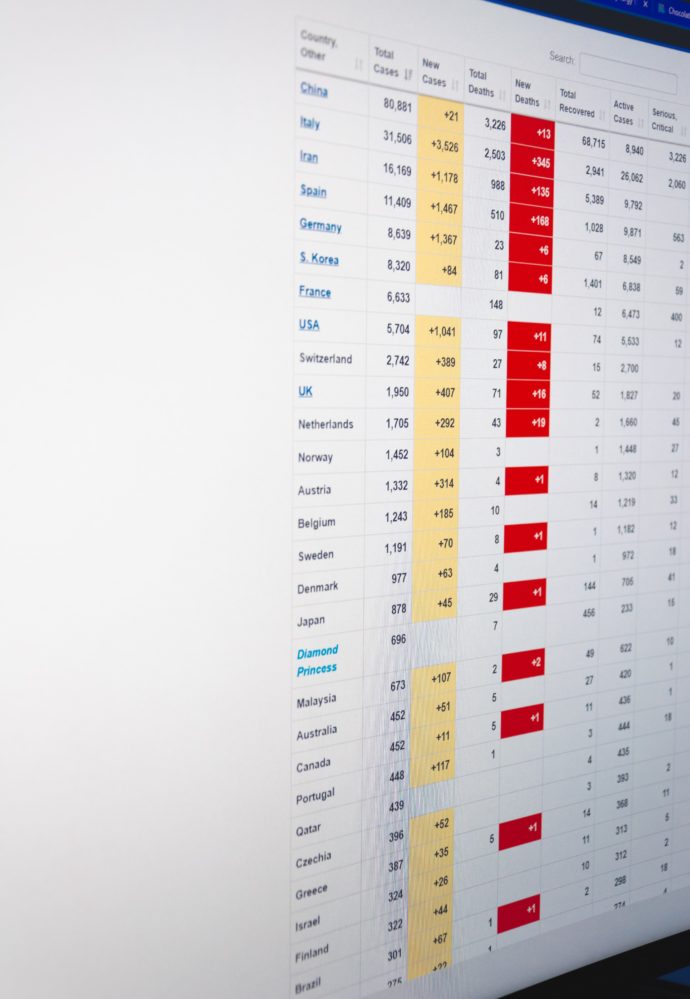
As tomorrow is the federal holiday celebrating the Fourth of July, the FEHBlog will report COVID-19 stats today. It’s not pretty. The stats are based on the CDC’s COVID-19 Cases in the U.S. website.

Week endingTotal CasesTotal Deaths

May 21

297,581

8,956
June 4148,2107,561
June 18161,2894,865
June 25199,2525,270
July 2304,4966,215

The first row was the high point in new cases and new deaths over the past six weeks. The new cases are back at the mid-May level but deaths are still below mid-May (but above mid-June). The FEHBlog firmly believes that this new surge in cases will be more manageable than the first surge because doctors know how to manage the disease and treatments are available.

Senator Chuck Grassley (R Iowa), who is Chairman of the Senate Finance Committee, has introduced his Updated Prescription Drug Pricing Reduction Act of 2020. It’s worth noting that the Senator’s Committee approved the 2019 version of this bill last summer by a 19-9 vote. Sen. Grassley then worked with Sen. Ron Wyden (D. Ore.) to make the bill more bipartisan in nature. However, the bill has no Democrat Senator co-sponsors because after all this is an election year. There may wind being action on this bill in the lame duck session following the November election.

The Society for Human Resource Management offers three checklists to help employers avoid LGBTQ discrimination in their benefit programs following the recent Supreme Court decision including sexual orientation and gender identity within the scope of prohibited sex discrimination. Check it out.

The Department of Health and Human Services has posted its current list of sub regulatory guidance. The website explains that

On October 9, 2019, the President issued Executive Order (EO) 13891 entitled Promoting the Rule of Law through Improved Agency Guidance Documents (84 FR 552350). The EO requires HHS to establish a single, searchable, indexed database that contains links to all of HHS’s guidance documents currently in effect. Guidance documents come in a variety of formats, including interpretive memoranda, policy statements, manuals, bulletins, advisories, and more. Please note, the contents of this database do not have the force and effect of law and are not meant to bind the public in any way. These documents are intended only to provide clarity to the public regarding existing requirements under the law or HHS policies.

The FEHBlog looks forward to reviewing OPM’s companion site.

Speaking of OPM, Federal News Radio reports

Existing health and retirement benefits are a significant incentive for employees to take or keep a job in the federal government, according to the latest survey results from the Office of Personnel Management.

About 70% of those who took OPM’s 2019 benefits survey said the ability to receive insurance through the Federal Employee Health Benefits Program influenced their decision to a “great or moderate” extent to take a job in government, while 80% said the program influenced their decision to keep their jobs.

Hey what’s not to like? Great benefits and if you have FEHBP coverage for the five years preceding your civil service retirement you carry FEHBP coverage into retirement with the full government contribution. Well deserved benefits.

Friday Stats and More

The CDC’s COVID-19 cases in the U.S. website, which the FEHBlog tracks, added age demographic information this week. The basic infection mortality rate stabilized then dropped slightly then stabilized again over the past two weeks. That has to be good news. The CDC’s weekly COVIDview supports the FEHBlog’s layman analysis.

MedPage Today offers an interesting story about the downswing of the illness from the perspective of New York City clinicians who have been on the front line.

The Centers for Medicare and Medicaid Services finalized today a subset of proposed Medicare Advantage and Part D changes that the agency proposed earlier this year. CMS is releasing the final rule in two installments so that Medicare Advantage and Part D plans are not overwhelmed. That’s considerate.

OPM released additional COVID-19 guidance for federal agencies today. The guidance concerns the Families First Coronavirus Response Act’s paid leave program for employees affected by COVID-19.

Thursday Miscellany

The House of Representatives passed COVID-19 relief bill no. 3.5 (H.R. 266) by a vote of 388-5 this afternoon. The bill restores funding for the Small Business Administration’s relief programs and provides $100 billion in funding for healthcare providers.

OPM issued a new COVID-19 letter to FEHBP carriers today. The FEHBlog was pleased to see that OPM is allowing FEHB high deductible plans with health savings accounts to cover telehealth before the “high deductible” as permitted by the CARES Act (COVID-19 relief bill no. 3).

OPM also announced today that “the Combined Federal Campaign (CFC) will conduct a nationwide special solicitation to support charities serving and affected by COVID-19. This special solicitation will run through June 30.” Good call. Here’s the link to the campaign.

Also over the past two days, OPM has issued FAQs on resuming normal workforce operations at federal facilities and the Families First Coronavirus Response Act’s (COVID-19 relief bill no. 2) paid sick leave program. Meanwhile the U.S. Department of Labor is up to nearly 90 FAQs on that program which also applies to private sector employers with under 500 employees.

Midweek update

Today, the FFCRA Paid COVID-19 Sick Leave Benefit took effect generally for private employers with under 500 employees. The Labor Department which enforces this law published temporary rules on mandated benefit. The informal guidance accompanying the rules explains that

Most employees of the federal government are covered by Title II of the Family and Medical Leave Act, which was not amended by this Act, and are therefore not covered by the expanded family and medical leave provisions of the FFCRA. However, federal employees covered by Title II of the Family and Medical Leave Act are covered by the paid sick leave provision.

Federal News Network discusses the complex impact of COVID-19 on the U.S. Postal Service. The article begins as follows:

With the Postal Service now tracking the deaths of its employees from the coronavirus pandemic, in addition to a growing list of those who have tested positive for the virus, the agency is doing everything it can to continue normal operations — even in the most extraordinary circumstances.

The USPS Board of Governors held a moment of silence Wednesday for postal employees who have died of complications from COVID-19, the illness caused by the current strain of the virus.

Those include Rakkhon Kim, a 50-year old letter carrier in New York City, who died of complications from the virus last week.

Terribly sad.

It’s worth linking to this Wall Street Journal article on nurses working on the COVID-19 front line in the Bronx, New York. The Boston Globe’s STAT discusses how the COVID-19 spreads and creates additional hot spots.

Healthcare Dive reports on a FAIR Health study of consumer use of telehealth and retail clinics relying on data gathered before the current COVID-19 emergency. “Consumer use of telehealth and retail clinics spiked from 2017 to 2018, while use of urgent care centers, ambulatory surgery centers and emergency rooms dropped as consumers increasingly turn to cheaper sites of care for low-acuity medical needs.”

As the article notes, telehealth use has become a necessity in the past month. HIMSS provides a patient guide on how to get the most out of telehealth visits. This may be useful for health plans to share with members.

CARES Act Update

The President and the entire Senate leadership have agreed on a third COVID-19 relief bill known as the CARES Act (H.R. 748). Senator Charles Grassley, the Senate Finance Committee Chair, has released a summary of the bill’s taxation and unemployment insurance provisions and summary of its health provisions. The key health provisions affecting federal employees benefits are the following:

Sec. 3701. Health Savings Accounts for Telehealth Services
This section would allow a high-deductible health plan (HDHP) with a health savings account (HSA) to cover telehealth services prior to a patient reaching the deductible, increasing access for patients who may have the COVID-19 virus and protecting other patients from potential exposure.

Sec. 3702. Over-the-Counter Medical Products without Prescription
This section would allow patients to use funds in HSAs and Flexible Spending Accounts for the purchase of over-the-counter medical products, including those needed in quarantine and social distancing, without a prescription from a physician.

The FEHBlog mistakenly stated on Sunday that that the House of Representatives would be back on Capitol Hill yesterday. In fact, as the Wall Street Journal explains, House members remain on recess this week. Should the Senate as anticipated pass the CARES Act today, the House leadership is expected to seek approval by a unanimous consent motion. A single member of Congress can block such a motion so a lot rides on entire House leadership support for the bill. According to the Wall Street Journal, House Speaker Nancy Pelosi wants the unanimous consent to clear the House. This motion could be brought to the House floor on tomorrow or Friday. The Journal further reports that the President is ready to sign the bill into law.

The FEHBlog has found a link to a COVID-19 statistics site, The COVID-19 Tracking Project, that displays aggregated lab results from COVID-19 testing, U.S. state by state, where available.

Thursday Thoughts

Fedweek reports that

The largest FEHB carrier, Blue Cross-Blue Shield, has loosened several policies, for those diagnosed with COVID-19, the respiratory condition caused by the COVID-19 virus including waiving:

prior authorization requirements for diagnostic tests and for covered services that are “medically necessary and consistent with CDC guidance”;

any copays or deductibles for diagnostic tests or treatment under that same standard;

early medication refill limits on 30-day prescription maintenance medications and cost sharing for prescriptions for up to a 14-day supply; and

copays for telehealth services related to COVID-19.

The FEHBlog was pleased to see that FEP is waiving telehealth cost sharing related to COVID-19. OPM’s carrier letter mentioned in yesterday’s post overlooked telehealth which is an important tool to mitigate the spread of COVID-19. If your plan offers a telehealth benefit, it is important to pre-register for that benefit before you need to use it. The FEHBlog found his plan’s pre-registration program to be quite efficient.

You will find that FEHBP plans prominently have links to their special COVID-19 coverage features on their websites.

The Wall Street Journal has put its helpful COVID-19 update website outside its general website paywall.

In other news,

  • The Centers for Medicare and Medicaid Services announced earlier this week “the Part D Senior Savings Model, a voluntary model that enables participating Part D enhanced plans to lower Medicare beneficiaries’ out-of-pocket costs for insulin to a maximum $35 copay per thirty-day supply throughout the benefit year. Beneficiaries who take insulin and enroll in a plan participating in the model should save an average of $446 in annual out-of-pocket costs for insulin, or over 66 percent, relative to their average cost-sharing for insulin today.” This program will launch next year. Time will tell whether the prescription benefit plan can extend this discount to FEHBP and other commercial health plans.
  • The National Cancer Institute released the Annual Report to the Nation on the Status of Cancer. The report presents good news
    • Overall cancer incidence rates are leveling off among males and increasing slightly among females.These trends reflect population changes in cancer risk factors, screening test use, diagnostic practices, and treatment advances. 
    • This year’s Special Section focused on progress toward select Healthy People 2020 objectives related to four common cancers (lung, colorectal, female breast, and prostate). The Healthy People 2020 target death rate (161.4 deaths per 100,000 persons) for all cancers combined was met overall and in most sociodemographic groups.
    • During 2007-2017, cancer death rates decreased 15% overall, and the percent improvement target (-10%) was met in many sociodemographic groups.
    • Many of the Healthy People 2020 objectives for death rates, cancer screening, and major risk factors related to lung, colorectal, female breast, and prostate cancer were met.
  • Becker’s Hospital Review provides an overview of seven key dates of the HHS interoperability rule released earlier this week.
  • Healthcare Dive discusses the five additional healthcare apps that CVS/caremark has added to its curated app “formulary” for the benefit of plan sponsors. “Livongo Health, Hinge Health, Hello Heart, Torchlight and Whil are now available for CVS’ PBM clients to use, in addition to Sleepio, a personalized digital sleep program and the first participating program when the service launched in 2019.”

Monday Musings

Today’s U.S. Supreme Court order list from its February 21 conference made no mention of the Texas v. U.S. cases (Nos. 19-840 and 19-841) concerning the Affordable Care Act’s constitutionality, one way or the other. This means that the Court will take up (or continue consideration of) the cases at a later conference. At this stage the Court is deciding whether to review the Fifth Circuit’s decision now or wait for further proceedings in the lower courts. The Court’s docket sheet states that the cases have been re-distributed for the February 28, 2020, conference.

The Federal Employees Dental and Vision Programs’ (“FEDVIP”) laws requires OPM to bid out all of the FEDVIP contracts every seven years. Currently OPM has contracted for 10 FEDVIP dental plans and four FEDVIP vision plans. Last week, OPM released its request for proposals for the next seven year FEDVIP contract cycle which begins on January 1, 2021. OPM states in the RFP document that it has capped the upper limit of dental plans at 12 and vision plans at 5. The deadline for submission of proposals is March 23, 2020. OPM expects to announce the successful contractors in May.

The Washington Post reports that the focal point of the national drug overdose crisis has shifted to the California and other western states. The drugs causing overdose deaths are principally two illicit drugs — fentanyl and methamphetamine.

In California, fatal drug overdoses over the previous 12 months increased 13.4 percent between July 2018 and July 2019, the last month for which the CDC has compiled provisional data — an additional 728 deaths.

Fentanyl delivers an immediate, powerful high but can also render the user unconscious and unbreathing almost instantly. * * * [San Francisco based harm reduction worker Kristen Marshall] noted that thousands of overdoses have been reversed by peers on the street who were supplied with naloxone as part of harm reduction efforts. For many years, San Francisco saw a growing population of drug users but had a strikingly low rate of fatal overdoses. But that was before fentanyl showed up.

In contrast, Illinois’ fatal drug deaths were down 8 percent, Pennsylvania’s down 10 percent, Michigan’s down 13 percent and Maine’s down 20 percent.

Thursday Miscellany

Fedweek noticed another tidbit in the agency’s FY 2021 budget that’s worth noting :

OPM is seeking authority from Congress to offer federal employees what it calls “voluntary benefits” such as short-term disability insurance, prepaid legal plans, emergency short-term childcare, and personal accident insurance.

The purchasing employee or annuitant would be responsible for paying 100% of the premiums for these coverages. What’s more the FEHBlog knows that prepaid legal plans cannot be offered on a pretax basis like FEDVIP can.

In other news,

  • Milliman posted an interesting infographic on various aspects of organ transplantation in the U.S. Average wait times are up and survival rates are down. That’s puzzling.
  • Healthcare Dive reports that “The [federal] Health Information Technology Advisory Committee on Wednesday unanimously approved its second annual report to Congress on the state of health IT landscape, recommending fixes to improve the electronic access, exchange and use of medical information.”
  • The Centers for Disease Control announced today that this year’s flu vaccine is having an efficacy rate of 45%.
  • Health Affairs offers an interesting study on the impact of administrative costs on U.S. healthcare spending.

Big Monday

The U.S. Office of Personnel Management (“OPM”) released its call letter for 2021 FEHBP benefit and rate proposals today. The carrier proposals are due on Sunday May 31, 2020. To prepare the proposals carriers also need OPM’s technical guidance, which is a separate Carrier letter, and to submit their proposals, carriers also must complete OPM’s extensive “ADC” information request. OPM expects a lot from its FEHBP carriers.

The President did transmit his FY 2021 budget proposal to Congress today. The Administration intends to propose to statutory change to the FEHBP government contribution formula (5 USC Sec. 8906):

to base it on a plan’s score from the FEHB Plan Performance Assessment would improve healthcare quality and affordability within the program. The enactment of the proposals in 2021 will not begin to impact program financials until 2023. [Page 1168]✦

This appears to be a retread from the last budget cycle. However, the FEHBlog does not recall reviewing the proposed legislative language for the 2019 proposal. This proposal assuming its the same one didn’t get very far then, and it’s unlikely to get further this year in the FEHBlog’s view. Federal News Network discusses other federal employee compensation found issues in the budget proposal.

Russ Roberts the host of the Econtalk podcast held a fascinating conversation with “physician and author Marty Makary of Johns Hopkins University talks about his book The Price We Pay.” The book concerns fixing our healthcare system. Dr. Makary made a lot of sense to the FEHBlog. He encourages readers to listen to this podcast or read the transcript.