Midweek Update

Midweek Update

From Capitol Hill, Fierce Healthcare tells us

The House unanimously passed the Improving Seniors’ Timely Access to Care Act on Wednesday via a voice vote. The legislation, which has new transparency requirements for MA plans, now heads to the Senate.

Lawmakers behind the legislation said in a joint statement the bill will “make it easier for seniors to get the care they need by cutting unnecessary red tape in the healthcare system,” said Reps. Suzan DelBene, D-Washington, Mike Kelly, R-Pennsylvania, Ami Bera, M.D., D-California, and Larry Bucshon, M.D., R-Indiana.

It’s worth noting that traditional Medicare has no prior authorization requirements. Beckers Payer Issues adds

Enrollees in Medicare Advantage were less likely to receive low-value care than those enrolled in traditional Medicare, a new study published in JAMA Open Network found

The study, published Sept. 9, found Medicare Advantage enrollees received 9.2 percent fewer low-value services than their counterparts using traditional Medicare. 

Low-value care is services that provide little clinical benefit or cause more harm than benefits for a patient. 

The study’s authors, lead by researchers from Humana and Boston-based Tufts University School of Medicine, compared enrollees in a large, national Medicare Advantage plan to a random sample of 5 percent of traditional Medicare beneficiaries. 

The study found among Medicare Advantage enrollees, those who had HMO plans were less likely to receive low-value care than those with PPO plans.

Read the full study here.

Hopefully, Congress will not throw out the baby with the bath water.

From the federal employee benefits front, FedWeek informs us

OPM has issued a reminder to agencies of their authority to verify that family members being covered under the FEHB actually are eligible, including the process to be used and the documentation required.

The notice calls attention to a revision of the FEHB handbook section on family member eligibility reflecting several instructions of recent years, including one telling agencies to tighten scrutiny of those covered and another laying out procedures for removing those deemed ineligible. That is a response to several inspector general reports warning that ineligible persons are being insured under the program, raising premium costs to the government and to other FEHB enrollees.

That directive, now part of the handbook, lists agency responsibilities to verify eligibility of family members during initial enrollment of newly hired employees and when family members are being added to an existing enrollment due to a “qualifying life event” such as marriage.

In the middle of the last decade, OPM added a standard contract provision to FEHB contract requiring carriers to share the cost of any family member eligibility audit that OPM undertakes. OPM has not yet exercised that provision.

It turns out that for the past two weeks federal employee benefits expert Reg Jones has been writing in Fedweek about federal employee retirement benefits. Today’s he discusses survivor benefits which includes a squib about perhaps the most unique and valuable survivor benefit — FEHB coverage for the survivor’s life with the full government contribution as explained here:

If your spouse receives a survivor annuity and was covered under either the Self Plus One or Self and Family option of your Federal Employees Health Benefits plan when you died, he or she and all eligible children can continue that coverage. If the annuity amount is less than the premiums required, your spouse will be able to make payments directly to OPM to cover the cost.

From the Omicron and siblings front, we have two thoughtful pieces from MedPage Today

In other virus news, the American Hospital Association reports

The recent paralytic polio case in an unvaccinated adult in Rockland County, N.Y. and wastewater samples from communities near the patient’s residence meet the World Health Organization’s criteria for circulating vaccine-derived poliovirus, the Centers for Disease Control and Prevention announced yesterday. Genetic sequences from the virus in the patient and wastewater specimens have been linked to wastewater samples in Jerusalem and London, indicating community transmission, CDC said.
 
Thirty other countries have circulating vaccine-derived poliovirus, which is not caused by the polio vaccine but occurs when local immunity to poliovirus is low enough to allow prolonged transmission of the original weakened virus in the oral polio vaccine. Oral polio vaccine has not been used or licensed in the U.S. since 2000 but continues to be used in some countries. N.Y. Governor Kathy Hochul last week declared a state of emergency to help expand vaccination efforts and surveillance. 
 
“Polio vaccination is the safest and best way to fight this debilitating disease and it is imperative that people in these communities who are unvaccinated get up to date on polio vaccination right away,” said Dr. José R. Romero, director of CDC’s National Center for Immunization and Respiratory Diseases. “We cannot emphasize enough that polio is a dangerous disease for which there is no cure.”

From the No Suprises Act front, Beckers Hospital CFO Report relates

The No Surprises Act, which prevents patients from receiving surprise bills from out-of-network providers at emergency rooms, could lead to an increase in emergency department visits, a new study from the Agency for Healthcare Research and Quality found

The study, published Sept. 12 in The American Journal of Medical Care, compared emergency department visits rates in 15 states that implemented bans on balance billing between 2007 and 2018 to rates in 16 states where these bills were not banned. 

The study’s authors found that state-level bans reduced spending per emergency room visit by 14 percent but increased emergency room visits by 3 percentage points. These visits were 9 percent less urgent than before the balance billing ban, according to an emergency department severity index. 

Based on the state-level analysis, the study’s authors, led by AHRQ researcher William Encinosa, PhD, conclude that the No Surprises Act, which took effect this year, could result in 3.5 million more emergency room visits annually. 

“Because individuals will no longer have the fear of a possible catastrophic surprise ED bill not covered by their insurer, they may be more inclined to go to the ED in marginal, less severe cases,” the authors wrote. 

Read the full study here.

In the FEHBlog’s opinion, the No Surprises Act is working well, and he does not foresee a surge in ER visits because going to the emergency room is no picnic.

In preventive services news, MedPage Today reports

The jury is still out on whether asymptomatic children and adolescents should be screened for diabetes, the U.S. Preventive Services Task Force (USPSTF) said.

In a new recommendation statement published in JAMA, the task force concluded that there is insufficient evidence to weigh the benefits and harms of screening for type 2 diabetes in this pediatric population, despite rising rates of disease.

“[T]here is inadequate evidence that screening and early intervention lead to improvements in health outcomes such as renal impairment, cardiovascular morbidity, mortality, and quality of life,” wrote Carol M. Mangione, MD, MSPH, of the University of California Los Angeles, and colleagues.

From the miscellany department —

  • The Department of Health and Human Services announced that today HHS “Secretary Xavier Becerra formally swore in Melanie Fontes Rainer as Director of the Office for Civil Rights (OCR). Director Fontes Rainer previously served as the Acting Director and was officially appointed to the role last month.  OCR is responsible for enforcing federal civil rights; conscience protections; the Health Insurance Portability and Accountability Act (HIPAA) Privacy, Security, and Breach Notification Rules; and the Patient Safety and Quality Improvement Act and Patient Safety Rule – which together protect individuals’ fundamental civil rights and medical privacy.”
  • The Justice Department announced “the establishment of three Strike Force teams created to enhance the Department’s existing efforts to combat and prevent COVID-19 related fraud. “These Strike Force teams will build on the Department’s historic enforcement efforts to deter, detect, and disrupt pandemic fraud wherever it occurs,” said Attorney General Merrick B. Garland. “Since the start of this pandemic, the Justice Department has seized over $1.2 billion in relief funds that criminals were attempting to steal, and charged over 1,500 defendants with crimes in federal districts across the country, but our work is far from over. The Department will continue to work relentlessly to combat pandemic fraud and hold accountable those who perpetrate it.” The Strike Force teams will operate out of U.S. Attorney’s Offices in the Southern District of Florida, the District of Maryland, and a joint effort between the Central and Eastern Districts of California.”

The good news is there’s a cure for hepatitis C. The bad news is how hard it is to bring that miracle cure to the people who need it. For years experts assumed the drug’s astronomical price was the biggest barrier. So in 2019, Louisiana and Washington state adopted the “Netflix model,” as in paying a lower price for abundant access to the drug. Just last week the White House jumped on board for a national version.

But STAT’s Nicholas Florko has found that neither state is near its goal. In Washington, the treatment rate for Medicaid patients is now lower than before the initiative began, even with a lower price. “The further you get out in the population … the more you start to hit this population that is harder — harder to identify, more costly to convert to treatment,” Rena Conti of Boston University told Nick. Read his investigation here.

  • The National Institute of Health’s HEAL Program offers ways to build opioid use disorder prevention into everyday life.
  • Govexec discusses OPM’s efforts to “highlight ways federal employees can contribute to the White House’s fight against hunger and to improve Americans’ health and nutrition, including through an event later this month.”

Thursday Miscellany

Photo by Josh Mills on Unsplash

From the omicron and siblings front, AHIP informs us

Today the Centers for Disease Control and Prevention’s Advisory Committee on Immunization Practices (ACIP) voted to recommend the use of the bivalent mRNA COVID-19 vaccines as a single-dose booster for all individuals ages 12 and older (Pfizer-BioNTech) and 18 and older (Moderna), at least two months following primary series or previous booster dose.  The ACIP recommendation for the bivalent boosters was approved by a vote of 13-1.

The Committee reviewed modeling data showing the vaccine has the potential to reduce hospitalizations and deaths, especially among high-risk groups.  The bivalent boosters are recommended for all those over age 12 who have completed a primary series, at least 2 months after the most recent dose. The modeling data indicates that the vaccine is safe and effective, and that booster strategies will be executed in an equitable manner.  Models also indicate that waiting until more trial data is available (in two to three months) could lead to preventable hospitalizations and deaths.

ACIP members expressed concern that many assumptions had been made with the modeling, and that the vaccine being recommended – which includes protections specific to the BA.4/BA.5 variants – has not been tested in humans.  Mouse models were used for data on this vaccine, in addition to extrapolations from human trials using the BA.1-specific vaccine. CDC pointed out that annual influenza vaccines are modified based on projected variants without direct clinical evidence. ACIP members also expressed concerns that the bivalent booster makes assumptions about future variants, which this booster may not protect against.

Earlier this week, the Food and Drug Administration (FDA) amended the Emergency Use Authorizations (EUAs) for both the Moderna COVID-19 vaccine and the Pfizer-BioNTech COVID-19 vaccine to authorize bivalent formulations of the vaccines for use as a single booster dose at least two months following primary or booster vaccination. The bivalent Moderna vaccine is authorized for use as a single booster dose in individuals 18 years of age and older and the Pfizer bivalent vaccine is authorized for use as a single booster dose in individuals 12 years of age and older.  FDA also released fact sheets on both the Pfizer-BioNTech vaccine and the Moderna vaccine.

With the authorization, FDA has revised the EUAs to remove the use of the monovalent versions of the vaccines for booster administration for the age groups now covered by the bivalent booster products. ACIP also rescinded its recommendations for the monovalent booster vaccines.

Bivalent boosters may be available as early as next week.

The FEHBlog finds it noteworthy that the new bivalent booster replaces the monovalent booster.

STAT News offers FAQs on the new boosters.

STAT News also discusses the Omicron outlook for this autumn.

In a way, some physicians have said, Covid is becoming more like the other respiratory pathogens that most of us shake off but that can occasionally cause severe illness and death among the oldest adults or people who are already sick. So many more people are dying from Covid than from those other viruses, however, because of the massive number of cases that are still occurring overall.

Another trend that has continued into 2022 has been the racial and ethnic disparities associated with Covid. The gaps between different demographic groups’ death rates have shrunk over time, but at the peak of this summer’s wave, for example, death rates by age group among Hispanic adults were notably higher than those among white adults, federal data indicate.

One of the silver linings of the pandemic is that, unlike with some viruses, SARS-2 did not pose a particularly serious threat to children. That’s not to minimize the hospitalizations and deaths — as well as incidents of long Covid and MIS-C — that the virus did cause in pediatric populations. But overall, kids have faced much lower risks of severe outcomes from Covid than adults.

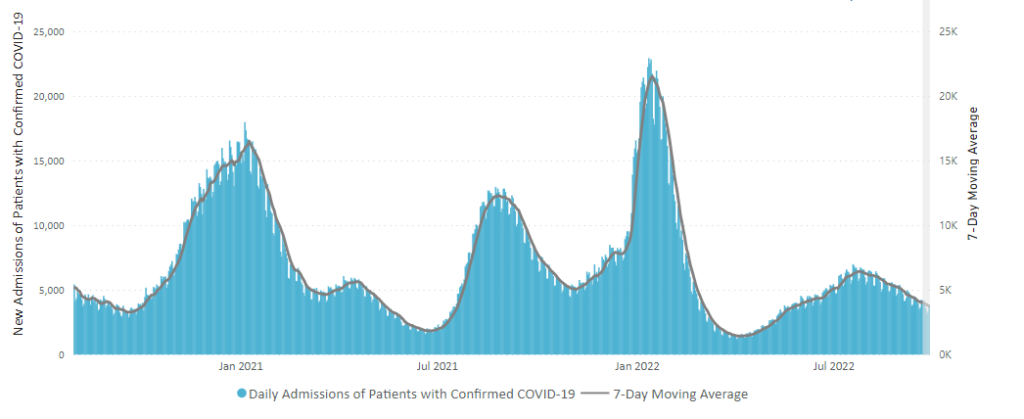
Still, something worrisome occurred this summer with kids and Covid, as hospitalizations reached their second highest peak of the entire pandemic, surpassing last summer’s Delta wave and only trailing the initial Omicron spike early this year.

The article’s experts encourage vaccinating children to stem this tide.

From the FEHB front, Govexec provides a handy just before and just after federal retirement checklist, and Fedweek helpfully delves into “What Counts and What Doesn’t for Keeping FEHB Coverage in Retirement,” which should be a key consideration for career feds.

From the public health front, the CDC reminds us September is Sepsis Awareness Month

Anyone can get an infection, and almost any infection, including COVID-19, can lead to sepsis. Sepsis is the body’s extreme response to an infection and is a life-threatening medical emergency.

September is Sepsis Awareness Month and CDC encourages patients and healthcare professionals to share Get Ahead of Sepsis resources, below, to learn how to protect themselves, their loved ones, and their patients from sepsis:

Patients and families:
* New this year is an updated patient and family brochure.
* Download and share any of CDC’s FREE patient education materials with your friends and loved ones to learn how to prevent infections, be alert to the signs and symptoms of sepsis, and act fast if sepsis is suspected.
* Share updated sepsis graphics on social media to educate friends and loved ones about sepsis.
* Are your children back to school? Talk to your child’s healthcare professional and school nurse about steps you can take to prevent infections that can lead to sepsis. Some steps include taking good care of chronic conditions and getting recommended vaccines.
Healthcare professionals:
New this year are two fact sheets for long-term care nurses and certified nurse assistants.
Download and share CDC’s FREE healthcare professional education materials with your colleagues to educate them about how to recognize signs and symptoms of worsening infection and sepsis, how to get ahead of sepsis, and what to do if they suspect sepsis.
Educate your patients and their families about:
o Preventing infections
o Keeping cuts clean and covered until healed
o Managing chronic conditions
o Recognizing early signs and symptoms of worsening infection and sepsis
o Seeking immediate care if signs and symptoms are present

This Sepsis Awareness Month, spread the word about sepsis—you can help save lives.

To learn more about sepsis and how to prevent infections, visit www.cdc.gov/sepsis or call 1-800-CDC-INFO.

From the miscellany department —

  • Medpage Today offers a special report about a ” New Behavioral Health Database Reveals Gaps in Care — Researchers behind it hope to provide the data needed to remedy the problem.”
  • STAT News reports “Drug treatment of veterans with opioid use disorder increased during the first year of the pandemic, according to a new study, suggesting that the rapid shift from in-person to telehealth visits at VA medical centers enabled patients to get access to care despite Covid-related disruptions.”
  • Fierce Healthcare tells us “Cigna’s Evernorth subsidiary is expanding its diabetes care value program to combine traditional pharmaceutical interventions with devices, tools and resources to help patients better understand and manage their diabetes.”
  • Healthcare Dive informs us that “To staunch the losses of rural hospital closures that endanger access to care for millions, federal regulators are hoping some facilities opt in to a new payment model, but providers say they want more flexibilities and clarity before making the pivot. * * * The new rule ‘maybe gets halfway there,’ Jennifer Findley, vice president of education and special projects at the Kansas Hospital Association, told Healthcare Dive. ‘It’s not as much as we were hoping for but it does give some more flexibility than what you have today.’”
  • Health Payer Intelligence reports “Chronic diseases are common among emergency department patients, particularly among seniors and those ages 45 to 64, according to a National Health Statistics Report. ‘Monitoring ED visits made by adults at highest risk of severe COVID-19-related illness is important for understanding the health burden of COVID-19 and for planning prevention strategies,’ the researchers explained. ‘Ongoing monitoring of the presence of these underlying chronic conditions at ED visits will continue to inform COVID-19 response efforts.’”
  • Also Health Payer Intelligence notes that “Three major social determinants of health factors are particularly predominant barriers to care for America’s seniors: economic instability, loneliness, and food insecurity, according to a study sponsored by Alignment Healthcare. Researchers from Toluna conducted an online survey from July 24 to August 13, 2022, which reached 2,600 seniors ages 65 and older. Most respondents identified as white. Half were in Medicare Advantage and this population was divided primarily between preferred provider organizations and health maintenance organizations.”

Midweek update

Photo by Manasvita S on Unsplash

From the Omicron and siblings front —

The New York Times reports

The Food and Drug Administration on Wednesday [August 31] authorized the first redesign of coronavirus vaccines since they were rolled out in late 2020, setting up millions of Americans to receive new booster doses targeting Omicron subvariants as soon as next week.

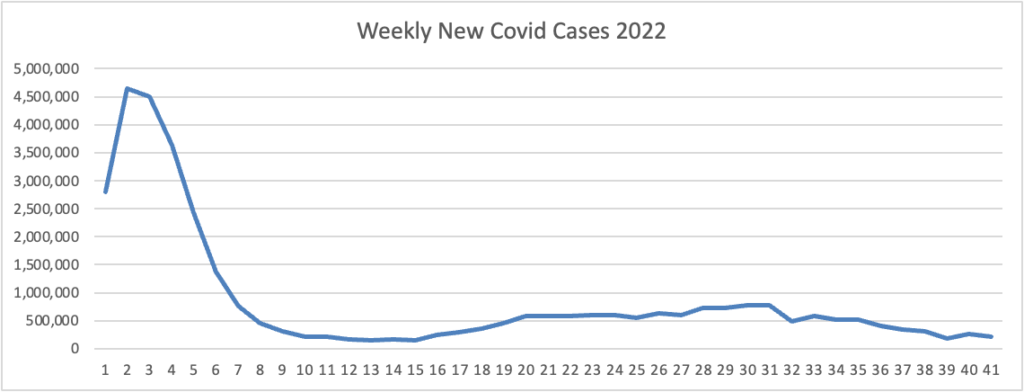
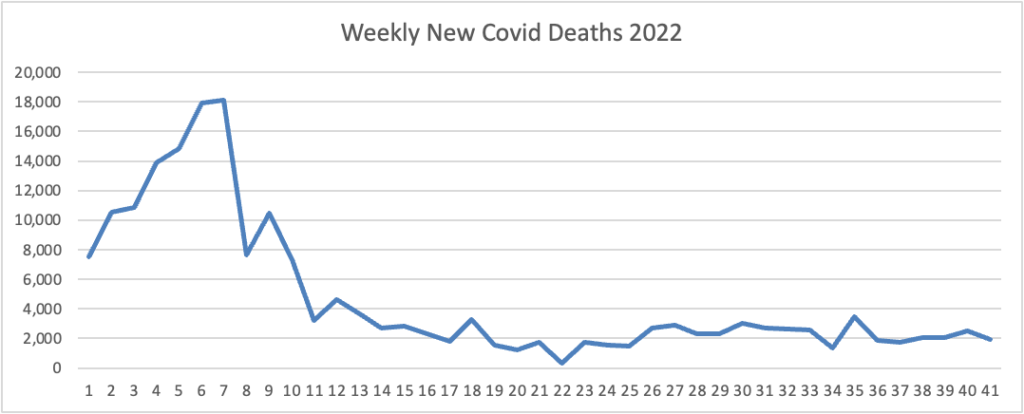
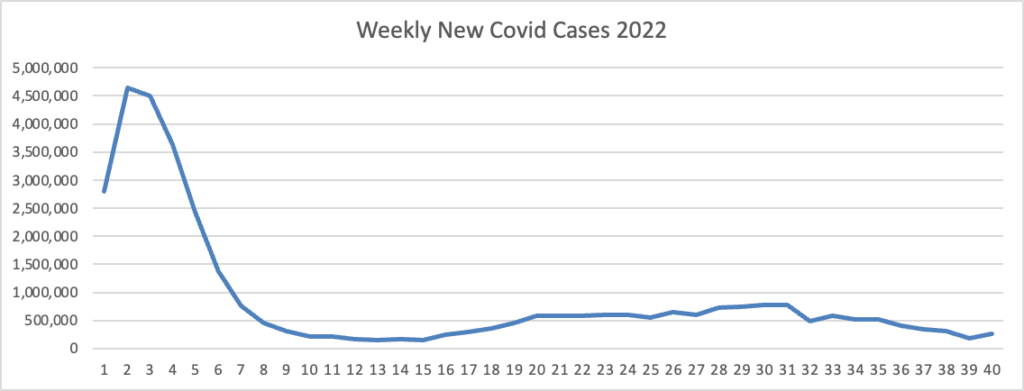
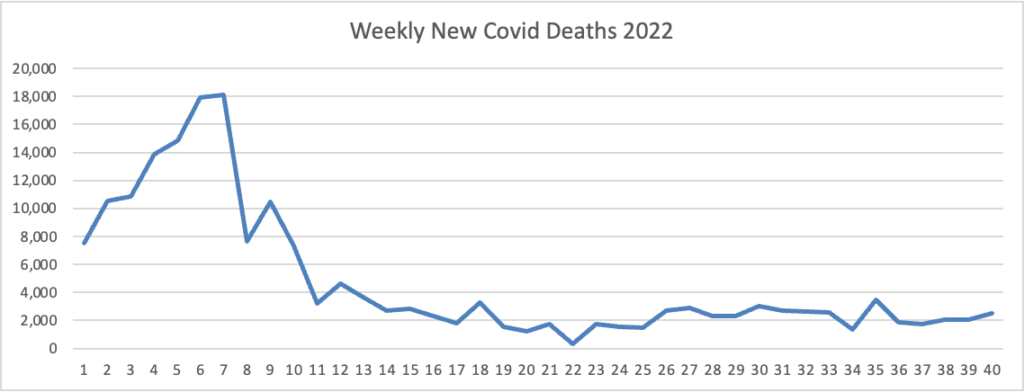
The new formulation arrives as roughly 90,000 infections and 475 deaths are still being recorded daily around the United States, more than two years into a pandemic that has killed more than a million Americans and driven a historic drop in life expectancy.

With winter approaching and the BA.5 variant of Omicron still circulating widely, federal officials hope the redesigned shots will help slow the pandemic’s seemingly relentless march. Yet many Americans appear to have become indifferent to the virus and its risks, making the task tougher than ever.

The new boosters are “bivalent,” meaning they contain a combination of the original formulation and one targeting BA.5, now the dominant version of the virus, as well as a sister subvariant of Omicron. One is made by Pfizer and its German partner BioNTech for use in people as young as 12, and the other by Moderna, for those 18 and older.

Here’s a link to the CDC’s 2021 U.S. life expectancy report which was released today.

Reuters adds

Advisers to the U.S. Centers for Disease Control and Prevention (CDC) will meet on Thursday [September 1] to vote on whether to recommend the use of two COVID-19 vaccine boosters tailored against the Omicron variant.

A recommendation in favor of the modified vaccines by Pfizer Inc and its German partner BioNTech SE , as well as Moderna Inc is expected to pave the way for a rollout next week.

Medpage Today offers background on tomorrow’s CDC Advisory Committee on Immunization Practices meeting.

ACIP will weigh in on newly authorized fall COVID boosters this week, in a manner unprecedented during the pandemic — without data from human clinical trials.

While most experts agree that there are no safety concerns, and many support the FDA’s attempt to keep up with viral variants, others have pointed out gray areas and open questions when it comes to Omicron-targeting bivalent vaccines.

That includes whether boosters with components targeting Omicron would offer a significant advantage in terms of efficacy — particularly, protection against infection — over boosting against the ancestral strain of the virus alone.

David Leonhardt, writing in his Morning column for the New York Times, provides his latest Covid poll which finds all Americans trending toward placing Covid in the rear view mirror.

A growing number of very liberal Americans have decided that it’s time to treat Covid as an unpleasant but manageable part of life, much as many other Americans — as well as people in other countries — decided months ago.

While the FEHBlog was pleased with the Times poll results, he thinks that Forbes hits the nail on the head with its opinion piece on how America can bring down its Covid death rate which took 383 lives yesterday.

Tragically, the vast majority of Covid-19 deaths are now preventable – if all Americans were up to date with vaccines, and if high-risk individuals got treated promptly after testing positive. If all that were to happen, Covid deaths in the U.S. would be nearly zero, as White House Covid-19 Response Team Coordinator Dr. Ashish Jha told the U.S. Chamber of Commerce Foundation recently.

What can the nation do to make that happen? Put simply, we must embrace the notion that Covid-19 deaths are largely preventable, not inevitable. Instead of trying to put those deaths out of mind, we should focus on what we can do to stop them.

Why are 400 Americans still dying each day? For starters, 15 million seniors have not received their first booster, and only 33% of Americans over 50 and 40% over 65 have received their second booster. In addition, over 20% of adults have not completed their primary vaccination series.

The health impacts of that inaction are sizable. The CDC estimates that among those 50 and older, the unvaccinated had a 29-fold increased risk of dying from Covid-19 and vaccinated people with only one booster had a 4-fold increased risk compared to those with two or more booster doses.

Meanwhile, access to the oral antiviral medication Paxlovid – which reduces the rates at which high-risk people get severe cases of Covid-19 or die from it – is the most limited in zip codes in which people were highly vulnerable to the virus. Moreover, access to and awareness of Evushield – which reduces the risk that immunocompromised people will develop symptomatic Covid-19 for up to six months – remains limited.

To keep Covid-19 and its impact in public consciousness, local health officials should publicly recognize when citizens in their communities lose their lives to the virus. For the same reason, local print and broadcast media should provide coverage of community memorials to those who have died. That should inspire citizens within communities to help each other fully access and use the tools available to all Americans, whether vaccines or treatments.

Local faith organizations, businesses, and other community leaders who have the trust of the population should redouble their efforts reminding individuals that their actions with respect to Covid-19 testing, vaccination, and treatment can make a tangible difference for their community.

Health care professionals should use every office visit, even if unrelated to Covid-19, to remind patients about the need to stay up to date with their vaccinations and have a plan to access treatment if they test positive and are eligible for treatment. The medical community’s attention to preventing and managing chronic conditions such as obesity and diabetes is now even more vital given their detrimental impact on Covid-19 outcomes.

Amen to that. Honestly, while the FEHBlog falls into the senior category, he has been delaying his second booster in order to receive the bivalent vaccine (or the Novovax booster which hasn’t been approved yet). The FEHBlog plans to make an appointment for the bivalent vaccine next week.

Finally, Healthcare Dive informs us

Americans may have to pay for their COVID-19 vaccinations as early as January as federal funding for vaccine purchase and distribution runs out and the shots shift to the commercial market, according to Dawn O’Connell, Assistant Secretary for Preparedness and Response at the HHS.

The announcement comes after the HHS hosted over 100 representatives from state and local governments, including various stakeholders, insurers and pharmaceutical companies in a planning meeting on Tuesday.

“While the federal government has been pleased to play this role, we have always known that we would not be in this business forever,” O’Connell said in a post on the ASPR site. “Unfortunately, the timeline to make the transition has accelerated over the past six months without additional funds from Congress to support this work.”

Read that as health plans may have to pay for their members’ Covid vaccinations next year. Conceding that the FEHBlog is not a Hyde amendment expert, he does not understand why the Senate leadership did not ram through more Covid funding in the massive budget reconciliation act.

Moving onto the country’s fentanyl crisis

CBS News tells us

The Drug Enforcement Administration issued an advisory Tuesday about an “emerging trend” of “brightly-colored” fentanyl pills being used to lure children and young people. What is often called “rainbow fentanyl” has been seized by law enforcement agencies in 18 states just this month, the DEA said.

The drugs, made to look like candy, comes in several forms, including “pills, powder and blocks that resembles sidewalk chalk,” the DEA said.

“Rainbow fentanyl — fentanyl pills and powder that come in a variety of bright colors, shapes, and sizes — is a deliberate effort by drug traffickers to drive addiction amongst kids and young adults,” DEA Administrator Anne Milgram said in a statement.

Regulatory Focus adds

The US Food and Drug Administration (FDA) said it plans to fight the current opioid crisis by going after online drug retailers and promoting the development of non-opioid alternatives.
 
On 30 August, the agency published its FDA Overdose Prevention Framework that largely aligns with the Department of Health and Human Service’s (HHS) 2021 Overdose Prevention Strategy. The framework echoes concepts in the HHS strategy, such as supporting primary prevention, encouraging harm reduction and advancing evidence-based treatments. FDA’s framework also includes the actions to protect the public from unapproved, diverted and counterfeit drugs with overdose risk.
 
In a blog post, FDA Commissioner Robert Califf said the agency needs new approaches to counter the rapid growth of illicit, chemically synthesized fentanyl, fentanyl analogs and methamphetamines on the market. Cracking down on such activities while securing the supply chain for approved opioids and other controlled substances is a top priority, he said.

In U.S. healthcare business news, Healthcare Dive reports

Walgreens Boots Alliance has completed its majority stake acquisition in at-home care technology platform CareCentrix, the retail pharmacy giant announced Wednesday.

The $330 million investment gives Walgreens a 55% ownership of CareCentrix. Walgreens has the option to acquire the remaining equity in the future.

The investment, first announced in October, expands Walgreen’s reach in the health sector, especially in the areas of primary care, specialty pharmacy, post-acute and home care, the company said in a Wednesday release.

STAT News observes

Employers, who provide health coverage to roughly half the U.S. population, are acutely aware of where health care’s current cost trajectory is headed. In a recent survey of executives at 300 of the country’s largest employers, nearly 90% said they believe the cost of providing health benefits will become unsustainable within five to 10 years.

Yet instead of finding new ways to manage costs and help sustain this critical lifeline for America’s workers, many health systems continue to increase the prices they charge commercial insurers. And they can because, in many cases, newly consolidated health systems are the only game in town.

Employers and private insurers pay, on average, 224% of what Medicare would have paid for the same service at the same facility, despite new data showing that hospitals require payments that represent just 127% of Medicare to cover their expenses.

In federal employee compensation news, Federal News Network reports

President Joe Biden has formally announced his plans to give civilian federal employees a pay raise next year, starting on Jan. 1, 2023.

Most civilian employees under the General Schedule, as anticipated, will receive an average 4.6% federal pay raise in 2023, according to the alternative pay plan Biden submitted to congressional leaders Wednesday afternoon.

The president is specifically recommending a 4.1% across-the-board pay raise for federal employees in 2023, with an additional 0.5% average locality pay adjustment — resulting in a 4.6% average pay increase.

Biden said his alternative pay plan would help federal pay stay competitive with what workers with critical skills could earn in the private sector.

Tuesday Tidbits

Photo by Patrick Fore on Unsplash

Roll Call reports from Capitol Hill

More than 3.5 million veterans who were exposed to toxic substances on overseas deployments will gain easier access to health and disability benefits under a bill that cleared the Senate Tuesday.

President Joe Biden is certain to sign the bill into law in the coming days.

The bill would make servicemembers who contracted any of 23 conditions — from brain cancer to hypertension — after being deployed to Iraq, Afghanistan and other combat zones automatically eligible for VA benefits. The measure is expected to cost nearly $280 billion over a decade, according to the Congressional Budget Office.

This law should save the FEHB Program money as the federal workforce has a large cadre of veterans who use veterans’ healthcare. VA facilities charge the FEHB and private sector plans for non-service connected health care. This law confirms that toxic substances treatment to service-connected care for which the VA is liable.

Govexec adds

The [VA] bill [also] authorizes leases for 31 new medical facilities at VA to help accommodate the expected surge in patients, which is expected to cost nearly $1 billion. The Congressional Budget Office found the slew of pay and other human resources changes would come with a $5.7 billion price tag over the next decade.

The bill will authorize the department to buy out the contract of health care professionals to recruit them to VA, so long as they make a four-year commitment to the department. VA will have $40 million per year for the buyouts. VA’s health care employees will be eligible for pay boosts worth 50% of their base salaries, up from the current cap of 30%. Overall pay would be capped at level two of the Executive Service pay scale, which is currently $203,000 per year. McDonough has called lifting the pay caps essential for VA’s recruiting and retention efforts and has aggressively pushed Congress to pass the reform.

With regard to the Schumer-Manchin reconciliation bill, the Hill reports that Senators Manchin and Simema are exchanging text on the bill.

From the Omicron and siblings front,

McKinsey and Company offer their assessment of when the Covid pandemic will end.

In this update, we discuss the outlook, the current and potential future use of boosters and therapeutics, and the shifts in response strategies to the COVID-19 crisis around the world. We also introduce the McKinsey COVID-19 Immunity Index—a tool for understanding a community’s current level of risk from the disease.

A group of physicians provides their observations in MedPage Today on how best to investigate the Paxolovid rebound issue.

The debate about “COVID-19 rebound” after nirmatrelvir/ritonavir (Paxlovid) treatment is one of these timely areas warranting further investigation. Continuing down the current path of uncertainty has consequences for how and by whom this antiviral should be used. However, by applying lessons learned from the early days of the pandemic — including acknowledging the importance of randomized controlled trials (RCTs) — we can avoid repeating the same mistakes. To do this, it is necessary to start by defining the question, identifying current knowledge gaps, and only then can one propose scientific solutions to bring a rapid resolution to the COVID-19 rebound controversy.

Paxlovid consists of two drugs: nirmatrelvir, which inhibits a SARS-CoV-2 protease inhibiting viral replication, and ritonavir, which slows the inactivation and breakdown of nirmatrelvir. Per a CDC health advisory released in May, COVID-19 rebound is defined as a return of symptoms or a “new positive viral test after having tested negative” occurring “2 to 8 days after initial recovery.” We just saw this over the weekend in the case of President Biden.

This definition of rebound is challenging and prone to inflating the incidence of rebound. It is possible some individuals identified as having “Paxlovid rebound” may have been experiencing a waxing and waning of COVID-19 symptoms while some unknown number of other reported rebound cases could be due to the known limitations of COVID-19 testing.

Precision Vaccinations tells us that in the near future the federal government will make the Omicron antibody based treatment known as Evusheld available through local pharmacies including “Albertsons, Acme, Jewel-Osco, Pavilions, Randalls, Safeway, Star Market, Vons, CPESN, Amber Specialty Pharmacy, Managed Healthcare Associates, and Thrifty White.”

Hugh Montgomery, Professor of Intensive Care Medicine at University College London, UK, and TACKLE principal investigator, commented in a press release, “Despite the success of vaccines, many individuals such as older adults, individuals with co-morbidities, and those who are immunocompromised, remain at risk for poor outcomes from severe COVID-19.”

“Additional options are needed to prevent disease progression and reduce the burden on healthcare systems, especially with the continued emergence of new variants.”

“The TACKLE (study) results show that one intramuscular dose of Evusheld can prevent these individuals from progressing to severe COVID-19, with earlier treatment leading to even better results.”

From the moneypox front, Fierce Healthcare reports

The White House has named Robert Fenton to serve as the response coordinator for the monkeypox outbreak, as calls for a larger federal role intensify. 

Fenton previously helped to coordinate COVID-19 vaccine distribution while working at the Federal Emergency Management Agency. He will work alongside Demetre Daskalakis, M.D., who will be the deputy coordinator. 

The coordinators will lead the administration’s efforts on “strategy and operations to combat the current monkeypox outbreak, including equitably increasing the availability of tests, vaccinations and treatments.” 

From the Affordable Care Act front, the International Foundation of Employee Benefit Plans informs us

The Internal Revenue Service (IRS) has issued Revenue Procedure 2022-34 providing the indexing adjustment for the required contribution percentage. For plan years beginning in 2023, the required contribution percentage is 9.12%, down from 9.61% in 2022. 

The affordability calculation can determine whether an individual can afford employer-sponsored health coverage and affect whether the individual would be eligible for a premium tax credit on the health insurance exchanges. This could affect employers that do not use a safe harbor method to determine whether the coverage they offer is affordable to employees.

For plan years beginning in 2023, employer-provided coverage is considered affordable for an employee if the employee required contribution is no more than 9.12% of that employee’s household income. Because applicable large employers generally do not know their employees’ household incomes, there are three safe harbor methods for calculating affordability.

In the FEHB Program, OPM must assure itself that the lowest premium nationwide FEHB plan premium for the self only option does not cost more than 9.12% of the lowest paygrade federal employee eligible to participate in FEHBP.

From the FEHB front, Fedweek columnist Reg Jones wraps up his series of federal employee and annuitant survivor benefits.

From the Medicare front, Healthcare Dive reports on provider reaction to yesterday’s final CMS rule on Medicare Part A payments to inpatient hospitals beginning October 1, 2022.

Providers remained largely unhappy early this week despite a final ruling issued by the CMS on Monday that increases inpatient payments to hospitals by more than was initially proposed.

Organizations like The American Hospital Association said it was “pleased” by the payment update, a 4.3% bump up from the proposed 3.2%, but added it “still falls short of what hospitals and health systems need to continue to overcome the many challenges that threaten their ability to care for patients and provide essential services for their communities.”

Group purchasing organization Premier agreed, saying the payment update “falls woefully short” of what is needed for health systems. “Coupled with record high inflation, this inadequate payment bump will only exacerbate the intense financial pressure on American hospitals,” SVP of Government Affairs Soumi Saha said in a statement.

Beckers Hospital review offers six takeaways from the final rule.

From the U.S. healthcare business front

Healthcare Dive reports

High operating expenses took their toll on hospitals and physician groups in June, producing negative year-over-year margins for a sixth consecutive month, a new report from Kaufman Hall found. Month-to-month increases in patient volumes were not enough to offset the growing cost of care, the advisory firm said Monday.

Compared with May, operating margins improved, contract labor costs fell as demand slowed, and expenses cooled slightly in the latest month. But the industry has yet to turn the corner on an “enormously difficult year,” the report said.

“Although hospitals are seeing improved volumes and reduced expenses month-over-month, they will likely end up with historically low margins for the remainder of the year,” Kaufman Hall predicted.

and

Louisiana-based Ochsner Health has officially merged with Rush Health Systems, giving the merged system seven hospitals and more than 30 clinics in the east Mississippi and west Alabama region, according to a Monday release.

New names and branding are being rolled out at regional hospitals under the new brand, Ochsner Rush Health, the release said. Ochsner Rush Health will have 250 staff and contracted physicians and 95 advanced practice providers.

Ochsner Rush Health is also boosting its minimum wage to $12 an hour, impacting more than 400 employees and representing a $1.5 million investment, according to the release.

From the public health front,

  • Healio offers a bleak outlook for chronic disease in the US over the next forty years “likely stressing an already burdened health care system.”
  • The Center for Disease Control points to its revamped diabetes website “for people with diabetes or who are at risk for diabetes, and their families and friends.”

From the judicial front,

STAT News tells us

In a significant victory for AbbVie, a U.S. appeals court panel declined to revive a lawsuit that accused the company of using a so-called patent thicket to forestall competition for its Humira medication, a franchise product that generates billions of dollars in sales each year.

The opinion shot down arguments by unions, insurers, and the city of Baltimore, which alleged that AbbVie “abused the patent system” and “erected significant barriers to entry to block biosimilar competition” by filing dozens of patents for the drug. Some of the 132 U.S. patents that the company holds on its medicine extend to 2034, although the basic patent expired in 2016.

The case has been closely tracked over concerns that the use of numerous patents — some of which may offer only marginal improvements or changes to a medicine — are exploited by pharmaceutical companies to protect monopolies at the expense of consumers. This has prompted the Food and Drug Administration and Patent and Trademark Office to jointly examine the issue.

Congress can change the patent system applicable to prescription drugs.

The American Hospital Association reports

The Department of Justice today filed a lawsuit challenging an Idaho law restricting abortion. The complaint seeks a declaratory judgment that the law conflicts with and is preempted by the Emergency Medical Treatment and Labor Act in situations where an abortion is necessary stabilizing treatment for an emergency medical condition. It also seeks an order permanently enjoining the law to the extent it conflicts with EMTALA, which requires hospitals that receive federal Medicare funds to provide necessary stabilizing treatment to patients who arrive at their emergency departments while experiencing a medical emergency.

The FEHBlog hopes that the federal court hearing the case seeks a decision from the Idaho Supreme Court on the scope of Idaho’s abortion law before proceeding with the case. The FEHBlog finds it hard to believe that any U.S. court would interpret its state’s abortion law as overriding obligations created by EMTALA and for that matter the Hippocratic Oath.

Thursday Miscellany

Photo by Josh Mills on Unsplash

From Capitol Hill, the Wall Street Journal reports that the Senate majority’s leadership is rallying the caucus to pass the Schumer – Manchin compromise reconciliation bill that would address climate and healthcare concerns while raising taxes. The goal is for the Senate to pass the bill next week which immediately precedes the Senate’s August recess.

The Hill adds that

A day after Sen. Joe Manchin (D-W.Va.) stunned Washington by endorsing hundreds of billions of dollars for President Biden’s domestic agenda, House Democrats are rallying behind the nascent package as a crucial — if incomplete — strategy for tackling the climate crisis and easing working class economic strains.

Both articles discuss the flies remain in the reconciliation ointment.

Govexec informs us

The odds that Congress would increase the average 4.6% pay raise planned for federal employees in 2023 got a little longer Thursday, after Senate appropriators revealed that they would effectively endorse President Biden’s pay increase proposal.” The Senate Appropriations Committee on Thursday revealed all of their initial versions of fiscal 2023 spending bills, including the package governing financial services and general government, which is the vehicle by which Congress weighs in on federal employee compensation. That bill makes no mention of changes to career federal employees’ pay, effectively endorsing the pay raise plan offered by Biden in his fiscal 2023 budget proposal.

Here is a link to the Senate Appropriations Committee’s press release unveiling those bills. What caught the FEHBlog’s eye is the statement in the press release that the Senate appropriations bills, like the House appropriations bills, do not include the Hyde amendments limiting federal funding of abortions to cases of rape, incest, or endangerment of the mother’s life. That tectonic change would draw the FEHBP into the post-Dobbs controversy.

From the Affordable Care Act front, Prof. Katie Keith does her usual outstanding job breaking down the proposed ACA Section 1557 individual non-discrimination rule in Health Affairs Forefront. In the FEHBlog’s view, the rule is unnecessarily complicated. It is the FEHBlog’s understanding that this HHS rule would not apply to FEHBP and that HHS would refer Section 1557 complaints involving FEHB plans to OPM. As the preamble points out, Section 1557 is a law that doesn’t need an implementing rule. Nevertheless, HHS recommends that other agencies with programs covered by Section 1557 adopt their own implementing rule using the HHS rule as a template.

The ACA regulators issued a 13-page long ACA FAQ 54 describing in detail the ACA rule requirements under which health plans must cover contraceptive drugs and services for women without cost sharing.

On a related note, Healthcare Dive tells us

Melanie Fontes Rainer is now acting director of HHS’ Office of Civil Rights. Fontes Rainer will replace Lisa Pino, who oversaw rulemaking related to patient safety, reproductive rights and other healthcare issues and issued policy regarding health equity, long COVID and firearm injury and death prevention, the agency said in an emailed statement.

From the federal employee benefits front, Fedweek explains the circumstances under which survivors of federal employees (as opposed to federal annuitants) are eligible for federal survivor benefits.

If you are an employee who was married when you die and you had at least 18 months of creditable civilian service, your spouse will be entitled to a survivor annuity.  * * * f you were enrolled in either the self plus one or self and family options of the Federal Employees Health Benefits program when you died, the person(s) on your enrollment could continue that coverage. If you weren’t enrolled in the program (or were enrolled but in the self only option), any otherwise eligible survivors would be out of luck.

From the Omicron and siblings front, the American Medical Association offers a helpful Q&A on Covid boosters.

From the monkeypox front, Reuters makes two reports

  • The United States has the capacity to conduct 60,000-80,000 tests for monkeypox virus per week, Health and Human Services Secretary Xavier Becerra said on Thursday. When the monkeypox outbreak began, the U.S. was able to conduct only 6,000 tests per week, Becerra told reporters during a telephone briefing.
  • The U.S. Centers for Disease Control and Prevention (CDC) said on Wednesday it plans to make the rapidly spreading monkeypox disease a nationally notifiable condition. The designation, which is set to take effect on Aug. 1, updates criteria for reporting of data on cases by states to the agency and would allow the agency to monitor and respond to monkeypox even after the current outbreak recedes, the CDC said.

From the U.S. healthcare business front —

The American Hospital Association issued a report attacking the commercial health insurance industry, which in the FEHBlog’s view is akin to strangling the golden goose.

Healthcare Dive reports

Teladoc beat Wall Street expectations for revenue in the second quarter, with a topline of $592 million, up 18% year over year. Chronic care membership came in higher than analysts expected, while member utilization improved year over year.

But “all eyes” are on the vendor’s guidance for the rest of the year, which implies a third-quarter miss and a steep ramp-up for earnings in the fourth quarter, SVB Securities analyst Stephanie Davis wrote in a note on the results.

STAT News chimes in

Telehealth giant Teladoc is bracing for disappointing earnings this year as it faces headwinds that could also thwart competitors struggling to turn a profit — including increasingly frugal employers delaying or dropping contracts for virtual care.

“The challenge that we’re seeing is in these times of economic uncertainty, all purchases are just getting a significantly higher level of scrutiny,” CEO Jason Gorevic said in an earnings call Wednesday.

Gorevic also noted that declining yield on advertising suggests that individual patients may start spending less on direct-to-consumer services like BetterHelp, the company’s mental health care offering. Those hurdles aren’t unique to Teladoc. Competitors like Amwell and Talkspace could also have to grapple with cutbacks.

Healthcare Dive also delves into Amazon’s planned acquisition of One Medical. “The deal fast-tracks Amazon’s ambitions in healthcare, while giving One Medical a cushion in today’s tricky economic environment.”

Yesterday, the FEHB wrote about the hospitals receiving five stars from Medicare. Today Becker’s Hospital Review lists the 192 hospitals receiving a single start from that program.

Finally STAT News lists the 41 best books and podcasts on health and science to check out this Summer.

Thursday Miscellany

Photo by Josh Mills on Unsplash

From the Omicron and siblings’ front —

MedPage Today reports “Second COVID booster shot boosted antibodies in Seniors — but small Israeli study did not determine how quickly response will wane.”

Becker’s Hospital Reviews tells us

At least 18 cases of the newest omicron subvariant BA.2.75 have been confirmed in seven U.S. states as of July 20, early disease surveillance data shows. 

Globally, researchers have identified 201 cases in more than a dozen countries as of July 12, according to data from outbreak.info, a platform that tracks data on coronavirus variants and is supported by the CDC and other national research groups. 

The subvariant has a large number of mutations that may make it more adept than BA.5 — the nation’s current dominant strain — at spreading quickly and evading immune protection. Experts say it’s still unclear whether BA.2.75 will compete against BA.5 or cause more severe illness, according to CNN.

This leads us to the Wall Street Journal’s editorial board comments

The President’s [Omicron] infection [disclosed today] demonstrates how hard it is to avoid the new and highly transmissible Covid variants. The White House has gone to great lengths to protect Mr. Biden, but there’s only so much staff can do if the President is going to do his job. 

Despite continuing pleas from the White House and public-health elite, vaccination by now provides little protection against transmission. * * * The evidence is that the vaccines do reduce the chances of getting serious Covid and being hospitalized, though many elderly patients who have been vaccinated are still dying from the virus.

While this quote is an opinion, not a news report, it struck a chord with the FEHBlog. The FEHBlog wishes the President a speedy recovery.

From the unusual viruses front, the Department of Health and Human Services offers a fact sheet on its response to the monkeypox outbreak.

In mergers and acquisitions news, Healthcare Dive informs us

Amazon has agreed to acquire primary care network One Medical for $18 a share, valuing the company at $3.9 billion.

The all-cash deal for San Francisco-based One Medical comes after months of speculation about a potential acquisition, reportedly drawing interest from companies including CVS Health, according to Bloomberg.

Analysts said a potential buyout for One Medical, which has grown rapidly since it was founded in 2007, could come at a significant premium. Amazon’s price of $18 a share represents a premium of 43% over its closing price of $10.18 a share on Wednesday.

STAT News explains why Amazon pursued adding One Medical to its healthcare portfolio.

With One Medical, Amazon is also tapping deeper into the vein of health care’s payment system. One Medical gets paid through two main avenues: commercial health insurers and Medicare. The Medicare side came from Iora, which One Medical bought for $1.4 billion last year.

Commercially insured patients, or those who get coverage through their jobs, are by far the most profitable within health care and overlap with a large chunk of Amazon’s subscription base. Even though One Medical focuses on less expensive primary care, there’s evidence One Medical charges some of the highest rates for those routine office visits and services, and that’s largely assisted by One Medical’s hospital partners.

Hospitals pay fixed sums to One Medical to care for patients, but they also “extend their health insurance contracts” to One Medical, the company said when it went public in 2020. The result: Hospitals that ink deals with One Medical get the most profitable patients in their market referred to them for more intensive services, and One Medical gets to piggyback off the lucrative payments that those dominant hospitals wring out of insurers.

STAT News concludes

Amazon’s success — and how disruptive it might prove to be to telehealth competitors — will depend in part on how well it integrates One Medical into its existing in-person and virtual offerings through Amazon Care. Analysts said that will become clear over the next year.

Whether it does draw patients away from traditional health care providers depends on their partnership with payers and their fees, said Aaron Neinstein, vice president of digital health for UCSF Health. “There’s no question that the One Medical annual fee is out of reach for most people in the U.S. Might Amazon change that or bundle it with Prime? Who knows.”F

Health Leaders Media reports that, notwithstanding the Federal Trade Commission’s nascent efforts,

Hospital and health system mergers and acquisitions in Q2 of 2022 have returned to trendlines that Kaufman Hall has been following since the beginning of the pandemic, the consulting firm said in its recently released M&A quarterly report.

During the second quarter of 2022, there were 13 hospital and health system M&A transactions, on-trend and only one transaction less than the 14 transactions reached in Q2 of 2021 and 2020. However, the total transacted revenue in the second quarter reached a “historic high” of $19.2 billion, more than doubling the $8.5 billion transacted revenue in the same quarter in 2021.

From the reports department and via Axios, the FEHBlog ran across this comprehensive McKinsey and Company report on the future of U.S. healthcare: what’s next for the industry post-Covid. Check it out.

From the Rx coverage front, DrugChannels calls our attention to this Amgen preview of 2022 trends in the biosimilars market. Adam Fein observes

As I predicted two years ago, the biosimilar boom is finally here. Prices are dropping while adoption accelerates. Prices are now declining by 9% to 22% annually. For therapeutic areas with biosimilars launched in the last three years, biosimilars’ market share averages 74%.  See Amgen slides 8 and 9.

Before the boom began, Dr. Scott Gottlieb, a former FDA commissioner, argued that we shouldn’t give up on biosimilars and prematurely regulate prices. As we can now see, Dr. Gottlieb was right. #NoTowel

From the SDOH front, Health Payer Intelligence explains

Race and ethnicity data collection is complex, but there are steps that health insurers—and the healthcare industry at large—can take to improve the process, according to a report from Urban Institute funded by Elevance Health (formerly Anthem).

From the miscellany department

  • Fierce Healthcare discusses a recent Fitch report on non-profit hospitals.

Labor, supply and capital cost increases have been rampant across the industry this year thanks to broader inflation pressures and other pandemic factors, the ratings agency wrote.

Reversing the margin trends will likely require nonprofit hospitals to take on a combination of rate hikes in the short term, “relentless” cost-cutting and productivity initiatives for the medium term and “transformational changes to the business model” for the long term, Fitch wrote.

Fortunately for those hospitals, many organizations already have the means to weather the storm as they overhaul their operations.

“The vast majority of our rated credits have strong balance sheets that will offset lower margins for a period of time and allow for operational improvements,” Fitch wrote. “Without more substantial changes to the current business model, or with additional coronavirus surges this fall or winter, this balance sheet cushion could eventually erode.”

Rate negotiations with payers will likely be an upward battle, the group wrote.

  • Healthcare Forefront points out the value of underutilized fentanyl test strips

Fentanyl test strips (FTS) are a simple, inexpensive, and evidence-based method of averting drug overdose. FTS are small strips of paper that can detect the presence of fentanyl in any drug batch—pills, powder, or injectables. This tool might be lifesaving for the teenager experimenting for the first time, the individual in the throes of a severe opioid use disorder, the concert-goer looking for a trip, the person using a preferred substance obtained from a new source, or the individual years into recovery. FTS also support the dignity and well-being of people who use drugs (PWUD), enabling them to make educated decisions about their safety.

And yet after years of press and discussions of the strips’ utility, FTS aren’t as widely available as one would expect them to be. It is time to take a more critical look at the importance of destigmatizing this tool and increasing its distribution and availability, while highlighting the grave risks in not doing so.

  • HealthDay gives us some good news.

U.S. hospitals became much safer places for patients over the past decade, with medical errors and adverse events declining significantly across the nation, federal government data show.

Between 2010 and 2019, patient safety dramatically improved among the four types of conditions for which people are most often hospitalized: heart attacks, heart failure, pneumonia and major surgical procedures.

“There has been a precipitous, very important drop in the number of these events, which to me validates the idea that these were preventable,” said senior researcher Dr. Harlan Krumholz, director of the Yale New Haven Hospital Center for Outcomes Research and Education in New Haven, Conn. “The status quo wasn’t written in stone. We have been able to actually make hospitals safer for those conditions.”

The new study relied on data gathered by the Medicare Patient Safety Monitoring Program, an effort created in the wake of a landmark 1999 Institute of Medicine report that drew national attention to patient safety in hospitals, the study authors said in background notes.

  • Fedweek reviews the steps that federal employees should take to position themselves for retirement.

Thursday Miscellany

Photo by Josh Mills on Unsplash

From Capitol Hill, Roll Call reports

West Virginia Democrat Joe Manchin III is yet again upending his party’s priority economic package, jettisoning climate measures and tax increases he previously favored and leaving only provisions focused on lowering health care costs.

Manchin communicated the decision to his negotiating partner, Senate Majority Leader Charles E. Schumer, on Thursday, according to two Democratic sources familiar with the situation.

The move came one day after Manchin expressed heightened anxiety about inflation, after the June consumer price index data released that morning showed inflation climbed 9.1 percent on an annualized basis over the previous year.

and

The House on Thursday passed, 329-101, its version of the fiscal 2023 National Defense Authorization Act, which would authorize $840.2 billion in national defense spending, after sifting through hundreds of amendments and hours of debate.

The sprawling Pentagon policy bill, which has been enacted into law every year for the past 61 years, would authorize funds for the Defense Department and national security programs within the Department of Energy. * * *

In the coming months, the Senate will take up its own version of the annual defense policy bill.

This must-pass bill typically includes significant federal procurement changes that can impact FEHB contracts.

From the Omicron and siblings front, MedPage Today offers an expert opinion on whether to get a second Covid booster or wait until the fall for potentially improved Covid shots?

For those still deciding, the CDC’s booster calculator provides guidance for anyone unsure about their eligibility. Generally speaking, for people age 60 and older, a first booster is recommended for those who received primary immunization more than 5 months previously, and a second booster is recommended for those who received their first booster more than 4 months ago.

James Grisolia, MD, a San Diego neurologist, described it as a physician’s dilemma. “While we were between surges, I would have given similar advice (to wait before getting the second booster) but as of several weeks ago, it was obvious we were going into another surge. I began encouraging older folks to get their second booster.”

From the FEHB front —

  • Fedweek discusses the differences in levels of FEHB coverage.
  • Benefits consultant Tammy Flanagan wraps up her three-part series on one federal employee’s journey into retirement with an article on FEHB issues.

From the telehealth front, Healthcare Dive offers an interview with Teladoc’s chief medical officer, Vidya Raman-Tangella.

From the mental healthcare front, here is a link to SAMHSA’s 988 nationwide suicide/mental healthcare crisis hotline which becomes available on Saturday, July 16.

From the reports department

  • CVS Health released its Health Care Insights 2022 report.
  • The Kaiser Family Foundation issued a report on the cost of delivering a baby in the U.S. “This analysis examines the health costs associated with pregnancy, childbirth, and post-partum care using a subset of claims from the IBM MarketScan Encounter Database from 2018 through 2020 for enrollees in large employer private health plans. It finds that health costs associated with pregnancy, childbirth, and post-partum care average a total of $18,865 and the average out-of-pocket payments total $2,854.”

From the U.S. healthcare business front, MedPage Today identifies the largest physician groups in our country.

Thursday Miscellany

Photo by Josh Mills on Unsplash

From the Capitol Hill front, STAT News provides more information on the Senate Democrats’ drug pricing proposal

The text released Wednesday is similar to a sweeping package that passed the House last year — it would allow Medicare to negotiate prices with drugmakers, it would protect seniors from especially exorbitant drug costs, and it would discourage drugmakers from raising their prices dramatically.

There are some notable changes that will affect when patients see savings, how the drug development pipeline works, how certain patients will pay for insulin, and how the new prices would affect safety-net programs and Medicaid.

The Washington Examiner emphasizes The proposal * * * lacks language included in the lower chamber’s bill that would cap insulin prices for people with diabetes at $35 a month.”

The STAT News article adds

Senate Democrats are taking a gamble and removing all of the provisions that would have lowered patients’ insulin prices out of the bill, to allow a separate, bipartisan effort led by Sens. Jeanne Shaheen (D-N.H.) and Susan Collins (R-Maine) to advance.

Now, the HHS secretary would still be allowed to negotiate insulin prices, but only within the parameters and limits of the regular process. Shaheen and Collins’ bill relies on drugmakers voluntarily lowering their prices in exchange for banning rebates for the products.

The brand drug lobby PhRMA blasted the out-of-pocket cost changes, claiming that “Democrats weakened protections for patient costs included in previous versions, while doubling down on sweeping government price-setting policies.”

From the Omicron and siblings’ front

STAT News reports

Six months after regulators issued an emergency use authorization for Paxlovid, physicians say they still have significant questions about prescribing guidelines for the leading treatment for high-risk Covid patients.

STAT spoke with providers who said they and their colleagues aren’t on the same page about when to prescribe Paxlovid or the criteria that separates those who need it from those who do not. They also said it is unclear whether they can give a second course when patients test positive again after taking Paxlovid, a phenomenon known as a rebound. And nearly all the experts who spoke with STAT said that they are clamoring for more data on rebounds, which is complicating and sometimes changing their calculus about when to give the drug.

“There is a real dearth of evidence right now out there, and obviously there’s a lot of confusion,” said Jonathan Li, a physician at Brigham and Women’s Hospital and virology researcher at Harvard Medical School who is also a member of the Covid-19 Treatment Guidelines Panel. “And even amongst people who are immersed in the literature, and who are infectious disease experts, you’ll see actually a fairly wide range in opinions.” * * *

“Pretty much everybody meets the EUA criteria. They made it very, very, very broad,” said David Smith, a professor, physician, and virology researcher at the University of California, San Diego. In a single week in May, over 160,000 Paxlovid prescriptions were filled.

Physicians generally agree that certain high-risk patients — including people who are unvaccinated or those over 65 with multiple comorbidities — should always be prescribed the drug. But the broader eligibility makes it difficult for some physicians to decide who should or should not receive Paxlovid. A child is not likely to need it, but what about a healthy 50-year-old man? A 65-year-old woman? The experts STAT spoke with didn’t agree.

MedPage Today informs us

According to Lawrence Kleinman, MD, MPH, of the department of pediatrics at Rutgers Robert Wood Johnson Medical School in New Jersey, we need to take our time in defining long COVID, whether it’s with a checklist, an algorithm, or an entry for the medical dictionary.

“If we defined it a certain way and we missed something in that initial definition, then there will be silence on that until someone comes around and does a postmortem on our analysis,” Kleinman, who is also the lead researcher in the Rutgers pediatric hub of the NIH’s nationwide RECOVER study, told MedPage Today. “We want to avoid that to the extent that’s possible.”

He said more research and data collection are needed before the work of defining long COVID is possible in a clinically meaningful way. At the moment, he noted, there isn’t even clear criteria for where to start.

For example, should researchers focus on setting a specific number of days a person experiences fatigue after an acute COVID infection? If so, what should those ranges look like — fatigue after 30 days? As he pointed out, there are not enough data to develop the foundational elements needed for researchers to piece together a practical definition just yet.

Nothing is simple.

From the Medicare front, the American Hospital Association reports

The Centers for Medicare & Medicaid Services today released its calendar year 2023 proposed rule for the physician fee schedule. The rule proposes to cut the conversion factor to $33.08 in CY 2023, as compared to $34.61 in CY 2022, which reflects the following: the expiration of the 3% statutory payment increase; a 0.00% conversion factor update; and a budget-neutrality adjustment. In addition, CMS proposes to delay for one year (until Jan. 1, 2024) the implementation of its policy to define the substantive portion of a split (or shared) visit based on the amount of time spent by the billing practitioner. Under this policy, if a non-physician practitioner performed at least half of an E/M visit and billed for it, Medicare would only pay 85% of the PFS rate.

CMS proposes numerous policy changes to the Medicare Shared Savings Program. For example, it would modify the manner in which accountable care organizations’ benchmarks are calculated to help sustain long-term participation and reduce costs. It also would provide increased flexibility for certain smaller ACOs to share in savings. The rule also proposes updates to MSSP quality-measurement policies, including a new health equity adjustment that would award bonus points to ACOs serving higher proportions of underserved or dually-eligible beneficiaries.

For the Quality Payment Program, CMS proposes five new, optional Merit-based Incentive Payment System Value Pathways that would be available beginning in 2023. These MVPs align the reporting requirements of the four MIPS performance categories around specific clinical specialties, medical conditions or episodes of care. CMS also proposes refinements to the MIPS subgroup reporting process, an increase to the quality data completeness threshold, and changes to the requirements and scoring of the Promoting Interoperability category. The proposed rule also includes requests for input on policy ideas for advancing health equity and transitioning to digital quality measurement.

Comments are due Sept. 7. 

CMS adds

For a fact sheet on the CY 2023 Physician Fee Schedule proposed rule, please visit:https://www.cms.gov/newsroom/fact-sheets/calendar-year-cy-2023-medicare-physician-fee-schedule-proposed-rule

For a fact sheet on the CY 2023 Quality Payment Program proposed changes, please visit (clicking link downloads zip file): https://qpp-cm-prod-content.s3.amazonaws.com/uploads/1972/2023%20Quality%20Payment%20Program%20Proposed%20Rule%20Resources.zip

For a fact sheet on the proposed Medicare Shared Savings Program changes, please visit: https://www.cms.gov/newsroom/fact-sheets/calendar-year-cy-2023-medicare-physician-fee-schedule-proposed-rule-medicare-shared-savings-program

For a CMS blog on the proposed behavioral health changes, please visit: https://www.cms.gov/blog/strengthening-behavioral-health-care-people-medicare

To view the CY 2023 Physician Fee Schedule and Quality Payment Program proposed rule, please visit: https://www.federalregister.gov/public-inspection/2022-14562/medicare-and-medicaid-programs-calendar-year-2023-payment-policies-under-the-physician-fee-schedule  

From the nicotine front, STAT News tells us

The FDA suddenly reversed course this week on its efforts to ban Juul e-cigarette sales, an embarrassing about-face that calls into question the reasoning behind the agency’s initial decision, experts said.

Tuesday evening, the Food and Drug Administration announced it was giving Juul’s application for its vaping products a second look because of “scientific issues … that warrant additional review.” The move came less than two weeks after the FDA made international headlines for ordering all of the vaping giant’s products off the market, prompting praise from lawmakers and advocates alike.

The FDA previously said that Juul “did not provide [sufficient] evidence and instead left us with significant questions,” which prevented the agency from granting its application. But now, it seems, the FDA is acknowledging there is additional information in Juul’s application that regulators didn’t adequately consider.

Ruh-roh.

From the women’s healthcare front —

Employee Benefit News reports

Fertility benefits and family-building programs have become table stakes for employers looking to support their workforce, but an increasing number of providers and employees are working to offer care during the next stage of reproductive health: menopause. 

Nine out of 10 working women said menopause affects their work performance, according to a survey by AARP, which estimates that companies lose $150 billion a year in lost productivity as a result. Yet, 99% of women in the U.S. don’t have access to an employer-sponsored menopause care benefit. 

“This is an area that nobody has really focused on, and there isn’t much out there available for employees,” says Maya Bodinger, vice president of business development at P.volve. “The menopause transition can be anywhere from four years to 12. This is not just a year or two like how we traditionally think about reproductive health.” 

MedPage reports

Cesarean deliveries have increased in the U.S. over the last few years, driven by a rise in patients who underwent first-time C-sections, according to a CDC report.

While the rate of primary C-sections fluctuated from 2016 to 2019, it increased from 2019 to 2021 among women in all age groups, reported Michelle Osterman, MHS, of the CDC’s National Center for Health Statistics.

The primary cesarean rate reached 22.4% in 2021, Osterman wrote in Vital Statistics Rapid Release.

The repeat cesarean rate, however, which captures patients who have multiple procedures, steadily decreased by around 1% each year from 2016 to 2021 (87.6% to 85.9%), Osterman noted. Repeat cesarean delivery rates decreased specifically for women ages 25 to 39, those who identified as white or Hispanic, and those with full- or late-term pregnancies.

The increase in overall C-sections likely would have been higher if not for the decrease in repeat procedures, she said.

“Because 7 to 9 out of 10 pregnant folks with a prior cesarean will have a repeat cesarean, we can anticipate an overall climb in the overall cesarean delivery rate for the years ahead,” Kjersti Aagaard, MD, PhD, an ob/gyn at Baylor College of Medicine and Texas Children’s Hospital in Houston, told MedPage Today.

Finally, the FEHBlog notes that benefits consultant Tammy Flanagan has released the second part of her three-part story on a typical federal employee’s experience with the federal government’s retirement process. The report appears in Govexec.

Midweek Update

From Capitol Hill, Fierce Healthcare reports

Senate Democrats have narrowly reached a deal on legislation to give Medicare the power to negotiate for lower drug prices.

The Senate released text Wednesday (PDF) on the deal that also repeals the controversial Part D rebate rule and installs a cap on monthly cost-sharing payments for Part D and Medicare Advantage plans. 

The legislative text shows that starting in 2026, the Department of Health and Human Services will choose 10 drugs eligible for negotiation. The next year, the number of eligible drugs will increase to 15, and in 2029 and every year after by 20. 

The sole-source drugs subject to negotiation will be chosen based in part on their total spending under Medicare Parts B and D. There is an exception for small biotech drugs from 2026 through 2028 such as vaccines and excludes certain orphan drugs as well.

Roll Call adds “Congress is fast approaching its scheduled August recess, followed by peak campaign season, so Democratic lawmakers only have a few more weeks in session to push their legislative priorities before they could lose control of either chamber in November.”

From the Omicron and siblings front, the American Hospital Association tells us

The Food and Drug Administration today authorized state-licensed pharmacists to prescribe Paxlovid (nirmatrelvir and ritonavir) to patients as a treatment for those at high risk of severe COVID-19. Because Paxlovid must be taken within five days of symptom onset, the change could spur expanded access and more-timely treatment of eligible patients. The change was made through an amended emergency use authorization. 

This standing order approach should accelerate the continuing rollout of test to treat locations.

Regrettably the Wall Street Journal adds

Governments, drugmakers and vaccination sites are discarding tens of millions of unused Covid-19 vaccine doses amid sagging demand, a sharp reversal from the early days of the mass-vaccination campaign, when doses were scarce. * * *

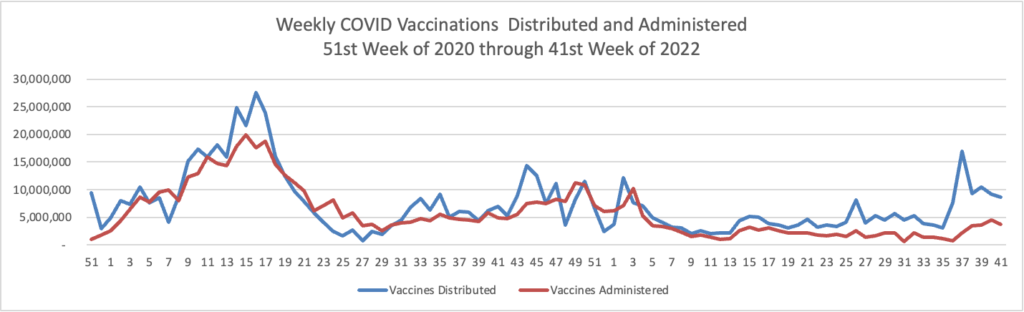
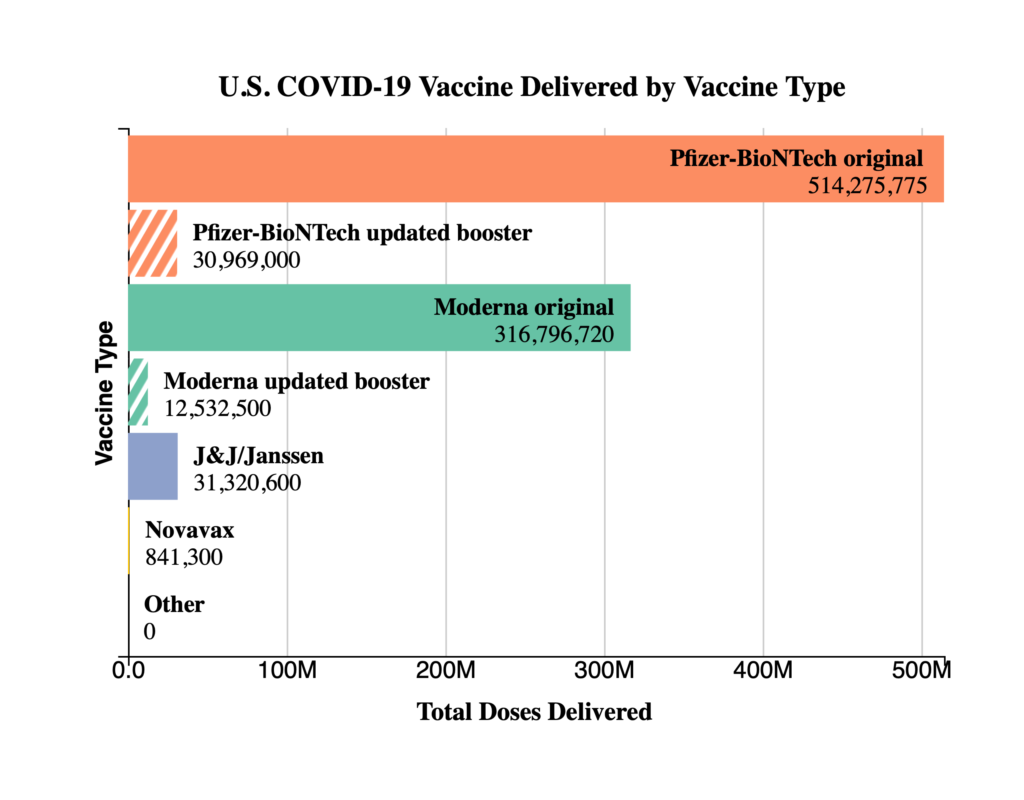
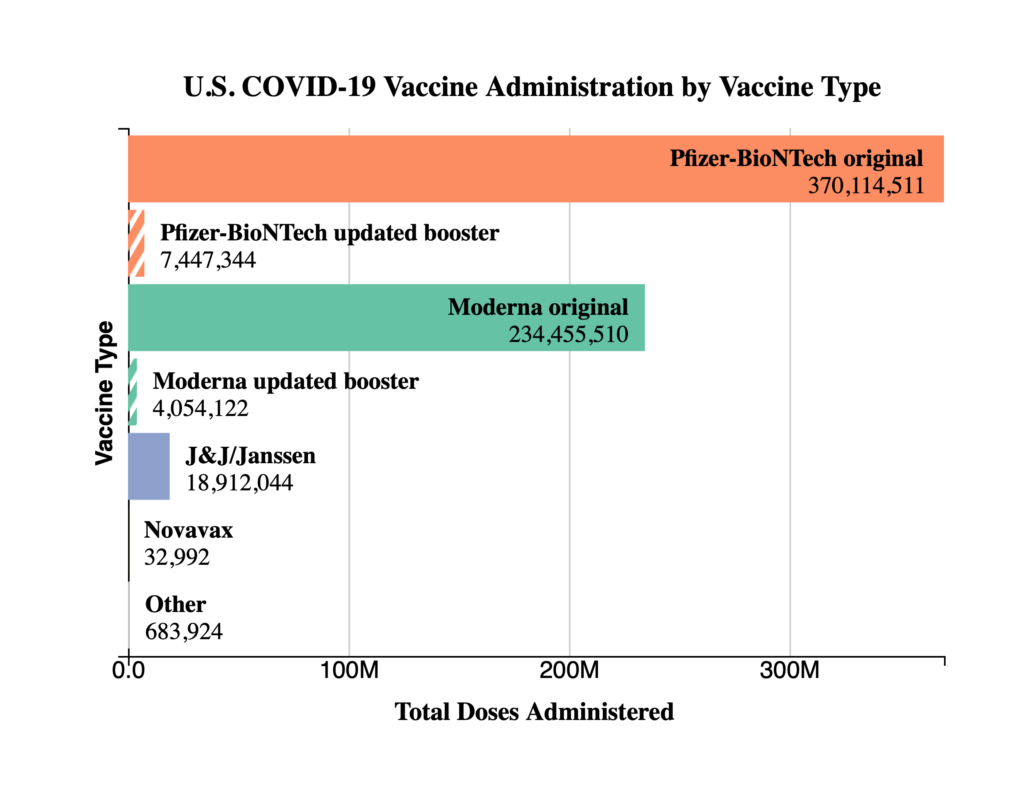
In the U.S., about 90.6 million Covid-19 doses have been wasted, or 11.9% of the more than 762 million Covid-19 vaccine doses delivered since the shots became available in late 2020, according to the Centers for Disease Control and Prevention.

The wastage rate has accelerated recently: Some 12 million of the discarded doses have been thrown out since late May.

The disposals come during a significant drop in demand for Covid-19 vaccines, even with young children recently becoming eligible. The seven-day moving average of doses administered daily in the U.S. was about 155,000 as of June 21, down from about 1.1 million on Jan. 1 and the peak of about 3.5 million daily in April 2021.

Partly driving the wastage, health experts said, is the way the Covid-19 vaccines are packaged in multiuse vials containing from five to 20 doses. Once opened, the vials generally must be used within about 12 hours of opening or the remaining doses discarded.

From the telehealth front

Healthcare Dive reports

COVID-19 made its way back into the top five telehealth diagnoses nationally on Fair Health’s monthly tracker in April for the first time since January, according to the report out Wednesday.

Every U.S. census region except the South saw COVID-19 return to the top five diagnoses list, and the uptick is in line with rising cases reported in April by the Centers for Disease Control and Prevention.

Telehealth use overall also rose nationally and in every region after two months of decline, the report found.

Fierce Healthcare informs us

Teladoc is further building out its primary care offering, Primary360, with new services that enhance care coordination and grow in-home options.

Primary360 will now provide care coordination support and health plan in-network referrals alongside free same-day medication delivery from Capsule and in-home, on-demand phlebotomy services backed by Scarlet Health, according to an announcement Wednesday from Teladoc.

The new care coordination capabilities will allow Primary360’s care team to take a “holistic” view of the patient’s coverage and make streamlined referrals to Teladoc services they can access. The care team can also then ensure a patient is referred to an in-network provider when in-person services are necessary.

mHealth Intelligence reports “The burgeoning mental health epidemic in America is widespread across age groups, but the youth have faced a particularly challenging time amid the COVID-19 pandemic. As the youth mental health crisis reaches new heights, providers are increasingly turning to telehealth to help expand access to behavioral healthcare.”

In the same spirit, Health Data Management discusses best practices for hospitals interested in providing acute care at home services.

From the U.S healthcare front, Beckers Hospital Review calls our attention to the fact that “Money, formerly Money Magazine, and Leapfrog Group collaborated for their first shared ranking of “best hospitals” to help consumers make decisions about which healthcare institutions are best for their money. The inaugural list was released July 6 and can be found in full here.” Check it out.

From the fraud, waste and abuse front, Healthcare Dive reports

The federal government won or negotiated more than $5 billion in healthcare fraud judgments and settlements in its 2021 fiscal year, the largest amount ever in the history of the HHS and Department of Justice’s fraud and abuse enforcement program.

Due to those and other efforts from previous years, the government clawed back almost $1.9 billion, according to a new report from the departments.

Of that $1.9 billion, about $1.2 billion went to the Medicare trust funds, which are on increasingly precarious financial footing due to growing stress on the insurance program. In addition, roughly $99 million in federal Medicaid money was transferred back to the CMS.

 Finally, Govexec brings us up to date on projections for 2023 annual raises for federal employees.

President Biden and House appropriators seem thus far to be in agreement that federal employees should receive an average 4.6% pay raise next year, but there are still several steps officials must take before it can be implemented at the end of the year. * * *

On Capitol Hill, there are still a few opportunities for federal employee groups and some lawmakers to try to increase the raise to the average 5.1% figure they have been advocating for.

Friday Stats and More

Happy National Postal Workers Day!

Using the CDC’s Covid Data Tracker and Thursday as the first day of the week, here are the FEHBlog’s weekly charts of new Covid cases and deaths from the 27th week of 2021 through the 26th week of 2022:

The CDC did not produce its weekly review of Covid statistics today as it’s the beginning of the July 4th holiday weekend. The CDC’s daily averages of new cases, new deaths and new hospitalization for the past week has been 109,944 cases, 316 deaths and 4,947 hospitalizations.

Beckers Hospital Review informs us

Temporary loss of smell emerged as a common indicator of COVID-19 early in the pandemic. Research into the cause and treatment of the condition, known as anosmia, is ongoing, though recent studies have brought us one step closer to answers. 

Two latest findings on COVID-19-related anosmia:

1. Loss of smell and taste is becoming less common as the virus evolves, according to researchers.

2. Smell and taste hasn’t fully returned for many people who contracted COVID-19 early in the pandemic, research shows. 

In retrospect, the FEHBlog is pleased that he continued theses charts from the last six months of 2021 into the first half of 2022 because doing so captured the three important surges. Now the FEHBlog has to decide what to do next Friday as the charts present a years worth of data.

Here is the FEHBlog’s weekly chart of Covid vaccinations distributed and administered from the beginning of the Covid vaccination era (the 51st week of 2020) through this week, the 26th week of 2022.

It’s worth adding that the CDC is currenly providing weekly, not daily, vaccination stats. The CDC is now offering on a colorful, adjustable chart on “Primary Series Completion, Booster Dose Eligibility, and Booster Dose Receipt by Age, United States.

Medscape adds

COVID-19 vaccines protected against severe disease and death in people with overweight or obesity, a large English study found.

Compared with the unvaccinated, vaccinated individuals in each BMI group experienced significantly lower likelihood of COVID-related hospitalization starting at 2 weeks from their second dose, reported Carmen Piernas, PhD, of the University of Oxford, and colleagues:

* Underweight: OR 0.51 (95% CI 0.41-0.63)

* Normal weight: OR 0.34 (95% CI 0.32-0.36)

* Overweight: OR 0.32 (95% CI 0.30-0.34)

* Obesity: OR 0.32 (95% CI 0.30-0.34)

In other vaccine news, Medscape reports

A new study provides more evidence that influenza vaccination may help protect older adults against Alzheimer’s disease (AD).

In a large propensity-matched cohort of older adults, those who had received at least one influenza inoculation were 40% less likely than unvaccinated peers to develop AD over the course of 4 years.

“Influenza infection can cause serious health complications, particularly in adults 65 and older. Our study’s findings ― that vaccination against the flu virus may also reduce the risk of Alzheimer’s dementia for at least a few years ― adds to the already compelling reasons get the flu vaccine annually,” Avram Bukhbinder, MD, with McGovern Medical School at the UTHealth, Houston, Texas, told Medscape Medical News.

Sign me up.

Also from the public health front, Medscape tells us

About 80% of US adults have low to moderate cardiovascular (CV) health based on the American Heart Association (AHA) checklist for optimal heart health, which now includes healthy sleep as an essential component for heart health. With the addition of sleep, “Life’s Essential 8” replaces the AHA’s “Life’s Simple 7” checklist. * * *

The AHA Presidential Advisory — Life’s Essential 8: Updating and Enhancing the American Heart Association’s Construct on Cardiovascular Health — was published online June 29 in the journal Circulation.

companion paper published simultaneously in Circulation reports the first study using Life’s Essential 8.

Overall, the results show that CV health of the US population is “suboptimal, and we see important differences across age and sociodemographic groups,” [Dr. Donald] Lloyd-Jones [chair of the department of preventive medicine at Northwestern University’s Feinberg School of Medicine in Chicago] said.

Medpage offers a detailed Q&A on monkeypox. Among them

Could monkeypox be spread easily from person to person, similar to COVID-19? 

“Monkeypox is certainly not COVID-19,” stressed [Capt. Agam] Rao [, MD, a medical officer at the U.S. Public Health Service at the National Center for Emerging and Zoonotic Infectious Diseases (NCEZID)]. Based on prior outbreaks and the current outbreak, monkeypox appears to spread through “direct close contact. So, intimate contact that might happen during sex, but also any other close contact that might occur — for example, if you live with someone who has monkeypox and you are sleeping on the same bedding and using the same towels.”

“It really is not something that you will just pass on to someone walking down the street,” she said.

While agency researchers are “keeping an open mind” about the possibility that the virus could be more easily transmitted, “at this time, there’s no indication that it would spread the way that COVID spread and spread to as many people, [and] at this time, the risk for the worldwide population … is low,” she added.

From the prior authorization front, Healthcare Dive reports

Aetna is no longer requiring prior authorization for cataract surgeries, a controversial policy the payer adopted a year ago, according to a new provider notice.

Aetna is also rolling back prior authorization requirements for video EEGs and home infusion for some drugs. It’s adding two new-to-market drugs to the precertification list.

The payer said in a statement that it came to its decision after analyzing real-time data from the year the requirement was in place. “Going forward, we will focus on retrospective reviews of procedures and providers where questions of medical necessity exist,” Aetna said.

From the Rx coverage front, Fierce Pharma offers an article on how payers are planning to avoid cost shocks associated with gene therapy.

Kelley Miller, senior director of managed markets for the specialty pharmacy Optum Frontier Therapies, said there are three major considerations for his team during coverage talks. One is the clinical landscape, while another is the “human” element of what the patients and their families are going through. Thirdly, the team looks at the “economic impact” of the treatment.

Once Miller’s team has that information, the “conversations should come fast and furious,” he said.

Despite the biopharma industry’s advances in gene therapies, ICER president Steven Pearson, M.D., M.Sc., said it’s still a “fairly dicey business proposition” for companies in this field, especially outside the U.S. He pointed to bluebird bio’s decision to pull beta thalassemia gene therapy Zynteglo from the European market last year.

From the U.S. healthcare front, Beckers Hospital Review reports

IBM Watson Health, in partnership with Fortune, has released its top 15 health systems, which they find set an example for health systems and hospitals across the nation. With its data, the report will continue to stand as a resource for these groups to improve their quality of care and efficiency. 

In its 14th year of publishing this study, IBM Watson Health found that the top 15 health systems had better survival rates, fewer patient complications, fewer healthcare-associated infections, better long-term outcomes, better 30-day mortality/revisitation rates and more. The study also found that patients revered the top 15 hospitals more than peer system hospitals. 

For 2022, Allina Health of Minneapolis, MN, sits on top of the large health systems division. Cone Health of Greensboro, NC, sits on top of the medium health systems division. Asante of Medford Oregon sits on top of the small health system division.

From the Medicare Advantage front, Health Payer Intelligence discusses AHIP’s statement on the Medicare Advantage program which places various attacks against the MA program in perspective.

In addition to defending prior authorizations and spotlighting certain facets of OIG reporting, AHIP also offered evidence for Medicare Advantage plans’ efficacy overall.

The health plans have been proven to excel on quality measures and on overall efficiency, surpassing original Medicare’s quality level. They also have to ascribe to certain network adequacy standards.

Medicare Advantage plans produce savings for the Medicare program and offer higher value for members and taxpayers. In particular, Medicare Advantage plans offer strong value to members who are lower-income and underserved.

Lastly, AHIP pointed out that these plans have bipartisan support.

Finally federal employee benefits consultant Tammy Flanagan follows the retirement process of a federal employee in a three-part article in Govexec.