Midweek Report

Midweek Report

Photo by Manasvita S on Unsplash

From Washington, DC,

  • The Wall Street Journal reports
    • “Senate Republicans said they would stick with their plan to vote on a narrow part of President Trump’s agenda focused on border security and military spending, brushing off his comments that he favored a broader approach led by House Republicans.
    • “Senate Majority Leader John Thune (R., S.D.) said the Senate’s budget blueprint, which is up for a vote starting on Thursday, would give Trump another way to enact his domestic agenda, positioning it as a backup plan if the broader House package stalls. The House framework also includes trillions of dollars for tax relief and partially offsetting spending cuts.” * * *
    • “House and Senate Republicans are using a process called reconciliation that allows them to pass their plan through the Senate with a simple majority rather than the 60 votes usually required, allowing them to bypass Democratic opposition. But they have been working on different tracks. Both chambers of Congress have been racing to finish their versions of the budget framework, one of which would need to be passed by both houses and signed into law by Trump before work begins on the nitty-gritty of the underlying bill.”
  • Modern Healthcare reports,
    • “Dr. Mehmet Oz has agreed to divest stakes worth millions of dollars in numerous healthcare companies, including UnitedHealth Group and HCA Healthcare, if he is confirmed as administrator of the Centers for Medicare and Medicaid Services.
    • “In an ethics agreement posted by the Office of Government Ethics Wednesday, President Donald Trump’s pick to lead CMS said he would end investments in many companies within 90 days of confirmation. He also said upon confirmation, he would resign from numerous advisory positions he holds.”
  • Healthcare Dive informs us,
    • “The Federal Trade Commission will continue to use stricter guidelines inked by the Biden administration in reviewing corporate mergers, FTC Chair Andrew Ferguson notified staff on Tuesday, in a setback for healthcare M&A.
    • “The guidelines finalized in 2023 raised the bar for antitrust review, and as such have been broadly opposed by the private sector. Their preservation complicates expectations that the Trump administration will take a looser stance toward combating consolidation.
    • “Ferguson said he felt the need to clarify the FTC’s M&A review process given a flood of new premerger filings the agency received after new submission requirements went into effect earlier this month.”

From the judicial front,

  • Per Modern Healthcare,
    • “The Federal Trade Commission’s legal action against the three largest pharmacy benefit managers will move forward after a federal judge rejected their bid to halt the case.
    • “In a court filing Tuesday, U.S. District Judge Matthew Schelp denied a request by CVS Health’s CVS Caremark, Cigna’s Express Scripts and UnitedHealth Group’s OptumRx for a preliminary injunction in the FTC’s in-house case examining their influence over insulin costs.”
  • The Wall Street Journal alerts us,
    • “The implementation of the Corporate Transparency Act, which requires millions of companies to disclose their true ownership to the government, is back on after a federal judge in Texas reversed an injunction he issued last month.
    • “The Treasury Department’s Financial Crimes Enforcement Network, which oversees the enforcement of the law, on Tuesday issued a notice that extended the filing deadline for most companies to March 21. FinCEN said it recognized that companies may need additional time to comply. 
    • “Judge Jeremy Kernodle of the Eastern District of Texas, in a ruling this week, granted the U.S. government’s request to stay a national injunction issued on Jan. 7. Kernodle cited a U.S. Supreme Court ruling in favor of the Treasury issued in January by Justice Samuel Alito, which overturned a lower court order that was blocking enforcement of the CTA in another case challenging the constitutionality of the law.”

From the public health and medical research front,

  • Healthcare Dive tells us,
    • “U.S. hospitals are busier than they were before the COVID-19 pandemic, according to a study published Wednesday in JAMA Open Network. If occupancy trends continue to rise as expected, the nation could be on the brink of a bed shortage.
    • “Average hospital occupancy rates were up 11% in 2024 compared to 2019, due mostly to a declining supply of staffed beds rather than an increase in hospitalizations. The average supply of staffed beds fell from 802,000 beds between 2009 and 2019 to 674,000 beds between May 2023 and April 2024.
    • “Without changes to the projected hospitalization rate or existing bed supply, the U.S. is poised to experience an adult bed shortage by 2032, with some states experiencing a shortage before that time, according to the study.”
  • Per Healio,
    • “Antidepressants were more effective than placebo in reducing anxiety symptoms among adults with moderate to severe generalized anxiety disorder, according to a review published in Cochrane Database of Systematic Reviews.
    • “The research shows that antidepressants are highly effective at treating generalized anxiety disorder, at least in the specific circumstances seen in trials,” Giuseppe Guaiana, MD, MSc, PhD, FRCPC, associate professor of psychiatry in the Schulich School of Medicine & Dentistry at Western University in London, Ontario, Canada, and chief of psychiatry at St. Thomas Elgin General Hospital in St. Thomas, Canada, said in a press release. “For people with generalized anxiety disorder and no other conditions, we have good evidence that antidepressants lead to clinically meaningful improvements over a 1- to 3-month period compared to placebo.”
  • The National Cancer Institute lets us know,
    • “A form of nivolumab that can be injected under the skin (subcutaneous) has gained approval from the Food and Drug Administration (FDA). The approval allows the injectable version to be used for most of the same patient groups as the original formulation, which is given as an infusion through a vein (intravenous or IV).
    • “Experts say the injectable version of nivolumab, also called Opdivo Qvantig, will make the treatment quicker and easier for patients to get. The injection takes less than 5 minutes, compared with about 30 minutes for the infusion.” 
  • Per MedPage Today,
    • “Higher calcium intake was consistently associated with a reduced risk of colorectal cancer (CRC) across calcium sources and tumor sites, according to a cohort study using data from the NIH-AARP Diet and Health Study.
    • “Among over 470,000 participants who were cancer-free at baseline, higher total calcium intake was associated with a lower risk of CRC (HR 0.71, 95% CI 0.65-0.78, P<0.001 for trend), reported Erikka Loftfield, PhD, MPH, of the National Cancer Institute, and colleagues.
    • “Dairy, nondairy, and supplemental sources contributed a mean of 42.1%, 34.2%, and 23.7% of total calcium intake, respectively, they noted in JAMA Network Open.”

From the U.S. healthcare business front,

  • Healthcare Finance News reports,
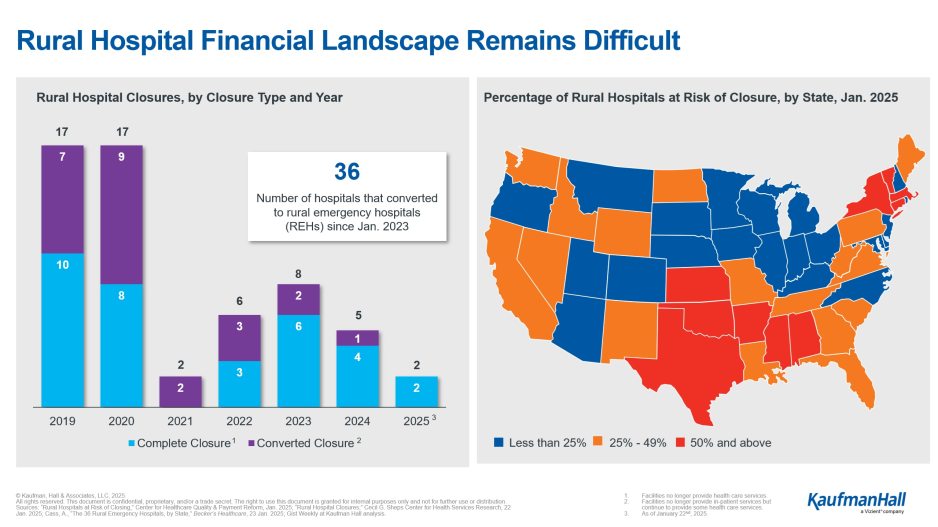
    • “It remains a challenging time for the nation’s rural hospitals. The percentage of such hospitals operating with negative margins is slightly lower than it was last year, at about 46%.
    • “At the same time the number of rural hospitals deemed at risk of closure has increased.
    • “According to a new Chartis report, the national median operating margin for rural hospitals is 1%, but the median margin is negative in 16 states. At the state level, all three of Connecticut’s rural hospitals are operating in the red, and 87% of Kansas’ rural hospitals are in the red, followed by Washington (76%), Oklahoma (70%) and Wyoming (70%). 
    • “At the other end of the spectrum, Alaska (15%) and Wisconsin (19%) are the only states in which the percentage of rural hospitals in the red is less than 20%.”
  • Fierce Healthcare relates,
    • “Sutter Health will invest $1 billion to expand its services across Northern California’s East Bay region, including a new flagship campus in Emeryville.
    • “The health system announced Wednesday that the campus will feature a new medical center with up to 200 beds as well as a regional destination for ambulatory care. The plans also leave room for future expansion, according to the announcement.
    • “The ambulatory services complex at the 12-acre campus will feature a wide array of specialties and will offer imaging and laboratory services. It expects to welcome its first patients as early as 2028, Sutter said.
    • “The 335,000-square-foot medical center will include labor and delivery, surgical services, intensive care, emergency care and neonatal intensive care. The facility will be designed with the potential to add additional patient rooms in the future.
    • “Sutter is targeting a 2032-33 opening date for the medical center, according to the announcement.”
  • and
    • “Humana’s senior-focused primary care division is charting a course for further expansion throughout 2025, the company announced Wednesday.
    • “Those expansion plans include centers in four new markets: Augusta and Savannah in Georgia, North Carolina’s Triad Region and Wichita, Kansas. Between CenterWell and Conviva, the team plans to open between 20 and 30 new centers in existing markets, too, across 11 states.
    • “That number includes CenterWell facilities that are co-located at Walmart stores, with 11 remaining locations in that partnership set to open by the end of this year.
    • “With our expansion efforts, we’re taking a thoughtful approach to growth, seeking out communities that would benefit from our holistic and personalized senior care model,” said Sanjay Shetty, M.D., president of Humana’s CenterWell healthcare services segment, in a press release.”
  • Fierce Healthcare adds from the VIVE conference,
    • “Value-based care company Lumeris rolled out new AI technology for primary care doctors that produces personalized, next-best actions at both the patient and population levels. 
    • “Dubbed “Tom,” and described as a Primary Care as a Service solution embedded in clinical workflows and is designed to extend the primary care team’s reach across patient management areas including prevention and wellness, care coordination, social determinants of health, population health and chronic disease management.
    • “Tom reduces burnout by automating time-consuming tasks, according to the company, and the tech can support physicians to help health systems manage larger patient panels without sacrificing care quality. 
    • “Unlike traditional analytics-based systems, Lumeris’ AI tool executes next-best actions, including scheduling screenings and appointments, monitoring medication adherence, conducting post-discharge outreach, and sharing patient education, according to the company.
    • “The tech can initiate an interactive, patient-specific outbound call or text based on best next action such as following up post discharge, answer questions about medications and identify and reach out to close preventive gaps in care. The tech also will summarize patient text and voice interactions into relevant notes and actions into the practice’s workflow.”


Tuesday Report

From Washington, DC

Capitol Hill News

  • Roll Call lets us know,
    • “The Senate took its first procedural step Tuesday on a budget blueprint that would pave the way for a filibuster-proof border security, defense and energy package, a key part of President Donald Trump’s legislative agenda.
    • “Once GOP leaders were certain of a critical mass of senators returning to Washington in time, they teed up a vote on the motion to proceed to the fiscal 2025 budget resolution, which was agreed to on a mostly party-line, 50-47 vote. Only a simple majority is needed to proceed and to eventually adopt the framework on a final vote, but Republicans don’t expect any Democrats to help them advance it, making every GOP vote count.  
    • “Once a budget resolution is adopted in both chambers, key congressional committees can get to work on writing the actual reconciliation bill — which is immune to a filibuster, like the budget resolution — to implement their fiscal priorities.
    • “The initial Senate plan laid out in the fiscal 2025 resolution envisions spending boosts for defense and border security, domestic energy incentives and offsets to pay for the package. It doesn’t address the 2017 tax cuts expiring at the end of the year, instead promising to come back with a second budget reconciliation process later this year to deal with the tax pieces of the GOP agenda.”

White House News

  • Fierce Healthcare tells us,
    • “A new executive order signed by President Trump aims to expand access to in vitro fertilization (IVF) and make it more affordable.
    • “The order directs the Domestic Policy Council to make policy recommendations to protect IVF access and “aggressively” reduce the associated costs for treatment. The policies should focus on ensuring reliable access to IVF and addressing areas that exacerbate the out-of-pocket and health plan costs associated with the care.
    • “These are treatments that have become unaffordable for many Americans,” Will Scharf, the White House staff secretary, said at a press conference on Tuesday.”
  • Per MedPage Today,
    • “The Trump administration’s efforts to address the causes of chronic diseases will all be based on “unbiased science,” HHS Secretary Robert F. Kennedy Jr. said Tuesday.
    • “We will convene representatives of all viewpoints to study the causes for the drastic rise in chronic disease,” Kennedy said in a speech to HHS employees. “Some of the possible factors we will investigate were formally taboo or insufficiently scrutinized — the childhood vaccine schedule; electromagnetic radiation; glyphosate; other pesticides; ultra-processed foods … SSRIs [selective serotonin reuptake inhibitors] and other psychiatric drugs; PFAS [per- and polyfluoroalkyl substances]; PFOA [perfluorooctanoic acid]; microplastics — nothing is going to be off-limits.”
    • “Whatever belief or suspicion I have expressed in the past, I’m willing to subject them all to the scrutiny of unbiased science,” Kennedy said in the speech, a portion of which was posted on Xopens in a new tab or window. “That is going to be our template — unbiased science. That’s something that will make us all proud of this agency and of our role in restoring American health.”
    • “Let’s commission research that will satisfy all the stakeholders once and for all,” he continued. “Let’s use protocols that we all agree on in advance and not alter the outcomes of studies when they’re halfway through [because] they look inconvenient. Let’s all depoliticize these issues and reestablish a common ground for action and renew the search for existential truths with no political impediments and no preconceptions.”

Postal Service News,

  • Govexec informs us,
    • “Postmaster General Louis DeJoy will soon step down as head of the U.S. Postal Service, creating an opening for the agency’s governing board to fill as it is in the midst of implementing controversial and sweeping reforms to its operations. 
    • “DeJoy has requested the USPS board begin its process to find a successor just months after telling Congress he would remain in the post “until somebody hauls me out of here.” The postmaster general has faced significant criticism since his appointment to the role in 2020 for his efforts to slow down mail delivery, raise prices and consolidate mail processing while also winning some plaudits for creating a vision he said would eliminate the agency’s financial troubles. 
    • “Postmasters general serve no fixed terms and are chosen by the board. President Biden while in office faced some calls to fire DeJoy, a long-time Republican donor who came to USPS after running a successful private sector logistics company, though he could only be removed by the board or on his own volition. 
    • “DeJoy said “much critical work” remains to implement his vision for the agency, but he decided it was time to start the process of identifying a successor.”

Food and Drug Administration News

  • Fierce Pharma relates,
    • “Two years on, Bavarian Nordic’s $380 million vaccine M&A move appears to be paying off.
    • “The Danish company’s chikungunya vaccine, Vimkunya, has now crossed the FDA finish line, heating up the competition with Valneva by countering with a label that covers a broader population.
    • ‘The FDA approved Vimkunya’s use in people who are at least 12 years old, marking the first chikungunya vaccine that can be given to those younger than 18. With the nod, Bavarian Nordic also picked up a priority review voucher (PRV) under the FDA’s tropical disease PRV program; the company plans to monetize the PRV “when appropriate,” it said in a Friday press release.”

From the judicial front,

  • The AP, via Federal News Network, reports,
    • “A federal judge refused Tuesday to immediately block billionaire Elon Musk and the Department of Government Efficiency from accessing government data systems or participating in worker layoffs. 
    • “U.S. District Judge Tanya Chutkan found that there are legitimate questions about Musk’s authority but said there isn’t evidence of the kind of grave legal harm that would justify a temporary restraining order. 
    • “The decision came in a lawsuit filed by 14 Democratic states challenging DOGE’s authority to access sensitive government data. The attorneys general argued that Musk is wielding the kind of power that the Constitution says can only be held by those who are elected or confirmed by the Senate. 
    • “The Trump administration, for its part, has maintained that layoffs are coming from agency heads, and asserted that despite his public cheering of the effort Musk isn’t directly running DOGE’s day-to-day operations himself.” 
  • Per STAT News,
    • “California officials were dealt a setback by a federal judge who ruled that a controversial law banning so-called pay-to-delay deals between pharmaceutical companies is, in part, unconstitutional and so cannot be enforced against agreements that had no link to the state.
    • “In his ruling, U.S. District Court Judge Troy Nunley determined that the state law, which was enacted in 2019, violated the Dormant Commerce Clause of the U.S. Constitution because it would extend to pay-to-delay agreements that happened outside of California and, therefore, attempted to regulate interstate commerce.”

From the public health and medical research front,

  • The Wall Street Journal offers its perspective on bird flu. “With so much H5N1 virus circulating across the U.S., scientists worry we are a few mutations away from a potential human pandemic.”
  • Beckers Hospital Review discusses hospitalizations for measles outbreaks.
  • CNN reports,
    • “The best way to stay protected against measles is to get vaccinated, according to experts. The measles, mumps and rubella (MMR) vaccine is 93% effective against measles after one dose and 97% effective against measles after two, according to the CDC.
    • “Officials’ guidance says children should get two doses of the MMR vaccine: the first dose between 12 and 15 months and the second around age 4, before starting school.
    • “When people consider their choice about vaccinating their child, it isn’t just about their own individual child, but this is a public health issue. … If we just stop thinking about the health of the population, we are going to see more and more vaccine-preventable illness, outbreaks occur,” said Dr. Christina Johns, a pediatric emergency physician at PM Pediatrics.
    • “Older children or adults can also get vaccinated if they didn’t get the vaccine as a child, she says. However, people born before 1957 are likely to have been naturally infected and thus already have immunity, according to the CDC.
    • CDC guidance also indicates that if someone is exposed to measles, getting the MMR vaccine within 72 hours could induce some protection or result in less serious illness.”
  • The National Cancer Institute blogs about “Many Men with Metastatic Prostate Cancer Are Not Getting the Recommended Treatments, Study Finds.”
  • Beckers Hospital Review tells us,
    • “Investments in primary care are declining and fewer clinicians are entering the field at a time when chronic disease rates are rising, according to a new report from researchers at the American Academy of Family Physicians. 
    • “The report, “The Health of US Primary Care: 2025 Scorecard Report — The Cost of Neglect,” points to underlying challenges contributing to a lack of access to primary care in the U.S., including insufficient funding and reimbursement rates. This marks the third edition of the scorecard report, led by researchers at the AAFP’s Robert Graham Center for Policy Studies in Primary Care. The report is co-funded by the Milbank Memorial Fund and The Physicians Foundation and is based on national and state-level data tracking primary care performance, workforce trends and reimbursement patterns.”
  • A National Institutes of Health online newsletter discusses “Dementia in the U.S. | Contact lenses slow myopia in kids | New malaria target.”
  • The HHS Inspector General released a report titled “Not All Medicare Enrollees Are Continuing Treatment for Opioid Use Disorder.”
  • Per BioPharma Dive,
    • “An experimental Duchenne muscular dystrophy gene therapy from Solid Biosciences showed potential in a small clinical trial, leading the biotechnology company to quickly raise funds on the findings.
    • “Three months after treatment with Solid’s therapy, SGT-003, the first three participants in an early-stage clinical trial produced higher-than-normal levels of a tiny protein linked to muscle function, Solid said Tuesday. No serious side effects were observed so far, the company added.
    • “Solid claims the results, while early, suggest SGT-003 could be more potent than Sarepta Therapeutics’ Elevidys, the only approved Duchenne gene therapy. The company intends to discuss an accelerated approval pathway with U.S. regulators later this year. Solid’s share price rose by as much as 79% Tuesday morning before settling back to trade up 40%. It announced a $200 million stock offering alongside the study results.”

From the U.S. healthcare business front,

  • CIGNA Healthcare announced,
    • “Specialty medications used to treat rare, chronic, and complex diseases are often administered via injection or infusion. While some patients need to receive these medications in a hospital setting, most patients can use options that are more affordable and more convenient. These include infusion centers not affiliated with hospitals, qualified physician’s offices, or administration in the patient’s home by a trained nurse. When appropriate, guiding patients to these non-hospital settings can make specialty treatment easier to access while reducing health care costs.
    • “Although some treating physicians have concerns about the quality and safety of alternative sites, new research published in the Journal of Clinical Pathways found that patients who received specialty medication treatments at non-hospital outpatient settings are less likely to experience adverse reactions or seek care at the emergency room than those treated at hospital outpatient settings. They are also less likely to be hospitalized within a week following treatment. These findings are based on a retrospective analysis of Cigna Healthcare claims data from more than 122,000 patients who received nearly 1 million injections or infusions of 72 specialty drugs between January 1, 2021, and October 31, 2023.
    • “This research clearly demonstrates that administering specialty medications in non-hospital settings is safe and effective,” said Dr. Jeff Langsam, national director of oncology and senior medical director of specialty pharmacy at Cigna Healthcare. “The convenience and comfort of these less intensive care settings also enhance the patient’s experience.”
  • Fierce Healthcare adds,
    • “CVS Health has named Ed DeVaney as president of its pharmacy benefit manager, CVS Caremark.
    • “DeVaney has served as interim president of Caremark since December 2024. The president’s role was vacated when David Joyner took over as CEO of CVS Health in October.
    • “CVS said that DeVaney joined the company in 2005 and held roles across Caremark and the company’s Aetna division. Prior to taking over as interim president, DeVaney was Caremark’s president of employer and health plans, where he led the team’s work to grow and retain its PBM customers.”
  • Beckers Health IT explains how artificial intelligence tools are being integrated into electronic health records.
  • Beckers Payer Issues discusses the healthcare stop loss market.

Happy Presidents Day

Mount Rushmore Photo by Laura Nyhuis on Unsplash

From Washington, DC

  • Milliman explains how to navigate the new mental health parity rules which are under a legal challenge before the U.S. District Court for the District of Columbia.
  • Per Fierce Pharma,
    • “Pfizer’s two-year run with the only 5-in-1 meningococcal vaccine on the U.S. market has come to an end. Now, GSK is ready to play catch-up after nabbing its own FDA approval. 
    • “The FDA approved the British drugmaker’s Penmenvy vaccine to protect people ages 10 to 25 against meningococcal serogroups A, B, C, W and Y (MenABCWY), which together cause the most invasive meningococcal disease (IMD) cases globally. The shot mixes the antigenic components of GSK’s established meningococcal vaccines Bexsero and Menveo, which target MenB and MenACWY, respectively, to offer broader coverage in fewer doses.”
  • MedPage Today adds,
    • “The FDA approved insulin-aspart-szjj (Merilog) as the first rapid-acting insulin biosimilar product to treat adults and children with diabetes, the agency announced Friday [February 14].
    • “Like its reference counterpart, insulin aspart (Novolog), the biosimilar helps lower mealtime blood sugar spikes to improve glycemic control. The approval is for both a 3 mL single-patient-use prefilled pen and a 10 mL multiple-dose vial.
    • “For the millions of people who rely on daily injections of insulin for treatment of diabetes, having a biosimilar option for their rapid-acting insulin injection can truly make a difference, as biosimilar products have the potential to increase access to these life-saving medications,” said Sarah Yim, MD, director of the Office of Therapeutic Biologics and Biosimilars in the FDA’s Center for Drug Evaluation and Research (CDER), in a statement.

From the U.S. public health and medical research front,

  • Beckers Clinical Leadership identifies America’s priciest health conditions.
  • Medscape notes,
    • “The CDC recommends everyone age 6 months or older get a flu vaccine, although so far this year, fewer adults have gotten the shot, compared to last year. The adult flu vaccination rate this season is 44%, down from 48% last season. According to the National Foundation for Infectious Diseases, “as long as influenza (flu) viruses are circulating in your community, it’s not too late to get vaccinated against flu.”
  • The New York Times offers “New Insights into Older Hearts. Heart disease is more common in people over 65, but treatments are better than ever. That can complicate decision-making for older heart patients.”
  • Consumer Reports, writing in the Washington Post, explains “How to keep your eyes healthy and your vision sharp. Cataracts, dry eyes, glaucoma and other eye problems become more common with age. Knowing the early signs and acting fast can make a difference.”
  • Per Healio,
    • There is evidence that GLP-1s can ameliorate psychiatric and neurologic symptoms.
    • More clinical trials on the direct and indirect effects of GLP-1s and their mechanisms of action are needed.
  • and
    • “American Indian and Alaska Native women face substantially higher risk for heart disease, particularly during reproductive-age years.
    • “Generational trauma, violence and racism have compounded [pregnancy] risks.”

From the U.S. healthcare business front,

  • Modern Healthcare reports,
    • “CommonSpirit Health’s quarterly net patient revenue dipped for the first time in months.
    • “The health system saw net patient revenue of $8.9 billion in the second quarter of fiscal 2025, a 5% drop from the year-ago period, according to its earnings report released Friday. Net patient revenue, or revenue from providing healthcare services after contractual discounts, makes up most of providers’ total operating revenue and can have a big impact on the bottom line.
    • “The results were markedly different from last year, when CommonSpirit was one of several systems that saw big increases in net patient revenue due to higher utilization and improved payer rates.
  • Beckers Hospital Review shares more insights on CommonSpirit Health’s second quarter report.
  • Beckers Payer Issues discusses the adverse impact of the Inflation Reduction Act on payers.
  • Fierce Healthcare relates,
    • “As obesity rates rise across the U.S., a new study from UnitedHealthcare and the Health Action Council examines the financial costs that this growing “epidemic” may cause for employers.
    • “The report (PDF) notes that 75% of adults in U.S. are either overweight or obese, up from 50% in 1990. Obesity rates grew fastest among younger adults, according to the report.”The HAC represents about 230 self-funded employers, and, among its members, about a quarter (26%) have been diagnosed with obesity. The obese population accounts for 46% of the employers’ medical spend, according to the report.
    • “Per member per month costs for obese employees were more than double on average compared to those who were not obese, the study found. Per member per month costs for those with obesity averaged $973, compared to $421 for non-obese workers.”
  • and
    • “As both regulatory and market forces are pushing the industry toward more transparency in healthcare pricing, MultiPlan sees opportunities to be a bigger player in data and tech for providers, payers and employers.
    • “The data analytics company, which has been in the market for 45 years, launched a rebrand at the ViVE 2025 digital health conference on Monday.
    • “Rebranded Claritev, the company is focused on developing new products and technologies that provide data insights to a broader swath of the healthcare market. Providing “actionable insights” to healthcare organizations will be a key part of the company’s growth, Travis Dalton, chairman, CEO and president, told Fierce Healthcare in an interview in the lead-up to the ViVE 2025 event.”
  • MedTech Dive informs us,
    • “Medtronic has bought nano surface technology from Nanovis for use in its next-generation spine fusion implants.
    • “Nanovis, which disclosed the deal Tuesday [February 11], has developed nanotechnology to improve the speed and consistency of bone growth. The company has its own portfolio of spine devices.
    • “Medtronic will use the technology to develop PEEK interbody spine fusion devices that enhance implant fixation. The technology could help bone grow and fuse with the implant.”
  • The Wall Street Journal reports,
    • “If you need a prescription filled in the coming years, don’t be surprised if it flies in and lands in your backyard. 
    • “Hospitals and doctors are increasingly experimenting with the use of drones to deliver medications, lab tests and supplies to patients being treated at home. Some are testing whether drones can be used to deliver organs for transplant more quickly and cheaply. And in some cities, a 911 call today could set off a drone carrying a defibrillator, Narcan spray or tourniquet to the scene of an emergency ahead of the arrival of paramedics.” * * *
    • “One of the challenges in this space five to 10 years ago was that there wasn’t a really clear regulatory framework. Over the last 18 months this has solidified, especially in the U.S. There is now a clear path to scale,” says Adam Woodworth, chief executive officer of Wing, the drone-service unit of Google’s parent Alphabet GOOGL.

Friday Report

From Washington, DC,

  • Kaufmann Hall considers health policy in the second Trump administration.
  • Fierce Healthcare lets us know,
    • “The Department of Health and Human Services (HHS) is firing up to 5,200 probationary employees today, as part of an unprecedented cutting of jobs across the federal government.
    • “Of the impacted workers, 1,300 are employed by the Centers for Disease Control and Prevention (CDC) while a sizeable portion work for the National Institutes of Health (NIH). Employees were given four weeks paid administrative leave and notified on the morning of Feb. 14, as first reported by the Associated Press.” * * *
    • “The Department of Veterans Affairs announced layoffs Thursday affecting more than 1,000 federal workers, in a move the Trump administration said would save $98 million per year.”
  • The Wall Street Journal notes,
    • The Trump administration’s effort to slash the federal workforce is pushing employees into a challenging job market, where their age and lack of corporate experience can hold them back.
    • Federal workers are also facing an environment where hiring for white-collar jobs has slowed.
    • Despite the availability of state and local government jobs, many of these positions take place outside offices and aren’t a good match for federal workers’ experience.
  • The American Hospital Association News tells us,
    • “President Trump Feb. 13 signed a presidential memorandum ordering the development of a comprehensive plan for “restoring fairness in U.S. trade relationships and countering non-reciprocal trading arrangements.”
    • “The announcement directs the U.S. Trade Representative and the Secretary of Commerce, in consultation with the secretaries of a number of U.S. agencies, to develop plans for reciprocal tariffs on every country that taxes U.S. imports and submit a report to the president. In addition, within 180 days of the memo, the director of the Office of Management and Budget will assess all fiscal impacts on the federal government and the impacts of any information collection requests on the public and deliver an assessment in writing to the president.
    • “For more information, see the presidential memo and fact sheet.”

From the public health and medical research front,

  • The Centers for Disease Control and Prevention announced today,
    • COVID-19
      • “COVID-19 activity is elevated in many areas of the country. Though wastewater levels are high, emergency department visits are at low levels, and laboratory percent positivity is stable. Emergency department visits and hospitalizations are highest in older adults and emergency department visits are also elevated in young children.
      • “There is still time to benefit from getting your recommended immunizations to reduce your risk of illness this season, especially severe illness and hospitalization.
      • “CDC expects the 2024-2025 COVID-19 vaccine to work well for currently circulating variants. There are many effective tools to prevent spreading COVID-19 or becoming seriously ill.”
    • Influenza
    • RSV
      • “RSV activity remains elevated but is declining in most areas of the country. Emergency department visits and hospitalizations are highest in children and hospitalizations are elevated among older adults in some areas.”
    • Vaccination
      • “Vaccination coverage with influenza and COVID-19 vaccines are low among U.S. adults and children. Vaccination coverage with RSV vaccines remains low among U.S. adults. Many children and adults lack protection from respiratory virus infections provided by vaccines.”
  • Beckers Clinical Leadership points out,
    • “A farmer in Mercer County, Ohio, has tested positive for H5N1 influenza, marking the state’s first human case of bird flu. 
    • “The worker had direct contact with deceased commercial poultry, according to a Feb. 12 news release from the Ohio Department of Health.”
  • Per Medscape,
    • “How long will vaccine protection last? A simple blood test may have the answer. Researchers at Stanford School of Medicine, Stanford, California, have identified a molecular signature in the blood that appears days after vaccination and predicts the durability of the immune response. Published in Nature Immunology in January, this discovery could transform vaccine development, testing, and personalization of vaccines. The study also offers insights into why some vaccines provide lifelong immunity while others lose effectiveness within months.”
  • Per Healio
    • “The percentage of U.S. adults with obesity did not significantly rise from 2013 to 2023, though a small uptick in the rate of obesity was seen for children and adolescents, according to data published in JAMA.
    • “From 2013 to August 2023, there were small increases in obesity in children and adolescents aged 2 to 19 years, driven by increases among males and children aged 2 to 5 years,” Samuel D. Emmerich, DVM, an epidemiologist at the CDC National Center for Health Statistics, told Healio. “In adults aged 20 years and older, severe obesity increased slightly, driven by increases among women and middle-aged adults. There were no significant changes in any other subgroups, in high weight-for-length or in high waist circumference.”
  • Per HCPLive,
    • “New research is shedding light on a heightened risk of colorectal cancer (CRC) in patients with both nonadvanced and advanced adenomas detected during colonoscopy, highlighting the importance of surveillance colonoscopy in this population and the need for more frequent screening among those with advanced adenomas.
    • “Leveraging data from the Minnesota Colon Cancer Control Study, the present analysis found individuals with adenomas at colonoscopy, regardless of whether or not they were advanced, were at a greater risk of developing CRC than those with no adenomas. Additionally, findings showed participants with advanced adenomas were at increased risk of both CRC mortality and all-cause mortality.
    • “Studies have reported the association of advanced adenomas with increased risk of CRC and CRC-related death over the following 5 to 15 years compared with having no advanced adenomas. The association of nonadvanced adenomas with CRC incidence and mortality after colonoscopy is less clear,” Aasma Shaukat, MD, MPH, a gastroenterologist and Robert M. and Mary H. Glickman Professor of Medicine at New York University Grossman School of Medicine, and colleagues wrote. “However, to our knowledge, no studies have evaluated the association of adenomas and advanced adenomas with all-cause mortality.”
  • Health Day adds,
    • “You may be less likely to develop an especially lethal form of colon cancer if you’re a longtime consumer of yogurt, new research finds.
    • “Folks who ate two or more servings of yogurt per week for years had 20% lower odds for an aggressive type of tumor typically found on the right side of the colon, researchers reported Feb. 12 in the journal Gut Microbes.
    • “The tumors’ tissues also tested positive for a bacterium commonly found in yogurt, called Bifidobacterium.
    • “It has long been believed that yogurt and other fermented milk products are beneficial for gastrointestinal health,” co-senior author Dr. Tomotaka Ugai, a pathologist at Mass General Brigham in Boston, noted. “Our new findings suggest that this protective effect may be specific for Bifidobacterium-positive tumors.” 

From the U.S. healthcare business front,

  • The Wall Street Journal reports,
    • Johnson & Johnson’s halt of U.S. sales of a new heart-rhythm device due to safety concerns is hobbling a major strategic push by the company into one of the industry’s fastest-growing markets.
    • “The healthcare company paused use of the device, known as Varipulse, last month after receiving reports of neurovascular events in several patients. The company didn’t explain what the events were, but several strokes have been reported to a federal device-safety database, and doctors’ concerns are centered on strokes.
    • “J&J has been racing to catch up to competitors in the fast-growing market for medical devices treating irregular heart rhythms, and to revive the company’s medical-device business generally. 
    • “Rivals Boston Scientific and Medtronic have dominated the market for so-called pulsed-field ablation devices, which research firm Clarivate estimates will reach about $12 billion by 2032, from $1.6 billion last year. 
    • “More than 10 million Americans have the heart-rhythm disorder that the devices treat. 
    • “This is a huge hit for J&J,” said Dr. John Mandrola, an electrophysiologist at Baptist Health in Louisville, Ky., who treats patients with heart-rhythm problems. “The market’s so big, and this just sets them back.”
  • Beckers Payer Issues lists major health insurers by 2024 medical loss ratios.
  • Kaufmann Hall takes a look at “Navigating Health Systems Through a Decade of Change” via a conversation with Rich Liekweg, CEO of BJC Health System in Missouri, and Nick Barto, president of BJC Health System.

Happy Lincoln’s Birthday

Our greatest President

From Washington, DC

Capitol Hill News

  • The American Hospital Association (AHA) News tells us,
    • House Republicans Jan. 12 released a budget resolution for fiscal year 2025 focusing on the Trump administration’s agenda on border security, defense, energy and taxes. The budget resolution, which acts as an outline for the reconciliation process, calls for increasing the debt ceiling by $4 trillion and allows for $4.5 trillion in spending for tax cuts. It also would allocate $200 billion for border and defense spending. The resolution instructs seven committees to come up with no less than $1.502 trillion in mandatory cuts over ten years. 
    • Notably, for health care, the bill instructs the House Energy and Commerce Committee to cut mandatory spending by no less than $880 billion. The committee has primary jurisdiction over a number of health care programs, including Medicaid, and some proposals have been circulating that would enact significant cuts to Medicaid. The House is expected to mark up its budget resolution tomorrow. 
  • Politico adds,
    • “Senate Republicans easily pushed their budget resolution out of committee on Wednesday — the first step toward being able to enact President Donald Trump’s massive domestic policy agenda.
    • “The Senate Budget Committee voted 11-10, along party lines, to approve the fiscal framework meant to tee up a package of energy, border security and defense policy through the partisan budget reconciliation process. Across the Capitol, House GOP leaders struggled at the same time to rally their own around a far more expansive plan that would pave the way for legislation that would bundle those same policies alongside trillions of dollars in tax cuts.”
  • The Senate Invoked, 53-47: Motion to invoke cloture on Executive Calendar #17 Robert F. Kennedy, Jr. to be Secretary of HHS. The Senate is expected to confirm Mr. Kennedy’s nomination as HHS Secretary Thursday morning.
  • Fierce Healthcare lays out the “top policy issues for hospitals, payers, docs and tech” on Capitol Hill this year.

White House news

  • Here is a link to the President’s February 11 executive order captioned “IMPLEMENTING THE PRESIDENT’S “DEPARTMENT OF GOVERNMENT EFFICIENCY” WORKFORCE OPTIMIZATION INITIATIVE,” which was mentioned in Tuesday’s report.
  • The American Society of Pension Professionals and Actuaries lets us know,
    • “Daniel Aronowitz has been officially nominated by the White House to become next Assistant Secretary of Labor for the Employee Benefits Security Administration (EBSA). He is the President of Euclid Fiduciary (now Encore Fiduciary), a fiduciary liability insurance underwriting company for employee benefit plans.
    • “His experience in the professional liability industry includes expertise as a coverage lawyer and underwriter.”
  • The AHA News informs us, “Tom Engels is the new administrator for the Health Resources and Services Administration, according to its website. Engels previously held the same position in the first Trump administration from 2019 to 2021.”
  • Federal News Network updates us on federal agency efforts to bring their workforces back to office.

Judicial front

  • Federal News Network reports,
    • “The Trump administration is free to continue implementing its controversial deferred resignation program after a federal court in Massachusetts dissolved a restraining order that had delayed the program’s deadline by several days.
    • “In a written opinion Wednesday afternoon, Judge George O’Toole said he had determined that the three federal unions that had challenged the program lacked the standing they’d need in order to meet the legal standard for a temporary restraining order.” * * *
    • “Wednesday’s ruling does not completely end the legal challenge — it only affects the unions’ requests for a temporary pause in the deferred resignation program while their claims work their way through the litigation process. However, in denying a temporary restraining order and preliminary injunction, O’Toole said he had determined the unions were unlikely to succeed on the merits of their case.
    • “OPM is pleased the court has rejected a desperate effort to strike down the deferred resignation program. As of 7 p.m. tonight, the program is now closed,” said McLaurine Pinover, a spokeswoman for the office. “There is no longer any doubt: the deferred resignation program was both legal and a valuable option for federal employees. This program was carefully designed, thoroughly vetted, and provides generous benefits so federal workers can plan for their futures.”
    • In fact, the Fork in the Road program closed at 7:20 pm ET Wednesday night per its website.

FDA News

  • Fierce Pharma notes,
    • “More than 13 years after its initial FDA approval, Pfizer’s blood cancer drug Adcetris has nabbed another regulatory green light to treat large B-cell lymphoma (LBCL).
    • “The CD30-directed antibody-drug conjugate has been approved in combination with lenalidomide and rituximab for certain LBCL patients, the FDA said Wednesday. Eligible patients must have tried at least two prior lines of systemic therapy and be ineligible for an autologous hematopoietic stem cell transplant or a CAR-T therapy.
    • “Adcetris won the approval after showing it helped patients with heavily pretreated LBCL live longer in a phase 3 trial.”

From the public health and medical research front,

  • CBS News reports,
    • “For the first time since the beginning of the pandemic, more people in the U.S. died of influenza than from COVID-19 in the week ending on Jan. 25, according to weekly figures published by the Centers for Disease Control and Prevention.
    • “For the week ending on Jan. 25, nearly 1.7% of all deaths nationwide were attributed to the flu, compared to roughly 1.5% being the result of COVID-19, according to CDC data. Rates of influenza hospitalizations are more than three times higher than COVID-19 hospitalizations amid this season’s record wave of flu infections.”
  • and
    • “The U.S. confirmed at least a dozen deaths from whooping cough last year, according to preliminary figures released this week by the Centers for Disease Control and Prevention. That marks the most fatalities from the bacterial infection since a 2017 surge of the illness, which is also known as pertussis.
    • “Over the last month, pertussis infections have been rising again. While cases reported to the CDC by health departments dipped over the winter holidays, weekly infections have accelerated for a month straight since then.”
  • The New York Times adds,
    • “A worsening measles outbreak has taken root in Texas, sickening two dozen and hospitalizing nine on the western edge of the state, where childhood vaccination rates have dwindled in recent years.
    • “As of Tuesday, 22 children and two adults had been infected, all of whom were unvaccinated, local health officials said. * * *
    • “The Texas outbreak has so far been limited to residents of Gaines County, which borders New Mexico and has roughly 20,000 residents. Last year 82 percent of kindergarten students received the measles, mumps and rubella vaccine, according to state data. That figure is roughly 10 percentage points lower than the average vaccination rate in Texas public schools and far below the federal target of 95 percent for measles vaccination.”
  • Nature points out that “Dozens of new obesity drugs are coming; these are the ones to watch. Next-generation obesity drugs will work differently from Ozempic and Wegovy — aiming to deliver greater weight loss with fewer side effects.”
  • BioPharma Dive, on the other hand, lets us know “A small semaglutide trial suggests the medicine’s suppression of appetite may extend to alcohol, but larger trials are needed to establish a conclusive benefit.”
  • Per Fierce Healthcare,
    • “More than five years ago, Apple launched three medical studies to test how well its Apple Watch can track a person’s mobility and cardiovascular health, changes in hearing and women’s health and fertility.
    • “The tech company is now broadening its health research ambitions to use its devices, including iPhones, Apple Watch and AirPods along with third-party devices, for a longitudinal, virtual study to monitor changes in participants’ health, spanning a wide range of health and disease areas.
    • “Apple wants to tap into the devices and apps that individuals use every day to evaluate the connections between physical and mental health as well as social determinants, such as whether someone lives alone or with family, and how all these aspects of health factor into a person’s overall well-being.”

From the U.S. healthcare business front,

  • Healthcare Dive reports
    • “CVS Health’s profits were nearly cut in half last year as the healthcare giant wrestled with elevated medical costs in its Aetna insurance business. 
    • “The company reported net income of $4.6 billion in 2024, compared with $8.4 billion in the prior year, according to earnings results released Wednesday. 
    • “But CVS showed signs of financial improvement in the fourth quarter, beating Wall Street expectations on earnings and revenue.” 
  • Bloomberg explains,
    • “In the insurance unit, CVS spent 94.8% of premium revenue on medical care in the quarter, less than analysts expected. Investors prefer a lower number. However, CVS said in a separate filing that high use of medical services will continue to pressure the business. 
    • “The company pointed in particular to high costs in its business that manages care for patients on Medicaid, the US health program for the poor. States have been cutting Medicaid rolls since the pandemic, often culling healthier patients in the program while sicker patients remain.” 
  • Fierce Healthcare adds,
    • “CVS Health CEO David Joyner went on the defense of the pharmacy benefit management industry on the company’s Q4 earnings call Wednesday morning.” * * *
    • “One of the most powerful forces helping to offset rising healthcare costs is PBMs like Caremark,” Joyner said. “These entities remain the only part of the drug supply chain and entirely focused on lowering costs, but have erroneously been subject to deceptive rhetoric and misinformation.”
    • “Joyner noted that branded pharmaceutical manufacturers “added $21 billion of annual gross drug spend through their price actions” in January. Drugs where PBMs lack tools to negotiate prices have seen prices rise more than twice as fast as other products, he said.
    • “In addition, Joyner said that “multiple well-known economists” have projected that PBMs create $100 billion in net value each year for the healthcare system.”
  • Per the AHA News,
    • The Council for Affordable Quality Healthcare Feb. 11 released a report  highlighting how the health care industry can save $20 billion by transitioning from manual to electronic workflows.  
    • In addition, it found that the industry could save $515 million annually on electronic prior authorizations and save providers and staff 14 minutes per transaction.
  • Per Fierce Healthcare,
    • “UnitedHealth Group and Amedisys outlined plans to divest a significant number of home health and hospice locations as they seek to close their $3.3 billion merger.
    • “In a court filing issued late last week, UHG said it intends to pursue a divestiture plan that would sell off “at minimum” 128 combined home health and hospice facilities. The company said in the filing that once the divestitures are completed it will operate only 10% of home health services in the U.S. and 4% of hospice services.
    • “UnitedHealth argued that leaves plenty of competition in this space, as it will still be up against 11,000 home health agencies and more than 5,000 hospice agencies across the U.S.
    • ‘The Department of Justice sued to block the deal in mid-November, arguing that it would hamper competition across multiple home health markets.”
  • Per JAMA Open,
    • Question How have the proportion and absolute number of psychiatrists providing professional services to traditional Medicare enrollees changed as the field has grown?
    • Findings In this cross-sectional study using data from 2014 to 2022, the nationwide proportion of psychiatrists billing Medicare Part B declined from 44% in 2014 to 33% in 2022. The number of psychiatrists billing Medicare Part B declined by 3772 during a time when the total number of active psychiatrists increased by 6076.
    • Meaning These findings suggest that during a time of psychiatrist workforce growth, the proportion and number of psychiatrists accepting Medicare Part B decreased, further suggesting potential decreases in access to psychiatrist-led care for older adults and individuals with disabilities.”

Tuesday Report

From Washington, DC,

Capitol Hill news

  • Roll Call reports,
    • “House Republicans are plowing ahead with a budget resolution markup on Thursday before the chamber’s scheduled one-week recess begins the following day. 
    • “The blueprint wasn’t finalized yet and leadership also has some work to do in preparation for the floor, with key holdouts looking for assurances on things like spending cuts and raising the statutory debt ceiling. 
    • “But Speaker Mike Johnson, R-La., said after the GOP conference’s weekly meeting Tuesday that the “intention” was to mark up the blueprint in committee on Thursday after hammering out the details Tuesday. “We’ll be rolling out the details of that probably by tonight,” Johnson said. “We are right on the schedule that we need to be on.”
    • “The Budget panel has a 24-hour notice rule for posting text before bringing the resolution up for a committee vote.
    • “By the end of the day, we’ll be able to have the final pieces to put the budget resolution along with the reconciliation instructions in play, because we have to communicate that in some detail when we mark it up,” House Budget Chairman Jodey C. Arrington, R-Texas, said Tuesday after the conference meeting.”
  • The House Budget Committee has scheduled “a markup for the Concurrent Resolution on the Budget for Fiscal Year 2025 which will be held on February 13, 2025, at 10 am.

White House news

  • The Washington Post reports,
    • “President Donald Trump on Tuesday signed an executive order that calls on federal agencies to work with the U.S. DOGE Service in a bid to cut their existing workforce and limit future hiring. Ahead of the signing, Trump was joined in the Oval Office by Elon Musk, his billionaire ally who is overseeing DOGE, an agency that Trump has empowered to find government efficiencies.”
  • The Office of Personnel Management has updated its Fork in the Road website for the legal developments that occurred yesterday

Medical Coding news

  • The ICD10 Monitor alerts us that 50 new ICD 10 PCS codes will become effective on April 1. 2025.
  • Per a recent government bulletin,
    • The Assistant Secretary for Technology Policy/Office of the National Coordinator for Health Information Technology (hereafter ASTP) Standards Bulletin 2025-1 (SB25-1) describes the development of the Draft United States Core Data for Interoperability Version 6 (Draft USCDI v6), which ASTP released on January 14, 2025. 
    • The USCDI sets the technical and policy foundation for the access, exchange, and use of electronic health information to support nationwide interoperable health information exchange and is a standard stewarded and adopted by ASTP on behalf of the U.S. Department of Health and Human Services (HHS). ASTP publishes new versions of USCDI annually, with a draft version released in January and a final version released in July to keep pace with clinical, technology, and policy changes that influence the use of clinical and related terminology. Draft USCDI v6 includes new data elements that seek to advance interoperability for patient care.
    • SB25-1 describes ASTP’s continued expansion of USCDI, following the same prioritization approach applied to USCDI Version 5. SB25-1 also reflects ASTP’s consideration of submissions for new data elements, comments on previously submitted data elements, and the evolving maturity of data elements through the USCDI+ Program.

From the public health and medical research front,

  • The University of Minnesota’s CIDRAP informs us,
    • “COVID-19 vaccination averted more than 5,000 US in-hospital deaths, 13,000 intensive care unit (ICU) admissions, and 68,000 hospitalizations in 7 months in 2023-2024, researchers from the US Centers for Disease Control and Prevention (CDC) estimated late last week in Vaccine, although with considerable uncertainty.
    • “The investigators estimated COVID-related deaths, ICU admissions, and hospitalizations prevented by vaccination from October 1, 2023, to April 21, 2024, using a novel multiplier model that used causal inference, conditional probabilities of hospitalization, and correlations between data elements in simulations.
    • “The U.S. Centers for Disease Control and Prevention’s Advisory Committee on Immunization Practices (ACIP) has used estimates of the potential benefits and risks to inform vaccine policy decisions, and burden averted estimates can be used to evaluate vaccine policy,” the study authors wrote.”
  • STAT News lets us know,
    • “We’ve talked a lot about how hospitals have been recording a lot more patient visits throughout 2024. One major component of that: There’s been a lot more little bundles of joy lately.
    • “Analysts at investment bank Leerink Partners looked at birth data across four states (Arizona, Colorado, Florida, and North Carolina) and found births in December were up almost 4% year over year. 
    • “There’s an especially interesting trend in Florida: 53% of all births are covered by commercial health insurance (either from the parents’ workplace or the Affordable Care Act exchanges). 
    • “Usually, Medicaid covers the majority of births, but this reversal is “a reflection of redeterminations,” in which states kicked people off Medicaid if they no longer met eligibility requirements that were loosened during the pandemic, Leerink analysts wrote to investors.”
  • The Washington Post reports,
    • “California-based Tri-Union Seafoods has issued a voluntary recall of canned tuna sold at Trader Joe’s, Safeway, Harris Teeter, Walmart, Costco and other major grocery stores in dozens of states.
    • “The recall centers on concerns that a manufacturing defect in the cans may cause “a potentially fatal form of food poisoning,” the company said in a statement Friday.
    • “Tri-Union Seafoods said the defect, located on the cans’ pull-tab lid, may compromise the integrity of the product seal, especially over time, causing it to leak or become contaminated with the clostridium botulinum bacterium, which causes botulism.
    • “While Tri-Union Seafoods has said no illnesses linked to the recalled products have been reported, the company warned consumers not to use the product, “even if it does not look or smell spoiled.” The manufacturing company asked consumers to instead return the recalled tuna for a full refund, throw it away or contact Tri-Union directly for a retrieval kit and a coupon for a replacement product.” * * *
    • “Tri-Union Seafoods issued the recall notice Friday on all tuna products sold under the Genova, Van Camp’s, H-E-B and Trader Joe’s brand names.” * * *
    • Tri-Union’s statement includes UPCs, can codes and best-by dates you can check to determine if your tuna is affected by the recall. Consumers can contact Tri-Union Seafoods at support@thaiunionhelp.zendesk.comor 833-374-0171 to request a replacement product.”
  • The Wall Street Journal lets us know,
    • “We all know cigarettes cause cancer. The memo on booze hasn’t reached everyone.
    • “Doctors say many people are surprised to learn alcohol raises the risk of certain cancers, such as liver, colorectal and breast cancer. And cancer patients say they aren’t always aware of the increased risk until after they have been diagnosed.
    • “As awareness increases—the former U.S. surgeon general recently called for adding warning labels on alcoholic beverages—more people are rethinking their drinking habits. On social-media sites like Reddit, cancer patients talk about replacing alcohol with cannabis, although this, too, has health issues. Others opt for mocktails or nothing at all.”
  • Per Beckers Hospital Review,
    • “A phase 3 trial found that a combination of a Pfizer and Astellas drug, enfortumab vedotin, and Merck’s drug, pembrolizumab, has significantly improved survival rates for patients with advanced bladder cancer. 
    • “The latest results from the trial, which focused on patients with untreated, locally advanced or metastatic urothelial cancer, showed that the combination therapy reduced the risk of death by 49% compared to traditional chemotherapy.” 
  • Healio tells us,
    • “Women prescribed a GLP-1 receptor agonist up to 2 years before conception were less likely to develop hypertensive disorders of pregnancy, gestational diabetes, have a preterm birth or cesarean delivery, researchers reported.
    • “Relatively little is known how preconception GLP-1 receptor agonist use may impact pregnancy outcomes,” Christopher T. Nau, MD, assistant professor in the department of reproductive biology at Case Western Reserve University School of Medicine and the division of maternal fetal medicine at University Hospitals Cleveland Medical Center, told Healio. “This study suggests that [GLP-1s] may have potential to be a powerful tool to optimize preconception health.”
    • “The findings were published in the American Journal of Obstetrics and Gynecology.”
  • MedPage Today notes,
    • “[A] Plasma p-tau217 [blood test] successfully identified Alzheimer’s pathology in several neurodegenerative syndromes.
    • “This included disorders not typically associated with Alzheimer’s disease, like frontotemporal dementia.
    • “Alzheimer’s pathology in syndromes related to frontotemporal lobar degeneration correlated with worse cognitive performance.”
  • Per an NIH news release,
    • “National Institutes of Health (NIH) scientists and their colleagues report that a single dose of a broadly neutralizing antibody (bnAb) administered prior to virus exposure protects macaques from severe H5N1 avian influenza. Highly pathogenic avian influenza (HPAI) H5N1 viruses have sporadically spilled over from birds into many other animals, including humans and dairy cows, in recent years. Although it has not yet acquired the capacity to spread readily between people, H5N1 has pandemic potential, which has spurred efforts to develop effective treatments and other countermeasures.
    • “The investigators studied a bnAb called MEDI8852, which was discovered and developed by Medimmune, now part of AstraZeneca. MEDI8852 targets a portion of a key flu protein that is less prone to change than other parts of the virus and thus is capable of conferring protection against a wide range of flu viruses. In the new study, a group of macaques received an injection of MEDI8852 and were exposed to aerosolized HPAI H5N1 virus three days later. All the pre-treated animals survived and experienced no or very limited signs of disease. In contrast, a group of control macaques developed severe or fatal illness within a short time after virus exposure.
    • “Of note, the scientists determined that MEDI8852 remained in the body for a prolonged time after the injection. According to scientists, protection from severe disease would extend to weeks beyond antibody infusion, providing a realistic preventative window in the face of an H5N1 outbreak.”

From the U.S. healthcare business front,

  • Healthcare Dive reports,
    • “Humana brought in profit of $1.2 billion in 2024, down more than half from $2.5 billion in 2023 due to significantly higher spending on its members’ care in Medicare and Medicaid, according to financial results released Tuesday.
    • “Still, Humana’s performance in the fourth quarter capping off the year was better than expected given ongoing cost pressures in the government programs, analysts said.
    • “Humana said it expects to lose 550,000 members in privatized Medicare Advantage plans this year — roughly one-tenth of its individual MA footprint — from cutting unprofitable plans to improve margins. The size of the membership loss is notably larger than Humana’s prior expectations.”
  • STAT News adds,
    • “The most important number in health insurance, at least to Wall Street and the companies themselves, is the medical loss ratio.” * * *
    • Here’s how fourth-quarter MLRs have looked for insurers so far, and how they compared to Wall Street’s consensus estimates: Molina Healthcare (90.2% actual vs. 88.7% consensus), Oscar Health (88.1% actual vs. 86.9% consensus), Cigna (87.9% actual vs. 84.7% consensus), UnitedHealth (87.6% actual vs. 86.5% consensus).
    • “Centene (89.6% actual vs. 90% consensus) and Elevance Health (92.4% actual vs. 92.6% consensus) each barely had lower fourth-quarter MLRs than expected.”
  • Per BioPharma Dive,
    • “Novartis is wagering more than $3 billion that a startup it helped launch six years ago has developed a better blood thinner than what’s now available.
    • “The Swiss drugmaker on Tuesday announced a deal to acquire Anthos Therapeutics, a Boston-based startup it formed with Blackstone Life Sciences in 2019. Novartis will pay $925 million upfront,and could pay up to $2.15 billion more should the drug at the center of the deal hit certain regulatory and sales milestones. The deal should close in the first half of 2025.
    • “Through the acquisition, Novartis will regain a blood-thinning drug, called abelacimab, that’s currently in late-stage testing. Novartis originally discovered the compound, but in 2019 licensed it to Anthos, a startup Blackstone Life Sciences launched with $250 million. That deal gave Novartis a minority stake in Anthos, which went on to advance the drug into Phase 3 testing.
  • Fierce Pharma notes,
    • “Some two years into Leqembi’s launch, Eisai continues to go all-in on its Alzheimer’s disease-fighting antibody, which the company believes could be finally nearing a “growth expansion phase” despite slow sales so far in the U.S.
    • “All told, Leqembi brought home around 13.3 billion Japanese yen ($87 million) in the third quarter of Eisai’s 2024 fiscal year, which will wrap up on March 31. In the U.S. specifically, Leqembi grew roughly 30% quarter-over-quarter to 7.7 billion yen (nearly $51 million), Eisai said in a recent earnings presentation (PDF).
    • “Cumulatively, the antibody has generated total sales of 29.6 billion yen (about $194 million) over the last nine months of 2024, putting Leqembi on track to reach a 12-month sales target of 42.5 billion yen ($279 million), Eisai’s chairman and CEO, Tatsuyuki Yasuno, said in an interview with Fierce Pharma.”
  • Per Beckers Hospital Review,
    • “Warner Robbins and Perry, Ga.-based Houston Healthcare’s bid to join Emory Healthcare was approved by both boards, according to a Feb. 10 news release.
    • “Both boards finalized the terms of a definitive agreement outlining the specific details and provisions of Houston Healthcare to integrate into Atlanta-based Emory. The two organizations have been working on an agreement since August 2024, when they signed a nonbinding letter of intent to combine.
    • “Emory and Houston Healthcare are now focused on finalizing the regulatory reviews and approvals before closing the transaction in the “coming months,” according to the statement.”

Monday Report

Photo by Sven Read on Unsplash

From Washington, DC,

White House News

  • Regulatory Focus considers how this Executive Order may impact the Food and Drug Administration.
  • The Regulatory Focus article notes that the Trump administration is in the process of updating the December 13, 2024, semi-annual regulatory agenda published by the Biden Administration.

Judicial News

  • Federal News Network reports,
    • President Donald Trump’s plan to downsize the federal workforce remains on hold after a courtroom hearing on Monday afternoon.
    • It’s the latest example of how the Republican president’s ambitious plans have become ensnared in the judicial system.
    • U.S. District Judge George O’Toole Jr. had paused the deferred resignation program, commonly described as a buyout, last week.
    • On Monday, he said the stay would remain in place until he issues a ruling. It’s unclear when that could happen.
    • Trump wants to use financial incentives to encourage government employees to quit. According to the White House, 65,000 workers had taken the government up on its offer as of Friday.

FDA News

  • Per MedTech Dive,
    • “The Food and Drug Administration published an early alert on Thursday about a BD device linked to 30 serious injuries and four deaths.
    • “The FDA issued the alert one day after BD wrote to customers to recommend actions to mitigate the risks posed by a system used to break up and remove clots from arteries. 
    • “Stress, wear, high temperatures, friction or localized pressure can cause part of BD’s Rotarex device to break, the FDA said, and result in vessel injuries and severe bleeding.”
  • Reuters informs us,
    •  “AbbVie (ABBV.N) said on Friday that the U.S. Food and Drug Administration approved its drug for complicated intra-abdominal infections, including those caused by drug-resistant bacteria.
    • “AbbVie and co-developer Pfizer’s (PFE.N), opens new tab drug, Emblaveo, is approved in combination with an antibiotic medication for patients 18 years and older with such infections.
    • “Deaths from antibiotic-resistant bacteria, also known as superbugs, have been on the rise globally, and health regulators have called for the development of newer treatments as resistance to older antibiotics grows.”

From the public health and medical research front,

  • The American Hospital Association News tells us,
    • “At least 24 million people have had seasonal flu this season, according to estimates  from the Centers for Disease Control and Prevention. Nearly 49,000 patients were admitted to hospitals with the flu for the week ending Feb. 1. Emergency department visits due to the flu remain classified as “very high” and “increasing,” the agency said. ED visits for COVID-19 are “low” and “decreasing,” while visits for respiratory syncytial virus are “moderate” and “decreasing.” Overall respiratory illness activity causing people to seek health care is “very high.” 
  • The Washington Post reports,
    • “A Nevada dairy worker was infected with a version of bird flu that is known to have killed one person in the United States and severely sickened a teen in Canada, state and federal health authorities said Monday.
    • “This version of the virus was detected for the first time in dairy farms last month in Nevada. The Central Nevada Health District said Monday that an adult was exposed to infected dairy cattle while working at a farm in the northwestern part of the state. The Centers for Disease Control and Prevention said its genetic analysis confirmed that the virus in the Nevada person is the same as was detected in the Nevada dairy cows.
    • “The Nevada worker had conjunctivitis, commonly known as pink eye, but no other reported symptoms. The worker is recovering, the district said, and close contacts and other workers exposed at the farm are being contacted and monitored for symptoms. They are being offered personal protective equipment, testing and antiviral medication, the district said. No additional cases have been confirmed.”
  • Cardiovascular Business lets us know,
    • “The virus responsible for COVID-19 is associated with several long-term heart risks, according to a new analysis published in Radiology.[1] This appears to be true regardless of the patient’s age or health at the time of infection.
    • “COVID-19, caused by SARS-CoV-2, is initially characterized by acute lung injury and respiratory failure,” senior author Junbo Ge, MD, director of the cardiology department at Zhongshan Hospital in Shanghai, China, said in a statement. “However, emerging evidence indicates COVID-19 also involves an extreme inflammatory response that can affect the cardiovascular system.”
    • “Ge et al. examined coronary CT angiography (CCTA) data from more than 800 patients with a mean age of nearly 64 years old. More than 67% of patients were men. While 41% of patients underwent CCTA prior to the COVID-19 pandemic, the remaining patients underwent CCTA during the pandemic. One in four of patients imaged during the pandemic presented with an active SARS-CoV-2 infection. All patients underwent baseline and follow-up measurements over time, allowing researchers to follow different trends over time.
    • “Overall, after reviewing more than 2,500 coronary artery lesions, the group determined that plaque volumes grew much faster in SARS-CoV-2 patients. High-risk plaques (20.1% vs. 15.8%), coronary inflammation (27% vs. 19.9%) and target lesion failure were also significantly more common in patients infected with SARS-CoV-2”
  • Per Beckers Hospital Review,
    • “Patients aren’t the only ones turning to obesity drugs to manage health. More physicians are using GLP-1s too, The New York Times reported Feb. 10.
    • “While there are no studies documenting the number of physicians taking GLP-1s, a number of physicians told the Times that they’ve noticed many colleagues growing thinner and sharing similar eating habits.
    • “Physicians “are a good litmus test for drugs that are highly effective,” Robert Califf, MD, the former FDA chief, told the Times.” 
  • Per National Institutes of Health press releases,
    • “Eating gradually increasing doses of store-bought, home-measured peanut butter for about 18 months enabled 100% of children with peanut allergy who initially could tolerate the equivalent of at least half a peanut to consume three tablespoons of peanut butter without an allergic reaction, researchers report. This easy-to-implement treatment strategy could potentially fulfill an unmet need for about half of children with peanut allergy, who already can tolerate the equivalent of at least half a peanut, considered a high threshold. The findings come from a trial sponsored and funded by the National Institutes of Health’s National Institute of Allergy and Infectious Diseases (NIAID) and published today in the journal NEJM Evidence.
    • “Children with high-threshold peanut allergy couldn’t participate in previous food allergy treatment trials, leaving them without opportunities to explore treatment options,” said NIAID Director Jeanne Marrazzo, M.D., M.P.H. “Today’s report focuses on this population and shows that a very safe and accessible form of therapy could be liberating for many of these children and their families.”
  • and
    • “Influenza A virus particles strategically adapt their shape—to become either spheres or larger filaments—to favor their ability to infect cells depending on environmental conditions, according to a new study from National Institutes of Health (NIH) scientists. This previously unrecognized response could help explain how influenza A and other viruses persist in populations, evade immune responses, and acquire adaptive mutations, the researchers explain in a new study published in Nature Microbiology.”

From the U.S. healthcare business front,

  • BioPharma Dive tells us,
    • “Axsome Therapeutics gained more than $1 billion in market value Monday, after the brain drug developer disclosed a patent settlement with Teva Pharmaceuticals that will keep a generic copy of Axsome’s top drug at bay in the U.S. until at least 2038.
    • “Axsome had sued Teva for patent infringement when the generic drugmaker filed for approval of a knock-off version of Auvelity, a medicine for major depressive disorder that last year earned Axsome some $290 million in net sales.
    • “Per the settlement struck by the two companies, Teva will gain a license to sell generic Auvelity on or after March 31, 2039, should Axsome gain regulatory exclusivity for pediatric use of the drug. If Axsome doesn’t, Teva can enter the U.S. market with its copy on Sept. 30, 2038.”
  • Fierce Pharma adds,
    • “Incyte’s ruxolitinib franchise, made up of blockbuster JAK inhibitor Jakafi and its topical counterpart Opzelura, have been the company’s driving focus for years. Now, with Jakafi approaching a 2028 patent cliff, Opzelura is gaining momentum as several expansion opportunities take shape.
    • “The 2021-approved Opzelura grew sales by 50% during 2024, reaching $508 million on the back of its two approved indications in atopic dermatitis and vitiligo. Included in the fourth quarter’s $162 million revenue haul is $24 million from sales outside of the U.S., where Opzelura’s European launch is seeing positive momentum, Incyte said on its earnings presentation Monday. 
    • “Opzelura remains the only marketed topical JAK inhibitor, although Leo Pharma’s delgocitinib is vying for a nod in chronic hand eczema. Besides studies in prurigo nodularis and mild to moderate hidradenitis suppurativa, Incyte’s next move for Opzelura is an expected approval in pediatric atopic dermatitis in the second half of this year.”
  • Beckers Hospital Review relates
    • “As of September, there were 284,626 licensed nurse practitioners practicing in the U.S., though NP availability per capita varies significantly across states.
    • “The total number of practicing NPs has remained relatively unchanged since January 2024, according to KFF data. 
    • “To compare NP availability across states, Becker’s analyzed KFF data on the number of practicing NPs alongside U.S. Census Bureau population estimates to calculate the number of NPs per 100,000 residents in each state.”
    • FEHBlog note — The article provides lists the states from highest to lowest NP availability per capita. Tennessee is on top.

Tuesday Report

From Washington, DC,

Capitol Hill News

  • Healthcare Dive tells us,
    • “A key congressional committee voted Tuesday to advance to a full Senate vote the nomination of prominent vaccine skeptic Robert F. Kennedy Jr. as the next U.S. health secretary.
    • “The 14-13 vote by the Senate Finance Committee was along party lines, with all 14 Republicans on the panel voting in favor of Kennedy. Among them was Sen. Bill Cassidy, R-La., a physician who said in a hearing last week that he was “struggling” with his vote because of Kennedy’s claims about vaccines.
    • “Cassidy said on social media platform X he voted yes after “very intense conversations” with Kennedy and the White House over the weekend.
    • “With the serious commitments I’ve received from the administration and the opportunity to make progress on the issues we agree on like healthy foods and a pro-American agenda, I will vote yes,” he said.”
  • The American Hospital Association News adds, “The Senate Feb. 4 confirmed Doug Collins as the new Department of Veterans Affairs secretary by a 77-23 vote.”
  • Per a Senate news release,
    • “U.S. Senate Finance Committee Chairman Mike Crapo (R-Idaho) released the following statement after meeting with Dr. Mehmet Oz, President Trump’s nominee to be Centers for Medicare and Medicaid Services (CMS) Administrator:
    • “I had a constructive meeting with Dr. Oz, where we discussed his approach to health care policy and vision for CMS.  I value his advocacy for consumer choice and his commitment to expanding Americans’ access to affordable, high-quality health care.  I look forward to considering his nomination before the Finance Committee.”
  • Politico reports, “President Donald Trump’s nominee for attorney general, Pam Bondi, was confirmed by the Senate Tuesday evening, 54-46.

OPM News

  • Govexec informs us,
    • “With just two days remaining before the deadline for federal workers to accept or reject the Trump administration’s so-called deferred resignation program, agencies are again defending its legality and increasingly coaxing feds to take the deal.
    • “Federal workers have until Thursday to respond to one of a series of emails offering what Trump officials are calling “buyouts,” in which a federal worker is paid their current salary and benefits until Sept. 30 though will have effectively quit by the end of February. Administration officials say employees who accept the deal will be placed on paid administrative leave—in an apparent effort to circumvent the $25,000 cap on Voluntary Separation Incentive Payments—while the Office of Personnel Management has already begun granting agencies Voluntary Early Retirement Authority for eligible federal workers.
    • “But according to Axios, only 20,000 feds have thus far accepted the deal, which has been widely panned by Democrats and federal employee groups as illegal and unenforceable. That accounts for less than 1% of the 2.3 million federal workers, and well below the White House’s reported target of 10%.” * * *
    • “OPM on Tuesday issued new guidance seeking to defend the offer’s legality, insisting that the agreement resigning federal workers will sign legally binds agencies into maintaining their pay and benefits until September.”
  • Federal News Network points out,
    • “Agencies have until Noon on Wednesday to send the Office of Personnel Management a list of employees on probation and say whether or not they want to keep them.
    • “Federal sources confirm OPM asked agencies to submit their lists and gave them a 200-character limit to explain why the employee should stay in government.” * * *
    • “Data on how many employees are under a probationary period is not readily available. The latest data from Fedscope is from March 2024 and shows more than 220,000 federal employees were within their one-year probationary period. That number may indicate generally how many newly hired employees are in the federal workforce at any given time.”

Food and Drug Administration News

  • The Hill reports
    • “The Food and Drug Administration has upgraded its classification of a broccoli recall initially reported in late December, labeling it as “Class I” — the agency’s most serious recall category.
    • “Braga Fresh, of Salinas, California, had initially issued an “advisory” for a specific lot of Marketside Broccoli Florets in late December, after Health and Human Services workers discovered Listeria monocytogenes in “multiple samples” from a Texas Walmart.
    • “The broccoli had been distributed to Walmart stores in 20 states: Alaska, Arkansas, Arizona, California, Colorado, Idaho, Illinois, Indiana, Kentucky, Louisiana, Michigan, Montana, Nevada, Ohio, Oklahoma, Oregon, Texas, Utah, Washington and Wyoming.
    • “No illnesses had been reported at the time of the initial advisory. Consumers were advised to throw away the potentially affected product and contact Braga Fresh with any other concerns.
    • “In late January, however, the FDA upgraded the recall to a Class I, the FDA’s website shows.
    • “Class I, the FDA says, involve “a situation in which there is a reasonable probability that the use of, or exposure to, a violative product will cause serious adverse health consequences or death.”
  • Per Fierce Pharma
    • “Seven months after the FDA signed off on a reintroduction of Roche’s eye implant Susvimo, the U.S. regulator has broadened its label as a treatment for diabetic macular edema (DME), which is the leading cause of diabetes-related blindness.
    • “The nod is the second indication for Susvimo, an alternative to regular eye injections that was originally approved to treat wet age-related macular degeneration in October 2021.
    • “Twelve months later, however, Susvimo was pulled because of manufacturing problems with the seal on the port delivery device. By July of last year, Roche had ironed out the issues and earnedendorsement from the FDA to put it back on the market. 
    • ‘Susvimo is the size of a grain of rice and is surgically implanted under the upper eyelid. The device provides a customized formulation of Lucentis (ranibizumab), which needs refilling just twice a year.”
  • STAT News reports,
    • “Amgen said Tuesday that the Food and Drug Administration has ordered a hold on a study of the company’s early-stage obesity candidate, another potential setback in the company’s efforts to join the booming weight loss drug market.
    • “Amgen has so far said little about the drug, dubbed AMG 513, and has not described the drug’s mechanism. On a call with analysts, Amgen executives did not explain why AMG 513 is on a clinical hold, other than to say “it’s not related to the drug” and that discussions are underway to reopen the study.” 

Miscellany

  • The Social Security Administration has created a set of online FAQs about the Social Security Fairness Act.
  • The Groom Law Group discusses the CMS simplified prescription drug creditable coverage methodology proposed on January 10. “Comments on the Draft CY 2026 Part D Redesign Program Instructions are due to CMS no later than February 10, 2025. and must be submitted to PartDRedesignPI@cms.hhs.gov with the subject line “Draft CY 2026 Part D Redesign Program Instructions.”

From the public health and medical research front,

  • Healio lets us know,
    • “World Cancer Day [is] Feb. 4.
    • “Union for International Cancer Control (UICC) created World Cancer Day in 2000 to educate the public about the importance of early detection and treatment, encourage elected representatives to commit ample resources to reduce cancer mortality, and increase awareness that lifestyle behaviors have a considerable effect on cancer risk.
    • “This year’s World Cancer Day is the first of a 3-year campaign with the theme “United by Unique.” The campaign is designed to promote the need for “a fundamental shift in cancer care and health systems” around the world toward a people-centered approach, according to a UICC press release.
  • and
    • “SGLT2 inhibitors confer greater risk reductions for major adverse cardiovascular events in older adults with type 2 diabetes compared with younger adults, according to findings from a systematic review and meta-analysis published in JAMA.” * * *\
    • “Age should not be a barrier to treatment with SGLT2 inhibitors in patients who are likely to benefit from reduced CV risk,” Peter Hanlon, PhD, clinical senior research fellow in the School of Health and Wellbeing at University of Glasgow in the U.K., told Healio. “It also suggests that for these treatments that have a proven CV benefit, change in blood glucose may be a poor indicator of the protective effect on CV outcomes.”
  • The Wall Street Journal discusses “The Right White Noise for a Good Night’s Sleep. Plus, some of our favorite products for blocking annoying sounds.

From the U.S. healthcare business front,

  • Healthcare Dive reports,
    • “On Tuesday, Centene touted healthy membership growth in Affordable Care Act plans, while arguing that Medicaid and Medicare — businesses that proved rocky last year — will stabilize in 2025.
    • “Already the largest marketplace carrier, Centene now has upwards of 5 million ACA members paying premiums, executives told investors during a call to discuss its fourth-quarter results. That’s compared to 4.8 million members at the end of 2024.
    • “Growth in ACA members was a major contributor to Centene’s $3.3 million in profit last year, according to the company. However, Centene expects enrollment to peak in the first quarter before sliding back down over the year, in part from efforts to improve program integrity, CEO Sarah London said.”
  • Per Fierce Pharma,
    • “The continued decline of Merck & Co.’s HPV vaccine Gardasil in China has come to a head as the New Jersey drug giant is halting shipments to the world’s second-most populous country.
    • “Thanks to ongoing market challenges, Merck is temporarily cutting off Gardasil deliveries to China from February through at least the middle of 2025. The move should help the drugmaker clear out excess doses of the vaccine cluttering its inventory, Merck said (PDF) in an earnings presentation Tuesday.
    • “Over the last three months of 2024, Gardasil generated $1.6 billion in sales globally, signaling an 18% decline compared to the same period in 2023. For the full year, during which Merck generated total revenues of $64.2 billion, Gardasil sales dropped 3% to $8.6 billion.”
  • Per Healthcare Dive,
    • “HCA Healthcare completed its $110 million purchase of Manchester, New Hampshire-based Catholic Medical Center on Feb. 1, a spokesperson confirmed to Healthcare Dive. The deal is the latest in a growing trend of hospital acquisitions motivated by financial distress.
    • “HCA received regulatory approval to purchase CMC in January, after the New Hampshire attorney general’s office determined CMC was on the brink of bankruptcy and could soon close its 330-bed acute care facility without a buyer.
    • “Regulators imposed significant conditions on the sale and will monitor HCA for compliance over 10 years. For example, HCA will be required to invest $200 million to expand healthcare capacity in New Hampshire and preserve critical service lines for the duration of the monitoring period, including pregnancy care.”
  • and
    • Prospect Medical Holdings said Monday it has a deal to sell its two hospitals in Rhode Island — collectively called CharterCARE Health Partners — for approximately $160 million to the Centurion Foundation, a nonprofit healthcare operator based in Georgia. 
    • The deal precedes Prospect’s January Chapter 11 bankruptcy filing. Prospect and Centurion signed a definitive agreement in 2022, and Rhode Island regulators approved the sale last year. However, the attorney general’s office placed 40 closing conditions on the sale. In first day bankruptcy motions, Prospect said the terms were too onerous for the cash-strapped system to meet.
    • In a statement to Healthcare Dive, a spokesperson for the Rhode Island attorney general’s office was steadfast, saying the parties “must comply” with the regulators’ terms as laid out last year. “We are reviewing their filing carefully to determine whether their proposed sale does so,” the spokesperson said.

Monday Report

Photo by Sven Read on Unsplash

From Washington, DC,

  • This afternoon, a cloture petition on the nomination of Russell Vought to be Director of the Office of Management and Budget was filed with the Senate. The next step will be a vote on the cloture motion which requires 51 votes.
  • Per a Senate news release,
    • “U.S. Senate Finance Committee Chairman Mike Crapo (R-Idaho) and Finance Committee member Michael Bennet (D-Colorado), with Ranking Member Ron Wyden (D-Oregon) and Finance Committee member Tim Scott (R-South Carolina), reintroduced the Medicare Multi-Cancer Early Detection (MCED) Screening Coverage Act that would ensure Medicare beneficiaries’ access to cutting-edge tests capable of detecting multiple types of cancer before symptoms appear.  Bipartisan companion legislation (H.R. 842) was also introduced in the U.S. House of Representatives.” * * *
    • Bill text can be found here
  • Nature adds,
    • “US Preventive Services Task Force (USPSTF) guidelines recommend single-cancer screening for select cancers (e.g., breast, cervical, colorectal, lung). Advances in genome sequencing and machine learning have facilitated the development of blood-based multi-cancer early detection (MCED) tests intended to complement single-cancer screening. MCED tests can interrogate circulating cell-free DNA to detect a shared cancer signal across multiple tumor types. We report real-world experience with an MCED test that detected cancer signals in three individuals subsequently diagnosed with cancers of the ovary, kidney, and head/neck that lack USPSTF-recommended screening. These cases illustrate the potential of MCED tests to detect early-stage cancers amenable to cure.”
  • The New York Times reports,
    • The U.S. Food and Drug Administration has given the green light to two biotechnology companies for clinical trials that will transplant organs from genetically modified pigs into people with kidney failure. If successful, these studies could lead to the broader use of cross-species transplantation, a dream of medical scientists for centuries.
    • One of the companies, United Therapeutics Corporation, will begin its trial with six patients, but that number could eventually rise to 50. The other, eGenesis, said it would begin with three patients and grow the study from there.
    • “We are entering a transformative era in organ transplantation,” said Mike Curtis, the president and chief executive of eGenesis.
  • The Government Accountability Office released a report on food safety.
    • “Millions of Americans get sick from foodborne illness every year. While many cases are mild, some cases can result in hospitalization, long-lasting complications, or even death.
    • “In this Q&A, we reported that the safety and quality of the U.S. food supply is governed by at least 30 federal laws, collectively administered by 15 federal agencies. Federal agencies have developed some agency-specific and joint goals related to reducing foodborne illness, but most of these goals have not been met.
    • “A national food safety strategy could help ensure agencies are working together in an effective and efficient manner to reduce foodborne illness.”
  • AHIP offers for public download a report on Medicare Advantage Demographics. “The most recent demographic data [released last Friday January 31] show that MA continued to be a vital source of coverage for low-income Medicare enrollees and diverse populations.”

From the public health and medical research front,

  • The New York Times considers whether the “Bird Flu Could Become Airborne? Scientists were slow to recognize that Covid spreads through the air. Some are now trying to get ahead of the bird flu.”
  • BioPharma Dive adds, “Drugmakers prep for bird flu outbreak, despite continued low risk. While the virus hasn’t made a sustained leap into humans, vaccines and treatments are being developed ahead of an outbreak.”
  • The American Medical Association lets us know what doctors wish their patients knew about Alzheimer’s Disease.
  • The Washington Post informs us,
    • “Those who go hungry or worry about getting food while pregnant are at higher risk of complications such as preeclampsia and gestational diabetes, a new analysis suggests.
    • “The paper, published in JAMA Network Open, used data from an online health survey of more than 19,300 pregnant Kaiser Permanente Northern California members between June 2020 and September 2022. Researchers did not find similar risks among those who received food assistance while pregnant.”
  • Per MedPage Today,
    • “Just over half of patients with overweight or obesity discontinued their GLP-1 receptor agonist within 1 year, with rates even higher among the subset without type 2 diabetes, according to a retrospective cohort study.
    • “Among over 125,000 patients, 53.6% discontinued their GLP-1 receptor agonist by 1 year, and these rates were significantly higher for patients without versus with type 2 diabetes (64.8% vs 46.5%), reported Ezekiel J. Emanuel, MD, PhD, of the University of Pennsylvania in Philadelphia, and colleagues.
    • “Regardless of diabetes status, every 1% of body weight loss was tied to a 3% lower risk of discontinuation, they wrote in JAMA Network Open.
    • “Of the 41,792 patients who stopped treatment and had a weight measurement at discontinuation available, 47.3% and 36.3% of those with and without type 2 diabetes, respectively, restarted their GLP-1 agent at 1 year, and 57.3% and 46.4% restarted within 2 years. For every 1% of body weight regained after discontinuing treatment, there was a 2% to 3% increased hazard of restarting treatment.
    • “The high discontinuation rate did not come as much of a surprise, as prior studies have reported GLP-1 receptor agonist discontinuation rates of up to 81%, Emanuel’s group wrote. They added that the links between weight loss and discontinuation and between weight regain and reinitiation “suggest that weight management is an important factor regardless of type 2 diabetes status.”
  • Per BioPharma Dive,
    • “Adding Pfizer’s cancer drug Braftovi to standard treatments helped people with a form of colorectal cancer live longer without their disease worsening than those who got the typical care alone in a Phase 3 trial, the company said Monday.
    • “The result confirms earlier research from the study, called Breakwater, which had shown that trial volunteers receiving Braftovi were significantly more likely to see their tumors shrink or disappear. Those data were used to support an accelerated U.S. clearance for Braftovi in colorectal cancer in December.”

From the U.S. healthcare business front,

  • Healthcare Dive tells us,
    • “Health supply chain costs and pharmaceutical expenses are projected to rise modestly between July 2025 and June 2026, according to new research from healthcare services company Vizient.
    • “Pharmacy spend will rise 3.8%, driven in part by increased demand for specialty medications. AbbVie’s autoimmune disease drug Humira will continue to be the most popular drug by total spend, however popular GLP-1s like Ozempic, Wegovy and Mounjaro are projected to enter the top-10 list of medications by total spend.
    • “Supply chain costs will rise by approximately 2% during the period, following higher prices for raw materials, increased freight and shipping costs and tariffs on medical-surgical products, according to the report.”
  • Fierce Healthcare adds,
    • “Moody’s Ratings is downgrading the insurance industry’s credit outlook to negative as elevated medical costs continue to batter payers.
    • “Moody’s analysts noted in a report that spending in the commercial market alone is set to increase by 8% this year, the fastest rate recorded in 13 years. Spending in the individual market, meanwhile, is set to climb by 7.5%, another increase that’s higher than in recent years.
    • “Factors driving these spending hikes include inflation, prescription drug spending and higher utilization of behavioral health. Based on those trends, Moody’s projects spending in Medicare Advantage (MA) will also increase by between 5% and 7%.
    • “We are changing our outlook on the health insurance sector to negative from stable,” the Moody’s analysts wrote. “Although we expect EBITDA growth to remain in the low single digits, insurers will continue to grapple with medical costs in excess of reimbursement rates for MA and Medicaid, while commercial coverage also faces continued high medical costs.
  • Per Healthcare Dive,
    • “Cigna has released a plan it says will make healthcare more affordable and accessible for its members — including tying executive compensation to customer satisfaction — as health insurers continue to reckon with discontent with their industry since the killing of a major insurance executive late last year.
    • Cigna plans to start linking bonus awards for high-level officers to the company’s net promoter score, a measure of customer loyalty and satisfaction, the Connecticut-based insurer said Monday.
    • “Cigna will also invest in more care advocates, pare back hurdles to receiving care and make it easier for doctors to update patients on the status of prior authorization requests. Cigna also plans to release an annual “customer transparency” report starting next year with information on its business practices, including data on prior authorization requests, appeals and denials.”
  • and
    • Bankrupt Prospect Medical Holdings said Friday it intends to sell Crozer Health, its four-hospital health system based in Pennsylvania, to an unnamed consortium of nonprofit healthcare operators.
    • Attorneys for Prospect said the proposed sale is the “only viable alternative to an immediate, forced shutdown of the Pennsylvania Hospitals” in documents filed in federal bankruptcy court on Friday.
    • Prospect will appear before the bankruptcy court on Thursday to seek approval for the transaction. As of Monday morning, the hospital operator had yet to file critical details about the sale to the court, including a proposed purchase price or the names of the possible buyers. However, a press release says the deal would include all Crozer hospitals, ambulatory surgery centers, clinics and physician offices.

Friday Report

From Washington, DC,

White House News

  • Per a White House fact sheet,
    • “ELIMINATING 10 REGULATIONS FOR EACH NEW REGULATION ISSUED: Today, President Donald J. Trump signed an Executive Order to unleash prosperity through deregulation. 
    • “The Order requires that whenever an agency promulgates a new rule, regulation, or guidance, it must identify at least 10 existing rules, regulations, or guidance documents to be repealed.  
    • “The Director of the Office of Management and Budget will ensure standardized measurement and estimation of regulatory costs.
    • “It requires that for fiscal year 2025, the total incremental cost of all new regulations, including repealed regulations, be significantly less than zero.'”
  • FEHBlog observation – The White House needs to turn its attention to subregulatory guidance.

Capitol Hill news

  • Modern Healthcare reports,
    • “Doctors and some bipartisan allies on Capitol Hill advanced their campaign to boost Medicare physician reimbursements with the release of new legislation Friday.
    • “The Medicare Patient Access and Practice Stabilization Act of 2025 would give doctors a 6.6% rate increase through 2026 and be retroactive to the beginning of this year, when a 2.9% cut took effect.” * * *
    • “The next government funding bill, which must pass by March 14 to prevent a partial shutdown, is an obvious vehicle. Supporters would likely have a greater chance getting Medicare physician reimbursements into that legislation than into a broader bill with many billions in healthcare cuts that Trump and GOP leaders are drafting on a partisan track.”
  • Per a Senate press release,
    • “U.S. Senate Democratic Whip Dick Durbin (D-IL) and U.S. Senator Chuck Grassley (R-IA), a senior member and former chairman of the Senate Finance Committee, today sent a letter to the President and CEO of the Pharmaceutical Research and Manufacturers of America (PhRMA) urging them to embrace their bipartisan legislation, the Drug-price Transparency for Consumers (DTC) Act, to empower patients and providers and commit to voluntarily disclosing list prices in DTC advertisements. 
    • “The Senators wrote, “The United States is one of only two developed countries in the world that permits such pharmaceutical commercials. President Trump’s nominee for Health and Human Services Secretary has expressed interest in outright banning this practice. It would be wise for drug companies to adopt commonsense solutions to address the concerns that have been raised about DTC prescription drug advertising. As you are aware, the United States Senate previously voted unanimously to pass our measure to require that pharmaceutical companies disclose their list prices in DTC ads, and it is our hope that this policy will become law this Congress. This bipartisan legislation would ensure that when patients are bombarded with information about the newest wonder drug, the price is not kept secret. President Trump previously has issued regulations to advance this policy.” * * *
    • Full text of the letter is available here.

OPM News

  • OPM issued an addendum (FEHBlog Dropbox link) to its 2026 FEHB / PSHB call letter today which implements two of the President’s executive orders.
  • Federal News Network reports,
    • “Trump administration officials are taking major steps to cut down the size of the workforce and federal programs at the Office of Personnel Management.
    • “During an internal meeting Friday morning, Trump administration officials directed OPM senior career staff to begin making plans to cut the agency’s workforce and programs by 70%. Multiple sources with direct knowledge of the meeting confirmed the details of the meeting to Federal News Network.
    • “Sources who provided information to Federal News Network on the condition of anonymity said the political leadership at the agency also directed OPM leaders to stop work on anything that is not statutorily required.
    • “Trump administration officials told agency office leaders and associate directors at OPM to prepare briefs over the weekend detailing all of their work and programs that are statutorily required. By Monday, all OPM offices are expected to give political leaders organizational staffing charts with plans for an initial 30% reduction for both federal employees and contractors.”

Postal Service news

  • Federal News Network tells us
    • “The Postal Service’s regulator warns the next phase of a 10-year reform plan would slow mail delivery for a “significant portion of the nation,” but wouldn’t save USPS enough money to justify the changes.
    • “The Postal Regulatory Commission, in an advisory opinion on key parts of the USPS “Delivering for America” plan, found upcoming changes meant to cut billions of dollars each year wouldn’t do much to help the agency regain its long-term financial footing — but would lead to “disproportionate” cuts in service across rural communities.
    • “A PRC official told Federal News Network that nearly 40% of single-piece first-class mail — including letters and postcards — would see a service downgrade under these changes — and that the impact would be even greater in rural areas.
    • “The Commission urges the Postal Service to reconsider whether the speculative, meager gains from this proposal outweigh the certain downgrade in service for a significant portion of the nation,” the PRC wrote Friday.”

FDA News

  • MedPage Today informs us,
    • “The FDA approved an oral combination of meloxicam and rizatriptan (Symbravo) to treat adults with acute migraine with or without aura, Axsome Therapeutics announcedopens in a new tab or window.
    • “Meloxicam is a COX-2 preferential non-steroidal anti-inflammatory drug (NSAID) and rizatriptan is a 5-HT 1B/1D agonist (triptan). The newly approved drug uses a proprietary technology called MoSEIC to increase meloxicam’s solubility and speed of absorption after the drug is taken orally while maintaining its extended plasma half-life.
    • “A significant proportion of migraine patients experience inadequate efficacy with currently available acute treatments, leading to even greater suffering, and an increased risk of worsening of migraine pain and attack frequency,” said Richard Lipton, MD, of Albert Einstein College of Medicine in New York City, in a statement. “Results of multiple clinical trials demonstrate that Symbravo can provide rapid and long-lasting freedom from migraine pain, whether treatment is taken early in the attack while the pain is mild, or later in the attack when the pain may be severe.”

From the public health and medical research front,

  • The Centers for Disease Control and Prevention announced today
    • “Seasonal influenza activity remains elevated and continues to increase across the country. COVID-19 activity is elevated in many areas of the country. RSV activity is declining in many areas of the country.
    • “COVID-19
      • “COVID-19 activity is elevated in many areas of the country. Though wastewater levels are high, emergency department visits are at low levels, and laboratory percent positivity was similar to last week. Emergency department visits and hospitalizations are highest in older adults and emergency department visits are also elevated in young children.
      • “There is still time to benefit from getting your recommended immunizations to reduce your risk of illness this season, especially severe illness and hospitalization.
      • “CDC expects the 2024-2025 COVID-19 vaccine to work well for currently circulating variants. There are many effective tools to prevent spreading COVID-19 or becoming seriously ill.
    • “Influenza
    • “RSV
      • “RSV activity remains elevated but is declining in many areas of the country. Emergency department visits and hospitalizations are highest in children and hospitalizations are elevated among older adults in some areas.
    • “Vaccination
      • “Vaccination coverage with influenza and COVID-19 vaccines are low among U.S. adults and children. Vaccination coverage with RSV vaccines remains low among U.S. adults. Many children and adults lack protection from respiratory virus infections provided by vaccines.
  • News supplementing the CDC report
    • Health Day notes,
      • “People still see COVID-19 as an ongoing public health threat, even though the pandemic officially ended in 2023, according to a new HealthDay/Harris Poll.
      • “Nearly 3 in 4 people (72%) agree COVID is still a serious public health issue, including more than a third (35%) who strongly agree, the poll found.
      • “COVID has settled into the sort of ongoing health threat already posed by the seasonal flu, which had its turn as a pandemic back in 1918, Dr. Paul Offit, director of the Vaccine Education Center at the Children’s Hospital of Philadelphia, said.
      • “You’ll get hundreds of thousands of people hospitalized with influenza every year,” Offit told HealthDay TV. “You’ll get tens of thousands of people who die every year from influenza. I think that’s what COVID is now. I think this virus will be with us for decades, if not longer.”
    • The University of Minnesota’s CIDRAP lets us know
      • “The nation’s flu activity continued a steady rise last week, with 44 states at the high or very high level and that national test positivity just shy of 30%, the Centers for Disease Control and Prevention (CDC) said today in its weekly update.
      • “Outpatient visits for flulike illness have been above the national baseline for 9 weeks in a row. Of samples that tested positive for flu at public health labs, nearly all were influenza A, and subtyped influenza A samples were about evenly split between the H3N2 and 2009 H1N1 strains.
      • “On the CDC’s flu activity map, most of the country is awash in shades of red that reflect high or very high activity. However, some states are shaded purple, the highest level on the activity scale. They include Southeastern states such as Louisiana, South Carolina, and Tennessee, but also several in the Northeast, including Massachusetts, New Jersey, New York, and New Hampshire.
      • “The CDC reported 16 more pediatric flu deaths, which push the season’s total to 47. The deaths occurred between the middle of December and the week ending January 25. All involved influenza A, and, of 13 subtyped samples, 7 were H1N1 and 6 were H3N2. 
      • “For deaths overall, the level remained steady, with flu making up 1.6% of all deaths last week.
      • “Emergency department (ED) visits for flu are at the very high level and are increasing in all age-groups, making up 7% of all ED visits, the CDC said in its weekly respiratory virus snapshot. Meanwhile, hospitalizations for flu remain elevated and are likewise on the rise for all age-groups.”
  • Per STAT News,
    • “Researchers confirmed that antidepressants lead to a significant reduction in generalized anxiety
    • “The long-awaited update, published by the Cochrane Database of Systematic Reviews, considered by some to be the gold-standard of evidence-based health care, considered evidence from 37 unique randomized control trials with 12,226 participants and found that these drugs are effective compared to a placebo.
    • “The drugs’ long-term impacts are muddier, said Prof. Peter Tyrer, an emeritus psychiatry professor at Imperial College London who was not involved in the study. Some patients have difficulties stopping antidepressants because of withdrawal problems. 
    • “The main reason why antidepressants were preferred to benzodiazepines (drugs that are equally effective in treating generalised anxiety) was the dependence risk, we just seem to have shifted the problem of adverse effects from one class of drugs to another,” Tyrer said. 
  • and
    • “To create one of the most advanced immunotherapies in cancer, CAR-T cell therapies, scientists engineer immune T cells to carry a synthetic protein on their surfaces. This protein, called the chimeric antigen receptor or CAR, is what gives these engineered cells such potency against certain cancers and allows them to recognize and destroy malignant cells. In a new study, scientists have found that CAR-T cells are able to donate this synthetic protein to normal T cells, essentially arming other cells in the immune system with advanced technology to kill cancer.
    • “While this finding is fascinating scientists and cancer researchers, it’s not yet clear how sharing CARs between T cells might impact CAR-T therapy efficacy or influence the design of future synthetic receptors, experts told STAT. However, the work does reveal new biology around how T cells share proteins with one another and gives bioengineers some insights into how to manipulate that process.”

From the U.S. healthcare business front,

  • Beckers Payer Issues tells us,
    • “Aetna, Blue Shield of California and Centene’s Health Net have launched a shared, value-based payment model for reimbursing primary care physicians in California.
    • “The project, led by the California Quality Collaborative and the Integrated Healthcare Association, involves 11 providers across the state, covering about 17,000 patients. The single payment model went live on Jan. 1 and aims to address primary care reimbursement challenges, improve health equity, and boost health outcomes. The model focuses on small, independent practices and could eventually expand beyond California, according to a Jan. 30 news release.
    • “Instead of each health plan using its own payment system, the three insurers use a single, shared system that rewards physicians for providing high-quality care, especially among underserved populations. The CQC will help practices implement the new system, improve care coordination, and integrate mental and physical health services. A platform called Cozeva will provide data to help physicians track their performance and close care gaps.
    • “Participating providers are here. A full model guide is available here.
  • Kauffman Hall offers an infographic about the state of rural healthcare.
  • BioPharma Dive considers the following — “After decades of research, Vertex Pharmaceuticals has an approved pain medicine. Can one of the most powerful biotechs contend with a healthcare system that’s long favored opioids?” The FEHBlog hopes so.
  • Per Fierce Pharma,
    • “One of the most important launches for Novartis in recent years is off with a bang.
    • “Following a broad FDA approval for the adjuvant treatment of HR-positive, HER2-negative early breast cancer in September, Novartis’ Kisqali grew U.S. sales by 65% year over year—or nearly 25% sequentially—to $549 million in the fourth quarter of 2024.
    • “A Novartis presentation released on Friday shows that Kisqali’s new patient starts jumped from an average of around 1,500 per month before the approval to about 2,200 in both October and November. Data for December were not yet available.”
  • and
    • “Two years after AbbVie’s loss of market exclusivity for Humira, those “How it Started and How it’s Going” memes are looking better each quarter for the Illinois drugmaker.
    • “On Friday, when AbbVie reported its quarterly earnings, the pharma giant jacked up its 2027 projected sales of Humira follow-ons Skyrizi and Rinvoq to a combined $31 billion. It is a $4 billion increase on the company’s previous guidance for the immunology duo.
    • “Chief commercial officer Jeff Stewart explained that the projection increase has come because of growing “share capture.” Skyrizi now holds 40% of the total prescription share of the biologics psoriasis market, he said.
    • “Of the $4 billion adjustment to the 2027 projection, $2 billion has been added to Skyrizi’s estimate in inflammatory bowel disease (IBD) and $500 million has been added to Rinvoq’s in the same indication.  
    • “Across the board, we’re seeing tremendous performance, particularly in IBD,” Stewart explained.”