Tuesday Report

Tuesday Report

From Washington, DC

  • The Wall Street Journal offers a summary of seven takeaways from the President’s speech on Tuesday night.
  • Bloomberg Law tells us,
    • “A battle over legislation that would make it easier for Medicare cancer patients to get their drugs may reignite this week when a key Republican lawmaker is expected to reintroduce the proposal.
    • “The measure (H.R. 5526) was passed in the House in September 2024 but stalled in the Senate amid opposition from the pharmacy industry. Rep. Diana Harshbarger (R-Tenn.), a pharmacist, said in a statement to Bloomberg Law the legislation “is one of my top healthcare priorities, and I expect to reintroduce it this week.”
    • “This legislation had strong bipartisan support in Congress last year because it would greatly benefit the lives of countless seniors who need life-saving medications but might not be able to access them easily,” Harshbarger said. “I’m looking at all legislative opportunities to advance this bill and get it enacted into law.”
    • “The legislation, and S. 3458 introduced last Congress by former Sen. Kyrsten Sinema (I-Ariz.), would have amended the physician self-referral law and restored a Covid-19 pandemic-era waiver that allowed Medicare patients to receive their oral cancer medications through the mail, by courier, or via pick-up by family members.”
  • Wolters Kluwer lets us know,
    • “On March 2, 2025 the United States Department of the Treasury announced that with respect to the Corporate Transparency Act (CTA), it will not enforce any penalties or fines associated with the beneficial ownership information reporting (BOIR) rule under the current deadlines, and it will further not enforce any penalties or fines against United States citizens or domestic reporting companies or their beneficial owners after a forthcoming rule change takes effect. 
    • “The Treasury Department also announced that it will be issuing a proposed rulemaking that will narrow the scope of the BOI reporting rule to foreign reporting companies only. Treasury stated that it was taking this step “in the interest of supporting hard-working American taxpayers and small businesses and ensuring that the rule is appropriately tailored to advance the public interest.”
    • The Treasury Department’s press release can be read in full here: https://home.treasury.gov/news/press-releases/sb0038
  • Federal News Network tells us,
    • “The Trump administration’s Office of Personnel Management has revised its guidance on probationary employees, now stating that OPM was not directing agencies to fire federal workers.
    • “An update to OPM’s Jan. 20 memo on Tuesday adds a paragraph clarifying that any decision to fire employees should be left to individual agencies.
    • “Please note that, by this memorandum, OPM is not directing agencies to take any specific performance-based actions regarding probationary employees,” the updated memo states. “Agencies have ultimate decision-making authority over, and responsibility for, such personnel actions.”
  • Kevin Moss, writing in Federal News Network, discusses how federal annuitants can control their FEHB premiums.
  • Per an FDA news release,
    • On Monday, the FDA approved the first generics of Xarelto (rivaroxaban), 2.5 mg, tablets to reduce the risk of major cardiovascular events in adult patients with coronary artery disease (CAD) and to reduce the risk of major thrombotic vascular events in adult patients with peripheral artery disease (PAD), including patients who have recently undergone a lower extremity revascularization procedure due to symptomatic PAD. Anticoagulants (blood thinners) are among the most commonly prescribed medications in the U.S., and Monday’s approval of the first generics of rivaroxaban, 2.5 mg, tablets will make a direct impact on American patients who rely on anticoagulant medications. Approving safe and effective generics to help provide patients more treatment options continues to be a priority for the FDA.

From the judicial front,

  • Per Fierce Healthcare,
    • “UnitedHealth Group notched a major court win in a legal challenge over its Medicare Advantage (MA) billing practices that is stretching into its second decade.
    • “The suit was first filed by a whistleblower in 2011, and the Department of Justice (DOJ) joined the case in 2017. The court-appointed special master released its report this week, in which, after reviewing the evidence, it determined “that the government is lacking any evidence in support of two essential elements of its False Claim Act and related common law claims.”
    • “The suit alleges that UnitedHealth conducted reviews of patients’ medical records that allowed it to identify underpayments while ignoring instances of overbilling. This would enable the company to juice its risk scores and thus its MA payouts.” * * *
    • “In the lawsuit, the feds argue that the billing practices allowed UHG to pocket $2.1 billion. The special master rebuffed an analysis from a government expert who identified 1.97 million codes among 28 million that were allegedly unsupported by the patients’ diagnoses.
    • “The special master noted in its report that the expert did not review medical charts before making this determination.” * * *
    • “The special master’s report recommends that the courts grant UHG a summary judgement and reject the DOJ’s request for partial summary adjudication.”

From the public health and medical research front,

  • Katelyn Jetelina, a/k/a Your Local Epidemiologist, remarks
    • “If you’re 65+ or moderately/severely immunocompromised, a spring Covid-19 vaccine is available. Last October, CDC recommended a second dose of the 2024-2025 Covid-19 vaccine for this spring. It’s a 6-month recommended interval, so the first people will be eligible this week.
    • Are they still working? Yes. Data published last week showed Covid-19 vaccines provided 45% additional protection against hospitalizations this winter.”
  • The Wall Street Journal points out that the Health and Human Services Department under its new leadership is heightening its scrutiny of vaccines.
  • In this week’s online Research Matter, NIH discusses “Tracking diet from stool samples | Diabetes & antibiotic resistance | Cancer cell cooperation.”
  • Per an NIH news release,
    • An observational study supported by the National Institutes of Health (NIH) found that infants who had more diverse bacteria in their gut had lower childhood blood pressure, and this protective association was stronger if they were breastfed for at least six months. The findings published in the Journal of the American Heart Association.
    • For the research, investigators reviewed data from 526 children enrolled in a prospective study in Denmark. They looked for connections between infant gut bacteria, which can be influenced by nutrition and supports a variety of health functions, and childhood blood pressure. To assess this, they collected fecal samples to analyze bacteria in the infants’ intestines during their first week, month, and year of life. Three and six years later, they measured the children’s blood pressure.
    • The researchers found children with more diverse gut bacteria at one month had lower blood pressure six years later. They then assessed the influence of breastfeeding, which was measured in this study for durations of at least six months. They discovered that among children breastfed for at least six months, the blood-pressure lowering effect of having more diverse bacteria in their gut was even stronger. Specifically, those with a greater diversity of gut bacteria throughout the first month of life had systolic blood pressure that was about 2 mm Hg lower six years later if they were breastfed for at least six months.
  • The National Cancer Institute points out,
    • “A new study has identified a group of genetic changes that are likely involved in the development of cancer in children. According to the findings, genomic changes affecting large pieces of DNA, called structural variants, contribute to an estimated 1% to 6% of pediatric solid tumors.” * * *
    • “Overall, the researchers estimated that structural variants are involved in the development of 1% to 6% of neuroblastomas, Ewing sarcomas, and osteosarcomas. That is a rough estimate limited by the relatively small number of children in the study and the exclusion of certain types of structural variants due to technical limitations, the team noted.”
  • STAT News reports,
    • “It’s easy to think cervical cancer could be 100% preventable. Along with lung, breast, and colorectal cancer, it has screening tests to find precancerous changes that can be treated before full-blown cancer develops. Even more, there is a highly effective vaccine against HPV, the virus that causes most cervical cancer diagnoses.
    • “Still, those two forms of prevention are not enough if people aren’t getting them, a research letter published Monday in JAMA Network Open reports. The cross-sectional study found incidence and mortality rates have been climbing in rural counties in the United States since 2012, going in the wrong direction after declining since 2001. Cases were 25% higher and deaths were 42% higher in rural counties compared to urban counties through 2019. 
    • “Researchers said those jumps in incidence and mortality showing up in rural areas may be a result of lower screening, diagnosis, and treatment rates, all an offshoot of reduced options for care outside cities.
    • “There was also a trend toward higher incidence among Black women starting in 2017, but that rise was not statistically significant. Other research, from the American Cancer Society, has concluded the mortality rate for Black women is roughly 65% higher than the rate for white women.”
  • BioPharma Dive relates,
    • “Merck & Co.’s cancer immunotherapy Keytruda is one of the pharmaceutical industry’s biggest successes. The drug’s arrival in 2014 introduced a new way of treating cancer and, over time, it became standard therapy for a panoply of different tumors. Clinical achievements brought about commercial performance, making Keytruda the world’s best-selling medicine.
    • “After the repeated failure of past attempts to improve on Keytruda, a new class of drugs might finally offer a better backbone for immunotherapy’s next decade.
    • “Last September, biotechnology companies Summit Therapeutics and Akeso revealed clinical trial results showing one of these drugs significantly outperformed Keytruda. Called ivonescimab, it cut the risk of lung cancer progression in half compared to Keytruda in a Phase 3 study — a result so striking it sparked a wave of investment in oncology research practically overnight.
    • “This really was a ‘black swan’ event,” said Allen Yang, Summit’s chief medical officer. “It’s clearly what everybody’s been looking for.”

From the U.S. healthcare business front,

  • Fierce Healthcare shares news from this week’s HIMSS conference being held in Las Vegas.
  • Healthcare Dive adds,
    • “Lightning-fast evolution in artificial intelligence and growing adoption of the models is giving rise to concerns that AI could exacerbate existing divides between technological haves and have-nots in the healthcare industry.
    • “But all types of providers — regardless of location or finances — can adopt AI, experts said Monday at the HIMSS conference in Las Vegas.
    • “It’s just a question of knowing how.
    • “Rural hospitals, smaller systems and health clinics without a massive IT infrastructure should reach out to AI companies to discuss potential partnerships, said Graham Walker, co-director of advanced development at Kaiser Permanente’s medical group, during a panel.”
  • The Wall Street Journal reports,
    • Walgreens Boots Alliance is closing in on a deal with private-equity firm Sycamore Partners that would take the struggling drugstore chain off the public market for around $10 billion, according to people familiar with the matter. 
    • “The sides are aiming to complete a deal as soon as Thursday, assuming a last-minute snag doesn’t delay the talks or end them entirely, the people said. 
    • “They have been discussing Sycamore paying between $11.30 a share and $11.40 a share in cash, the people said. The deal could also include contingent value rights that would increase the value if certain targets are later reached, they added. 
    • “Should Sycamore complete the deal for the whole company, it is expected to maintain the core U.S. retail business and sell off or take public the other parts of the company, the people said.”
  • Modern Healthcare informs us,
    • “CVS Health has dealt its Medicare Shared Savings Program accountable care organization business to Wellvana, the companies announced Tuesday.
    • “As part of the all-stock transaction, CVS Health took a minority stake in Wellvana, a privately held physician-enablement vendor. The companies did not disclose the terms of the deal and did not immediately respond to interview requests.”
  • Beckers Payer Issues lets us know,
    • “Blue Cross Blue Shield of Michigan reported a loss of $1.02 billion on enterprise revenue of $40.6 billion in 2024, driven by rising utilization of expensive medical services and costs for prescription and specialty drugs.
    • “The company reported an underwriting loss of $1.7 billion in 2024, resulting in a negative operating margin of -4.2%. These losses were partly offset by strong performance from the company’s investment portfolio. 
    • “In 2024, Blue Cross saw an increase of $3 billion for medical and pharmacy claims costs compared to 2023. There was an increase of $900 million in pharmacy claims costs, including $544 million for specialty drugs, of which $215 million was for new indications on autoimmune drugs. GLP-1 drugs alone produced $1.1 billion in claims in 2024, a 29% increase from 2023.
    • “Total membership stands at 5.1 million. There are 663,000 Medicare Advantage members, 286,000 Medicaid members, and 160,000 ACA members.”
  • Healthcare Dive tells us,
    • “Winston-Salem, North Carolina-based Novant Health and Durham, North Carolina-based Duke University Health System will partner to build an unspecified number of new campuses across North Carolina, according to a Monday press release.
    • “The partnership aims to increase patient access to primary care and advanced specialty treatment, as well as shorten wait times for care.
    • “Construction on the first sites will begin this summer, and facilities will open approximately 18 months after work begins, according to the news release.” 

Monday Report

Photo by Sven Read on Unsplash

From Washington, DC

  • The Hill reminds us,
    • “The calendar will officially turn to March this week, putting Congress in the same month as the looming March 14 government shutdown deadline. Despite that date fast-approaching, however, lawmakers in both parties have still not struck a deal to keep the lights on in Washington past the middle of next month — raising the possibility of a shutdown.”
  • Federal News Network notes,
  • HUB International discusses the Labor Department and CMS 2023 Mental Health Parity Compliance reports.
    • While not an exclusive or comprehensive list of all possible violations, the [article’s] list provides some guidance on the types of issues the Departments view as violations (particularly on the NQTL side). Employers should review their plan designs for any potential MHPAEA violations based on the [article’s] enforcement data and work with their providers to rectify any noncompliant design elements.
  • The Labor Department’s Inspector General released a report on Mental Health Parity Enforcement encouraging more resources be given to the enforcers. The FEHBlog believes that this additional cost can be avoided by simplifying the Mental Health Parity rule.
  • The HHS Inspector General reports “Medicare Part D Spending for 10 Selected Diabetes Drugs [including GLP-1 drugs] Totaled $35.8 Billion in 2023, an Increase of 364 Percent From 2019.”
  • MedPage Today tells us,
    • “The FDA approved adaptive deep brain stimulation (DBS) technology (BrainSense adaptive DBS and BrainSense electrode identifier) for people with Parkinson’s disease, Medtronic announced Monday.
    • “Like other DBS devices, the newly approved technology uses a surgically implanted neurostimulator to transmit electrical signals. The adaptive feature adjusts therapy based on a patient’s neural activity in real time, reducing the need to manually adjust stimulation.
    • “Adaptive deep brain stimulation will help revolutionize the approach to therapeutic treatment for patients with Parkinson’s disease,” said Helen Bronte-Stewart MD, MSE, of Stanford University School of Medicine in California, in a statement. “The transformative personalized care we can achieve through automatic adjustment greatly benefits patients receiving therapy that adapts to their evolving needs.”

From the judicial front,

  • Per Govexec,
    • “An independent federal oversight agency has deemed at least some of President Trump’s mass firings of probationary period employees unlawful, creating a pathway for those employees to regain their jobs. 
    • “The Office of Special Counsel, the agency responsible for investigating illegal actions taken against federal employees, issued its decision for six employees, each at different agencies. While the decision was technically limited in scope, it could have immediate impact on all terminated staff at those six agencies and could set a wide-ranging precedent across government. It has not been made public and was provided to Government Executive by a source within the government. OSC, which did not provide the document to Government Executive, verified its authenticity. 
    • “OSC has turned the case over to the quasi-judicial Merit Systems Protection Board for enforcement of its findings and is so far requesting a 45-day stay on the firing decisions. The agency said it will use that time to further investigate the dismissals and determine the best way to mitigate the consequences from the apparent unlawful actions. 
    • “MSPB has three business days to issue a decision on the stay request. If it does not act by that deadline, the stay will go into effect.”
  • It’s worth adding that the Scotusblog explains
    • “The Supreme Court on Friday [February 21] left in place for now an order by a federal judge in Washington, D.C., that instructed President Donald Trump to temporarily reinstate the head of an independent federal agency [the Office of Special Counsel] tasked with protecting whistleblowers from retaliation. The justices did not act on a request from the Trump administration to block the order by U.S. District Judge Amy Berman Jackson, which had restored Hampton Dellinger as head of the Office of Special Counsel for 14 days, beginning on Feb. 12. Instead, the justices explained in a brief order, they put the government’s request on hold until Jackson’s order expires on Feb. 26.”
  • Per Healthcare Dive,
    • “Express Scripts, Caremark and Optum Rx are turning to an appeals court to try to reverse a legal setback in their ongoing feud with the Federal Trade Commission.
    • “The PBMs said on Friday they will ask the 8th Circuit Court of Appeals to halt the agency’s suit against them for allegedly inflating the cost of insulin, three days after a Missouri district judge ruled the FTC’s case could move forward.
    • “The PBMs — known as the “Big Three” for their outsized control of the U.S. prescription drug market — also asked the district judge again for an injunction halting the FTC’s suit pending their appeal. Express Scripts, Caremark and Optum Rx intend to ask the 8th Circuit for an injunction in one week unless the district court complies.”

From the public health and medical research front,

  • The Washington Post reports,
    • “Cardiovascular disease remains the leading cause of death in the United States and accounted for 941,652 deaths in 2022, according to a report published by the American Heart Association.
    • “In the United States in 2022, heart disease and stroke killed more people than all forms of cancer and accidental deaths. Coronary heart disease was the leading cause of death attributable to cardiovascular disease (39.5 percent), followed by stroke (17.6 percent), other cardiovascular diseases (17 percent), hypertensive diseases (14 percent), heart failure (9.3 percent) and diseases of the arteries (2.6 percent), the AHA said. More people died of cardiovascular causes in 2022 than 2021, when there were 931,578 cardiovascular deaths, according to the report.
    • “The report also notes that between 2017 and 2020, nearly half of U.S. adults (48.6 percent) had some form of cardiovascular disease. According to the AHA, 59 percent of non-Hispanic Black women and 58.9 percent of non-Hispanic Black men had cardiovascular disease.
    • “Advances in clinical diagnosis and treatment have lessened the burden of heart disease over time, but more needs to be done to treat major risk factors, including obesity, high blood pressure and diabetes, said Keith Churchwell, a physician and clinical professor of medicine at the Yale School of Medicine who serves as volunteer president of the American Heart Association.”
  • The American Medical Association lets us know “what doctors wish patients knew about cancer screening and prevention.”
  • Healio informs us,
    • “Paxlovid may not decrease the risk for hospitalization or death in older adults vaccinated against COVID-19 as much as previously thought, according to research published in JAMA.
    • “Since the strongest predictor of severe COVID-19 is advanced age, it has been crucial to obtain evidence on whether the results of the Pfizer trials” — which showed Paxlovid reduced COVID-19 hospitalizations and deaths in unvaccinated adults — “generalized to older and vaccinated populations,” John Mafi, MD, MPH, associate professor-in-residence of medicine at the David Geffen School of Medicine at UCLA, said in a press release.
    • “At best, Mafi and colleagues wrote, Paxlovid could reduce COVID-19-related hospitalization by 1.3 percentage points, or 4 times less than the 5.5 percentage-point risk reduction reported in Pfizer’s original trial among unvaccinated adults.
    • “Our study effectively rules out the notion that Paxlovid causes large reductions in hospitalization in vaccinated older adults,” Mafi said. “While we cannot rule out a small reduction in COVID-19 hospitalization, our results indicate that, at best, Paxlovid’s potential effect on COVID-19 hospitalization among vaccinated older adults is four times weaker than the effect originally reported in Pfizer’s 2022 clinical trial.”
  • Consumer Reports< writing in the Washington Post, explores “How to keep your bones strong. Worried about osteoporosis? Here are the tests, moves, meds and foods you need to know about.”
  • The Wall Street Journal reports,
    • Frozen shakes served in hospitals and nursing homes have been recalled after being linked to a deadly outbreak of listeria, resulting in 12 deaths and sickening at least 38 people in 21 states.
    • The shakes, sold under the brands Lyons ReadyCare and Sysco Imperial, were made in the same facility in Fort Wayne, Ind., and have been recalled by both companies.
    • Listeria can cause serious illness, especially in newborns, older people, and those with weakened immune systems, and can survive on surfaces for long periods.
  • and
    • “Red-light therapy, a treatment involving exposure to low levels of red or near-infrared light, is gaining popularity for its purported benefits in weight loss, antiaging and mood balance.
    • “While some research shows promise in areas like dermatology and mood disorders, more evidence is needed to confirm its broader health benefits.
    • “Consumers should be cautious when purchasing red-light therapy devices, as there are no established standards for wavelength, intensity and length of treatment, and some products may not be effective or safe.”

From the U.S. healthcare business front,

  • The American Hospital Association News fills us in on its ongoing rural healthcare leadership conference.
  • Per BioPharma Dive,
    • “Summit Therapeutics and Pfizer on Monday said they will test an experimental Summit immunotherapy with Pfizer’s antibody drug conjugates in trials evaluating two of the sector’s most closely watched types of cancer medicines.
    • “Pfizer will oversee the clinical trials, which will involve Summit’s ivonescimab and multiple different Pfizer ADCs against certain solid tumors. The two companies will retain commercialization rights to their respective products, Summit said.
    • “According to Summit, the deal “will allow us to quickly advance beyond our promising late-stage development plan,” which already includes multiple studies in lung cancer. The companies didn’t provide specifics, but said the trials will begin in the middle of the year and aim to find “potentially landscape-changing combinations.”
  • Beckers Payer Issues relates,
    • Bon Secours Mercy Health and Cigna Healthcare will be out of network across eight Virginia hospitals [listed in the article] on April 1.
    • Almost all of Cigna’s business with Bon Secours is through employer-sponsored plans that are self-funded. If Bon Secours Mercy Health leaves our network, OAP and PPO members will be affected.
  • Beckers Hospital Review discusses “the twofold challenge of an older population — and how systems are adapting.”
    • “In less than a decade, older Americans are projected to outnumber children for the first time in U.S. history, sparking conversations about the need for age-friendly healthcare. 
    • “At the same time, declining birth rates and longer life expectancies — half of babies born in 2020 are expected to live past 100 years — pose potential workforce challenges.
    • Becker’s connected with four health system leaders [in this article] to explore the challenges this demographic shift presents and how they are preparing to address it.”

Friday Report

Happy Washington’s Birthday (one day early)

First in war, first in peace, first in the hearts of his country

From Washington, DC,

  • “The American Medical Association News reports,
    • “The U.S. Senate voted 52-48, after a 10-hour “vote-a-rama” session, to adopt a budget resolution for fiscal year 2025 focusing on the border, military and energy. The bill would authorize roughly $340 billion in spending and be fully offset by corresponding spending cuts. The budget resolution is a blueprint for one of two budget reconciliation bills the Senate hopes to enact this year, with the second focusing on extending tax cuts and cutting spending.
    • “Meanwhile, the House of Representatives next week plans to vote on its own budget resolution focusing on the Trump administration’s agenda on border security, defense, energy and taxes. The budget resolution calls for $2 trillion in spending cuts that could potentially impact Medicaid and other key health care programs. The proposal also allows for up to $4.5 trillion in spending for tax cuts. President Trump this week expressed his preference for the House’s one-bill approach.” * * *
    • “Both chambers must pass a common budget resolution to move forward with the reconciliation process.”
  • MSN lets us know,
    • “President Donald Trump warned drugmakers in a private meeting [yesterday] that tariffs are coming and said companies should hustle to move overseas manufacturing to the US, according to two people familiar with the conversation.
    • “Trump also didn’t commit to pushing Congress to water down a drug pricing program enacted under President Joe Biden that the pharmaceutical industry has been seeking relief from. 
    • “The president’s tone suggests the pharmaceutical industry’s bid to win an ally in the White House might be more difficult than executives had hoped. Despite his pro-business leanings, Trump had a rocky relationship with drug companies in his first term, at one point accusing them of “getting away with murder” on the price of medicines.” 
  • The Wall Street Journal informs us,
    • The U.S. Food and Drug Administration declared that the shortage of Novo Nordisk’s weight-loss medications Wegovy and Ozempic has been resolved, according to its website.
    • The FDA announcement confirms that the U.S. supply of both prescription-only drugs now meets or exceeds the current and projected demand in the country, Danish pharmaceutical company Novo Nordisk said Friday.
    • The popularity of Novo Nordisk’s blockbuster GLP-1 drugs had forced the FDA to include Wegovy and Ozempic in its official shortage list, despite the company’s efforts to ramp up production.
    • Ozempic, which treats diabetes, and Wegovy, sold for obesity, have spent over two years on the FDA’s list. During that time, compounding pharmacies–those which produce custom medications–were legally entitled to produce copies of both semaglutide drugs, which were also cheaper than Novo Nordisk’s versions.
    • The regulator’s decision to take them off of the shortage list means that compounding pharmacies will need to stop making and selling knock offs.
  • Modern Healthcare adds
    • “The Food and Drug Administration issued a notice on Friday classifying its recall of the Boston Scientific Accolade pacemaker devices as the most serious type of recall.
    • “To date, 832 injuries and two deaths tied to the devices have been reported. The recall affects about 13% of Accolade devices manufactured before September 2018.
    • “The pacemakers treat slow heart rhythms by pacing the upper and lower chambers of the heart and adjusting the pacing rate to meet the body’s needs. Due to a manufacturing issue with the battery cathode, the pacemakers might enter safety mode under certain conditions, and as a result may not properly regulate the heart’s rhythm and rate, according to the FDA.”
  • Govexec tells us,
    • “The Office of Personnel Management is laying off its entire procurement team as the federal government’s human resources agency continues to reduce its footprint.
    • “Employees were informed Friday that their positions were being “abolished” and they would be separated from federal service in 60 days. The decision is separate from the ostensibly for-cause firings that OPM kicked off internally earlier this month and have subsequently swept up agencies throughout the government. 
    • “The employees impacted by Friday’s moves received reduction-in-force notices from acting OPM Director Charles Ezell, who said he was issuing the layoffs due to three separate executive orders issued by President Trump.” 
  • The IRS issued guidance about “Health Coverage Reporting Required by Sections 6055 and 6056,” the IRS 1095-B and 1095-C forms following up on a statutory change that occurred last December.

From the judicial front,

  • Politico reports.
    • “A federal judge blocked President Donald Trump’s bid to deprive federal funding from programs that incorporate “diversity, equity and inclusion” initiatives.
    • “U.S. District Judge Adam Abelson ruled that Trump’s policy likely violates the First Amendment because it penalizes private organizations based on their viewpoints. And the judge said the policy is written so vaguely that it chills the free speech of federal contractors concerned they will be punished if they don’t eliminate programs meant to encourage a diverse workforce.
  • Per Govexec,
    • “A federal judge in Washington, D.C., on Friday ended a weekslong-halt on the Trump administration’s plan to put the vast majority of employees at the U.S. Agency for International Development on administrative leave, denying unions’ request to issue a preliminary injunction in the case.
    • “The American Foreign Service Association and the American Federation of Government Employees sued to block the apparent effort to decimate the agency and reposition it under the auspices of the State Department. More than 2,000 employees were briefly placed on paid administrative leave before the court’s initial intervention earlier this month, and another 2,000 workers mostly stationed overseas also are on the at-least-temporary chopping block.
    • “U.S. District Judge Carl Nichols, a Trump appointee, had devoted most of his attention during hearings to concerns regarding the continued safety of those overseas workers stationed in high-risk regions. But recent filings from Peter Marocco, the agency’s day-to-day chief under Acting Administrator and Secretary of State Marco Rubio, stating that overseas employees will continue to have access to security-related systems like the SAFE Alert system and the SCRY Panic smartphone app, assuaged the judge’s fears.”
  • Beckers Hospital Review relates,
    • “The Trump administration plans to defend the ACA requirement that requires insurers to fully cover certain preventive services for their members. 
    • “On Feb. 18, the Justice Department filed a brief with the Supreme Court, arguing in favor of maintaining the Biden administration’s stance regarding the landmark case that centers on whether employers can exclude covered services on religious grounds. Specifically, the case addresses the authority of the U.S. Preventive Services Task Force (USPSTF) in mandating coverage for preventive services, including medications such as PrEP for HIV prevention.”

From the public health and medical research front,

  • The Centers for Disease Control and Prevention announced today,
    • “Seasonal influenza activity remains elevated across the country. COVID-19 activity is elevated in many areas of the country. RSV activity is declining in most areas of the country.
    • “COVID-19
      • “COVID-19 activity is elevated in many areas of the country. Though wastewater levels are high, emergency department visits are at low levels, and laboratory percent positivity is stable. Emergency department visits and hospitalizations are highest in older adults and emergency department visits are also elevated in young children.
      • “There is still time to benefit from getting your recommended immunizations to reduce your risk of illness this season, especially severe illness and hospitalization.
      • “CDC expects the 2024-2025 COVID-19 vaccine to work well for currently circulating variants. There are many effective tools to prevent spreading COVID-19 or becoming seriously ill.
    • “Influenza
      • “Seasonal influenza activity remains elevated across the country. Additional information about current influenza activity can be found at: Weekly U.S. Influenza Surveillance Report | CDC.
    • “RSV
      • “RSV activity remains elevated but is declining in most areas of the country. Emergency department visits and hospitalizations are highest in children and hospitalizations are elevated among older adults in some areas.
    • “Vaccination
      • “Vaccination coverage with influenza and COVID-19 vaccines is low among U.S. adults and children. Vaccination coverage with RSV vaccines remains low among U.S. adults. Many children and adults lack protection from respiratory virus infections provided by vaccines.
    • “Additional Respiratory Illnesses
      • “Pertussis
        • “Reported cases of whooping cough (pertussis) continue to be elevated nationwide. Whooping cough is very contagious and can spread easily from person to person. Babies younger than 1 year old are at highest risk of severe disease and complications. The best way to prevent complications from whooping cough is to get vaccinated. Learn more: About Whooping Cough | Whooping Cough | CDC.
      • “Mycoplasma pneumoniae
        • “Respiratory infections caused by the bacteria Mycoplasma pneumoniae have declined from their peak in late 2024 but remain high nationwide, especially in young children. M. pneumoniae infections are generally mild but can sometimes be severe, causing what’s known as “walking pneumonia.” Most people will recover without medicine, but some need antibiotics to get better. Learn more: About Mycoplasma pneumoniae Infection | M. pneumoniae | CDC.
      • “Group A Strep
        • “Respiratory infections caused by group A Streptococcus bacterium, such as strep throat and scarlet fever, are elevated nationwide. This is typical for this time of year. Healthcare providers can do a quick test to see if someone has strep throat or scarlet fever and if treatment with antibiotics can help. Learn more: About Strep Throat | Group A Strep | CDC.
    • Season Outlook
      • “The CDC has determined that the highest hospital demand for COVID-19, flu, and RSV to date this season occurred during the week ending February 1, 2025, and it was lower than the peak demand from last season. However, influenza activity remains high in most areas.
      • “The peak hospital demand due to COVID-19 during this fall and winter respiratory season was lower than all previous seasons, and nearly 50% lower than the peak demand last season.
      • “CDC does not anticipate producing additional respiratory disease outlook updates during the remainder of the 2024-2025 season. Read the entire 2024-2025 Respiratory Season Outlook – February Update (2/19/2025)”
  • Per Medscape, “A weekly alcohol intake exceeding the limits recommended by US guidelines was associated with an increased risk for coronary heart disease (CHD) among young and middle-aged men and women. Women had a higher risk for CHD than men, especially when heavy episodic drinking was involved.”
  • ABC News reports,
    • “Rates of drug overdose deaths decreased in the United States for the first time since the COVID-19 pandemic began, according to new federal data published early Thursday.
    • “The rate of overdose deaths fell from 32.6 deaths per 100,000 people in 2022 to 31.3 per 100,000 people in 2023, a 4% decrease, according to the report from the Centers for Disease Control and Prevention’s National Center for Health Statistics.
    • “Dr. Aitzaz Munir, an assistant professor of psychiatry at Rutgers New Jersey Medical School and associate program director for the Rutgers Addiction Medicine Fellowship Program, told ABC News the drop in the overdose death rate was “surprising” to him but a positive sign.”
  • The National Cancer Institute lets us know,
    • “Women who are pregnant routinely undergo prenatal blood testing to screen their fetuses for chromosomal disorders such as Down syndrome. However, in rare cases, this noninvasive prenatal testing (NIPT) will result in an abnormal or inconclusive finding that isn’t related to the fetus but rather, to the mother’s DNA. 
    • “The results of a study of more than 100 women with unusual NIPT findings but a normally developing fetus now show that such findings can have serious implications for the mother. Nearly half of the women in the study turned out to have cancer Exit Disclaimer, the researchers reported December 5 in the New England Journal of Medicine.
    • “Most of these cancers were only detected through whole-body magnetic resonance imaging (MRI), which is not yet routinely used by doctors to follow up on abnormal NIPT results. In contrast, standard diagnostic tests, such as physical exams and blood work, missed many of the cancers.
    • “These cancers tend to be truly hidden,” said co-lead investigator Amy Turriff, M.S., of the National Human Genome Research Institute. “Our study found that whole-body imaging is critical to sufficiently evaluate women who receive these [abnormal] results for cancer.”
    • “I hope [these findings] will increase awareness of these types of results and what should be done to triage these patients to the appropriate levels of care,” said Neeta Vora, M.D., of the University of North Carolina School of Medicine, who studies prenatal genetic testing and maternal cancers but was not involved in the study.”

From the U.S. healthcare business front,

  • Beckers Hospital Review identifies the most common reasons for hospitalizations.
    • “Maternal and neonatal stays accounted for 22% of hospitalizations in 2021, a recent KFF report found.
    • “The report is based on data from the American Hospital Association annual survey, the American Medical Association physician practice benchmark survey, the Census Bureau delineation files and population estimates, the healthcare cost and utilization project national inpatient samples, RAND hospital data and other sources.
    • “Maternal stays accounted for 1 in 10 hospitalizations and neonatal stays accounted for the same; hospital stays for mothers and newborns were recorded separately. Medicaid covered about 41% of births nationally.
    • “Other hospitalizations were categorized as medical (50%), surgical (18%), injury (5%), and mental health and substance abuse (5%) discharges.”
  • Per AIS Health,
    • “When it comes to how the country’s three dominant PBMs cover the blockbuster drug Humira (adalimumab) and its many biosimilars, one year has made a major difference.  
    • “As of 2025, AbbVie’s Humira either “has or will vanish from PBMs’ standard formularies,” Drug Channels CEO Adam Fein, Ph.D., wrote in his annual post analyzing which drugs were excluded on the standard commercial formularies offered by The Cigna Group’s Express Scripts, CVS Health Corp.’s Caremark and UnitedHealth Group’s Optum Rx, as of January 2025.”
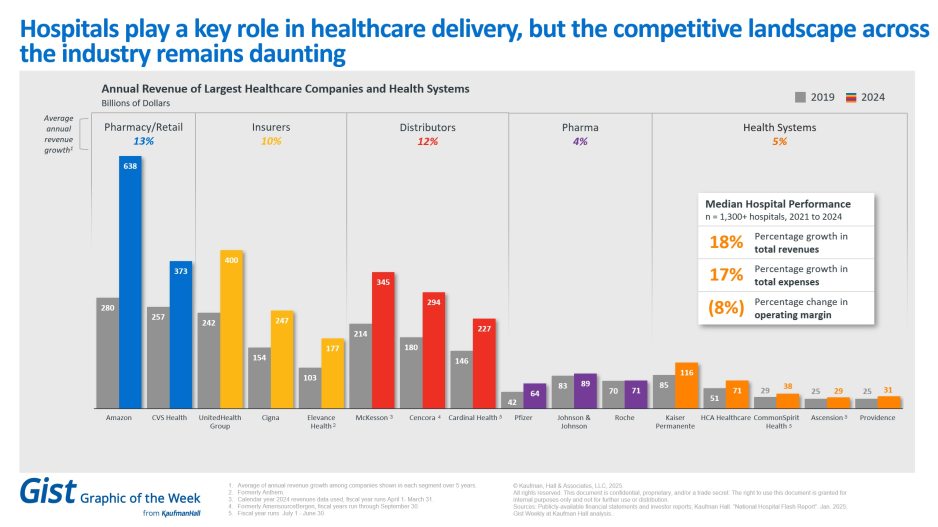
  • Kauffman Hall offers an infographic about “The State of Trust in Public Health in AmericaMedCity”
  • MedCity News shares seven announcements from the VIVE Conference, a few of which already were included in the FEHBlog.
  • Per Fierce Pharma,
    • “Pfizer is pulling further away from the gene therapy field with its decision to discontinue hemophilia product Beqvez.
    • “The New York pharma is ending global development and commercialization of Beqvez less than a year after an FDA approval for the gene therapy to treat hemophilia B. The one-time treatment carried a list price of $3.5 million per person.
    • “Several reasons led to the discontinuation, including limited interest from patients and doctors toward hemophilia gene therapies to date, a Pfizer spokesperson told Fierce Pharma in a statement.
    • “No patients seem to have received commercial Beqvez since its FDA nod in April 2024. The Pfizer spokesperson said the company will communicate the news to patients and providers that are in the treatment qualification process, adding that the company remains committed to supporting those who received the med in any clinical trial.
    • “Following Beqvez’s exit from the market, Pfizer has no commercial or clinical-stage gene therapies left in the works, according to its website. The spokesperson confirmed that the company doesn’t have any active gene therapy programs at the moment.”

Thursday Report

Photo by Josh Mills on Unsplash

From Washington, DC,

  • The Wall Street Journal reports,
    • “Senate Republicans moved to take their first step Thursday toward funding new spending on border security and the military, while Democrats prepared to put GOP lawmakers on the record on uncomfortable issues at the start of President Trump’s new term.
    • ‘The Senate was set to start a series of votes related to Republicans’ budget blueprint aimed at unlocking $342 billion in spending—and the same amount of offsetting cuts—over four years, which is expected to culminate in the plan’s passage sometime Friday morning. 
    • “The process of debating and amending the budget resolution was slated to begin late Thursday. A budget resolution—if passed by both chambers—unlocks a process known as budget reconciliation, which allows the Senate to bypass its filibuster rules and pass legislation with a simple majority instead of the 60-vote threshold for most measures. The process would allow Republicans to pass Trump’s fiscal agenda later this year without needing Democratic help. The Senate and House then would have to agree on final legislation. 
    • “But the reconciliation process also will empower Democrats to propose as many amendments as they want, leading to what is expected to be an all-night “vote-a-rama.” While the amendments are nonbinding, they offer a rare chance for the minority party to force the majority to follow its lead.
    • “Democrats are going to hold the floor all day long—and all night long—to expose how Republicans want to cut taxes for billionaires while gutting things Americans care about most: healthcare, jobs, public safety, national security, housing, education,” Senate Minority Leader Chuck Schumer (D., N.Y.) said.”
  • Per a Senate news release,
    • “Sen. Chuck Grassley (R-Iowa), a senior member and former chairman of the Senate Finance Committee, joined Sen. Amy Klobuchar (D-Minn.) in reintroducing the Safe and Affordable Drugs from Canada Act. The bipartisan bill would allow Americans to safely import prescription drugs from Canada – lowering costs, increasing access and strengthening competition in the pharmaceutical market. 
    • “Congress must take an all-of-the-above approach to lowering the price of prescription drugs. Our commonsense, bipartisan bill would provide Americans increased access to safe, affordable prescription drugs available in Canada, while boosting much-needed competition in the pharmaceutical industry,” Grassley said
    • “Americans pay the highest prices in the world for prescription drugs,” Klobuchar said. “Our bipartisan legislation would save Americans money by allowing them to import their medications from pharmacies in Canada. Brand-name prescription drugs that we invent here in America cost more than twice as much in the United States as in Canada. Americans deserve better. Building on my legislation to allow Medicare to negotiate lower prescription drug costs, I will continue to work to increase competition in the pharmaceutical market, so Americans no longer get ripped off by Big Pharma.” 
    • “Find bill text HERE.” 
  • Fierce Pharma tells us,
    • “As the second Trump administration settles in, the U.S.’ top pharmaceutical trade group is drafting its ambitions for the next four years ahead of a planned meeting with the president on Thursday.
    • “The sit-down between President Donald Trump and leaders from the Pharmaceutical Research and Manufacturers of America (PhRMA) will provide the trade group’s head, Stephen Ubl, and CEOs from several of the world’s top drugmakers with a potential avenue to sway the commander in chief’s views on policies affecting the industry, Bloomberg reported, citing people close to the matter.
    • “In particular, the industry wants to garner support for adjustments to certain drug pricing provisions baked into 2022’s Inflation Reduction Act (IRA), the news service said.” * * *
    • “As for what that government-industry collaboration might look like, PhRMA this week released its 2025 policy agenda (PDF), which broadly seeks to promote pro-innovation regulatory and trade positions, challenge features of the IRA price negotiations, curb hospital drug markups and clamp down on pharma middlemen.”
  • Yesterday, the Congressional Research Service posted an In Focus paper on U.S. healthcare spending and coverage.
  • Tammy Flanagan, writing in Govexec, explains “What happens to my insurance when I leave the federal government?”
  • NCQA has opened its HEDIS measures public comment period.
    • “NCQA’s public comment period is open and ready for your input.
    • “NCQA seeks public feedback on proposed new measures, changes to existing measures and measure retirements, and NCQA acknowledges that the health care policy environment is rapidly evolving at this time. Reviewers are asked to submit comments to NCQA in writing via the Public Comment website by 5:00 p.m. (ET), Thursday, March 13. NCQA will take into account all comments received and the evolving environment as NCQA moves forward to prepare the final versions of these measures.
    • “NCQA seeks comments on the following:
      • “Three new HEDIS measures.
      • “Revising six HEDIS measures.
      • “Retiring one HEDIS measure.
      • “Cross-cutting item for HEDIS to align with federal standards for race and ethnicity.
      • “Three new measures for the Diabetes Recognition Program.” * * *
    • The public comment period ends at 5:00 p.m. (ET) on Thursday, March 13. Visit My NCQA to submit comments. For details on proposed changes, visit the NCQA website.
  • Per an HHS news release,
    • “Today, the U.S. Department of Health and Human Services (HHS) Office for Civil Rights (OCR) took action to support President Trump’s executive orders defending children and restoring biological truth in civil rights and health information privacy enforcement.
    • “As directed by President Trump’s Executive Order 14187, “Protecting Children from Chemical and Surgical Mutilation,” HHS OCR rescinded prior Administration guidance entitled “HHS Notice and Guidance on Gender Affirming Care, Civil Rights, and Patient Privacy,” issued March 2, 2022 (“2022 OCR Notice and Guidance”).  This rescission supports Administration policy in Executive Order 14187 that HHS will not promote, assist, or support “the so-called ‘transition’ of a child from one sex to another, and it will rigorously enforce all laws that prohibit or limit these destructive and life-altering procedures.”  This rescission also aligns with Administration policy in Executive Order 14168, “Defending Women from Gender Ideology Extremism and Restoring Biological Truth to the Federal Government.”
    • “Today’s rescission provides important notice to the regulated community that the 2022 OCR Notice and Guidance no longer represents the views or policies of HHS OCR,” said OCR Acting Director Anthony Archeval.  “The rescission is a significant step to align civil rights and health information privacy enforcement with a core Administration policy that recognizes that there are only two sexes:  male and female.”
    • “Under the prior Administration, HHS through OCR provided notice to the public of how OCR intended to interpret civil rights and health information privacy authorities to protect the chemical and surgical mutilation of children, what the prior Administration referred to as “gender-affirming care.” Section 5 of Executive Order 14187 specifically directs HHS to rescind this guidance.
    • “OCR’s action is part of a larger initiative to defend women and children and restore biological truth to the federal government.
    • “OCR’s rescission of the 2022 OCR Notice and Guidance is available here: https://www.hhs.gov/sites/default/files/ocr-rescission-february-20-2025-notice-guidance.pdf – PDF

From the judicial front,

  • Govexec informs us,
    • “A federal judge on Thursday denied the National Treasury Employees Union and other federal employee unions’ request to block the mass firings of their members who are probationary employees, future large-scale layoffs across agencies pursuant to a Trump executive order and any renewal of the “deferred resignation” program for federal employees. 
    • “U.S. District Judge Christopher R. Cooper, an Obama appointee, said in his preliminary ruling that the unions likely must first bring their claims before the Federal Labor Relations Authority, whose chairwoman Trump recently fired ahead of the expiration of her term. 
    • “Although district court review may appear more efficient or convenient to NTEU, its preference does not insulate its claims from the [Federal Service Labor-Management Relations Statute] review scheme,” Cooper wrote.”
  • FEHBlog note — This is the same legal outcome that occurred in the preliminary injunction challenge to the Fork in the Road program in federal district court in Boston.
  • Reuters reports,
    • “Regeneron (REGN.O) has won a court ruling that will make it harder for U.S. authorities to win a lawsuit accusing it of paying illegal kickbacks through a charity to promote the use of its expensive eye drug Eylea.
    • In a unanimous opinion, on Tuesday, a three-judge panel of the 1st U.S. Circuit Court of Appeals found that the United States must prove that the alleged kickbacks directly caused Medicare, the federal health insurance program for Americans aged 65 and older, to make payments for Eylea that it otherwise would not have made.
    • “The government had argued that proving illegal kickbacks alone would be enough.
    • “We are pleased with the decision from the appellate court and look forward to presenting our case to a jury,” Regeneron said in a statement.”

From the U.S. public health and medical research front,

  • ABC News lets us know,
    • “Nature versus nurture: Scientists are gathering more evidence on which has more of an impact on human well-being amid the aging process.
    • “While both environmental exposures and genetics are known to play important roles in shaping human aging, living conditions and lifestyle choices impact human health much more than genetics, according to a new study published Wednesday in Nature Medicine.
    • “Researchers from Oxford Population Health used data from nearly 500,000 participants in the U.K. to assess the influence of 164 environmental factors and genetic risk scores for 22 age-related diseases and premature death, according to the paper.
    • “The data showed that environmental factors accounted for 17% of the variation in risk of death, compared to less than 2% explained by genetic predisposition.
    • “Smoking, socioeconomic status, physical activity and living conditions had the most impact on mortality and biological aging, the study found.”
  • Per Medscape,
    • “A new analysis of long COVID patients has identified five distinct subtypes that researchers say will help doctors diagnose the condition.
    • “The new five-type index, developed by federal researchers with the National Institutes of Health’s RECOVER COVID Initiative, identified the most common symptoms in 14,000 people with long COVID, with data from an additional 4000 people added to the updated 2024 index.
    • “By using the index, physicians and researchers can better understand the condition, which is difficult to treat and diagnose because no standard definitions or therapies have been developed. Doctors can use the index to offer more targeted care and help patients manage their symptoms more effectively.”
  • STAT News relates,
    • “Four years after Apple announced a study to explore how its products could be used to support people with asthma, an application developed from that research is now available to the public.
    • “Called Asthma Tool, the free software allows users to track their symptoms and triggers and to use wearable devices to monitor vitals, like resting heart rate, for signs that asthma may be acting up.” * * *
    • “Asthma Tool is an outgrowth of Apple’s Asthma Digital Study with insurer Anthem (now Elevance Health) and researchers at the University of California Irvine School of Medicine. Apple announced the study alongside two other research projects in 2020, saying it hoped to investigate how the Apple Watch’s new feature for measuring blood oxygen could be used in future health applications. In 2023, the collaborators released preliminary data suggesting that the asthma study helped Medicaid beneficiaries stay out of the emergency department.
    • “Despite the promising data, Apple has so far chosen not to release an asthma product on its own. The new Asthma Tool was released by CareEvolution, a clinical trials software company that developed the app used in the asthma study. The product is available as a module through the company’s MyDataHelps platform that lets people collect data for personal tracking and allows them to participate in research. MyDataHelps can be used on the web and or as an app on Apple or Android smartphones.”
  • The American Journal of Managed Care points out,
    • “The rollout of 2 major interventions to prevent severe respiratory syncytial virus (RSV) in infants—the RSV prefusion F (RSVpreF; ABRYSVO) vaccine for pregnant individuals and the monoclonal antibody nirsevimab (Beyfortus) for newborns—has shown high uptake in a recent cohort study.
    • “Conducted at a single academic center, the study found that 64% of eligible pregnant individuals received the RSVpreF vaccine, while 70% of eligible infants received nirsevimab before hospital discharge.
    • “This retrospective cohort study is published in JAMA Network Open.
  • Per Health Day,
    • “A blood test can help people with irritable bowel syndrome cut out specific trigger foods most likely to worsen their condition, a new study suggests.
    • “About 60% of IBS patients who followed a diet guided by the results of the blood test wound up suffering less stomach pain, researchers reported recently in the journal Gastroenterology.
    • “By comparison, 42% of IBS patients who didn’t get the blood test experienced a reduction in stomach pain, results show.
    • “The test “requires additional validation but could move us one step closer to a ‘precision nutrition’ approach, in which providers can offer personalized dietary recommendations to each patient with IBS,” researcher Dr. William Chey, chief of gastroenterology and hepatology at the University of Michigan, said in a news release.
    • “The blood test, called inFoods IBS, tests for the potential of 18 foods to worsen IBS symptoms in specific patients. These include wheat, oat, rye, whole egg, yeast, cow’s milk, black tea, cabbage, corn, grapefruit, honey, lemon and pineapple.
  • NBC News reports that “mRNA vaccines show promise in pancreatic cancer in early trial. Personalized mRNA vaccines show promise as pancreatic cancer treatment, a phase 1 clinical trial published Wednesday in Nature found.”
  • Per Healio,
    • “Patients with COPD had better inhaler adherence when invited to enroll in a program that lowers cost sharing for maintenance inhalers and offers medication management services, according to results published in JAMA Internal Medicine.
    • “These findings contribute to the limited evidence of interventions that can improve inhaler adherence in COPD, a disease with high morbidity whose costs are disproportionately incurred by Medicare, and the even more limited evidence addressing cost-related nonadherence, a growing concern given the high prices of inhalers,” Sumit D. Agarwal, MD, MPH, PhD, physician and health economist at Brigham and Women’s Hospital, and colleagues wrote.” * * *
    • “To better align insurance coverage with clinical benefit, insurers might consider selectively lowering cost sharing and providing medication management services for clinically effective, high-value services,” Agarwal and colleagues wrote.”

From the U.S. healthcare business front,

  • Healthcare Dive relates,
    • Community Health Systems’ losses widened in 2024 to $516 million, up from $133 million in 2023, as the health system struggled with cost pressures, including rising medical specialist fees and payer denials.
    • “The system also attributed its losses to divestitures. CHS has been chasing at least $1 billion in profits from hospital sales as it looks to pay down debt, but sales have dinged the provider’s operating income.
    • “This year, CHS expects to take in between $12.2 billion and $12.6 billion in revenue, with adjusted earnings before interest, taxes, depreciation and amortization ranging from $1.5 billion to $1.6 billion. The health system could upwardly revise its EBITDA projections if state supplemental payment programs are approved as planned, CHS CFO Kevin Hammons told investors Wednesday morning.”
  • Beckers Hospital CFO Report adds,
    • “Franklin, Tenn.-based Community Health Systems expects to offload two North Carolina hospitals and two Florida hospitals in the first quarter for about $540 million in gross proceeds, executives said during the company’s fourth-quarter earnings call on Feb. 19.
    • “CHS plans to sell ShorePoint Health Port Charlotte (Fla.) and certain assets of ShorePoint Health Punta Gorda to Altamonte Springs, Fla.-based AdventHealth for $265 million in cash. The deal is expected to close in the first quarter, subject to regulatory approvals and closing conditions.
    • “The for-profit system also plans to sell Lake Norman Regional Medical Center in Mooresville, N.C., to Duke University Health System. Durham, N.C.-based Duke aims to purchase the 123-bed hospital and its related assets for about $280 million.”
  • Modern Healthcare reports,
    • “CVS Health’s MinuteClinic is collaborating with Emory Healthcare Network to extend primary care services to more patients in Georgia.
    • “With the new partnership, MinuteClinic now offers in-network primary care services at all 35 clinics in the state to most payers through Emory’s integrated network. Patients also have access to Emory’s network of acute care, specialty care, labs, radiology and diagnostic services, according to a Thursday news release.
    • “A CVS spokesperson said the Emory collaboration marks the first time MinuteClinic has expanded into primary care services in partnership with a health system. The 35 locations are co-branded.”
  • Per a Talkspace news release,
    • “We closed out 2024 with a strong fourth quarter, delivering revenue and adjusted EBITDA growth as expected. We continued to broaden our reach, drive awareness and adoption, enhance the provider and member experience, and deliver high-quality care. I’m proud of all that Talkspace has accomplished this year to build a sustainable, profitable business,” said Dr. Jon Cohen, CEO of Talkspace.
    • “Dr. Cohen continued, “Over the last three years, we’ve undergone a significant strategic shift, focusing on the payor market and growing our total covered lives to nearly 200 million. We’ve leveraged our well-known brand to drive awareness of Talkspace as an affordable way to access care for not just commercially insured adults, but also teens, seniors, and active members of the military. Talkspace has established a clear competitive advantage in the marketplace with the comprehensive nature of our solution, and we remain dedicated to meeting the escalating demand for accessible, high-quality behavioral health services in the U.S.”
  • From a Him and Hers news release,
    • “Hims & Hers today announced its plans to introduce at-home lab testing through its platform. The new capability will empower customers to take control of their health with deeper insights and enable providers to access a breadth of data and biomarkers that can help identify risk of disease before it develops, for more precise clinical decision-making. 
    • “The company has acquired an at-home lab testing facility, Sigmund NJ LLC marketed as Trybe Labs, which will allow Hims & Hers to support at-home blood draws and more comprehensive whole-body testing. The acquisition will broaden the company’s ability to offer a wide range of personalized treatments, supplements and medications and accelerate the expansion into new high-impact clinical categories including low testosterone, perimenopausal and menopausal support.”

Happy Presidents Day

Mount Rushmore Photo by Laura Nyhuis on Unsplash

From Washington, DC

  • Milliman explains how to navigate the new mental health parity rules which are under a legal challenge before the U.S. District Court for the District of Columbia.
  • Per Fierce Pharma,
    • “Pfizer’s two-year run with the only 5-in-1 meningococcal vaccine on the U.S. market has come to an end. Now, GSK is ready to play catch-up after nabbing its own FDA approval. 
    • “The FDA approved the British drugmaker’s Penmenvy vaccine to protect people ages 10 to 25 against meningococcal serogroups A, B, C, W and Y (MenABCWY), which together cause the most invasive meningococcal disease (IMD) cases globally. The shot mixes the antigenic components of GSK’s established meningococcal vaccines Bexsero and Menveo, which target MenB and MenACWY, respectively, to offer broader coverage in fewer doses.”
  • MedPage Today adds,
    • “The FDA approved insulin-aspart-szjj (Merilog) as the first rapid-acting insulin biosimilar product to treat adults and children with diabetes, the agency announced Friday [February 14].
    • “Like its reference counterpart, insulin aspart (Novolog), the biosimilar helps lower mealtime blood sugar spikes to improve glycemic control. The approval is for both a 3 mL single-patient-use prefilled pen and a 10 mL multiple-dose vial.
    • “For the millions of people who rely on daily injections of insulin for treatment of diabetes, having a biosimilar option for their rapid-acting insulin injection can truly make a difference, as biosimilar products have the potential to increase access to these life-saving medications,” said Sarah Yim, MD, director of the Office of Therapeutic Biologics and Biosimilars in the FDA’s Center for Drug Evaluation and Research (CDER), in a statement.

From the U.S. public health and medical research front,

  • Beckers Clinical Leadership identifies America’s priciest health conditions.
  • Medscape notes,
    • “The CDC recommends everyone age 6 months or older get a flu vaccine, although so far this year, fewer adults have gotten the shot, compared to last year. The adult flu vaccination rate this season is 44%, down from 48% last season. According to the National Foundation for Infectious Diseases, “as long as influenza (flu) viruses are circulating in your community, it’s not too late to get vaccinated against flu.”
  • The New York Times offers “New Insights into Older Hearts. Heart disease is more common in people over 65, but treatments are better than ever. That can complicate decision-making for older heart patients.”
  • Consumer Reports, writing in the Washington Post, explains “How to keep your eyes healthy and your vision sharp. Cataracts, dry eyes, glaucoma and other eye problems become more common with age. Knowing the early signs and acting fast can make a difference.”
  • Per Healio,
    • There is evidence that GLP-1s can ameliorate psychiatric and neurologic symptoms.
    • More clinical trials on the direct and indirect effects of GLP-1s and their mechanisms of action are needed.
  • and
    • “American Indian and Alaska Native women face substantially higher risk for heart disease, particularly during reproductive-age years.
    • “Generational trauma, violence and racism have compounded [pregnancy] risks.”

From the U.S. healthcare business front,

  • Modern Healthcare reports,
    • “CommonSpirit Health’s quarterly net patient revenue dipped for the first time in months.
    • “The health system saw net patient revenue of $8.9 billion in the second quarter of fiscal 2025, a 5% drop from the year-ago period, according to its earnings report released Friday. Net patient revenue, or revenue from providing healthcare services after contractual discounts, makes up most of providers’ total operating revenue and can have a big impact on the bottom line.
    • “The results were markedly different from last year, when CommonSpirit was one of several systems that saw big increases in net patient revenue due to higher utilization and improved payer rates.
  • Beckers Hospital Review shares more insights on CommonSpirit Health’s second quarter report.
  • Beckers Payer Issues discusses the adverse impact of the Inflation Reduction Act on payers.
  • Fierce Healthcare relates,
    • “As obesity rates rise across the U.S., a new study from UnitedHealthcare and the Health Action Council examines the financial costs that this growing “epidemic” may cause for employers.
    • “The report (PDF) notes that 75% of adults in U.S. are either overweight or obese, up from 50% in 1990. Obesity rates grew fastest among younger adults, according to the report.”The HAC represents about 230 self-funded employers, and, among its members, about a quarter (26%) have been diagnosed with obesity. The obese population accounts for 46% of the employers’ medical spend, according to the report.
    • “Per member per month costs for obese employees were more than double on average compared to those who were not obese, the study found. Per member per month costs for those with obesity averaged $973, compared to $421 for non-obese workers.”
  • and
    • “As both regulatory and market forces are pushing the industry toward more transparency in healthcare pricing, MultiPlan sees opportunities to be a bigger player in data and tech for providers, payers and employers.
    • “The data analytics company, which has been in the market for 45 years, launched a rebrand at the ViVE 2025 digital health conference on Monday.
    • “Rebranded Claritev, the company is focused on developing new products and technologies that provide data insights to a broader swath of the healthcare market. Providing “actionable insights” to healthcare organizations will be a key part of the company’s growth, Travis Dalton, chairman, CEO and president, told Fierce Healthcare in an interview in the lead-up to the ViVE 2025 event.”
  • MedTech Dive informs us,
    • “Medtronic has bought nano surface technology from Nanovis for use in its next-generation spine fusion implants.
    • “Nanovis, which disclosed the deal Tuesday [February 11], has developed nanotechnology to improve the speed and consistency of bone growth. The company has its own portfolio of spine devices.
    • “Medtronic will use the technology to develop PEEK interbody spine fusion devices that enhance implant fixation. The technology could help bone grow and fuse with the implant.”
  • The Wall Street Journal reports,
    • “If you need a prescription filled in the coming years, don’t be surprised if it flies in and lands in your backyard. 
    • “Hospitals and doctors are increasingly experimenting with the use of drones to deliver medications, lab tests and supplies to patients being treated at home. Some are testing whether drones can be used to deliver organs for transplant more quickly and cheaply. And in some cities, a 911 call today could set off a drone carrying a defibrillator, Narcan spray or tourniquet to the scene of an emergency ahead of the arrival of paramedics.” * * *
    • “One of the challenges in this space five to 10 years ago was that there wasn’t a really clear regulatory framework. Over the last 18 months this has solidified, especially in the U.S. There is now a clear path to scale,” says Adam Woodworth, chief executive officer of Wing, the drone-service unit of Google’s parent Alphabet GOOGL.

Friday Report

From Washington, DC,

  • Kaufmann Hall considers health policy in the second Trump administration.
  • Fierce Healthcare lets us know,
    • “The Department of Health and Human Services (HHS) is firing up to 5,200 probationary employees today, as part of an unprecedented cutting of jobs across the federal government.
    • “Of the impacted workers, 1,300 are employed by the Centers for Disease Control and Prevention (CDC) while a sizeable portion work for the National Institutes of Health (NIH). Employees were given four weeks paid administrative leave and notified on the morning of Feb. 14, as first reported by the Associated Press.” * * *
    • “The Department of Veterans Affairs announced layoffs Thursday affecting more than 1,000 federal workers, in a move the Trump administration said would save $98 million per year.”
  • The Wall Street Journal notes,
    • The Trump administration’s effort to slash the federal workforce is pushing employees into a challenging job market, where their age and lack of corporate experience can hold them back.
    • Federal workers are also facing an environment where hiring for white-collar jobs has slowed.
    • Despite the availability of state and local government jobs, many of these positions take place outside offices and aren’t a good match for federal workers’ experience.
  • The American Hospital Association News tells us,
    • “President Trump Feb. 13 signed a presidential memorandum ordering the development of a comprehensive plan for “restoring fairness in U.S. trade relationships and countering non-reciprocal trading arrangements.”
    • “The announcement directs the U.S. Trade Representative and the Secretary of Commerce, in consultation with the secretaries of a number of U.S. agencies, to develop plans for reciprocal tariffs on every country that taxes U.S. imports and submit a report to the president. In addition, within 180 days of the memo, the director of the Office of Management and Budget will assess all fiscal impacts on the federal government and the impacts of any information collection requests on the public and deliver an assessment in writing to the president.
    • “For more information, see the presidential memo and fact sheet.”

From the public health and medical research front,

  • The Centers for Disease Control and Prevention announced today,
    • COVID-19
      • “COVID-19 activity is elevated in many areas of the country. Though wastewater levels are high, emergency department visits are at low levels, and laboratory percent positivity is stable. Emergency department visits and hospitalizations are highest in older adults and emergency department visits are also elevated in young children.
      • “There is still time to benefit from getting your recommended immunizations to reduce your risk of illness this season, especially severe illness and hospitalization.
      • “CDC expects the 2024-2025 COVID-19 vaccine to work well for currently circulating variants. There are many effective tools to prevent spreading COVID-19 or becoming seriously ill.”
    • Influenza
    • RSV
      • “RSV activity remains elevated but is declining in most areas of the country. Emergency department visits and hospitalizations are highest in children and hospitalizations are elevated among older adults in some areas.”
    • Vaccination
      • “Vaccination coverage with influenza and COVID-19 vaccines are low among U.S. adults and children. Vaccination coverage with RSV vaccines remains low among U.S. adults. Many children and adults lack protection from respiratory virus infections provided by vaccines.”
  • Beckers Clinical Leadership points out,
    • “A farmer in Mercer County, Ohio, has tested positive for H5N1 influenza, marking the state’s first human case of bird flu. 
    • “The worker had direct contact with deceased commercial poultry, according to a Feb. 12 news release from the Ohio Department of Health.”
  • Per Medscape,
    • “How long will vaccine protection last? A simple blood test may have the answer. Researchers at Stanford School of Medicine, Stanford, California, have identified a molecular signature in the blood that appears days after vaccination and predicts the durability of the immune response. Published in Nature Immunology in January, this discovery could transform vaccine development, testing, and personalization of vaccines. The study also offers insights into why some vaccines provide lifelong immunity while others lose effectiveness within months.”
  • Per Healio
    • “The percentage of U.S. adults with obesity did not significantly rise from 2013 to 2023, though a small uptick in the rate of obesity was seen for children and adolescents, according to data published in JAMA.
    • “From 2013 to August 2023, there were small increases in obesity in children and adolescents aged 2 to 19 years, driven by increases among males and children aged 2 to 5 years,” Samuel D. Emmerich, DVM, an epidemiologist at the CDC National Center for Health Statistics, told Healio. “In adults aged 20 years and older, severe obesity increased slightly, driven by increases among women and middle-aged adults. There were no significant changes in any other subgroups, in high weight-for-length or in high waist circumference.”
  • Per HCPLive,
    • “New research is shedding light on a heightened risk of colorectal cancer (CRC) in patients with both nonadvanced and advanced adenomas detected during colonoscopy, highlighting the importance of surveillance colonoscopy in this population and the need for more frequent screening among those with advanced adenomas.
    • “Leveraging data from the Minnesota Colon Cancer Control Study, the present analysis found individuals with adenomas at colonoscopy, regardless of whether or not they were advanced, were at a greater risk of developing CRC than those with no adenomas. Additionally, findings showed participants with advanced adenomas were at increased risk of both CRC mortality and all-cause mortality.
    • “Studies have reported the association of advanced adenomas with increased risk of CRC and CRC-related death over the following 5 to 15 years compared with having no advanced adenomas. The association of nonadvanced adenomas with CRC incidence and mortality after colonoscopy is less clear,” Aasma Shaukat, MD, MPH, a gastroenterologist and Robert M. and Mary H. Glickman Professor of Medicine at New York University Grossman School of Medicine, and colleagues wrote. “However, to our knowledge, no studies have evaluated the association of adenomas and advanced adenomas with all-cause mortality.”
  • Health Day adds,
    • “You may be less likely to develop an especially lethal form of colon cancer if you’re a longtime consumer of yogurt, new research finds.
    • “Folks who ate two or more servings of yogurt per week for years had 20% lower odds for an aggressive type of tumor typically found on the right side of the colon, researchers reported Feb. 12 in the journal Gut Microbes.
    • “The tumors’ tissues also tested positive for a bacterium commonly found in yogurt, called Bifidobacterium.
    • “It has long been believed that yogurt and other fermented milk products are beneficial for gastrointestinal health,” co-senior author Dr. Tomotaka Ugai, a pathologist at Mass General Brigham in Boston, noted. “Our new findings suggest that this protective effect may be specific for Bifidobacterium-positive tumors.” 

From the U.S. healthcare business front,

  • The Wall Street Journal reports,
    • Johnson & Johnson’s halt of U.S. sales of a new heart-rhythm device due to safety concerns is hobbling a major strategic push by the company into one of the industry’s fastest-growing markets.
    • “The healthcare company paused use of the device, known as Varipulse, last month after receiving reports of neurovascular events in several patients. The company didn’t explain what the events were, but several strokes have been reported to a federal device-safety database, and doctors’ concerns are centered on strokes.
    • “J&J has been racing to catch up to competitors in the fast-growing market for medical devices treating irregular heart rhythms, and to revive the company’s medical-device business generally. 
    • “Rivals Boston Scientific and Medtronic have dominated the market for so-called pulsed-field ablation devices, which research firm Clarivate estimates will reach about $12 billion by 2032, from $1.6 billion last year. 
    • “More than 10 million Americans have the heart-rhythm disorder that the devices treat. 
    • “This is a huge hit for J&J,” said Dr. John Mandrola, an electrophysiologist at Baptist Health in Louisville, Ky., who treats patients with heart-rhythm problems. “The market’s so big, and this just sets them back.”
  • Beckers Payer Issues lists major health insurers by 2024 medical loss ratios.
  • Kaufmann Hall takes a look at “Navigating Health Systems Through a Decade of Change” via a conversation with Rich Liekweg, CEO of BJC Health System in Missouri, and Nick Barto, president of BJC Health System.

Happy Lincoln’s Birthday

Our greatest President

From Washington, DC

Capitol Hill News

  • The American Hospital Association (AHA) News tells us,
    • House Republicans Jan. 12 released a budget resolution for fiscal year 2025 focusing on the Trump administration’s agenda on border security, defense, energy and taxes. The budget resolution, which acts as an outline for the reconciliation process, calls for increasing the debt ceiling by $4 trillion and allows for $4.5 trillion in spending for tax cuts. It also would allocate $200 billion for border and defense spending. The resolution instructs seven committees to come up with no less than $1.502 trillion in mandatory cuts over ten years. 
    • Notably, for health care, the bill instructs the House Energy and Commerce Committee to cut mandatory spending by no less than $880 billion. The committee has primary jurisdiction over a number of health care programs, including Medicaid, and some proposals have been circulating that would enact significant cuts to Medicaid. The House is expected to mark up its budget resolution tomorrow. 
  • Politico adds,
    • “Senate Republicans easily pushed their budget resolution out of committee on Wednesday — the first step toward being able to enact President Donald Trump’s massive domestic policy agenda.
    • “The Senate Budget Committee voted 11-10, along party lines, to approve the fiscal framework meant to tee up a package of energy, border security and defense policy through the partisan budget reconciliation process. Across the Capitol, House GOP leaders struggled at the same time to rally their own around a far more expansive plan that would pave the way for legislation that would bundle those same policies alongside trillions of dollars in tax cuts.”
  • The Senate Invoked, 53-47: Motion to invoke cloture on Executive Calendar #17 Robert F. Kennedy, Jr. to be Secretary of HHS. The Senate is expected to confirm Mr. Kennedy’s nomination as HHS Secretary Thursday morning.
  • Fierce Healthcare lays out the “top policy issues for hospitals, payers, docs and tech” on Capitol Hill this year.

White House news

  • Here is a link to the President’s February 11 executive order captioned “IMPLEMENTING THE PRESIDENT’S “DEPARTMENT OF GOVERNMENT EFFICIENCY” WORKFORCE OPTIMIZATION INITIATIVE,” which was mentioned in Tuesday’s report.
  • The American Society of Pension Professionals and Actuaries lets us know,
    • “Daniel Aronowitz has been officially nominated by the White House to become next Assistant Secretary of Labor for the Employee Benefits Security Administration (EBSA). He is the President of Euclid Fiduciary (now Encore Fiduciary), a fiduciary liability insurance underwriting company for employee benefit plans.
    • “His experience in the professional liability industry includes expertise as a coverage lawyer and underwriter.”
  • The AHA News informs us, “Tom Engels is the new administrator for the Health Resources and Services Administration, according to its website. Engels previously held the same position in the first Trump administration from 2019 to 2021.”
  • Federal News Network updates us on federal agency efforts to bring their workforces back to office.

Judicial front

  • Federal News Network reports,
    • “The Trump administration is free to continue implementing its controversial deferred resignation program after a federal court in Massachusetts dissolved a restraining order that had delayed the program’s deadline by several days.
    • “In a written opinion Wednesday afternoon, Judge George O’Toole said he had determined that the three federal unions that had challenged the program lacked the standing they’d need in order to meet the legal standard for a temporary restraining order.” * * *
    • “Wednesday’s ruling does not completely end the legal challenge — it only affects the unions’ requests for a temporary pause in the deferred resignation program while their claims work their way through the litigation process. However, in denying a temporary restraining order and preliminary injunction, O’Toole said he had determined the unions were unlikely to succeed on the merits of their case.
    • “OPM is pleased the court has rejected a desperate effort to strike down the deferred resignation program. As of 7 p.m. tonight, the program is now closed,” said McLaurine Pinover, a spokeswoman for the office. “There is no longer any doubt: the deferred resignation program was both legal and a valuable option for federal employees. This program was carefully designed, thoroughly vetted, and provides generous benefits so federal workers can plan for their futures.”
    • In fact, the Fork in the Road program closed at 7:20 pm ET Wednesday night per its website.

FDA News

  • Fierce Pharma notes,
    • “More than 13 years after its initial FDA approval, Pfizer’s blood cancer drug Adcetris has nabbed another regulatory green light to treat large B-cell lymphoma (LBCL).
    • “The CD30-directed antibody-drug conjugate has been approved in combination with lenalidomide and rituximab for certain LBCL patients, the FDA said Wednesday. Eligible patients must have tried at least two prior lines of systemic therapy and be ineligible for an autologous hematopoietic stem cell transplant or a CAR-T therapy.
    • “Adcetris won the approval after showing it helped patients with heavily pretreated LBCL live longer in a phase 3 trial.”

From the public health and medical research front,

  • CBS News reports,
    • “For the first time since the beginning of the pandemic, more people in the U.S. died of influenza than from COVID-19 in the week ending on Jan. 25, according to weekly figures published by the Centers for Disease Control and Prevention.
    • “For the week ending on Jan. 25, nearly 1.7% of all deaths nationwide were attributed to the flu, compared to roughly 1.5% being the result of COVID-19, according to CDC data. Rates of influenza hospitalizations are more than three times higher than COVID-19 hospitalizations amid this season’s record wave of flu infections.”
  • and
    • “The U.S. confirmed at least a dozen deaths from whooping cough last year, according to preliminary figures released this week by the Centers for Disease Control and Prevention. That marks the most fatalities from the bacterial infection since a 2017 surge of the illness, which is also known as pertussis.
    • “Over the last month, pertussis infections have been rising again. While cases reported to the CDC by health departments dipped over the winter holidays, weekly infections have accelerated for a month straight since then.”
  • The New York Times adds,
    • “A worsening measles outbreak has taken root in Texas, sickening two dozen and hospitalizing nine on the western edge of the state, where childhood vaccination rates have dwindled in recent years.
    • “As of Tuesday, 22 children and two adults had been infected, all of whom were unvaccinated, local health officials said. * * *
    • “The Texas outbreak has so far been limited to residents of Gaines County, which borders New Mexico and has roughly 20,000 residents. Last year 82 percent of kindergarten students received the measles, mumps and rubella vaccine, according to state data. That figure is roughly 10 percentage points lower than the average vaccination rate in Texas public schools and far below the federal target of 95 percent for measles vaccination.”
  • Nature points out that “Dozens of new obesity drugs are coming; these are the ones to watch. Next-generation obesity drugs will work differently from Ozempic and Wegovy — aiming to deliver greater weight loss with fewer side effects.”
  • BioPharma Dive, on the other hand, lets us know “A small semaglutide trial suggests the medicine’s suppression of appetite may extend to alcohol, but larger trials are needed to establish a conclusive benefit.”
  • Per Fierce Healthcare,
    • “More than five years ago, Apple launched three medical studies to test how well its Apple Watch can track a person’s mobility and cardiovascular health, changes in hearing and women’s health and fertility.
    • “The tech company is now broadening its health research ambitions to use its devices, including iPhones, Apple Watch and AirPods along with third-party devices, for a longitudinal, virtual study to monitor changes in participants’ health, spanning a wide range of health and disease areas.
    • “Apple wants to tap into the devices and apps that individuals use every day to evaluate the connections between physical and mental health as well as social determinants, such as whether someone lives alone or with family, and how all these aspects of health factor into a person’s overall well-being.”

From the U.S. healthcare business front,

  • Healthcare Dive reports
    • “CVS Health’s profits were nearly cut in half last year as the healthcare giant wrestled with elevated medical costs in its Aetna insurance business. 
    • “The company reported net income of $4.6 billion in 2024, compared with $8.4 billion in the prior year, according to earnings results released Wednesday. 
    • “But CVS showed signs of financial improvement in the fourth quarter, beating Wall Street expectations on earnings and revenue.” 
  • Bloomberg explains,
    • “In the insurance unit, CVS spent 94.8% of premium revenue on medical care in the quarter, less than analysts expected. Investors prefer a lower number. However, CVS said in a separate filing that high use of medical services will continue to pressure the business. 
    • “The company pointed in particular to high costs in its business that manages care for patients on Medicaid, the US health program for the poor. States have been cutting Medicaid rolls since the pandemic, often culling healthier patients in the program while sicker patients remain.” 
  • Fierce Healthcare adds,
    • “CVS Health CEO David Joyner went on the defense of the pharmacy benefit management industry on the company’s Q4 earnings call Wednesday morning.” * * *
    • “One of the most powerful forces helping to offset rising healthcare costs is PBMs like Caremark,” Joyner said. “These entities remain the only part of the drug supply chain and entirely focused on lowering costs, but have erroneously been subject to deceptive rhetoric and misinformation.”
    • “Joyner noted that branded pharmaceutical manufacturers “added $21 billion of annual gross drug spend through their price actions” in January. Drugs where PBMs lack tools to negotiate prices have seen prices rise more than twice as fast as other products, he said.
    • “In addition, Joyner said that “multiple well-known economists” have projected that PBMs create $100 billion in net value each year for the healthcare system.”
  • Per the AHA News,
    • The Council for Affordable Quality Healthcare Feb. 11 released a report  highlighting how the health care industry can save $20 billion by transitioning from manual to electronic workflows.  
    • In addition, it found that the industry could save $515 million annually on electronic prior authorizations and save providers and staff 14 minutes per transaction.
  • Per Fierce Healthcare,
    • “UnitedHealth Group and Amedisys outlined plans to divest a significant number of home health and hospice locations as they seek to close their $3.3 billion merger.
    • “In a court filing issued late last week, UHG said it intends to pursue a divestiture plan that would sell off “at minimum” 128 combined home health and hospice facilities. The company said in the filing that once the divestitures are completed it will operate only 10% of home health services in the U.S. and 4% of hospice services.
    • “UnitedHealth argued that leaves plenty of competition in this space, as it will still be up against 11,000 home health agencies and more than 5,000 hospice agencies across the U.S.
    • ‘The Department of Justice sued to block the deal in mid-November, arguing that it would hamper competition across multiple home health markets.”
  • Per JAMA Open,
    • Question How have the proportion and absolute number of psychiatrists providing professional services to traditional Medicare enrollees changed as the field has grown?
    • Findings In this cross-sectional study using data from 2014 to 2022, the nationwide proportion of psychiatrists billing Medicare Part B declined from 44% in 2014 to 33% in 2022. The number of psychiatrists billing Medicare Part B declined by 3772 during a time when the total number of active psychiatrists increased by 6076.
    • Meaning These findings suggest that during a time of psychiatrist workforce growth, the proportion and number of psychiatrists accepting Medicare Part B decreased, further suggesting potential decreases in access to psychiatrist-led care for older adults and individuals with disabilities.”

Tuesday Report

From Washington, DC,

Capitol Hill news

  • Roll Call reports,
    • “House Republicans are plowing ahead with a budget resolution markup on Thursday before the chamber’s scheduled one-week recess begins the following day. 
    • “The blueprint wasn’t finalized yet and leadership also has some work to do in preparation for the floor, with key holdouts looking for assurances on things like spending cuts and raising the statutory debt ceiling. 
    • “But Speaker Mike Johnson, R-La., said after the GOP conference’s weekly meeting Tuesday that the “intention” was to mark up the blueprint in committee on Thursday after hammering out the details Tuesday. “We’ll be rolling out the details of that probably by tonight,” Johnson said. “We are right on the schedule that we need to be on.”
    • “The Budget panel has a 24-hour notice rule for posting text before bringing the resolution up for a committee vote.
    • “By the end of the day, we’ll be able to have the final pieces to put the budget resolution along with the reconciliation instructions in play, because we have to communicate that in some detail when we mark it up,” House Budget Chairman Jodey C. Arrington, R-Texas, said Tuesday after the conference meeting.”
  • The House Budget Committee has scheduled “a markup for the Concurrent Resolution on the Budget for Fiscal Year 2025 which will be held on February 13, 2025, at 10 am.

White House news

  • The Washington Post reports,
    • “President Donald Trump on Tuesday signed an executive order that calls on federal agencies to work with the U.S. DOGE Service in a bid to cut their existing workforce and limit future hiring. Ahead of the signing, Trump was joined in the Oval Office by Elon Musk, his billionaire ally who is overseeing DOGE, an agency that Trump has empowered to find government efficiencies.”
  • The Office of Personnel Management has updated its Fork in the Road website for the legal developments that occurred yesterday

Medical Coding news

  • The ICD10 Monitor alerts us that 50 new ICD 10 PCS codes will become effective on April 1. 2025.
  • Per a recent government bulletin,
    • The Assistant Secretary for Technology Policy/Office of the National Coordinator for Health Information Technology (hereafter ASTP) Standards Bulletin 2025-1 (SB25-1) describes the development of the Draft United States Core Data for Interoperability Version 6 (Draft USCDI v6), which ASTP released on January 14, 2025. 
    • The USCDI sets the technical and policy foundation for the access, exchange, and use of electronic health information to support nationwide interoperable health information exchange and is a standard stewarded and adopted by ASTP on behalf of the U.S. Department of Health and Human Services (HHS). ASTP publishes new versions of USCDI annually, with a draft version released in January and a final version released in July to keep pace with clinical, technology, and policy changes that influence the use of clinical and related terminology. Draft USCDI v6 includes new data elements that seek to advance interoperability for patient care.
    • SB25-1 describes ASTP’s continued expansion of USCDI, following the same prioritization approach applied to USCDI Version 5. SB25-1 also reflects ASTP’s consideration of submissions for new data elements, comments on previously submitted data elements, and the evolving maturity of data elements through the USCDI+ Program.

From the public health and medical research front,

  • The University of Minnesota’s CIDRAP informs us,
    • “COVID-19 vaccination averted more than 5,000 US in-hospital deaths, 13,000 intensive care unit (ICU) admissions, and 68,000 hospitalizations in 7 months in 2023-2024, researchers from the US Centers for Disease Control and Prevention (CDC) estimated late last week in Vaccine, although with considerable uncertainty.
    • “The investigators estimated COVID-related deaths, ICU admissions, and hospitalizations prevented by vaccination from October 1, 2023, to April 21, 2024, using a novel multiplier model that used causal inference, conditional probabilities of hospitalization, and correlations between data elements in simulations.
    • “The U.S. Centers for Disease Control and Prevention’s Advisory Committee on Immunization Practices (ACIP) has used estimates of the potential benefits and risks to inform vaccine policy decisions, and burden averted estimates can be used to evaluate vaccine policy,” the study authors wrote.”
  • STAT News lets us know,
    • “We’ve talked a lot about how hospitals have been recording a lot more patient visits throughout 2024. One major component of that: There’s been a lot more little bundles of joy lately.
    • “Analysts at investment bank Leerink Partners looked at birth data across four states (Arizona, Colorado, Florida, and North Carolina) and found births in December were up almost 4% year over year. 
    • “There’s an especially interesting trend in Florida: 53% of all births are covered by commercial health insurance (either from the parents’ workplace or the Affordable Care Act exchanges). 
    • “Usually, Medicaid covers the majority of births, but this reversal is “a reflection of redeterminations,” in which states kicked people off Medicaid if they no longer met eligibility requirements that were loosened during the pandemic, Leerink analysts wrote to investors.”
  • The Washington Post reports,
    • “California-based Tri-Union Seafoods has issued a voluntary recall of canned tuna sold at Trader Joe’s, Safeway, Harris Teeter, Walmart, Costco and other major grocery stores in dozens of states.
    • “The recall centers on concerns that a manufacturing defect in the cans may cause “a potentially fatal form of food poisoning,” the company said in a statement Friday.
    • “Tri-Union Seafoods said the defect, located on the cans’ pull-tab lid, may compromise the integrity of the product seal, especially over time, causing it to leak or become contaminated with the clostridium botulinum bacterium, which causes botulism.
    • “While Tri-Union Seafoods has said no illnesses linked to the recalled products have been reported, the company warned consumers not to use the product, “even if it does not look or smell spoiled.” The manufacturing company asked consumers to instead return the recalled tuna for a full refund, throw it away or contact Tri-Union directly for a retrieval kit and a coupon for a replacement product.” * * *
    • “Tri-Union Seafoods issued the recall notice Friday on all tuna products sold under the Genova, Van Camp’s, H-E-B and Trader Joe’s brand names.” * * *
    • Tri-Union’s statement includes UPCs, can codes and best-by dates you can check to determine if your tuna is affected by the recall. Consumers can contact Tri-Union Seafoods at support@thaiunionhelp.zendesk.comor 833-374-0171 to request a replacement product.”
  • The Wall Street Journal lets us know,
    • “We all know cigarettes cause cancer. The memo on booze hasn’t reached everyone.
    • “Doctors say many people are surprised to learn alcohol raises the risk of certain cancers, such as liver, colorectal and breast cancer. And cancer patients say they aren’t always aware of the increased risk until after they have been diagnosed.
    • “As awareness increases—the former U.S. surgeon general recently called for adding warning labels on alcoholic beverages—more people are rethinking their drinking habits. On social-media sites like Reddit, cancer patients talk about replacing alcohol with cannabis, although this, too, has health issues. Others opt for mocktails or nothing at all.”
  • Per Beckers Hospital Review,
    • “A phase 3 trial found that a combination of a Pfizer and Astellas drug, enfortumab vedotin, and Merck’s drug, pembrolizumab, has significantly improved survival rates for patients with advanced bladder cancer. 
    • “The latest results from the trial, which focused on patients with untreated, locally advanced or metastatic urothelial cancer, showed that the combination therapy reduced the risk of death by 49% compared to traditional chemotherapy.” 
  • Healio tells us,
    • “Women prescribed a GLP-1 receptor agonist up to 2 years before conception were less likely to develop hypertensive disorders of pregnancy, gestational diabetes, have a preterm birth or cesarean delivery, researchers reported.
    • “Relatively little is known how preconception GLP-1 receptor agonist use may impact pregnancy outcomes,” Christopher T. Nau, MD, assistant professor in the department of reproductive biology at Case Western Reserve University School of Medicine and the division of maternal fetal medicine at University Hospitals Cleveland Medical Center, told Healio. “This study suggests that [GLP-1s] may have potential to be a powerful tool to optimize preconception health.”
    • “The findings were published in the American Journal of Obstetrics and Gynecology.”
  • MedPage Today notes,
    • “[A] Plasma p-tau217 [blood test] successfully identified Alzheimer’s pathology in several neurodegenerative syndromes.
    • “This included disorders not typically associated with Alzheimer’s disease, like frontotemporal dementia.
    • “Alzheimer’s pathology in syndromes related to frontotemporal lobar degeneration correlated with worse cognitive performance.”
  • Per an NIH news release,
    • “National Institutes of Health (NIH) scientists and their colleagues report that a single dose of a broadly neutralizing antibody (bnAb) administered prior to virus exposure protects macaques from severe H5N1 avian influenza. Highly pathogenic avian influenza (HPAI) H5N1 viruses have sporadically spilled over from birds into many other animals, including humans and dairy cows, in recent years. Although it has not yet acquired the capacity to spread readily between people, H5N1 has pandemic potential, which has spurred efforts to develop effective treatments and other countermeasures.
    • “The investigators studied a bnAb called MEDI8852, which was discovered and developed by Medimmune, now part of AstraZeneca. MEDI8852 targets a portion of a key flu protein that is less prone to change than other parts of the virus and thus is capable of conferring protection against a wide range of flu viruses. In the new study, a group of macaques received an injection of MEDI8852 and were exposed to aerosolized HPAI H5N1 virus three days later. All the pre-treated animals survived and experienced no or very limited signs of disease. In contrast, a group of control macaques developed severe or fatal illness within a short time after virus exposure.
    • “Of note, the scientists determined that MEDI8852 remained in the body for a prolonged time after the injection. According to scientists, protection from severe disease would extend to weeks beyond antibody infusion, providing a realistic preventative window in the face of an H5N1 outbreak.”

From the U.S. healthcare business front,

  • Healthcare Dive reports,
    • “Humana brought in profit of $1.2 billion in 2024, down more than half from $2.5 billion in 2023 due to significantly higher spending on its members’ care in Medicare and Medicaid, according to financial results released Tuesday.
    • “Still, Humana’s performance in the fourth quarter capping off the year was better than expected given ongoing cost pressures in the government programs, analysts said.
    • “Humana said it expects to lose 550,000 members in privatized Medicare Advantage plans this year — roughly one-tenth of its individual MA footprint — from cutting unprofitable plans to improve margins. The size of the membership loss is notably larger than Humana’s prior expectations.”
  • STAT News adds,
    • “The most important number in health insurance, at least to Wall Street and the companies themselves, is the medical loss ratio.” * * *
    • Here’s how fourth-quarter MLRs have looked for insurers so far, and how they compared to Wall Street’s consensus estimates: Molina Healthcare (90.2% actual vs. 88.7% consensus), Oscar Health (88.1% actual vs. 86.9% consensus), Cigna (87.9% actual vs. 84.7% consensus), UnitedHealth (87.6% actual vs. 86.5% consensus).
    • “Centene (89.6% actual vs. 90% consensus) and Elevance Health (92.4% actual vs. 92.6% consensus) each barely had lower fourth-quarter MLRs than expected.”
  • Per BioPharma Dive,
    • “Novartis is wagering more than $3 billion that a startup it helped launch six years ago has developed a better blood thinner than what’s now available.
    • “The Swiss drugmaker on Tuesday announced a deal to acquire Anthos Therapeutics, a Boston-based startup it formed with Blackstone Life Sciences in 2019. Novartis will pay $925 million upfront,and could pay up to $2.15 billion more should the drug at the center of the deal hit certain regulatory and sales milestones. The deal should close in the first half of 2025.
    • “Through the acquisition, Novartis will regain a blood-thinning drug, called abelacimab, that’s currently in late-stage testing. Novartis originally discovered the compound, but in 2019 licensed it to Anthos, a startup Blackstone Life Sciences launched with $250 million. That deal gave Novartis a minority stake in Anthos, which went on to advance the drug into Phase 3 testing.
  • Fierce Pharma notes,
    • “Some two years into Leqembi’s launch, Eisai continues to go all-in on its Alzheimer’s disease-fighting antibody, which the company believes could be finally nearing a “growth expansion phase” despite slow sales so far in the U.S.
    • “All told, Leqembi brought home around 13.3 billion Japanese yen ($87 million) in the third quarter of Eisai’s 2024 fiscal year, which will wrap up on March 31. In the U.S. specifically, Leqembi grew roughly 30% quarter-over-quarter to 7.7 billion yen (nearly $51 million), Eisai said in a recent earnings presentation (PDF).
    • “Cumulatively, the antibody has generated total sales of 29.6 billion yen (about $194 million) over the last nine months of 2024, putting Leqembi on track to reach a 12-month sales target of 42.5 billion yen ($279 million), Eisai’s chairman and CEO, Tatsuyuki Yasuno, said in an interview with Fierce Pharma.”
  • Per Beckers Hospital Review,
    • “Warner Robbins and Perry, Ga.-based Houston Healthcare’s bid to join Emory Healthcare was approved by both boards, according to a Feb. 10 news release.
    • “Both boards finalized the terms of a definitive agreement outlining the specific details and provisions of Houston Healthcare to integrate into Atlanta-based Emory. The two organizations have been working on an agreement since August 2024, when they signed a nonbinding letter of intent to combine.
    • “Emory and Houston Healthcare are now focused on finalizing the regulatory reviews and approvals before closing the transaction in the “coming months,” according to the statement.”

Monday Report

Photo by Sven Read on Unsplash

From Washington, DC,

White House News

  • Regulatory Focus considers how this Executive Order may impact the Food and Drug Administration.
  • The Regulatory Focus article notes that the Trump administration is in the process of updating the December 13, 2024, semi-annual regulatory agenda published by the Biden Administration.

Judicial News

  • Federal News Network reports,
    • President Donald Trump’s plan to downsize the federal workforce remains on hold after a courtroom hearing on Monday afternoon.
    • It’s the latest example of how the Republican president’s ambitious plans have become ensnared in the judicial system.
    • U.S. District Judge George O’Toole Jr. had paused the deferred resignation program, commonly described as a buyout, last week.
    • On Monday, he said the stay would remain in place until he issues a ruling. It’s unclear when that could happen.
    • Trump wants to use financial incentives to encourage government employees to quit. According to the White House, 65,000 workers had taken the government up on its offer as of Friday.

FDA News

  • Per MedTech Dive,
    • “The Food and Drug Administration published an early alert on Thursday about a BD device linked to 30 serious injuries and four deaths.
    • “The FDA issued the alert one day after BD wrote to customers to recommend actions to mitigate the risks posed by a system used to break up and remove clots from arteries. 
    • “Stress, wear, high temperatures, friction or localized pressure can cause part of BD’s Rotarex device to break, the FDA said, and result in vessel injuries and severe bleeding.”
  • Reuters informs us,
    •  “AbbVie (ABBV.N) said on Friday that the U.S. Food and Drug Administration approved its drug for complicated intra-abdominal infections, including those caused by drug-resistant bacteria.
    • “AbbVie and co-developer Pfizer’s (PFE.N), opens new tab drug, Emblaveo, is approved in combination with an antibiotic medication for patients 18 years and older with such infections.
    • “Deaths from antibiotic-resistant bacteria, also known as superbugs, have been on the rise globally, and health regulators have called for the development of newer treatments as resistance to older antibiotics grows.”

From the public health and medical research front,

  • The American Hospital Association News tells us,
    • “At least 24 million people have had seasonal flu this season, according to estimates  from the Centers for Disease Control and Prevention. Nearly 49,000 patients were admitted to hospitals with the flu for the week ending Feb. 1. Emergency department visits due to the flu remain classified as “very high” and “increasing,” the agency said. ED visits for COVID-19 are “low” and “decreasing,” while visits for respiratory syncytial virus are “moderate” and “decreasing.” Overall respiratory illness activity causing people to seek health care is “very high.” 
  • The Washington Post reports,
    • “A Nevada dairy worker was infected with a version of bird flu that is known to have killed one person in the United States and severely sickened a teen in Canada, state and federal health authorities said Monday.
    • “This version of the virus was detected for the first time in dairy farms last month in Nevada. The Central Nevada Health District said Monday that an adult was exposed to infected dairy cattle while working at a farm in the northwestern part of the state. The Centers for Disease Control and Prevention said its genetic analysis confirmed that the virus in the Nevada person is the same as was detected in the Nevada dairy cows.
    • “The Nevada worker had conjunctivitis, commonly known as pink eye, but no other reported symptoms. The worker is recovering, the district said, and close contacts and other workers exposed at the farm are being contacted and monitored for symptoms. They are being offered personal protective equipment, testing and antiviral medication, the district said. No additional cases have been confirmed.”
  • Cardiovascular Business lets us know,
    • “The virus responsible for COVID-19 is associated with several long-term heart risks, according to a new analysis published in Radiology.[1] This appears to be true regardless of the patient’s age or health at the time of infection.
    • “COVID-19, caused by SARS-CoV-2, is initially characterized by acute lung injury and respiratory failure,” senior author Junbo Ge, MD, director of the cardiology department at Zhongshan Hospital in Shanghai, China, said in a statement. “However, emerging evidence indicates COVID-19 also involves an extreme inflammatory response that can affect the cardiovascular system.”
    • “Ge et al. examined coronary CT angiography (CCTA) data from more than 800 patients with a mean age of nearly 64 years old. More than 67% of patients were men. While 41% of patients underwent CCTA prior to the COVID-19 pandemic, the remaining patients underwent CCTA during the pandemic. One in four of patients imaged during the pandemic presented with an active SARS-CoV-2 infection. All patients underwent baseline and follow-up measurements over time, allowing researchers to follow different trends over time.
    • “Overall, after reviewing more than 2,500 coronary artery lesions, the group determined that plaque volumes grew much faster in SARS-CoV-2 patients. High-risk plaques (20.1% vs. 15.8%), coronary inflammation (27% vs. 19.9%) and target lesion failure were also significantly more common in patients infected with SARS-CoV-2”
  • Per Beckers Hospital Review,
    • “Patients aren’t the only ones turning to obesity drugs to manage health. More physicians are using GLP-1s too, The New York Times reported Feb. 10.
    • “While there are no studies documenting the number of physicians taking GLP-1s, a number of physicians told the Times that they’ve noticed many colleagues growing thinner and sharing similar eating habits.
    • “Physicians “are a good litmus test for drugs that are highly effective,” Robert Califf, MD, the former FDA chief, told the Times.” 
  • Per National Institutes of Health press releases,
    • “Eating gradually increasing doses of store-bought, home-measured peanut butter for about 18 months enabled 100% of children with peanut allergy who initially could tolerate the equivalent of at least half a peanut to consume three tablespoons of peanut butter without an allergic reaction, researchers report. This easy-to-implement treatment strategy could potentially fulfill an unmet need for about half of children with peanut allergy, who already can tolerate the equivalent of at least half a peanut, considered a high threshold. The findings come from a trial sponsored and funded by the National Institutes of Health’s National Institute of Allergy and Infectious Diseases (NIAID) and published today in the journal NEJM Evidence.
    • “Children with high-threshold peanut allergy couldn’t participate in previous food allergy treatment trials, leaving them without opportunities to explore treatment options,” said NIAID Director Jeanne Marrazzo, M.D., M.P.H. “Today’s report focuses on this population and shows that a very safe and accessible form of therapy could be liberating for many of these children and their families.”
  • and
    • “Influenza A virus particles strategically adapt their shape—to become either spheres or larger filaments—to favor their ability to infect cells depending on environmental conditions, according to a new study from National Institutes of Health (NIH) scientists. This previously unrecognized response could help explain how influenza A and other viruses persist in populations, evade immune responses, and acquire adaptive mutations, the researchers explain in a new study published in Nature Microbiology.”

From the U.S. healthcare business front,

  • BioPharma Dive tells us,
    • “Axsome Therapeutics gained more than $1 billion in market value Monday, after the brain drug developer disclosed a patent settlement with Teva Pharmaceuticals that will keep a generic copy of Axsome’s top drug at bay in the U.S. until at least 2038.
    • “Axsome had sued Teva for patent infringement when the generic drugmaker filed for approval of a knock-off version of Auvelity, a medicine for major depressive disorder that last year earned Axsome some $290 million in net sales.
    • “Per the settlement struck by the two companies, Teva will gain a license to sell generic Auvelity on or after March 31, 2039, should Axsome gain regulatory exclusivity for pediatric use of the drug. If Axsome doesn’t, Teva can enter the U.S. market with its copy on Sept. 30, 2038.”
  • Fierce Pharma adds,
    • “Incyte’s ruxolitinib franchise, made up of blockbuster JAK inhibitor Jakafi and its topical counterpart Opzelura, have been the company’s driving focus for years. Now, with Jakafi approaching a 2028 patent cliff, Opzelura is gaining momentum as several expansion opportunities take shape.
    • “The 2021-approved Opzelura grew sales by 50% during 2024, reaching $508 million on the back of its two approved indications in atopic dermatitis and vitiligo. Included in the fourth quarter’s $162 million revenue haul is $24 million from sales outside of the U.S., where Opzelura’s European launch is seeing positive momentum, Incyte said on its earnings presentation Monday. 
    • “Opzelura remains the only marketed topical JAK inhibitor, although Leo Pharma’s delgocitinib is vying for a nod in chronic hand eczema. Besides studies in prurigo nodularis and mild to moderate hidradenitis suppurativa, Incyte’s next move for Opzelura is an expected approval in pediatric atopic dermatitis in the second half of this year.”
  • Beckers Hospital Review relates
    • “As of September, there were 284,626 licensed nurse practitioners practicing in the U.S., though NP availability per capita varies significantly across states.
    • “The total number of practicing NPs has remained relatively unchanged since January 2024, according to KFF data. 
    • “To compare NP availability across states, Becker’s analyzed KFF data on the number of practicing NPs alongside U.S. Census Bureau population estimates to calculate the number of NPs per 100,000 residents in each state.”
    • FEHBlog note — The article provides lists the states from highest to lowest NP availability per capita. Tennessee is on top.

Friday Report

From Washington, D.C.

  • Roll Call reports,
    • “The Senate fiscal 2025 budget resolution released Friday gives instructions to nine authorizing committees to draft a filibuster-proof reconciliation bill aimed at strengthening border control, buttressing military spending and encouraging domestic energy production.
    • “The fiscal blueprint, written by Senate Budget Chairman Lindsey Graham, R-S.C., gives the authorizing committees until March 7 to fill in the details and provide their respective pieces of the package to the Budget Committee, which will then meld them into one bill.
    • “The plan, to be marked up by the committee Feb. 12 and 13, assumes $342 billion over four years divided between border security, the Pentagon and Coast Guard: $175 billion for the border, $150 billion for defense and $17 billion for the Coast Guard.
    • “The new funding would be fully paid-for, but how they do that specifically is up to the authorizing committees charged with drafting the implementing bill. Committees given instructions to come up with the offsets are given low targets — at least $1 billion — to provide them with maximum flexibility. But the expectation is those committees will exceed those targets.”
  • and
    • “House Republican leaders emerged late Thursday from a roughly three-hour meeting without an agreement on the contours of the massive budget reconciliation package they’ve been talking about for weeks.
    • “But they planned to work through the weekend ironing out details with a goal of marking up the blueprint needed for the filibuster-proof bill early next week.
    • “Speaker Mike Johnson said he’ll be working Saturday and through Sunday’s Super Bowl taking place in New Orleans — in his and Majority Leader Steve Scalise’s home state of Louisiana. President Donald Trump, who hosted House GOP leaders for several hours to discuss reconciliation earlier in the day, is slated to attend the game Sunday.
    • “We are almost there,” Johnson said. “A couple final details that we’ve got to work out.”
  • The Washington Post reports
    • A federal judge said Friday he will temporarily bar the U.S. Agency for International Development from putting 2,200 workers on paid leave as planned by the end of the day after employee groups filed a lawsuit challenging the Trump administration’s authority to shut down the agency.
    • U.S. District Judge Carl J. Nichols said after a hastily called hearing that he will enter a “limited” order in the lawsuit, brought Thursday, and was still weighing whether to order the government to undo the decision to place an additional 500 workers on paid leave.
    • Nichols said he would explain his decision in writing Friday evening, and cautioned that his freeze would be temporary while both sides flesh out their complex but hastily sketched-out claims.
  • OPM on its Fork in the Road webpage acknowledges the federal court order extending the “deadline for the Deferred Resignation Program, the deadline for federal employees to accept the program is being extended to Monday, February 10, at 11:59 pm ET.
  • MedTech Dive tells us,
    • “The American Hospital Association (AHA) has called for the Trump administration to exempt medical devices from tariffs on imports from Canada, China and Mexico.
    • “In a letter sent to President Donald Trump Tuesday, AHA CEO Richard Pollack said disruption to the supply of devices from China would curtail hospitals’ ability to perform life-saving surgeries, protect patients and healthcare workers from contagion, and diagnose and monitor patient conditions.
    • “The AHA is particularly concerned about products that are already in short supply despite ongoing efforts to strengthen the domestic supply chain, Pollack said.”
  • The Government Accountability Office released a report on the Postal Service today.
    • “The U.S. Postal Service is consolidating some of its mail processing facilities. Before doing so, USPS must give public notice of the proposed changes and provide information on how the changes will affect costs, employees, and mail service.
    • “But we found that USPS’s process for estimating the costs of these changes doesn’t align with best practices we considered. For example, USPS doesn’t document all the assumptions and methodologies it uses to develop cost estimates. This information would help decision-makers and oversight groups better understand any risks or uncertainty involved in the estimates.
    • ‘Our recommendations address this issue.

From the public health and medical research front,

  • Fierce Pharma points out,
    • “Since 1999, Feb. 7 has marked National Black HIV/AIDS Awareness Day, drawing attention to the disproportionate impact of HIV on Black communities.
    • “For ViiV Healthcare—the HIV-focused joint venture between GSK, Pfizer and Shionogi—the day represents a dual opportunity to both celebrate progress and plan next steps, according to Randevyn Pierre, ViiV’s head of national field engagement in external affairs.
    • “It’s the moment for us to remember those who have contributed so much to this fight to end HIV/AIDS, and it’s an opportunity for us to celebrate how far we’ve come in HIV treatment, advocacy, activism, research and community work, and also to use that as evidence of how far we can go to end HIV,” Pierre said in an interview with Fierce Pharma Marketing.”
  • The Centers for Disease Control and Prevention announced
    • “Seasonal influenza activity remains elevated and continues to increase across the country. COVID-19 activity is elevated in many areas of the country. RSV activity is declining in most areas of the country.
    • “COVID-19
      • “COVID-19 activity is elevated in many areas of the country. Though wastewater levels are high, emergency department visits are at low levels, and laboratory percent positivity is declining. Emergency department visits and hospitalizations are highest in older adults and emergency department visits are also elevated in young children.
      • “There is still time to benefit from getting your recommended immunizations to reduce your risk of illness this season, especially severe illness and hospitalization.
      • “CDC expects the 2024-2025 COVID-19 vaccine to work well for currently circulating variants. There are many effective tools to prevent spreading COVID-19 or becoming seriously ill.
    • “Influenza
    • ‘RSV
      • “RSV activity remains elevated but is declining in most areas of the country. Emergency department visits and hospitalizations are highest in children and hospitalizations are elevated among older adults in some areas.
    • “Vaccination
      • ‘Vaccination coverage with influenza and COVID-19 vaccines are low among U.S. adults and children. Vaccination coverage with RSV vaccines remains low among U.S. adults. Many children and adults lack protection from respiratory virus infections provided by vaccines.”
  • The University of Minnesota’s CIDRAP informs us,
    • “Infection with the SARS-CoV-2 Omicron variant confers weak, short-term protection against reinfection, compared with the much more robust and durable protection provided by earlier variants, which highlights the need for periodic vaccine updates, a Cornell University Qatar–led study suggests.
    • ‘The researchers used a test-negative, case-control study design to compare the efficacy of SARS-CoV-2 Omicron infection against reinfection and poor outcomes in Qataris with that offered by infection with previously dominant strains such as Alpha, Beta, and Delta. COVID-positive people were matched with COVID-negative controls in a 1:2 ratio by sex, age-group, nationality, number of underlying medical conditions, vaccine doses received, week of COVID-19 test, testing method, and reason for testing.
    • “The results were published yesterday in Nature. today.”
  • and
    • “Researchers today in JAMA Network Open say children with previous COVID-19 infection have a 25% to 28% higher risk of developing new gastrointestinal (GI) tract symptoms for up to 2 years than kids who did not report SARS-CoV-2 infections.
    • “Studies in adults have shown that the risk of developing new GI symptoms, including abdominal pain, irritable bowel syndrome (IBS), and gastroesophageal reflux disease (GERD), is increased in the year following COVID-19 infection, but it is unknown if kids are at the same increased risk.” 
  • Beckers Clinical Leadership adds “Flu cases reach highest levels since 2009 pandemic: 6 respiratory virus updates.”
    • “Flu levels have surged to their highest levels since the 2009 swine flu pandemic, with influenza-related emergency department visits remaining very high across the U.S. 
    • “The flu continues to drive the most respiratory illness activity and officials warn that flu-related emergency department visits are expected to remain high in the coming weeks. “
  • The American Hospital Association News lets us know.
    • “A study by the Penn State Department of Nutritional Sciences found that low vitamin D levels in the first trimester of pregnancy are associated with higher rates of preterm birth and decreased fetal length.    
    • “More than 25% of women who are pregnant or lactating have lower than recommended levels of vitamin D,” said Alison Gernand, one of the study’s authors.   
    • “Women with higher levels of vitamin D were found to have experienced small but statistically significant increases in fetal length.”
  • The New York Times reports,
    • “Hospital and emergency room patients diagnosed with cannabis use disorder — defined as an inability to stop using cannabis even when the drug is causing harm — died at almost three times the rate of individuals without the disorder over the next five years, according to a study published on Thursday, the largest on the subject.
    • ‘Patients with cannabis use disorder were 10 times as likely to die by suicide as those in the general population. They were also more likely to die from trauma, drug poisonings and lung cancer. Those numbers suggest that cannabis use disorder is about half as dangerous as opioid addiction and slightly less dangerous than alcohol use disorder, the researchers said.
    • “A second report, published on Tuesday, found that more cases of schizophrenia and psychosis in Canada have been linked to cannabis use disorder since the drug was legalized.
    • “Many people think, ‘Oh, cannabis is not harmful — it’s organic, it’s natural; how great,’” said Dr. Laura Bierut, a psychiatrist at Washington University School of Medicine in St. Louis who is an author of an editorial accompanying the study of death risk. But the marijuana sold today is far more potent, and more harmful, than what baby boomers smoked in the 1960s and 1970s, she said.”
  • Per Healio,
    • “Central obesity measures of waist circumference and waist-to-hip ratio appear to be more accurate and consistent indicators of colorectal cancer incidence compared with BMI, according to a study published in JAMA Network Open.
  • and
    • “A blood-based biomarker test may be a reliable method for predicting or ruling out Alzheimer’s disease-related pathology and subsequently for assisting clinicians in formulating a treatment plan for patients, according to new research.
    • “The clinical integration of blood biomarkers for AD holds promise in enabling the early detection of pathology and timely intervention,” Mark Monane, MD, MBA, senior medical adviser at C2N Diagnostics, which funded the study, and colleagues wrote in Diagnostics. “The use of a blood biomarker test that is scalable and accessible as well as acceptable and equitable may address the unmet need in diagnostic testing.”

From the U.S. healthcare business front,

  • Beckers Hospital Review lets us know,
    • “Oakland, Calif.-based Kaiser Permanente posted an operating income of $569 million (0.5% operating marin) in 2024, up from an operating income of $329 million (0.3% margin) in 2023, according to its Feb. 7 financial report. 
    • “Kaiser’s 2024 results include Risant Health, the Washington, D.C.-based nonprofit it formed to “to expand and accelerate the adoption of value-based care in diverse, multi-payer, multi-provider, community-based health system environments.” Risant closed the acquisition of its first health system, Danville, Pa.-based Geisinger, on March 31. It closed the acquisition of its second, Greensboro, N.C.-based Cone Health, on Dec. 1. 
    • “Kaiser reported operating revenues of $115.8 billion for the fiscal year ended Dec. 31, up from $100.8 billion in 2023. The system posted operating expenses of $115.2 billion, up from $100.5 billion in 2023. 
    • “The system posted a net income of $12.9 billion in 2024. Standard accounting rules required Kaiser and Risant to report the net value of unrestricted assets of the organizations that became part of Risant as one-time net income on its financial statements. A total of $6.8 billion of the $12.9 billion in the system’s net income was related to those acquisitions. The system posted a net income of $4.1 billion in 2023. 
    • “Kaiser reported capital spending of $3.7 billion in 2024, down from $3.8 billion in 2023. Its capital spending priorities in 2024 included preparations to meet California’s seismic safety standards by 2030 and supporting investments in leading-edge technologies and environmentally sustainable facilities. As of Dec. 31, Kaiser and Risant had 55 hospitals, 841 medical offices and 40 retail and employee clinics. “
  • Healthcare Dive reports,
    • “Verily, the life sciences arm of technology giant Alphabet, has reached a deal to sell its insurance subsidiary to Elevance, the payer confirmed to Healthcare Dive on Friday.
    • “The subsidiary, called Granular Insurance Company, provides stop-loss insurance for employers meant to protect them from catastrophically high medical costs.
    • “Terms of the deal were not disclosed.”
  • and
    • “A federal bankruptcy judge agreed to a deal on Thursday that places Prospect Medical’s struggling health system Crozer Health into a 30-day receivership.
    • “Under the terms, Pennsylvania regulators will provide Washington, D.C.-based FTI Consulting $20 million to act as an independent monitor and manager of Crozer while Prospect continues to search for a permanent buyer for the four-hospital health system.
    • “The deal isn’t the one Prospect originally intended to present before the Texas court. However, it will keep the lights on at Crozer for at least another 30 days.”
  • BioPharma Dive notes,
    • “Alumis and Acelyrin are merging, the biotechnology companies said Thursday afternoon, in an all-stock deal that leaves the combined company with a bigger cash balance and three drugs in clinical testing. 
    • “Per deal terms, Acelryin stockholders will receive 0.4274 shares of Alumis stock for each share they own, leaving them with about 45% of the combined company and Alumis equity holders with 55%. The new company, which will keep the Alumis name and be run by its executive team, would have $737 million in cash, enough to keep operating into 2027.  
    • “The merged entity will continue to develop Alumis’ two so-called TYK2 inhibitors, one of which is being developed for plaque psoriasis and lupus while the other is targeting neuroinflammatory conditions like multiple sclerosis. Acelyrin’s top prospect, a thyroid eye disease drug called lonigutamab, is part of the deal, too, but the program will be re-evaluated to “confirm its differentiation in a capital efficient manner,” the companies said.”