Thursday Miscellany

Thursday Miscellany

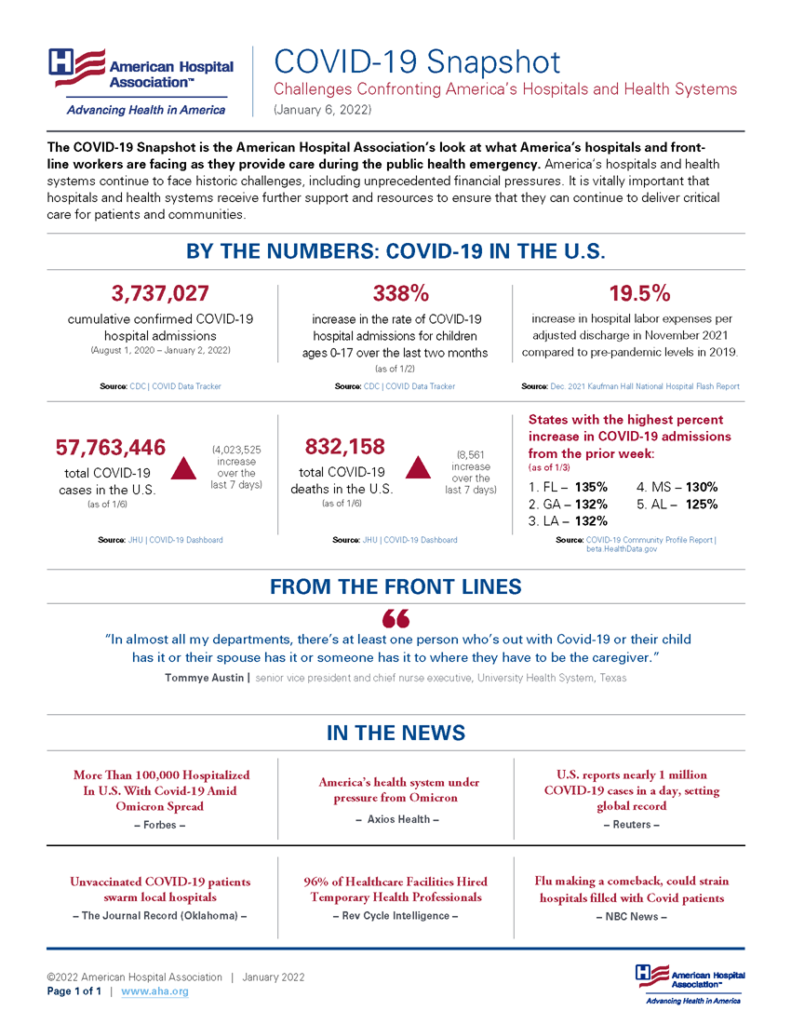
From the Omicron front, the American Hospital Association offers its January 2022 monthly COVID snapshot. “The COVID-19 Snapshot is the American Hospital Association’s look at what America’s hospitals and frontline workers are facing as they provide care during the public health emergency.”

From the COVID testing front, the FEHBlog commends this 20 minute long Wall Street Journal podcast on why at home COVID tests are so hard to find.

In that regard STAT News offers a report on a

new study raises significant doubts about whether at-home rapid antigen tests can detect the Omicron variant before infected people can transmit the virus to others.

The study looks at 30 people from settings including Broadway theaters and offices in New York and San Francisco where some workers were not only being tested daily but were, because of rules at their workplaces, receiving both the antigen tests and a daily test that used the polymerase chain reaction, or PCR, which is believed to be more reliable.

On days 0 and 1 following a positive PCR test, all of the antigen tests used produced false-negative results, even though in 28 of the 30 cases, levels of virus detected by the PCR test were high enough to infect other people. In four cases, researchers were able to confirm that infected people transmitted the virus to others during the period before they had a positive result on the rapid antigen test.

This study suggests to the FEHBlog that one rapid at home tests are still useful to help decide whether to end an isolation or quartine period at five days or once available whether or not a COVID pill should be taken. However, one use of a rapid at home test may not be so reliable to help decide whether or not to enter a gathering. In fairness to Abott and Quickvue, both manufacturers include two tests in each kit so that the test can be repeated a couple days later. If you are using these at home tests follow the manufacturers’ instructions.

From the COVID vaccine mandate front, the U.S. Court of Appeals for the Sixth Circuit on January 5 upheld by a 2-1 vote a regional stay on the Biden Administration’s government contractor mandate. As you know the U.S. Court of Appeals for the 11th Circuit is considering a nationwide stay on that mandate after deciding the stay may remain in place pending the Court’s final decision on that matter.

On Friday morning the U.S. Supreme Court will consider whether or not to maintain stays on the Biden Administation’s healthcare worker vaccination mandate and its OHSA ETS vaccinate or test program for employers with 100 or more employees. The Supreme Court allows the public to listen to the oral argument or read the transcript. The proceedings will begin at 10 am ET. The FEHBlog expects a decision from the Court in this accelerated proceeding next month.

On the private sector initiated vaccine front, the Society for Human Resource Management (SHRM) adds that

​Employers are on safer legal footing terminating employees for violating mandatory vaccination policies than imposing lesser punishments, legal experts advise. They say employers should not opt, for example, to withhold pay raises, make only vaccinated workers eligible to apply for internal positions or promote only vaccinated employees.

Many lower courts have upheld employers’ mandatory vaccination policies, which, unlike the Occupational Safety and Health Administration’s emergency temporary standard, aren’t yet before the Supreme Court, though the court may address them in passing.

On the human resources front —

  • SHRM offers 2022 guidance and reminders for benefit and compensation managers.
  • Govexec digs into the details of the President’s recent executive order adjusting federal employee compensation for 2022.

From the healthcare business front —

Healthcare Dive tells us that

Value-based primary care provider Vera Whole Health has announced plans to acquire health data and navigation company Castlight in a deal valued at approximately $370 million.

The transaction, which will bring a value-based care model to the employer healthcare market by integrating Castlight’stechnology with Vera’s clinical network and medical workers, is structured as an all-cash tender offer under which Vera will acquire all of Castlight’s outstanding shares.

Vera’s majority equity holder, Clayton, Dubilier & Rice, has committed to invest up to $338 million in the combination, while major health insurer Anthem (a long-time Castlight customer) has also pledged to make an investment, the size of which has yet to be disclosed.

Fierce Healthcare reports that

Magellan Healthcare has partnered with NeuroFlow to launch a digital emotional well-being program accessible to all Magellan members. 

The program went live at the start of the new year and aims to be a self-help tool, enabling members to take charge of their own mental health and build confidence and stress-management skills. NeuroFlow supplies the technology via a member-facing platform, which can be accessed either via an iOS or Android app or web browser. 

Members who use the platform can access exercises that are meant to keep them engaged and can receive recommendations for resources based on their needs. Activities include evidence-based videos, behavioral trackers and digital cognitive behavioral therapy programs developed by Magellan. The program can also refer members to a care manager or therapist.

Midweek update

Photo by Josh Mills on Unsplash

From the Omicron front —

  • David Leonhardt, writing in the New York Times, informs us that while the surge of Omicron cases is stressing hospitals, Omicron has created less hospitalizations, milder hospitalizations, and fewer deaths compared to the Delta variant which Omicron replaced.
  • Becker’s Hospital Review reports that “The national surge in COVID-19 cases fueled by the highly transmissible omicron variant may last weeks, rather than months, according to the most recent projections from the COVID-19 Scenario Modeling Hub, a consortium of researchers helping the CDC track the pandemic’s trajectory.”
  • Medscape offers expert opinions on whether the current Omicron surge will hasten the transition from pandemic to endemic. For example —

Whether the current surge will mean the predicted switch to endemic COVID-19 will come sooner, however, “is very hard to predict,” Michael Lin, MD MPH, told Medscape Medical News.

“It’s an open question,” he said, “if another highly transmissible variant will emerge.”

On a positive note, “at this point many more people have received their vaccinations or been infected. And over time, repeated infections have led to milder symptoms,” added Lin, hospital epidemiologist at Rush Medical College in Chicago, Illinois.

“It could end up being a seasonal variant,” he said.

On the COVID vaccine front, AHIP tells us that

Today the Centers for Disease Control’s Advisory Committee on Immunization Practices (ACIP) recommended a single Pfizer-BioNTech COVID-19 vaccine booster dose for persons aged 12-17 years at least 5 months after their primary series, by a vote of 13-1.

The Committee reviewed real-world data from Israel and the CDC showing there are no new safety concerns following a booster in this population, and that adverse events were less common from a 3rd dose as compared to the primary series.

Members of the Committee also stressed the primary focus continues to be vaccination of unvaccinated individuals, and that there is a need to increase education and understanding of the effects of COVID-19 on children and adolescents in order to help parents make informed decisions.

The FDA noted that it continues to review data on children aged 5-11 and will update recommendations when more data is available.

On the COVID testing front, Bloomberg offers a comprehensive look at the state of the Biden Administration’s efforts to improve availability of rapid at home COVID tests. Of note to health plans —

Private insurers will reimburse for at-home tests beginning at some point next week, when a Biden administration rule is set to take effect. That will allow Americans to submit claims, and could spark an initial spike in demand. But it remains to be seen whether people will take advantage of the reimbursement as filing insurance claims can be a time-consuming and tedious task.

In the FEHBlog’s view the Affordable Care Act converted health plans into public utilities. Aside from the wisdom of imposing this public health responsibility on health plans, this approach does not make sense due to the high administrative cost of processing paper claims. It will become a side show.

On the COVID treatment front, STAT News reports that

The Biden administration doubled its order of Covid-19 pills from Pfizer, a move that will modestly increase the limited U.S. supply of the treatment in the short term amid a record-setting surge in coronavirus casesThe New York Times writes. The new order will eventually provide enough pills for an additional 10 million Americans, bringing the government’s total order of the drug to 20 million treatment courses. But they will not all be available right away. Only 35,000 of the additional courses will be delivered this month, and 50,000 more in February, supplementing 350,000 treatment courses that were already expected over the next two months.

From the COVID vaccine mandate front, Govexec reports that the Postal Service has asked the Occupational Health and Safety Administration for “a 120-day extension to implement the [vaccinate or test] rule, saying that would allow enough time to update its systems for record collection and bargain with its unions over the details.”

From the Rx coverage front

  • Reuters reports that “Pfizer Inc  and Germany’s BioNTech SE  will develop an mRNA-based vaccine for viral infection shingles, collaborating for the third time after th success of their COVID-19 vaccine based on the same technology.
  • Healthcare Dive offers its observations on where drug prices are headed this year.
  • Biopharma Dive identifies five Food and Drug Administration approval decisions to watch in the first quarter of 2022.
  • In related news, mHealth Intelligence tells us that

“Researchers from the University of Massachusetts Amherst, Syracuse University and SUNY Upstate Medical University have collaborated to create a wireless sensor designed to prevent opioid relapses and overdoses. * * *

The opioid epidemic has steadily worsened across the country since the late 1990s. In 2019, nearly 50,000 people in the U.S. died from opioid-related overdoses, according to data from the National Institute on Drug Abuse. Further, around 21 to 29 percent of patients prescribed opioids for chronic pain misuse them, the federal data shows.  

To combat this issue, the research team — headed by Tauhidur Rahman, PhD, an assistant professor in the College of Information and Computer Sciences at UMass Amherst and co-director of the MOSAIC Lab — is developing a sensor, which will use machine learning to pinpoint psychophysiological signs in real time and determine whether they are consistent with opioid cravings. Cravings are one of the main drivers behind relapses and overdoses.

If a craving is identified, the sensor providers the user with mindfulness-based interventions. These ultimately could be customized based on the user’s behaviors and clinician input.

“Nothing like this exists today,” Rahman said in the news release. “And we believe that mobile technologies can provide an effective mechanism for people with addiction to monitor their condition and manage their cravings better.”

Cool.

From the OPM front, Govexec reports that

The Office of Personnel Management is set to publish regulations implementing a 2021 law aimed at improving agency accountability for acts of discrimination and whistleblower retaliation against federal workers.

The Elijah E. Cummings Federal Employee Antidiscrimination Act, named for the late lawmaker who led the House Oversight and Reform Committee and signed on Jan. 1, 2021, encourages agencies to take action against federal employees who are found to be responsible for “intentional” acts of discrimination or retaliation, and be more transparent with the public when such incidents are adjudicated.

In a proposed rule set to be published to the Federal Register Thursday, OPM said that [among other new requirements] agencies will be expected to post a notification on their public-facing websites within 90 days of the finalization of any case in which the agency was found to have discriminated or retaliated against a federal employee.

Tuesday’s Tidbits

Photo by Patrick Fore on Unsplash

Lots of updates from the Centers for Disease Control (“CDC”) today

  • “Today, CDC is updating our recommendation for when many people can receive a booster shot, shortening the interval from 6 months to 5 months for people who received the Pfizer-BioNTech COVID-19 Vaccine.  This means that people can now receive an mRNA booster shot 5 months after completing their Pfizer-BioNTech primary series.  The booster interval recommendation for people who received the J&J vaccine (2 months) or the Moderna vaccine (6 months), has not changed.”
  • The CDC released a study of over 40,000 COVID- vaccinated pregnant women.

In a retrospective cohort of >40,000 pregnant women, COVID-19 vaccination during pregnancy was not associated with preterm birth or small-for-gestational-age at birth overall, stratified by trimester of vaccination, or number of vaccine doses received during pregnancy, compared with unvaccinated pregnant women.

These data support the safety of COVID-19 vaccination during pregnancy. CDC recommends COVID-19 vaccination for women who are pregnant, recently pregnant, who are trying to become pregnant now, or who might become pregnant in the future.

  • As expected, the CDC revised and lengthened its revised COVID quarantine and isolation policy by, e.g., adding “at home testing when available,” right at the time that at home COVID test are hard to purchase. What’s more, the Wall Street Journal reports the prices for those tests are jumping at Walmart and Kroger because the White House curiously let a price support program lapse. Govexex informs about how government agencies had been struggling to implement this CDC guidance even before today’s changes.

Also from the Omicron front, Medscape tells us about a British study finding that

Protection against hospitalization from COVID-19 vaccines is “good” against the Omicron variant of SARS-CoV-2, an analysis has found.

The risk for adults of being admitted to hospital with Omicron was approximately one third (Hazard Ratio 0.33, 95% CI 0.30 to 0.37) of that for the Delta variant, the UK Health Security Agency (UKHSA) said in a technical briefing.

The analysis also found that the risk of presentation to emergency care, or being admitted to hospital, with Omicron – whether testing for symptomatic or asymptomatic infection – was approximately half of that for Delta (Hazard Ratio 0.53, 95% CI 0.50 to 0.57).

From the Affordable Care Act front – –

  • The International Foundation of Employee Benefit Plans announced that “The Centers for Medicare and Medicaid Services (CMS) issued the proposed 2023 actuarial value (AV) calculator and methodology.” This should be useful when preparing FEHB 2023 benefit and rate proposals.
  • The Labor Department’s Employee Benefit Security Administration announced that it is seeking speakers to talk at an ACA listening session about the ACA’s provider non-discrimination provision, known as Section 2706. In Division BB of the Consolidated Appropriations Act of 2021, Congress tasked the ACA regulators with adopting a rule interpreting Section 2706. The listening session bears on that effort.

From the healthcare business front

  • Fierce Healthcare tells us that “Centene Corporation has completed its acquisition of Magellan Health, the insurer announced Tuesday. The $2.2 billion deal closes exactly one year after its announcement on Jan. 4, 2021. The combination will create one of the country’s largest behavioral health platforms, including 41 million unique members. * * * In addition to its behavioral health platform, Magellan will add 5.5 million members to Centene’s government program, 16 million pharmacy members and 2 million pharmacy benefit management members.”
  • Healthcare Dive reports that “HCA Healthcare has purchased the largest urgent care chain in Florida, MD Now Urgent Care, the health system said Tuesday. The deal closed at the end of 2021 for an undisclosed sum. The deal gives HCA 59 urgent care centers in a state where it already has a significant presence, with 47 hospitals.” 

From the tidbits department

  • STAT News interviews Dr. Peter Marks, director of the FDA’s Center for Biologics Evaluation and Research. “[2022] will have to be a year where we transition to working alongside the pandemic, as opposed to being dominated by the pandemic,” Dr. Marks told STAT in a wide-ranging interview. Let’s hope so.
  • Medpage Today brings us up to date on Biogen’s Aduhelm saga and considers 2022 biggest hurdles for heathcare in the U.S.
  • The new acting National Institutes of Health director Dr. Larry Tabak is continuing the tradition of writing a weekly director’s blog. This week’s issue concerns science’s 2021 breakthroughs, e.g., the COVID pills.

Monday Roundup

Photo by Sven Read on Unsplash

From the Omicron front, the Wall Street Journal reports that

The seven-day average of daily reported Covid-19 cases in the U.S. reached a pandemic record 403,385 on Sunday, according to a Wall Street Journal analysis of Johns Hopkins University data. The fresh peak arrived even as most states paused reporting during the New Year’s holiday weekend. Reporting delays will likely lead to spikes in reports of cases this week as states catch up. While Covid-19 tests remain in short supply in much of the U.S., Covid-19 testing was less robust last year, complicating comparisons between pandemic surges.

Hospitalizations for confirmed or suspected Covid-19 reached a seven-day average of 97,855 on Monday, according to data posted by the U.S. Department of Health & Human Services. That is up 41% in the past two weeks but below both the pandemic peak of 137,510 on Jan. 10, 2021, and the smaller peak of 102,967 on Sept. 4, 2021, during the Delta surge.

Bloomberg adds that

While omicron may be good at evading the attacks of antibodies, recent studies have also shown that it has far less success avoiding the second-line defenses of vaccines and prior infections: T-cells and B-cells.

T-cells are responsible for attacking a virus once it makes its way into the body’s cells if antibodies fail to prevent infection in the first place. In a recent study by Burgers and colleagues, scientists used white blood cells from Covid patients to show that about 70-80% of the T-cell response is preserved compared with previous strains of the virus. That means that for those who are either vaccinated or had a Covid infection in the past 6 months, it is likely their T-cells can recognize omicron and fight it off relatively quickly. 

This latest research will need to be followed up with further study. If it holds up to additional scrutiny, it just might explain why current infections appear to be more mild than in previous waves of the virus.

Yet, AP reports that

As the COVID-19 omicron variant surges across the United States, top federal health officials are looking to add a negative test along with its five-day isolation restrictions for asymptomatic Americans who catch the coronavirus, the White House’s top medical adviser said Sunday.

Dr. Anthony Fauci said the Centers for Disease Control and Prevention is now considering including the negative test as part of its guidance after getting significant “pushback” on its updated recommendations last week.

Adding to current mandatory testing is not going to push the COVID ball further toward endemic status particularly when people who actually may be infected soon will need a test to gain access to a COVID pill. It is time for the government to rethink its testing strategy. As a physician explained in a thought provoking Atlantic article

I will admit to being as self-interested as any other human. Despite recognizing the need for vaccine and test equity, I received three Pfizer shots as soon as I was eligible, and I’ve kept a stash of rapid-detection kits in my closet. But my own cognitive dissonance, and that of other privileged people, has become untenable in the face of Omicron’s case surge. Given the reality of our testing shortages, it’s time we started cutting back, where and when we can.

From the COVID vaccine front, AHIP tells us that

“Today the Food and Drug Administration amended the emergency use authorization (EUA) for the Pfizer-BioNTech COVID-19 Vaccine to expand the use of a single booster dose of the vaccine to include its use in individuals as young as 12 years of age.

“The FDA reviewed real-world data from Israel, including safety data from more than 6,300 individuals 12 through 15 years of age who received a booster dose of the vaccine at least 5 months following completion of the primary two-dose vaccination series. The data shows there are no new safety concerns following a booster in this population. There were no new cases of myocarditis or pericarditis reported to date in these individuals.

“The amended EUA additionally:

  • Decreases the time between the completion of primary vaccination of the Pfizer COVID-19 Vaccine and a booster dose to at least five months.
  • Allows for a third primary series dose for certain immunocompromised children 5 through 11 years of age.

“Peer-reviewed data from multiple laboratories indicate that a booster dose of the Pfizer COVID-19 Vaccine greatly improves an individual’s antibody response to be able to counter the omicron variant. Authorizing booster vaccination to take place at five months rather than six months may therefore provide better protection sooner for individuals against the highly transmissible omicron variant.

“Children 5 through 11 years of age who are fully vaccinated and are not immunocompromised do not need a third dose at this time, but the FDA will continue to review information and communicate with the public if data emerges suggesting booster doses are needed for this pediatric population.”

From the Health and Human Services Department front —

  • Prof. Katie Keith has published in the Health Affairs Forefront the third installment of her review of the proposed 2023 Notice of Benefit and Payment Parameters. This one focuses on the Affordable Care Act’s risk adjustment provisions.
  • The Department issued today its own upbeat discussion of the recently implemented consumer billing protections provided by the No Surprises Act.
  • While the ACA risk adjustment provisions don’t apply the FEHB, the consumer billing protections do. Indeed the consumer billing protections wisely apply to both insured and uninsured folks. All consumers should become familiar with these protections.

From the prescription drug front, STAT News informs us that

As 2022 gets under way, pharmaceutical companies have so far raised wholesale prices by a median of 4.9% on more than 450 prescription medicines, an overall annual increase that is comparable to the price hikes seen over the past three years, according to a new analysis.

The numbers are preliminary, though, because still more price increases are expected to be disclosed by drug makers later this month, since not every company has reported their latest prices to industry databases. Nonetheless, the early indication is that many drug makers are keeping price hikes in check due to ongoing bad publicity that has sparked sustained political pressure.

Analyzing pharmaceutical price hikes has become a ritual each January as drug makers boost prices to meet financial goals. But as poll after poll finds more Americans are complaining about the cost of prescription medicines, these companies have gradually shied away from mid-year increases and also generally limited price hikes below double digits in hopes of avoiding still more negative headlines.

Drug Channels adds

Reality has again failed to cooperate with the politically motivated cries of “skyrocketing drug prices” or anecdotes about companies “jacking up prices” 

Brand-name drug prices continue to decline, while the prices of other healthcare products and services continue to rise. For 2021, brand-name drugs’ net prices dropped for the fourth consecutive year. Meanwhile, brand-name drug list prices grew more slowly than overall inflation. What’s more, we project that the gross-to-net bubble for patent-protected brand-name drugs will exceed $200 billion in 2021. See our updated analysis [that may be found in the linked article]. 

The factors that drive declining brand-name drug prices remain for 2022, suggesting that these trends will continue. 

Thursday Stats and More

Based on the CDC’s COVID Data Tracker and using Thursday as the first day of the week, here is the FEHBlog’s final weekly calendar for 2021 and it’s a stunner:

STAT News features a timely article captioned “Beyond Case Counts: What Omicron is teaching us.”

Brace yourself: Case counts are going to reach astounding heights. Already, reported infections have doubled in just a few weeks. The average daily number of infections is greater than 300,000. (It’s likely that our case counts will become increasingly less reliable as well, given both the shortcomings of our testing infrastructure and the growing use of at-home tests.)  

But, in large part because the immunological landscape today is far different than what it was two years ago, cases are less likely to result in severe disease than was the case at the start of the pandemic. 

Back then, a rise in cases inevitably led to an increase in hospitalizations and deaths. When vaccines went into wide use, those metrics started to become decoupled; cases could rise sharply but hospitalizations and deaths occurred at a lower level than before. In the current phase of the pandemic, the distance between those metrics is growing even greater. * * *

[A] key question relates to how long we’ll be in Omicron’s grasp. South Africa’s bellwether wave soared to extraordinary heights — then quickly began to ebb. Data from several European countries also suggest that Omicron waves may be short, sharp shocks compared to the waves that have preceded it. But too little is yet known to predict with any confidence whether the experience of a country with a relatively young population, such as South Africa, will hold true in a country with an older population, such as the United States. 

Here’s a link to the FEHBlog’s final weekly chart of new COVID deaths:

As cases have skyrocketed, deaths have ranged between 5,000 and 10,000 per week for over four months.

Here’s the FEHBlog’s weekly chart of new COVID vaccinations administered and distributed from the 51st week of 2020, when the vaccinations became available to the public, and the 52nd week of 2021:

The number of administered COVID vaccines has dropped during the holidays. Currently, 72.8% of Americans aged 18 and older are fully vaccinated and 36.3% of that cadre are boostered. Nearly 50% of Americans aged 50 and older are boostered.

Also from the COVID vaccine front, the Hill reports that

The Food and Drug Administration (FDA) is expected to approve booster shots of Pfizer and BioNTech’s COVID-19 vaccine for 12- to 15-year-olds on Monday, people familiar with the agency’s plan told The New York Times.

In addition to that broadened policy, the FDA also intends to announce that both children and adults could seek their booster shot five months after their second dose, instead of the previously advised six months. Immunocompromised children ages 5 to 11 are also expected to be allowed boosters, according to the Times.

The Times reported that the vaccine advisory committee for the Centers for Disease Control and Prevention (CDC) is set to meet next week to vote on approving the FDA’s policy changes, which CDC Director Rochelle Walensky is expected to endorse. 

From the No Surprises Act front, CMS has released a handy, comprehensive overview of the federal independent review process. Check it out.

From the Affordable Care Act front, Prof. Katie Keith writing in Health Affairs Forefront has released two of three articles on the ACA 2023 Notice of Benefit and Payment Parameters released earlier this week — link to Part 1 and link to Part 2. Part 1 includes a discussion of proposed changes to the medical loss ratio calculation and Part 2 discusses the standardized benefit requirements that the FEHB mentioned earlier this week.

From the health disparity front, the Agency for Healthcare Research and Quality issued its 2021 report on national healthcare qualities and disparities, the nineteen report in this series. Here’s a link to the report’s executive summary.

From the New Year’s Eve front, the New York Times made available this guidance:

“Many public health experts agree that you can celebrate with your favorite people as long as you’re taking precautions.
“To help you make a decision and gauge the level of risk, The Times has this quiz.”

Midweek update

From the Omicron front, the Washington Post reports that breakthrough Omicron cases are becoming the new normal in the U.S.

Long-anticipated holiday plans fell apart as people — young and old, vaccinated and unvaccinated — tested positive right and left. Those with negative tests worried it was only a matter of time.

They are likely right, according to Robert Frenck, professor of pediatrics and director of the Vaccine Research Center at the Cincinnati Children’s Hospital. “You know what? You’re probably going to get covid,” he said, but if you have been vaccinated you are unlikely to become seriously ill.

Oddly, in the FEHBlog’s view, the article does not mention the additional natural immunity gained from a mild case of Omicron.

STAT News raises three “big” questions about the Biden administration’s Covid response in 2022 —

1. Will the government broaden its focus beyond vaccines? STAT News explains that

Even before there were Covid-19 vaccines, there were commonsense tools used to prevent the disease from spreading: Wearing masks, and avoiding indoor gatherings with large numbers of other people.

But two years into the pandemic, the U.S. is still laser-focused on vaccines, and has largely ignored other factors. In particular, federal regulators haven’t done much to incentivize Americans to wear higher-quality face coverings, or to maintain better filtration and cleaner air in indoor spaces.

On the bright side, the FDA approved two new rapid over the counter COVID tests today on an emergency use basis. The more the merrier.

2. Will people who feel sick have better options for tests and treatments? STAT News explains rapid COVID tests are short in supply and pricey and the Biden Administration’s government solutions won’t be implemented for weeks. Similarly we have two exciting COVID pills which won’t be widely available for months.

3. Forget a third vaccine dose — will Americans need a fourth, too? To the FEHBlog that seems like a foregone conclusion.

From our other epidemic front, MedPage Today reports that

The volume of opioids dispensed from retail pharmacies fell by about 21% from 2008-2009 to 2017-2018, but cuts were not uniform, national prescription records showed.

Changes in opioid prescribing varied substantially by county, patient, and prescriber, reported Bradley Stein, MD, PhD, of the RAND Corporation in Pittsburgh, and co-authors in Annals of Internal Medicine. * * *

Per-capita morphine milligram equivalents (MMEs) fell by 22.6% in metropolitan counties and by 34.6% in counties with the highest rates of fatal opioid overdoses, the researchers found. In multiple counties, opioid prescribing increased over time. Some states had counties with both increases and substantial decreases, and these counties often were next to each other.

People 18 to 25 years old experienced the sharpest decrease in prescription opioids (66.6%) per capita, followed by those 26 to 35 (57%). Patients 56 to 65 had essentially no change (0.1% decline), while those 66 and older had a 12% drop.

People covered by commercial insurance had a 41.5% decline per capita. Those with Medicaid had a 27.7% reduction, and those with Medicare had a 17.5% drop.

MMEs plummeted by 70.5% among emergency physicians, even though these doctors are likely to prescribe opioids predominantly to people with acute pain, the researchers noted. The top two opioid prescribers, primary care physicians and pain specialists, also saw reductions in MMEs of 40% and 15.4%, respectively. MMEs fell by 49.3% among surgeons and by 59.5% among oncologists.

From the COVID vaccine mandate front, the Eleventh Circuit U.S. Court of Appeals which is hearing a challenge to a nationwide stay of the government contractor mandate (Case No.  21-14269), decided yesterday not to hear the case before the entire court rather than a three judge panel and today to decline the government’s request to accelerate the briefing and argument calendar. Consequently the stay will remain in effect at least through January 2022.

From the Federal Register front, the Department of Health and Human Services finalized its rescission of the Trump Administration’s most favored nation drug pricing rule. Smart move.

Tuesday Tidbits

Photo by Josh Mills on Unsplash

From the Omicron front, the Wall Street Journal reports that

The Centers for Disease Control and Prevention added to research suggesting the Omicron variant can lead to reinfections that are often accompanied by mild Covid-19 symptoms, as new cases soared across the U.S.

States reported 512,553 cases on Monday—the most for a single day since the start of the pandemic—as states caught up after pausing for the Christmas holiday, according to a Wall Street Journal analysis of data from Johns Hopkins University. The tally lifted the seven-day average of reported cases to 237,061, 15,000 less than the pandemic high recorded about a year ago.

The report for Monday didn’t include North Carolina, South Carolina and Rhode Island, which remained on pause. That gap and more blackouts in reporting during the New Year weekend are expected to muddy the tracking of the full extent of the pandemic’s trajectory until January, when reporting catches up. 

Covid-19 testing was also less prevalent earlier in the pandemic, complicating case-rate comparisons from one surge to another. As with earlier variants, tracking Omicron’s spread in the U.S. has been a challenge for public-health officials. The CDC on Tuesday estimated that Omicron was responsible for 59% of new infections for the week through Dec. 25 and 23% for the week through Dec. 18. Last week, the CDC had estimated Omicron drove some 73% of infections in the week through Dec. 18. The CDC said Tuesday that the latest figures fell within the bounds of its statistical model and that the trend of Omicron’s increasing prevalence among U.S. cases is clear. 

Bloomberg adds

The omicron-fueled U.S. surge in Covid-19 cases appears to be triggering a lower rate of hospitalizations than earlier waves, more evidence that the highly transmissible variant leads to milder symptoms than other strains. 

The seven-day average of new cases hit 206,577 on Sunday, roughly 18% lower than the all-time high recorded on Jan. 11, according to data from the Centers for Disease Control and Prevention. Meanwhile, hospitalizations rose to a seven-day average of 8,964, only half their earlier peak recorded in January. * * *

Even when patients do end up in the hospital with omicron, they appear to spend less time there. However, the increasing numbers of breakthrough infections among vaccinated people may skew hospitalization data, said Jeffrey Morris, professor and director of the biostatistics division at the University of Pennsylvania’s Perelman School of Medicine.

“It appears there is less risk of hospitalized disease across the board, but we have to be a little bit careful about interpreting that,” he said in a phone interview. The rate of hospitalizations and deaths may appear artificially lower because breakthrough cases tend often turn out to be mild, Morris said.

From the Affordable Care Act front, the Department of Health and Human Services issued the first round of 2023 Benefit and Payment Parameter rules today. Here’s a link to the CMS fact sheet which describes big, disruptive proposed changes to the federal and state marketplaces. For example

CMS proposes to require issuers in the FFMs and State-based Marketplaces on the Federal Platform (SBM-FPs) to offer standardized plan options at every product network type, metal level, and throughout every service area that they offer non-standardized options in plan year (PY) 2023. For example, if an issuer offers a non-standardized gold plan in a particular service area, that issuer must also offer a standardized gold plan in that same service area. CMS is not proposing to require issuers to offer standardized plan options at product network types, metal levels, and throughout services areas in which they do not offer non-standardized options. CMS has designed two sets of standardized plan options at each of the bronze, expanded bronze, silver, silver cost-sharing reduction (CSR) variations, gold, and platinum metal levels of coverage, with each set being tailored to the unique cost-sharing laws in different sets of states. CMS also proposes to display these standardized options differentially on HealthCare.gov and to resume enforcement of the existing standardized plan option differential display requirements for web brokers and QHP issuers utilizing a Classic Direct Enrollment or Enhanced Direct Enrollment pathway.

The key aspect of these rules applicable to the FEHB Program is the disclosure of the 2023 limits on in-network cost sharing. The fact sheet explains that

CMS will issue the 2023 benefit year premium adjustment percentage, the maximum annual limitation on cost sharing, reduced maximum annual limitation on cost sharing, and the required contribution percentage (payment parameters) in guidance by January 2022, consistent with policy finalized in the 2022 Payment Notice (86 FR 24140). 

These rules also routine tweak the medical loss ratio rules under which FEHB community rated plans generally operate.

From the No Surprises Act front, the Internal Revenue Service released Rev. Proc. 2022-11. This Rev. Proc. explains that

For an item or service furnished during 2022, the group health plan or group or individual health insurance issuer must calculate the qualifying payment amount by increasing the median contracted rate (as determined in accordance with § 54.9816-6T(b), 29 CFR 2590.716-6(b), and 45 CFR 149.140(b))8 for the same or similar item or service under such plan or coverage, on January 31, 2019, by the combined percentage increase as published by the Department of the Treasury (Treasury Department) and the Internal Revenue Service (IRS) to reflect the percentage increase in the consumer price index for all urban consumers (U.S. city average) (CPI-U) over 2019, such percentage increase over 2020, and such percentage increase over 2021. * * *

This Rev. Proc. provides that combined (2019-2021) CPI-U adjustment for next year which of course begins on Saturday:

For items and services provided on or after January 1, 2022, and before January 1, 2023, the combined percentage increase to adjust the median contracted rate is 1.0648523983.10 Pursuant to this revenue procedure, group health plans and group and individual health insurance issuers may round any resulting qualifying payment amount to the nearest dollar.

Example. A group health plan sponsor calculates a median contracted rate for a service with service code X; the service is not an anesthesia service or air ambulance service. The median contracted rate for service code X is $12,480 as of January 31, 2019. For a service with service code X furnished during 2022, increasing the median contracted rate by the combined percentage increase of 1.0648523983 results in $13,289.36; rounding to the nearest dollar results in a qualifying payment amount of $13,289.

From the upcoming new year department —

  • Fedweek offers advice to federal employees on paycheck changes to expect / confirm in the first paycheck of 2022 which, “[d]epending on the payroll provider, employees typically receive a pay distribution late in the week following the end of a pay period [here January 15] or early in the week subsequent to that.”
  • STAT News again peers into its crystal ball and predicts / discusses three challenges facing hospitals next year: Staffing, federal assistance, and patient capacity. On that last challenge

The bright spot is that the health care system could have another tool in its arsenal to fight Covid-19 in 2022 — antivirals that could reduce hospitalizations even if people become infected. There are some logistical challenges around deploying the pills, as they have to be taken early in the course of the Covid-19 infection. If the United States can capitalize on their potential, the treatments have the potential to relieve the worst of the pressure that 2022 could bring to bear on weary hospitals.

Monday Roundup

Photo by Sven Read on Unsplash

From the Omicron front, STAT News offers an article about forecasting the Omicron winter, and it’s cloudy.

Which immediate future plays out will be a function of a few big unknowns — some already baked into Omicron’s biology and some that can be altered based on how people behave in the coming days and weeks. Further out, the models get fuzzier still. But though they differ in the details, all of them point to SARS-CoV-2 being here to stay.

“I think we may be in for a longer road than we had hoped,” said Jeffrey Shaman, an infectious disease forecaster at Columbia University’s Mailman School of Public Health. 

In an encouraging development, the Centers for Disease Control have announced changes to their 10 day quarantine requirement for folks who contract COVID:

Given what we currently know about COVID-19 and the Omicron variant, CDC is shortening the recommended time for isolation from 10 days for people with COVID-19 to 5 days, if asymptomatic, followed by 5 days of wearing a mask when around others. The change is motivated by science demonstrating that the majority of SARS-CoV-2 transmission occurs early in the course of illness, generally in the 1-2 days prior to onset of symptoms and the 2-3 days after. Therefore, people who test positive should isolate for 5 days and, if asymptomatic at that time, they may leave isolation if they can continue to mask for 5 days to minimize the risk of infecting others.

Additionally, CDC is updating the recommended quarantine period for those exposed to COVID-19. For people who are unvaccinated or are more than six months out from their second mRNA dose (or more than 2 months after the J&J vaccine) and not yet boosted, CDC now recommends quarantine for 5 days followed by strict mask use for an additional 5 days. Alternatively, if a 5-day quarantine is not feasible, it is imperative that an exposed person wear a well-fitting mask at all times when around others for 10 days after exposure. Individuals who have received their booster shot do not need to quarantine following an exposure, but should wear a mask for 10 days after the exposure.  For all those exposed, best practice would also include a test for SARS-CoV-2 at day 5 after exposure. If symptoms occur, individuals should immediately quarantine until a negative test confirms symptoms are not attributable to COVID-19.

For a little holiday humor, Mary Norris in the New Yorker provides a linguistic look at Omicron. Of note,

Having reached omicron (ο), we are already more than halfway through the alphabet.

If this seems to be happening too fast, it’s partly because scientists have skipped some letters. They got to mu (μ), which is right in the middle, and then left out nu (ν), because it sounds confusingly like “new”; we can’t go around talking about a new Nu variant of interest. They also skipped the next letter, xi (ξ), not because it looks so exotic, sitting there between “N” and “O,” but because Xi is a Chinese surname and, one cannot help but notice, the surname of the guy who runs China.

In other healthcare news, the Department of Health and Human Services today

release[d] the annual update to the Department’s National Plan to Address Alzheimer’s Disease, which for the first time includes a new goal focused on work being done to promote healthy aging and reduce the risks that may contribute to the onset of Alzheimer’s disease and related dementias.

Although these diseases cannot yet be prevented, there is growing evidence that addressing certain risk factors for dementia, such as high blood pressure, physical inactivity, and chronic medical conditions such as diabetes and depression, may lower the chances of developing the disease or delay its onset. * * *

Under the plan’s new goal, the federal government will accelerate research on risk factors for Alzheimer’s disease and related dementias, and strengthen the infrastructure that is necessary to rapidly translate and disseminate information about risk factors, interventions to reduce the burden of risk factors, and related health promotion activities to health care providers, community-based providers, caregivers, and public health networks.

STAT News peered into its crystal ball to identify three pharma trends to watch next year:

  • Continued uncertainty over drug pricing
  • Intensifying debate over global access, and
  • Debate over FDA standards / Ahuhelm fallout

Holiday Weekend Update

The FEHBlog trusts that his readers had a Merry Christmas.

Congress is on a break until next week when the second session of the 117th Congress kicks off.

On Saturday, January 1, 2022, the surprise billing protections of the federal No Surprises Act take effect.

From the Omicron front, Bloomberg’s Prognosis informs us that

The coronavirus that causes Covid-19 can spread within days from the airways to the heart, brain and almost every organ system in the body, where it may persist for months, a study found.

In what they describe as the most comprehensive analysis to date of the SARS-CoV-2 virus’s distribution and persistence in the body and brain, scientists at the U.S. National Institutes of Health said they found the pathogen is capable of replicating in human cells well beyond the respiratory tract.

The results, released online Saturday in a manuscript under review for publication in the journal Nature, point to delayed viral clearance as a potential contributor to the persistent symptoms wracking so-called long Covid sufferers. Understanding the mechanisms by which the virus persists, along with the body’s response to any viral reservoir, promises to help improve care for those afflicted, the authors said.

An opinion piece in STAT News discusses a trend in COVID weekly new death statistics in the U.S. that the FEHBlog noticed in last Thursday’s post:

Several colleagues and I [Duane Schulthess] at Vital Transformation began closely following the data on Covid-19 early in the pandemic.

Since that time, we’ve kept a keen eye on the relationship between cases and deaths, particularly during the recent waves, which have been influenced by improved treatments and vaccines, as well as by new variants. There are legitimate concerns about the trajectory of the newest variant, Omicron, and public health experts are paying close attention to the exponentially mounting cases, particularly in the United Kingdom, which in the past has functioned as a canary in the Covid-19 coal mine for the U.S.

While early reports from South Africa suggested that Omicron might cause less-severe Covid-19, the rapidly mounting case numbers and overall transmissibility have been alarming, particularly in the U.K. According to a Dec. 10 government technical briefing(see page 17), Omicron cases were expanding by 35% per day.

But there’s something else different this time around, at least in the U.K.: the statistical relationship between Covid-19 cases and deaths appears to have broken down with Omicron.

Looking at daily death rates in the U.K. from May 15 — essentially from the point at which the Delta wave began — to Sept. 15, there is a highly statistically significant relationship between daily new cases and deaths. In short, case rates accurately predict death rates. But beginning the analysis on Sept. 15, coinciding with flattening of the Delta curve and the onset of Omicron, shows no statistical relationship between Covid-19 case rates and deaths. * * *

It’s still, of course, early days. While it is possible that death rates due to Omicron may rise later, at the moment in the U.K., Covid-19 daily cases no longer meaningfully link to deaths. So, according to the math, Omicron cases rising no longer automatically means impending doom and gloom

In healthcare M&A news, Healthcare Dive tells us that

— Tenet and its subsidiary USPI completed a $1.1 billion acquisition of SurgCenter Development, giving the ambulatory surgery unit an ownership stake in 86 more surgery centers and related support services.

— Tenet said it’s willing to buy additional interests of up to $250 million from physician owners. This process is expected to continue over the coming months, Tenet said Wednesday.

— As part of the deal, USPI will have exclusivity on developing new centers — at minimum 50 — with SCD during a five-year period.

Fierce Healthcare peers into its crystal ball to let us know about

From the FDA new drug approval front, MedCity News reports that

The FDA has approved a new cholesterol-lowering drug from Novartis that addresses the same target as two commercialized medicines from Amgen and Regeneron, but with a different approach and a key dosing advantage—just two injections per year.

The drug, inclisiran, is part of a relatively new class of genetic medicines that work by stopping production of a problem protein. In the case of the Novartis drug, which will be marketed under the name Leqvio, the target is PCSK9, a liver protein that in high amounts, impedes the body’s ability to clear low-density lipoprotein cholesterol, the “bad” form of cholesterol. Leqvio is comprised of small-interfering RNA that harnesses a cellular mechanism called RNA interference to stop a gene from producing PCSK9.

The way that Leqvio and other RNAi drugs work is sometimes referred to as gene silencing. It’s a different approach than PCSK9 inhibitors, antibody drugs that bind to this protein to block it. The FDA approved two of these drugs, Amgen’s  Repatha and Regeneron’s Praluent, in 2015. They’re both given as subcutaneous injections every two weeks or monthly. However, their high price tags made them a tough sell to payers, and revenue fell short of initial expectations. In 2018, Amgen slashed Repatha’s price by nearly 60%, making the drug available at list price of $5,850 per year. Months later, Regeneron matched the pricing move for its PCSK9-blocking drug.

The benefits of competition do apply to prescription drug development.

Last week, the U.S. Census Bureau released its “Vintage 2021 national and state population estimates and components of change.” In sum,

Since April 1, 2020 (Census Day), the nation’s population increased from 331,449,281 to 331,893,745, a gain of 444,464, or 0.13%.

Between July 1, 2020, and July 1, 2021, the nation’s growth was due to natural increase (148,043), which is the number of excess births over deaths, and net international migration (244,622). This is the first time that net international migration (the difference between the number of people moving into the country and out of the country) has exceeded natural increase for a given year.

The voting-age resident population, adults age 18 and over, grew to 258.3 million, comprising 77.8% of the population in 2021.

The South, with a population of 127,225,329, was the most populous of the four regions (encompassing 38.3% of the total national population) and was the only region that had positive net domestic migration of 657,682 (the movement of people from one area to another within the United States) between 2020 and 2021. The Northeast region, the least populous of the four regions with a population of 57,159,838 in 2021, experienced a population decrease of -365,795 residents due to natural decrease (-31,052) and negative net domestic migration (-389,638).

The West saw a gain in population (35,868) despite losing residents via negative net domestic migration (-144,941). Growth in the West was due to natural increase (143,082) and positive net international migration (38,347).

Thursday Stats and More

Happy Festivus, dear readers. Because the FEHBlog won’t be posting on Christmas Eve or Christmas Day, he has moved up the COVID Stats report to today’s post. Therefore, the FEHBlog also wishes you a Merry Christmas

Based on the Centers for Disease Control’s COVID Data Tracker and using Thursday as the first day of the week, here is the FEHBlog’s latest weekly chart of new COVID cases for 2021:

Bloomberg notes that

The omicron variant’s case rate has now exceeded the worst days of the first delta-fueled wave, and more cities and countries are imposing precautions. But there’s more research showing it to be less severe than previous mutations. That said, two doses and a booster of the vaccine most widely used around the world isn’t enough to fight off omicron. China’s Sinovac shot didn’t produce sufficient levels of neutralizing antibodies, research found. Another study however showed a third dose of AstraZeneca’s vaccine, like that of Moderna and Pfizer-BioNTech, significantly boosts protection against the variant. 

Here’s the FEHBlog’s weekly chart of new COVID deaths which has operated within the same range for the past three months:

Finally, here’s the FEHBlog’s weekly chart of new COVID vaccinations distributed and administered from the 51st week of 2020 through the 51st week of 2021:

The number of COVID vaccines, including boosters, topped 500,000,000 today according to the CDC. 71% of Americans aged 12 and older are fully vaccinated and over one third of Americans aged 18 and older are boostered.

David Leonhardt in his New York Times’ Morning column offers an array of convincing statistics showing the importance of being fully vaccinated and boostered against COVID.

STAT News reports that

The Food and Drug Administration on Thursday granted emergency authorization to Merck’s molnupiravir, an antiviral pill shown to reduce hospitalization and death in cases of Covid-19, but only in cases where other FDA-authorized Covid treatments are not accessible or clinically appropriate.

The approval comes a day after the FDA authorized an antiviral pill from Pfizer for much broader use in patients as young as 12. 

“Today’s authorization provides an additional treatment option against the COVID-19 virus in the form of a pill that can be taken orally. Molnupiravir is limited to situations where other FDA-authorized treatments for COVID-19 are inaccessible or are not clinically appropriate and will be a useful treatment option for some patients with COVID-19 at high risk of hospitalization or death,” Patrizia Cavazzoni, director of the FDA’s Center for Drug Evaluation and Research, said in a statement.

A Merck spokesperson said Merck is ready to ship hundreds of thousands of courses of treatment within days of authorization and 1 million courses over the next few weeks in the U.S. Ten million courses are ready to be packaged and distributed worldwide.

Bloomberg adds its perspective on the FDA’s EUAs of COVID pills yesterday and today.

The U.S. has cleared its first two Covid-19 treatment pills. Now comes the hard part: deciding who should get one. Merck’s molnupiravir was authorized Thursday by the Food and Drug Administration for use in some infected adults at high risk of severe illness. The U.S. will soon have 3 million courses of it available. Meanwhile, Pfizer’s Paxlovid, authorized earlier this week, showed stronger clinical trial data. But it will only be available in limited quantities at first, as Pfizer takes months to ramp up manufacturing. Regulators are signaling they prefer Pfizer’s pill, but concede Merck’s drug is better than nothing. Regardless, availability may depend on which state you live inDavid E. Rovella

In the linked article Bloomberg explains that

Just like Covid-19 testing sites and vaccines, Covid-19 treatment pills will be in short supply for months until production can increase.

The federal distribution to states will be based on population, and it will likely be up to doctors to prescribe Pfizer Inc.’s Paxlovid. The National Institutes of Health said it will release recommendations on how to allocate treatments.* * *

“Product will be limited at first and ramp up significantly in the coming months,” the department [of Health and Human Services] said. “An initial 65,000 courses of Paxlovid will be made available for shipment to states and territories and will begin arriving at dispensing sites by the end of December.”

The U.S. will have 265,000 Pfizer courses by the end of January and 10 million courses by July. It will also have 3 million of Merck & Co.’s Covid pill, developed with partner Ridgeback Biotherapeutics LP, by the end of January.

Doctors will be looking for the Merck and Pfizer pills to fill a gap for high-risk patients, who until now have been treated with monoclonal antibody therapies to keep them from needing hospital care.

Some of the most widely used antibody treatments from Eli Lilly & Co. and Regeneron Pharmaceuticals Inc. appear far less effective against omicron than earlier variants because they target regions on the virus’s spike protein that have changed during its evolution.

In No Surprises Act (“NSA”) news —

  • The Centers for Medicare and Medicaid Services released FAQS for out-of-network providers who may be impacted by the NSA which takes effect on January 1, 2022.
  • The FEHBlog has been looking more deeply into the federal independent dispute resolution (“IDR”) process under this law. The IDR process allows an out-of-network provider with claims subject to the NSA to negotiate its payment with the health plan and if unsatisfied bring the payment issue to baseball arbitration using a CMS approved arbitrator. CMS has posted a list of the five currently approved organizations certified to conduct IDR arbitrations. The FEHBlog checked out a couple of these organizations and found out that at least two of them also are CMS approved independent review organizations (“IRO”) which decide health plan claim disputes under the Affordable Care Act. (In the FEHBP OPM acts as the IRO.)
  • The FEHBlog also learned that out-of-network providers who obtain patient consent to waive their NSA rights cannot access the IDR process on that consenting patient’s claims. Health plans will need to be on the lookout for the provider’s notice that the NSA rights waiver has been accepted by the patient / plan member. Here is a link to the consent form. In these cases which the FEHBlog expects to be relative few in number, the plan would pay the out-of-network provider using the ACA emergency care rules or the plan allowance for non-emergency services.
  • Generally only providers, e.g., primary surgeon, lead oncologist, who manage the patient’s care can seek patient consent to waive NSA rights. Ancillary providers, e.g., anesthesiologists, radiologist, pathologists, hospitalists, are locked into using the IDR process. This was a sound decision by the ACA regulators. Kaiser Family Foundation offers a useful compendium of these rules.
  • What’s more, Thompson Reuters reports that

HHS has released instructions for reporting data under a transparency provision included in the Consolidated Appropriations Act, 2021 (CAA , Division BB, Section 204), which requires group health plans and insurers to annually report prescription drug and health care spending, premiums, and enrollment information to the government

OPM has required FEHB carriers to comply with this reporting requirement via OPM’s reporting authority under the FEHB Act, 5 U.S.C. Sec. 8910. This strikes the FEHBlog as a bit of a stretch as Congress did not apply NSA Section 204 to the FEHBP in the NSA law and Section 8910 contemplates carriers providing reports to OPM. When FEHB carriers find themselves obligated to submit reports to HHS, a separate law outside the FEHB Act vests that authority in the other agency, e.g., Section 111 Medicare eligibility reporting to CMS. In any event, the enforcement deadline for the 2020 and 2021 reference year reporting under Section 204 is December 27, 2022.