Tuesday’s Tidbits

Tuesday’s Tidbits

Photo by Patrick Fore on Unsplash

From the Omicron and siblings front —

STAT News tells us

Scientists around the world are discovering and tracking newer forms of the Omicron coronavirus variant, showing how even when a strain becomes globally dominant, it continues to evolve and can splinter into different lineages.

Case in point: Updated data released Tuesday showed that a burgeoning form of Omicron, called BA.2.12.1 —  itself a sublineage of the BA.2 branch of Omicron — now accounts for nearly one in five infections in the United States. It’s eating into the prevalence of the ancestral BA.2, highlighting the emergent virus’s transmission advantage over its parent. BA.2 now accounts for about 74% of cases, while the remaining 6% or so are from the BA.1 branch of Omicron, the first form of the variant that took over globally and whose prevalence has been falling as BA.2 became dominant.

The menagerie can be dizzying to track, especially because all these cases technically fall under the Omicron umbrella. But even as scientists closely monitor the divergence of Omicron, early signs suggest the different lineages don’t substantially differ in terms of how virulent they are or in their ability to evade the protection generated by immunizations. While some of the newer forms of the virus might be better spreaders than others, their emergence doesn’t necessarily result in huge increases in cases.

David Leonhardt adds in his New York Times morning column today

In several places where the number of cases has risen in recent weeks, hospitalizations have stayed flat. (In past Covid waves, by contrast, hospitalizations began rising about a week after cases did.) * * *

Even if hospitalizations do rise in coming weeks, a declining share of coronavirus cases that result in serious illness would be very good news, Dr. Craig Spencer, director of global health in emergency medicine at Columbia University, has pointed out.

I haven’t seen a Covid patient in the E.R. in weeks and go to work now expecting not to,” Spencer told me, “despite a swirl of Covid in the community.”

Among other things, a decoupling of cases and severe illness would mean that hospitals were less likely to become overwhelmed during future Covid surges. When hospitals avoid getting swamped, they can provide care to every patient who needs it — which becomes another factor that reduces bad health outcomes.

For these reasons, Mr. Leonhardt plans to shift his focus from new cases to new hospitalizations.

From the Covid vaccine front

Govexec explains

Because mRNA-based vaccines are a relatively new class of vaccines, they do not include the traditional adjuvants. The current mRNA vaccines used in the U.S. rely on small balls of fat called lipid nanoparticles to deliver the mRNA. These lipid molecules can act as adjuvants, but how precisely these molecules affect the long-term immune response remains to be seen. And whether the current COVID-19 vaccines’ failure to trigger strong long-lived antibody response is related to the adjuvants in the existing formulations remains to be explored.

While the current vaccines are highly effective in preventing severe disease, the next phase of vaccine development will need to focus on how to trigger a long-lived antibody response that would last for at least a year, making it likely that COVID-19 vaccines will become an annual shot.

STAT News adds

New data from Moderna offer hope that booster shots against Covid-19 could become at least somewhat more effective than they already are. But the data also point to how difficult it could be to determine exactly which Covid shots to give as annual boosters.

At a hearing of a Food and Drug Administration advisory panel earlier this month, experts fretted about exactly how governments should make decisions about the composition of annual boosters. And they were adamant that governments, not pharmaceutical companies, should be deciding the strain composition of the shots, as the World Health Organization does for influenza shots. But these data are a reminder that those decisions can be tough. What would experts do when faced with booster shots with several different compositions? Will adding new strains work similarly for different types of vaccines? There are a huge number of open questions.

There’s also the biggest problem with annual flu shots: People don’t get them. Even with the current Covid boosters, this has been true. Data presented to the FDA panel said that 217 million Americans are vaccinated about Covid. But only 90 million people have received a booster dose. How many will turn out for a new booster next year?

Look at this comparison of winter 2019-2020 flu vs. 2020-2021 Covid

2019 – 2020 Winter CDC Fluview 3/28/202020-2021 Winter COVID-1910/1/2020 to 3/21/2021
Flu Deaths                       24,000 COVID-19 Deaths               332,636 
Flu Cases             39,000,000 COVID-19 cases        22,399,598 
Deaths over total cases0.06%1.49%
https://www.cdc.gov/flu/weekly/index.htm

Who would look back on pre-Covid flu as the good old days? But comparatively, it is. We see millions more flu cases, but hundreds of thousands fewer flu deaths.

Kaiser Health News discusses the need for better ventilation in office buildings which could help tamp down Covid and flu cases. “The science is airtight,” said Joseph Allen, director of the Healthy Buildings program at Harvard University’s T.H. Chan School of Public Health. “The evidence is overwhelming.”

From the No Surprises Act front, Healthcare Dive reports

The online portal for resolving payment disputes between payers and providers for certain out-of-network charges is now open, the CMS said Monday. The portal initiates what’s known as the federal independent dispute resolution process, a key part of the No Surprises Act that outlaws balance bills in most cases. As a last resort, it allows payers and providers to resolve payment disputes using an arbitration style similar to the model adopted by Major League Baseball in salary negotiations.

From the transparency in coverage rule front, the Labor Department issued ACA FAQ 53 today. FAQ 53 provides guidance to health plans, including FEHB plans, on how to post three machine-readable pricing files on their website. The Labor Department will begin to enforce this requirement on July 1, 2022.

From the healthcare pricing front

Health Affairs reports

Commercial health plans pay higher prices than public payers for hospital care, which accounts for more than 5 percent of US gross domestic product. Crafting effective policy responses requires monitoring trends and identifying sources of variation. Relying on data from the Healthcare Provider Cost Reporting Information System, we describe how commercial hospital payment rates changed relative to Medicare rates during 2012–19 and how trends differed by hospital referral region (HRR). We found that average commercial-to-Medicare price ratios were relatively stable, but trends varied substantially across HRRs. Among HRRs with high price ratios in 2012, ratios increased by 38 percentage points in regions in the top quartile of growth and decreased by 38 percentage points in regions in the bottom quartile. Our findings suggest that restraining the growth rate of HRR commercial hospital price ratios to the national average during our sample period would have reduced aggregate spending by $39 billion in 2019.

Fierce Healthcare relates

Seniors save nearly $2,000 on average a year in total healthcare spending in Medicare Advantage (MA) compared to fee-for-service Medicare, a new study finds.

The study, published Tuesday, by the advocacy group Better Medicare Alliance finds that seniors spent $1,965 less including premiums and out-of-pocket costs on MA when compared to fee-for-service.

“We see particularly strong results for historically disadvantaged populations, including Black and Hispanic beneficiaries and those who are low-income,” said Allison Rizer, principal at the consulting firm ATI Advisory, which performed the study that examined 2019 Medicare Current Beneficiary Survey data.

From the healthcare business front, Fierce Healthcare tells us

UnitedHealth Group executives said Thursday that its Optum Health subsidiary, which is one of the country’s largest physician groups, is building out value-based care partnerships at a faster rate than was expected.

In its earnings report, the healthcare giant said it initially projected that 500,000 new patients would be treated in value-based arrangements. It’s upping that projection to 600,000. Wyatt Decker, M.D., CEO of Optum Health, said on the company’s earnings call that reflects Optum’s efforts to invest in technology, analytics and building networks are paying off.

“What you’re really seeing is a result of almost 10 years of building a flywheel that now has significant momentum,” Decker said. “All of that continues to yield benefits and, frankly, growth.”

From the research front —

MedPage Today announced

The severity of multiple sclerosis (MS) was linked with geographic latitude, an observational study showed.

Among 46,000 MS patients living in temperate zones, more severe disease was seen in those who lived above 40° latitude, reported Tomas Kalincik, MD, PhD, of the University of Melbourne, Australia, and co-authors.

The association was driven mainly, but not exclusively, by ultraviolet B (UVB) radiation exposure contributing to both MS susceptibility and severity, the researchers wrote in Neurology.

AHRQ discusses a study on “Geographic Variation in Inpatient Stays for Five Leading Substance Use Disorders, 2016-2018.” There are interesting State variations.

Monday Roundup

Photo by Sven Read on Unsplash

From the Omnicron and siblings front

The Centers for Disease Control today posted updated websites for the following topics that include updated or new tools:

AHIP informs us

The White House and the U.S. Department of Health and Human Services (HHS) are hosting an upcoming meeting entitled, Conversations on Encouraging COVID-19 Vaccinations, a virtual program that is part of the “We Can Do This” COVID-19 public education campaign.

The virtual Summit will feature conversations among leading doctors, medical professionals, parents, and community leaders about COVID-19 vaccines and how the broader medical community can encourage vaccination among pregnant people, children, teens, and young adults.

The event will be held on Friday, April 22 at 12:00 PM – 2:30 PM ET.  You can join the meeting here.

Speaking of AHIP, the FEHBlog noticed today that the OPM AHIP FEHB carrier conference website is fully built out. The virtual conference will be held on April 27 and 28.

Speaking of OPM, OPM announced today “the Combined Federal Campaign (CFC) will conduct a special solicitation that will allow the federal community to support charities serving and affected by the war in Ukraine and the resulting humanitarian and refugee crisis. This special solicitation will run through June 30, 2022.”  Thoughtful step on OPM’s part.

Roll Call reports

The Biden administration Monday said it would not enforce the mask mandate for airplanes and transit after a federal judge in Florida struck it down.

In a 59-page order, U.S. District Judge Kathryn Kimball Mizelle said the Centers for Disease Control and Prevention overstepped its authority by requiring passengers to wear masks on public transportation, saying the mandate ”exceeds the CDC’s statutory authority and violates the procedures required for agency rulemaking.”

The Biden administration responded late Monday with a statement saying that the agencies are reviewing the decision and assessing possible next steps. * * *

The CDC recommended that people continue to wear masks in indoor public transportation settings.

USA Today adds

United, American, Southwest, Delta and Alaska and other airlines late Monday said they were dropping their face mask requirement effective immediately given a federal judge’s ruling in Florida and the White House response to it.

From the Medicare front, the Centers for Medicare Services announced

a proposed rule for inpatient and long-term hospitals that builds on the Biden-Harris Administration’s key priorities to advance health equity and improve maternal health outcomes. In addition to annual policies that promote Medicare payment accuracy and hospital stability, the FY 2023 Inpatient Prospective Payment System (IPPS) and Long-Term Care Hospital (LTCH) Prospective Payment System (PPS) rule includes measures that will encourage hospitals to build health equity into their core functions, thereby improving care for people and communities who are disadvantaged and/or underserved by the healthcare system. The rule includes three health equity-focused measures in hospital quality programs, seeks stakeholder input related to documenting social determinants of health in inpatient claims data, and proposes a “Birthing-Friendly” hospital designation.

For acute care hospitals paid under the IPPS that successfully participate in the Hospital Inpatient Quality Reporting Program and are meaningful electronic health record users, the proposed increase in operating payment rates is projected to be 3.2%. This reflects a FY 2023 projected hospital market basket update of 3.1% reduced by a projected 0.4 percentage point productivity adjustment and increased by a 0.5 percentage point adjustment required by statute. Under the LTCH PPS, CMS expects payments to increase by approximately 0.8% or $25 million. * * *

For a fact sheet on the proposed payment rule visit: https://www.cms.gov/newsroom/fact-sheets/fy-2023-hospital-inpatient-prospective-payment-system-ipps-and-long-term-care-hospitals-ltch-pps

For a fact sheet specific to the maternal health and health equity measures included in the proposed payment rule visit: https://www.cms.gov/newsroom/fact-sheets/fy-2023-hospital-inpatient-prospective-payment-system-ipps-and-long-term-care-hospitals-ltch-pps-0

The American Hospital Association’s statement on the proposed rule may be found here. The regulatory battle has been joined.

From the medical research front

  • Medpage Today offers access to “a video [in which], Scott Weiner, MD, MPH, director of the Brigham Comprehensive Opioid Response and Education (B-CORE) Program at Brigham and Women’s Hospital in Boston, discusses his recent study on the risks of chronic use and overdose with hydrocodone versus oxycodone and how providers can keep their patients safe when prescribing these medications.” A transcript of the video also is provided.

Higher levels of “good” cholesterol in the fluid surrounding your brain and spinal cord may help protect you from Alzheimer’s disease, a new study suggests.

“This study represents the first time that small HDL particles in the brain have been counted,” said study co-author Dr. Hussein Yassine. He is an associate professor of medicine and neurology at the University of Southern California’s Keck School of Medicine in Los Angeles.

For the study, Yassine and his colleagues analyzed concentrations of high-density lipoproteins (HDL) — often referred to as “good cholesterol” — in the cerebrospinal fluid of 180 healthy volunteers with an average age of nearly 77.

The study linked a higher number of small HDL particles in cerebrospinal fluid with two key indicators that they might protect against Alzheimer’s. * * *

The results suggest that small HDL particles may point the way to treatments for early Alzheimer’s, long before mental decline occurs.

From the Rx coverage front, STAT News reports

The nation’s preeminent cancer hospitals are charging commercial health insurers anywhere from double to seven times their costs of acquiring cancer drugs, a new study shows.

Most top cancer institutions also are keeping their drug prices secret in direct violation of federal law, potentially exposing themselves to fines.

The findings reinforce how cancer care, especially the drugs, generates significant revenue for hospitals, and how markups on drugs potentially put insured cancer patients in financially perilous situations. * * *

Ultimately, researchers found the amount of money that a hospital gets from an insurance company, just for the cancer therapy, often is more than what the drug company receives.

So it’s not just insulin. No bueno.

Weekend update

CPhoto by Mark Tegethoff on Unsplash

Happy Easter and Passover.

Congress continues with its State / District work period for a second week. Congress resumes its work on Capitol Hill next week.

From the Omnicron and siblings front, the Wall Street Journal reports

In the latest phase of the Covid-19 pandemic, federal and local officials are telling people to decide for themselves how best to protect against the virus. 

Health officials are leaving it up to people to assess if they need booster shots, whether to wear a mask and how long to isolate after a positive test. Businesses, schools and other entities are scaling back specific guidelines as they prepare for a return to normal.

The question of when older adults should get a second vaccine booster is the latest example of the government shifting decisions from broad-based community outreach to personal choice. People 50 years and older can get the additional booster at least four months after their first, but health authorities aren’t pushing those eligible to get the shots. 

That’s sensible. Bloomberg’s Prognosis adds

Nearly a third of employers who previously required Covid-19 shots have dropped or plan to drop the requirement by the end of this year, according to a forthcoming survey from the consulting firm Willis Towers Watson. (Read the full story here.)

From the Social Determinants of Health front, Fierce Healthcare reports

Optum Ventures is investing in senior care startup DUOS to help fuel the company’s growth and build out its technology capabilities.

Launched in 2021, New York-based DUOS helps place expert personal assistants, called “Duos,” into the homes of seniors. The company works directly with consumers as well as with payer and provider organizations.

and

Kaiser Permanente has doubled its Thriving Communities Fund to $400 million, unlocking more money to build affordable housing and other value-based investments. 

The nonprofit healthcare provider’s announcement Thursday comes as the Biden administration is pressing for the industry to tackle social risk factors such as food and housing insecurity.  * * *

Insurer UnitedHealth Group earlier this month announced a $100 million investment in affordable housing, bringing its total housing investment to $800 million. The insurer has created more than 19,000 housing units as part of the initiative. 

CVS also invested $114 million in affordable housing in 2020, hoping to also set aside certain units for the homeless and seniors. 

The major investments in housing come as the healthcare industry is pressing to tackle social risk factors. 

From the novel approaches front

Health Payer Intelligence informs us

Blue Cross Blue Shield of Michigan is making at-home genetic testing available to members as part of a precision medicine approach to care.

The payer will cover genetic testing through Blue Care Network, the company’s nonprofit health maintenance organization (HMO), which covers 840,000 members.

“Our first priority with the Blue Cross Personalized Medicine program is to ensure that a physician is able to provide the right medication, at the right dose, as early in the process as possible,” said Scott Betzelos, MD, chief medical officer and vice president of HMO strategy and affordability at Blue Care Network.

Fierce Healthcare tells us

Cigna’s Evernorth is teaming with the Behavioral Health Center of Excellence (BHCOE) to more effectively measure the quality of care for people with autism.

The partnership will allow the two to collaborate on creating measures that will help people with autism and their caregivers track the efficacy of their treatment. The partners plan to start with measures for applied behavior analysis (ABA), which is the most well-researched and effective intervention for people with autism spectrum disorder.

The lack of common performance measures for ABA makes it hard to track outcomes among providers, according to the announcement.

Friday Stats and More

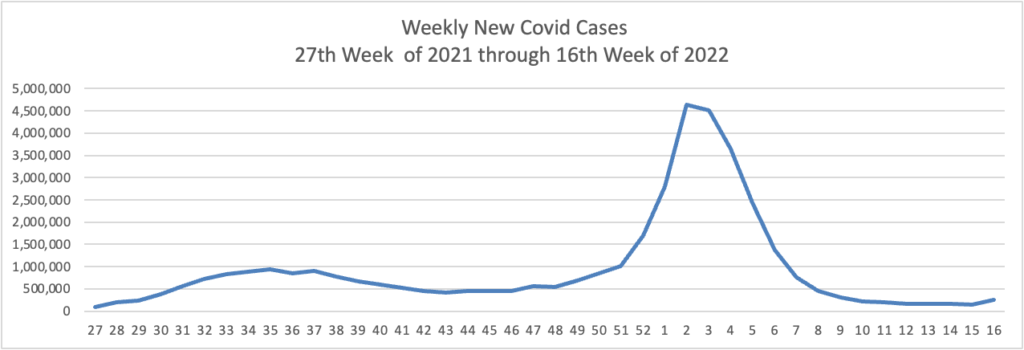
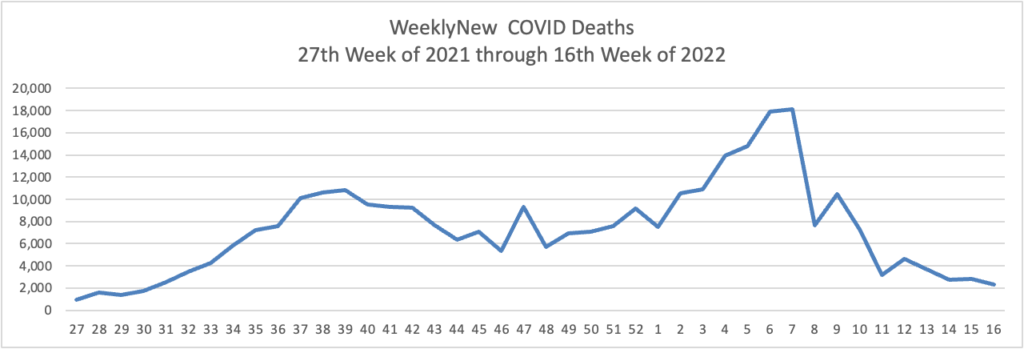
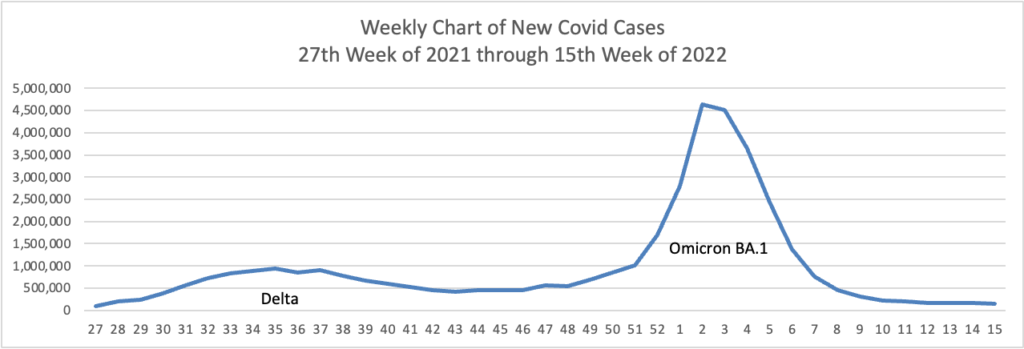
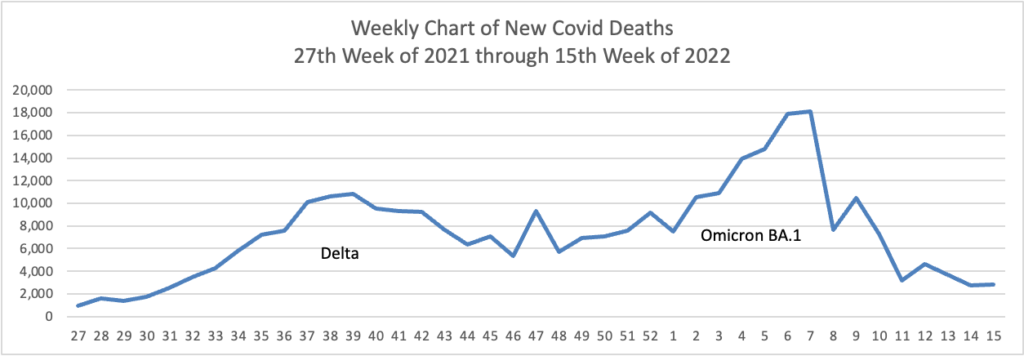
Based on the Centers for Disease Control’s Covid Data Tracker and using Thursday as the first day of the month, here are the FEHBlog’s weekly charts of new Covid cases and deaths

Here is a link to the CDC’s weekly review of COVID statistics. Among those statistics are the following:

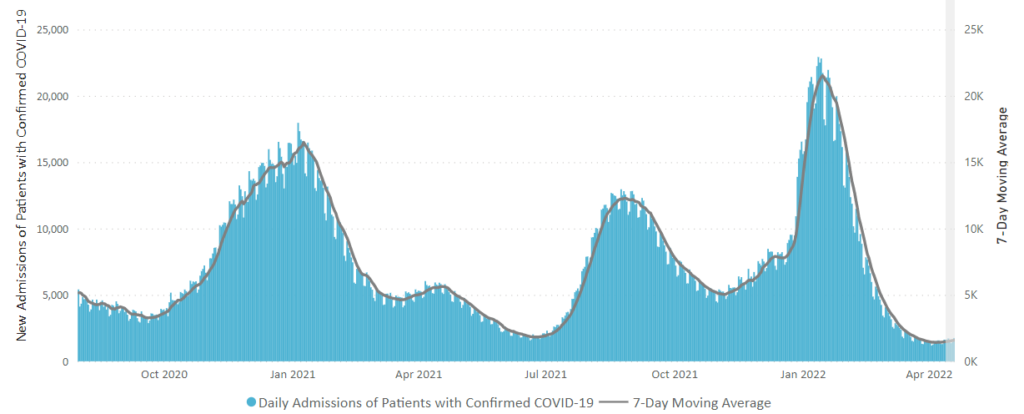
New Hospital Admissions

The current 7-day daily average for April 6–April 12, 2022, was 1,446. This is a 1.3% increase from the prior 7-day average (1,427) from March 29–April 4, 2022.

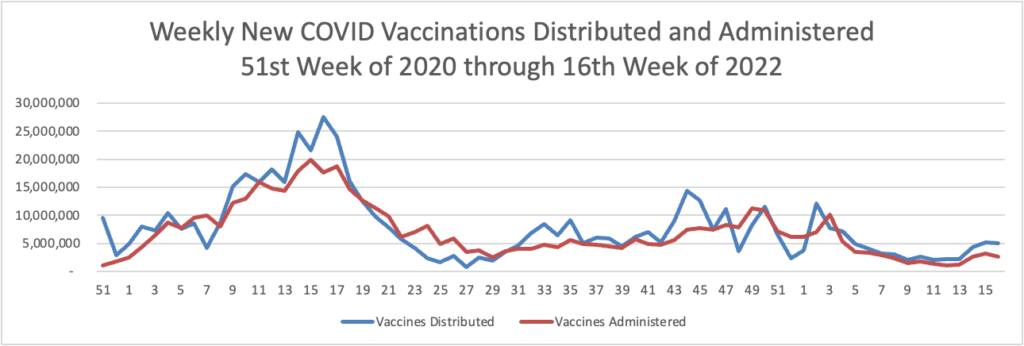
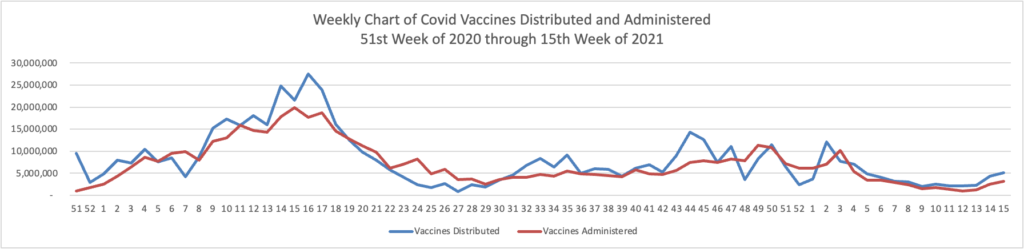
Here’s the FEHBlog’s weekly chart of Covid vaccinations distributed and administered from the beginning of the Covid vaccination era to the latest week ending last Wednesday, April 13.

For the second week in a row, Covid vaccines distributed and administered have increased materially.

The CDC’s principal point in this week’s Covid statistical review is the following:

Throughout the COVID-19 pandemic, many people have delayed or avoided medical care, including routine, urgent, and emergency care. If it’s something you’ve neglected, it’s time to jump back in—consider putting “get a checkup” on top of your to-do list, especially if you’re at risk for heart disease. Regular checkups provide the opportunity to prevent, screen for, and manage chronic conditions, and to get routine vaccinations.

The FEHBlog agrees that the best step a person can make on the road to a healthy life is to establish a relationship with a primary care doctor.

In other Omicron and siblings news —

MedPage Today informs us

The FDA granted an emergency use authorization (EUA) to the first COVID-19 test that can detect the virus in breath samples, the agency announced on Thursday.

Dubbed the InspectIR COVID-19 Breathalyzer, the test uses gas chromatography-mass spectrometry to rapidly detect volatile organic compounds associated with SARS-CoV-2. Patients breathe into a disposable straw on the device — which is about the size of a piece of carry-on luggage, according to the agency — and results are returned in less than 3 minutes. The test is intended for healthcare settings where samples can be collected and analyzed, such as mobile testing sites, doctor’s offices, and hospitals.

Cool.

Kaiser Health News tells us

The federal “test-to-treat” program, announced in March, is meant to reduce covid hospitalizations and deaths by quickly getting antiviral pills to people who test positive. But even as cases rise again, many Americans don’t have access to the program.

The program allows people with covid symptoms to get tested, be prescribed antiviral pills, and fill the prescription all in one visit. The federal government and many state and local health departments direct residents to an online national map where people can find test-to-treat sites and other pharmacies where they can fill prescriptions.

But large swaths of the country had no test-to-treat pharmacies or health centers listed as of April 14. * * *

Even people who regularly see a doctor may be unable to get a prescription in time, and that’s where the program comes in. Before the pandemic, 28% of Americans didn’t have a regular source of medical care, with rates even higher for Black and Hispanic Americans. 

See above re PCPS and no bueno.

The article adds

Truepill, a company that provides telehealth and pharmacy technology, offers online covid assessments through its website findcovidcare.com * * *. The company has filled more than 10 million prescriptions in the past five years.

The service, available in all 50 states and Washington, D.C., costs $25 to $55. Though insurance isn’t accepted, the cost is comparable to insurance copays for in-person doctor appointments. Prescriptions can be sent to a local pharmacy for no additional charge or shipped to a home overnight via FedEx for a $20 fee.

It’s always good to have a Plan B.

From the FEHB front, OPM issued a final, final rule concerning a Consolidated Appropriations Act 2021 provision extending the opportunity for tribal employers to enroll employees at certain tribal schools to join the FEHB Program.

From the Social Determinants of Health Front, Fierce Healthcare calls to our attention

a Northeast Business Group on Health guide for employers looking to tackle obesity and diabetes through a racial lens. “Obesity, Diabetes and Health Equity: What Employers Can Do” lays out a step-by-step approach. Key among them is embedding health outcomes within other diversity, equity and inclusion efforts. Another big recommendation is to build benefits to address obesity and diabetes that are based in clinical best practices.

In the FEHBlog’s view, OPM’s 2023 call letter asks carriers to address member obesity issues in this manner.

From the Rx coverage front, the Wall Street Journal reports

After Covid-19, vaccine makers’ next big target is a respiratory virus that kills up to 500 children a year nationwide and has been among the leading causes of U.S. hospitalizations for decades.

The respiratory syncytial virus, or RSV, infects nearly everyone at some point, causing mild, cold-like symptoms for most people. But it can lead to serious health problems such as difficulty breathing and pneumonia for infants and older adults.

Now several drugmakers including Pfizer Inc., Johnson & JohnsonModerna Inc. and GlaxoSmithKline PLC are testing shots that infectious-disease specialists say show promise at safely preventing RSV disease. Initial development of most of these vaccines predated the current pandemic, but the rapid success in finding effective Covid-19 vaccines has energized the RSV effort, according to analysts.

Good luck.

From the federal government front

  • Meritalk provides a Who’s Who in implementing the President’s Management Agenda. The article explains “As the Office of Management and Budget’s (OMB) effort to transform the President’s Management Agenda from a list of goals into actionable policy steps gathers steam, OMB is fleshing out its list of Federal agency officials who are taking on leadership roles not only for the three major PMA pushes but for numerous strategic goals within each of them.” The OPM Director Kiran Ajuha is one of three senior federal executives in charge of the PMA’s workforce issues.
  • Federal News Network offers an interview with the Postmaster General Louis Dejoy.

Thursday Miscellany

Photo by Josh Mills on Unsplash

From the Omnicron and siblings front, the Wall Street Journal reports encouraging news.

The Omicron BA.2 variant has dominated new infections in the U.S. for weeks without setting off a major surge so far, raising hopes among some public-health experts that the nation might dodge a more significant hit.

BA.2 is in particular affecting the Northeast, where virus concentrations in wastewater are rising alongside reported infections in such places as New York, Washington, D.C., and Philadelphia. Concern about BA.2 prompted Philadelphia to restore an indoor-mask requirement and U.S. authorities to extend mask mandates for airplanes and other forms of transportation.

Still, BA.2 hasn’t yet caused the rise in hospitalizations some doctors said they would have anticipated. Disease experts say some combination of immunity from Covid-19 vaccinations and a severe wintertime surge, aided by springtime weather drawing people outdoors, might be keeping the virus at bay.

MedPage Today informs us

A booster dose of the Pfizer-BioNTech COVID-19 vaccine was safe and produced an immune response in kids ages 5 to 11, including against the Omicron variant, the companies said on Thursday.

These data came from two sources: the phase II/III clinical trial on 140 children ages 5 to 11 who received a booster dose at least 6 months after their two-dose primary series, and a subgroup of 30 kids in whom response against Omicron was studied specifically. In this subgroup analysis, there was a 36-fold increase in neutralizing antibody titers compared with levels seen after the two-dose primary series, the companies reported.

The companies plan to submit a request to the FDA for an emergency use authorization (EUA) for a third dose for this age group “in the coming days.” The agency previously authorized a two-dose primary series of the 10 μg formula for this age group in October 2021.

Health IT Analytics tells us, “When comparing groups that experienced the worst effects of COVID-19, a study published in Public Health Nursing found that the pandemic had a significant impact on those who exhibit high social vulnerability, leading them to have the highest mortality levels.” This finding illustrates the importance of resolving health disparities.

On a related note, Govexec reports

More than 90 federal agencies released their first-ever equity action plans on Thursday, laying out more than 300 strategies to better help underserved communities. This follows an executive order President Biden issued on day one of his administration, which directed agencies to conduct equity assessments of their top three to five high-impact services for Americans to determine where there were systematic barriers. These findings helped agencies develop their plans.

“Taken together these 300 actions demonstrate what it means to take a whole-of-government approach to advancing equity,” said a senior administration official on a background briefing call. “For the first time Americans will see a full picture of what it looks like for the entire federal government to advance equity at once.”

For example, Health and Human Services Department plans to better help individuals with limited English proficiency access federal health programs; the General Services Administration seeks to assess the impact on communities of its vast real estate portfolio; and the Office of Personnel Management looks to invest in data to look at potential barriers in the federal hiring process.

In a significant development from the No Surprises Act front, the Affordable Care Act regulators issued helpful Federal Independent Dispute Resolution (IDR) Process Guidance for Disputing Parties and Certified IDR Entities. The new guidance no longer treats the Qualifying Payment Amount as a rebuttable presumption. This action strongly suggests that the QPA’s rebuttable presumption status will be removed from the “final, final” version of the IDR rule. That regulation is due out next month. However, the rule does not yet appear on the OMB Office of Information and Regulatory Affairs’ list of rules currently being subjected to their oversight.

In other regulatory news, the International Foundation of Employee Benefits Plans alerts us, ​

The Department of Justice (DOJ) released guidance including frequently asked questions (FAQs) on how the Americans with Disabilities Act (ADA) protects individuals from discrimination when they are being treated for and recovering from opioid use disorder (OUD).

From Capitol Hill, EndPoint News reports

A group of 30 bipartisan lawmakers sent letters to 7 naloxone manufacturers, calling on them to apply for over-the-counter status for their opioid overdose antidotes and open up supplies further as the opioid crisis continues in the US with record levels of overdoses and deaths.

Citing a Massachusetts study that found substantially increased access to naloxone reduced opioid overdose mortality rates by 46%, the senators and representatives called on Pfizer, Teva Pharmaceuticals, Adamis Pharmaceuticals, Akorn, Amphastar Pharmaceuticals, Emergent BioSolutions, and Hikma Pharmaceuticals to “submit applications to make naloxone available over the counter without delay.”

Currently, there are three FDA-approved forms of naloxone — injectable, auto-injector and nasal spray — and all three currently require a prescription, but in most states and the District of Columbia pharmacists are allowed to dispense naloxone under a standing order, meaning they don’t actually need individual prescriptions. Some states also have given pharmacists direct authority to prescribe and sell naloxone to consumers.

Good idea. The HHS Secretary Xavier Becerra extended the opioid epidemic public health emergency for another 90 days earlier this month.

From the healthcare business front, Healthcare Dive reports on UnitedHealth Group’s 1st Quarter 2022 financial results.

UnitedHealth is bullish on completing its controversial acquisition of data analytics firm Change Healthcare, despite legal action from the Department of Justice to block the deal.

UnitedHealth’s extended agreement with Change “reflects our firm belief in the potential benefits of this combination to improve healthcare and in our ability to successfully overcome the challenge to this merger,” Chief Operating Officer Dirk McMahon told investors on a Thursday morning call regarding first-quarter financial results.

The Minnetonka, Minnesota-based healthcare behemoth beat Wall Street expectations for earnings and revenue in the quarter, with a topline of $80.1 billion, up 14% year over year due to double-digit growth at health services arm Optum and payer business UnitedHealthcare. Net earnings were $5.1 billion, up 3% year over year. UnitedHealth raised its full-year guidance following the results.

STAT News adds

The Omicron surge didn’t lead to an explosion of medical claims at UnitedHealth Group, which contributed to higher-than-expect profits. UnitedHealth ended the first three months of the year with more than $5 billion of profit on $80.1 billion of revenue. The company’s medical loss ratio, which shows the percentage of insurance premiums that were spent on medical claims, was 82% — higher than 80.9% in the first quarter of 2021, but less than what Wall Street expected.

From the miscellany department

  • The ICD 10 Monitor discusses “two extremely encouraging studies in terms of the content coverage and feasibility of replacing ICD-10-CM with ICD-11.”
  • BioPharma Dive reports “AbbVie and Genmab said treatment with their dual-acting antibody epcoritamab led to responses in nearly two-thirds of patients with lymphoma, announcing on Wednesday that their clinical trialsurpassed its benchmark for success. The partners will now take the data to the Food and Drug Administration and other regulators to determine whether it’s good enough to formally submit for approval.”
  • Health Data Management offers useful insights into the ongoing TEFCA launch.

Midweek Update

Photo by Thought Catalog on Unsplash

From the Omicron and siblings front —

The Secretary of Health and Human Services Xavier Becerra renewed the declaration of a public health emergency due to Covid for another 90 days from April 16. Roll Call provides background on this expected decision.

Beckers Hospital Review summarizes an interview the White House’s new COVID-19 response coordinator, Ashish Jha, MD, recently gave to NPR. The article describes Dr. Jha as optimistic.

Roll Call also offers its perspectives on the CDC’s Covid vaccination strategy.

Some experts question boosting with vaccines modeled on the original virus as new variants sweep the globe. The immune system responds most quickly to variants it has already encountered, and evidence has shown that people infected with a significantly different variant of a virus can potentially suffer worse reactions when a new wave hits. 

But it’s not yet clear if this is the case with COVID-19 or whether the current vaccines have broad enough protection to neutralize this phenomenon, known as “original antigenic sin.” 

“Theoretically, repeated exposure to an older variant formula may drive our immune system to concentrate too much on old features and not on new features,” Katelyn Jetelina, an assistant professor at University of Texas Health Science Center, wrote in her Substack newsletter. “But despite some truly surprising evolutionary leaps of the virus (like Omicron) we have not seen any convincing evidence of OAS among humans, which is great news.”

There’s also disagreement in the medical community about whether more COVID-19 shots of any kind are necessary for the broader public beyond the elderly and high-risk. The debate has muddled the message on already confusing booster recommendations.

“The FDA and CDC have kind of come out with, like, a lukewarm, ‘Yeah, you can do this,’ as opposed to, ‘Run and do it now.’ And you know, that’s going to leave most people confused,” said Jen Kates, Kaiser Family Foundation director of global health and HIV policy. 

In this regard, the Wall Street Journal discusses “Why It Is Hard to Know Who Needs a Covid Booster: Mysterious T Cells: Vaccine experts aren’t certain who under 65 years should get a second booster–and when–because the response of T cells is poorly understood.”

Researchers and U.S. health officials measuring whether Covid-19 vaccines work have largely focused on the body’s first-line defense, called antibodies. The Food and Drug Administration recently cleared a second booster shot partly based on real-world research out of Israel showing the extra dose restored antibody levels that had waned and reduced risk of infections.

“You have T cells that are not waning to the same degree and are likely a big part of what’s going to keep you out of the hospital,” said John Wherry, director of the Institute for Immunology at the University of Pennsylvania.

The presence of T cells, vaccine experts say, might explain why many vaccinated people who tested positive for Covid-19 several months after their inoculations managed to avoid severe cases.

The T cells continue to work against the virus, according to the experts and studies, after antibodies have waned or lost effectiveness because of a variant. 

Some studies have found that T cells from Covid-19 shots persist for at least half a year after initial series of vaccination. A study by researchers at La Jolla Institute and published in the journal Cell in March found that the T cells lasted six months and were about 80% as effective against Omicron as other variants. 

Lingering T cells might reduce the need for many healthy people to get a second booster dose within months of their first, some vaccine experts say. In fact, there might be diminishing returns from getting boosters over time if T-cell levels eventually plateau or slowly drop over time as people get more shots, researchers say.

There is limited evidence to go on, however. * * * Dr. Wherry said his lab expects to publish data soon showing that T cells after the initial series of vaccines remain in the body for at least nine to 12 months. “We are building the plane as we’re flying,” Dr. Wherry said. 

From the Covid vaccine mandate for federal employees front, Govexec follows up on last week’s decision from the U.S. Court of Appeals for the Fifth Circuit lifting the preliminary injunction on that mandate. The FEHBlog noted earlier this week that the federal government has asked the Fifth Circuit to accelerate the effective date for that action. Govexec tells us that the plaintiffs’ attorneys have opposed the government’s motion and intend to petition the Court for a rehearing or a rehearing en banc.

The White House announced “Additional Actions in Response to Vice President Harris’s Call to Action on Maternal Health.” Of interest to FEHB carriers, the fact sheet explains

  • “Birthing-Friendly” Hospital Designation: CMS is proposing the “Birthing-Friendly” hospital designation to drive improvements in maternal health outcomes and maternal health equity. The “Birthing-Friendly” hospital designation would assist consumers in choosing hospitals that have demonstrated a commitment to maternal health. The Administration announced this new designation during the White House Maternal Health Day of Action Summit.
    • Initially, the designation would be awarded to hospitals based on attestation that the hospital has participated in maternity care quality improvement collaboratives and implemented best practices that advance health care quality, safety, and equity for pregnant and post-partum patients.
    • Data will be submitted by hospitals for the first time in May 2022, and CMS will post data for October to December 2021 in fall 2022. Criteria for the designation may be expanded in the future.

OPM’s call letter for 2023 benefit and rate proposals suggested that carriers keep an eye on this initiative.

Speaking of government initiatives, Federal News Network brings us up to date on the TEFCA initiative that would create a backbone for the country’s regional health data networks, among other data resources.

From the government reporting front, HR Dive informs us

The U.S. Equal Employment Opportunity Commission today opened 2021 data collection reporting for its Employment Information Report (EEO-1), Standard Form 100, Component 1. The filing deadline is May 17, 2022, EEOC said.

Generally, private employers with at least 100 employees must submit an EEO-1 Component 1 report. So must federal contractors with 50 or more employees. 

The window for reporting has been shortened significantly compared to the last two years, with HR given a little over one month to complete the form.

Gee, the FEHBlog understood that the Covid public health emergency had been extended.

From the medical research from LifeSciences Intelligence reports

A major international study recently identified 75 genes associated with an increased risk of developing Alzheimer’s disease, including 42 new genes not previously discovered. 

The study involving UK Dementia Research Institute researchers enrolled over 100,000 individuals with Alzheimer’s disease and over 600,000 healthy individuals across the UK, US, Australia, and Europe. Researchers studied the differences in their genetic makeup. 

Notably, 60–80% of disease risk is based on genetics. Therefore, researchers must continue to uncover the biological causes and develop treatments for the millions of people affected globally.  

From the mental healthcare front, Beckers Hospital Review offers a suicide rate of each U.S. state and the District of Columbia in 2020, according to a ranking Kaiser Family Foundation released on April 12. The national age-adjusted suicide rate was 13.5 per 100,000 people in 2020. Wyoming had the highest rate and the District of Columbia the lowest.

Tuesday’s Tidbits

Photo by Patrick Fore on Unsplash

From the Omicron and siblings front

Beckers Hospital Review informs us

The World Health Organization on April 11 said it is monitoring two new “sister variants” of the original omicron strain dubbed BA.4 and BA.5, according to global news network WION.

Whither BA.3?

A lot of news sources are offering reports on Stealth Omicron. We learn from the AP that Stealth Omicron is another sibling of BA.2.

It was given the “stealth” nickname because it looks like the earlier delta variant on certain PCR tests, says Kristen Coleman at the University of Maryland School of Public Health. The original omicron, by contrast, is easy to differentiate from delta because of a genetic quirk.

BA.2 is “now the dominant coronavirus version in the U.S. and more than five dozen other countries.”

From the Health and Human Services Department, we find an account of “Secretary Becerra and HHS Leaders Celebrating Black Maternal Health Week 2022.”

From the Centers for Disease Control department

  • The CDC explains how diabetics can keep eating the cultural foods to which they are accustomed by taking a few preparation twists.
  • Neisseria gonorrhoeae (gonorrhea), a common sexually transmitted infection (STI) that can result in life-threatening ectopic pregnancy and infertility, leads to more than an estimated half a million drug-resistant infections in the United States each year.
  • With health departments in two states, CDC is expanding drug resistant-gonorrhea surveillance beyond traditional STI clinics and into emergency departments, where more people are seeking STI care.
  • From 2018 through 2019, nearly one-third (29%) of patients with positive tests from the North Carolina site were diagnosed at emergency departments, and drug resistance testing uncovered eight cases of gonorrhea less likely to be successfully treated by one of two drugs in the recommended first line treatment at that time.
  • Bloomberg adds “After sexually transmitted diseases fell during the early months of pandemic lockdowns and social distancing, the U.S. saw a resurgence of some of the most common infections through the end of 2020, according to a report.”

From the U.S. Preventive Services Task Force front, the Wall Street Journal tells us

All children should be screened for anxiety starting as young as 8 years old, government-backed experts recommended, providing fresh guidance as doctors and parents warn of a worsening mental-health crisis among young people in the pandemic’s wake.

The draft guidance marks the first time the U.S. Preventive Services Task Force has made a recommendation on screening children and adolescents for anxiety. The task force, a panel of independent, volunteer experts that makes recommendations on matters such as screening for diabetes and cancer, also reiterated on Tuesday its 2016 guidance that children between ages 12 and 18 years old should be screened for major depressive disorder. 

“What the pandemic has done is, it exacerbated a pre-existing issue,” said Nasuh Malas, director of pediatric consultation and liaison psychiatry services at C.S. Mott Children’s Hospital in Ann Arbor, Mich., who isn’t on the task force. “These guidelines are a preliminary step to many, many steps that we need to take nationally as a community of people who are concerned about our youth.”

STAT News adds

After staying flat for a decade, the overdose death rate among U.S. adolescents nearly doubled from 2019 to 2020 — an alarming climb that continued into 2021, a study in JAMA shows. It’s not a surge of 14- to 18-year-olds using drugs, researchers said. If anything, survey data indicate that fewer teens experimented with drugs during the pandemic. Rather, a main factor is the supply of increasingly deadly drugs, one that has driven overall overdose deaths to more than 100,000 per year and has now trickled down to adolescents. What teens may think is an opioid painkiller or Xanax diverted from the legal supply is now more likely to be a counterfeit tablet containing fentanyl or similar synthetic opioids. “Drug use is becoming more dangerous, not more common” among adolescents, study co-author Joseph Friedman told STAT’s Andrew Joseph. Read more.

From the antibiotic overuse front, the American Journal of Preventive Medicine informs us “Unnecessary prescription of antibiotic prophylaxis by dentists continues to be common. Antimicrobial stewardship strategies are needed to improve prescribing by dentists.” No bueno.

Also in the no bueno department, Healthcare Dive calls our attention to a Lown Institute report

— U.S. nonprofit hospitals often get tax breaks worth far more than they spend on charity care and community investment, according to a new report from the Lown Institute. Prominent systems such as Providence, Trinity Health, Mass General Brigham and the Cleveland Clinic had some of the largest of these “fair share deficits,” the healthcare think tank said.

— The Lown Institute found 227 of the 275 hospital systems it studied spent less on charity care and community investment than the value of their tax exemptions. The fair share deficits of all hospital systems studied totaled $18.4 billion, which the institute argues could have been used to address health equity, housing, food insecurity and other local needs.

— Many of the hospital systems also received hundreds of millions of dollars in grant funding through the Coronavirus Aid, Relief, and Economic Security Act in 2020. The 275 systems examined operate more than 1,800 hospitals nationwide.

From the Rx coverage department. Drug Channel assesses the recent CMS Office of Actuaries report projecting U.S. healthcare spending.

The econowonks at the Centers for Medicare & Medicaid Services (CMS) recently released the latest projections for U.S. spending on healthcare. (See links below.) These data provide our first official look at post-pandemic U.S. healthcare spending. 

As you will see below, outpatient prescription drugs dispensed by retail and mail pharmacies are projected to remain a small share (8.4%) of total U.S. healthcare spending. What’s more, taxpayers—via Medicare and Medicaid—will continue to crowd out the private insurance market. One bright spot: consumers will account for an ever-smaller share of drug spending. 

Thus, the government actuaries expect that pharmaceuticals will not be the key driver of U.S. healthcare spending growth. Will someone tell our elected officials?

Here are tidbits that also follow up from stories in recent FEHBlog posts

  • Fierce Healthcare reports that the bipartisan bill to control the price of insulin to consumers will “ensure that plans and PBMs ‘cannot collect rebates, which drive up drug costs at the point of sale, on insulins that roll prices back to 2006 or equivalent levels,’ the release said.” 
  • Healthcare Dive reports that part of the Administration’s efforts to control medical debt includes the following

The Biden administration laid out a four-point plan to reduce America’s medical debt on Monday, including having the HHS dig into how providers’ billing practices impact care access and affordability.

Under the plan announced by Vice President Kamala Harris, the HHS will request data from 2,000 providers on their bill collection practices, lawsuits against patients, financial assistance offerings, debt buying practices and more. The HHS will use this information in grant determinations, and to shape data and policy recommendations to the public.

The department will also share potential violations with enforcement agencies.The White House is also guiding federal agencies to stop using medical debt as an underwriting factor in credit programs where possible

  • Health Payer Intelligence discusses AHIP’s comments on the CDC’s draft, revised opioid prescription guidelines.

Finally here are some OPM and USPS tidbits

  • Govexec offers an interview with the Postmaster General Louis DeJoy.
  • Federal News Network tells us

The Office of Personnel Management issued a second round of guidance to agencies on Tuesday, outlining several ways agencies should make employees more aware of their collective bargaining rights.

OPM’s guidance also directs agencies to quickly process requests to pay union dues through payroll deductions, and train managers and supervisors on how to remain neutral during union organizing campaigns.

OPM Director Kiran Ahuja, in a blog post, said the guidance is part of the administration’s focus on making the federal government a model employer in a competitive labor market.

Monday Roundup

Photo by Sven Read on Unsplash

From Capitol Hill —

Roll Call informs us

The House Appropriations Committee is tentatively planning to take up its fiscal 2023 spending bills in June, teeing up potential floor votes in July, according to people familiar with the schedule.

Subcommittees would mark up their 12 annual bills from June 13 to June 22. The full committee would hold its markups from June 22 through June 30.

The top four appropriators in the House and Senate, known as the “four corners,” are expected to meet shortly after the two-week recess this month to begin discussions aimed at reaching a bipartisan agreement on overall discretionary spending levels for the fiscal year that begins Oct. 1.

STAT News tells us

A bipartisan group of four key lawmakers unveiled a long-shot policy that aims to alleviate one of the American health care industry’s most embarrassing problems: mind-bogglingly high prices for insulin, a drug millions of Americans need to survive.

The policy outline released Monday is a reboot of a three-year-old bill introduced by Sens. Jeanne Shaheen (D-N.H.) and Susan Collins (R-Maine). It would dangle a carrot for drugmakers to lower their list prices. Insurers and middlemen wouldn’t get to keep fees for diabetes drugs — but only if drugmakers lower list prices for drugs back to 2006 levels. It would also make sure patients with Medicare or private insurance don’t pay more than $35 per month for their insulin, though it would not offer the same protection to the uninsured.

Federal News Radio follows up on last week’s Senate confirmation of Kristin Boyd to be the first Senate-confirmed OPM Inspector General in over six years.

From the Omicron and siblings front —

Fierce Healthcare calls attention to a Commonwealth Fund report on the efficacy of Covid vaccines

COVID-19 vaccinations have blunted the worst waves of the pandemic, preventing millions of deaths, limiting strain on the U.S. healthcare system and producing “substantial cost savings” in healthcare spending, according to new estimates published Friday by the Commonwealth Fund.

From the first authorizations in December 2020 through March 2022, COVID-19 vaccination was estimated to have averted roughly 2.3 million deaths and 66.2 million additional infections, per the analysis.

Further, the push for shots in arms was found to have prevented 17 million hospitalizations in the U.S. and saved the country’s healthcare system just shy of $900 million in total spending, notwithstanding the country’s savings related to workplace absences and deaths.

The Wall Street Journal reports

The risk of developing inflammatory heart conditions after Covid-19 vaccination is relatively low, two large studies found, especially when compared with the heart-related risks from Covid-19 disease itself and from vaccines against other diseases [such as the flu].

“The overall message is that you can never consider risk in isolation,” said Jason Perry Block, an associate professor at Harvard Medical School and a co-author of the CDC’s analysis.

Concerns over potential side effects from Covid-19 vaccines are one reason some eligible adults in the U.S. say they haven’t gotten the shots, according to public-opinion surveys. About 70% of eligible Americans have been fully vaccinated against Covid-19, according to the CDC.

In considering the cardiac risks associated with Covid-19 vaccines, Dr. Block said people “also have to consider the risk on the other hand. If you don’t get vaccinated and do get infected, the risk is higher of cardiac complications.”

From the Covid vaccine mandate front —

A federal district court in Georgia preliminarily enjoined the federal government’s vaccine mandate on its contractors. The federal government appealed to the U.S. Court of Appeals for the 11th Circuit. The appeal was argued before a panel of three judges last Friday. Federal News Network adds

A three-judge panel from the U.S. Court of Appeals for the 11th Circuit says it remains unclear whether the Biden administration has the authority to impose a COVID-19 vaccine mandate on federal contractor employees.

The administration told the court last Friday that federal contracting law gives the president broad authority to set the terms of the federal government’s contracts, including making sure contractors have enough healthy employees to complete their contracts with agencies on time.

The judges,  however, repeatedly said during oral arguments that the federal government has a high bar to clear, in order for the court to overturn a lower court’s injunction barring the administration from enforcing the mandate.

The 11th Circuit likely will issue its opinion next month.

The Hill reports on the latest developments in the federal government’s vaccine mandate on its workforce.

The Biden administration on Monday asked a federal appeals court to clear a procedural hurdle that remained after a key legal victory last week and allow the administration to quickly resume enforcement of its COVID-19 vaccine mandate for federal employees.  

The request to the U.S. Court of Appeals for the 5th Circuit, if granted, would effectively reinstate the public health policy after it was put on hold across the country in January by a federal judge in Texas.

* * *

The administration’s request Monday would move up the timeline for the panel’s judgment to take effect, which is currently not set to occur until May 31. 

From the SDOH front, Health Payer Intelligence informs us

UnitedHealthcare announced that it will expand a program to advance maternal health equity in for minority communities in North Carolina.

“Access to quality maternal health care will help close the gap on health inequity in our state,” said Anita Bachmann, chief executive officer of UnitedHealthcare Community Plan of North Carolina. “We are honored to partner with Mountain Area Health Education Center and SistasCaring4Sistas of North Carolina to address disparities and outcomes with the expanded doula program.”

The payer partnered with the community-based organization SistasCaring4Sistas to expand access to the organization’s program, Doulas for Social Justice.

From the Aduhelm front, Fierce Healthcare reports on payers’ cheerful reaction to last week’s CMS Medicare coverage decision of that expensive drug only at the clinical trial level. “We appreciate that when these treatments receive an accelerated FDA approval, Medicare will cover for patients in [Food and Drug Administration] or [National Institutes of Health] approved trials,” according to a statement from insurance lobbying group AHIP.”

From the miscellany department

  • The Wall Street Journal reports about “New apps and telehealth services [that] are providing women in middle age more access to health expertise, education and support to help them during menopause [such as MenoLife].”
  • The Department of Health and Human Services shares Secretary Becerra’s remarks at the White House Medical Debt Event with Vice President Harris. Here is a link to the Administration’s fact sheet describing new actions to lessen the burden of medical debt and increase consumer protection. According to the fact sheet,

These actions will help:

Hold medical providers and debt collectors accountable for harmful practices;

Reduce the role that medical debt plays in determining whether Americans can access credit – which will open up new opportunities for people with medical debt to buy a home or get a small business loan;

Help over half a million of low-income American veterans get their medical debt forgiven; and,

Inform consumers of their rights.

  • Medpage offers an interesting account of how a doctor is trying to make sure that his patients get the medical screening tests that they need.

Weekend update

Photo by Mark Tegethoff on Unsplash

From the Capitol Hill front, Congress is on a State / District work period for the next two weeks.

Medpage Today identifies the likely winners and losers if the Senate joins the House of Representatives in capping insulin cost-sharing at $35 per dose. There are no surprises.

From the federal employment front, Govexec tells us

The U.S. Postal Service has converted 63,000 part-time or non-permanent workers into career positions, with leadership saying it has helped stabilize the workforce after years of escalating turnover.  * * *

The Postal Service ended 2021 with nearly 517,000 career employees, its highest total since 2012. The non-career workforce has remained fairly steady in recent years at 136,000. 

This factoid is worth noting because career employees typically are eligible for FEHB coverage while part-timers and non-permanent workers are not.

From the Omicron and siblings front, the Wall Street Journal informs us about the BA.2-related numbers to watch when considering whether or not to take additional Covid precautions. For example,

Hospitalization rates are likely a more accurate indicator of transmission and reflect the severity of infections, some scientists say. A related useful metric:  the number of people visiting emergency rooms with influenza-like illnesses, which the CDC tracks and publishes nationally; New York has data, too. Scientists say BA.2 is more transmissible than the original Omicron variant but not more dangerous. * * *

UNC’s Dr. Lessler says the [CDC’s Communities] map is useful for those who aren’t at high risk for severe Covid and don’t have close contact with those who are. “It can serve as a good lower limit for how cautious to be,” he says.

The CDC’s surveillance of wastewater for Covid-19 is also telling, he says, though it is based on limited samples. Some wastewater data show readings from the Northeast, in particular, have been edging higher from low levels. * * *

Should you decide that the level of Covid-19 circulating is too high for your comfort, Dr. Varma advises putting a few measures in place:

— Make sure you’re up to date with Covid vaccinations and boosters for which you’re eligible.

— Have a supply of high-quality masks you can wear in indoor settings.

— Ensure that you have a supply of rapid antigen tests; one pack per family member is a good rule of thumb.

— Improve indoor ventilation when you have visitors over or if someone in your household gets Covid-19.

— Have the number of your local or state health department on hand so you can get antiviral pills if you qualify and fall sick.

And, if you test positive, follow the latest guidelines recommended by the CDC and your doctor. 

From the opioid epidemic front

  • NPR discusses draft CDC guidance on prescribing opioids that will replace the current guidance that was issued in 2016.
  • MedPage Today suggests that doctors should not prescribe opioids without first preparing a deprescribing plan for the patient.

A deprescribing plan involves laying out a specific path for reducing, and then eliminating, opioid use even before the first prescription is written. It is often a way for physicians to involve other resources, including mental health care, community support, and social services to assist the patient as opioid dosage gradually falls.

Importantly, the plan should not be an act of enforcement, but rather, the product of physician and patient working together. Properly structured, the plan will give the patient confidence that an opioid prescription may help relieve pain in the short run but will not lead to dependence or addiction in the long term. The goal is to produce a better outcome for the patient than is possible with continued opioid use.

From the telehealth front, mHealth Intelligence reports

MemorialCare in Fountain Valley, California, is partnering with TytoCare to enhance its telehealth services.

TytoCare provides virtual home examination and diagnosis solutions, including a hand-held tool for remotely examining the heart, lungs, skin, ears, throat, abdomen, and body temperature, and a telehealth platform for sharing exam data, conducting live video exams, and scheduling visits.

Through the new partnership, MemorialCare will expand its virtual care offerings. TytoCare’s handheld device will allow patients to perform guided medical exams with MemorialCare providers remotely. The device has received Food and Drug Administration approval.

Patients can use the TytoCare app to participate in video visits offered through MemorialCare’s Virtual Urgent Care service. Data from the remote exam is sent to MemorialCare providers through an encrypted network.

Providers can leverage exam data to diagnose and treat conditions and write a prescription if needed. The virtual visit is also downloaded into MemorialCare’s MyChart EMR system.

From the medical research department, STAT News reports

While CAR T-therapy has cured some people with blood cancers, this form of immunotherapy has so far produced lackluster results for solid tumors like lung or kidney cancer. But a new early-phase clinical trial presented on Sunday at the American Association of Cancer Research (AACR) conference suggests that CAR T-cells may be able to shrink some solid tumors — as long as it gets a boost from an mRNA vaccine from BioNTech.

The mRNA vaccine manufacturers worked on cancer cures before they pivoted to Covid in early 2020. It’s hopeful to see that BioNTech is back in cancer research.

Friday Stats and More

Based on the Centers for Disease Control’s Covid Data Tracker and using Thursday as the first day of the week, here are the FEHBlog’s weekly charts of new Covid cases and deaths from the 27th week of 2021, a low points of cases and death, and the 14th week of 2022, another lull but not quite as low.

The CDC’s Weekly Review of its COVID statistics issued today notes “The current 7-day daily average for March 30–April 5, 2022, was 1,406. This is a 10.3% decrease from the prior 7-day average (1,567) from March 23–29, 2022.”

Here’s the FEHBlog’s weekly chart of Covid vaccinations administered and distributed since the beginning of the Covid vaccination era through this week, again using Thursday as the first day of the week.

The administration of Covid vaccines popped us this week. Over 75% of the U.S. population aged 18 and older are fully vaccinated. Nearly half (48.6%) of that cadre is boostered. The Weekly Review’s commentary discusses the importance of vaccinating children.

COVID-19 vaccines have undergone—and continue to undergo—the most intensive safety monitoring in U.S. history, and adverse events are rare. Vaccinating children is the single best way to protect them from severe illness associated with COVID-19. 

From Capitol Hill, the Wall Street Journal reports

Senators had also hoped to move forward on the coronavirus vaccines and treatments package, but progress quickly bogged down over Republican efforts to amend the bill to extend a pandemic-era immigration policy called Title 42—which allows Border Patrol agents to quickly turn away migrants at the southern border—with some Democrats siding with the GOP. Senators said they ran out of time, and the break could help end the logjam, even if it means the aid will need to wait at least several weeks.

“We’ll see where the discussions go, but my assumption is during the course of the break they’ll be some conversations between people who are interested in advancing it and see if we can make any headway on coming up with a process,” said Sen. John Thune (R., S.D.) on the Covid aid.

“I don’t think we’re leaving anything hanging up in the air that we’re not going to be able to continue to work with afterwards,” said Sen. Angus King (I., Maine), who caucuses with Democrats.

Congress is on State / District work periods for the next two weeks.

From the Rx coverage front, Health Affairs offers a fascinating article leading with an HHS Inspector General report on biosimilar drug use in the Medicare Part D program. The article blossoms into a broader look at biosimilar use in America. For example,

Last fall, two academics from the USC Schaeffer Center for Health Policy & Economics and the University of Chicago Harris School of Public Policy analyzed the available biosimiliars and found these were, on average, 30% less expensive than the underlying brand-name biologics. This represented a savings of about $665 off the average price.

Perhaps the biggest boost, though, will occur when biosimilar versions of Humira begin entering the U.S. market next year. This is expected to kick-start a wave of increased biosimilar usage between now and 2027, by which time the worldwide market should roughly double to $20 billion, according to Bernstein analyst Ronny Gal.

“The savings we identified with increased biosimilar use, while modest, could be significant once biosimiliar versions of Humira come on the market,” said [Melissa] Baker [from the HHS Office of Inspector Genera]. “Part D spending for Humira is in the billions of dollars.” The HHS OIG report noted that Humira and Enbrel accounted for more than $5 billion in Part D spending and nearly half of Part D spending on biologics in 2019.

From the Aduhelm front, Fierce Healthcare tells us

Leaders of the Food and Drug Administration (FDA) and the Centers for Medicare & Medicaid Services (CMS) sought to present a united front a day after CMS approved narrow Medicare coverage of the Alzheimer’s disease drug Aduhelm.

FDA Commissioner Robert Califf, M.D., and CMS Administrator Chiquita Brooks-LaSure issued a joint statement Friday to address criticism of CMS’ decision that Medicare only cover Aduhelm and similar products for beneficiaries in a qualifying clinical trial. Critics have charged CMS is trying to undermine the FDA’s approval decisions as the agency cleared the drug last year via accelerated approval.

“The work of both of our agencies is critical to ensure that medical products are available to people across the country,” the agency leaders said in a statement.

From the mental healthcare front, Health Payer Intelligence informs us

CVS Health and its payer arm, Aetna, aimed to make strides in the healthcare industry in 2021 by delivering affordable healthcare services to members, increasing access to virtual and mental healthcare, and implementing initiatives to advance health equity, according to the payer’s 2021 Environmental, Social, and Governance (ESG) report. The report reflects data from January 1 to December 31, 2021.

Well done.

Finally, the FEHBlog ran across this helpful Kaiser Family Foundation preventive services tracker website.

The Affordable Care Act (ACA) requires new private health insurance plans to cover many recommended preventive services without any patient cost-sharing. For adults, the required services are recommended by the U.S. Preventive Services Task Force (USPSTF), the Advisory Committee on Immunization Practices (ACIP), and the Health Resources and Services Administration (HRSA) based on recommendations issued by the Institute of Medicine Committee on Women’s Clinical Preventive Services.  As new recommendations are issued or updated, coverage must commence in the next plan year that begins on or after exactly one year from the recommendation’s issue date.

This tracker presents up-to-date information on the adult preventive services nongrandfathered private plans must cover, by condition, including a summary of the recommendation, the target population, the effective date of coverage, and related federal coverage clarifications.

For more information, see the fact sheet Preventive Services Covered by Private Health Plans under the Affordable Care Act.

This tracker also applies to FEHB plans. Thanks, KFF.