Thursday Miscellany

Thursday Miscellany

Photo by Josh Mills on Unsplash

From Capitol Hill, the American Hospital Association reports

The Senate today voted 72-25 to pass and send to the House a continuing resolution that would extend current federal funding levels for health care and other programs through Dec. 16. Current government funding expires at midnight Sept. 30.

The legislation also would extend through Dec. 16 two expiring programs that help maintain access to care in rural communities: the Medicare-dependent Hospital and enhanced Low-volume Adjustment programs. AHA will continue to advocate for long-term extension of these programs. Among other provisions, the continuing resolution would reauthorize the Food and Drug Administration’s user fee programs, and provide emergency funding for Ukraine and disaster assistance.

A proposal dealing with energy-permitting plans was dropped from the measure on Tuesday, speeding passage of the legislation. The House is expected to pass the measure by Friday. 

Roll Call provides more background on the CR.

The American Hospital Association also tells us

The House voted 220-205 today to pass legislation to hold employer-based health plans more accountable for improper denials of mental health and substance use benefits. The Mental Health Matters Act (H.R.7780) would give the Department of Labor more authority to enforce plan requirements under the Mental Health Parity and Addiction Equity Act and Employee Retirement Income Security Act, ban forced arbitration agreements when plans improperly deny benefits and ensure a fair standard of review by the courts. The bill also would provide grants to develop, recruit and retain school-based mental health professionals and link schools with local mental health systems, among other provisions.

Fierce Healthcare provides more color on this troubling bill.

The ERISA Industry Committee (ERIC)—which represents large employer plan sponsors—wrote a letter Monday to all House members calling for them to oppose (PDF) the Mental Health Matters Act when it comes up for a vote later this week. The letter comes as Congress is considering how to improve pay parity between behavioral and physical health amid reports of some insurers not following requirements in the Affordable Care Act. 

“This bill includes provisions that weaponize the Department of Labor (DOL) to sue employers rather than helping them come into compliance,” the letter said. * * *

[I]t remains unclear whether the Senate will take it up. The Senate Finance Committee is considering action to tackle pay parity but so far has not released any legislation. Chairman Ron Wyden, D-Oregon, previously told Fierce Healthcare that he is still working on legislation to tackle the issue, including taking aim at “ghost networks” where providers listed in directories don’t take new patients.

Earlier this month, Healthcare Dive reported that

The Senate Finance Committee released a bipartisan-supported discussion draft bill that aims to increase mental health access and improve mental health workforce shortages.

The draft bill proposes to fill the gap in mental healthcare worker shortages by funding training for 400 additional Medicare Graduate Medical Education psychiatric slots for residencies per year beginning Oct. 1, 2024. Over a decade, 4,000 psychiatric residencies would be supported by the funding, according to the bill.

The Senate’s focus on access to care makes much more sense than the House’s punitive approach, particularly considering the unnecessary complexity of the federal mental health parity law.

From the Omicron and siblings front, MedPage Today discusses nasally administered Covid vaccines now under development. “The idea is that mucosal vaccines could bolster immunity at these viral entry points, stopping the pathogen from implanting, multiplying, and transporting itself throughout the body.” Finger crossed.

From the monkeypox front, CNBC reports

A single dose of the two-dose monkeypox vaccine provides some protection against the virus, according to CDC data.

People at risk of monkeypox who have not received a shot are 14 times more likely to get infected, the preliminary data found.

These are the first real-world findings on how well the vaccine is working in the current outbreak.

 The CDC is still recommending that everyone at risk receive two doses of the vaccine.

From the Food and Drug Administration front —

STAT News informs us

The Food and Drug Administration approved a new medicine for ALS from Amylyx Pharmaceuticals on Thursday, providing a desperately-needed new treatment option for a devastating disease.

The medicine, to be sold as Relyvrio, is not a cure for ALS but proved to moderately slow the progression of the neurological disease, which causes the destruction of neurons in the brain and spinal cord, resulting in weakened muscles, paralysis, and death.

Amylyx did not immediately disclose how much it will charge for Relyvrio. “Amylyx’s goal is that every person who is eligible for Relyvrio will have access as quickly and efficiently as possible,” the company’s co-CEOs said in a statement, “as we know people with ALS and their families have no time to wait.”

Healio relates

The FDA approved bevacizumab-adcd for the treatment of six cancer types, according to a press release from the biosimilar’s manufacturer.

Bevacizumab-adcd (Vegzelma, Celltrion USA), a biosimilar to bevacizumab (Avastin, Genentech), is a recombinant humanized monoclonal antibody that binds to vascular endothelial growth factor (VEGF) and prohibits it from binding to VEGFR-1 and VEGFR-2 on the surface of endothelial cells.

FDA approved bevacizumab-adcd for metastatic colorectal cancer; recurrent or metastatic nonsquamous non-small cell lung cancer; metastatic renal cell carcinoma; recurrent glioblastoma; persistent, recurrent or metastatic cervical cancer; and epithelial ovarian, fallopian tube or primary peritoneal cancer.

In medical research news, STAT News tells us

After a steep drop in its stock price and with mounting competition from rivals, genomics giant Illumina on Thursday launched a new line of high-powered DNA sequencers, ratcheting up the race to read genetic information accurately and cheaply.

The new instruments, dubbed the NovaSeq X Series, can churn out up to 20,000 human genomes in a year, 2.5 times the max output of the company’s current machines, executives announced. The cost of generating this data has dropped, too, from about $5 per billion DNA bases on Illumina’s last line of high-end sequencers to as low as $2 on the new products.

That will bring the cost of reading a whole human genome on the company’s equipment from about $600 to $200, which could help make sequencing more mainstream in everyday medicine. While the price of sequencing isn’t the only obstacle to using genomics to improve human health, it remains a major factor.

Intriguing.

From the Medicare front, the Centers for Medicare and Medicaid Services (CMS) announced 2023 Medicare Advantage plan and Part D prescription drug plan premiums in advance of the Medicare Open Enrollment, which runs from October 15 through December 7, 2022.

The projected average premium for 2023 Medicare Advantage plans is $18 per month, a decline of nearly 8% from the 2022 average premium of $19.52. Medicare Advantage plans will continue to offer a wide range of supplemental benefits in 2023, including eyewear, hearing aids, preventive and comprehensive dental benefits, access to meals (for a limited duration), over-the-counter items, and fitness benefits.

[T]he average basic monthly premium for standard Part D coverage is projected to be $31.50, compared to $32.08 in 2022. 

To view the premiums and costs of 2023 Medicare Advantage and Part D plans, please visit: https://www.cms.gov/medicare/prescription-drug-coverage/prescriptiondrugcovgenin. Select the various 2023 landscape source files in the downloads section of the webpage. 

For state-by-state information, important dates and enrollment resources for Medicare Advantage and Part D in 2023, please visit: https://www.cms.gov/files/document/2023-medicare-advantage-and-part-d-state-state-fact-sheets.pdf

For more information on the Medicare Advantage Value-Based Insurance Design Model, including plan participation, please visit: https://innovation.cms.gov/innovation-models/vbid.

From the telehealth front, the Wall Street Journal reports a tragic story —

Cerebral treated a 17-Year-Old without His parents’ consent. They found out the day he died.
Telehealth startup didn’t use software to flag minors, according to employees and documents; company says it complies with state rules and the case is an outlier.

Anthony Kroll signed up for Cerebral in December and uploaded his Missouri intermediate driver’s license showing he was 17. Missouri law prohibits clinicians from providing mental-health treatment to people under 18 without parental consent. 

Anthony told a Cerebral clinician he had suicidal thoughts, and she prescribed him an antidepressant that carries a warning label for adolescents, according to medical records reviewed by the Journal. Cerebral didn’t notify his family. 

His parents, Wendi and Todd Kroll, said they didn’t know their son was suicidal or was seeking mental-health treatment. “I had no idea he was even on [medication] until the day he died,” Mrs. Kroll said, adding that she found the pill bottle at their home a few hours before her son died by suicide.

A Cerebral spokesman said Anthony misrepresented his age, the company regrets he received care without parental consent, and the treatment he received was appropriate. “This case is an unfortunate outlier,” the spokesman said. “Any loss of life is tragic, and we extend our deepest condolences to the family.” 

From the miscellany department

  • The GAO released a report titled “Artificial Intelligence in Health Care: Benefits and Challenges of Machine Learning Technologies for Medical Diagnostics.” ” Machine learning technologies can help identify hidden or complex patterns in diagnostic data to detect diseases earlier and improve treatments. We identified such technologies in use and development, including some that improve their own accuracy by learning from new data. But developing and adopting these technologies has challenges, such as the need to demonstrate real-world performance in diverse clinical settings.”
  • Federal News Network tells us

Agencies may soon get some more specific guidance on how best to implement President Joe Biden’s sweeping executive order on diversity, equity, inclusion and accessibility in the federal workforce.

The Chief Diversity Officers Executive Council, a governmentwide panel composed of agencies’ chief diversity officers and led by the Office of Personnel Management, held its first-ever meeting on Sept. 29.

“This has been a really long time coming,” OPM Director Kiran Ahuja said in an exclusive interview with Federal News Network.

Midweek update

Photo by Manasvita S on Unsplash

From Capitol Hill, the Hill catches us up on the news surrounding the continuing resolution funding the federal government through December 16. The CR remains on track to be signed into law by the weekend. Here are links to the Senate Appropriations Committees’ text of the continuing resolution, which is a substitute for HR and a section-by-section bill summary.

From the Omicron and siblings front, David Leonhardt, writing in his Morning column for the New York Times, answers current questions about Covid vaccinations and boosters.

From the Rx coverage front, Fierce Pharma reports

Japanese ophthalmology specialist Santen has earned an FDA approval for its eye drops. The U.S. regulator has signed off on Santen’s Omlonti to reduce elevated intraocular pressure (IOP) in patients with glaucoma or ocular hypertension. Santen developed the drug, otherwise known as omidenepag isopropyl ophthalmic solution, along with another century-old Japanese firm, UBE Industries of Tokyo.

As a selective prostaglandin EP2 receptor agonist, Omlonti provides patients with primary open-angle glaucoma or ocular hypertension—both of which can cause blindness—a treatment with a unique mechanism of action, Santen said. 

“This approval is an important milestone in our ambition to tackle unmet needs in eye health,” Peter Sallstig, the chief medical officer of Santen, said in a release.

Known as Eybelis in Japan, the drops won approval there in 2018. On top of that, five more countries in Asia sanctioned the treatment last year. It is Santen’s first glaucoma offering in the U.S. Approximately 3 million people in the U.S. and 76 million worldwide have the two conditions, with numbers increasing as the global population ages, Santen said.

In other FDA developments, the agency today announced

proposed updated criteria for when foods can be labeled with the nutrient content claim “healthy” on their packaging. This proposed rule would align the definition of the “healthy” claim with current nutrition science, the updated Nutrition Facts label and the current Dietary Guidelines for Americans

More than 80% of people in the U.S. aren’t eating enough vegetables, fruit and dairy. And most people consume too much added sugars, saturated fat and sodium. The proposed rule is part of the agency’s ongoing commitment to helping consumers improve nutrition and dietary patterns to help reduce the burden of chronic disease and advance health equity. 

From the healthcare technology front, Fierce Healthcare tells us

Cigna is launching a new concierge care platform that aims to harness both the strengths of its health plan and its sister company, Evernorth.

The new offering, called Pathwell, integrates Evernorth’s data analytics, clinical expertise and digital solutions with the medical benefits and network of its health plan with the goal of providing a personalized, comprehensive care experience for members who are managing high-cost conditions. Pathwell will first target patients with musculoskeletal conditions and patients who take injectable or infused biologic drugs.

The Cigna team expects to build Pathwell out to other conditions in the future. The solution is now available in many U.S. commercial plans and will grow over the course of 2023.

Shawna Dodds, vice president of product development at Cigna, told Fierce Healthcare that combining the powers of the health plan and Evernorth allows the insurer to offer the choices members need to take charge of managing their own conditions.

“It’s combining the strategic assets that exist across those two companies to really bring the integrated experience to the consumer,” she said.

From the drug research front, STAT News warns that the positive trial results on Biogen’s new Alzheimer’s drug are not a reason by itself to pop the Champagne bottles.

The trumpeting from the companies Eisai and Biogen relied on data that showed that people receiving the therapy, lecanemab, saw a slower decline versus those on a placebo. That finding was based on a .45-point difference between the groups on an 18-point scale called the Clinical Dementia Rating sum of boxes, amounting to a 27% reduction in the rate of cognitive decline.

But translating what that statistical gobbledygook could mean for patients living with Alzheimer’s is a different challenge, one that physicians will have to navigate as they weigh whether to prescribe the treatment (presuming it wins regulatory approval) and for which patients.

The clinical significance of the trial data — as opposed to the statistical significance, which was proven by the study — will continue to be debated among neurologists and geriatricians as lecanemab moves through the regulatory approval process and into doctors’ offices. Insurers could also weigh in, assessing how widely they’re willing to cover the treatment and for which patients based on what kind of perceptible outcomes they think the data point to.

After all, what people want from any Alzheimer’s therapy is not measured by some “sum of boxes” or questionnaire but by the details of an individual life. Would this mean they could keep driving or working? Could they keep taking the dog for a walk without their family worrying about them getting lost? Could they hold on to the knowledge of who those family members are — and who they themselves are — for longer?

Mia Yang, a geriatrician at Wake Forest, noted that the impact of a .45-point difference on the scale depended on where someone was. Someone with a CDR score of 0.5, for example, might have some memory problems but could still keep up with daily activities. Someone with a score of 1, however, might start encountering some functional losses.

A half-point difference wouldn’t mean much for someone with more advanced Alzheimer’s, Yang said.

“I’m cautiously optimistic that it could be potentially meaningful for those folks who are in the mild stage,” Yang said about lecanemab. Indeed, the trial focused on people with early-stage Alzheimer’s.

From the US healthcare business front, Beckers Hospital CFO Report explores why nine hospitals closed this year. “From cash flow and staffing challenges to dwindling patient volumes, many factors lead hospitals to shut down.”

From the federal employee benefits front, Reg Jones, writing in Fedweek, discusses the Federal Employee Group Life Insurance Program known as FEGLI.

Monday Roundup

Photo by Sven Read on Unsplash

Federal News Network reports that its popular journalist on federal employment matters, Mike Causey, passed away at age 82 shortly after completing a broadcast.

Causey was a popular figure in the newsroom, who loved to share a funny story or joke, often approaching with a mischievous gleam in his eye. Colleagues appreciated his soft-spokenness and gentle demeanor. “Mike was someone who offered kindness and a warm smile to everyone he encountered,” said federal workforce reporter Drew Friedman.

A peerless reporter, Causey cultivated a large and devoted readership that followed him from medium to medium. He knew nuances of topics such as the best day to retire or the shrewdest Thrift Savings Plan strategy better than anyone. His writing was marked by an easy, accessible, occasionally humorous style undergirded by thorough, factual reporting. Causey is widely acknowledged as having coined the term, “inside the beltway.”

Now there’s a phrase that the FEHBlog frequently used without knowing its connection to Mike Causey. RIP.

Fierce Healthcare released its list of the most influential minority executives in healthcare for 2022. Congratulations to the winners.

From the healthcare cost front —

  • The Segal Company released its 2023 Health Care Costs Survey. “Health care spending in 2021 spiked an average of 14% per covered participant, the highest increase in a decade. The surge was primarily driven by the return of previously deferred medical care and the uptick of COVID-19 vaccines and therapeutics, according to data released” by Segal in this survey.
  • RevCycle Intelligence informs us “Inflation and rising labor costs will increase US national healthcare spending by $370 billion in the next five years, according to a McKinsey report. Consumer prices are rising faster than healthcare inflation, but general inflation has recently driven up healthcare supply input costs.”

Whoa, Nelly, the FEHBlog sees a common theme here. The cost curve is up.

From the Omicron and siblings front, WebMD tells us

Pfizer/BioNTech and Moderna, the two biggest COVID vaccine makers for the United States, are both seeking emergency authorization from the FDA for bivalent vaccine boosters for children.

Pfizer’s booster would be for children 5 to 11 who have completed a primary vaccination series, the company said in a Monday news release. Moderna’s updated boosters would be for children ages 6 to 17 who have completed a primary vaccination series, the company tweeted on Friday. 

For the Moderna booster, children 12 to 17 would receive the same dose as older people, while children 6 to 11 would get a half dose from the same vial, the CDC said in a Sept. 20 update to its fall vaccination planning guide.

“If authorized by FDA, CDC anticipates a recommendation for bivalent COVID-19 vaccine as a booster for pediatric age groups in early to mid-October,” the CDC document said.

From the substance use disorder front, the Hill reports

President Biden on Friday announced that his administration would distribute $1.5 billion to states and territories, including tribal lands, to fund responses to opioid overdoses and support recovery.

The U.S. Department of Health and Human Services (HHS) will disseminate the funding through the Substance Abuse and Mental Health Services Administration’s (SAMHSA) State Opioid Response and Tribal Opioid Response grant programs as part of National Recovery Month. * * *

Along with the new funding, the Biden administration published new guidance to facilitate greater access to FDA-approved naloxone products, which treat opioid overdoses in emergency situations, and guidance for employers to create “Recovery-Ready Workplaces.”

Weekend update

Photo by Dane Deaner on Unsplash

Happy New Year. Shanah Tovah.

The House of Representatives and the Senate are scheduled to be in session this week for Committee business and floor voting. Congress is set to go on an election break on September 30, the end of the federal fiscal year. Due to the incentive to get on the campaign trail, the FEHBlog expects Congress to wrap up by the end of next weekend a continuing resolution funding the federal government through December 16. The Senate version of the continuing resolution will be released tomorrow as negotiations are ongoing.

From the Omicron and siblings front, the Department of Health and Human Services announced how the federal government supports the Covid treatment market as its funding shifts to the private sector.

From the Rx coverage front, STAT News tells us

Brand-name drugmakers increased wholesale prices by 4.9% in the second quarter this year, up slightly from 4.4% a year ago. But when accounting for inflation, wholesale prices fell by 3.7%. Inflationary pressures are likely to push wholesale prices still higher, STAT writes, citing a new analysis. At the same time, net prices that health plans paid for medicines — after subtracting rebates, discounts, and fees — dropped by 0.8%, but after considering inflation, net prices actually fell 7.9% compared with 3.8% in this year’s first quarter. This was the largest quarterly decline in real terms seen by analysts at SSR Health, which conducted the analysis.

From the litigation front, Health Affairs Forefront provides helpful background on a September 7 decision from a Texas district federal court holding the Appointments clause of the U.S. Constitution bars the federal government from treating U.S Preventive Services Task Force recommendations as binding on health plans. The lawsuit also involves a Religious Freedom Restoration Act (“RFRA”)claim. The Court has reserved a ruling on appropriate remedies. The FEHBlog expects that the Appointments clause challenge will not survive appellate review but who knows what can happen with an RFRA claim. Another remaining issue is the plaintiffs’ challenge to the contraceptive mandate.

From the maternal care front, MedCity News informs us

Racial disparities in maternal health complications grew amid Covid-19, BCBS report finds
Pregnancy-related complications increased 9% between 2018 and 2020 among all women, but the rate of change is even more significant among women of color. The disparities exist regardless of having commercial insurance or Medicaid. * * *

The fact that racial disparities exist regardless of commercial insurance or Medicaid coverage suggests that the issues are due to broader health challenges, including underlying conditions, racial inequities and biases in the healthcare system, according to the report.

To combat these disparities, BCBS listed several actions players in the healthcare industry can take. This includes adding nurse-midwives and birthing centers to provider networks, expanding coverage for postpartum care to one year after giving birth and using value-based contracts for maternal health.

BCBS doesn’t just call on healthcare leaders to act, but the government as well. In the report, the payer urges Congress to pass the Congressional Black Maternal Health Caucus’ Momnibus package, which provides steps to improve health outcomes for pregnant women and mothers of color. BCBS also asks for states to extend Medicaid coverage from 60 days to a full year postpartum, an option provided through the American Rescue Plan Act.

One’s race or ethnicity should not determine how likely you are to suffer from pregnancy-related complications. We must address deep-rooted issues like implicit bias and systemic racism that cause these disparities in the first place,” [Dr. Adam] Myers said in a news release.

Friday Stats and More

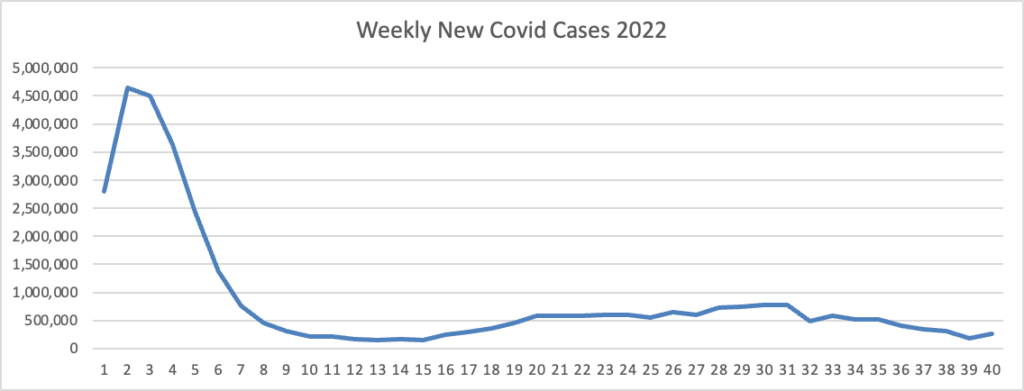
Based on the Centers for Disease Control’s Covid Data Tracker and using Thursday as the first day of the week, here is the FEHBlog’s latest chart of weekly new Covid cases 2022:

The bulge on the left side of the chart is the original Omicron. The CDC’s weekly interpretation of its Covid stats adds

As of September 21, 2022, the current 7-day moving average of daily new cases (54,186) decreased 10.6% compared with the previous 7-day moving average (60,593).

CDC Nowcast projections* for the week ending September 24, 2022, estimate that the combined national proportion of lineages designated as Omicron will continue to be 100%. There are five lineages designated as Omicron: BA.5, BA.4.6, BA.4, BF.7, and BA.2.75. The predominant Omicron lineage is BA.5, projected at 83.1% (95% PI 81.3-84.7%).

The New York Times asks

Where is Pi?

Last year, the World Health Organization began assigning Greek letters to worrying new variants of the coronavirus. The organization started with Alpha and swiftly worked its way through the Greek alphabet in the months that followed. When Omicron arrived in November, it was the 13th named variant in less than a year.

But 10 months have passed since Omicron’s debut, and the next letter in line, Pi, has yet to arrive.

That does not mean SARS-CoV-2, the coronavirus that causes Covid-19, has stopped evolving. But it may have entered a new stage. Last year, more than a dozen ordinary viruses independently transformed into major new public health threats. But now, all of the virus’s most significant variations are descending from a single lineage: Omicron.

“Based on what’s being detected at the moment, it’s looking like future SARS-CoV-2 will evolve from Omicron,” said David Robertson, a virologist at the University of Glasgow.

Here is the CDC’s latest chart of daily new Covid hospitalization trends:

The weekly CDC review adds

The current 7-day daily average for September 14–20, 2022, was 3,971. This is a 9.9% decrease from the prior 7-day average (4,410) from September 7–13, 2022.

CDC’s Coronavirus Disease 2019-Associated Hospitalization Surveillance Network (COVID-NET) shows that COVID-19-associated hospitalizations continue to affect adults ages 65 years and older. Since early April 2022, more than 50% of all COVID-19-associated hospitalizations occurring every week are among adults ages 65 years and older. Before April 2022, adults ages 65 years and older had not comprised more than half of all COVID-19-associated hospitalizations since January 2021.

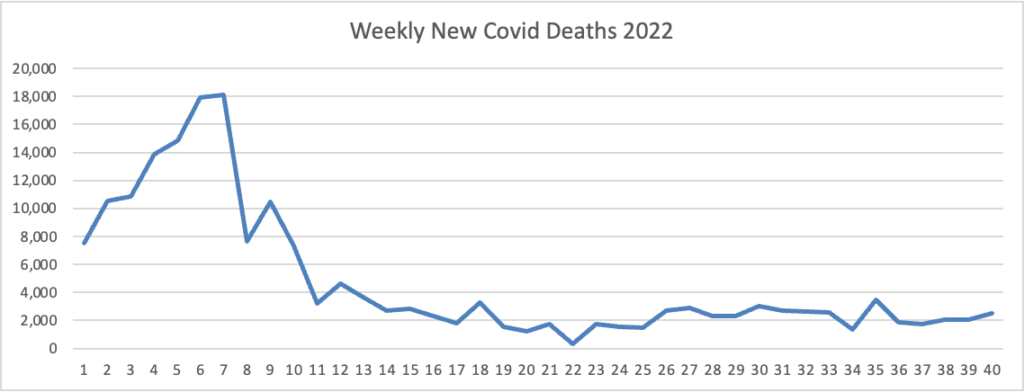
Here’s the FEHBlog latest chart of new weekly Covid deaths

The weekly CDC review adds “The current 7-day moving average of new deaths (347) decreased 12.2% compared with the previous 7-day moving average (396).”

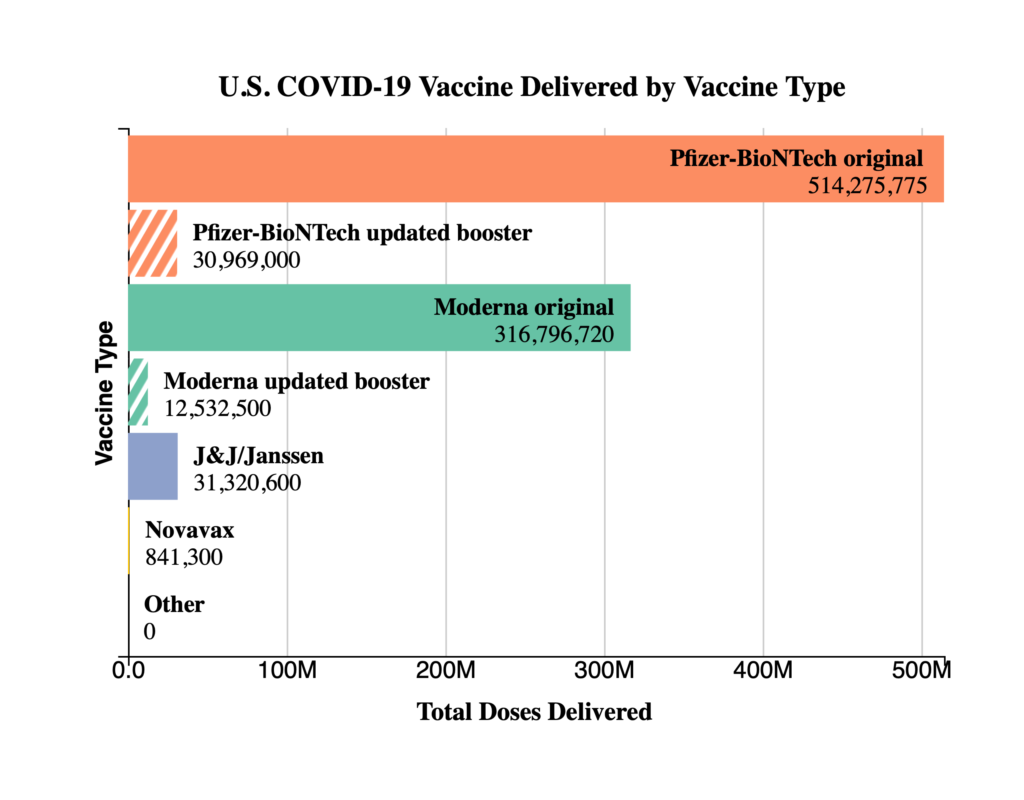
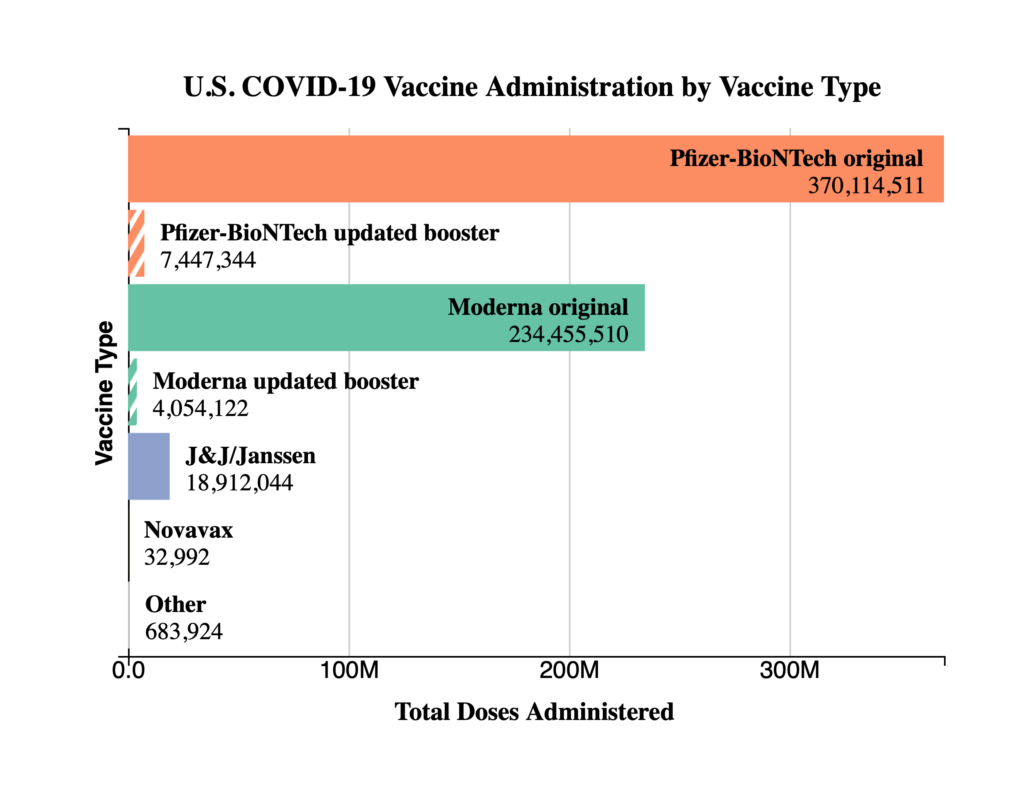
Here is the FEHBlog’s chart of Covid vaccinations distributed and administered from the beginning of the Covid vaccination era, the 51st week of 2020, and the recently end 38th week of 2022.

The weekly CDC review adds

As of September 21, 2022, 616.2 million vaccine doses have been administered in the United States. Overall, about 263.8 million people, or 79.5% of the total U.S. population, have received at least one dose of vaccine. About 225.0 million people, or 67.8% of the total U.S. population, have completed a primary series.

Of those who have completed a primary series, about 109.6 million people have received a booster dose,* and 4.4 million people have received an updated (bivalent) booster dose. But 49.9% of the total booster-eligible population has not yet received a booster dose. Booster dose eligibility varies by age and health condition. Learn more about who is eligible.

It’s worth noting that according to the CDC’s Covid Data Tracker 92.3% of Americans 65 and older have received the first two vaccination doses; 71% of this cadre as received one booster dose, and 43% of this cadre, including the FEHBlog, has received two booster doses. Given the COVID-NET news above, these are the most important statistics.

In CDC Communities Level news, the weekly CDC review points out

As of September 22, 2022, there are 226 (7.0%) counties, districts, or territories with a high COVID-19 Community Level, 1,005 (31.2%) counties with a medium Community Level, and 1,986 (61.7%) counties with a low Community Level. Compared with last week, this represents a large decrease (−6.3 percentage points) in the number of high-level counties, a moderate decrease (-4.7 percentage points) in the number of medium-level counties, and a large increase (+11.0 percentage points) in the number of low-level counties. 

In other virus news, the New York Times reports

With monkeypox cases on the decline nationally, federal health officials expressed optimism on Thursday that the virus could be eliminated in the United States, though they cautioned that unless it was wiped out globally, Americans would remain at risk.

“Our goal is to eradicate; that’s what we’re working toward,” Dr. Demetre Daskalakis, the deputy coordinator of the White House monkeypox response team, said during a visit to a monkeypox vaccination clinic in Washington. He added, “The prediction is, we’re going to get very close.”

From the Rx coverage front, EndPoint News informs us

Drug pricing experts generally agree that bluebird bio’s two recently approved gene therapies and their multimillion-dollar price tags aren’t going to be one-offs as a wave of new cell and gene therapies makes its way to the market.

The FDA’s recent approvals for bluebird’s $2.8 million Zynteglo — with ICER supporting the price and an 80% rebate if patients don’t achieve transfusion independence — and the $3 million Skysona, approved under accelerated approval, are likely to be the norm for gene therapy prices moving forward, particularly if they can reduce costs elsewhere in the health care ecosystem, experts said.

Daniel Ollendorf, director of value measurement & global health initiatives at the Center for the Evaluation of Value and Risk in Health at Tufts Medical Center, told Endpoints News in a phone interview that the trend behind multimillion-plus gene therapies is an extension of what began with Novartis’ $2.1 million spinal muscular atrophy gene therapy Zolgensma, which is still priced at about half of the 10-year current cost of chronic SMA therapy, and became a blockbuster for Novartis last year with more than $1.35 billion in annual sales.

But the expectation is that these high list prices will come with risk-sharing agreements and refunds if the products don’t work so payers don’t have to bear the full brunt of the financial risk, Ollendorf said. And he noted that some gene therapies don’t lend themselves as well to tracking milestones, but that isn’t the case for observing transfusion independence in those receiving Zynteglo.

From the maternity care front, Health Payer Intelligence tells us

Payers are implementing new programs that capitalize on telehealth and partnerships with technology companies to better engage pregnant members and improve maternal health outcomes. * * *

AHIP encouraged payers to integrate health technologies like telehealth into perinatal and maternal health to close access gaps to obstetric care in rural and underserved communities.

Perinatal telehealth interventions to improve outcomes can include videoconferences to replace or supplement in-person visits and enable consultation with specialists remotely, AHIP mentioned.

In the postpartum period, telehealth and other tools can be implemented to drive earlier postpartum follow-up visits and provide access to lactation consultants (tele-lactation).

Within the last year, Capital District Physicians’ Health Plan and Harvard Pilgrim Health Care partnered with digital family health platform Ovia to help members navigate fertility, pregnancy, and early parenting.

Through this partnership, members will gain access to three mobile apps – Ovia Fertility, Ovia Pregnancy, and Ovia Parenting in an effort to reduce maternity costs and improve maternal outcomes such as lowering c-section rates, preterm delivery, and neonatal intensive care unit (NICU) stays.

From the human interest front, Forbes explains “Why Billionaire Eric Schmidt Is Backing A High School Senior Making A Cancer-Detecting Toothbrush And Other Brilliant Teens.”

Thursday Miscellany

Photo by Josh Mills on Unsplash

Yesterday, the FEHBlog welcomed the first day of autumn when the autumnal equinox was at 9:04 pm today. To compound his error, the FEHBlog overlooked that yesterday was World Gratitude Day. The FEHBlog is grateful for his readers.

From Capitol Hill, Roll Call reports on the state of the continuing resolution to fund the federal government into mid-December.

Congressional leaders and appropriators are expected to spend the weekend haggling over the last details of the text Schumer is aiming to unveil Tuesday [following the Jewish New Year holiday], which he would offer as a substitute amendment.

On Thursday, authorizing committees agreed on a five-year reauthorization of FDA user fee programs, which could potentially be attached to the continuing resolution. Numerous other authorizations, funding “anomalies” and a supplemental aid package for Ukraine and other purposes were still being negotiated. 

The House of Representatives is capable of acting quickly.

From the Omicron and siblings’ front

  • Beckers Hospital Review reports, “Retooled COVID-19 booster shots that target omicron subvariants could be authorized and available for children to receive within a month, the CDC said in a vaccination planning guide released Sept. 20.”

In other public health news, STAT News tells us

As some of us wonder how we’ll know when the coronavirus pandemic is over, a new report from the WHO called “Invisible Numbers” reminds us that noncommunicable diseases take more lives than infectious diseases (and make Covid-19 worse). To wit: Cardiovascular diseases including heart disease and stroke, cancer, diabetes, chronic respiratory diseases, and mental illness cause nearly three-quarters of deaths in the world and kill 41 million people every year. Some of the more striking findings:

* Every year 17 million people under age 70 die of noncommunicable diseases, 86% of whom live in low- or middle-income countries.

* Preventable risk factors include tobacco use, unhealthy diets, harmful use of alcohol, physical inactivity, and air pollution.

* NCDs cause 74% of all deaths, but interventions known to work could avert at least 39 million NCD deaths by 2030.

In that regard, ABC News reports

Cancer deaths in the United States are continuing to decline, according to a new report from the American Association for Cancer Research.

The report, published Wednesday, found that deaths from cancer have decreased by 2.3% every year between 2016 and 2019.

Overall, there has been a 32% reduction in the U.S. cancer death rate since 1991, which translates into approximately 3.5 million lives being saved, the report said.

Additionally, in 2022, there are more than 18 million cancer survivors living in the U.S., equivalent to 5.4% of the population, the report found. Fifty years earlier, there were just 3 million cancer survivors.

That’s remarkable.

In related medical research news,

Medscape reports

New results from a large prospective trial give a better idea of how a blood test that can detect multiple cancers performs in a “real-life” setting.

“As this technology develops, people must continue with their standard cancer screening, but this is a glimpse of what the future may hold,” commented study investigator Deborah Schrag, MD, MPH, chair, Department of Medicine, Memorial Sloan Kettering Cancer Center, New York City.

STAT News relates

The National Institutes of Health on Thursday announced more than $600 million in fresh funding for an expansive and ongoing push to unravel the mysteries of the human brain, bankrolling efforts to create a detailed map of the whole brain, and devise new ways to target therapeutics and other molecules to specific brain cell populations.

Scientists across the country are involved, from teams at the Salk Institute to Duke University to the Broad Institute of MIT and Harvard, among other places. If successful, they will help answer fundamental questions about the body’s most complex organ. What are all the cell types in the brain? How are they connected to one another? How do the workings of the brain change during disease, and what can we do about that?

So far, those questions have proven easier to ask than to answer, with researchers gleaning bits of information from individual studies, but the hope is that a broad-based effort will jump-start new revelations.

Hope springs eternal.

From the mental healthcare front —

Health Payer Intelligence explains

CVS Health is making progress toward its behavioral health goal of decreasing the suicide rate among Aetna members by 20 percent by 2025, but progress among adolescent members is lagging, the healthcare organization announced.

“Our members are not immune to the national suicide crisis reported by the CDC. Though we are on track lowering suicide attempts in adults, our goal will not be reached until we can say the same for adolescents,” said Sree Chaguturu, MD, executive vice president and chief medical officer at CVS Health.

The organization has been working toward this goal since 2017, its work running parallel to that of the American Foundation for Suicide Prevention (AFSP) which had the same goal.

As of March 2022, CVS Health saw suicide attempts among Aetna members drop by 15.7 percent when compared to the company’s 2019 rate.

CVS Health broke down the overall rate by age and found that the reductions were largely driven by decreases among members ages 18 and older. For individuals in this age range, suicide attempts dropped by 17.5 percent in 2021 and dropped another 34.1 percent through March 2022.

Having made progress toward the goal, however, the organization does not intend to slow down.

“We are doubling down on efforts to prevent suicide in teens by identifying those most at-risk and in need of intervention, reaching out to those discharged from the ER after a suicide attempt with resources and supporting parents and loved ones in prioritizing the mental health of their kids,” Chaguturu explained.

Specifically, Aetna saw an upward trend in suicide attempts among its adolescent members.

Members between the ages of 13 and 17 saw increases in suicide attempts. In 2021, the suicide rate among this population grew 43 percent. In the first three months of 2022, the suicide rate jumped another 32 percent.

“We are implementing evidence-based therapies and outreach programs to prevent suicidal ideation before it starts and get adolescents the clinical care they need when they are at risk,” said Cara McNulty, president of behavioral health and mental well-being at CVS Health. “Every suicide attempt prevented, life saved, and mental health resource sought is an important step to reducing death by suicide in the United States.”

Mazaal Tov to CVS Health for those successful and ongoing efforts.

The Society for Human Resources offers guidance on suicide prevention in the workplace.

From the No Surprises Act litigation front, STAT News explains

During a hearing yesterday, the Association of Air Medical Services indicated it was following in the footsteps of AHA and AMA and would likewise dismiss its claims now that the final rules are out. But the AAMS also said it was deliberating whether it would file a different lawsuit in a different court, while attorneys for AMA and AHA backpedaled and said they have no intentions of filing any new lawsuits anywhere.

Today we got some clarity when the Texas Medical Association filed a new lawsuit challenging the revised final independent dispute resolution rule issued in the summer. In addition, the American Hospital Association and the American Medical Association have announced that they are joining the case as friends of the court in support of the Texas Medical Association. The lawsuit was filed in the U.S. District Court for the Eastern District of Texas. And the beat goes on.

From the U.S. healthcare business front, the Wall Street Journal reports

Humana Inc. HUM 0.67%▲ and CVS Health Corp. CVS 0.06%▲ are circling Cano Health Inc., CANO 32.17%▲ according to people familiar with the situation, as healthcare heavyweights scramble to snap up primary-care providers.

The talks are serious and a deal to purchase Cano could be struck in the next several weeks, assuming the negotiations don’t fall apart, some of the people said. Cano shares, which had been down nearly 7%, turned positive and closed up 32% after The Wall Street Journal reported on the talks with Humana and other unnamed parties, giving the company a market value of roughly $4 billion.

Bloomberg subsequently reported CVS’s interest.

It couldn’t be learned which other potential buyers might be in the mix, but Cano could be Humana’s to lose as the health insurer has a right of first refusal on any sale, part of an agreement that was originally struck in 2019.

Miami-based Cano operates primary-care centers in California, Florida, Nevada, New Mexico, Texas, Illinois, New York, New Jersey and Puerto Rico, according to documentation from the company. It mainly serves Medicare Advantage members, a private-sector alternative to Medicare for seniors.

Beckers Payer Issues tells us

Healthcare startup Curative, best-known for providing COVID-19 testing, is introducing a health plan with no copays or deductibles. 

The company is offering the new plan in the Austin, Texas, area, with plans to expand throughout Texas over the next year, Curative said Sept. 21. The announcement comes as the startup lays off 109 employees from its testing business in California.

In a news release, Fred Turner, co-founder and CEO of Curative, said the startup is on a mission to “drastically remake” the U.S. healthcare system. 

“The only way to achieve true cost transparency is for all in-network services to be covered at $0 cost, so members actually know where they stand and can get the care they need without surprise bills or medical debt,” Mr. Turner said in the release. 

According to the news release, Curative plan members will not owe any copay costs if they complete a baseline visit to evaluate preventive care and health literacy. 

From the Postal Service front, Federal News Network reports

Postmaster General Louis DeJoy announced Wednesday that all Executive and Administrative Schedule (EAS) and Pay Band Non-bargaining unit employees will soon receive a 3% salary increase, “regardless of their current salary maximum.”

DeJoy, in a memo to USPS officers Wednesday, said the pay increase will go into effect Sept. 24 and will reflect on the employees’ Oct. 14 pay statement.

Midweek Update

Happy First Day of Autumn!

From Capitol Hill, Roll Call discusses the Senate Majority Leader’s plans for successfully passing the continuing resolution funding the federal government through December 16, 2022.

[I]n theory the tentative plan to start the process this Thursday could lead to a final Senate vote by next Friday, when the current fiscal year expires. It might even enable the House to take up the Senate-passed bill and clear it in time to beat the midnight deadline.

All that assumes everything goes according to plan and that there’s an acceptable stopgap funding package that can pass in both chambers. None of those details have been released, but top appropriators and other lawmakers said Wednesday there’s no talk yet of a very short-term CR to buy more time.

From the Omicron and siblings’ front —

  • Fierce Healthcare tells us about the possible blossoming of another Omicron variant BF.7
  • The Wall Street Journal reports on the rollout of nasal Covid vaccines in Asia “though just how effective they are remains to be seen.” These are adenovirus, not mRNA-based, vaccines. Nonetheless

Delivering a vaccine through the nose has the potential to build up a type of immune response known as mucosal immunity, or immunity in the upper airway tract, said David Curiel, professor of radiation oncology at Washington University School of Medicine who co-developed the Bharat vaccine. That is important because mucosal immunity could more effectively block infection and transmission of the coronavirus than the type of immunity induced by injected vaccines, he said.

In other virus news, Forbes offers an illuminating article by Gayle Smith, the CEO of the ONE Campaign, which fights to end extreme poverty and preventable disease. Ms. Smith writes on the emergence of polio.

The re-emergence of polio is worrisome, particularly considering the politicization of and uneven response to the Covid-19 pandemic. Panic, however, is unwise. What is needed is vigilance and vaccination coverage. Fortunately, there are millions of people who are living proof that polio vaccines work.

This is a moment when the world can do the right thing and eradicate a preventable disease. Since the mid-1950s, a concerted global effort has confined endemic polio to only two countries and proven that this is a virus we can defeat. 

Going all the way is a moonshot and a win for the world. It is not without its challenges, of course. But it is far easier right now than defeating Covid, or malaria, or AIDS. One can only hope that ridding the world of a disease known as “infantile paralysis” might be something we can all agree on — if not for ourselves then for the children whose lives continue to be at risk.

Also, from the public health front, the National Institutes of Health helpfully informs us

In a large clinical trial that directly compared four drugs commonly used to treat type 2 diabetes, researchers found that insulin glargine and liraglutide performed the best of four medications approved by the U.S. Food and Drug Administration to maintain blood glucose levels in the recommended range. Blood glucose management is a key component of keeping people with type 2 diabetes healthy. All four medications evaluated were added to treatment with metformin, which is the first-line drug to treat type 2 diabetes. The trial was funded by the National Institute of Diabetes and Digestive and Kidney Diseases (NIDDK), part of the National Institutes of Health.

More than 37 million Americans have diabetes, and approximately 90 to 95% of them have type 2 diabetes. People with diabetes who keep their blood glucose levels in the near-normal range generally have a much lower risk of developing diabetes complications such as nerve, kidney, and eye diseases. Most people with type 2 diabetes require more than one medication to control blood sugar levels over time. 

While there is general agreement among health care professionals that metformin combined with diet and exercise is the best early approach in diabetes care, there is no consensus on what to do next to best keep high blood glucose in check.

From the wellness front, Fierce Health relates that United Healthcare is expanding its relationship with exercise machine marker Peleton. As a result, UHC will be making Pelton’s fitness services available to as many as 10 million of its members.

From the federal compensation and benefits front

  • Govexec reports on locality pay developments, and Social Security changes that Congress may approve this year.
  • Reg Jones writing in FedWeek provides a personal story about federal survivor benefits worth a gander.

Monday Roundup

Photo by Sven Read on Unsplash

From the Omnicron and siblings front —

The Wall Street Journal and STAT News consider when the Covid pandemic will be over in the United States in response to the President’s comment to a 60 Minutes interviewer Sunday night.

STAT News also offers an interview with the President’s science advisor Francis Collins, MD. Dr. Collins “revealed his pain at seeing people spurn mRNA Covid vaccines developed with breathtaking speed and lamented that he and other health officials failed to communicate the ever-changing science behind Covid recommendations.”

The Wall Street Journal adds

More than a year-and-a-half after the first Covid-19 vaccines became available, people are trickling in every day to get their first doses. 

As health officials and physicians roll out retooled boosters targeting substrains of the Omicron variant, federal data suggest there are still thousands of people a day getting shots of the original vaccines for the first time. 

All together, the seven-day average for adults getting first shots each day ranged between roughly 15,000 and 18,000 in late August, according to a Wall Street Journal analysis of data from the U.S. Centers for Disease Control and Prevention. 

The data can overestimate first-shot recipients, because there are times where the agency can’t link follow-up shots, including boosters, to people who received an initial series. The same effect can lead to an undercount of booster shots, according to the CDC.

People who recently got the first jab cited a range of reasons. Some said they were ordered to do so, such as to start a new job or travel for a vacation. Others waited until a vaccine using a more-traditional technology, instead of the newer mRNA versions, became available. Some went ahead after getting sick with Covid-19, or after a family member vouched that the shots worked. 

Perhaps this news will reassure Dr. Collins.

Moreover, Paxlovid helps people who contract Omicron whether or not they are vaccinated. However, STAT News cautions that advances in treating the sickest Covid patients have stalled since February 2021.

From January 2020 to February 2021, researchers proved four different effective therapies for patients hospitalized with Covid-19 — a lightning pace for drug research, where progress is often measured in decades.

That picture has changed starkly. Advances in treating the sickest Covid patients have stalled. Since February 2021, no new therapies for the hospitalized have emerged as decisively effective, even as over 2,000 patients continue to die daily around the globe, including 300 to 500 in the U.S. * * *

[The stall is due to the fact that m]ost trials have been too small to generate decisive results. Breakthroughs in treating hospitalized patients have come exclusively from large coordinated studies run by governments, NGOs, or consortiums, often testing multiple therapies at once. 

As severe Covid grows rarer, those large studies become harder to do. The U.K.’s landmark Recovery trial, which early on demonstrated steroids were effective and hydroxychloroquine was not, is still ongoing and has expanded to new countries. But it hasn’t issued results since May and hasn’t shown a new therapy was effective since 2021

Quite a conundrum.

In monkeypox news, Fierce Healthcare tells us

New cases of monkeypox are down 50% since early August, the Center for Disease Control and Prevention announced in a press briefing.

The nation’s seven-day average for new cases peaked on Aug. 10, with 461 cases, and on Sept. 14 was 170, according to federal health officials. Credit for the decrease was given to education and vaccination efforts.

“We approach this news with cautious optimism,” said Rochelle Walensky, M.D., director of the CDC, at a Sept. 15 press briefing. “We continue to closely monitor data on this outbreak, those at risk, and how prevention measures are being used.”

Walensky stated that while overall growth was down, geographical pockets of the U.S. still showed an increase in cases. Over 23,000 cases of the virus have been confirmed in the U.S. as of Sept. 16.

From the maternal health front, the American Hospital Association reports

An estimated 84% of pregnancy-related deaths in 36 states between 2017 and 2019 were preventable, according to a new Centers for Disease Control and Prevention report based on data from interdisciplinary committees that review deaths during and up to one year after pregnancy.

Among deaths with information on timing, 22% occurred during pregnancy, 25% on or within seven days of delivery, and 53% seven days to one year after pregnancy. The leading underlying causes of pregnancy-related death were cardiac and coronary conditions among Black people, mental health conditions among Hispanic and white people, and hemorrhage among Asian people.

The first data released under a CDC-funded program to support these Maternal Mortality Review Committees, the report “paints a much clearer picture of pregnancy-related deaths in this country,” said Wanda Barfield, M.D., director of CDC’s Division of Reproductive Health at the National Center for Chronic Disease Prevention and Health Promotion. “The majority of pregnancy-related deaths were preventable, highlighting the need for quality improvement initiatives in states, hospitals, and communities that ensure all people who are pregnant or postpartum get the right care at the right time.”

From the healthcare costs front, Health Leaders Media discusses a Buck Consultants survey of health insurers and administrators finding rising costs in employer-sponsored plans.

In US healthcare business news –

The Wall Street Journal reports

A federal judge Monday ruled against a Justice Department antitrust challenge to UnitedHealth Group Inc.’s $13 billion acquisition of health-technology firm Change Healthcare Inc., rejecting government claims that the deal would unlawfully suppress competition and limit innovation in health-insurance markets.

U.S. District Judge Carl Nichols ruled for the companies in an opinion that he kept under seal for now because he said it “may contain competitively sensitive information.” The judge said he would release a redacted public version of the ruling in the coming days. In a one-page public order, he denied the Justice Department’s request to block the companies from completing the deal.

The lawsuit, filed in February, is an early blow to stepped-up antitrust enforcement by the Biden administration. The department didn’t immediately respond to a request for comment.

The decision is a triumph for UnitedHealth, which owns the largest U.S. health insurer and a healthcare operation that comprises thousands of doctors as well as clinics, surgery centers and other assets, along with a powerful conglomeration of health data.

Healthcare Dive adds

Humana expects to pay between $450 million and $550 million to acquire the first group of senior-focused primary care centers that it developed through a joint venture with Welsh, Carson, Anderson & Stowe, Chief Financial Officer Susan Diamond said Friday during the insurer’s investor day.

The agreement inked with Welsh Carson in 2020 included options for Humana to acquire the private equity firm’s interest in the joint venture in stages over the next five to 10 years. The venture was expected to open 67 clinics by early 2023. “We are planning for the full acquisition of centers built in partnership with Welsh Carson through our put and call options beginning in 2025,” Diamond said.

In mid-May, Humana and Welsh Carson announced a second joint venture that will spend up to $1.2 billion to open about 100 new value-based primary care clinics for Medicare patients between 2023 and 2025 under the CenterWell Senior Primary Care brand.

From the Medicare front, STAT News relates

Chronic kidney disease, already a problem affecting millions of Americans, is only expected to become more prevalent as the country ages. For those with end-stage disease, a transplant is the ideal treatment, but dialysis is their reality. Hundreds of thousands of Americans flock to clinics three times a week to have their blood filtered through — in the absence of a functioning kidney — a machine.

As a medical treatment, dialysis is a stopgap measure that fails to fix a chronic problem (average life expectancy on dialysis is five to 10 years). As an industry, dialysis has significant flaws, including a lag in home dialysis use. Critics argue dialysis clinics have for decades shirked a responsibility to help patients get on the kidney transplant waitlist and receive organs from living donors — the gold standard. 

Now federal health officials are trying to fix those problems with a big policy experiment, using one of their biggest hammers: how dialysis providers are paid. 

That should get the dialysis providers’ attention.

From the National Institutes of Health front, the NIH Center for Alzheimer’s and Related Dementias issued an update on its work and operations.

Weekend Update

As we wrap up the last weekend of summer, we can look forward to the House of Representatives and the Senate holding Committee business and floor voting. Yahoo Finance adds

Once again, the threat of a government shutdown looms at the end of the fiscal year, which arrives on September 30. Lawmakers have two weeks to provide funding to keep large swaths of the federal government open and functioning, and the most likely result at this point is a short-term bill called a continuing resolution that funds the government for about 10 weeks, or until mid-December. Lawmakers would then look to pass an omnibus spending package to cover the rest of the 2023 fiscal year.

From the Omicron and siblings front, the Wall Street Journal offers an engaging interview with Moderna’s CEO Stéphane Bancel who “discusses the company’s latest Covid shot and research on using mRNA in seasonal flu vaccines and personalized treatments for cancer.”

From the social determinants of health front, Health Affairs discusses best practices to improve the collection and distribution of race, ethnicity, and language data for use by health care providers and payers. Healthcare payers, in particular, cannot address SDOH issues strategically without having REL data. The FEHBlog’s idea, which he has floated unsuccessfully to date, is to add REL codes to the AMA’s CPT 4 code system, thereby allowing the ready distribution of that data via reliable coders.

Speaking of the distribution of healthcare data, EHR Intelligence reports that “Large Health IT Networks Unveil Plans to Become Qualified Health Information Network (“QHIN”) Under TEFCA.” TEFCA will act as the Electronic Health Records “backbone” to vastly improve health record interoperability, which has long been a national EHR goal.

From the mental healthcare front, last Friday, “the U.S. Department of Health and Human Services (HHS) released the HHS Roadmap for Behavioral Health Integration (Roadmap), which details policy solutions that would help to better integrate mental health and substance use care into the larger health care system and other systems. The Roadmap is based on feedback Secretary Becerra received from patients and providers during more than two dozen stops on his National Tour to Strengthen Mental Health.”

Finally, a government contract expert discusses in Federal News Network why the 1994 federal acquisition reform law (actually the related 1994 and 1996 laws) aiming to simplify the federal procurement process needs a reboot. The FEHBlog heartily agrees.

Friday Stats and More

Based on the Centers for Disease Control’s (CDC) Covid Data Tracker and using Thursday as the first day of the week, here is the FEHBlog’s 2022 weekly chart of new Covid cases:

The bulge on the left is the first strain of Omicron.

The CDC’s weekly interpretative summary adds,

As of September 14, 2022, the current 7-day moving average of daily new cases (59,856) decreased 15.9% compared with the previous 7-day moving average (71,190). 

CDC Nowcast projections* for the week ending September 17, 2022, estimate that the combined national proportion of lineages designated as Omicron will continue to be 100%. There are five lineages designated as Omicron: BA.5, BA.4.6, BA.4, BF.7, and BA.2.75. UPDATE: BF.7 has been separated from BA.5 and BA.2.75 sublineage is separated from BA.2 due to their positive growth rate. Until last week, these were aggregated with BA.5 and BA.2, respectively. The predominant Omicron lineage is BA.5, projected at 84.8% (95% PI 83.2-86.3%).

Here is the CDC’s chart of daily trends in new Covid hospitalizations:

The CDC’s weekly interpretative summary adds “The current 7-day daily average for September 7–12, 2022, was 4,371. This is a 6.1% decrease from the prior 7-day average (4,657) from August 31–September 6, 2022.”

Here’s the FEHBlog 2022 weekly chart of new Covid deaths

The CDC’s weekly interpretative summary adds, “The current 7-day moving average of new deaths (358) increased 3.9% compared with the previous 7-day moving average (344).”

The American Hospital Association points out that

In-hospital mortality among patients hospitalized primarily for COVID-19 fell from 15.1% during the delta period to 4.9% this April through June, the Centers for Disease Control and Prevention reported this week. 

“In-hospital mortality risk was substantially lower during the later Omicron period overall and for older adults, persons with disabilities, and persons with multiple underlying medical conditions, who accounted for a larger proportion of hospitalizations in this period than they did during previous periods and remained at highest risk for death,” the authors said.

Here’s the FEHBlog’s chart of Covid vaccinations distributed and administered from the beginning of the Covid vaccination era in December 2020 through the 37th week of 2022. In the 37th week of this year, you will note a noticeable jump in distributions and administrations due to the release of bivalent mRNA booster.

The CDC’s weekly interpretative summary adds,

As of September 14, 2022, 612.8 million vaccine doses have been administered in the United States. Overall, about 263.4 million people, or 79.3% of the total U.S. population, have received at least one dose of vaccine. About 224.6 million people, or 67.7% of the total U.S. population, have been fully vaccinated.

Of those fully vaccinated, about 109.2 million people have received a booster dose,* but 50.0% of the total booster-eligible population has not yet received a booster dose. Booster dose eligibility varies by age and health condition. Learn more about who is eligible.

The CDC’s Communities Levels experienced “Compared with last week, * * * a moderate decrease (−3.9 percentage points) in the number of high-level counties, a moderate decrease (-3.8 percentage points) in the number of medium-level counties, and a large increase (+7.4 percentage points) in the number of low-level counties.”

From the unusual viruses front —

  • The AP reports that the CDC warns providers against giving the only monkeypox treatment Tpoxx “to otherwise healthy adults who are not suffering severe symptoms. ‘For most patients with healthy immune systems, supportive care and pain control may be enough,’ agency officials said in a statement.”
  • The New York Times offers information on what parents should know about “the Latest Enterovirus Spike; The C.D.C. has issued an alert [to providers] about enterovirus D68, which has been linked to rare, polio-like paralysis.” In addition, the Times article advises soap and water handwashing and respiratory etiquette.

From the U.S. healthcare business front, we have two articles from Healthcare Dive.

  • “Hospitals are likely to lose “billions of dollars” due to continued depressed margins and heightened labor costs, according to a report Thursday prepared for the American Hospital Association by Kaufman Hall. Even in the report’s optimistic model, more than half of all hospitals could end the year with negative margins, driven by an expected $135 billion increase in expenses this year and an $86 billion rise in labor costs alone.” Here’s a link to the article.

From the medical research front, we have two articles from STAT News:

  • “CAR-T therapy isn’t exclusive to oncology: A half-dozen people with severe lupus, an autoimmune condition, have gone into remission after receiving an infusion of CAR-T cells, STAT’s Isabella Cueto reports. In lupus, B cells create antibodies against a person’s body, resulting in a vicious cycle of inflammation and immune attacks that lead to pain, fatigue, and organ damage. * * * Although the treatment has only been tested in six patients thus far, experts agree it is tantalizing.”
  • “There hasn’t been much in the pharmaceutical arsenal to help people who abuse methamphetamines. But STAT’s Lev Facher reports that researchers are now studying a new monoclonal antibody, which binds to meth molecules and helps prevent them from entering the brain. The antibody is showing early promise in the smattering of emergency rooms involved in the study. One Phase 2 study is testing if the monoclonal antibody can treat meth overdose, and another is measuring its efficacy in helping long-term recovery. Ideally, the drug could be used for both purposes. The drug’s development is overseen by the University of Arkansas for Medical Sciences and the biotech InterveXion.”

From the miscellany front

  • WTW released a study on how large employers are “doubling down on controlling healthcare costs and enhancing affordability.
  • The National Committee for Quality Assurance released its Measurement Year 2021 health plan ratings.
  • RevCycle Intelligence offers an interesting angle on a Health Affairs study of the efficacy of State No Surprise Billing laws in controlling out-of-network spending.