
Midweek Update

Midweek Update

The Office of Personnel Management issued a guidance letter to FEHB carriers on the COVID-19 virus today.

The Internal Revenue Service today issued a Notice 2020-15 which permits high deductible health plans used with health savings accounts (under Internal Revenue Code Section 223) to cover COVID-19 testing on a first dollar basis. To its credit, OPM references the IRS notice in the above linked carrier letter.

The U.S. Labor Department also issued FAQ guidance on COVID-19 or Other Public Health Emergencies and the Family and Medical Leave Act.

As noted on Monday, this is Patient Safety Awareness week. The patient safety organization ECRI Institute released a list of top 10 patient safety concerns. The Safety Week’s key sponsor HHS’s Agency for Healthcare Quality and Research issued

Making Healthcare Safer III, a comprehensive report whose pages are filled with practical information on how today’s clinicians can keep patients free from harm.

The report reviews roughly four dozen practices that target patient safety improvement across a variety of settings. If appropriately applied, many of these practices can dramatically reduce high-impact healthcare-related harms.

The 47 patient safety practices and evidence highlighted in the report include technological and staffing-related practices, a series of specific hygiene and disinfection interventions for reducing healthcare-associated infections, and several practices designed to prevent medication errors and reduce opioid misuse and overdoses.

Tuesday Tidbits

The FEHBlog listened to the federal government’s COVID 19 press conference on the drive home from work. The Surgeon General urged listeners to visit coronavirus.gov. When the FEHBlog arrived home, he checked out the website and it turns out to be another url for the Centers for Disease Control’s COVID-19 website that he takes a peak at daily. At least the FEHBlog hasn’t been misdirecting readers. Here is today’s COVID-19 scorecard:

Travel-related83
Person-to-person spread36
Under Investigation528
Total cases647

The FEHBlog learned late this afternoon that COVID-19 concerns have caused OPM and AHIP to cancel the annual FEHBP carrier conference which was scheduled to run from April 1 to April 3 in lovely Crystal City Virginia. The FEHBlog while disappointed understands the decision because the event jams hundreds of people together in one hotel ballroom.

Yesterday’s Health and Human Services rules on electronic health record (“EHR”) interoperability and data blocking gave a big boost to HL7’s FHIR specification. “FHIR (Fast Healthcare Interoperability Resources) Specification is a standard for exchanging healthcare information electronically.” The FEHBlog was excited to hear about the FHIR specification early last year because it appeared to be a solution to the nagging EHR interoperability problem. HHS appears to have jumped into the FHIR specification pool with both feet.

This morning the FEHBlog listened to a HIMSS webinar on FHIR accelerators. The four HL7-designated FHIR accelerators are leading the FHIR charge to solve interoperability problems in different spheres:

  • The DaVinci Project is focused using FHIR to fix healthcare business to business exchange issues.
  • The Carin Alliance is focused on using FHIR to fix healthcare business to consumer exchange issues.
  • CodeX is focused on using FHIR to share clinical trial appropriate data found in EHRs with researchers in an effort to find cancer cures.
  • The Gravity Project is focused on sharing social determinant of health data found in EHRs with healthcare businesses for care coordination and SDOH benefit purposes.

Good luck to them all.

Monday Musings

The U.S. Office of Personnel Management issued additional COVID-19 guidance and FAQs on Saturday March 7. The Federal News Network summarizes OPM’s issuances here.

Here are the Centers for Diseases Control’s March 9 COVID-19 statistics for the U.S.

  • Travel-related 72
  • Person-to-person spread 29
  • Under Investigation 322
  • Total cases 423

The CDC has issued guidance for people at risk of contracting serious illness from COVID-19. According to the CDC,

Early information out of China, where COVID-19 first started, shows that some people are at higher risk of getting very sick from this illness. This includes:

  • Older adults
  • People who have serious chronic medical conditions like:
  • Heart disease
  • Diabetes
  • Lung disease

Becker’s Hospital News reports on a study recently published in the Journal of American Medical Association. The study which was conducted in Singapore finds that from a contagion standpoint the COVID-19 virus does not linger in the air but it does contaminate surfaces.

As predicted, the Trump Administration released its final electronic health record interoperability and data blocking rules today. The objective of the rules is to give patients better access to their health records. The rules take effect as early as January 1, 2021. The implementation of the interoperability rule is staged over time.

Here are links to the government fact sheets on the final interoperability rule and the final data blocking rule. WEDI, which an information technology advisor to the HHS Secretary, prepared a helpful comparison of the proposed and final data blocking rules.

Healthcare Dive reports on industry reaction to the final rules. Healthcare Dive explains

The CMS rule requires Medicaid, the Children’s Health Insurance Program, Medicare Advantage plans and Affordable Care Act exchange plans to provide their collective 125 million patients with free electronic access to their personal health data, including medical claims and encounter information including cost, by 2021.

MA plans, state Medicare and CHIP programs, CHIP managed care entities, Medicaid managed care plans and qualified health plans in the federal exchanges now have to “implement, test, and monitor” a Health Level Seven FHIR-compliant API, which the government has selected as the new national standard.

Those plans also have to make their provider directories available to current and potential enrollees through the API technology, too (excepting the federal exchanges, which already do so), by 2021, with the hope insurers will carry over those practices to private plans as well.

Finally it’s worth noting that HHS’s Agency for Healthcare Quality and Research has deemed this to be Patient Safety Awareness Week.

Weekend update

Welcome to Daylight Savings Time! Congress remains in session on Capitol Hill this week. Federal News Network reports that the President signed into law the $8.3 billion COVID 19 funding bill (H.R. 6074) on Friday.

Notwithstanding the cancellation of the HIMSS conference

  • Modern Healthcare reports that the Trump Administration plans to release the final electronic health records interoperability and data blocking rules tomorrow, and.
  • DaVinci, “a private sector initiative that addresses the needs of the Value Based Care Community by leveraging the HL7 FHIR platform,” with the FHIR API, plans to go ahead with virtual HIMSS presentations via an online format. Thanks DaVinci.

Fierce Healthcare reports on an interesting flu vaccine study in the Annals of Internal Medicine.

The researchers said continued vaccination of seniors, particularly with high-dose vaccines, still seems appropriate, as the study results did not preclude modest effectiveness of the flu vaccine against severe outcomes.

“Our findings raise questions, however, about the overall effectiveness of a vaccination strategy that is limited to standard vaccines and focuses too much on elderly persons. Supplementary strategies, such as vaccinating children and others who are most likely to spread influenza, may also be necessary to address the high burden of influenza-related complications among older adults,” the researchers concluded.

The researchers measured hospitalization and mortality rates by month of age. Their data included 170 million episodes of care and 7.6 million deaths. Flu vaccination rates increased sharply at age 65, but there was no matching decrease in hospitalizations or death.

TGIF

OPM now has a prominent page on its website that gathers together the agency’s COVID 19 guidance. Just in time for a group of Democrat Senators to criticize that guidance as Govexec reports. In salient point the Senators state that

OPM work with health insurance providers to ensure that federal employees can affordably access the preventive care and treatment they may need as a result of COVID 19.

Here are today’s COVID 19 statistics for our country from the Centers for Disease Control

Travel-related36
Person-to-person spread18
Under Investigation110
Total cases164

Here’s a link to the CDC’s latest statistics for another coronavirus, the flu.

  • Pneumonia and influenza mortality has been low [this flu season], but 136 influenza-associated deaths in children have been reported so far this season. This number is higher for the same time period than in every season since reporting began in 2004-05, except for the 2009 pandemic.
  • CDC estimates that so far this season there have been at least 34 million flu illnesses, 350,000 hospitalizations and 20,000 deaths from flu.

Modern Healthcare discusses an interesting Humana social determinants of health program in the Medicare Advantage program. The program kicked off this month with Oschner Health in New Orleans. The FEHB Act and the Internal Revenue Code don’t allow FEHBP plans to copy this program but they can take steps to emulate it, in the FEHBlog’s view.

The Boston Globe’s StatNews provides an interesting overview of the state of the biosimilar drug market in our country. Biosimilars are the specialty drug equivalent of generic drugs. Congress opened the door to biosimilar development in the Affordable Care Act. Biosimilars are poised to create a substantial amount of drug cost savings over the next five years according to the article.

COVID-19

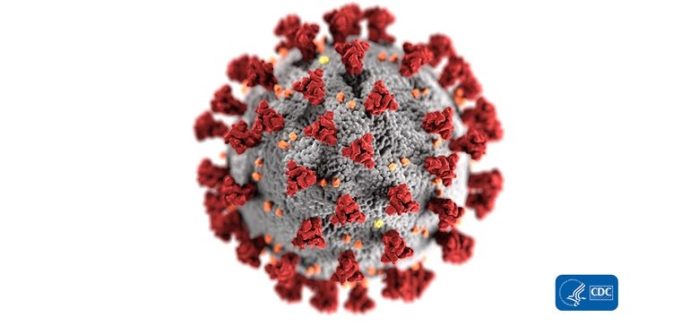
The FEHBlog usually calls the Thursday issue, Thursday miscellany, but today everything is going to be about the COVID-19 situation (picture of the virus above).

The Senate approved the House bill (H.R. 6074) to provide $8.3 billion in funding for the COVID-19 situation by a 96-1 vote.

Healthcare Dive discusses an AHIP policy directive that will lead health plans without delay to cover COVID-19 testing when ordered by a physician with few if any strings attached. Good call.

The Boston Globe’s STATNews discusses potential treatments for COVID-19.

Medical literature published during the Spanish flu pandemic of 1918 includes case reports describing how transfusions of blood products obtained from survivors may have contributed to a 50% reduction in death among severely ill patients. In 1934, a measles outbreak at a Pennsylvania boarding school was halted when serum harvested from the first infected student was used to treat 62 fellow students. Only three of the 62 students developed measles — all mild cases.

More recently, plasma-derived therapy was used to treat patients during outbreaks of Ebola and avian flu. And on Wednesday the Japanese drugmaker Takeda Pharmaceutical Co. said it was developing a new coronavirus drug derived from the blood plasma of people who have recovered from Covid-19. Its approach is based on the idea that antibodies developed by recovered patients might strengthen the immune system of new patients.

That’s hopeful news.

The President will not be speaking at next week’s HIMSS conference after all because HIMSS today announced its decision to cancel the conference due to the COVID-19 situation. The FEHBlog also has had two conferences cancel on him over the past two days.

Here’s a link to a Journal podcast on whether COVID-19 will cause a recession in our country. Wall Street Journal chief economics reporter John Hilsenrath thinks not comparing the current situation to the state of the country after the 9-11 attacks. Check it out — it’s only 20 minutes long.

Midweek update

This afternoon, the House of Representatives passed a funding bill for the COVID-19 situation (H.R. 6074) by a 415-2 vote. Fierce Healthcare breaks down the key elements of H.R. 6074 here.

Federal News Network reports on OPM’s latest “preliminary” COVID-19 guidance. The top line is that “OPM advised agencies to incorporate telework in their continuity of operations plans (COOP). Those emergency plans supersede an agency’s previous telework policies, according to OPM.”

CMS also announced agency actions to address the spread of COVID-19. The top lines are that CMS wants “health care providers across the country to ensure they are implementing their infection control procedures, which they are required to maintain at all times. Additionally, CMS is announcing that, effective immediately and, until further notice, State Survey Agencies and Accrediting Organizations will focus their facility inspections exclusively on issues related to infection control and other serious health and safety threats, like allegations of abuse – beginning with nursing homes and hospitals.”

The Journal podcast explains why this second action is quite necessary.

Healthcare Dive reports that

Uber Health is attempting to address provider gripes with its non-emergency medical transportation platform through a handful of new features that began rolling out late last year, the San Francisco-based rideshare company said Wednesday.

Providers can now select specific pickup and drop-off sites at large hospitals, similar to how the app is used in airports, and people can receive details of their ride like driver name, make and model of car and time of arrival over a landline phone, instead of just text messages.

Uber Health has grown 300% year over year since its launch in 2018 and plans to double the size of its team this year.

Lyft has a similar product.