Monday Roundup

Monday Roundup

Photo by Sven Read on Unsplash

From Capitol Hill, Roll Call discusses the Senate Parliamentarian’s role in refereeing budget reconciliation bills like the Build Back Better Act.

Senate committees have been updating the House-passed $2.2 trillion climate and social spending package text to ensure it complies with budget reconciliation rules, but most have yet to begin the formal review process with the Senate parliamentarian known as “the Byrd bath.”

Majority Leader Charles E. Schumer sent a “Dear Colleague” letter on Monday reiterating his goal to pass the legislation in the Senate before Christmas. But the update he provided on the procedural steps needed to get there suggests senators will be lucky if they can meet that deadline. 

Schumer said Senate committees are continuing informal conversations with Senate Parliamentarian Elizabeth MacDonough about their pieces of the package and “making necessary technical and ‘Byrd proofing’ edits to the House bill.” The Byrd rule requires any policy changes made through reconciliation to have more than a “merely incidental” impact on the budget, among other restrictions.

From the COVID vaccine front, Medscape informs us that

Adolescents and adults younger than age 21 who develop myocarditis after mRNA COVID-19 vaccination frequently have abnormal findings on cardiac MRI(cMRI) but most have a mild clinical course with rapid resolution of symptoms, a new study concludes.

“This study supports what we’ve been seeing. People identified and treated early and appropriately for the rare complication of COVID-19 vaccine-related myocarditis typically experienced only mild cases and short recovery times,” American Heart Association (AHA) President Donald M. Lloyd-Jones, MD, said in a podcast.

“Overwhelmingly, the data continue to indicate the benefits of COVID-19 vaccine far outweigh any very rare risks of adverse events from the vaccine, including myocarditis,” Lloyd-Jones added.

and that

The U.S. Food and Drug Administration on Friday authorized the use of Eli Lilly’s COVID-19 dual-antibody therapy in treating mild to moderate symptoms in all children, including newborns, who are at risk of severe illness.

The therapy, bamlanivimab plus etesevimab, was previously authorized for children aged 12 years and older and weighed at least 88 pounds.

“Children under one year of age, who are exposed to the virus that causes COVID-19, may be at particularly high risk for severe COVID-19 and this authorization addresses the medical needs of this vulnerable population,” said Patrizia Cavazzoni, director of the FDA’s Center for Drug Evaluation and Research.

The FDA authorization also allows the administration of the therapy as a preventive measure in children who are exposed to the virus.

Per STAT News

People who received the Pfizer (PFE)-BioNTech (BNTX) vaccines may get as much benefit from a Johnson & Johnson (JNJ) booster shot as a Pfizer oneThe New York Times explains, citing the findings of a small study released on Sunday. Researchers at Beth Israel Deaconess Medical Center in Boston studied 65 people who had received two shots of the Pfizer vaccine. Six months after the second dose, the researchers gave 24 of the volunteers a third dose of the Pfizer vaccine and gave 41 the Johnson & Johnson shot. The study was funded in part by Johnson & Johnson and has not yet been published in a scientific journal.

As of today according to the Centers for Disease Control, 60% of the U.S. population is fully vaccinated and 25% of the U.S. population over age 18 has had a booster.

From the Delta variant testing front

  • The American Medical Association reviews the different COVID tests that are available in our country. The article warns that the at home tests must be performed correctly. This will be useful information to share with health plan members.
  • A friend of the FEHBlog pointed out this HHS website that lists low or or no COVID cost testing facilities in each of the states and DC. Another friend of the FEHBlog informed him that local public libraries in the Washington DC area offer at home rapid COVID tests like Binax to their visitors at no cost. The FEHBlog learned long ago that when a health plan is asked to provide a service or supply that it typically does not cover, like over the counter drugs or tests, you typically can find a government resource to fill the gap. To soften the financial blow of the the President’s unexpected mandate that health plans cover the cost of at home rapid COVID tests, health plans also should consider educating members about community resources.

Speaking of which, Health Payer Intelligence reports on payer efforts to fund various community resources to address the social determinants of health, a thoughtful idea particularly at the holiday season.


Thursday Miscellany

From the Capitol Hill front, Roll Call reports that

The Senate looks set to clear a House-passed a temporary spending bill Thursday night that would keep the lights on at federal agencies through Feb. 18, buying 11 more weeks to try to resolve partisan disputes over funding levels and policy riders that have stalled progress on fiscal 2022 appropriations.

The stopgap measure passed the House on a 221-212 vote earlier in the evening. The Senate timeline cleared up once it became apparent a group of GOP conservatives would get an up-or-down vote on an amendment to bar funding to implement a new private sector vaccine mandate.

“I think we’re gonna get our amendment at a 50-vote threshold,” Sen. Roger Marshall, R-Kan., told reporters after the House vote. 

A Senate GOP leadership aide said the vote would occur in that chamber Thursday evening. With three absences on the Republican side, senators expected Marshall’s amendment to be defeated, which would set up a vote on clearing the stopgap bill for President Joe Biden’s signature ahead of a midnight Friday deadline to avert a partial government shutdown.

So as the FEHBlog expect, no government shutdown which is good news.

From the Delta variant front —

STAT News informs us that

Health officials on Thursday reported the country’s second Covid-19 infection from the Omicron variant in a Minnesota resident who notably did not travel internationally recently, unlike the first case.

The case in Minnesota is an adult male who had been vaccinated and, in early November, received a booster shot. He lives in Hennepin County, which includes Minneapolis, state health officials said. He developed mild symptoms on Nov. 22, was tested on Nov. 24, and no longer has symptoms. 

The man had been in New York City in the days leading up to feeling sick and attended the Anime NYC 2021 convention at the Javits Center from Nov. 19 to Nov. 21. Minnesota health officials are collaborating with New York City authorities and the Centers for Disease Control and Prevention on their case investigation.

Bloomberg adds

In some of the first data to come back on the omicron variant of the coronavirus, researchers in South Africa, where it was first identified, say the mutation is spreading faster than the delta strain. There also seems to be a greater risk of reinfection—where previously infected people get the virus again. Three times higher, in fact. But scientists also said hospitalizations in South Africa remain muted, a sign that may be attributable in part to vaccinations. Shabir Madhi, a vaccinologist at the University of the Witwatersrand, said he’s “optimistic that in this resurgence, while the total number of cases will probably be greater, hospitalizations and deaths will be lower.” —David E. Rovella

The Wall Street Journal reports that

Early laboratory studies suggest that a Covid-19 antibody treatment developed byGlaxoSmithKline GSK 0.24% PLC and Vir Biotechnology Inc. VIR -2.19% is effective against the Omicron variant, the companies said, setting it apart from similar therapies that appear to work less well against the highly mutated strain.

The companies said Thursday that they had tested the drug, called sotrovimab, against certain individual mutations found in Omicron, which has now been detected in at least 24 countries, including the U.S. Glaxo and Vir said the findings were preliminary and they would need to test the treatment against the whole of the mutated spike protein found in the variant to confirm the result. The companies published the preliminary research, which hasn’t yet been peer reviewed.

From the White House, the President announced a bevy of new COVID control measures today. Of particular interest to health plans is the following one:

Providing health plan coverage of no-cost rapid, over-the-counter (OTC) COVID-19 tests:  To expand access and affordability of at-home COVID-19 tests, the Departments of Health and Human Services, Labor and the Treasury will issue guidance by January 15th to clarify that individuals who purchase OTC COVID-19 diagnostic tests will be able to seek reimbursement from their group health plan or health insurance issuer and have insurance cover the cost during the public health emergency. Workplace screening would remain consistent with current guidance. 

That workplace guidance currently requires the employer to fund the cost of testing, e.g., in programs that require vaccinations or weekly testing / masking. However, I think that once this Pandora’s box is open, employers will be telling their employees to pick up a test at the local pharmacy if they need to be tested. What’s stopping them? Healthcare Dive explains that the mandate will remove the market incentive currently on manufacturers to lower costs.

The plan is a potential boon for medtech companies that produce at-home tests. With insurers on the hook for payment, it may drive up demand, particularly among those who were sensitive to prices before. Abbott, BD and Quidel are big players in the at-home testing space.

Furthermore the FEHBlog doesn’t see the sense in taking this step before the Food and Drug Administration give emergency use authorization to Merck and Pfizer COVID pills to treat COVID at its onset.

From the COVID vaccine mandate front, Beckers Hospital Review reports that

HHS is appealing a federal court’s decision to temporarily block the start of its vaccination mandate for healthcare workers, according to Bloomberg Law

U.S. District Judge Terry Doughty in Louisiana granted a preliminary injunction Nov. 30 halting the vaccination rule for healthcare workers until legal challenges are resolved.  * * *

HHS Secretary Xavier Becerra and other defendants filed an appeal Dec. 1. The U.S. Court of Appeals for the 5th Circuit will hear the appeal. 

From the pharmacy front —

Healthcare Dive informs us that

CVS Health and Microsoft are forming a strategic alliance to co-develop products around the areas of personalized care and digital health, the two companies announced Thursday.

CVS said it plans to use Microsoft’s computing capabilities to deliver more customized health recommendations when and where consumers need them as the retail pharmacy giant continues to focus on digitally enabled and consumer-centric health services. The two will also look for new ways to leverage technology and machine learning to automate CVS operations and reduce waste.

Fierce Healthcare tells us that

CVS Pharmacy is expanding an in-app feature for visually impaired patients, which reads prescription information out loud, to all of its nearly 10,000 U.S. locations.

The solution, called Spoken Rx, was designed in collaboration with the American Council of the Blind. Patients enrolled in the program can scan the labels on their prescription containers and have their information, including the medication’s name and directions for use, read out loud to them in either English or Spanish.

* * * The feature is free to all patients who enroll. CVS can provide a standalone speaker device to read prescription labels if the patient doesn’t have a smartphone.

CVS also offers ScripTalk on its website, which allows patients who get their medications delivered to their homes to have their prescriptions read aloud through the separate ScripTalk app. The pharmacy giant first made the service available in 2014.

The company has options for braille and large-print prescription labels through their online pharmacy too.

Tuesday’s Tidbits

From the Delta variant vaccination and treatment front, AHIP informs us that

The Food and Drug Administration’s (FDA) Antimicrobial Drugs Advisory Committee (AMDAC) held a meeting to discuss the safety and efficacy of the COVID-19 antiviral treatment molnupiravir, developed by Merck and Ridgeback Biotherapeutics. The oral treatment is the first COVID-19 therapy that could be taken outside a clinical setting. The Committee reviewed data by Merck and the FDA on molnupiravir’s toxicity, efficacy, and safety, and discussed concerns over treatment of pregnant persons and the potential effects of viral mutation and evolution. Initial data from Merck showed that molnupiravir reduced the hospitalization risk among high-risk patients by 48%, however data released November 26 suggests the reduction in hospitalizations may be closer to 30%.

The Committee voted 13-10 that the potential benefits of molnupiravir outweigh the known and potential risks when used for the treatment of mild-moderate COVID-19 in adult patients who are within 5 days of symptom onset and are at high risk of severe COVID-19, including hospitalization or death. Given concerns about the potential harmful effects on fetal development, Committee members further stressed the need for pregnancy testing prior to taking molnupiravir.

The FDA will review AMDAC’s conclusions and formally decide whether or not to grant emergency use authorization (EUA) to molnupiravir in the coming weeks. 

Acting Food and Drug Commissioner Dr. Janet Woodcock announced

The [Food and Drug Administration] is working as quickly as possible to evaluate the potential impact of this variant on the currently available diagnostics, therapeutics and vaccines. We are closely monitoring the situation and are committed to communicating with the public as we learn more. 

Historically, the work to obtain the genetic information and patient samples for variants and then perform the testing needed to evaluate their impact takes time. However, we expect the vast majority of this work to be completed in the coming weeks.

Healthcare Dive informs us that

The emergence of a new COVID-19 variant, named Omicron (B.1.1.529), is putting pressure on diagnostics manufacturers who test for the presence of SARS-CoV-2 to ensure its results are not impacted. Thermo Fisher ScientificQiagen and Lucira Health were quick to claim their tests can detect the emerging variant.    

The Wall Street Journal reports that

The Omicron variant of the Covid-19 virus could lead to more infections among vaccinated people, according to several scientists, but some said there were reasons to believe the shots would protect against severe disease.

While the new variant might evade the antibodies generated in reaction to the vaccines, the virus will likely remain vulnerable to immune cells that destroy it once it enters the body, said Ugur Sahin, co-founder of BioNTech SE, which sells a Covid-19 shot with partner Pfizer Inc.

“Our message is: Don’t freak out, the plan remains the same: Speed up the administration of a third booster shot,” Dr. Sahin said in an interview Tuesday.

In that regard, Govexec.com notes that “Pfizer/BioNTech are expected to apply for approval for their booster shots for 16 and 17 year olds and the FDA “could authorize extra shots within roughly a week,” The New York Times reported on Monday.”

In COVID vaccine mandate legal news, the FEHBlog was quite surprised to read in Govexec that

On Tuesday, a federal judge temporarily blocked the COVID-19 vaccine mandate for federal contractors in three states.

U.S. District Judge Gregory Van Tatenhove, who serves in the U.S. District Court for the Eastern District of Kentucky, issued a preliminary injunction for the vaccine mandate for federal contractors and subcontractors in all covered contracts in Kentucky, Ohio and Tennessee. Following President Biden’s issuance of the executive order on the mandate on September 9, there have been numerous legal challenges. 

“This is not a case about whether vaccines are effective. They are. Nor is this a case about whether the government, at some level, and in some circumstances, can require citizens to obtain vaccines. It can,” wrote Van Tatenhove. “The question presented here is narrow. Can the president use congressionally delegated authority to manage the federal procurement of goods and services to impose vaccines on the employees of federal contractors and subcontractors? In all likelihood, the answer to that question is ‘no.’”

The New York Times adds

A federal judge issued a preliminary injunction on Tuesday to halt the start of President Biden’s national vaccine mandate for health care workers, which had been set to begin next week. 

The injunction, written by Judge Terry A. Doughty, effectively expanded a separate order issued on Monday by a federal court in Missouri. The earlier one had applied only to 10 states that joined in a lawsuit against the president’s decision to require all health workers in hospitals and nursing homes to receive at least their first shot by Dec. 6 and to be fully vaccinated by Jan. 4.

“There is no question that mandating a vaccine to 10.3 million health care workers is something that should be done by Congress, not a government agency,” Judge Doughty of U.S. District Court for the Western District of Louisiana wrote. He added: “It is not clear that even an act of Congress mandating a vaccine would be constitutional.”

The plaintiffs, he added, also have an “interest in protecting its citizens from being required to submit to vaccinations” and to prevent the loss of jobs and tax revenue that may result from the mandate.

It looks like the vaccine mandates are creating more work Judicial Panel on Multidistrict Litgation.

From the HIV front —

  • The National Institutes of Health tells us that “Among people with HIV worldwide who are receiving antiretroviral therapy (ART), adults are getting closer to the global target of 95% achieving viral suppression, but progress among children and adolescents is lagging and long-term viral suppression among all groups remains a challenge. These findings of a study funded by the National Institutes of Health suggest that substantial efforts are needed to help people with HIV durably suppress the virus. The findings were published today in the journal The Lancet HIV.”
  • The Centers for Disease Control informs us that “Improving access to and use of HIV services for [men having sex with men] MSM, particularly Black MSM, Hispanic/Latino MSM, and younger MSM, is essential to ending the HIV epidemic in the United States.”
  • Here is a link to the CDC’s website on HIV treatment.

From the tidbits department —

  • Fierce Healthcare calls to our attention the fact that

The Business Group on Health has identified several trends in health and wellness to keep an eye on next year, which they say highlight the sense of “collective urgency” employers and their workforces feel.

For example, the organization echoed an ongoing industry trend: virtual care isn’t going away following a massive increase in use during the pandemic. However, the Business Group argues that taking full advantage of its strengths will require integration with in-person offerings.

  • The Society for Human Resource Management, having lost respect for the Delta variant, discusses how the Omicron variant may impact the workplace.
  • AHRQ tells us that “Patients with retail medications to treat opioid use disorders spent on average 3.4 times more for out-of-pocket prescriptions than the rest of the U.S. population, according to an AHRQ-study published in the Journal of Substance Abuse and Treatment.” No bueno.
  • Also “AHRQ has released an updated Chartbook on Rural Healthcare that shows that people in rural areas face difficulty getting timely, high-quality, affordable healthcare. 
  • HHS’s Office for Civil Rights which enforces the HIPAA Privacy and Security Rules now has settled in OCR’s favor 25 complaints against healthcare providers for allegedly violating HIPAA’s individual right to access medical records.

Thanksgiving Wrap Up

From the Delta variant mandate front, Federal News Network reports that

The federal government is at 96.5% compliance with the Biden administration’s COVID-19 vaccination mandate for employees and contractors, including civilian and military personnel.

Monday was the deadline to get vaccinated, and as of yesterday, the U.S. Agency for International Development, the departments of Commerce, Transportation, the Office of Personnel Management and the Small Business Administration all have at least 99% compliance with the mandate among employees. That includes the percentage of agency employees covered by a vaccination requirement with at least one dose of a COVID-19 vaccination, or a pending or approved exception or extension. Again, that’s for compliance — when it comes to actual vaccination or employees with at least one dose of a COVID vaccine, the compliance rates hovered between 86.1% and 97.8%.

That’s good news.

In Delta variant testing news, David Leonhardt in the New York Times Mornings column brings us a handy guide rapid COVID tests which are will work hand in glove with the Merck early COVID treatment pill that the Food and Drug Administration will consider for emergency use authorization next week.

The Covid tests that you take in a doctor’s office or testing center are usually PCR tests, which are designed to identify whether you have any amount of the Covid virus. They can sometimes come back positive even if you had the virus weeks earlier and have not been infectious for a long time.

The rapid tests — also known as antigen tests — are designed to tell whether you are infectious. That’s why they are such a powerful public-health tool. They can prevent somebody with the virus from spreading it to others.

“For too long, people thought of testing as an extra and not the core, and it needs to be thought of as the core,” Mara Aspinall, a professor at Arizona State University and former biotechnology executive, told Kaiser Health News.

The most widely available antigen test seems to be BinaxNOW, from Abbott. You should also feel comfortable using QuickVue, Ellume and Flowflex, among others. If you search for one of these tests online and a website points you to a different brand, do some research. Others can be very expensive.

Both CVS and Walgreens have search engines that let you find tests for sale near you. I recommend calling the store to confirm it still has them in stock — and then immediately going to buy it. A store may limit you to buying one test pack at a time. * * *

The F.D.A. approved three more tests this week, and the Biden administration continues to spend more to expand their availability.

By Christmas and New Year, tests should be easier to find than they are this week.

Fingers crossed.

In other news

After months of speculation, President Biden on Wednesday announced his intent to nominate the acting director of the Office of Management and Budget—currently Deputy Director Shalanda Young—to become the permanent leader. He also announced his pick to replace Young as deputy director. 

Young, a veteran of the House Appropriations Committee, has been serving as acting OMB director since the end of March when she was confirmed as deputy director, which followed the withdrawal of Neera Tanden’s nomination for the top job. Lawmakers from both parties immediately called on the administration to tap Young for the director role. 

Nani Coloretti, who the president will formally nominate as OMB deputy director, is currently a senior vice president at the Urban Institute. She has previously served in senior roles at the Housing and Urban Development and Treasury departments and Consumer Financial Protection Bureau. * * *

OMB’s role in advancing the administration’s priorities is critical. It manages the federal budget process, regulatory matters, procurement and management of the federal workforce (as demonstrated in the outline of the president’s management agenda released last week), including the return to office process and implementation of the coronavirus vaccine mandate.

Young is currently on maternity leave, so Jason Miller, OMB deputy director for management, is handling the day-to-day responsibilities. While the clock ran out earlier this month for some acting positions under the 1998 Federal Vacancies Reform Act, there is no time limit for acting OMB directors. 

  • Healthcare Dive provides an overview of third quarter financial reports from non-profit healthcare facilities, such as the Cleveland Clinic.

Nonprofit giant Cleveland Clinic posted operating revenue of $3.1 billion in the third quarter, up 13% year over year as net patient revenue swelled on an influx of patient activity. The Ohio academic medical center’s topline was also helped by higher outpatient pharmacy revenue, as utilization of outpatient and specialty drugs increased.

However, pandemic pressures weighed heavily on nonprofits in the quarter ended Sept. 30, as spending drove down operating incomes for systems like Providence HealthCommonSpirit and Kaiser Permanente, which shelled out more on overtime and staffing agencies, pharmaceuticals and medical supplies to respond to increased volumes.

The trend was common but not universal: Minnesota-based Mayo Clinic is an outlier, reporting a robust operating margin of 8% as revenue growth kept well above costs.

Cleveland Clinic operates 19 hospitals and a number of outpatient and ambulatory surgery centers, along with physician offices. Its network is most concentrated in northeast Ohio and Florida, though the system also operates centers in Toronto, Las Vegas and Abu Dhabi.

Have a wonderful Thanksgiving holiday.

Tuesday’s Tidbits

Photo by Patrick Fore on Unsplash

From the Delta variant front, David Leonhardt in the New York Times Mornings column tries to place the pre-Thanksgiving increase in COVID cases in perspective. He encourages readers to recognize that it’s the cadre over 65 and particularly those in their 80’s and 90’s who are threatened by COVID.

Covid is the threat on many of our minds. But for most people under 65, the virus may present less risk than a car trip to visit relatives this week.

The situation is more frightening for older people, especially those in their 80s and 90s. For the oldest age groups, Covid presents a real risk even after vaccination. It appears to be more dangerous than a typical flu and much more dangerous than time spent riding in a vehicle, based on C.D.C. data.

As a result, older Americans need protection during a surge. (The same is also true of a small percentage of younger people with specific vulnerabilities to Covid, like organ-transplant recipients.) The most effective way to protect vulnerable people is through vaccination — not only of them but also of others who might infect them [e.g., initial vaccinations for children beginning at age 5 and young teenagers and boosters for fully vaccinated adults, after two months for the Johnson & Johnson vaccine and six months for the mRNA vaccines.]

STAT News reminds us that the FDA will consider granting emergency use authorization to the Merck anti-viral pill for treating early COVID next Tuesday. However,

[C]linical trials for both the Pfizer and Merck antivirals focused on unvaccinated people with at least one risk factor for developing severe Covid-19. Trial data, as disclosed by the drug companies, shows them to be remarkably effective: No patient in either study died after being treated with a course of antivirals.

But it might be difficult to get the drugs outside a clinical trial setting. Depending on the particular patient, it could involve four individual steps: recognizing symptoms, receiving a positive Covid-19 test result, being prescribed an antiviral by a doctor, and picking up the pills at a nearby pharmacy.

Each step could prove difficult, Gaffney said, beginning with the challenge of recognizing symptoms during winter, when early signs of Covid-19 might be easily written off as a cold, flu, or allergies. Even if patients do quickly suspect they have Covid, diagnostic tests are still sometimes hard to come by. Many of the patients who test positive won’t have primary care physicians. And perhaps worst: The antivirals are ideally taken just three days after symptom onset, meaning the four-step process can’t face any setbacks.

Of all the challenges patients will face when seeking the antiviral treatments, the lack of access to efficient testing is by far the largest. * * *

[Céline] Gounder, a physician and NYU professor who served on President Biden’s Covid advisory board in the months before his inauguration] suggested that some immunocompromised people, for instance, should be prescribed the antivirals preemptively, if they’re exposed to Covid but haven’t tested positive — eliminating a potentially burdensome step. * * *

Ideally, though, people who live outside congregate settings would be able to access the same level of service at retail pharmacies. Other fixes, Gounder suggested, could include issuing a “standing order” for the drugs — essentially, allowing an entire city or state’s population to receive the drugs without a prescription.

In other words, we are close to having a Flonase for COVID.

From the Delta variant vaccine mandate front, the Wall Street Journal reports that

The Biden administration on Tuesday filed an emergency court motion that seeks the immediate reinstatement of its rules requiring many employers to ensure their workers are vaccinated or tested weekly for Covid-19.

The Justice Department filed the request with the Sixth U.S. Circuit Court of Appeals in Cincinnati, which last week was designated as the court that would decide legal challenges filed around the country to the vaccine-or-testing rules.

The Occupational Safety and Health Administration earlier this month formally issued the requirements, which apply to businesses with 100 or more employees. The rules cover roughly 84 million workers and are scheduled to take effect Jan. 4.

Also because the government contractor mandate requires contractors to verify its employees’ COVID vaccination status with supporting documents, the Society for Human Resource Management offers guidance on how employers can recognize fake vaccination cards.

From the tidbits department —

  • The Federal Times informs us that “Legislation introduced in the House Tuesday would not only establish credentials necessary for all future Office of Personnel Management directors, but also formally dictate the agency’s role in leading human resources through data-driven and modern policy. Under the bill, introduced by Rep. Gerry Connolly, D-Va., a nominee for OPM director would have to have prior human capital experience and be chosen without regard for political affiliation.”

The [independent dispute] system chosen by the Biden administration was expected to push insurance premiums down by 0.5% to 1%, the Congressional Budget Office estimated.

“Everyone has to give a little to get to a good place,” [HHS Secretary] Becerra said. “That sweet spot, I hope, is one where patients … are extracted from that food fight [between out of network providers and health plans]. And if there continues to be a food fight, the arbitration process will help settle it in a way that is efficient, but it also will lead to lower costs.”

  • The International Foundation of Employee Benefit Plans provides its insights into the new proposed rule on ACA reporting referenced in yesterday’s FEHBlog post. The proposed rule would provide:

— An Automatic 30-Day Extension of Deadline for Furnishing Statements Under Sections 6055 and 6056

— An Alternative Manner of Furnishing Statements Under Section 6055 During Taxable Years When the Individual Shared Responsibility Payment is Zero

Under the proposed alternative manner of furnishing, the reporting entity must post a clear and conspicuous notice on the entity’s website stating that responsible individuals may receive a copy of their statement upon request. The notice must include an email address, a physical address to which a request may be sent, and a telephone number that responsible individuals may use to contact a reporting entity with any questions.

The public comment period on this IRS proposed rule ends in roughly sixty days.

  • Govexec offers a helpful to-do list for the ongoing Federal Benefits Open Season from Nov. 8-Dec. 13
  1. Use the plan comparison tools available at OPM’s website and Checkbook’s Guide to Federal Health Plans to compare the top three or four health plan options for you and your family’s needs.
  2. Register to attend a virtual health fair hosted by the Federal Long Term Care Insurance Program. There will be live chat days on Nov. 12, Nov. 19, Dec. 1, and Dec. 8. 
  3. The National Active and Retired Federal Employees Association’s Federal Benefits Institute will have a variety of resources available during open season, including a live webinar series. 

Midweek update

Thanks to ACK15 for sharing their work on Unsplash.

Timely observation from Forbes

Consumer prices are rising at the fastest pace in 30 years, as the Covid-19 pandemic and supply chain bottlenecks and staffing shortages reverberate around the globe. Data from the Bureau of Labor Statistics shows inflation rose 6.2% in October, with energy, cars and beef leading the way with increases of more than 20%.

However, some healthcare services seemed to buck the trend. Health insurance prices were down 6.4%. But it’s important to note that the index doesn’t directly price insurance policies — it tracks the movement of insurance premium holding the quality of the plan as constant (which isn’t how things tend to play out in the real world, especially with the rise of high deductible plans). The index shows eyeglasses and eyecare services saw only a 0.4% bump, while dental services were up 2.2%. Hospital and doctor services were up around 4%.

Until this year, healthcare prices have outpaced general inflation for more than a decade, explains healthcare analyst and Forbes contributor Joshua Cohen. “This is partly a function of the consumer price index being historically low during this period; often under 2%, in fact!” While it appears there may be a reversal, it won’t be official for many more months, as the confirmed data lags behind by several quarters, says Cohen. Plus, there are some holes. For example, the index doesn’t take into account the launch prices of new drugs, it only takes into account “increases of prices of existing products.” Stay tuned as to whether the decline in prices is an anomaly or a trend…

The observation is timely because at this time of year the federal employee press typically is complaining the FEHB premiums are increasing faster than the cost of living. That’s not the case for 2022.

From the Delta variant front, the Department of Health and Human Services announced that

To support access to [rapid at home COVID testing], HHS will use [$650 million of American Rescue Plan] funds to ramp up U.S. domestic manufacturing capacity. By strengthening our ability to produce these tests in the United States, we will minimize our reliance on imports from overseas, and sustain robust long-term manufacturing throughout 2022. The funding will also support purchasing raw materials and finished tests to increase our domestic supply of diagnostic tests.

This initiative builds on recent efforts by the Biden-Harris Administration to strengthen testing and make tests more available nationwide. President Biden recently announced $3 billion in new investments in rapid testing. These resources will grow the supply of rapid tests, including quadrupling the supply of at-home tests by the end of the year. HHS also recently announced a series of actions to help reduce costs, make tests more available, and support bringing more over-the-counter tests to market in the U.S.

Fierce Healthcare reports

Express Scripts is launching a new option for employers to cover over-the-counter COVID-19 tests under the pharmacy benefit.

Beginning Jan. 1, members who can access the benefit can visit an in-network pharmacy to purchase an applicable COVID-19 test. Members can then show their Express Scripts member card at checkout, which will process the purchase through their benefit.

Plans can set the copayment for the test at either a discounted rate or a $0 copay, Express Scripts said.

From the COVID vaccine mandate department —

Federal News Network reports

The largest federal employee union has asked the White House to push back the Nov. 22 deadline that executive branch workers currently have to comply with the federal vaccine mandate.

The American Federation of Government Employees said Tuesday federal workers should have the same Jan. 4 deadline that the Biden administration recently extended for contractors to receive their vaccine doses.

In a letter to the White House, Office of Management and Budget and the Office of Personnel Management, the union urged the Biden administration to harmonize federal vaccine mandate deadlines for government employees and contractors.

From the surveys department —

  • Health Affairs tells us about the Kaiser Family Foundation’s 2021 benchmark survey on employer sponsored healthcare in the U.S.
  • Healthcare Dive reports on the latest Leapfrog hospital patient safety grades. “Among 2,901 facilities scored by the Leapfrog Group, 32% received A grades this fall. Another 26% of hospitals received B grades while 35% scored a C. * * * Only 7% of hospitals received D grades, and less than 1% received an F.” The grades were in line with pre-pandemic scoring.

The International Foundation of Employee Benefit Plans reminds us that November is Men’s Health Awareness Month.

You’re probably already familiar with No-Shave November and Movember, movements created to encourage conversations about cancer awareness among men. These events encourage participants to put down their trimmers for 30 days and think about donating their monthly hair-maintenance expenses to the cause. Many cancer patients lose their hair during diagnosis and treatment, and one way to show empathy and support is to grow awareness while growing mustaches, beards and full heads of hair. For more ideas on getting your organization involved, click here.

From the healthcare business front, Health Payer Intelligence and Healthcare Dive each provide wrap up reports on 3rd quarter financial reporting from health insurers.

What’s more, Fierce Healthcare tells us that

Health IT industry veteran Donald Rucker, M.D. is joining the leadership team at interoperability startup 1upHealth.

Rucker, who served as the National Coordinator for Health Information Technology under the Trump administration, is jumping on board 1upHealth as its new chief strategy officer. The Boston-based company, founded in 2017, structures claims and clinical data to make it easier for organizations to share information.

As CSO, Rucker will help set the direction for 1upHealth’s ongoing innovations in Fast Healthcare Interoperability Resources (FHIR)-enabled computing and help healthcare organizations meet the evolving clinical, technical and reimbursement demands for modern data, according to the company.

From the encouraging research front, the National Institutes of Health informs us that

  • Sixty hours of a therapy called [Constraint induced movement therapy] CIMT led to significant improvements in hand and arm function among children with cerebral palsy in a randomized trial.
  • The findings suggest that intense treatment with CIMT has greater benefit than conventional forms of therapy.

From the Open Season advice department, Federal News Network alerts us that next Monday ‘November 15, 2021 on ForYourBenefit, our hosts Bob Leins, CPA®, and Tammy Flanagan, Senior Benefits Director NITP, will talk about Open Season.” Here’s a link to the show’s website which discloses that the show has been covering Open Season for the past three weeks. Check it out.

Monday Roundup

Photo by Sven Read on Unsplash

From the FEHB Open Season front, consultant Tammy Flanagan reports on the new trend of FEHB plans to offer Medicare Part B premium reimbursement contingent upon joining a related Medicare Advantage plan.

From the Delta variant front, the American Hospital Association informs us that

The Food and Drug Administration Friday authorized another over-the-counter COVID-19 diagnostic test for emergency use. The iHealth COVID-19 Antigen Rapid Test delivers results in 15 minutes. The company anticipates producing 100 million tests per month, with capacity increasing to 200 million per month in early 2022, FDA said.

STAT News offers an interesting snapshot of the now diminishing Delta variant surge.

Chart comparing hospitalizations by vaccine status

The chart truly speaks for itself.

In the maternal health field, the Health and Human Services Department announced that “200+ hospitals that are participating in the HHS Perinatal Improvement Collaborative, a contract with Premier, Inc. This new network is focused on improving maternal and infant health outcomes by reducing disparities. Comprised of hospitals from all 50 states, the collaborative is the first to evaluate how pregnancy affects overall population health by linking inpatient data of newborns to their mothers.” A list of the participating hospitals may be found at the bottom of the HHS press release.

From the Rx coverage front, STAT News tells us

Nearly a dozen of the highest-rated hospitals in the U.S. charged commercial health insurers and cash-paying patients significantly more than what Medicare has recently paid for 10 infused medicines on which the government spends the most money, according to a new analysis.

Median prices exceeded the Medicare Part B payment limit by a low of 169% at Rush University Medical Center in Chicago, while the Mayo Clinic Hospital in Phoenix exceeded the payment limit by 344%. Among cash-paying customers, the prices ranged from 149% of the Medicare payment limit at Rush to 306% at Brigham and Women’s Hospital and Massachusetts General Hospital, both based in Boston.

The Part B infused medicines for which Medicare Part B spent the most money were Rituxan, Orencia, Enbrel, Prolia, Eylea, Opdivdo, Keytruda, Avastin, Lucentis, Neulasta, and Remicade, but the list did not include biosimilar versions. These medications are variously used to treat conditions including cancer, rheumatoid arthritis, and macular degeneration.

Medicare Part B already sets Part B drug prices which tend to be injectables administered at facilities. Democrat legislators in Congress also want Medicare Part D to fix prices for certain drugs distributed by pharmacies. Government price fixing has never worked successfully in the American economy in the FEHBlog’s understanding.

Also from the healthcare pricing front, Health Payer Intelligence informs

Outcomes-based contracts continue to be popular for certain therapies as healthcare costs mount, an Avalere study found.

Avalere’s findings draw on survey responses from 51 insurers and pharmacy benefit managers. Altogether, the survey participants cover approximately 59 million members. The survey was fielded from September 27 to October 8, 2021 and it is Avalere’s fifth annual survey on the subject.

“OBCs typically include an agreement between health plans and drug or device manufacturers that ties product reimbursement to specific clinical, quality, or utilization outcomes,” Avalere researchers explained.

Let’s go.

Friday Stats and More

Based on the Centers for Disease Control’s COVID Data Tracker and using Thursday as the first day of the wee, here is the FEHBlog’s weekly chart of new COVID cases this year:

New cases plateaued this week. Weekly new COVID hospitalizations continue their down trend. For the latest week, the number of new admissions was 5,025 compared to a peak of 16,478 in the first week of 2021.

The number of COVID-related deaths continues it decline according the FEHBlog’s chart:

Distribution and administration of COVID vaccines was up sharply the past two weeks. At least one million doses were administered daily last week.

Here’s a link to the CDC’s weekly interpretation of its COVID statistics. Notably,

As of November 4, 2021, 426.7 million vaccine doses have been administered. Overall, about 222.6 million people, or 67% of the total U.S. population, have received at least one dose of vaccine. About 193.2 million people, or 58.2% of the total U.S. population, have been fully vaccinated.* About 21.5 million additional/booster doses in fully vaccinated people have been reported. As of November 4, 2021, the 7-day average number of administered vaccine doses reported (by date of CDC report) to CDC per day was 1,510,524, a 55.8% increase from the previous week.

The best news is Pfizer’s announcement of a successful trial of antiviral pill to tame early COVID.

  • PAXLOVID™ (PF-07321332; ritonavir) was found to reduce the risk of hospitalization or death by 89% compared to placebo in non-hospitalized high-risk adults with COVID-19
  • In the overall study population through Day 28, no deaths were reported in patients who received PAXLOVID™ as compared to 10 deaths in patients who received placebo
  • Pfizer plans to submit the data as part of its ongoing rolling submission to the U.S. FDA for Emergency Use Authorization (EUA) as soon as possible

The Merck pill that Great Britain approved this week and the FDA will consider this month had the following reporting efficacy in its trial —

  • At the Interim Analysis, 7.3 Percent of Patients Who Received Molnupiravir Were Hospitalized Through Day 29, Compared With 14.1 Percent of Placebo-Treated Patients Who were Hospitalized or Died

The FEHBlog points this out to illustrate the strength of the Pfizer pill not to downplay the Merck pill.

The public health strategy for defeating COVID always has been a combination of testing, drugs, and vaccines. Nobody expected the vaccines to lead the pack, but the FEHBlog is grateful that testing and drugs finally are catching up to the wonderous vaccines. You combine these new drugs with rapid at home tests like the recently FDA approved FlowFlex on top of the vaccines, and you are left with endemic COVID in the FEHBlog’s view. As the FEHBlog is not a medical expert, let’s close this section with a squib from STAT News:

The development of oral medicines that can be used to treat Covid early on could blunt the impact of the pandemic.

Nahid Bhadelia, the founding director of the Center for Emerging Infectious Diseases Policy & Research at Boston University, called oral antiviral pills “incredibly important” because existing treatments such as monoclonal antibodies must be given intravenously or as shots.

“With an oral antiviral, patients have more time and greater access to a treatment that will keep them out of the hospital,” Bhadelia said. “But the promise of oral antivirals will only be recognized if they’re available at your local pharmacy, and you can afford it, and you can get the test that tells you that you’re positive for Covid, so you can actually take advantage of this drug. So, the promise is there, but the rest of the pieces need to come together.”

From the tidbits department —

Morning Consult reports that

  • 72% of U.S. adults who have used telehealth said they’ve accessed virtual care through their regular provider or health plan, while another 17% have gotten care through a direct-to-consumer platform and 11% have used both types of services.
  • 53% of U.S. adults said they’d rather use in-person health care than telehealth moving forward, but that share fell to 45% among those who have used telehealth in the past.
  • Among the challenges for on-demand telehealth is getting coverage for the services, as traditional payers and providers roll out their own virtual care options.

The HHS Agency for Healthcare Quality and Research reports that

The Lehigh Valley Health Network (LVHN) used an AHRQ initiative to expand treatment for opioid use disorders in Pennsylvania. As a result, primary care physicians are now using medication-assisted treatment to care for their patients with opioid use disorders.  This new practice has been a success; as of fall 2021, 75 percent of patients who initiated treatment have returned in the following calendar month to continue treatment. With addiction treatment, this number of returning patients represents a major improvement, as most patients traditionally end treatment quickly.

With eight hospitals and numerous health centers, physician practices, rehabilitation locations, and other outpatient locations, LVHN serves patients in seven eastern Pennsylvania counties. LVHN used AHRQ resources to integrate treatment for opioid use disorder into primary care practice.

“In one visit, a patient can get his diabetes and blood pressure medications, plus his medication for opioid use disorder, without feeling the judgement of going to an addiction specialist,” noted Gillian A. Beauchamp, M.D., LVHN emergency physician. “When you’re sitting in a primary care waiting room, nobody knows why you’re there, so you don’t feel the stigma you might in another setting of care.”

Bloomberg tells us that

Even though the [COVID pandemic] upheaval increased risk factors for suicide like financial stress, the number of Americans who took their own lives decreased by 3% in 2020, the Centers for Disease Control’s statistical group reported this week

Suicides had increased steadily this century before peaking in 2018 with 48,000 annual deaths. That number declined slightly in 2019 and continued to drop in 2020, to less than 46,000, according to the CDC’s provisional data. In April, when shutdowns were most severe, the U.S. saw the lowest number of suicides in any month of 2020, 14% below the previous year’s total that month.

Federal News Network reports

In an ongoing effort to inject more young talent into the federal workforce, the Office of Personnel Management is out with yet another new hiring policy.

The latest policy, which OPM will publish as an interim rule Friday, is designed to help agencies more easily recruit and hire recent college graduates into administrative and professional positions in the federal government.

The new hiring policy means agencies can noncompetitively appoint qualified and eligible college graduates to permanent career positions at or below the General Schedule 11 level, OPM said. In a blog post on the new policy, OPM Director Kiran Ahuja said recent gradates have a chance to earn up to $72,000 a year under this new authority.

Midweek Update

From the Delta variant front, MedPage Today reports on a recent study supporting the FDA/CDC conclusion that all immunocompromised folks over the vaccine eligibility age should receive a COVID vaccine booster.

Kaiser Health News surveys the U.S. market for convenience COVID testing.

FedWeek reminds us that

Just days remaining before the deadline for federal employees to receive a Coronavirus vaccination under the mandate and disciplinary actions could soon follow, although indications are that such actions will not necessarily be immediate nor fast-moving.

Taking into account the two-week waiting period afterward that required to be considered fully vaccinated by the deadline of November 22, employees would need to receive either the single Johnson and Johnson vaccine or the second dose of the two-dose Pfizer or Moderna vaccines no later than next Monday (November 8).

In the third quarter financial results department, we find

Healthcare Dive reporting that

  • “CVS Health’s payer business Aetna reported higher-than-expected costs for COVID-19 treatment and testing in the third quarter as the highly infectious delta variant spread and deferred care returned.
  • “However, a greater volume of vaccinations and COVID-19 tests (along with pharmacy services growth) fueled a sharp jump in profit, leading the Woonsocket, Rhode Island-based company to boost its full-year outlook.
  • “CVS beat Wall Street expectations on both earnings and revenue for the quarter, with a topline of $73.8 billion, up 10% year over year, contributing to net income of $1.6 billion, up 30% year over year.”

Fierce Healthcare reporting

  • “Humana expects its individual Medicare Advantage membership to grow by 8% in 2022 as part of a more conservative financial outlook. 
  • “The insurer gave hints to its outlook for next year as part of its earnings report released Wednesday that saw Humana post a $1.5 billion profit in the third quarter but cut its financial outlook for 2021 due in part to higher-than-expected COVID-19 costs.
  • “The insurer’s third-quarter earnings report, though, released Wednesday, pointed to strong growth in its Medicare Advantage offerings and lower-than-expected healthcare use among MA beneficiaries.
  • “Humana also generated $20.7 billion in revenue for the third quarter, which fell short of Wall Street expectations.”

BioSpace reporting

  • “Pfizer reported its third-quarter 2021 financialsciting $24.1 billion in quarterly revenues, a stunning 130% operational growth. If you exclude the sales of its COVID-19 vaccine with BioNTech, revenues grew 7% operationally to $11.1 billion. The company raised its full-year guidance to range from $81 to $82 billion.
  • “’While we are proud of our third quarter financial performance, we are even more proud of what these financial results represent in terms of the positive impact we are having on human lives around the world,’ said Albert Bourla, Pfizer’s chairman and chief executive officer. ‘For example, more than 75% of the revenues we have recorded up through third-quarter 2021 for Comirnaty have come from supplying countries outside the U.S., and we remain on track to achieve our goal of delivering at least two billion doses to low- and middle-income countries by the end of 2022 — at least one billion to be delivered this year and one billion near year, with the possibility to increase those deliveries if more are placed by these countries for 2022.’”

The FEHBlog also ran across this STAT News article discussing Moderna’s unexpected approach to breaking into the CRISPR gene editing market.

Moderna, flush with cash thanks to its blockbuster Covid-19 vaccine, made waves back in August when CEO Stéphane Bancel declared the company’s next frontier to be genome editing, the nascent science of rewriting DNA to treat disease. Three months later, Moderna has picked a partner for its foray into CRISPR, and it’s not one of the field’s multibillion-dollar players.

Metagenomi, a three-year-old startup out of the University of California, Berkeley, signed a deal to help Moderna discover and develop genome-editing therapies, the companies said Tuesday. The agreement includes an up-front cash payment to Metagenomi, bonuses for meeting development milestones, and royalties on any products that arise from the collaboration. Moderna will also make an equity investment in the company. Neither side disclosed financial details.

The idea behind Metagenomi is mining nature’s infinite complexity in search of new ways to edit DNA. That means scouring the natural world for soils, sediments, and microbiomes, putting the samples through intensive genome sequencing, and sifting the results for better genome-editing mousetraps. It’s a process called metagenomics, according to company co-founder and CEO Brian Thomas, and it has already produced results.

Many genome-editing efforts rely on pairing CRISPR with an enzyme called Cas9, which functions as the molecular pair of scissors that makes cuts to DNA. By studying nature, Metagenomi has discovered newer and potentially more potent enzymes that might broaden CRISPR’s medicinal promise.

Cool.

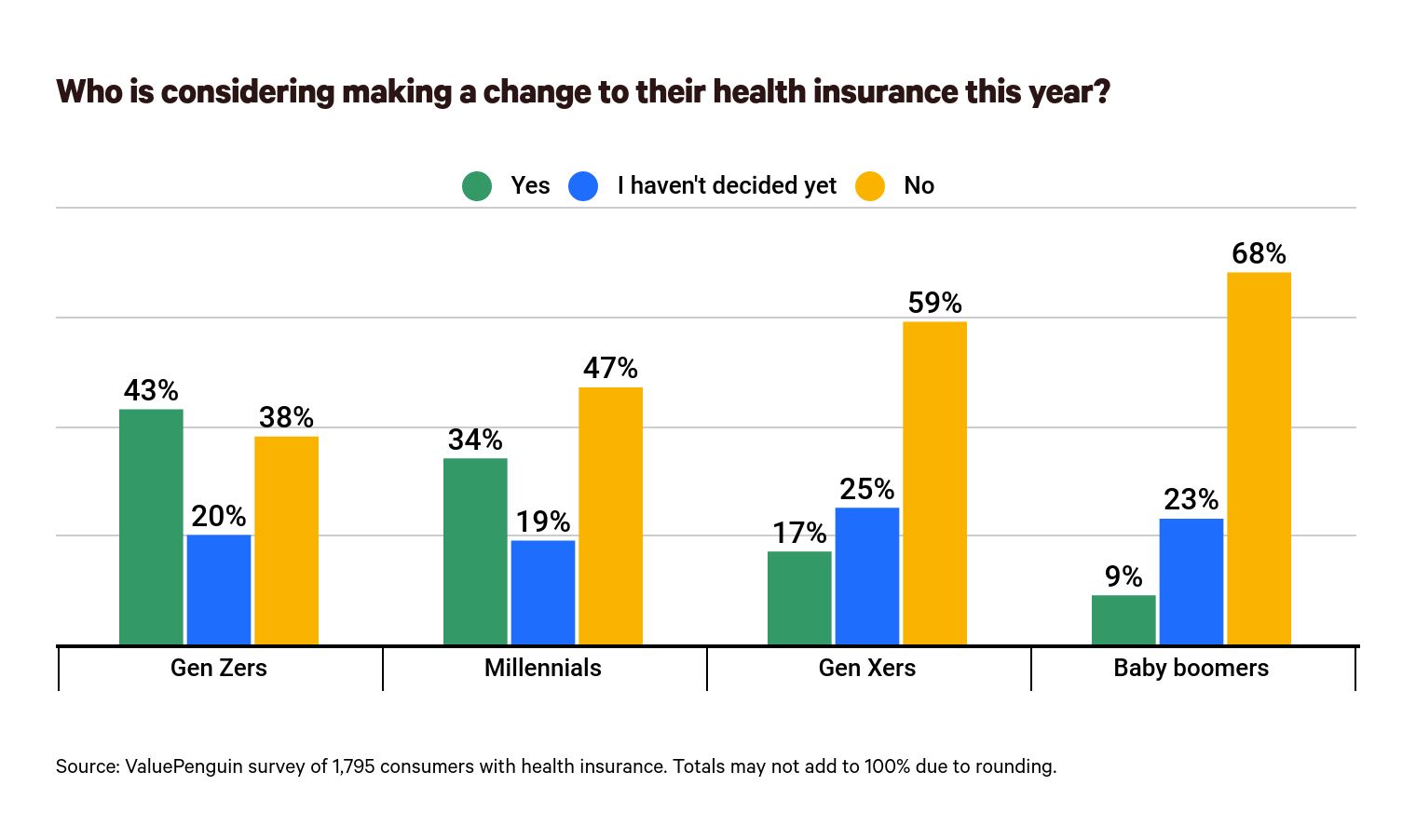
From the Open Season front, Health Payer Intelligence directed the FEHBlog to this fascinating ValuePenguin study of consumer attitudes toward health benefit open seasons. For example, eagerness to consider changing plans steadily decreases with age which may explain the relatively low turnover rate that typically occurs in FEHB Open Seasons.

Who is planning to change their health insurance?
From the ValuePenguin study

EHR Intelligence reports that the federal government is putting its weight behind the adoption of The HL7 Gender Harmony Logical Model in U.S. electronic health record systems:

  • “Gender identity (GI): an individual’s personal sense of being a man, woman, boy, girl, or something else.
  • “Sex for clinical use: a summary sex classification element based on clinical observations like organ survey, hormone levels, and/or chromosomal analysis.
  • “Recorded sex or gender (RSG): sex values or gender values that are specified administrative documents such as identity cards or insurance cards.
  • “Name to use (NtU): the name that the patient wishes to use in healthcare interactions.
  • “Pronouns: the English language third-person personal pronoun determined by the patient for use in healthcare interactions, clinical notes, and written instructions to caregivers.”

Assuming the model works with EHR system, it would be a logical next step to extended this model to health plan claim and customer service systems.

Monday Roundup

Photo by Sven Read on Unsplash

From the Delta variant front, Medscape informs us that

Unvaccinated people who had a recent infection were five times more likely to be reinfected with the coronavirus compared to those who were fully vaccinated and didn’t have a prior infection, according to a new study published Friday in the CDC’s Morbidity and Mortality Weekly Report.”

and

People who already have had COVID-19 may have more reason to get vaccinated, with new findings suggesting that vaccination after infection can boost protection. Under viral threat, the body first uses B cells to make antibodies against the invader, a process that can take up to 2 weeks. The immune system simultaneously creates memory B cells that can recognize the virus if it reappears and rapidly mounts a powerful secondary response.

In a series of  shots, the first dose triggers the primary response. The follow-up doses activate the memory B cells, strengthening defenses against the pathogen.

These new results, published in Cell Reports , show that a SARS-CoV-2 infection, like a first vaccine dose, will elicit the primary response, as expected.

Fierce Biotech tells us that

COVID-19 testing newcomer Detect aims to reset expectations for regular screening against the pandemic coronavirus—and it’s now received an FDA green light to move forward with its rapid, lab-quality test for repeated use in the home.

The company’s molecular diagnostic received an emergency authorization allowing it to be sold at retail stores over-the-counter. Equipped with a reusable analyzer and $50 cartridge-based tests, the system aims to produce results with PCR-level accuracy within one hour.

From the Delta variant mandate front, the Society for Human Resource Management reports that

​The White House issued guidance on Nov. 1 that its Dec. 8 deadline for federal contractors to be vaccinated against COVID-19 isn’t set in stone, providing companies with the opportunity to educate workers past that date rather than fire workers who haven’t been vaccinated by then.

“A covered contractor should determine the appropriate means of enforcement with respect to its employee at a covered contractor workplace who refuses to be vaccinated and has not been provided, or does not have a pending request for, an accommodation,” according to the guidelines.

As federal contractors prepare to implement the vaccine mandate, many questions have arisen on timing, costs and related issues, which prompted the White House to release the new guidance.  

Also today, OMB’s Office of Information and Regulatory Affairs concluded its review of the OSHA vaccination screening rule for private sector employers with 100 or more employees. This means that the rule should be released this week. Heavens only knows when the FAR Council will release its vaccine mandate rule for federal contractors.

Federal News Network offers an update on the federal employee vaccine mandate.

From the recognition department, Fierce Healthcare names ten women of influence in healthcare while Healthcare Dive points out that “Healthcare employees bore the brunt of the pandemic in the workforce. Women bore the brunt of the pandemic at home. Most nurses are both.”

In Affordable Care Act new, the IFEBP reports that “The Internal Revenue Service (IRS) issued the final 1094-B, 1095-B, 1094-C, and 1095-C forms that employers, plan sponsors and group health insurers will use to report health coverage to plan members and the IRS as required by the Affordable Care Act (ACA). IRS hasn’t released final instructions.” Links to the final forms are available at this link.