Monday Roundup

Monday Roundup

Photo by Sven Read on Unsplash

From Washington, DC,

  • Per an HHS press release,
    • “Today, to mark National Health Center Week, the U.S. Department of Health and Human Services (HHS), through the Health Resources and Services Administration (HRSA) released new data showing over 31 million total patients served at HRSA-funded health centers in 2023—an increase of 2.7 million since 2020.
    • “Community health centers play a pivotal, and growing, role in America’s health care system. They are especially important in our effort to reduce health care disparities in underserved communities,” said HHS Secretary Xavier Becerra. “More than 31 million people across the country – in every U.S. state, territory, and the District of Columbia – depend on health centers, making them a vital resource. The Biden-Harris Administration wants all Americans to have access to high-quality primary health care services, regardless of a patient’s ability to pay, and community health centers help make that possible.”
  • Beckers Hospital Review delves into the final Medicare acute inpatient prospective payment rule for fiscal year 2025 which was publicized last week.
  • The Wall Street Journal reports,
    • “Studies being used to decide whether the U.S. should authorize an ecstasy-based drug for traumatized patients missed serious side effects and were marked by bias.
    • “The Food and Drug Administration is expected within days to decide whether to approve the drug, known as MDMA, for treatment of post-traumatic stress disorder. Approval would be a milestone in decades of efforts to decriminalize the use of psychedelics
    • “Three people who were subjects in the studies told The Wall Street Journal that their thoughts of suicide worsened during or after testing, but their downward slides weren’t captured in trial data and therefore not reflected in the final results.” * * *
    • “FDA staffers have questioned the quality of the study results. Experts advising the agency recommended against approval, saying more safety and effectiveness evidence was needed. The Institute for Clinical and Economic Review, a nonprofit that reviews drugs and their prices, said the evidence was incomplete.
    • “The FDA told its advisers that it is looking into allegations of study misconduct and missing side effects. It told the Journal that it can’t comment on investigations until they are final, but its findings will be incorporated into its decision on the Lykos treatment.
    • “Problems with the trials mean the FDA might not be able to assess whether the treatment is safe and effective for everyone, or just some people, said experts advising the agency and bioethicists who spoke to the Journal about its findings.”

From the public health and medical research front,

  • USA Today lets us know,
    • “The KP.3.1.1 COVID-19 variant is the dominant strain of the virus, the latest projections from the Centers for Disease Control and Prevention (CDC) show.
    • “The agency’s Nowcast data tracker, which displays COVID-19 estimates and projections for two-week periods, projects the KP.3.1.1 variant accounting for 27.8% of positive infections, followed by KP.3 at 20.1% in the two-week stretch starting July 21 and ending Aug. 3.
    • “The KP.3.1.1 variant is very similar to other circulating variants in the United States. All current lineages are descendants of JN.1, which emerged in late 2023,” Rosa Norman, a spokesperson at the CDC, previously told USA TODAY.
    • “At this time, we anticipate that COVID-19 treatments and vaccines will continue to work against all circulating variants. CDC will continue to monitor the severity of variants and will monitor vaccine effectiveness.”
  • Bloomberg reports,
    • “Some CVS Health Corp. pharmacies are selling out of at-home Covid tests as a summer surge in infections drives up demand.
    • “As of Friday afternoon [August 2], CVS’s website showed that all brands of tests were out of stock at many locations in cities including Houston, Austin and Reno, Nevada. 
    • “The company said that 91% of its stores have at least one brand of test in stock. While the company “has seen an uptick in purchases” of the tests, it’s “quickly sending product to impacted stores,” a spokesperson said in an email.”
  • Per MedPage Today,
    • “Intermittent calorie restriction improved executive function and memory measures in cognitively intact older adults, an exploratory pilot study suggested.
    • “The 8-week randomized clinical trial of 40 overweight, cognitively normal older adults with insulin resistance examined the effect of two interventions — a 5:2 intermittent fasting plan versus a “healthy living” diet based on portion control and calorie reduction guidelines from the U.S. Department of Agriculture — on brain health. The 5:2 intermittent fasting group had 2 days of food intake of 480 calories/day (two meal replacement shakes), and 5 days of a healthy living diet.
    • “Both interventions improved executive function and memory, with intermittent fasting showing better results on certain cognitive measures, said Dimitrios Kapogiannis, MD, of the National Institute on Aging (NIA) and the Johns Hopkins University School of Medicine in Baltimore, in a poster presented at the Alzheimer’s Association International Conference.” * * *
    • “Many people think that eating a healthy diet or following an intermittent fasting regimen are good ways to stave off cognitive decline during aging, but our study actually provided supporting evidence,” Kapogiannis told MedPage Today.
    • “Our study lays the groundwork for larger clinical trials that will examine a variety of dietary interventions that will help people have good brain health and live healthier, longer lives,” he said.”
  • Beckers Clinical Leadership informs us,
    • “More than half of patients hospitalized and treated for pneumonia receive differing diagnoses during their stays, according to a study published in Annals of Internal Medicine
    • “Researchers from the University of Utah Health and the nearby VA Healthcare System, both based in Salt Lake City, measured the rates of concordance and discordance in pneumonia diagnoses. They followed three states: initial diagnosis in the emergency department, initial chest image reports and discharge diagnosis. 
    • “Among more than 2 million admissions at VA hospitals across the U.S., 36% of patients were admitted with a pneumonia diagnosis but not a corresponding discharge diagnosis. Another 33% had a discharge diagnosis of pneumonia but not an admission diagnosis. The study focused on admissions between 2015 and 2022.” * * *
    • “In conclusion, the authors of the latest study said physicians and patients should be aware of this high level of uncertainty about pneumonia diagnoses.

From the U.S. healthcare business front,

  • The Peterson/KFF Health System Tracker considers what drives health spending in the U.S. compared to other countries.
    • “The United States spends significantly more on healthcare than comparable countries do, and yet has worse health outcomes. Much of the national conversation has focused on spending on retail prescription drugs and insurer profits and administrative costs as key drivers of health spending in the United States. The Inflation Reduction Act, signed into law by President Biden in 2022, includes several provisions aimed at lowering the cost of these prescription drugs. While it is true that many brand-name retail prescription drugs are priced higher in the U.S. than in peer countries, health spending data indicates that other spending categories – particularly hospital and physician payments – are primary drivers of the U.S.’s higher health spending.” 
  • Risk and Insurance points out,
    • “Only about half of U.S. employers effectively manage health care costs, with nearly all organizations experiencing health plan premium increases, according to Gallagher’s 2024 U.S. Physical & Emotional Wellbeing Report.
    • “The report, which surveyed 3,552 organizations, found that employers ranked the high costs of medical services (68%) and specialty drugs (44%) as their top health care cost management challenges.” * * *
    • “Access the report on Gallagher’s website.”
  • Per BioPharma Dive,
    • “All doses of tirzepatide, the drug Eli Lilly sells as Zepbound for obesity and Mounjaro for diabetes, are now available in the U.S. after months of shortages made the in-demand medicine hard to obtain.
    • “Two dose strengths of Zepbound and another two of Mounjaro had been listed in short supply on a database maintained by the Food and Drug Administration as recently as early last week, before the agency updated the drug’s status to available on Friday.
    • “Lilly reports second quarter earnings on Thursday, when sales and supply of tirzepatide are likely to be the main focus of analyst questions. The company in April raised its financial forecasts for the year by $2 billion due to revenue growth for Zepbound and Mounjaro, which together brought in $2.3 billion between January and March.”
  • Per Healthcare Dive,
    • “Walgreens has once again cut its stake in drug distributor Cencora as the struggling pharmacy chain looks to boost funding.
    • “The Illinois-based retailer announced last week it was selling more shares in Cencora for roughly $1.1 billion in proceeds. The sales lower Walgreens’ stake in Cencora to approximately 10% from 12%.
    • “Walgreens said it will use the money to pay down debt and to fund its operations as it continues to pivot to a health services strategy.”
  • Per MedTech Dive,
    • “Johnson & Johnson said Friday [August 2] it launched Velys Spine, a surgical robot and standalone navigation platform. 
    • “The 510(k)-cleared system, which J&J developed with eCential Robotics, is designed to provide guidance on the placement of screws in freehand and robotic-assisted spine surgeries. 
    • “J&J’s Depuy Synthes plans to make the system available commercially in the first half of 2025. The system will join other Velys offerings J&J has cited as a growth driver in its hip and knee businesses.”
  • Per Fierce Healthcare,
    • “Steward Health Care will lay off about 1,200 workers in Massachusetts by the end of the month as it moves to close two hospitals in the state.
    • “The health system will let go 753 employees at its Carney Hospital and 490 workers at its Nashoba Valley Medical Center, according to a Worker Adjustment and Retraining Notification (WARN) report filed with state regulators on July 29.
    • “On Thursday, a federal judge cleared the way for embattled Steward Health Care to close Carney Hospital and Nashoba Valley Medical Center by the end of August. Those are two of the eight hospitals that the health system operates in the Bay State.”
  • and
    • “For the first time as a public company, Clover Health is announcing its first quarterly net profit, the company said ahead of its second quarter earnings call.
    • “Clover declared a net income of $7.2 million and an adjusted EBITDA of $36.2 million, both figures a substantial improvement year-over-year.
    • “I am delighted that our performance continues to validate Clover’s differentiated, technology-centric approach to healthcare, driven by our insurance offering and its ability to generate meaningful returns while leading with physician-choice for our members,” said Clover Health CEO Andrew Toy in a statement. “Through our Clover Assistant technology and integrated care management platform, we aim to empower physicians to improve clinical outcomes and lower the total cost of care for people with chronic diseases. This allows us to partner with a much wider range of physicians than other plans.”
    • “Insurance revenue also soared 11% higher year-over-year to $349.9 million due to member retention and growth, whereas the company’s medical cost ratio (MCR) improved to 71.3%, down from 77.9% the quarter before.”
  • and
    • “Cigna unveiled the first round of grant winners in a program announced earlier this year that seeks to address the rising tide of mental health needs among youth.
    • “The funding will be distributed to 22 awardees, Cigna said on Monday. For close to half of the recipients, it’s the first time they’re securing funding from Cigna or its philanthropic arm, the Cigna Group Foundation, according to an announcement.
    • “Cigna said it will distribute $9 million as part of the program. The organizations will focus on tackling post-pandemic stress and distress among kids aged five to 18, according to the release. There will be a particular emphasis on outreach in schools or related settings, Cigna said.”

Tuesday Tidbits

Photo by Patrick Fore on Unsplash

From Washington, DC,

  • Fierce Healthcare reports,
    • “The Centers for Medicare & Medicaid Services (CMS) is creating a voluntary demonstration program to support changes to Medicare Part D under the Inflation Reduction Act (IRA).
    • “The agency also finalized bid information for contract year 2025, with a base beneficiary premium increase of $2.08 for people with Part D.
    • “The IRA is designed to limit yearly premium increases from contract year 2024 to 2029. Because Part D and prescription drug plans can result in plan price variation for beneficiaries, CMS is creating the Part D Premium Stabilization Demonstration to “improve premium stability for participating stand-alone prescription drug plans,” according to a news release.
    • “This should result in a smoother rollout in how the IRA requires Medicare to support Part D prescription plans. The program will test whether even more financial requirements would improve the Part D program, a senior CMS official said Monday afternoon.”
  • Here is the link to the CMS fact sheet for the Part D demonstration project and bid information.
  • American Hospital Association News lets us know,
    • “The Centers for Medicare & Medicaid Services July 30 issued a final rule updating hospice payment rates for fiscal year 2025. Overall, CMS finalized a 2.9% net increase to payments compared with FY 2024. This includes a 3.4% market basket update and a 0.5 percentage point cut for productivity. As a result of this increase, the hospice payment cap will be increased from $33,494.01 to $34,465.34. CMS also finalized adoption of the most recent Office of Management and Budget statistical area delineations, which will affect the wage index used by some providers. In addition, the rule adopts a new patient-level data collection tool to replace the existing Hospice Item Set and also adds two new process measures beginning in FY 2028.”
  • Here is a link to the CMS fact sheet on the hospice payment rates.
  • The Washington Post informs us,
    • “The Centers for Disease Control and Prevention is launching a $5 million initiative to provide seasonal flu shots this fall to about 200,000 livestock workers in states hardest hit by the bird flu outbreak.
    • “Workers on poultry, dairy and pig farms are at greatest risk of being simultaneously exposed to seasonal flu and the H5N1 bird flu that has infected at least 172 dairy herds in 13 states, according to the Department of Agriculture. Such exposures raise the rare risk of the two viruses exchanging genetic material, a process known as reassortment, to create a new influenza virus that “could pose a significant public health concern by becoming more efficient at spread and potentially more severe,” Nirav Shah, CDC’s principal deputy director, said at a news briefing Tuesday. Widespread seasonal flu vaccination would reduce that risk, he said.
    • “Thirteen farmworkers have been infected in the outbreak. All had mild symptoms and recovered.
  • Per an HHS press release,
    • Today, the U.S. Department of Health and Human Services’ (HHS) Substance Abuse and Mental Health Services Administration (SAMHSA) released the results of the 2023 National Survey on Drug Use and Health (NSDUH), which shows how people living in United States reported their experience with mental health conditions, substance use and pursuit of treatment. The 2023 NSDUH report includes selected estimates by race, ethnicity and age group. The report is accompanied by two infographics offering visually packaged highlight data as well as visual data by race and ethnicity.
  • The press release includes key findings from the survey.
  • MedTech Dive tells us about how a “[p]atient shares a day in the life with diabetes at FDA’s first Home Health Hub meeting. The initiative, led by new CDRH Acting Director Michelle Tarver, is intended to improve health equity by including people’s living conditions in device design.”
  • The Assistant Secretary of Labor for Employee Benefit Security seeks in her blog to “raise awareness and break the silence surrounding minority mental health.
  • HHS’s Office for Civil Rights amended its Change Healthcare Cybersecurity Incident FAQ three to read as follows:
    • 3. Have Change Healthcare or UHG filed a breach report with HHS?
    • A: Yes, on July 19, 2024, Change Healthcare filed a breach report with OCR concerning a ransomware attack that resulted in a breach of protected health information. Change Healthcare’s breach report to OCR identifies 500 individuals as the “approximate number of individuals affected”. This is the minimum number of individuals affected that results in a posting of a breach on the HHS Breach Portal. Change Healthcare is still determining the number of individuals affected. The posting on the HHS Breach Portal will be amended if Change Healthcare updates the total number of individuals affected by this breach. HIPAA breach reports filed on the HHS Breach Portal may be amended as the breach report form allows a filer to file an initial breach report or an addendum to a previous report.”
  • Per a press release from the U.S. Attorney for the District of Massachusetts,
    • “Burlington County Eye Physicians (BCEP), an ophthalmology practice with locations in New Jersey and Pennsylvania, and Dr. Gregory H. Scimeca, an ophthalmologist and the owner of BCEP, have agreed to pay $469,232 to resolve allegations that they submitted and caused the submission of false claims for payment for medically unnecessary transcranial doppler (TCD) tests to Medicare and the Federal Employee Health Benefit (FEHB) Program in violation of the False Claims Act. 
    • “A TCD test is a noninvasive diagnostic test that can be used to estimate the blood flow through certain blood vessels in the brain. Medicare and the FEHB Program reimburse healthcare providers for both performing the test and for interpreting the test results. When a physician does not perform the test, but interprets the results of the test, they only can bill for their professional services of interpreting the test. A physician cannot bill for interpreting the test when they merely review another physician’s interpretation of the results.”  

From the public health and medical research front,

  • The Washington Post reports,
    • “The suicide rate for U.S. children 8 to 12 years old has steadily climbed in the past decade and a half, with a disproportionate rise among girls, data released Tuesday by the National Institute of Mental Health shows.
    • “The findings, published in the journal JAMA Network Open, highlight pervasive issues regarding mental health that affect U.S. children daily, the study authors said.
    • “The authors of the study blame no single reason for the increase, but experts not involved in the study say the problem is multifaceted, citing technology, social media and guns as the main culprits.
    • “Between 2001 and 2022, 2,241 children ages 8 to 12 — known as preteens — died by suicide. While suicide rates were decreasing until 2007, they increased by about 8 percent each year from 2008 to 2022.
    • “From 2001 through 2007, 482 children ages 8 to 12 died by suicide at a rate of 3.34 per 1 million “preteens. From 2008 to 2022, the number of suicides in that age group rose to 1,759, with a rate of 5.71 per 1 million.”
  • Per STAT News,
    • “If millions of Americans no longer qualify for a statin or a blood pressure medication based on a new calculator updated to better predict their risk, that could lead to 107,000 more heart attacks and strokes over 10 years, a new study estimates.
    • “The research paper, published Monday in JAMA, is the second in two months drawing attention to widely used medicines designed to prevent the leading cause of death in the United States.
    • “The research is creating a buzz in cardiology circles while two medical societies formulate new guidelines to inform practice, weighing the new risk models and existing thresholds that trigger prescriptions.
    • “This is concerning that we could reverse eligibility for many millions of Americans,” Raj Manrai, assistant professor of biomedical informatics in the Blavatnik Institute at Harvard Medical School and senior author of the new study, said in an interview. “We really need to reexamine the other side of the equation here, which is how those risk estimates are going to be used by patients and physicians to decide who and when individuals receive preventative care, particularly statins and antihypertensive blood pressure medications.”
  • Per a National Institutes of Health (NIH) press release,
    • “A new global study sponsored by the National Institute of Allergy and Infectious Diseases has determined that cabotegravir, an antiretroviral medication used for HIV treatment, is safe for use before and during pregnancy. The study analyzed the pregnancy and infant outcomes of using long-acting injectable cabotegravir in more than 300 pregnant women. These findings fill an important knowledge gap that will help increase access to HIV treatment for cisgender women before, during, and after pregnancy.” 
  • NIH also posted a summary of recent medical research developments.
  • STAT News relates,
    • “A new study suggests that an older GLP-1 drug may help protect the brains of people with early Alzheimer’s disease, supporting the case for further research on the class of medications — originally developed for obesity and diabetes — in neurological diseases.
    • “The Phase 2 randomized trial, led by researchers at Imperial College London, tested Novo Nordisk’s liraglutide, the predecessor to Ozempic and Wegovy, in patients with early Alzheimer’s disease over one year. The study did not meet the primary endpoint of change on a measure of how much sugar the brain uses for energy, but it showed that patients on the drug had nearly 50% less shrinking in parts of the brain that control memory and learning and that treated participants had a slightly slower decline in cognitive function.”
  • CNN adds,
    • “A growing set of evidence suggests that using semaglutide could lead to decreased substance use, and a large new study shows a promising link between the medication and tobacco use. But experts emphasize that much more research is needed before using the medications off-label for smoking cessation.
    • “In a study published Monday in the journal Annals of Internal Medicine, researchers tracked the medical records of more than 200,000 people who started medications to treat type 2 diabetes, including nearly 6,000 people using semaglutide medications such as Ozempic.
    • “Over the course of a year, people who started using semaglutide were significantly less likely to have medical encounters for tobacco use disorders, prescriptions for medications for smoking cessation or counseling for smoking cessation than those who started other diabetes medications such as insulin and metformin.
    • “The study authors note that the reasons individuals might be less likely to seek medical treatment for tobacco use disorder vary widely; it could suggest that their tobacco use decreased or that they’ve become less willing to seek help to quit smoking, for example.”

From the U.S. healthcare business front,

  • Reuters points out,
    • “Four pharmaceutical companies involved in the first U.S. negotiations over prices for the Medicare program said they do not expect a significant impact on their businesses after seeing confidential suggested prices from the government for their drugs that will take effect in 2026.
    • “Top executives from Bristol Myers Squibb (BMY.N), opens new tab, Johnson & Johnson (JNJ.N), AbbVie (ABBV.N), and AstraZeneca (AZN.L), which have five of the 10 drugs chosen for the first wave of negotiations, described their newly informed views on quarterly conference calls.”
  • Modern Healthcare notes,
    • “Drug prices are expected to increase 3.81% next year, propelled by expensive cell and gene therapies and glucagon-like peptide agonists.
    • “The estimate from Vizient, a group purchasing organization, tops the company’s 2024 drug cost growth projection of 3.42%. Vizient uses recent provider purchasing data to forecast what hospitals and health systems might pay for drugs after discounts and rebates.”
  • The Wall Street Journal reports,
    • “Pfizer’s quarterly results beat Wall Street estimates and the drugmaker raised its outlook, denoting strong demand for its non-Covid products. * * *
    • “Pfizer’s revenue was boosted by several acquired products and recent commercial launches, which offset a decline from its Covid-19 vaccine Comirnaty, and unfavorable foreign currency translation. Excluding Covid products, revenue rose 14% on the year.
    • “Chief Financial Officer David Denton said this was the first quarter of top-line growth since the end of 2022, when Pfizer’s Covid-related revenues peaked.
    • “Pfizer Chief Executive Albert Bourla said in an interview the company is making progress on its strategy to drive growth and improve the company’s share price through dealmaking, including its $43 billion acquisition of cancer-maker; cost-cutting programs; and launching new medicines.
    • “We are progressing on all cylinders,” he said.”
  • Per STAT News,
    • “Shares of Merck fell 9% Tuesday after the company reported that in the second quarter, it saw a decrease in shipments of its HPV vaccine Gardasil in China, a significant market for the drug.
    • “The company brought in $2.48 billion in sales of Gardasil in the second quarter, slightly lower than estimates of $2.5 billion made by analysts polled by Visible Alpha.
    • “Despite the Gardasil hit, Merck raised guidance for full-year sales to $63.4 to $64.4 billion from the previously guided $63.1 to $64.3 billion. The company lowered guidance for full-year earnings, though, to $7.94 to $8.04 per share from the previously forecasted $8.53 to $8.65, due to expenses related to the acquisition of ophthalmology-focused biotech EyeBio.”
  • Per Healthcare Dive,
    • “Google will not renew its contract with Amazon’s primary care subsidiary One Medical, ending a longstanding agreement that gave Google employees access to discounted medical care, the companies confirmed to Healthcare Dive.
    • “The contract loss is a major blow for the provider. Google was One Medical’s largest customer, accounting for 10% of its revenue in 2020. That figure dipped slightly in 2021, after which One Medical stopped disclosing its finances publicly.
    • “The decision is not because One Medical was acquired by Google rival Amazon last year, a Google spokesperson said. The current contract will expire at the end of 2024.”
  • and
    • “Mental telehealth coverage has contracted slightly since the government declared an end to the COVID-19 public health emergency last year, according to a new study published in JAMA.
    • “The study, which analyzed over 1,000 outpatient mental health treatment facilities, found that publicly owned mental health treatment facilities were less likely to have adopted telehealth services at all, and more likely to have discontinued them after the Biden administration ended the COVID PHE, compared to privately owned facilities.
    • “The results come as lawmakers are considering whether to permanently expand telehealth flexibilities to providers this year, after the federal government enacted temporary policies that expanded access to telehealth services during the pandemic.”
  • The Washington Post gives us a heads up on the test run of drones to deliver cardiac care to patients in North Carolina.
    • “What if the first responder on the scene of a cardiac arrest were a drone carrying an automated external defibrillator?
    • “When every second counts, public safety professionals are increasingly eyeing drones — which can fly 60 miles an hour and don’t get stuck in traffic — to deliver help faster than an ambulance or EMT.
    • “Starting in September, 911 callers in Clemmons, N.C., may see a drone winging its way to those suffering a cardiac arrest. Under a pilot program operated jointly by the Forsyth County Sheriff’s Office, local emergency services, the Clinical Research Institute at Duke University and drone consulting firm Hovecon, drone pilots from the sheriff’s department will monitor 911 calls and dispatch drones.”
  • The Wall Street Journal lets us know,
    • “Theranos’s ambitions for a finger-prick blood test are finally being realized—by other companies.
    • “”Since May, needle-phobic people in Austin, Texas, have been able to visit pharmacies for routine medical tests on drops of blood squeezed from their fingertips, rather than the usual way of plunging a needle into a vein in the arm and drawing large vials of blood. 
    • The rise and fall of Theranos—the Silicon Valley startup that promised to revolutionize blood testing but ended dissolved, with its founder Elizabeth Holmes convicted of fraud—cast a pall over the idea that critical medical tests could be run on mere drops of blood.
    • “Demand for alternatives to standard blood draws never went away, however. And companies—including Becton Dickinson and Babson Diagnostics, which make the tests rolling out in Austin—have been working out technological kinks that foiled Theranos.”
    • FEHBlog observation: As the old saying goes, timing is everything.


Midweek update

OPM Headquarters a/k/a the Theodore Roosevelt Building

From Washington, DC,

  • At long last, the federal employee press is publicizing the Part D opt out penalty found in the proposed supplemental Postal Service Health Benefits (PSHB) Program rule.
  • Federal News Network reports, “There’s a catch in USPS insurance program for Medicare-eligible retirees. USPS annuitants who opt out of Medicare Part D will lose underlying prescription drug coverage, according to OPM’s [proposed] regulations.” Those opt out annuitants will continue to pay the full premium.
  • OPM reads the PSHB law as only offering Part D EGWP benefits to Part D eligible annuitants in the PSHBP. There is no underlying Rx coverage according to the agency’s FAQs. That statutory interpretation puts federal employees who live overseas in quite a pickle because Part D coverage is not available outside the United States.
  • In any case, it’s the FEHBlog’s legal opinion that the opt out penalty may not survive judicial review in our post-Chevron era, and because the penalty is roughly 20% of the premium, annuitants may be incented to bring a lawsuit challenging the penalty. Time will tell.
  • Govexec tells us,
    • “The Office of Personnel Management is opening a channel to provide federal employees affected by Hurricane Beryl to obtain emergency paid leave.  FEHBlog note: Beryl hit Houston TX hard.
    • “Acting OPM director Robert Shriver said in a July 19 memo that the agency had established an emergency leave transfer program, by which other federal employees may donate unused annual leave to impacted employees through the creation of agency leave banks. 
    • “Through the agency leave banks, impacted employees “who are adversely affected by a major disaster or emergency, either directly or through adversely affected family members, and who need additional time off from work” can utilize donated leave without having to use their own.” 
  • Per Fierce Healthcare,
    • “The Centers for Medicare & Medicaid Services (CMS) has released new data on risk adjustment payments for 2023.
    • “The agency said (PDF) insurers participating on the Affordable Care Act’s exchanges will pay $10.3 billion as part of the risk adjustment program. Risk adjustment state transfers as a percent of premiums declined from 2022, according to the report.
    • “This trend is likely driven by shifts in the risk pools, according to CMS, which are likely impacted by ongoing insurer expansion into new regions.”
  • The American Hospital Association News informs us,
    • “The Substance Abuse and Mental Health Services Administration July 24 announced it is awarding $45.1 million in grants toward various behavioral health initiatives. The funding includes $15.3 million specifically planned to support children through mental health services in schools, services for those who have experienced traumatic events, and services specific to those at risk for or with serious mental health conditions.” 
  • Roll Call reports,
    • “House leaders canceled votes scheduled for next week as the GOP majority struggles to pass its fiscal 2025 appropriations bills.
    • “The decision to scrap next week’s session came a day after Republican leaders had to yank the Energy-Water spending bill from the floor amid growing doubts they could muster enough votes to pass it with their razor-thin majority. * * *
    • “GOP leaders all week had been mulling the possibility of sending members home early rather than remain in session next week as previously scheduled. Speaker Mike Johnson, R-La., said Wednesday that the decision to cancel votes next week wasn’t a direct result of problems with the appropriations bills.
    • “It’s not related to that. We’ve had a tumultuous couple of weeks in American politics and everybody’s, to be honest, still tired from our convention, and it’s just a good time to give everybody time to go home to their districts and campaign a little bit. We’ll come back and regroup and continue to work on this.”
    • “Johnson also said funeral arrangements for Rep. Sheila Jackson Lee, D-Texas, who died last weekend after a battle with pancreatic cancer, would pose logistical challenges next week. Johnson said a lot of members would want to attend the events, to be held in Houston, which could keep members away from Washington for three days.”
  • Per a Senate press release,
    • “Senate Finance Committee Chair Ron Wyden, D-Ore., and five senators today introduced a bill to apply criminal penalties to rogue insurance brokers who are changing Americans’ Affordable Care Act (ACA) marketplace plans without their knowledge or consent, and take other steps to strengthen consumer health insurance protections. * * *
    • “The one-pager is available here. A summary of the bill is available here. The bill text is available here.”

From the public health and medical research front

  • ABC News relates,
    • “So far, only 25 cases of West Nile virus have been reported in 14 states, according to data from the Centers for Disease Control and Prevention. This is lower than the 117 cases reported at the same time last year. * * *
    • “Mosquitoes typically become infected with the virus after feeding on infected birds and then spread it to humans and other animals, the federal health agency said. Cases typically begin rising in July and are highest in August and September, CDC data shows.
    • “The majority of people with the virus do not have symptoms, but about one in five will experience fever along with headaches, body aches, joint pain, diarrhea, vomiting or a rash. Most symptoms disappear but weakness and fatigue may last for weeks or months.
    • “About one in 150 will develop severe disease leading to encephalitis, which is inflammation of the brain, or meningitis, which is inflammation of the membranes that surround the brain and spinal cord — both of which can lead to death. So far this year, 11 of the 25 cases have resulted in neuroinvasive disease, according to the CDC.
    • “There are currently no vaccines or specific treatments available for West Nile virus. The CDC recommends rest, fluids and over-the-counter medications. For those with severe illness, patients often need to be hospitalized and receive support treatments such as intravenous fluids.
    • “To best protect yourself, the CDC suggests using insect repellant, wearing long-sleeved shirts and pants, treating clothing and gear and taking steps to control mosquitoes. This last step includes putting screens on windows and doors, using air conditioning and emptying out containers with still water.”
  • The New York Times adds,
    • “As the bird flu outbreak in dairy cows has ballooned, officials have provided repeated reassurances: The virus typically causes mild illness in cows, they have said, and because it spreads primarily through milk, it can be curbed by taking extra precautions when moving cows and equipment.
    • “A new study, published in Nature on Tuesday, presents a more complex picture.
    • “Some farms have reported a significant spike in cow deaths, according to the paper, which investigated outbreaks on nine farms in four states. The virus, known as H5N1, was also present in more than 20 percent of nasal swabs collected from cows. And it spread widely to other species, infecting cats, raccoons and wild birds, which may have transported the virus to new locations.
    • “There’s probably multiple pathways of spread and dissemination of this virus,” said Diego Diel, a virologist at Cornell University and an author of the study. “I think it will be really difficult to control it at this point.” * * *
    • Although many infected cows did recover on their own, the researchers found, two farms reported a spike in cow deaths. On the Ohio farm, 99 cows died over the course of a three-week outbreak, a mortality rate roughly twice as high as normal.
    • “I think the potential for this virus to cause very serious disease has been downplayed a bit,” said Richard Webby, an influenza expert at St. Jude Children’s Research Hospital, who was not involved in the new study. “That has probably hurt the response.”
    • “Still, Dr. Diel noted, the cause of these deaths remains unknown. “Whether the mortality observed in those cases was due directly to influenza or whether the influenza infection led to a secondary bacterial infection, I think that’s a question that remains to be answered,” he said.”
  • Per BioPharma Dive,
    • “An experimental gene therapy from Pfizer succeeded in a Phase 3 study of people with hemophilia A, overcoming safety concerns that had put the trial on hold for almost a year.
    • “The treatment, giroctocogene fitelparvovec, is a one-time infusion designed to help patients produce a protein called Factor VIII that’s needed for normal blood clotting. Currently, people with hemophilia A use infusions of Factor VIII to prevent bleeding episodes.
    • “In the AFFINE study, researchers followed 75 patients for at least 15 months after they received Pfizer’s therapy. Study participants had fewer bleeding episodes and higher levels of Factor VIII, compared with standard prophylactic treatment before the infusion, Pfizer said Wednesday. Only one treated patient returned to prophylactic infusions.”
  • Healio notes that “In a single-center cohort of patients with heart failure and obesity, weight-loss surgery led to improved clinical outcomes including reduced BMI and HbA1c and less reliance on diuretics, researchers reported.”
  • mHealth Intelligence reports,
    • “There has been a “notable jump” in the percentage of employers offering deductibles of $4,000 or more — from 36% to 45% — according to a survey of more than 6,000 employers conducted by employee benefits firm Alera Group. 
    • “More companies are also offering qualified high-deductible health plans (up from 47% to 52%), Alera Group found. The survey also found, perhaps unsurprisingly, that 4 in 5 medical plans experienced a rate increase over the past year.
    • “Employers appear to be managing increased costs by providing more choices, with more than half of large employers offering three or more plan options. More employers are also exploring self-funding, Alera Group found.”

From the U.S. healthcare business front,

  • Fierce Healthcare lets us know,
    • “Humana’s CenterWell is planning to open 23 clinics at Walmart locations in four states, the company announced Wednesday.
    • “The health clinics will operate in space that previously held Walmart’s own clinics, according to the announcement. CenterWell intends to have the locations across Florida, Georgia, Missouri and Texas fully equipped, staffed and opened by the first half of 2025.
    • “The locations will operate under both the CenterWell and Conviva brands, providing senior-focused primary care. CenterWell is the fastest-growing senior-focused primary care provider in the nation, Humana said.”
  • Per Healthcare Dive,
    • “S&P Global Ratings analysts have downgraded Walgreens Boot Alliance by two notches, to ‘BB’ from ‘BBB-’, which puts the drugstore company into speculative-grade territory.
    • ‘Analysts Diya Iyer and Hanna Zhang cited guidance for the year “notably below” their expectations, and said “material strategic changes, limited cash flow generation, and large maturities in coming years are key risks to the business.”
    • “The company is struggling in its retail business as well as its pharmacy operations, they said in a Friday client note. In the U.S., margins are taking a hit on the pharmacy side from reimbursement pressure and on the retail side from declining sales volume and higher shrink. They expect Walgreens’ S&P Global Ratings-adjusted EBITDA margin to decline more than 100 basis points this fiscal year, dipping below 5%, from 6% last year, though the company’s cost cuts will counter that somewhat.”
  • MedTech Dive points out the top five medtech deals in the first half of 2024.
  • Per HR Dive,
    • “There has been a “notable jump” in the percentage of employers offering deductibles of $4,000 or more — from 36% to 45% — according to a survey of more than 6,000 employers conducted by employee benefits firm Alera Group. 
    • “More companies are also offering qualified high-deductible health plans (up from 47% to 52%), Alera Group found. The survey also found, perhaps unsurprisingly, that 4 in 5 medical plans experienced a rate increase over the past year.
    • “Employers appear to be managing increased costs by providing more choices, with more than half of large employers offering three or more plan options. More employers are also exploring self-funding, Alera Group found.”

    Monday Roundup

    Photo by Sven Read on Unsplash

    From Washington, DC,

    • Healthcare Dive reports,
      • “The Biden administration is making it harder for insurance agents and brokers to change people’s plans on the federal Affordable Care Act marketplace following mounting consumer complaints about unauthorized changes.
      • “On Friday, the CMS announced agents can’t make changes to a consumer’s enrollment in the federal exchanges unless they’re already associated with that consumer. If agents and brokers are unassociated, they have to take additional steps to update a consumer’s marketplace enrollment — even with that consumer’s consent, according to the notice.
      • “Unassociated brokers will have to have a three-way call with the beneficiary and the marketplace’s call center, or have the beneficiary change their enrollment themselves through HealthCare.gov or another approved portal. The changes, which don’t apply to the 18 states (and Washington, D.C.) that run their own insurance marketplaces, took effect immediately.”
    • Per an HHS press release,
      • “The Biden-Harris Administration’s Kids Online Health and Safety Task Force, co-led by the U.S. Department of Health and Human Services’ (HHS) Substance Abuse and Mental Health Services Administration (SAMHSA) and the U.S. Department of Commerce’s (DOC) National Telecommunications and Information Administration (NTIA), released a new report today with recommendations and best practices for safer social media and online platform use for youth. The recommendations in the report, Online Health and Safety for Children and Youth: Best Practices for Families and Guidance for Industry, underscore the Administration’s efforts to address the ongoing youth mental health crisis and support the President’s Unity Agenda for the nation. Task Force members also committed to future actions, including providing more resources for kids, teenagers and families, guidance for pediatricians and conducting more research.”
    • Healthcare Innovation lets us know,
      • “On July 17, the Office of the National Coordinator for Health IT (ONC) released the agency’s latest Data Brief and Quick Stat. According to ONC’s survey findings, 64 percent of U.S. hospitals plan to participate in TEFCA™, the Trusted Exchange Framework and Common Agreement. The agency notes that “This is an increase over 2022, when 51 percent of U.S. hospitals said they planned to participate.”
      • “Other findings:
        • “Approximately 7 out of 10 hospitals that participated in national networks or health information exchanges (HIEs) planned to participate in TEFCA, compared to 4 out of 10 hospitals that did not participate in either type of network.
        • “Hospitals with more resources, such as those that are larger, non-critical access, and affiliated with health systems, indicated greater awareness and had higher levels of planned participation in TEFCA when compared to smaller, critical access, and independent hospitals with fewer resources.
        • “The percent of hospitals that were aware of TEFCA but did not know if they would participate decreased from 23% to 9% from 2022 to 2023.”
      • FEHBlog Note — TEFCA is the government’s backbone for the healthcare electronic medical records system.

    From the public health and medical research front,

    • The Washington Post reports,
      • “More than 40 percent of women said they skipped or delayed a screening recommended by a health professional, according to a recent survey by Gallup for the medical technology company Hologic.
      • “In the survey of 4,001 adult women across the United States, 90 percent of respondents agreed that it is important to get regular preventive health screenings for cancer, heart disease, sexually transmitted infections and other key health conditions. But 43 percent also said they skipped or delayed a recommended screening, including for breast cancer, cervical cancer and colorectal cancer.
      • “The respondents cited multiple reasons for doing so: anxiety about medical tests, pain concerns, cost, lack of time or not believing a screening was necessary.
      • “In addition, only 42 percent of the participants said they were “very confident” about which health screenings they needed. Many women also had trouble finding pertinent information, with 31 percent of Gen Z women saying it was hard for them to find relevant health information.”
    • Medscape tells us,
      • “Illicit use of the veterinary tranquilizer xylazine continues to spread across the United States. The drug, which is increasingly mixed with fentanyl, often fails to respond to the opioid overdose reversal medication naloxone and can cause severe necrotic lesions.
      • “A report released by Millennium Health, a specialty lab that provides medication monitoring for pain management, drug treatment, and behavioral and substance use disorder treatment centers across the country, showed the number of urine specimens collected and tested at the US drug treatment centers were positive for xylazine in the most recent 6 months.” * * *
      • “Because xylazine exposure remains a significant challenge in the East and is a growing concern in the West, clinicians across the US need to be prepared to recognize and address the consequences of xylazine use — like diminished responses to naloxone and severe skin wounds that may lead to amputation — among people who use fentanyl,” said Millennium Health Chief Clinical Officer Angela Huskey, PharmD, in a press release.”

    From the U.S. healthcare business front,

    • Fierce Healthcare names the most influential minority executives in healthcare. Kudos to that group.
    • Beckers Payer Issues points out recent physician hires to executive roles at payer organizations.
    • Fierce Healthcare informs us,
      • “Embattled Steward Health Care has canceled auctions for its hospitals in Ohio and Pennsylvania after it did not receive qualified bids for those facilities, according to a court filing.
      • “The health system said in a document filed Sunday with bankruptcy court in Texas that it is working to determine alternatives for those facilities and expects to make an announcement at a later date. It had initially set a bid deadline for June 24 for these assets, which was later pushed back to July 15.
      • “Steward filed for chapter 11 bankruptcy in the Southern District of Texas in May.”
    • Fierce Healthcare also relates,
      • “Cigna has created a new impact fund that aims to address health disparities commonly impacting local communities.
      • “The insurer’s philanthropic arm, the Cigna Group Foundation, will operate the Cigna Group Health Equity Impact Fund. Through the program, Cigna will contribute $9 million over the next three years to tackle disparities and inequities across priority states.
      • “According to an announcement, the program will initially focus in Houston, Texas and Hartford, Connecticut. By drilling down to these specific communities, Cigna said it can “optimize” the level of assistance needed to put toward the unique equity challenges they’re facing.”

    Tuesday’s Tidbits

    Photo by Patrick Fore on Unsplash

    From Washington, DC,

    • Fierce Healthcare tells us
      • “A bipartisan quartet of House representatives have introduced a bill peeling back restrictions on new or expanded physician-owned hospitals.
      • “The Physician Led and Rural Access to Quality Care Act, brought late last week, would create an exception to an Affordable Care Act’s ban that aimed to reduce conflicts of interest in care. Specifically, it would permit new physician-owned hospitals to open in rural areas that are at least 35 miles from another existing hospital or critical access hospital (or 15 miles in difficult-to-traverse areas).
      • “The new bill would also sunset a prohibition on expanding any existing physician-owned hospitals.”
      • FEHBlog note: The bill pits the American Medical Association (pro) against the American Medical Association (con).
    • Per a Department of Health and Human Services press release,
      • “Today, CMS is releasing the final part two guidance – PDF regarding plan outreach and education for the Medicare Prescription Payment Plan, which aims to ensure that people with Medicare prescription drug coverage, especially those most likely to benefit, are aware of the payment option. Starting in 2025, the Medicare Prescription Payment Plan provides the option to people with Medicare prescription drug coverage to spread the costs of their prescription drugs over the calendar year rather than paying in full at the pharmacy counter each time they fill a prescription. People with Medicare must opt into the Medicare Prescription Payment Plan to utilize the new benefit. Notably, this payment option launches at the same time that all individuals with Medicare prescription drug coverage will begin to have their annual out-of-pocket prescription drug costs capped at $2,000, providing needed financial relief for high prescription drug costs.” * * *
      • “Today’s Medicare Prescription Payment Plan final part two guidance, which complements the final part one guidance – PDF released on February 29, is also accompanied by the release of the final Medicare Prescription Payment Plan model materials. Medicare Part D plans can use the model materials when communicating to Part D enrollees about the Medicare Prescription Payment Plan.” * * *
      • “For the fact sheet on the final part two guidance for the Medicare Prescription Payment Plan, please visit: https://www.cms.gov/files/document/fact-sheet-medicare-prescription-payment-plan-final-part-two-guidance.pdf – PDF
      • “For the updated Information Collection Request (ICR) for the Medicare Prescription Payment Plan model plan materials, please visit: https://www.cms.gov/files/zip/medicare-prescription-payment-plan-model-materials.zip
      • “For an updated implementation timeline for the Medicare Prescription Payment Plan, please visit: https://www.cms.gov/files/document/medicare-prescription-payment-plan-timeline.pdf – PDF
    • Another HHS press release brings us up to date on improvements to the 988 mental health lifeline which was launched two years ago today.
    • Healio adds,
      • “Since the launch of the 988 Suicide & Crisis Lifeline in 2022, counselors have answered more than 10 million calls, texts and chats from people seeking help for suicidal thoughts and mental health crises, according to HHS officials.
      • “During a press conference, HHS Deputy Secretary Andrea Palm said the lifeline “has become one of the most effective first-line responses that we have to help individuals who feel alone and without options.” * * *
      • “HHS has invested nearly $1.5 billion into the lifeline, according to an agency press release. It has lines that are tailored to people who speak Spanish, veterans, American Sign Language (ASL) users and the LGBTQI+ community. Since these lines were added to the 988 lifeline in 2023, there have been about 20,000 chats and texts with Spanish speakers, more than 475,000 texts, calls and chats with LGBTQI+ individuals and approximately 20,000 videophone contacts with ASL users.
      • “Among all contacts over the past 2 years, about 1.7 million were texts, according to the release. In the past year, HHS reported a 51% increase in texts and a 34% increase in calls, with support provided by more than 200 contact centers nationwide.”
    • CMS shares the following statement from CMS Administrator Chiquita Brooks-LaSure:
      • “Remembering Gail R. Wilensky, Ph.D., a health care policy savant who knew how to work across the aisle. Her Influence and leadership can still be felt today. She was very generous to the CMS leaders who served after her, including me. My deepest condolences to her loved ones. CMS is grateful for her service to our country.”
      • FEHBlog note — Dr. Wilensky, who passed away on July 11 at age 81, served as CMS (then HCFA) Administrator for President George H. W. Bush.
    • Per the AHA News,
      • “The AHA July 16 urged the Center for Medicare and Medicaid Innovation not to implement its newly proposed Increasing Organ Transplant Access Model as currently constructed, expressing concerns about many of its design features. The proposed mandatory payment model would test whether performance-based incentive payments paid to or owed by participating kidney transplant hospitals would increase access to kidney transplants while preserving or enhancing the quality of care and reducing Medicare expenditures. AHA said that IOTA features could exacerbate inequities and negatively impact quality of care. Specifically, AHA said the IOTA model would add unnecessary disruption and uncertainty to the transplant ecosystem, potentially incentivize sub-par matches given the heavy emphasis on volume and would be discordant with other regulatory requirements.” 

    From the public health and medical research front,

    • Per a press release, the Institute for Clinical and Economic Review published its Final Evidence Report on Treatment for Chronic Obstructive Pulmonary Disease 
      • Independent appraisal committee voted that current evidence is adequate to demonstrate superior net health benefits for ensifentrine added to maintenance therapy compared to maintenance therapy alone; ICER calculated a health-benefit price benchmark (HBPB) for ensifentrine between $7,500 to $12,700 per year, and the therapy is priced at $35,400 per year.
    • The National Institutes of Health announced,
      • “In a new analysis of data, researchers at the National Institutes of Health (NIH) have found that taking a daily supplement containing antioxidant vitamins and minerals slows progression of late-stage dry age-related macular degeneration (AMD), potentially helping people with late-stage disease preserve their central vision. Researchers reviewed the original retinal scans of participants in the Age-Related Eye Diseases Studies (AREDS and AREDS2) and found that, for people with late-stage dry AMD, taking the antioxidant supplement slowed expansion of geographic atrophy regions towards the central foveal region of the retina. The study was published in the journal Ophthalmology.
      • “We’ve known for a long time that AREDS2 supplements help slow the progression from intermediate to late AMD. Our analysis shows that taking AREDS2 supplements can also slow disease progression in people with late dry AMD,” said Tiarnan Keenan, M.D., Ph.D., of NIH’s National Eye Institute (NEI) and lead author of the study. “These findings support the continued use of AREDS2 supplements by people with late dry AMD.”
    • Beckers Hospital Review shares ophthalmologist organization opinions on eye conditions and Ozempic use.
      • A week after a study connected Ozempic and Wegovy to an eye condition that can cause partial blindness, two ophthalmology organizations said they have “been aware of other vision changes for some time.”
      • Changing sugar levels can affect the shape of the eye’s lens, according to the American Academy of Ophthalmology and North American Neuro-Ophthalmology Society. Because of this, semaglutide, the active ingredient of Type 2 diabetes drug Ozempic and weight loss medication Wegovy, might lead to blurry vision. 
      • The ophthalmology groups said previous studies have also found that semaglutide can exacerbate diabetic retinopathy and macular complications. 
      • “The medical community has been aware of other vision changes with semaglutide for some time,” the organizations said in a July 8 joint statement. However, the research associating the drug to non-arteritic anterior ischemic optic neuropathy [NAION] is the first of its kind. 
      • “The condition restricts blood flow to the optic nerve, which causes sudden, painless loss of vision in one eye, the statement said. The research did not confirm a causal relationship between the medications and NAION, but it identified a potential link.: * * *
      • “The subjects in this study were either overweight or obese or had Type 2 diabetes. People who have diabetes are already at risk of NAION,” the organizations said. “Other risk factors for NAION include heart disease, history of heart attack, high blood pressure and sleep apnea” — health risks that also are tied to diabetes and obesity. 
      • “In response to the study, Novo Nordisk, the manufacturer of Ozempic and Wegovy, said it takes adverse event reports seriously. 
      • “The ophthalmology groups said they recommend patients continue taking the medications unless they experience a sudden vision loss.”  
    • The AHA News points out,
      • “Antimicrobial-resistant infections remained above pre-pandemic levels in 2022, the Centers for Disease Control and Prevention reported July 16. CDC data show that infections, which increased 20% during the pandemic compared to the pre-pandemic period — peaked in 2021.
      • “The increases in antimicrobial resistance (AR) burden seen in 2020 and 2021 are likely due in part to the impact of COVID-19, which pushed healthcare facilities, health departments and communities near their breaking points,” the agency notes. “This resulted in longer hospital stays for hospitalized patients (including those diagnosed with COVID-19), challenged the implementation of infection prevention and control practices and increased inappropriate antibiotic use.” 
      • “The AHA provides resources which promote the appropriate use of medical resources.”
    • Medscape summarized the June meeting decisions of the CDC’s Advisory Committee on Immunization Practices and identifies the five immunizations that adults need beyond Covid and the flu vaccines.
    • Medscape also discusses the use of remote trials to accelerate the testing of new long Covid treatments.

    From the U.S. healthcare business front,

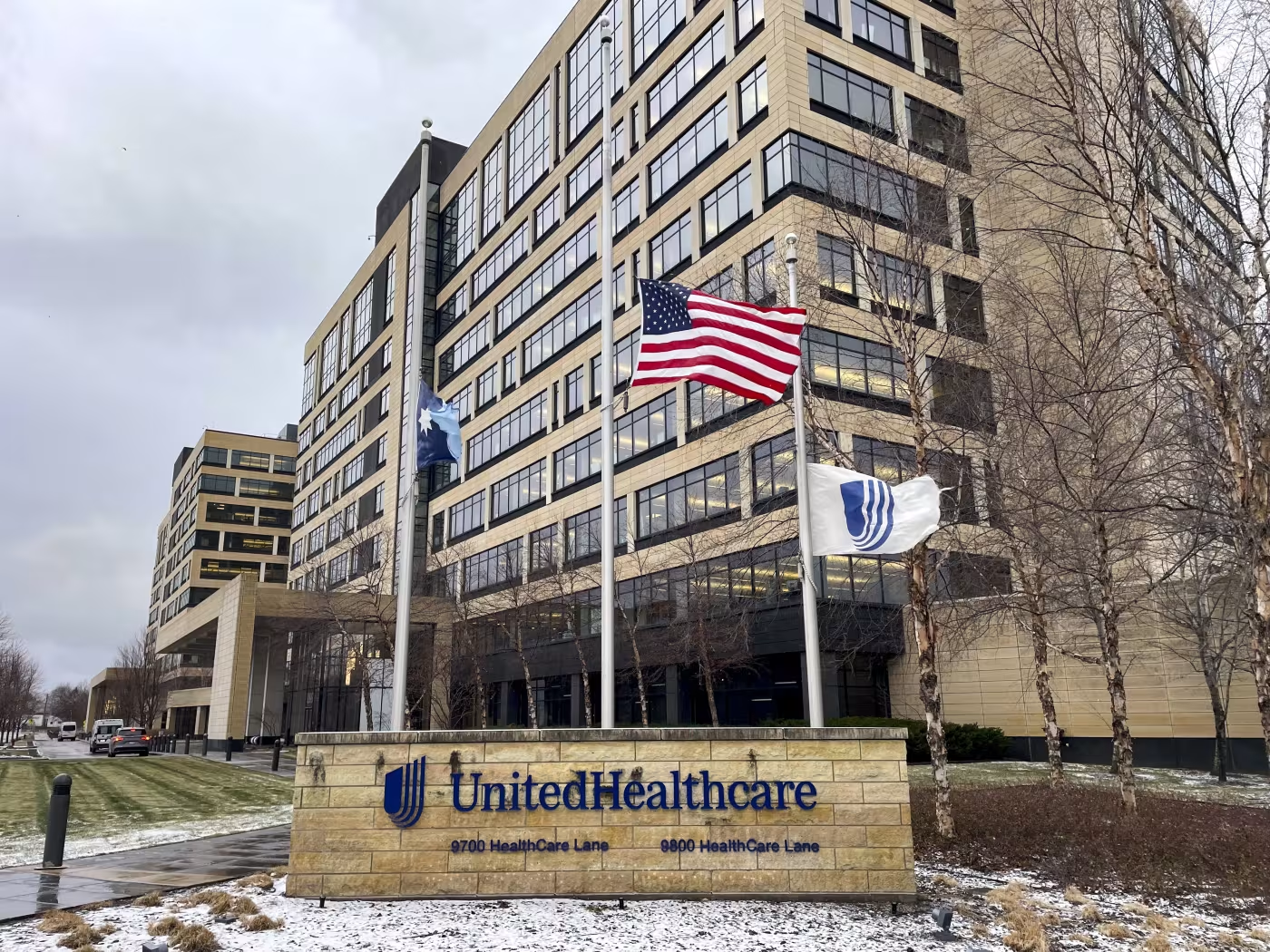
    • Beckers Payer Issues and Fierce Healthcare report on UnitedHealthcare’s second quarter financial results announced today.
      • BPI – “UnitedHealth Group posted $4.2 billion in net income during the second quarter of 2024, a 23% decline year over year.
      • “The company said it has restored the majority of affected Change Healthcare services and has provided more than $9 billion in advance funding and loans to providers. The total full year impact of the breach is estimated at $1.90 to $2.05 per share, with the company raising the estimated total cost of the attack to around $2.45 billion.”
      • FH – “UnitedHealth saw an elevated medical loss ratio in Q2, and executives pointed to the Change Healthcare cyberattack as a key factor.
      • “UnitedHealthcare had an MLR of 85.1% in the second quarter, compared to 83.2% in the prior year quarter. The insurer called out multiple elements that contributed to the elevated ratio in its earnings call on Tuesday morning. For one, UHC CEO Brian Thompson said there’s a clear difference in coding intensity after the insurer ended care waivers offered following the cyberattack.
      • “Amid the cyberattack, UnitedHealth eased prior authorization and utilization management to support cash flow to providers.”
    • Beckers Hospital Review provides details on U.S. News and World Report’s latest U.S. hospital rankings by State and by specialty.
    • pwc reports,
      • “Commercial health care spending growth is estimated to grow to its highest level in 13 years, according to PwC’s newest research into annual medical cost trend. PwC’s Health Research Institute (HRI) is projecting an 8% year-on-year medical cost trend in 2025 for the Group market and 7.5% for the Individual market. This near-record trend is driven by inflationary pressure, prescription drug spending and behavioral health utilization.
      • “HRI is also restating the 2023 and 2024 medical cost trends as higher than previously reported based on the input of health plans we surveyed and their trend experience. This unfavorable trend reflects higher than expected utilization of glucagon-like peptide-1 (GLP-1) drugs as well as higher acuity (higher levels of care) inpatient and outpatient utilization. Inpatient and outpatient utilization were driven by demand from care deferred since the pandemic, which was met by newly created capacity as sites of care shifted to outpatient, professional and ambulatory care settings.
      • “The same inflationary pressure the healthcare industry has felt since 2022 is expected to persist into 2025, as providers look for margin growth and work to recoup rising operating expenses through health plan contracts. The costs of GLP-1 drugs are on a rising trajectory that impacts overall medical costs. Innovation in prescription drugs for chronic conditions and increasing use of behavioral health services are reaching a tipping point that will likely drive further cost inflation.
      • “Meanwhile, cost deflators are not enough to offset cost inflators. The growing adoption of biosimilar medications may provide some relief, while many health plans are looking inward to find opportunities across business operations to generate additional cost savings. Today’s medical cost trend is an urgent call to action for healthcare organizations to rethink their strategies to manage the total cost of care more effectively – a challenge that is inextricably linked to the broader challenge of affordability, defined by the Affordable Care Act as the percentage of a member’s household income used for healthcare expenses.”
    • FEHBlog note — OUCH!
    • MedCity News discusses the improving state of the digital health fundraising market.

    Monday Roundup

    Photo by Sven Read on Unsplash

    From Washington, DC,

    • Roll Call lets us know,
      • “Senate Appropriations Committee leaders have agreed to add $34.5 billion in emergency spending to their fiscal 2025 bills on top of levels agreed to in last year’s debt limit negotiations, sources familiar with the talks said Monday. 
      • “Under the pact between Senate Appropriations Chair Patty Murray, D-Wash., and ranking member Susan Collins, R-Maine, defense accounts would receive an extra $21 billion in emergency spending while nondefense programs would get $13.5 billion.” 
    • Taking a gander at reginfo.gov led the FEHBlog to discover that on July 1, the final version of the simply infeasible federal mental health parity rule changes was submitted to OIRA for its review.
    • In yesterday’s post, the FEHBlog called attention to the new CMS GUIDE program. The post noted that program details would be released in early July. What do you know? Those details were posted today. The American Hospital News tells us,
      • “The Centers for Medicare & Medicaid Services July 8 announced over 400 participants in a new model focused on improving dementia care. The Guiding an Improved Dementia Experience (GUIDE) Model began July 1 and seeks to reduce strain on unpaid caregivers as well as offer care coordination and management, caregiver education and support, and respite services. CMS will also test an alternative payment for participants delivering key support services to people with dementia, including comprehensive, person-centered assessments and care plans, care coordination, and 24/7 access to a support line. People with dementia and their caregivers will have access to a care navigator to help them access services and support, including clinical services and non-clinical services such as meals and transportation through community-based organizations.”
    • The HHS Inspector General posted an impact brief on Medicare Advantage program fraud involving its risk adjustment program. The Wall Street Journal published an article the same type of fraud today.
    • STAT News informs us,
      • “The Biden administration has appealed a decision in which a federal court jury last year sided with Gilead Sciences over the rights to a pair of groundbreaking HIV pills — and at least $1 billion in royalties may be at stake.
      • “At issue is a battle over patents for Truvada and a newer, upgraded version called Descovy — two highly effective and lucrative medications — as well as the role played by the federal government in making it possible to prevent transmission of a highly infectious disease that plagued the American public for decades.
      • “The U.S. Centers for Disease Control, which had funded academic research into HIV prevention that later formed the basis for the pills, maintained that Gilead infringed its patent rights. The U.S. Department of Health and Human Services also contended that the company refused to reach a licensing agreement despite several attempts to strike a deal.” * * *
      • “U.S. District Court Judge Maryellen Noreika narrowed the Gilead victory last March when she set aside the jury finding that CDC patents were not infringed. So the appeal filed by the U.S. Department of Justice — on behalf of HHS — refers to the only portion of the jury finding that remains, which is that the patents were invalid.”
    • Per an FDA press release,
      • “Today, the U.S. Food and Drug Administration is advancing its mission of ensuring the public has access to accurate, up-to-date science-based information to inform decisions about FDA-regulated medical products to maintain and improve their health. The agency is providing updated recommendations to empower industry seeking to voluntarily address misinformation about or related to their approved/cleared medical products.” * * *
      • “Specifically, the revised draft guidance, Addressing Misinformation About Medical Devices and Prescription Drugs Questions and Answers, sets out a policy that supports companies that issue certain kinds of internet-based communications (“tailored responsive communications”) to address internet-based misinformation about or related to their approved/cleared medical products when that misinformation is created or disseminated by an independent third party. For example, a company might choose to use this type of communication when a celebrity, healthcare provider or influencer, not acting on behalf of the company, posts false, inaccurate and/or misleading representations of fact about the company’s approved/cleared medical product on social media. Additionally, this revised draft guidance provides companies with many examples that illustrate the types of misinformation found online that a company might choose to address with a tailored responsive communication, along with some considerations relevant to the current digital information environment.”
    • Govexec tells us,
      • “The Office of Personnel Management lost a small modicum of ground in its fight to reduce the backlog of pending retirement claims from federal employees as the agency’s backlog of cases inched back over 15,000.
      • “In June, OPM received 6,919 new retirement requests from departing federal workers, a slight increase over the 6,751 claims it received the previous month. But the agency’s pace in processing those claims fell precipitously, completing only 5,614 claims last month compared to the 8,793 it processed in May.
      • “That deficit led to OPM’s overall backlog of pending claims to climb from 14,035—an eight-year low—in May to 15,340 at the end of June. Consequently, the monthly average processing time for a retirement application ticked up four days, from 60 in May to 64 last month, though measured since the beginning of fiscal 2024, the average processing time has remained static at 61 days for four months running.”
    • The U.S. Preventive Services Task Force is celebrating its 40th anniversary. The FEHBlog is reminded that the FEHB Act will be 65 years old on September 28, 2024.

    From the public health and medical research front,

    • The New York Times reports,
      • “The process for diagnosing a child with autism heavily relies on a parent’s description of their child’s behavior and a professional’s observations. It leaves plenty of room for human error.
      • “Parents’ concerns may skew how they answer questionnaires. Providers may hold biases, leading them to underdiagnose certain groups. Children may show widely varying symptoms, depending on factors like culture and gender.
      • “A study published Monday in Nature Microbiology bolsters a growing body of research that suggests an unlikely path to more objective autism diagnoses: the gut microbiome.
      • “After analyzing more than 1,600 stool samples from children ages 1 to 13, researchers found several distinct biological “markers” in the samples of autistic children. Unique traces of gut bacteria, fungi, viruses and more could one day be the basis of a diagnostic tool, said Qi Su, a researcher at the Chinese University of Hong Kong and a lead author of the study.”
    • The American Medical Association tells us what doctors wish their patient knew about heat stroke.
    • The Wall Street Journal discusses the right and wrong ways for people to snack.
      • “America is a nation of snackers. A lot of us are doing it wrong. 
      • “Noshing outside of traditional mealtimes isn’t inherently bad. A snack can stave off hunger, boost energy, provide important nutrients and keep us from overeating later. But snacking can also lead us to eat extra calories and overdo it on sodium, added sugars and saturated fats, which can raise our risk of heart disease and obesity. 
      • “How to snack better? Reach for food combinations that keep you fuller longer: Pair carbs like apple slices with protein and fats, like peanut butter. Or try yogurt with berries. Then plan your snack times, and watch out for the minefield that is evening snacking.”
    • The Washington Post and Consumer Reports offer information about “an aggressive tick species spreading across the U.S. Lone star ticks don’t spread Lyme disease, but they can transmit other serious diseases and are linked to a mysterious meat allergy. And the threat is growing.”
      • “Lone star ticks have long been firmly established in the Southeastern United States. In recent decades, however, their numbers have been increasing in Midwestern and Northeastern states. Between 2017 and 2021, according to CDC data, nearly half of reported ehrlichiosis cases were in five states: Arkansas, Missouri, New York, North Carolina and Tennessee.”
    • The CDC has posted FAQs on infertility. “This page has definitions and frequently asked questions related to infertility. It has important information about infertility, including common misconceptions, risk factors, and treatment options.”
    • Beckers Hospital Review points out,
      • “GLP-1 drugs such as Ozempic and Wegovy may lower the risk of developing certain obesity-related cancers, according to a new study from researchers at Case Western Reserve University in Cleveland. 
      • “Researchers found people with type 2 diabetes who were being treated with the medications were significantly less likely to develop 10 of 13 obesity-associated cancers than those taking insulin, according to the findings published July 5 in JAMA Network Open. The retrospective study is based on an analysis of the medical records of over 1.6 million type 2 diabetes patients from 2005 to 2018.
      • “The risk was reduced by more than half for gallbladder cancer, meningioma, pancreatic cancer and hepatocellular carcinoma. Esophageal, colorectal, endometrial, ovarian, multiple myeloma and kidney were among the other cancers for which there was a significant risk reduction. The study did not find a difference in cancer risk reduction among those treated with GLP-1s compared with those taking metformin, an older diabetes drug. 
      • “In an interview with Bloomberg, Arif Kamal, MD, chief patient officer at the American Cancer Society and who was not involved in the research, called the new evidence on GLP-1s “compelling.”
    • Per Fierce Pharma,
      • “In examining the electronic records of more than 18,000 overweight or obese adults in the United States, health data analytics company Truveta found that Lilly’s tirzepatide helped patients lose more weight than Novo’s semaglutide, with the effects growing over time.
      • “Results of the study, which looked at data from May of 2022 and September of 2023, were published Monday in the JAMA Internal Medicine monthly review.
      • “”After use of tirzepatide for three months, patients lost an average of 5.9% of their body weight compared to 3.6% for semaglutide. Over a year’s time, those on tirzepatide lost an average of 15.3% of their body weight compared to 8.3% for semaglutide users.
      • Additionally, tirzepatide patients were much more likely to lose 15% of their body weight than those using semaglutide. While 42% of those on tirzepatide reached the benchmark after one year of treatment, only 18% of those on semaglutide could say the same. 
      • “Lilly’s tirzepatide is the active ingredient found in its diabetes product Mounjaro and its obesity treatment Zepbound, while Novo’s semaglutide is the compound used to make its diabetes blockbuster Ozempic and its obesity follow-on Wegovy.
      • “Importantly, the Truveta study looked at the drugs that are approved for diabetes. The authors noted that “future studies are needed to compare versions labeled for weight loss.”
    • Per an NIH press release,
      • “A series of experiments with highly pathogenic H5N1 avian influenza (HPAI H5N1) viruses circulating in infected U.S. dairy cattle found that viruses derived from lactating dairy cattle induced severe disease in mice and ferrets when administered via intranasal inoculation. The virus from the H5N1-infected cows bound to both avian (bird) and human-type cellular receptors, but, importantly, did not transmit efficiently among ferrets exposed via respiratory droplets. The findings, published in Nature, suggest that bovine (cow) HPAI H5N1 viruses may differ from previous HPAI H5N1 viruses and that these viruses may possess features that could facilitate infection and transmission among mammals. However, they currently do not appear capable of efficient respiratory transmission between animals or people.”
    • MedPage Today lets us know,
      • “Extended-release 7-day injectable buprenorphine was safe and tolerable for most patients who had minimal-to-mild opioid withdrawal, a nonrandomized trial found.
      • “Among 100 adult patients with minimal-to-mild opioid withdrawal scores who were given a 24-mg dose of extended-release buprenorphine, only 10 people (10%, 95% CI 4.9%-17.6%) saw a 5-point or greater jump in withdrawal symptoms within 4 hours of injection, reported Gail D’Onofrio, MD, of the Yale School of Medicine in New Haven, CT, and colleagues.” * * *
      • “The study examined whether patients with untreated opioid use disorder (OUD) and minimal-to-mild withdrawal could tolerate a 7-day dose of buprenorphine. Patients with OUD typically aren’t treated with medication until they are in significant withdrawal, due to fear of precipitated withdrawal. For that reason, “[n]o one has ever even attempted to give buprenorphine in that [0 to 7] range,” D’Onofrio said.” * * *
      • “[This is a real game-changer for emergency physicians and clinicians, even in the clinic, who would be able to induce people on buprenorphine much earlier than they previously could have,” D’Onofrio said.”

    From the U.S. healthcare business front,

    • The Wall Street Journal reports,
      • “Eli Lilly LLY has agreed to buy biopharmaceutical company Morphic Holding MORF for $3.2 billion in a deal that bolsters the drugmaker’s immunology pipeline.
      • “Eli Lilly on Monday said it would pay $57 a share for Morphic, a 79% premium to Friday’s closing price of $31.84 for the Waltham, Mass., company.
      • “Morphic is developing therapies for the treatment of serious chronic diseases, with a lead program targeting the inflammatory bowel diseases ulcerative colitis and Crohn’s disease.
      • “Eli Lilly late last year won U.S. Food and Drug Administration approval of its Omvoh treatment for moderately to severely active ulcerative colitis in adults.
      • “Indianapolis-based Eli Lilly said it expects to complete the acquisition, which isn’t subject to any financing conditions, in the third quarter.”
    • Modern Healthcare relates,
      • “More than half of people surveyed would feel just as safe getting hospital-level care at home as they would in a facility, according to the University of Southern California’s Schaeffer Center for Health Policy and Economics.
      • “Healthcare systems across the country are placing big bets on hospital-at-home programs, pushing access to more rural communities and lobbying state Medicaid programs to reimburse for the service. A Centers for Medicare and Medicaid Services waiver reimbursing for acute care at home expires at the end of this year, but bipartisan members of Congress are backing legislation that would provide Medicare reimbursement for another five years. More than 330 hospitals across 37 states offer hospital-level care at-home programs through the CMS Acute Hospital Care at Home waiver.” * * *
      • “The survey did not require participants to have prior experience with hospital-level care at home or knowledge of the service. It did provide participants with a brief explanation of how hospital-at-home programs operate.”
    • Per Fierce Healthcare,
      • “A recent proposal to report prior authorization to insurance plans through CPT codes was withdrawn at the eleventh hour when its physician advocate made an unexpected discovery: For certain codes and in very narrow circumstances, the prior auth requirements were already in place.
      • “Alex Shteynshlyuger, M.D., director of urology with New York Urology Specialists, had previously brought forward a time-based proposal that would ensure physicians are compensated for time spent on prior auth claims. He believed the changes would also reduce the number of claim requirements imposed by plans and limit the amount of appeals and could lead to better patient outcomes.
      • “Following the proposal, however, the American Medical Association (AMA) informed Shteynshlyuger that prior authorization is already explicitly mentioned in official procedure descriptions for half a dozen CPT codes. This required Shteynshlyuger to withdraw the proposal so he could revise and resubmit at a later date.
      • “Each CPT code includes a short description detailing the type of visit or examination. Longer descriptions—where the prior auth mentions were contained—are also stored in databases that can be purchased, but those are rarely encountered.
      • “As a matter of fact, I’ve never seen the long description in my lifetime,” said Shteynshlyuger.”
    • and
      • “Nearly 5 million fewer people delayed care from 2019 to 2022, a study from the Urban Institute with funding from the Robert Wood Johnson Foundation revealed.
      • “The study shows 4.75 million non-elderly Americans skipped necessary medical care, dropping from 12.1% to 9.7% in 2022.
      • “For families below 138% of the federal poverty line, there was a 27% reduction in cost barriers. A 19% reduction was evident for families between 138% and 249% of the federal poverty line.
      • “Researchers say these outcomes are a direct result of the Medicaid continuous coverage requirements and enhanced tax credits.
      • “Our findings show significant improvements in health insurance coverage and healthcare access under federal and state policy changes enacted during the public health emergency,” said Michael Karpman, principal research associate at the Urban Institute, in a statement. “The continued unwinding of the Medicaid continuous coverage requirement and the potential expiration of enhanced Marketplace subsidies after 2025 could make these gains in coverage and access difficult to sustain.”

    Midweek Update

    From Washington, DC,

    • The Michael J. Fox Foundation tells us
      • “On July 2, 2024, President Biden signed the National Plan to End Parkinson’s Act into law.”
      • “Now that the bill has been signed into law, the U.S. Department of Health and Human Services (HHS) will establish the National Parkinson’s Project, a first-ever federal initiative to prevent and cure Parkinson’s disease, treat its symptoms and slow or stop its progression. It will also establish a federal advisory council that will provide recommendations and guidance for making progress against Parkinson’s disease and atypical parkinsonisms.”
    • A Labor Department press release informs us,
      • “The U.S. Department of Labor has released a proposed rule with the goal of protecting millions of workers from the significant health risks of extreme heat. If finalized, the proposed rule would help protect approximately 36 million workers in indoor and outdoor work settings and substantially reduce heat injuries, illnesses and deaths in the workplace.”  * * *
      • “The proposed rule would require employers to develop an injury and illness prevention plan to control heat hazards in workplaces affected by excessive heat. Among other things, the plan would require employers to evaluate heat risks and — when heat increases risks to workers — implement requirements for drinking water, rest breaks and control of indoor heat. It would also require a plan to protect new or returning workers unaccustomed to working in high heat conditions.” * * *
      • “Employers would also be required to provide training, have procedures to respond if a worker is experiencing signs and symptoms of a heat-related illness, and take immediate action to help a worker experiencing signs and symptoms of a heat emergency. ” 
    • An HHS press release adds,
      • “FEMA and the U.S. Department of Health and Human Services (HHS) are encouraging everyone to plan and act now to protect themselves against the dangers of heat-related illness and deaths. Extreme heat is the leading cause of death among all weather-related hazards in the U.S., but this health impact is largely preventable. The Centers for Disease Control and Prevention (CDC) estimates that at least 1,220 people in the U.S. are killed by heat events each year. Older adults, young children, and those individuals with health conditions, such as asthma or diabetes are at a greater risk for heat-related illnesses.” * * *
      • A Full List of Heat and Health Resources That Can Help: The list can be found at 2024 HHS Resources on Heat and Health – PDF.
    • The Washington Post lets us know,
      • “The Food and Drug Administration has decided to revoke its authorization for the use of a stabilizer for fruity and citrus-flavored food and beverages, known as brominated vegetable oil (BVO), because it is unsafe.
      • “The agency concluded that the intended use of BVO in food is no longer considered safe,” the agency said in a statement Tuesday. It added that based on studies conducted in collaboration with the National Institutes of Health, it found that BVO has “the potential for adverse health effects in humans.”
      • “The vegetable oil is modified with bromine, a natural chemical element that can be used as an alternative to chlorine in swimming pools and is often used as a fire retardant. It has also been used in sedatives.”
      • “BVO is an ingredient in a handful of sports drinks and sodas, but according to the FDA, “today, few beverages in the U.S. contain BVO.” Sugary soda consumption in the United States has also been falling for more than two decades. Perhaps the best-known drink in the United States that still contains BVO is Sun Drop citrus soda, as well as some store-brand orange, pineapple and citrus-flavored sodas from Giant, Food Lion, Walmart and others.”
    • Reg Jones, writing in FedWeek, discusses the leave without pay program for federal employees.
    • BioPharma Dive points out five FDA decisions that may be issued in the third quarter of 2024.
    • Federal News Network reports,
      • “With a net gain of more than 80,000 civilian employees during fiscal 2023, the federal workforce posted yet another year of growth.
      • “Between 2019 and 2023, more than 140,000 employees joined the civil service, an increase of about 7%, according to data that the non-partisan, non-profit Partnership for Public Service compiled and released this week.
      • “The majority of the growth in the past couple of years occurred in 2023 alone — the federal workforce grew by 4% in just that one year, the Partnership said. The latest increase brings the grand total of full-time federal employees to just over 2 million.
      • “These professionals play a crucial role in protecting our national security, promoting public health, driving economic development and more,” the Partnership wrote in its data report, published Monday. “They are a fundamental part of a well-functioning government.”

    From the public health and medical research front,

    • The Washington Post reports,
      • “Three years after President Biden hoped July 4, 2021, would mark the country’s independence from covid, the coronavirus is still here as new variants drive yet another summer uptick.
      • “The country is indeed free from the waves of mass death that once overwhelmed hospitals and morgues, as well as policies restricting how Americans had fun and went to school and work.
      • ‘But just as the American Revolution didn’t fully eradicate the British threat (see: the War of 1812), the coronavirus remains a public health issue, inflicting milder but disruptive illness on most people and posing a greater danger to the medically vulnerable.” * * *
      • “Experts say wastewater data is best interpreted as a way of understanding which way the virus is trending.
      • “We have consistently seen over the past three years that there is a winter surge and there is also a summer surge,” Marlene Wolfe, program director for WastewaterSCAN, a private initiative that tracks municipal wastewater data, and an assistant professor of environmental health at Emory University’s Rollins School of Public Health. “Right now, we are waiting to see whether we actually will see a downturn over the next couple of weeks and we’ve hit the peak here, or whether those levels will actually go up.”
    • GovCIO notes,
      • “Health policy officials are targeting new elements for U.S. Core Data for Interoperability (USCDI) standards to help researchers and developers speak the same language for technology around cancer care and treatment.
      • “How do we think about these additional data elements to solve particular use cases so that our federal agency partners can programmatically build on that for the programs that they have and it allows everyone to be tethered and based on what the health care delivery system already supports?” National Coordinator for Health IT Micky Tripathi, who also recently assumed a dual role as acting chief AI officer at the Department of Health and Human Services, said at a May summit.
      • “Health agencies are building a pipeline of cancer data elements for USCDI. Tripathi said ONC partners have already agreed upon the first set of data elements that aligns with reporting requirements. Agencies involved include ONC, the National Cancer Institute (NCI), the Food and Drug Administration (FDA), the Centers for Disease Control and Prevention (CDC), and the Centers for Medicare and Medicaid Services (CMS).”
    • STAT News discloses,
      • “A new observational study on Wednesday reported for the first time a potential link between Novo Nordisk’s GLP-1 drugs Ozempic and Wegovy and an eye condition that can cause vision loss.
      • “After hearing anecdotes of patients on the diabetes and obesity drugs experiencing nonarteritic anterior ischemic optic neuropathy, or NAION, researchers at Massachusetts Eye and Ear analyzed data from a registry of patients at their institution to see if there was a broad trend.
      • “Among 710 patients with type 2 diabetes, there were 17 cases of NAION in patients prescribed semaglutide (the scientific name of both drugs). This translated to a cumulative rate of 8.9% over three years. That compares with six cases in patients prescribed non-GLP-1 diabetes drugs, calculated as a cumulative rate of 1.8%. Through statistical analyses, the researchers estimate that there was a 4.28 times greater risk of developing the condition in patients prescribed semaglutide, according to the study, published in JAMA Ophthalmology.
      • “Studying 979 patients who had overweight or obesity, researchers found 20 cases of NAION in people prescribed semaglutide, calculated as a cumulative rate of 6.7%. In comparison, there were three cases in people prescribed non-GLP-1 obesity drugs, calculated as a cumulative rate of 0.8%. The researchers estimate that there was a 7.64 times greater risk of developing the condition in patients prescribed semaglutide.”
    • Per a National Institutes of Health press release,
      • “Results from a large study supported by the National Institutes of Health show that protein analyses taken during the first trimester of pregnancy did not improve predictions for identifying people at risk for experiencing conditions related to having high blood pressure during pregnancy. Since there is an urgent need to better predict people at risk for developing conditions related to having high blood pressure during pregnancy, also called hypertensive disorders of pregnancy, researchers have been studying if proteins taken from blood or urine samples could provide this insight. This study provides the largest data to date based on using protein analyses from blood samples during early pregnancy.
      • “For this study, researchers analyzed 6,481 proteins from 1,850 study participants who had a first pregnancy between 2010 and 2013. Participants provided a blood sample during the study enrollment and had study check-ins during their second and third trimesters, after delivery, and two to seven years after their pregnancy. The protein analysis was used in different modeling equations to assess if proteins or their combinations with clinical data, such as maternal age and cardiovascular disease risks, during early pregnancy could provide clues for the 753 participants who experienced a hypertensive disorder of pregnancy. The conditions assessed included gestational hypertension, marked by high blood pressure that typically develops after 20 weeks of pregnancy, and preeclampsia, a significant rise in blood pressure after 20 weeks of pregnancy that can damage organs and is marked by elevated levels of protein in the urine.
      • “The prediction models, which included three different types of assessments, did not significantly improve risk predictions for these events. If the models did show predictive ability, they did not drastically improve criteria physicians currently use to assess risks. These criteria currently include risk factors such as having obesity, diabetes, high blood pressure, or a baby later in life.”
    • The NEJM Catalyst offers an article
      • “highlight[ing] the persistent challenges and opportunities surrounding the impact of value-based care (VBC) arrangements on patient safety, despite the widespread adoption of VBC models. In the context of recent declines in patient safety, the authors contend that this crucial component of health care value has not received sufficient attention in most VBC contracts.
      • “The authors propose strategies for how payers can integrate patient safety measures into VBC contracts and align financial incentives with quality performance, drawing on the example of Elevance Health’s initiative, the Quality-In-Sights: Hospital Incentive Program. In this program, patient safety measures comprise 80% of the overall score.
      • “The program suggests that a sustained and productive collaboration between payers and providers offers potential for integrating patient safety measures into VBC models to drive clinical improvements and financial efficiencies, but it requires commitment from all stakeholders in the health care ecosystem.”
    • Per MedPage Today,
      • “E-cigarette use among individuals eligible for [USPSTF recommended] lung cancer screening was independently associated with a reduced likelihood of screening, a cross-sectional study of U.S. adults revealed.” * * *
      • “Former smokers who use e-cigarettes remain at increased risk of lung cancer and should be targeted by interventions to improve adherence to LCS [lung cancer screening],” Wang and co-authors concluded.”

    From the U.S. healthcare business front,

    • STAT News reports,
      • “More than two dozen Medicare Advantage insurers received higher quality marks for 2024, based on a STAT review of new data released July 2 by the federal government.
      • “Ten health insurance companies, including UnitedHealth Group’s UnitedHealthcare and CVS Health’s Aetna, received critical upgrades in some of their offerings that will allow them to earn hundreds of millions of dollars in extra taxpayer-funded bonuses.”
    • Beckers Payer Issues offers more details on the plans that got a boost to five stars due to the CMS action.
    • Beckers Payer Issues also informs us,
      • “Walmart has held talks with Humana about a potential sale of its shuttered Walmart Health clinics, Fortune reported July 2. 
      • “Multiple sources familiar with the situation told Fortune that Walmart has held discussions with potential buyers for its clinics, including Humana, the only potential buyer named in the report. It is unclear if talks are ongoing, according to the publication.”
    • The Wall Street Journal reports,
      • GSK struck a deal to buy the rights to CureVac’s CVAC -6.59%decrease; red down pointing triangleCovid-19 and flu vaccines for up to 1.45 billion euros ($1.56 billion), in a bid to regain ground lost to newcomers to the vaccine market during the pandemic.
      • “The deal bolsters the U.K. pharmaceutical company’s vaccine portfolio at a time when bird-flu concerns are boosting demand. Vaccines accounted for roughly a third of GSK’s sales last year.
      • “GSK’s deal with CureVac follows in the footsteps of a vaccine licensing agreement between Sanofi and Novavax in May valued at up to $1.4 billion.
      • “Both GSK and Sanofi were among the biggest makers of vaccines before the pandemic, but fell behind rivals and new entrants that launched shots based on messenger RNA, or mRNA, technology as Covid-19 turbocharged demand. The mRNA-based vaccines that were widely used to combat Covid-19 use messenger ribonucleic acid instead of an actual bacteria or virus in the production process.”
    • Plan Advisor lets us know,
      • “Many employers are spending money on benefits that do not match the objectives of their workforce, based on a recent survey by Payroll Integrations, which connects payroll provider programs with employers.
      • “According to Payroll Integrations’ recent survey, summarized in the 2024 State of Employee Financial Wellness Report, only 18% of workers expressed interest in the programs their employers are now funding. While 41% of employers indicated they intend to increase their spending on financial education and planning services, workers would rather see their employers make larger investments in retirement plans (43%) and health insurance (54%).
      • “Employees are feeling the financial pressure from inflation, higher costs of living and the rise of insurance costs and now, more than ever, employers feel a responsibility to step in to help support their financial well-being,” said Doug Sabella, Payroll Integrations’ CEO, in a release that accompanied the report. “But there’s a clear disconnect between what employers think employees want in terms of financial wellness offerings and benefit programs and what employees feel they need to make a difference.”
      • “While workers in Generation Z want their companies to make lifestyle benefits top priority, older generations place more emphasis on health care and retirement, Payroll Integrations found. Baby Boomers ranked pensions as the most essential benefit, Gen X and Gen Y workers selected additional compensation, Millennials prioritized health savings accounts, and Gen Z employees picked lifestyle compensation.”

    Tuesday’s Tidbits

    Photo by Patrick Fore on Unsplash

    From Washington, DC,

    • Fierce Healthcare reports,
      • “The House Ways and Means Committee advanced bipartisan legislation on Thursday [June 28] that would grant Medicare coverage to novel medical technologies for four years while the Centers for Medicare & Medicaid Services (CMS) makes a national coverage determination. 
      • “The new version of the bill that was voted on by Ways and Means reduces the cost of the bill by 75% of the version that the House Energy and Commerce Committee voted favorably on back in November. It allocates $10 million per year over five years to CMS for the project. 
      • “The Ensuring Patient Access to Critical Breakthrough Products Act of 2024, if passed, would give any device designated as “breakthrough” from the Food and Drug Administration (FDA) four years of Medicare coverage. Co-sponsor of the bill Rep. Susan DelBene, R-Washington, said during the hearing that it takes CMS an average of more than five years to make a national coverage determination for FDA breakthrough devices.” 
    • BioPharma Dive lets us know,
      • “The Food and Drug Administration on Tuesday approved a new Alzheimer’s disease drug from Eli Lilly, several weeks after a panel of independent experts unanimously recommended its clearance.
      • “The drug, which Lilly will sell as Kisunla, is designed to slow Alzheimer’s progression by clearing from the brain a toxic, sticky protein called amyloid that scientists have long seen as a root cause of the disease. It’s the third of its kind to reach market, following similar medicines from Eisai and Biogen.
      • “In approving Kisunla, the FDA OK’d use in a roughly similar patient population as Eisai and Biogen’s Leqembi. Labeling for the drug, also known as donanemab, recommends doctors start treatment in patients who have mild cognitive impairment or dementia due to Alzheimer’s, and who have confirmed amyloid pathology.
    • Fierce Healthcare points out,
      • “Accountable care organizations concerned they would be held responsible for bad actors exploiting the Medicare system can breathe a sigh of relief.
      • “The Centers for Medicare & Medicaid Services (CMS) stepped in Friday [June 29] and proposed a rule that ensures they are safe from unfair financial ramifications.
      • “The rule (PDF), if finalized, would exclude payment amounts for certain intermittent urinary catheters submitted from suppliers used for assessing performance year 2023 financial performance of Medicare Shared Savings Program (MSSP) ACOs. Benchmarks will be set for 2024, 2025 and 2026, the agency said in a news release.”
    • The Washington Post offers background on the underlying fraud.
      • “Medicare officials this week separately confirmed that 11 companies were collectively responsible for $3.16 billion in questionable bills for urinary catheters between January 2023 and March 2024, saying the agency had successfully blocked payments to the companies.
      • “The ACOs said they identified 12 companies engaged in the alleged fraud, which they say stretches back into late 2022 or even earlier.
      • “Gaus, a 50-year veteran of the health-care industry, said he was not aware of Medicare ever before overhauling its payment rules in response to alleged fraud — a conclusion shared by several current Medicare officials who spoke with The Post. He warned that similar schemes are likely on the horizon.
      • “These fraudsters can get patient IDs, provider IDs, and maybe use AI to glean through these massive files of patient data that they collect from everywhere,” Gaus said.”
      • FEHBlog note: The Post broke the fraud story back in February 2024.}
    • KFF discusses the health policy implications of the June 29 Supreme Court decision dispensing with the Chevron doctrine. The article concludes,
      • “Short of unlikely Congressional action to restore Chevron deference, the Supreme Court in a single decision has shifted many policy decisions from agency technical experts to federal judges, with implications for health policy that will reverberate for years to come.”
      • FEHBlog opinion — The Supreme Court decision does not object to agency fact finding, which is an appropriate field for agency technical experts. The Supreme Court held that judges, not agency technical experts, should interpret the law (see Article III of the U.S. Constitution).
    • Following any decision, the Supreme Court can issue what’s colloquially known as a GVR order in related cases. GVR stands for granting certiorari, vacating the lower court judgment, and remanding for consideration in light of a particular recent decision. Yesterday, the Supreme Court posted an orders list which includes ten Chevron doctrine related GVR decisions in cases from the U.S. Court of Appeals for the D.C. Circuit (several to that Court), plus the Fourth, Fifth, Eighth, Ninth, and Eleventh Circuits. Consequently, we will have a lot of appellate decisions interpreting Loper Bright Enterprises v. Raimondo, 603 U. S. _ (2024) before long.
    • Per an HHS press release,
      • “Following the Supreme Court’s decision in Moyle v. United States, U.S. Department of Health and Human Services Secretary Xavier Becerra and the Centers for Medicare & Medicaid Services (CMS) Administrator Chiquita Brooks-LaSure sent a letter to hospital and provider associations across the country today reminding them that it is a hospital’s legal duty to offer necessary stabilizing medical treatment (or transfer, if appropriate) to all patients in Medicare-participating hospitals who are found to have an emergency medical condition. CMS also announced that the investigation of EMTALA complaints would proceed in Idaho while litigation continues in the lower courts. * * *
      • “In 2022, CMS issued guidance – PDF to reaffirm that EMTALA requires providers offer necessary stabilizing care for patients suffering emergency medical conditions, which might include abortion care in certain situations. Today’s letter reinforces previous letters from Secretary Becerra and Administrator Brooks-LaSure to hospital and provider associations reminding them of their obligations under EMTALA.”
    • The Centers for Medicare Services posted version 7.2 of the Section 111 reporting guidance for group health plan users today.

    From the public health and medical research front,

    • Beckers Hospital Review informs us,
      • “Hospitals across the country are finalizing staffing plans and issuing public warnings on fireworks safety ahead of the July Fourth holiday, when an average of around 91,000 patients visit emergency departments. 
      • “We are entirely staffed up for both the Fourth of July as well as the 5th of July,” Aekta Miglani, MD, medical director of the emergency department at Strong Memorial Hospital in Rochester, N.Y., told CBS affiliate WROC. “Every year we work really closely with our trauma division who we’re lucky to collaborate with on a regular basis, but Fourth of July is one of those holidays where we’ll be working [together] my guess is more frequently than others.” 
      • “On average, emergency departments see nearly 45,000 people daily on July 4 and 5, according to a Pew Research Center analysis of injury data from 2000 to 2018. In 2022, fireworks were involved in an estimated 10,200 injuries treated across hospital emergency departments, though physicians believe that number is much greater, since not everyone seeks care.” 
    • The Wall Street Journal compares the two FDA-approved Alzheimer’s Disease drugs – Kisunla Leqembi.
    • STAT News tells us,
      • “As the H5N1 bird flu outbreak in dairy cows enters its fourth month, the Centers for Disease Control and Prevention is taking steps to ramp up the nation’s capacity to test for the virus in people.
      • “In a call with reporters Tuesday, Nirav Shah, the CDC’s principal deputy director, emphasized that the risk to the general public remains low at this time. But given that the virus is showing no signs of slowing its push deeper into the U.S. cattle population — threatening to create lasting risks to dairy workers and giving it more chances to evolve in ways that make it better at spreading to and among humans — the agency is looking to increase the number and types of tests that can effectively detect H5N1 infections in people. * * *
      • “On Tuesday, the federal government also announced plans to support the development of messenger RNA-based pandemic influenza vaccines, including those that target H5 and H7 avian influenza viruses. BARDA, the Biomedical Advanced Research Development Authority, awarded Moderna $176 million to accelerate clinical testing of its pandemic vaccines, which are expected to enter a Phase 3 trial sometime next year. The U.S. government already has vaccine contracts and stockpiles of H5 vaccines made using other platforms by other manufacturers, including CSL Seqirus and Sanofi.”
    • The Washington Post notes,
      • “Only about 18 percent of eligible Americans were up to date with their lung cancer screenings in 2022, with compliance rates varying by state and region, according to a study published in JAMA Internal Medicine. American Cancer Society researchers analyzed data from the 2022 Behavioral Risk Factor Surveillance System, a population-based, nationwide survey of Americans.
      • “Screening eligibility was determined using 2021 U.S. Preventive Services Task Force criteria, which recommend annual lung cancer screening in high-risk individuals — defined as those with a pack-a-day cigarette habit for 20 years or more who are current smokers or have quit within the past 15 years and are between ages 50 and 80. * * *
      • “Screening can prevent deaths from lung cancer because the disease is “usually easier to treat at early stages,” according to the Centers for Disease Control and Prevention.”
    • The Wall Street Journal relates,
      • “Scientists suspect that one culprit behind your new illness might be the infection you got a couple of years ago. 
      • “The link between new health problems and your past health history appears to be particularly prevalent with Covid. A new Nature Medicine study found that health problems stemming from even mild Covid infections can emerge as many as three years afterward. The study found a greater risk three years later of problems in the gut, brain and lungs, including irritable bowel syndrome, mini-strokes and pulmonary scarring.
      • “This is different from what most people think of as “long Covid,” the debilitating chronic condition that can include fatiguebrain fog and racing heartbeat. Instead, the latest study has found an increased risk of new health conditions—things you probably wouldn’t think of as related to a prior illness—developing years later.”
      • FEHBlog note — The article states that a similar phenomenon occurred after the Spanish flu epidemic of 1918.
    • The National Cancer Institute posted new cancer information highlights today.
    • The National Institutes of Health announced,
      • “Scientists at the National Institutes of Health (NIH) have uncovered a brain circuit in primates that rapidly detects faces. The findings help not only explain how primates sense and recognize faces but could also have implications for understanding conditions such as autism, where face detection and recognition are often impaired from early childhood. The newly discovered circuit first engages an evolutionarily ancient part of the brain called the superior colliculus, which can then trigger the eyes and head to turn for a better look. This better view enables different brain areas in the temporal cortex to engage in more complex facial recognition. The study was published in the journal Neuron.
      • “Quick recognition of faces is a key skill in humans and other primates,” said Richard Krauzlis, Ph.D., of NIH’s National Eye Institute (NEI) and senior author of the study. “This newly discovered circuit explains how we’re able to quickly detect and look at faces, even if they first show up in the peripheral visual field where visual acuity is poor. This circuit could be what spotlights faces to help the brain learn to recognize individuals and understand complex facial expressions, helping us acquire important social interaction skills.”
    • The American Medical Association tells us what doctors wish their patients knew about kidney stones.
    • The Institute for Clinical and Economic Review announced,
      • “posting its revised Evidence Report assessing the comparative clinical effectiveness and value of imetelstat (Rytelo, Geron Corporation) for the treatment of anemia in myelodysplastic syndrome (MDS).  
      • “Patients that have anemia related to MDS may have to plan around frequent blood transfusions, which can significantly affect their daily activities,” said ICER’s Chief Scientific Officer and Director of Health Technology Assessment Methods and Engagement, Dan Ollendorf, PhD, MPH. “Imetelstat is a new treatment option for adults with low-to-intermediate MDS and transfusion-dependent anemia. While available clinical evidence suggests that imetelstat may reduce or eliminate the need for transfusions, its impact on the severe fatigue that often accompanies MDS anemia is less clear. There is no evidence to suggest that imetelstat reduces the progression or trajectory of MDS itself, and there are some key side effects of concern. As a result, we view the evidence as promising but inconclusive, and the current list price is not at all aligned with the modest benefit we do see.”
      • “This Evidence Report will be reviewed at a virtual public meeting of the CTAF on July 19, 2024. The CTAF is one of ICER’s three independent evidence appraisal committees comprising medical evidence experts, practicing clinicians, methodologists, and leaders in patient engagement and advocacy.”

    From the U.S. healthcare business front,

    • Per Fierce Healthcare,
      • “A new analysis from KFF digs into insurers’ financial performance across multiple markets and found the highest gross margins in the Medicare Advantage (MA) space.
      • “At the end of 2023, gross margins per enrollee in MA were $1,982 on average compared to $1,048 in the individual market. Medicaid was the lowest at $753 in gross margin per enrollee, and group plans fell in the middle at $910. Gross margins are a notable indicator for financial performance, though they’re not necessarily indicative of profitability as they do not account for administrative costs or tax liabilities.
      • “Gross margins in MA were similar in 2023 to those recorded in the 2022 version of the analysis, according to KFF. In 2022, MA plans averaged $1,977 per enrollee. This is despite concerns from multiple major players in this space about a spike in utilization over the course of 2023.
      • “Across most markets, gross margins have been relatively stable in recent years, though they have declined somewhat from spikes that occurred in 2020 during the initial phase of the COVID-19 pandemic,” the researchers wrote.”
    • Beckers Payer Issues lets us know,
      • “Humana provides the best customer experience to its members, according to Forrester’s “U.S. Health Insurers Customer Experience Index Rankings” for 2024.
      • “The June 17 ranking shared with Becker’s found that customer satisfaction with health insurers is on the decline, with half of the named insurers seeing lower scores compared to last year and none with improved scores. The industry’s average CX Index score dropped 2.7 points, a third straight year of declines. Average scores peaked at 70.2 out of 100 in 2021 and declined to 66.6 in 2024. 
      • [The FEHBlog notes that CareFirst, Kaiser Permanente, and UnitedHealthcare came in second, third, and fourth in the rankings.]
    • and
      • “Several Trinity Health hospitals from coast to coast are now out of network with UnitedHealthcare amid reimbursement disputes between the organizations. * * *
      • “Several of Livonia, Mich.-based Trinity’s ministries and hospitals have been renegotiating contracts with UnitedHealthcare to replace deals that expired at midnight on June 30. Deals have been reached in Florida and Iowa, but negotiations are ongoing for facilities located in Connecticut, Massachusetts, New York, Georgia, Indiana and California.”

    Monday Roundup

    Photo by Sven Read on Unsplash

    Happy Bobby Bonilla Day!

    “The calendar has turned to July 1, and that means one thing: It’s time for Mets fans everywhere to wish each other a Happy Bobby Bonilla Day! Why? On Monday, 61-year-old Bobby Bonilla will collect a check for $1,193,248.20 from the New York Mets, as he has and will every July 1 from 2011 through 2035.”

    The FEHBlog is not a Mets fan. It’s a fun story.

    From Washington, DC,

    • The American Hospital Association News reports,
      • “Changes to the Centers for Medicare & Medicaid Services’ Hospital Price Transparency Rule took effect July 1. Going forward, hospitals are required to use a standard machine-readable file format, which includes some new data elements, such as the negotiated rate methodology and an accuracy and completeness statement.”  
    • Per an HHS press release,
      • “Today, the U.S. Department of Health and Human Services (HHS), through the Health Resources and Services Administration (HRSA), announced more than $200 million to support 42 programs across the country aimed at improving care for older Americans, including those experiencing Alzheimer’s disease and related dementias.”
      • “HRSA’s Geriatrics Workforce Enhancement Program will train primary care physicians, nurse practitioners, and other health care clinicians to provide age-friendly and dementia-friendly care for older adults.  The program also focuses on providing families and other caregivers of older adults with the knowledge and skills to help them best support their loved ones.” * * *
      • “For a full list of award recipients, visit: https://bhw.hrsa.gov/funding/apply-grant/gwep-awardees.”
    • The Washington Post lets us know,
      • “The Federal Trade Commission has opened an investigation into Teva Pharmaceuticals, citing the company’s refusal to take down about two dozen patents for its asthma and COPD inhalers, according to confidential agency documents reviewed by The Washington Post.
      • “The FTC last week sent a civil investigative demand — effectively a subpoena — ordering Teva to provide internal communications, analysis and financial data related to the contested patents listed in a federal registry known as the Orange Book. The agency has argued that pharmaceutical companies such as Teva have wrongly made minor tweaks to their products to keep patents in the Orange Book and fend off generic competition. Teva charges hundreds of dollars for inhalers in the United States that the company sells for a fraction of the price overseas.
      • “Teva has until July 24 to cooperate with the FTC’s demand.”
    • The New York Times reports,
      • “The Supreme Court on Monday gave companies more time to challenge many regulations [under the Administrative Procedure Act], ruling that a six-year statute of limitations for filing lawsuits begins when a regulation first affects a company rather than when it is first issued.
      • “The ruling in the case — the latest in a series of challenges to administrative power this term — could amplify the effect of the blockbuster decision last week overturning a foundational legal precedent known as Chevron deference, which required federal courts to defer to agencies’ reasonable interpretations of ambiguous statutes. That decision imperils countless regulations, particularly on the environment, and advances a longstanding goal of the conservative legal movement.
      • “The vote was 6 to 3, split along ideological lines. Justice Amy Coney Barrett, writing for the conservative majority, rejected the government’s argument that the time limit to sue begins when an agency issues a rule.
      • FEHBlog note — The Supreme Court has completed its October 2023 term.

    From the public health and medical research front,

    • Per an NIH press release,
      • “A Phase 1 trial testing the safety of an experimental nasal vaccine that may provide enhanced breadth of protection against emerging variants of SARS-CoV-2, the virus that causes COVID-19, is now enrolling healthy adults at three sites in the United States. The National Institutes of Health (NIH) is sponsoring the first-in-human trial of the investigational vaccine, which was designed and tested in pre-clinical studies by scientists from NIH’s National Institute of Allergy and Infectious Diseases (NIAID) Laboratory of Infectious Diseases.” * * *
      • “The study aims to enroll 60 adult participants, ages 18 to 64 years old, who previously received at least three prior doses of an FDA-approved or -authorized mRNA COVID-19 vaccine. The trial sites are Baylor College of Medicine, Houston; The Hope Clinic of Emory University, Decatur, Georgia; and New York University, Long Island. Hana M. El Sahly, M.D., at the Baylor College of Medicine Vaccine Research Center, is leading the study.” * * *
      • “More information about the trial is available at clinicaltrials.gov using the identifier NCT06441968.”
    • MedPage Today informs us,
      • “Getting an mRNA COVID-19 shot during the first trimester of pregnancy didn’t lead to an increased risk of major structural birth defects, a multisite retrospective cohort study found.
      • “Major structural birth defects occurred in 1.48% of infants after a first-trimester vaccination and in 1.41% of those without a first-trimester vaccination (adjusted prevalence ratio 1.02, 95% CI 0.78-1.33), Elyse Kharbanda, MD, MPH, of the HealthPartners Institute in Bloomington, Minnesota, and colleagues reported in JAMA Pediatrics.”
      • “Additionally, secondary analyses revealed that there were no significant differences between groups when birth defects were grouped by organ system.
      • “These findings should provide reassurance to pregnant people and their obstetric care practitioners,” the authors concluded.”
    • The Washington Post relates,
      • “People with leg amputations were able to control their prosthetic limbs with their brains in a significant scientific advance that allows for a smoother gait and enhanced ability to navigate obstacles, according to a study published Monday in the journal Nature Medicine.
      • “By creating a connection between a person’s nervous system and their prosthetic leg, researchers at the K. Lisa Yang Center for Bionics at MIT and Brigham and Women’s Hospital paved the way for the next generation of prostheses.
      • “We were able to show the first full neural control of bionic walking,” said Hyungeun Song, first author of the study and a postdoctoral researcher at MIT.”
    • Beckers Hospital Review points out,
      • “The national supply of the cancer drug cisplatin now exceeds demand, FDA Commissioner Robert Cailiff, MD, said June 28. 
      • “The drug, which treats multiple cancers, had been in shortage since February 2023. The shortage occurred after the FDA halted imports from Intas Pharmaceuticals’ manufacturing plant in India in late 2022 due to quality issues. In May 2023, 70% of cancer centers lacked sufficient cisplatin supply, according to a report from the National Comprehensive Cancer Network. 
      • “Low supplies of cisplatin and other cancer drugs have complicated treatments for many patients, with some U.S. cancer centers still struggling to maintain adequate supplies.” 
    • The Washington Post and Consumer Reports identify cures for constipation.
    • BioPharma Dive calls attention to ten clinical trials to watch in the second half of 2024.

    From the U.S. healthcare business front,

    • Mercer explains why healthcare cost – and volatility – has CFOs worried. 
      • “As we head towards the third quarter of 2024, top concerns around health programs are affordability for both employees and employers, the potential impact of GLP-1s on cost trends, and the increased volatility in claims. For fully insured sponsors, claims volatility makes it difficult to predict cost from year to year, while self-insured sponsors may also experience the effects of claims volatility within a given year. Healthcare trends have been impacted by broader economic inflationary pressures with a lag, and the environment will remain challenging for some time to come. While we expect medical cost trends to be similar to last year’s, we see growing cost pressure from prescription drugs, which account for approximately one-third of total health plan costs.”
      • The article compiles Mercer’s findings from a survey of eighty CFOs.  
    • Beckers Hospital Review notes,
      • “If current trends continue, Michael Murphy, PharmD, said all payers will come to recognize pharmacists as healthcare providers by the end of the decade. 
      • “Dr. Murphy, the American Pharmacists Association’s adviser for state government affairs, said there has been “an explosion” of health plans increasing coverage for pharmacists’ services. In a June 26 blog post, he said momentum is building among commercial plans and state Medicaid fee-for-service and managed care plans. 
      • “Pharmacists are being enrolled as providers in much the same way that health plans enroll physicians, nurse practitioners and physician assistants,” Dr. Murphy said. “Pharmacists are also billing for their services in similar ways as other providers. Often, pharmacists submit the same billing codes that other healthcare providers submit for a comparable visit.”
    • STAT News reports,
      • “For 15 years, a formidable CEO-CFO duo often called “the two Tonys” ushered their St. Louis-based health system through a period of explosive growth, adding hospital after hospital until it became one of the country’s biggest health systems.
      • “The year after former CEO Anthony Tersigni and former finance chief Anthony Speranzo stepped down, their sprawling empire of roughly 140 hospitals underwent the ultimate stress test: the Covid-19 pandemic. Ascension has lost almost $4 billion on operations from fiscal 2020 through fiscal 2023, triggering deals to offload almost 30 hospitals. Just last week, Ascension said it would sell its remaining five hospitals in Alabama.
      • “They are going hard on the expense side,” said Stephen Infranco, managing director and head of the nonprofit health care team at S&P Global. “It’s a wait and see approach to how successful it is.”
      • “In a statement, Ascension spokesperson Sean Fitzpatrick said reviewing the hospital portfolio is an ongoing exercise at Ascension. “We are constantly looking for opportunities to prudently prune and grow our care delivery system in an effort to best serve patients in our communities,” he said.”
    • Per Fierce Healthcare,
      • “Amedisys, a large home health provider, plans to divest a number of care centers to an affiliate of VitalCaring Group in advance of its planned merger with UnitedHealth Group later this year.
      • “VitalCaring also acquired some UnitedHealth Group care centers in the deal, according to a filing with the U.S. Securities and Exchange Commission on Friday.
      • “The completion of the divestiture hinges on the closing of the merger between Amedisys and UnitedHealth Group, which is expected to close in the second half of 2024, Amedisys said in the SEC filing.” * * *
      • “This news is unsurprising and relatively on schedule,” wrote Matt Larew, a healthcare research analyst and partner at William Blair in an analyst note. “In May, a report originally surfaced that UnitedHealth and Amedisys were working with regulators on a divestment package of over 100 locations and a short time after it was reported that VitalCaring had emerged as the buyer.”
    • Per Healthcare Dive,
      • “Health technology startup Fabric is acquiring Walmart’s telehealth assets as the retailer exits its healthcare delivery business. 
      • “Fabric, which offers patient intake, care navigation and telehealth services, said Friday it purchased Walmart’s MeMD for an undisclosed amount. MeMD, which Walmart acquired in 2021, provides virtual behavioral, urgent and primary care benefits for 30,000 corporate partners and five million members.
      • “Walmart said in April it would close its healthcare business, citing a challenging reimbursement environment and growing operational costs that limited profitability.”
    • and
      • “Amazon is folding its telehealth marketplace into primary care chain One Medical, unifying its healthcare delivery services under a single brand — and placing One Medical in front of the eyes of engaged telehealth customers, potentially creating a new source of subscriptions.
      • Amazon is rebranding the marketplace, previously called Amazon Clinic, to Amazon One Medical Pay-Per-Visit. The service, which automatically connects patients to a provider via virtual video or messaging for a flat fee, is also getting more affordable.
      • “Messaging visits are $29, down from around $35, and video visits are $49, down from $75.”

    Weekend Update

    From Washington, DC,

    • The Supreme Court will end its October 2023 term tomorrow by releasing a final batch of three opinions.
    • The New York Times reports,
      • “The Biden administration said this week that it opposed gender-affirming surgery for minors, the most explicit statement to date on the subject from a president who has been a staunch supporter of transgender rights.
      • “The White House announcement was sent to The New York Times on Wednesday in response to an article reporting that staff in the office of Adm. Rachel Levine, an assistant secretary at the Department of Health and Human Services, had urged an influential international transgender health organization to remove age minimums for surgery from its treatment guidelines for minors.” * * *
      • “The Supreme Court agreed on Monday to hear a challenge — brought in part by the Biden administration — to a Tennessee law that bans treatments including puberty blockers, hormone therapy and surgery for transgender minors. This will be first time the justices will decide on the constitutionality of such statewide bans.”
    • The Washington Post lets us know,
      • House Republican leaders are asking government watchdogs to investigate health insurance sign-ups through the Affordable Care Act, citing reports that allege insurance brokers are fraudulently enrolling customers into some ACA health plans and that millions of Americans may be wrongly benefiting from federal insurance subsidies.
      • The House Energy and Commerce, Ways and Means, and Judiciary Committees requested Friday that the Government Accountability Office and the inspector general at the Department of Health and Human Services open investigations into the “astonishing level” of potential enrollment fraud, according to letters shared with The Washington Post.

    From the public health and medical research front,

    • Reuters tells us,
      • “The U.S. Food and Drug Administration has begun testing more dairy products for evidence of the bird flu virus as outbreaks spread among dairy herds across the country.
      • “More than 120 dairy herds in 12 states have tested positive for bird flu since March, according to the U.S. Department of Agriculture. Federal officials have warned that further spread among dairy cows could heighten the risk of human infections.
      • “The focus of additional testing is to ensure that pasteurization inactivates the virus, said Don Prater, acting director of the FDA’s Center for Food Safety and Applied Nutrition, on a call with reporters.
      • “Prior FDA testing of 297 retail dairy samples came back negative for evidence of the virus.
      • “The agency continues to strongly advise against consumption of raw milk products, Prater said.”
    • The Washington Post informs us,
      • “People over 50 with anxiety may be up to twice as likely to develop Parkinson’s disease as their peers without anxiety, a new analysis suggests.
      • “The study, published in the British Journal of General Practice, looked at primary care data from the United Kingdom. Researchers compared a group of 109,435 people 50 and older who were diagnosed with a first episode of anxiety between 2008 and 2018 with a control group of 987,691 people without anxiety.
      • “Researchers said, of those in the study, 331 patients with an anxiety diagnosis developed Parkinson’s disease over the decade, and the average patient who developed the disease did so 4.9 years after their first anxiety diagnosis.
      • “After adjusting for age, lifestyle factors, mental illness and other factors, people with anxiety were still twice as likely to develop Parkinson’s disease than those without an anxiety diagnosis. Those who developed the disease were also likelier to be male and in higher socioeconomic groups.”
    • STAT News adds,
      • “Fighting Alzheimer’s disease is a race against time. By the time most patients are diagnosed and treated, their cognitive symptoms have already advanced significantly.
      • “New research, though, pinpoints protein changes in cerebrospinal fluid highly associated with the development of Alzheimer’s disease. A better biological understanding of the brain disorder could foster new treatments and earlier intervention — as early as 20 years before onset of symptoms according to models from the study.
      • “The findings, published Wednesday in Science Translational Medicine, coincide with revised criteria from the Alzheimer’s Association that lean into the need for biology-based diagnosis and staging of the disease. The underlying biology of Alzheimer’s is still a scientific conundrum, but the approval of a drug targeting the disease’s amyloid pathology has sparked a push for blood and other tests to detect proteins associated with disease progression earlier, when treatment can be more successful.
      • “The study tracked upwards of 5,000 proteins to capture a dynamic picture of protein activity in patients with Alzheimer’s. “We take all these different proteins that we measure and we cluster them into these things called modules, that reflect different biological pathways, or processes, or cell types,” said study author Erik Johnson, assistant professor of neurology at Emory University. Those clusters of protein activity can serve as a springboard for both disease prediction and drug treatment experiments, he said.
    • Per NPR Shots,
      • “About 170 billion cells are in the brain, and as they go about their regular tasks, they produce waste — a lot of it. To stay healthy, the brain needs to wash away all that debris. But how exactly it does this has remained a mystery.
      • “Now, two teams of scientists have published three papers that offer a detailed description of the brain’s waste-removal system. Their insights could help researchers better understand, treat and perhaps prevent a broad range of brain disorders.
      • “The papers, all published in the journal Nature, suggest that during sleep, slow electrical waves push the fluid around cells from deep in the brain to its surface. There, a sophisticated interface allows the waste products in that fluid to be absorbed into the bloodstream, which takes them to the liver and kidneys to be removed from the body.
      • “One of the waste products carried away is amyloid, the substance that forms sticky plaques in the brains of patients with Alzheimer’s disease.
    • Medscape notes,
      • “Certain medications that are used to treat benign prostatic hyperplasia (BPH) are associated with a reduced risk for dementia with Lewy bodies (DLB), the second most common neurodegenerative type of dementia after Alzheimer’s disease. 
      • “Investigators found older men taking alpha-1 blockers terazosin, doxazosin, or alfuzosin (Tz/Dz/Az) were 40% less likely to develop DLB than those taking tamsulosin and 37% less likely than men taking the 5-alpha reductase inhibitors (5ARI) finasteride and dutasteride.
      • “These results are exciting because right now there are no drugs to prevent or treat dementia with Lewy bodies,” study investigator Jacob E. Simmering, PhD, of the University of Iowa in Iowa City, said in a press release. “If we can determine that an existing drug can offer protection against this debilitating disease, that has the potential to greatly reduce its effects.”
      • “The findings were published online on June 19, 2024, in Neurology.”
    • BioPharma Dive discusses “microscopic tunnels [which] are a goldmine for new medicines. Ion channel research made Vertex Pharmaceuticals one of the world’s most valuable biotechs. Now, other drug hunters have joined in, betting the field is ready to treat an array of illnesses.”
      • “It can be difficult to picture just how small a human cell is. On average, it’s one-tenth as wide as a strand of hair and 25 times smaller than a grain of salt. Tinier still are the thousands of ion channels anchored into the fluid, oily shell that encases these microscopic worlds.
      • “The channels act as canals; though, instead of water, they control the movement of electrically charged particles like sodium, potassium, calcium and chloride. When cells are stimulated in certain ways, the canals open, permitting ions to flood in or out. They then shut and return to a “resting” state. The opening and closing happens hundreds of times a second and actually jolts the cell, in essence telling it, “Something is happening, react!”
    • STAT News points out,
      • “A few years ago, the Centers for Medicare and Medicaid Services launched a big experiment. The agency wanted to see if financial incentives and penalties would improve care for people with end-stage kidney disease. So far, it hasn’t worked, a new study finds.
      • “The End-Stage Renal Disease Treatment Choices (ETC) model is a historic effort, both because it’s the largest such experiment in the history of American health care and because, unlike previous CMS Innovation Center pilot programs, it’s mandatory. About 30% of dialysis providers in the country participate, while the other 70% are used as a control group. It’s shaped like a gold-standard, randomized control trial, and run by the entity that covers the majority of health care related to end-stage renal disease, including dialysis. 
      • “Each year, providers are graded on how many patients they can move to home dialysis, which is more affordable for the health care system, and how many people go on to receive kidney transplants, among other metrics. If they do well, they receive some extra money. Those who don’t do well face financial penalties. Both amounts increase with each year of the experiment, up to an 8% bonus or 10% penalty by the end of the program.
      • “Those sticks and carrots don’t seem to be doing much. In a paper published in JAMA Health Forum on Sunday, researchers report a null effect: Providers enrolled in the experiment aren’t moving more patients to home dialysis or transplant than those in the control group.”