Thursday Miscellany

Thursday Miscellany

The Wall Street Journal reports that a Wuhan physician Dr. Li who had issued public warnings about the Wuhan or novel coronavirus has died from the disease. Not the first nor the last physician to sacrifice his or her life in the interest of public health and patient care. RIP

Last March, the FEHBlog heard Dr. Amy Tuter, a retired obstetrician, speak on Econtalk about the need for maternal ICUs. Consequently, the FEHBlog was pleased to read this American Hospital Association news article about

Titus Regional Medical Center, Mount Pleasant, Texas

Since implementing best practices related to maternal hemorrhaging, Titus Regional Medical Center’s maternal morbidity rate related to blood loss has been reduced significantly. The hospital employs a stage-based approach to maternal hemorrhage, simulates for staff emergent hemorrhage situations and provides intense education regarding the physiology of a hemorrhage.

Bravo!

Finally Healthcare Dive reports that

  • With the release of their fourth quarter earnings, Cigna executives touted the company’s ability to contain medical cost growth at 4% over 2019, continuing a streak.
  • The payer’s medical loss ratio of 82.3% for the fourth quarter of 2019 beat Wall Street expectations even though it increased from the prior-year period. It’s still “an encouraging sign” given several misses from other payers, David Windley of Jefferies said in a recent note.

Cigna did pay a significant amount in Affordable Care Act driven rebates for 2018 according to an HHS report. (When looking at the chart remember that insurers pay rebates based on state level MLRs over a rolling three year period. Consequently there are several CIGNA entries.)

Midweek update

OPM and AHIP which co-sponsor the annual FEHBP Carrier Conference have posted the Conference agenda. The FEHBlog welcomes the half day of break out sessions has been added to the agenda. The conference which is held in Arlington Virginia will run from early Wednesday afternoon April 1 through late Friday morning April 3.

Earlier today, the House of Representatives, as expected, passed a bill to repeal the 2006 law obligating the Postal Service to pre-fund healthcare coverage for their annuitants. Businesses generally have to account for this type of cost as a liability, but don’t have to put the money aside as the Postal Service must (although the Postal Service has not been able to fund the cost since 2012).

The FEHBlog expects the Senate to adopt this bill which reflects reality. The FEHBlog wonders whether this action will deflate the long running effort to create a lower cost Postal Service program within the FEHBP. The next edition of a general postal reform bill will be telling on this point.

The Centers for Medicare and Medicaid Services today proposed changes to the Medicare Advantage and Part D prescription drug programs. Health Payer Intelligence explains that the proposals

will increase plans’ revenues by 0.93 percent. The proposed rule would extend Medicare Advantage eligibility to those diagnosed with end-stage renal disease (ESRD), lower cost-sharing on prescription drugs, and enforce greater transparency and comparability of out-of-pocket healthcare spending for different drugs. CMS also introduced measures to promote using generics and biosimilar

CMS explains that the agency “will accept comments on all proposals in the Advance Notice through Friday, March 6, 2020, before publishing the final Rate Announcement by April 6, 2020.”

Speaking of Medicare, Healthcare Dive discusses an intriguing Humana initiative to develop primary care centers for their Medicare Advantage members. “The new venture is likely to double the number of centers [Humana subsidiary} Partners in Primary Care operates. It currently runs 47 locations throughout Kansas, Missouri, North Carolina, South Carolina, Texas and Florida.”

The FEHBlog has been tracking the course of the Texas v. U.S. case through the U.S. Supreme Court (Consolidated Nos. 19-840, 19-841). A group of States and the House of Representatives have petitioned the Supreme Court to review a December 2019 Fifth Circuit opinion holding the ACA’s individual mandate unconstitutional and directing the lower court to reconsider the extent to which the remainder of this massive law is severable from the unconstitutional part.

The parties’ and amici (friends of the Court) briefing on the petition for review will be competed on February 12, 2020. The Court’s docket sheet revealed today that the briefs will be distributed to the Court for the February 21, 2020 conference.

The Court needs four votes to take the case for review. If the Court decides to grant review (or certiorari), the decision would be announced late afternoon on February 12. Otherwise, a decision to decline review would be announced the following Monday February 15. The Court may punt the case to later conference in which event the cases will not be referenced in the February 15 order. All of the briefs are available by searching the Court’s docket for one of the case numbers — 19-840 or 19-841.

Medcity News provides a useful list of prescription drugs that are going off patent in 2020. The list also projects the availability of generic competitors.

Tuesday Tidbits

The Affordable Care Act (“ACA”) regulators issued a new ACA frequently asked questions (number 41) yesterday. Number 41 discusses the 2019 revised summary of benefits and coverage template and related documents intended for use in the 2021 plan year.

OPM Director Dale Cabaniss sent a letter yesterday to the federal government’s Chief Human Capital Officers about the Wuhan or novel coronavirus.

Although the risk of contracting 2019-nCoV remains very low, agencies should remind employees to use good health habits such as hand washing and encourage sick employees to seek medical treatment and use sick leave or other appropriate workplace flexibilities.  Where necessary, agencies should consider implementing social distancing, including the use of telework. 

That strikes the FEHBlog as good advice for the flu too.

The FEHBlog ran across today this Healio article which takes a deeper dive into last week’s CDC findings that drug overdose deaths dropped by 4% when comparing 2017 and 2018 statistics.

Other data published in Morbidity and Mortality Weekly Report show that opioid prescribing rates dropped in 11 states — California, Delaware, Florida, Idaho, Kentucky, Louisiana, Maine, Ohio, Texas, Virginia and West Virginia — during 2010 to 2016. These states represent about 38% of the U.S. population, according to researchers.

Finally Beckers Hospital Review discusses a disturbing study published in the Annals of Internal Medicine finding that

Visits to primary care physicians fell by 24.2 percent over the study period [2008-2016]. The proportion of adults who did not visit a primary care physician in a given year increased from 38.1 percent in 2008 to 46.4 percent in 2016.

Young adults, people without a chronic disease and individuals living in low-income areas demonstrated the largest drop in primary care visits, although the trend was visible across all age groups and income levels, according to NPR.

The study blames the unfortunate situation on rising out of pocket costs. However, the Affordable Care Act made in-network preventive care visits free. So that’s at best a partial answer. Health plans should strive to encourage strong relationships between members and their primary care physicians. The FEHBlog certainly appreciates his

Monday Musings

The Wall Street Journal reports today that

There have been at least 19 million U.S. cases of the flu this season, 180,000 hospitalizations, and 10,000 deaths, according to preliminary estimates from the CDC. There were 61,000 flu-related deaths in 2017-18 and 34,200 deaths in 2018-19. Public health experts say the levels of hospitalization are similar to recent seasons, but deaths are lower than usual and outpatient reports of influenza-like illness remain elevated.

The article adds that

More than half of the positive influenza test results from public health laboratories this flu season have been in children and adults under the age of 25, according to the Centers for Disease Control and Prevention’s most recent weekly influenza report. That’s a higher portion than in the past few years, when less than half the cases were in kids and young adults. 

The reason: The predominant strain circulating early this season was influenza B, which causes more significant illness in children than in adults. 

It makes one wonder why the Wuhan or novel coronavirus was named as a public health emergency but evidently not the flu. The FEHBlog realizes that the public health emergency declaration was intended to free up funding for an unexpected illness but even more government and press focus should be placed on the flu in the FEHBlog’s opinion.

Recently the FEHBlog mentioned a U.S. District Court for the District of Columbia decision holding that the government mandated “patient rates” applicable to individual requests for their own medical records cannot be applied to requests that direct the records to third parties. HHS’s Office for Civil Rights issued an important notice last week advising compliance with the court’s order. The FEHBlog would not be surprised to see an appellate challenge to the decision.

Last week, the Trump Administration made available to State governments a new Medicaid Healthy Adult Opportunity block grant program. The program reminds the FEHBlog of the block grant approach in the Republican’s 2017 bill to repeal and replace the Affordable Care Act. Healthcare Dive reports

Analysts with Cantor Fitzgerald said they maintain a positive view on the manged care sector following the block grant news last week. “It remains to be seen if/when/how many states will opt into the initiative,” the analysts said in a recent note. “We continue to view Medicaid as a compelling growth area.”

The nation’s health insurance lobby didn’t take a position on the measure, but stressed the importance of having flexibility in the program and the need to cover everyone​.

“We support offering state policymakers flexibility to design their Medicaid programs to best meet the needs of their citizens. At the same time, funding mechanisms for Medicaid should not undermine Americans’ access to the care they need and deserve,” America’s Health Insurance Plans said in a statement Friday.

Even if states were interested in implementing the policy, legal experts told Healthcare Dive the demonstration is unlikely to get off the ground — as a fight in the courts is all but certain.

That’s unfortunate, in the FEHBlog’s opinion.

TGIF

Today, the Department of Health and Human Services released the proposed 2021 Affordable Care Act notice of benefit and payment parameters. The Department issued a fact sheet on the 245 page notice. The notice is of principal relevance to qualified health plans in the ACA marketplaces. Two items in the notice are relevant to the FEHBP generally:

  • “The proposed 2021 maximum annual limitation on cost sharing is $8,550 for self-only coverage and $17,100 for other than self-only coverage. This represents an approximately 4.9 percent increase above the 2020 parameters of $8,150 for self-only coverage and $16,300 for other than self-only coverage.”
  • We propose changes to the policy regarding how drug manufacturer coupons accrue towards the annual limitation on cost sharing i n response to stakeholder feedback indicating confusion about the current regulatory requirement. We propose to revise the regulation finalized in the 2020 Payment Notice to provide that issuers would be permitted, but not required, to count toward the annual limitation on cost sharing amounts paid toward reducing out-of-pocket costs using any form of direct support offered by drug manufacturers to enrollees for specific prescription drugs. 

Of interest to insured FEHB plans,

We propose to amend current [medical loss ratio] MLR regulations to require issuers to deduct from incurred claims the prescription drug rebates and other price concessions attributable to the issuer’s enrollees and received and retained by an entity providing pharmacy benefit management services to the issuer. We further propose to clarify more generally that issuers must report expenses for services outsourced to or provided by other entities in the same manner as issuers’ expenses for non-outsourced services. These changes would help lower premiums by helping ensure that consumers’ premiums reflect the full benefit of prescription drug rebates and are not artificially inflated by outsourcing expenses. We also propose to clarify that expenditures related to certain wellness incentives in the individual market qualify as quality improvement activity expenses in the MLR calculation.

The Department is allowing thirty days for public comment. The final notice should be issued well before the 2021 FEHB benefit and rate proposal must be submitted on May 31, 2020.

In other news

  • HHS Secretary Alex Azar announced that the Wuhan coronavirus represents a public health emergency in our country. This declaration, among other things, makes special funding available to state, tribal, and local health departments as the government collectively works to keep the risk of the disease low.
  • Healthcare Dive reports that in their public comments health insurers and employers reacted negatively to the Administration’s cost sharing transparency proposed rule.
  • The Hill reports that the Food and Drug Adminstration has approved the first prescription drug to treat peanut allergies. “Aimmune Therapeutics is behind the drug, called Palforzia, which exposes patients to small amounts of peanuts and helps build up their resistance. “
  • The Wall Street Journal reported earlier this week that

Screening for lung cancer reduces deaths among current and former heavy smokers, according to a new study published Wednesday that adds to the evidence supporting wider testing.

The study, conducted by researchers in the Netherlands and Belgium and published online by the New England Journal of Medicine, found that scanning the lungs of heavy smokers reduced lung-cancer deaths by 24% in men and 33% in women over the course of a decade.

Have a great Super Bowl weekend.

Tuesday Tidbits

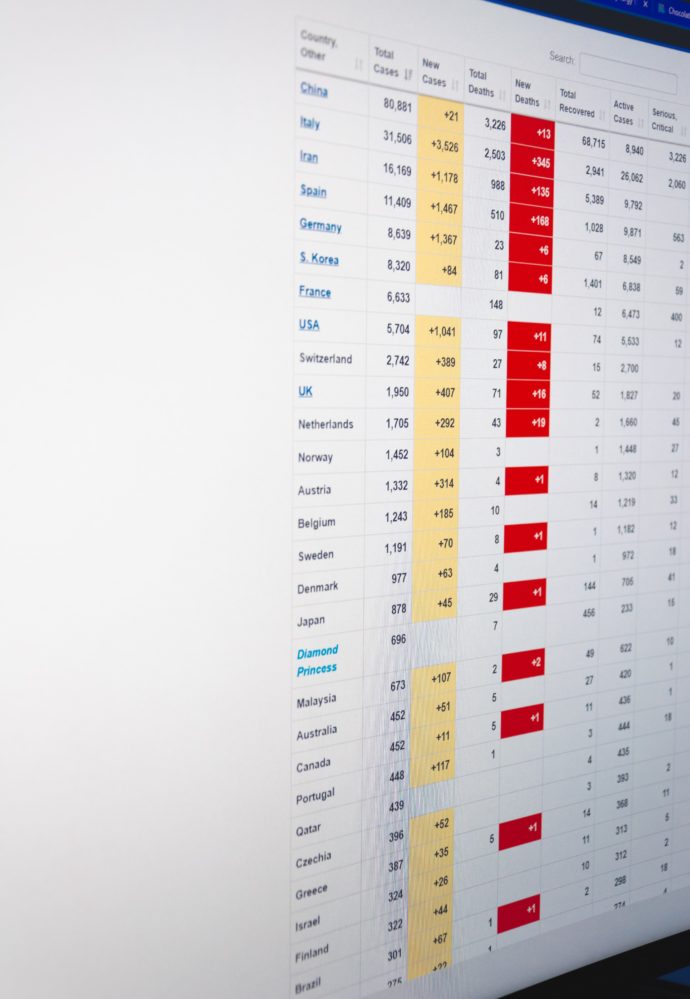
Johns Hopkins University provides us with a Wuhan coronavirus dashboard that constantly updates the spread of the virus. AJMC.com offers coverage of HHS’s Secretary Alex Azar’s press conference on the topic held earlier today.

“Americans should know that this is a potentially very serious public health threat, but, at this point, Americans should not worry for their own safety,” Azar said. Of the 4500 cases confirmed in China, the country has reported more than 100 deaths. However, “the cases that have been identified skew severe, including patients who are older or have other illnesses. The mortality rate may drop over time as we identify a broader set of cases.”

The CDC recently announced it would begin screening travelers for the virus at 20 airports, up from an initial number of 5. “We are constantly preparing for the possibility that the situation could worsen, and your health and safety has been and will be our top priority,” Azar said.

AHRQ released a chart book on employer sponsored health coverage in our country in 2018.

Between 2017 and 2018, there was no significant change in the overall percentage of private-sector employees (47.8 percent in 2018) enrolled in a health insurance plan offered by their employers (“enrollment rate”). There was also no significant change in the enrollment rate in any firm-size category.

In 2018, average annual health insurance premiums per enrolled employee with private-sector employer coverage were $6,715 for single coverage, $13,425 for employee-plus-one coverage, and $19,565 for family coverage. These amounts represent increases of 5.4 percent for single coverage, 5.0 percent for employee-plus-one coverage, and 4.7 percent for family coverage over 2017 levels

In 2018, enrolled employees paid 21.3 percent of total premiums for single coverage, 27.1 percent for employee-plus-one coverage, and 27.8 percent for family coverage (Exhibit ES.14). The employee share of total premiums in 2018 for single coverage decreased by 0.9 percentage points from its 2017 level, while the employee shares for the other two coverage types were not significantly different from their 2017 levels.

The statutory minimum employee contribution for FEHB coverage is 25% (5 U.S.C. Sec. 8906).

Finally here’s a shocking Justice Department press release concerning an electronic health records vendor Practice Fusion Inc. which agreed to pay the Government $145 million to settle criminal and civil complaints.

The resolution announced today addresses allegations that Practice Fusion extracted unlawful kickbacks from pharmaceutical companies in exchange for implementing clinical decision support (CDS) alerts in its EHR software designed to increase prescriptions for their drug products.  Specifically, in exchange for “sponsorship” payments from pharmaceutical companies, Practice Fusion allowed the companies to influence the development and implementation of the CDS alerts in ways aimed at increasing sales of the companies’ products.  Practice Fusion allegedly permitted pharmaceutical companies to participate in designing the CDS alert, including selecting the guidelines used to develop the alerts, setting the criteria that would determine when a healthcare provider received an alert, and in some cases, even drafting the language used in the alert itself.  The CDS alerts that Practice Fusion agreed to implement did not always reflect accepted medical standards.  In discussions with pharmaceutical companies, Practice Fusion touted the anticipated financial benefit to the pharmaceutical companies from increased sales of pharmaceutical products that would result from the CDS alerts.  Between 2014 and 2019, health care providers using Practice Fusion’s EHR software wrote numerous prescriptions after receiving CDS alerts that pharmaceutical companies participated in designing

Weekend update

Both Houses of Congress are in session this week on Capitol Hill. The FEHBlog has signed up for Congress.gov alerts for S. 1895, Senator Lamar Alexander’s bipartisan bill to lower health care cost. The FEHBlog received his first alert this morning — the addition of a summary of key bill provisions:

Among other things, the bill

applies in-network cost-sharing requirements to certain emergency and related nonemergency services that are provided out-of-network, and prohibits health care facilities and practitioners from billing above the applicable in-network cost-sharing rate for such services; 

revises certain requirements in order to expedite the approval of generics and biosimilars, including requirements relating to citizen petitions, application effective dates, and labeling; 

requires health care facilities and practitioners to give patients a list of provided services upon discharge and to bill for such services within 45 days; 

limits prices that pharmacy benefit managers (PBMs) may charge health insurers or enrollees for prescription drugs, based on prices paid by PBMs to pharmacies; 

establishes grant programs to support vaccinations and data modernization; and 

requires health insurers to make certain information, including estimated out-of-pocket costs, accessible to enrollees through specified technology (e.g., mobile applications).

The Hill reports that the Centers for Disease Control will begin to publish Wuhan coronavirus updates on Mondays, Wednesdays and Fridays. There are now five confirmed cases in the U.S., all of whom are hospitalized. One hundred other people under being watched for the virus.

Chicago’s Crain Business informs us about the merger for four southside Chicago hospitals.

The combination [Advocate Trinity Hospital, Mercy Hospital & Medical Center, South Shore Hospital and St. Bernard Hospital] aims to bolster the precarious finances of the safety-net hospitals that treat large numbers of low-income patients on Medicaid, which pays less than Medicare and commercial insurance.

With an estimated $1.1 billion investment—including private donations and government dollars intended for hospital transformation—the plan is to build at least one new hospital and open up to six new community health centers that would expand access to preventive services and address social determinants of health, such as food insecurity, the four hospital leaders said today.

That’s a hopeful twist on such deals.

The Wall Street Journal reports today that

Hundreds of regional grocery stores in cities from Minneapolis to Seattle are closing or selling pharmacy counters, which have been struggling as consumers make fewer trips to fill prescriptions and big drugstore chains tighten their grip on the U.S. market. * * *

Grocery pharmacies are the latest casualty of industry consolidation that has for years been forcing mom-and-pop drugstores to close. Even some big players have rethought the market. Target Corp. sold off its pharmacy business to CVS Health Corp. five years ago. * * *

The tougher conditions come as the entire drugstore industry copes with a shift to online shopping and shrinking profits in prescription medicines, which often disproportionately affect smaller players.

And so it goes.

Tuesday Tidbits

This morning without comment, the Supreme Court denied the motion of the petitioners defending the Affordable Care Act to expedite the Court’s review of the Fifth Circuit Court of Appeal’s decision on the ACA’s constitutionality (Nos. 19-840, 841). The FEHBlog has long given up on trying to predict Supreme Court decisions. Now. the respondents seeking to take down the law will have until shortly after the Super Bowl to submit their briefs. The petitioners will have an opportunity to reply, and then the Supreme Court can consider the petitioner in due course, perhaps late March or April. If the Court decides to review the Fifth Circuit opinion, which the FEHBlog assumes is unlikely, the case would be argued next fall. As yet, Federal District Judge Reed O’Connor has not begun the process of reconsidering his vacated decision holding the entire remainder of the ACA inseparable from the unconstitutional ACA individual mandate at least according to the docket sheet available on PACER. The stay order that the Judge Reed entered in December 2018 states in pertinent part that “The parties are directed to notify the Court upon the conclusion of the appeal of the partial judgment within 14 days of any decision.” As the Court is busy, it’s likely that the Judge will tend to other matters until the Supreme Court decides what to do at this stage at least in the FEHBlog’s view.

The Centers for Disease Control (“CDC”) announced today that the agency

is closely monitoring developments around a novel (new) coronavirus first identified in Wuhan, Hubei Province, China. Chinese authorities identified the new coronavirus, which has resulted in close to 300 confirmed cases in China, including cases outside Wuhan City, with additional cases being identified in a growing number of countries internationally. The first case in the United States was announced on January 21, 2020. There are ongoing investigations to learn more.

The Wall Street Journal reported over the weekend that

Nancy Messonnier, the CDC’s director for the National Center for Immunization and Respiratory Diseases, said that as health officials develop diagnostic tests and start testing people with symptoms who have traveled to Wuhan, more cases are likely to be identified around the world, including in the U.S. 

“As we start testing more, I expect that we’re going to see more cases,” she said. 

“I think it’s highly plausible there will be at least a case in the United States.” 

She called the spread a “serious issue,” but added that the CDC has “faced this challenge before.”

“Based on the info CDC has today, we believe the current risk from the virus to the general public is low,” Dr. Messonnier said in a telephonic press conference.

FYI, the Government Accountability Office (GAO) has issued a report on Artificial Intelligence in Healthcare: Benefits and Challenges of Machine Learning in Drug Development. Here’s a link to the GAO’s version of Cliff Notes on the report.

Weekend update

OPM directs us to the National & Community Service website for ideas on how to celebrate tomorrow’s Martin Luther King Jr. holiday. The FEHBlog believes that our country is indebted to Dr. King for his bold, essential leadership.

The House of Representatives has a district work period this week, while the Senate will be holding a trial on the House’s impeachment of the President.

Last Friday, the Centers for Disease Control announced updates to its vaping restriction recommendations in light of the subsiding vaping-related lung injury known as EVALI crisis. The FEHBlog appreciates the caution that the CDC has shown in handling this crisis.

Fierce Healthcare recently announced its Fierce 15 of 2019.

Big and small, high-tech and not, we’re honoring this collection of companies across the U.S. that are trying to change the world by changing the healthcare industry. 

The FEHBlog is not familiar with any of these companies but in time?

Healthcare Dive helpfully summarizes five key trends fo providers and payers. The FEHBlog is familiar with all of these.

Kaiser Health News discuss the latest hot item in wellness programs — helping employees sleep.

Supreme Court scheduling action

Healthcare Dive reports that “The Supreme Court on Monday set a Friday [January 10] afternoon deadline for challengers of the ACA to respond to the blue state coalition’s motion to expedite the case.” The lead coalition member State of California has requested that the Court calendar to case for oral argument this Spring so that a Supreme Court decision may be issued before the end of the current term in late June / early July. This scheduling order allows the Supreme Court to consider the motion to expedite at its Friday January 17, 2020, conference. Approval of the motion would require the support of at least five justices. If the Court decides the motion on January 17, the decision would be announced that Friday afternoon or the following Tuesday morning. Stay tuned.