FEHBlog

Cybersecurity Saturday

From Capitol Hill, per Nextgov, “the House [of Representatives] on Tuesday passed the NDAA conference report—language House and Senate Armed Services Committee leaders agree on that reconciles versions of the bill from each chamber. The next step is a vote on the conference report by the Senate.  (H.R. 4350).

Nextgov adds

“There were intensive efforts to get cyber incident reporting done but ultimately the clock ran out on getting it in the NDAA,” House Homeland Security Committee Chairman Bennie Thompson, D-Miss and Rep. Yvette D. Clarke, D-NY, who chairs the committee’s panel on cybersecurity, said in a joint statement Tuesday.

The annual Defense Authorization Act still “initiates the widest empowerment and expansion of CISA through legislation since the SolarWinds incident,” according to a summary of the bill released by the House Armed Services Committee Tuesday

The bill gives CISA added responsibilities around identifying threats to industrial control systems, and removing cybersecurity vulnerabilities while establishing voluntary partnerships with industrial control system and internet ecosystem companies. 

From the government initiative front, Health IT Security reports that

HHS launched a new website for its 405(d) Program with the goal of aligning healthcare cybersecurity across the industry. Under the Cybersecurity Act of 2015, HHS established the 405(d) Aligning Health Care Industry Security Approaches Program and the 405(d) Task Group, which is comprised of more than 150 industry and government experts.

The program aims to uphold the motto that “cyber safety is patient safety,” and its website contained resources, videos, products, and tools to help raise awareness and promote cybersecurity best practices, the HHS announcement stated.

“Healthcare professionals understand the importance of hand washing when it comes to mitigating the spread of diseases. Similarly, we know that cybersecurity practices reduce the risk of cyber-attacks and data breaches,” the website maintained.

Also the HHS Cybersecurity Program issued a healthcare sector alert yesterday

A highly utilized application called Log4j contains a severe, known vulnerability that is being actively and aggressively attacked. Upon successful exploitation, a compromised system or device can be used to execute arbitrary code, which can serve as the beginning of a larger cyberattack potentially resulting in any number of effects including data exfiltration and ransomware. HC3 advises healthcare and public health organizations to survey their infrastructure and ensure they are not running vulnerable versions of Log4j. Any vulnerable systems should be upgraded, and a full investigation of the enterprise network should commence to identify possible exploitation if a vulnerable version is identified.

Report

Log4j is a very common Java library/framework that provides logging capabilities to any number of software platforms that it serves. In late November, a remote code execution (RCE) vulnerability (tracked as CVE-2021-44228) was identified in certain versions which are now being actively exploited in the wild. Proof of concept exploit code has been circulating social media for several days and is publicly posted on well-known code repositories. The Log4j software is maintained by Apache and they have released an update which should be deployed (after testing, as needed) across all vulnerable devices in the enterprise in a timely manner.

From the interviews department

  • Tech Republic interviews Walgreens Boots Alliance CTO Mike Maresca “about what keeps him up at night and why building internal and external partnerships is key for digital transformation success.”
  • The Wall Street Journal interviews Kathy Hughes, the CISO for Northwell Health, a hospital / healthcare system in New York City and Long Island, and Joey Johnson, the CISO for Premise Health, which offers health and wellness services to employers, among others. This tidbit from the interview grabbed the FEHBlog’s attention:

WSJ: Can you briefly explain a couple of technologies that you had to deploy?

MS. HUGHES: The most significant one was, because we had seen such an uptick in phishing emails, we deployed a technology that actually does a live scan of a URL when it’s clicked within an email. The technology that we had before, if a URL had been accessed that was previously determined and rated to be malicious, it would be blocked. But this enabled us to do that in real time

Cool.

From the hacking front, Cyberscoop reports

Hackers associated with the SolarWinds supply chain compromise have been busy in the year since that attack was revealed, compromising multiple cloud solution companies with the goal of stealing data relevant to Russian interests and finding routes to additional victims, new research reveals.

Findings published Monday [December 6] by a team of analysts at Mandiant collate previous observations and analysis — along with the efforts of “hundreds of consultants, analysts and reverse engineers — to paint a picture of potentially distinct groups working alongside or within a more established Russian intelligence hacking group known as Nobelium, a name given to the group by Microsoft. The group is also known as Cozy Bear.

Last but never least, here is a link to Bleeping Computer’s The Week in Ransomware.

This week has quite a bit of ransomware news, including arrests, a new and sophisticated ransomware, and an attack bringing down 300 supermarkets in England.

This week’s biggest story is a law enforcement operation conducted by the FBI and Ontario Provincial Police (OPP) that arrested a Candian ransomware affiliate allegedly involved in hundreds of attacks.

We also learned about the new ALPHV (aka BlackCat) ransomware that appears to be one of the most sophisticated ransomware families we have seen this year.

Finally, this week’s largest known ransomware attack was on James Hall and Co, which affected point-of-sale systems and led to the temporary closing of over 300 Spar supermarkets in England. This week’s other known attack is on Nordic Choice Hotels by the Conti ransomware gang.

Friday Stats and More

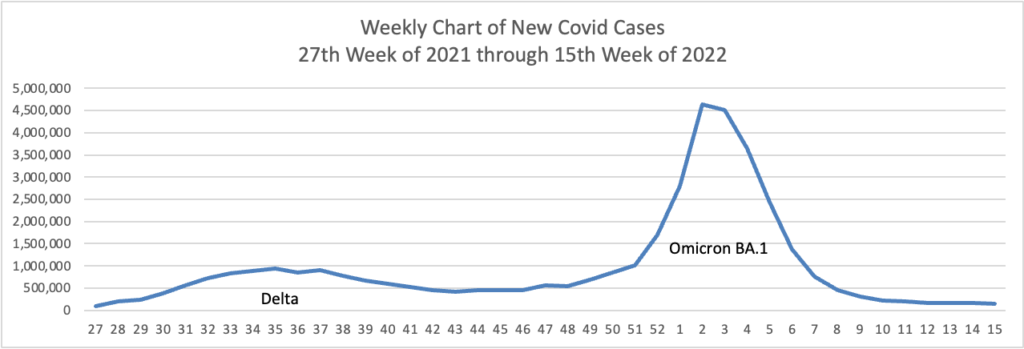
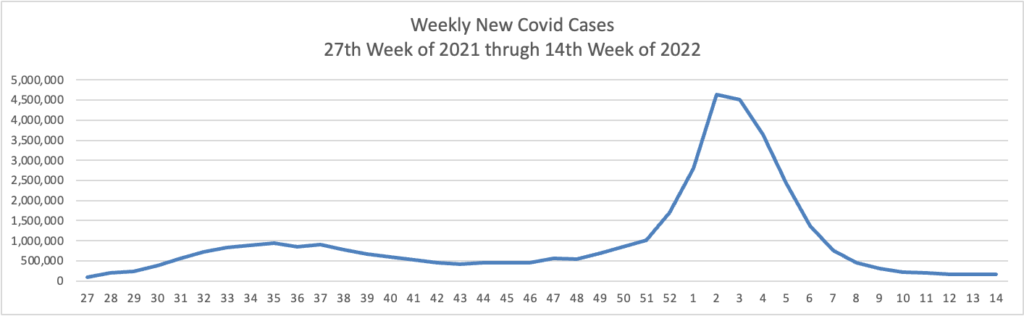
Based on the Centers for Disease Control’s COVID data tracker and using Thursday as the first day of the week, here is the FEHBlog’s weekly chart of new COVID cases for 2021:

STAT News reports today that Omicron may give Delta a run for its money.

As the Omicron variant snowballs in South Africa and widens its inroads in Europe, evidence is mounting that it can outcompete the highly transmissible Delta variant — a potential warning signal for the United States.

The Wall Street Journal adds that

The U.K. is emerging as a testing ground in the battle for dominance between the new Omicron variant of the coronavirus and Delta, the earlier strain that is currently driving most infections in the U.S. and Europe.

How Britain fares against Omicron will offer clues to the U.S. and the rest of the industrialized world about how the variant behaves in a highly vaccinated population, how sick those who are infected get and if its dozens of mutations have given Omicron enough of an advantage on the evolutionary ladder to starve Delta of the hosts it needs to stay on top.

The CDC’s weekly new COVID hospitalizations chart up week to week from 6.500 to 7,500 which is 54% below the number of new hospitalizations in January 2020. The Wall Street Journal adds that

As the pandemic heads into its third year, doctors are screening more effectively for these clots and improving treatment regimens, marking a significant medical advance alongside the vaccines and antiviral pills under review for Covid-19 that get the most attention.

Even before test results come in, doctors may sometimes treat patients with a high dose of anticoagulants if they suspect blood clots, often termed thrombosis, said Michael Streiff, a clot specialist at Johns Hopkins University.

“The incidence of thrombosis was very high in the beginning but has declined over time. I think this is due to better supportive care,” Dr. Streiff said.

Still, some doctors say there’s much to be done to improve outcomes further. Recent studies are helping to define more precise treatment protocols for clots.

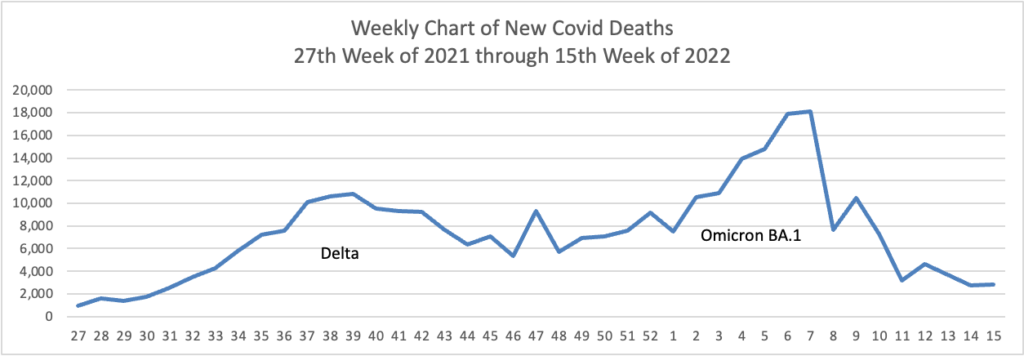
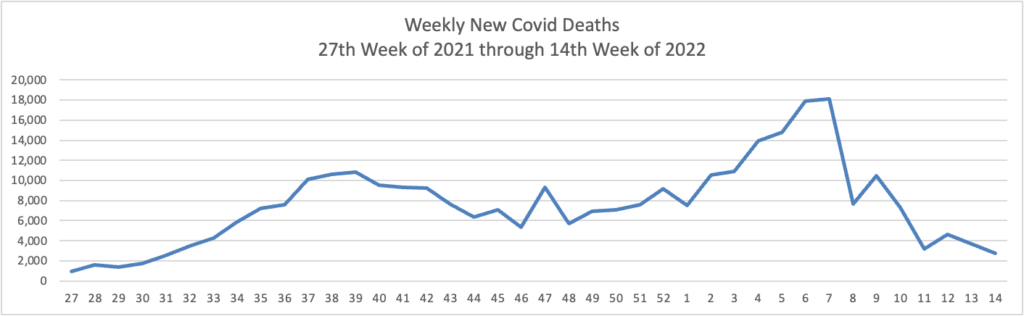
Here’s the FEHBlog weekly chart of new COVID deaths for 2021:

The Wall Street Journal notes that

The Omicron variant of Covid-19 has so far caused mostly mild cases of Covid-19 in a small group of largely vaccinated people in the U.S., federal data show.

Among at least 43 people infected with the variant in 25 states in recent days, there has been one hospitalization and no deaths so far, the Centers for Disease Control and Prevention said Friday.

Out of 43 cases identified between Dec. 1 and Dec. 8, nearly 80% of the people infected with Omicron were fully vaccinated, according to CDC data, and one-third had received a booster shot. Fourteen percent of the people had a previous Covid-19 infection. Patients most commonly reported mild symptoms like cough, fatigue, congestion or runny nose, the CDC said. Nearly 60% of cases were in people 18 to 39 years old.

The report is an early piece of the picture scientists are working to assemble on Omicron’s infectiousness and virulencerelative to other variants.

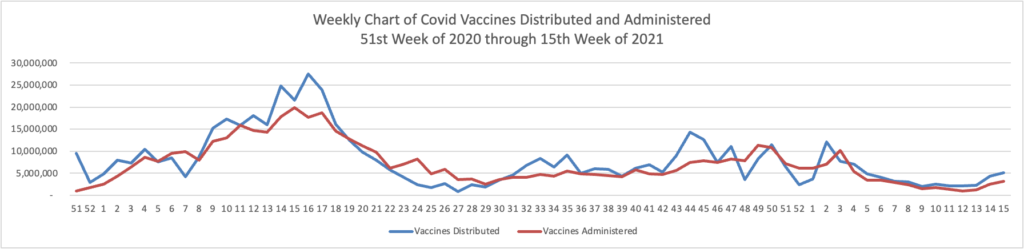
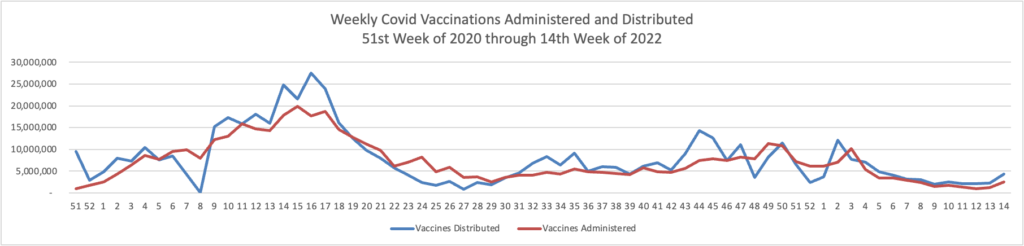
Here’s the FEHBlog’s weekly chart of new COVID vaccinations administered and distributed from the 51st week of 2020 through the 49th week of 2021:

This past week was the first week since June 2021 that administered vaccinations topped 10 million. Slightly over 50% of the U.S. population over 65 is boostered according to the CDC.

Here is a link to the CDC’s weekly interpretation of its COVID statistics which urges all Americans aged 16 and older to get boostered.

From the flu front, the CDC reports that seasonal flu activity remains low but continues to increase. The CDC encourages Americans to fight the flu by getting vaccinated, engage in preventative measures, and take flu antiviral drugs if your doctor prescribes them. We are about a month away from the CDC giving the same advice about COVID.

From the Capitol Hill front, FedWeek informs us that

Congress is moving toward passing a compromise version of the annual DoD authorization bill (S-1605) containing a number of provisions affecting personnel policies government-wide, including two new weeks of paid leave for federal employees on the death of a son or daughter.

The new “parental bereavement leave” replaces a House provision that would have expanded the authority for federal employees to take paid time rather than unpaid time for parental purposes covered by the Family and Medical Leave Act. The Senate version had not included any provision on parental leave.

The compromise provision uses the same definitions for children as under the FMLA; rules likely will be needed to define the policy, including the effective date.

The bill also: extends long-running authorities for all agencies to pay certain special allowances to employees working in areas of active military operations; requires OPM to perform a study of allowances for employees working in remote areas; and orders OPM to establish or update occupational series in the fields of software development, software engineering, data science, and data management.

However, the final version drops House language to require OPM to redefine locality pay areas for wage grade employees so that they align with the areas used for the GS system. Currently, in some cases wage grade employees receive smaller raises than GS employees at the same location. The bill however encourages OPM to address that issue. 

From the judicial front

  • The Society for Human Resource Management brings us up to date on oral arguments before the U.S. Supreme Court this week on human resources and employee benefit issues.
  • The Coalition against Surprise Billing blasted the American Medical Association and the American Hospital Association for bringing a lawsuit against the independent dispute resolution regulations under the No Surprises Act.

From the healthcare business front —

New York-based Hydrogen Health, a joint venture between Anthem, investment firm Blackstone and digital primary care company K Health, is launching its virtual primary care offerings nationwide, the provider announced Dec. 9. 

Anthem and its partners formed Hydrogen Health in April 2021 to leverage artificial intelligence to drive down healthcare costs in both employer and consumer markets. The joint venture offers employers and insurers text and video-based digital primary care, and taps K Health’s artificial intelligence to personalize that care. 

Hydrogen Health shared that since its initial launch with Anthem, its customers now include multiple Fortune 500 companies and other large employers. 

Moving into 2022, the plan anticipates it will expand the conditions it can diagnose and manage and grow its membership by 10 million — all digitally, according to the announcement. 

  • Healthcare Dive reports that on CVS Health’s investors day held yesterday.

— CVS Health plans to ramp up its acquisitions of physician practices and clinics as it continues to pursue its primary care strategy and races with other retail pharmacies to build out medical networks.

— The Woonsocket, Rhode Island-based healthcare behemoth already operates a network of MinuteClinics, urgent care locations staffed by nurse practitioners. But CVS wants to broaden its care delivery strategy into a primary care model, including “physician-led primary care centers with integrated virtual and home assets,” CVS EVP and president of pharmacy services Alan Lotvin said Thursday at CVS’ investor day.

— CVS plans to add a few hundred primary care centers to its network of MinuteClinics, drugstores and health-focused HealthHUB locations launched a few years ago, as it moves from an episodic to more longitudinal approach to care, Lotvin said. CVS also wants to eventually add more specialty services to compete as the retail healthcare market becomes increasingly saturated.

From the benefit design front, Health Payer Intelligence informs us that “Employing personalized, in-home chronic disease management services can have a significant impact on spending for seniors with chronic conditions, a study from Avalere found.”

Patients with quadriplegia saw the highest healthcare spending difference in total cost of care after receiving home healthcare. The group that received the home healthcare solution spent $12,807. In contrast, the group that did not receive in-home chronic disease management support spent nearly $30,000 more, with average spending of $42,709.

The condition that ranked lowest in the top ten chronic conditions was intestinal obstruction or perforation. But even for this condition, patients with the intervention spent on average $17,738 less than their counterparts.

Despite the major differences in total cost of care between the two groups, the group that received the targeted home healthcare intervention did not display drastic differences between healthcare spending levels before and after implementing the intervention.

Thursday Miscellany

Photo by Clarisse Meyer on Unsplash

From the Capitol Hill front, Roll Call reports that

The Senate broke a logjam over the statutory debt limit Thursday, clearing a measure that would allow Democrats to increase the nation’s borrowing capacity on their own without any Republican assistance necessary.

On a 59-35 vote, the Senate sent President Joe Biden a bill granting a one-time exemption to Senate rules so that a debt ceiling increase can go straight to final passage on a simple majority vote, rather than first having to clear a 60-vote procedural hurdle. 

Passage of the fast-track process legislation effectively ends weeks of partisan brinkmanship over whether and how to raise the statutory debt limit. Without congressional relief, the government may be unable to meet all its financial obligations after Dec. 15, Treasury Secretary Janet L. Yellen has warned.

Democrats have yet to release the bill that will actually raise the debt limit, though Senate Majority Leader Charles E. Schumer and Speaker Nancy Pelosi hope to clear that measure before Wednesday to meet Yellen’s deadline.

The legislation heading to the White House also would delay Medicare cuts that would otherwise be triggered Jan. 1, including across-the-board reductions to provider reimbursements as well as separate cuts to physician and laboratory services payments. It would temporarily waive statutory pay-as-you-go rules that would require steeper Medicare cuts next year as well as major reductions in farm price supports and a host of other federal benefits.

So Congress will remain in session next week.

Govexec adds that “The House on Thursday approved a package of reforms to add new protections to federal civil servants, further empower agency watchdogs and limit who can lead federal offices on a temporary basis.” The bill now heads over to the Senate.

From the COVID vaccine front, AHIP informs us that

The U.S. Food and Drug Administration (FDA) today authorized a booster dose of the Pfizer-BioNTech COVID-19 vaccine for 16- and 17-year-olds. Eligible teens will be able to get the shot once they are at least six months past their second dose.

New data from Israel published this week showed that a Pfizer booster increased immunity among citizens 16 and older, and though the study focused on the Delta variant, Pfizer announced this week that a third dose can help fight the Omicron variant.

The Centers for Disease Control and Prevention’s Advisory Committee on Immunization Practices (ACIP) are not expected to meet to develop new clinical recommendations for teen boosters, according to a report from Politico.

From the COVID vaccine mandate front, Federal News Network tells us that

The Biden administration offered more details Thursday for federal contractors tracking the multiple legal challenges to the president’s vaccine mandate, while reporting a slight increase in the number of executive branch employees who have complied with their agency’s own requirements.

Agencies will not enforce the provisions of the president’s federal contractor vaccine mandate while a nationwide preliminary injunction is in place, the Biden administration said.

Specifically, the government won’t enforce those clauses embedded in existing contracts where the work is performed inside the United States or an outlying area and is subject to a recent court order, according to a brief update to the Safer Federal Workforce Task Force issued Thursday.

the Wall Street Journal adds that

General Electric Co., Union Pacific Corp. and other large employers have suspended Covid-19 vaccine requirements for workers after a U.S. court ruling blocked the Biden administration’s plan to mandate vaccines for federal contractors.

A federal judge on Tuesday issued a nationwide preliminary injunction after concluding that federal procurement law didn’t give the administration the clear authority to impose the vaccine rules for contractors. Lawyers for the federal government filed a notice of appeal Thursday.

The court’s injunction applies to the federal government, including OPM, not to the government contractors. The government contractors therefore are free to choose whether or not to continue with their vaccine mandate programs while government enforcement of the program is enjoined. This news nevertheless suggests that the squeeze may not be worth the fallout.

From the No Surprises Act front, the American Hospital Association announced that

The American Hospital Association (AHA) and American Medical Association (AMA), representing hospitals, health systems, and physicians, sued the federal government today over the misguided implementation of the federal surprise billing law. The associations are joined in the suit by plaintiffs including Renown Health, UMass Memorial Health and two physicians based in North Carolina. 

The complaint was filed in the U.S. District Court for the District of Columbia. The plaintiffs also have moved for a preliminary injunction or a summary judgment.

The provider groups are freaking out over the regulator’s decision to use the plan’s payment in No Surprises Act situations, known as the qualifying payment amount, as the lodestar for baseball arbitration purposes in the No Surprises Act independent dispute resolution process. The QPA is based on the health plan network’s median payment as of January 2019 adjusted for inflation and regional differences. The QPA should be similar to what plans pay in-network providers which always has been materially more than the out-of-network rate which usually is based on Medicare’s fee schedule. Paying the out of network providers more than the in-network doctors under the No Surprises Act would disrupt health plan networks. The rule’s lodestar use of the QPA is perfectly reasonable.

From the miscellany department –

  • Beckers Payer Issues reports that “CMS is continuing to use discretion on enforcing payer data exchange guidelines introduced in a May 2020 interoperability rule, HHS stated in a Dec. 7 notice.  * * * “We are now announcing that we expect to extend this exercise of enforcement discretion of the payer-to-payer data exchange requirement until we are able to address the identified implementation challenges through future rulemaking,” the notice stated. “We anticipate providing an update on any evaluation of this enforcement discretion notification and related actions during calendar year 2022.” This is one of the 21st Century Cures Act’s three interoperability initiatives for HHS regulated health plans.
  • “Health and Human Services Secretary Xavier Becerra today announced that Lawrence A. Tabak, D.D.S., Ph.D., the principal deputy director of the National Institutes of Health (NIH), will serve as the acting director of NIH effective December 20, 2021.”

President Joe Biden selected 230 federal leaders to receive a Presidential Rank Award in 2021, nearly double the usual number of employees recognized.

The Presidential Rank Awards are one of the most prestigious civil service recognitions and come with a 35% of base salary award for Distinguished Rank recipients, who have demonstrated sustained, extraordinary career accomplishments, and a 20% award for Meritorious Rank recipients, who have demonstrated sustained accomplishments.

Congratulations to the recipients.

Midweek Update

From the Omicron front, and as a public service, the FEHBlog notes this Wall Street Journal A-hed article from yesterday explaining the proper pronunciation of Omicron:

“There isn’t one way of saying Omicron,” said Armand D’Angour, professor of classical languages and literature at the University of Oxford. “First of all, you know, we’re not there, we haven’t recorded it.”

Egbert Bakker, professor of ancient Greek at Yale University, says the letter is pronounced “AWE-mee-kron” in both modern and ancient Greek. But he is open to other forms: “Some people would say ‘oh-MIKE-ron,’ that is the Americanized way. I wouldn’t do it but I don’t think it’s completely unacceptable.”

Isn’t Egbert a perfect name for an Ivy League professor of foreign languages?

Also, the Wall Street Journal reports that

Pfizer Inc. and BioNTech SE  said that a third dose of their Covid-19 vaccine neutralized the Omicron variant in lab tests but that the two-dose regimen was significantly less effective at blocking the virus.

A third dose increased antibodies 25-fold compared with two doses against the Omicron variant, the companies said. Still, two doses may prove effective in preventing severe illness from Covid-19, they said, because immune cells are able to recognize 80% of parts of the spike protein that the vaccine targets.

The results were issued in a press release by the companies, and weren’t peer reviewed and published in a scientific journal.

As of today, just over 200 million Americans are fully vaccinated against COVID according the CDC. Next Tuesday December 14 will mark the first anniversary of COVID vaccinations outside of trials in the U.S.

From the Federal Benefits Open Season front, FedWeek reminds us that

December 13 is the last day of the current open season for electing or changing coverage in FEHB and FEDVIP for the 2022 plan (calendar) year of each program.

If current enrollees make no changes, they will retain the same coverage next year, subject to new premium rates and coverage terms. In practice, only single-digit percentages change plans, levels of coverage within plans that have more than one, or type of enrollment (between family coverage and self plus one, for example).

In contrast to the FEHB and FEDVIP programs, a new enrollment is required each year for those who want a health care flexible spending account, a dependent care account, or both in the following year. The dependent care maximum remains $5,000 while the health care maximum is rising $2,850.

OPM encourages FEHB plan enrollees to use its online FEHB and FEDVIP Plan comparison tools.

From the telehealth front —

Healthcare Dive reports that

— COVID-19 was no longer among the top five telehealth diagnoses nationwide in September, though use of virtual care rose overall, according to new data from nonprofit Fair Health.

— In August, COVID-19 was among the top five diagnoses nationally and in every U.S. census region except the Northeast. In September, the only region where the it ranked in the top five was the Midwest.

— However, national telehealth use (measured as a percentage of all medical claim lines) rose more than 2% in September for the second straight month as the delta variant gained a foothold in the U.S. following a sustained period of decline early this year.

Kaiser Health News discusses the provider push for expanded coverage of audio-telehealth services.

From the benefit design front, Health Payer Intelligence tells us that

UnitedHealthcare has launched a new employer-sponsored health plan for Arizona residents that seeks to prioritize customer support experiences and lower member premiums.

The Doctors Plan of Arizona is the result of a partnership between the payer and the accountable care organization (ACO) Banner Health Network. The plan will serve Maricopa and Pinal County residents who receive employer-sponsored health coverage.

Banner Health Network frequently partners with health plans and providers to increase access to affordable care, the press release noted. The ACO’s network includes primary and specialty care physicians.

Through the Doctors Plan of Arizona, members will gain access to Banner Health’s network of more than 5,000 physicians and 15 medical centers.

Additionally, the plan will offer members a chance to potentially save up to 15 percent on premiums compared to other traditional health plans. The plan will also offer zero-dollar copays for primary care and urgent care visits, around-the-clock access to telehealth visits, and care coordination from the member’s primary care provider.

UnitedHealthcare will work to improve the customer experience with a personalized concierge approach. The payer’s Doctors Plan of Arizona will include a customer service team that has access to patient data from the provider and the health plan, allowing for more streamlined coordination, the press release stated.

The FEHBlog’s love affair with the ACO concept has not abated.

Health Payer Intelligence also discusses nutritional benefits.

Payers face a variety of challenges in expanding nutritional benefits, particularly due to the lack of ability to measure outcomes, but there are ways to navigate this uncertainty, according to a report from McKinsey & Company (McKinsey).

Among American adults who have at least one chronic condition, 60 percent also have poor nutrition, the report noted. This social determinant of health tends to occur hand-in-hand with some of the most expensive conditions in the US such as hypertension, obesity, and diabetes.

Check out the McKinsey report and the article for nutritional benefit tips.

Finally the Internal Revenue Service today released its draft Fringe Benefits Tax Guide for 2022 which may come in handy for 2022 budgeting purposes.

Tuesday’s Tidbits

Photo by Patrick Fore on Unsplash

From Capitol Hill, Roll Call reports that

The House and Senate are moving swiftly toward passing legislation introduced Tuesday that would limit Senate debate on debt limit legislation to 10 hours, creating a loophole in that chamber’s 60-vote legislative filibuster rules.in his Morning’s column in the New York Times andor a vote Tuesday night, Speaker Nancy Pelosi wrote in a letter to lawmakers, along with a revised fiscal 2022 defense policy bill that would be sent to the Senate separately.

The two legislative vehicles are unrelated bills that previously passed both chambers with amendments; using them to carry the budget and defense measures allows Senate leaders to avoid a time-consuming motion to proceed in that chamber. Instead, only one cloture vote per bill would be needed. 

Senate Minority Leader Mitch McConnell, who briefed his caucus at lunch on Tuesday, blessed the arrangement in comments to reporters. He said the new debt limit measure could pass as early as Thursday, after the Senate clears the bill to create an expedited process.

“I’m confident that this particular procedure coupled with the avoidance of Medicare cuts will achieve enough Republican support to clear the 60 vote threshold,” McConnell said.

If Congress accomplishes all of these actions, it may just call it quits at the end of this week which was the original schedule. A delay in Medicare cuts is extremely important to the medical facility and provider professional associations.

On the COVID vaccine mandate front, a federal district judge in Georgia today ordered a nationwide preliminary injunction against enforcement of the federal government contractor mandate per Govexec which adds

The Biden administration’s vaccine rule for private businesses and vaccine mandate for Medicare- and Medicaid-certified providers and suppliers are also temporarily blocked by courts. So far, the vaccine mandate for federal employees has not been stopped.

This PI applies to all FEHB plan contractors and subcontractors.

From the Delta variant front, David Leonhardt who is the FEHBlog’s go-to COVID columnists recommends in his Morning column in the New York Times today

For now, vaccinated people can reasonably continue to behave as they were — but many should feel urgency about getting booster shots. Older people and others who are vulnerable, like people receiving cancer treatment, should continue to be careful and ask people around them to test frequently.

Unvaccinated people remain at substantial risk of serious illness. About 1,000 Americans have been dying each day of Covid in recent weeks, the vast majority of them unvaccinated.

Look up case and deaths counts for your county here.

From the Rx coverage front, Drug Channels released its

annual deep dive into employer-sponsored coverage for prescription drugs. 

For 2021, employers backed away slightly from high-deductible health plans. However, their pharmacy benefit designs increased the use of coinsurance for specialty and fourth-tier drugs. These designs have significantly raised patients’ out-of-pocket obligations and are likely to have reduced adherence. 

Manufacturers’ patient support funds help offset patients’ higher expenses. But employer plans are rapidly adopting copay accumulators, which allow payers and PBMs to absorb these funds. 

From the health benefits trends front, the Society for Human Resource Management informs us that

Three-quarters of health insurers say that managing a health plan’s network of care providers is critical to controlling rising medical costs.

The finding is from consultancy Willis Towers Watson’s 2022 Global Medical Trends Survey, conducted from July through September 2021 among 209 leading insurers globally.

The plan features mostly likely to keep costs under control, insuers said, were:

— Contracting with high-quality, cost-competitive doctors and hospitals for in-network coverage (cited by 75 percent of respondents).

— Requiring preapproval for scheduled inpatient services (67 percent).

— Offering telehealth services (63 percent).

Telehealth or virtual care rose to the third spot from the fifth position last year, “a sign that more insurers see potential savings from remote options for diagnosing and treating patients,” according to the report.

Yesterday was the deadline for submitting public comments on the the second No Surprises Act interim final rule, which concerns the independent dispute resolution process. For a ying and yang take on the comments, here are links to American Hospital Association’s comments and to AHIP’s comments.

Let’s wrap it up with a bunch of HHS tidbits

  • HHS today announced its plan to “propose a national “Birthing-Friendly” hospital designation on the Hospital Compare section of the CMS Care Compare website, and also encourages states to provide 12 months postpartum coverage to people with Medicaid and CHIP.”
  • The National Institutes of Health reported that “Researchers identified brain cells that help suppress hunger and regulate food intake” and that “The findings may help lead to better treatments for excessive eating and obesity.”
  • NIH also announced “The winners of the National Institutes of Health’s Decoding Maternal Morbidity Data Challenge were announced today in conjunction with the White House “day of action” on maternal health. Twelve prizes were awarded to seven winners who proposed innovative solutions to identify risk factors in first-time pregnancies. Without a prior pregnancy for comparison, it is difficult to identify risks for adverse pregnancy outcomes. Early detection of these risks can help reduce pregnancy complications and prevent maternal deaths.”
  • The Agency for Healthcare Quality and Researched released

A final report on strategies to improve patient safety and reduce medical errors has been delivered to Congress by the U.S. Department of Health and Human Services in consultation with AHRQ. Required by the Patient Safety Act of 2005, the report was made available for public review and comment and review by the National Academy of Medicine. It outlined several strategies to accelerate progress in improving patient safety, including using analytic approaches in patient safety research, measurement, and practice improvement to monitor risk; implementing evidence-based practices into real-world settings through clinically useful tools and infrastructure; encouraging the development of learning health systems that integrate continuous learning and improvement in day-to-day operations; and encouraging the use of patient safety strategies outlined in the National Action Plan by the National Steering Committee for Patient Safety

Access the final report, “Strategies to Improve Patient Safety: Final Report to Congress Required by the Patient Safety and Quality Improvement Act of 2005” (PDF, 1.16 MB).

  • The Centers for Disease Control “announced today that it has awarded $22 million to nearly 30 organizations around the world to combat antimicrobial resistance (AR) and other healthcare threats through the establishment of two new networks—the Global Action in Healthcare Network (GAIHN) and the Global AR Laboratory and Response Network (Global AR Lab & Response Network).”

Citing mounting evidence of ongoing harm, U.S. Surgeon General Vivek H. Murthy on Tuesday issued a public health advisory on the mental health challenges confronting youth, a rare warning and call to action to address what he called an emerging crisis exacerbated by pandemic hardships.

Symptoms of depression and anxiety have doubled during the pandemic, with 25% of youth experiencing depressive symptoms and 20% experiencing anxiety symptoms, according to Murthy’s 53-page advisory. There also appear to be increases in negative emotions or behaviors such as impulsivity and irritability — associated with conditions such as attention deficit hyperactivity disorder or ADHD.

And, in early 2021, emergency department visits in the United States for suspected suicide attempts were 51% higher for adolescent girls and 4% higher for adolescent boys compared to the same time period in early 2019, according to research cited in the advisory.

Monday Roundup

Photo by Sven Read on Unsplash

From Capitol Hill, Roll Call discusses the Senate Parliamentarian’s role in refereeing budget reconciliation bills like the Build Back Better Act.

Senate committees have been updating the House-passed $2.2 trillion climate and social spending package text to ensure it complies with budget reconciliation rules, but most have yet to begin the formal review process with the Senate parliamentarian known as “the Byrd bath.”

Majority Leader Charles E. Schumer sent a “Dear Colleague” letter on Monday reiterating his goal to pass the legislation in the Senate before Christmas. But the update he provided on the procedural steps needed to get there suggests senators will be lucky if they can meet that deadline. 

Schumer said Senate committees are continuing informal conversations with Senate Parliamentarian Elizabeth MacDonough about their pieces of the package and “making necessary technical and ‘Byrd proofing’ edits to the House bill.” The Byrd rule requires any policy changes made through reconciliation to have more than a “merely incidental” impact on the budget, among other restrictions.

From the COVID vaccine front, Medscape informs us that

Adolescents and adults younger than age 21 who develop myocarditis after mRNA COVID-19 vaccination frequently have abnormal findings on cardiac MRI(cMRI) but most have a mild clinical course with rapid resolution of symptoms, a new study concludes.

“This study supports what we’ve been seeing. People identified and treated early and appropriately for the rare complication of COVID-19 vaccine-related myocarditis typically experienced only mild cases and short recovery times,” American Heart Association (AHA) President Donald M. Lloyd-Jones, MD, said in a podcast.

“Overwhelmingly, the data continue to indicate the benefits of COVID-19 vaccine far outweigh any very rare risks of adverse events from the vaccine, including myocarditis,” Lloyd-Jones added.

and that

The U.S. Food and Drug Administration on Friday authorized the use of Eli Lilly’s COVID-19 dual-antibody therapy in treating mild to moderate symptoms in all children, including newborns, who are at risk of severe illness.

The therapy, bamlanivimab plus etesevimab, was previously authorized for children aged 12 years and older and weighed at least 88 pounds.

“Children under one year of age, who are exposed to the virus that causes COVID-19, may be at particularly high risk for severe COVID-19 and this authorization addresses the medical needs of this vulnerable population,” said Patrizia Cavazzoni, director of the FDA’s Center for Drug Evaluation and Research.

The FDA authorization also allows the administration of the therapy as a preventive measure in children who are exposed to the virus.

Per STAT News

People who received the Pfizer (PFE)-BioNTech (BNTX) vaccines may get as much benefit from a Johnson & Johnson (JNJ) booster shot as a Pfizer oneThe New York Times explains, citing the findings of a small study released on Sunday. Researchers at Beth Israel Deaconess Medical Center in Boston studied 65 people who had received two shots of the Pfizer vaccine. Six months after the second dose, the researchers gave 24 of the volunteers a third dose of the Pfizer vaccine and gave 41 the Johnson & Johnson shot. The study was funded in part by Johnson & Johnson and has not yet been published in a scientific journal.

As of today according to the Centers for Disease Control, 60% of the U.S. population is fully vaccinated and 25% of the U.S. population over age 18 has had a booster.

From the Delta variant testing front

  • The American Medical Association reviews the different COVID tests that are available in our country. The article warns that the at home tests must be performed correctly. This will be useful information to share with health plan members.
  • A friend of the FEHBlog pointed out this HHS website that lists low or or no COVID cost testing facilities in each of the states and DC. Another friend of the FEHBlog informed him that local public libraries in the Washington DC area offer at home rapid COVID tests like Binax to their visitors at no cost. The FEHBlog learned long ago that when a health plan is asked to provide a service or supply that it typically does not cover, like over the counter drugs or tests, you typically can find a government resource to fill the gap. To soften the financial blow of the the President’s unexpected mandate that health plans cover the cost of at home rapid COVID tests, health plans also should consider educating members about community resources.

Speaking of which, Health Payer Intelligence reports on payer efforts to fund various community resources to address the social determinants of health, a thoughtful idea particularly at the holiday season.

Weekend Update

Hanukkah greeting template. Nine candles and wishing. Hand drawn sketch illustration. White, yellow and blue colors

The House and the Senate will be holding Committee business and floor votes this week. Yesterday when writing up Cybersecurity Saturday, the FEHBlog could not find any fresh news on the National Defense Authorization Act (“”NDAA”) vote. The NDAA often includes federal procurement law changes and this year may include cyberbreach and cyber-ransom payment notice requirements.

The Wall Street Journal reports today that

Congress is expected to focus this week on the defense policy bill known as the National Defense Authorization Act, or NDAA, which was held up in the Senate last week over provisions regarding Russia and China. Instead of the Senate passing its own bill, a compromise bill—negotiated by leadership in the House and Senate—is expected to come to the House for a vote as early as this week.

The Journal further reports that Congressional leadership is working on the debt ceiling issue which may come to a head mid-month and hoping to bring the Build Back Better multi-trillion dollar budget reconciliation bill to a vote before Christmas.

The House of Representatives’ Postal Reform bill (H.R. 3076) would create a new Postal Service Service Health Benefits Program within the FEHB Program. The PSHBP would be tightly integrated with Medicare with respect to annuitant coverage. For that reason, the bill initially was referred to the House Oversight and Reform, Energy and Commerce, and Ways and Means Committees.

A friend of the FEHBlog called to his attention the fact that last Friday December 3, the Energy and Commerce and Ways and Means Committee were granted an extension for further consideration of the bill ending not later than Jan. 21, 2022. Of course, the Oversight and Reform Committee approved a substitute bill for House floor voting on May 13.

The ongoing Federal Employee Benefits Open Season ends on a week from tomorrow December 13, a few day following the end of Medicare Open Enrollment period which ends this week on December 7.

From the Delta variant front —

  • Today’s Washington Post has an interesting article on early analyses of the Omicron variant. The Post notes that

The omicron variant is likely to have picked up genetic material from another virus that causes the common cold in humans, according to a new preliminary study, prompting one of its authors to suggest omicron could have greater transmissibility but lower virulence than other variants of the coronavirus.FAQ: What to know about the omicron variant of the coronavirus

Researchers from Nference, a Cambridge, Mass.-based firm that analyzes biomedical information, sequenced omicron and found a snippet of genetic code that is also present in a virus that can bring about a cold. They say this particular mutation could have occurred in a host simultaneously infected by SARS-CoV-2, also known as the novel coronavirus, and the HCoV-229E coronavirus, which can cause the common cold. The shared genetic code with HCoV-229E has not been detected in other novel coronavirus variants, the scientists said.

The study is in preprint and has not been peer-reviewed.

  • National Public Radio offers conservative yet sensible guidance filled with expert opinions on how to navigate the holiday season without contracting COVID. For example,

The good news is, you don’t have to hibernate like it’s 2020. Experts note we’re in a much different place than we were last winter, with COVID-19 vaccines and boosters now widely available. There’s good hope that the current vaccines offer protectionagainst severe disease with omicron. 

That said, if this pandemic has taught us anything, it’s that when you don’t know what you’re dealing with, “we should invoke the precautionary principle,” says Dr. Abraar Karan, an infectious disease physician at Stanford University. 

In other words, don’t panic, but do be thoughtful about what risks you want to take.

In the FEHBlog’s opinion, that’s sound approach to living one’s life.

Cybersecurity Saturday

From the Capitol Hill front, Bank Info Security reviews the cybersecurity and breach notice measures found in the National Defense Authorization Act for the current government fiscal year. Defense One reports that the Senate at this point is not expected to pass its version of the bill until next month.

From the administrative front, Cyberscoop reports that

The Cybersecurity and Infrastructure Security Agency on Wednesday [December 1] named members to a new [Congressionally mandated] cyber advisory panel that will make recommendations on subjects ranging from battling misinformation to gaining aid from the hacker community on national cyber defense.

Among the 23 members selected are leaders from social media, cybersecurity companies, major technology firms and critical infrastructure sectors such as finance and energy. It includes officials from Johnson & Johnson and Walmart, as well as a longtime cybersecurity journalist and the mayor of Austin, Texas. * * *

Bylaws for the committee published in July said it would address subjects like critical infrastructure protection, information sharing, risk management and public-private partnerships. Wednesday’s announcement added potential subjects like the cyber workforce and disinformation. Its first meeting is Dec. 10.

Federal News Network informs us that

The Cybersecurity and Infrastructure Security Agency at the Department of Homeland Security is putting the final touches on several guidance documents to help ease the transition to a zero trust cybersecurity environment.

The entire goal of this effort to move security away from the network and to the data and application layers.

John Simms, the deputy branch chief of the Cybersecurity Assurance Branch in CISA, said the documents and other efforts are helping agencies shift their cyber thinking away from the network and closer to the data.

Over the last three months, CISA, along with the Office of Management and Budget, rolled out the draft zero trust strategy, the draft cloud security technical reference architecture and the draft zero trust maturity model.

From the reports front

  • On Thursday December 2, the Government Accountability Office issued a report in connection with GAO testimony before Congress “on the need for the federal government to develop and execute a comprehensive national cyber strategy, and to strengthen the role that it plays in protecting the cybersecurity of critical infrastructure. Ensuring the cybersecurity of the nation is on our High Risk List, and we have urged federal agencies to act on it.”
  • The HHS Office of Information Security released a presentation on December 2 about the risks that the cybercriminal group FIN12 posts to the healthcare sector.
  • Health IT Security reports about new Healthcare ISAC guidance to help CISOs navigate interoperability, patient access, and identity-centric data sharing under the 21st Century Cures Act. New interoperability mandates under the Cures Act require healthcare organizations to implement APIs to promote the digitization of electronic health information (EHI). “While APIs are the ‘door’ to enabling interoperability of EHR between healthcare organizations, strong identity solutions are the ‘key’ that keeps EHI secure,” the guide explained. OPM is eager for FEHB plans to offer these APIs to their members.

Here is a link to Bleeping Computer’s The Week in Ransomware.

The biggest news over the past two weeks is the unsealing of a United States’ Complaint for Forfeiture detailing how the FBI seized 39.89138522 bitcoins from an Exodus wallet belonging to an REvil affiliate. Based on the email listed in the court document, it is believed that the affiliate is one known as ‘Lalartu.’

The FBI also disclosed that Cuba ransomware has attacked 49 US critical infrastructure orgs and received at least US $43.9 million in ransom payments.

ZD Net adds that

Cyber criminals are using online adverts for fake versions of popular software to trick users into downloading three forms of malware – including a malicious browser extension with the same capabilites as trojan malware – that provide attackers with usernames and passwords, as well as backdoor remote access to infected Windows PCs.  

The attacks, which distribute two forms of seemingly undocumented custom-developed malware, have been detailed by cybersecurity researchers at Cisco Talos who’ve named the campaign ‘magnat’. It appears the campaign has been operating in some capacity since 2018 and the malware has been in continuous development.  

Over half of the victims are in Canada, but there have also been victims around the world, including in the United States, Europe, Australia and Nigeria.

In closing, an expert in Security Week offers his four cybersecurity predictions for 2022.

Friday Stats and More

Based on the Centers for Disease Control’s COVID Data Tracker and using Thursday as the first day of the week, here is the FEHBlog’s weekly chart of new COVID cases for this year.

The Wall Street Journal reports that

The new Omicron variant was identified in more than a dozen people in at least nine states, early evidence of its presence across the U.S.

While some of the people in the U.S. who have contracted the Omicron variant of the coronavirus that causes Covid-19 had recently traveled to southern Africa, where it was first identified last week, at least two states reported community spread of the new variant. States to report Omicron cases span the country from Hawaii to California and New York.

“It’s certainly spreading in the U.S.,” said Samuel Scarpino, managing director of pathogen surveillance at the Rockefeller Foundation. 

The Delta variant begs to note add “all of the other cases are mine.”

Here is a link to the CDC’s chart of new COVID hospitalizations which continues to trend up.

Here is the FEHBlog weekly chart of new COVID deaths for 2021

Oddly the number of deaths popped up last week.

Here’s the FEHBlog’s weekly new COVID vaccinations delivered and administered during the last two weeks of 2020 and this year.

In this regard, the Wall Street Journal reports that

The U.S. has plenty of Covid-19 vaccines but retail pharmacies are struggling to quickly administer them in some places.

Vaccine seekers in some states face waits of days or weeks for doses as local health officials hustle to improve access to meet surging demandCVS Health Corp.  Walgreens Boots Alliance Inc. and Walmart Inc., which are facing staffing shortages, now say they may not be able to accommodate people without appointments.

Millions of Americans are newly eligible for booster shots, and federal health officials in November recommended the vaccine for use in children as young as 5 years old. Concerns about the risks posed by the new Omicron variant also are driving more people to get vaccinated, health officials say.

An average of 1.4 million doses were administered daily in the U.S. in the week ended Thursday, a 22% increase from the previous week, which included Thanksgiving, according to the Centers for Disease Control and Prevention.

(The FEHBlog’s chart does not show a sharp increase because the government was not reporting vaccination statistics over the four day Thanksgiving weekend.)

Here is a link to the CDC’s weekly interpretation of its COVID statistics.

The Society for Human Resource Management discusses the impact of Omicron and the President’s COVID awareness program on employers.

From the influenza front, the CDC reports that “Seasonal influenza activity in the United States remains low, but in recent weeks, the number of influenza virus detections reported by clinical and public health laboratories has increased, and the percent of outpatient visits for respiratory illness has trended upward.” Next week is National Flu Vaccination Week.

From the Capitol Hill front, Federal News Network informs us that as expected,

President Joe Biden signed a continuing resolution Friday to keep funding federal government operations for another three months [precisely February 18, 2022], avoiding a government shutdown.

The  passed the Senate late last night by a margin of 69-28, while the House had approved the same measure earlier in the day on a party line vote, with only one Republican voting in favor.

Federal News Network reports at length about the House Oversight and Reform Committee vote approving an Committee leadership sponsored bill to strengthen OPM (H.R. 6066). The article notes that today OPM Director Kiran Ahuja “spoke at a virtual discussion hosted by NAPA. She reiterated that rebuilding the agency is one of her top priorities. In the last year, OPM has hired about 340 new employees, Ahuja said.”

From the pharmacy / PBM front —

  • Forbes interviews Walgreens CEO Roz Brewer about her primary care oriented strategy for the large pharmacy chain.
  • Fierce Healthcare tells us that

Express Scripts has launched a new solution that aims to integrate prescription discount card pricing into members’ existing benefits.

Through the new Right Price offering, a member who is eligible for savings through a discount card will automatically see those savings applied at the pharmacy counter. Matt Perlberg, senior vice president of supply chain at Express Scripts, told Fierce Healthcare that the pharmacy benefit manager most often sees these discounts come into play for members who have yet to meet their deductible.

For about 2% of claims, members who are purchasing generic drugs but have not yet met the deductible may find these coupon cards lead to a lower price than their drug benefits, Perlberg said.

In other strategy news, Beckers Payer Issues reports that

UnitedHealth Group CEO Andrew Witty said during a Forbes Annual Healthcare Summit discussion he is exploring how the company’s payer and provider branches can work together more closely. 

The initiative aims to provide government and employer customers with more comprehensive offerings, Mr. Witty said Dec. 2, according to Forbes

Mr. Witty pointed to developing mental health strategies as one avenue for combined growth.

That makes sense to the FEHBlog.

Thursday Miscellany

From the Capitol Hill front, Roll Call reports that

The Senate looks set to clear a House-passed a temporary spending bill Thursday night that would keep the lights on at federal agencies through Feb. 18, buying 11 more weeks to try to resolve partisan disputes over funding levels and policy riders that have stalled progress on fiscal 2022 appropriations.

The stopgap measure passed the House on a 221-212 vote earlier in the evening. The Senate timeline cleared up once it became apparent a group of GOP conservatives would get an up-or-down vote on an amendment to bar funding to implement a new private sector vaccine mandate.

“I think we’re gonna get our amendment at a 50-vote threshold,” Sen. Roger Marshall, R-Kan., told reporters after the House vote. 

A Senate GOP leadership aide said the vote would occur in that chamber Thursday evening. With three absences on the Republican side, senators expected Marshall’s amendment to be defeated, which would set up a vote on clearing the stopgap bill for President Joe Biden’s signature ahead of a midnight Friday deadline to avert a partial government shutdown.

So as the FEHBlog expect, no government shutdown which is good news.

From the Delta variant front —

STAT News informs us that

Health officials on Thursday reported the country’s second Covid-19 infection from the Omicron variant in a Minnesota resident who notably did not travel internationally recently, unlike the first case.

The case in Minnesota is an adult male who had been vaccinated and, in early November, received a booster shot. He lives in Hennepin County, which includes Minneapolis, state health officials said. He developed mild symptoms on Nov. 22, was tested on Nov. 24, and no longer has symptoms. 

The man had been in New York City in the days leading up to feeling sick and attended the Anime NYC 2021 convention at the Javits Center from Nov. 19 to Nov. 21. Minnesota health officials are collaborating with New York City authorities and the Centers for Disease Control and Prevention on their case investigation.

Bloomberg adds

In some of the first data to come back on the omicron variant of the coronavirus, researchers in South Africa, where it was first identified, say the mutation is spreading faster than the delta strain. There also seems to be a greater risk of reinfection—where previously infected people get the virus again. Three times higher, in fact. But scientists also said hospitalizations in South Africa remain muted, a sign that may be attributable in part to vaccinations. Shabir Madhi, a vaccinologist at the University of the Witwatersrand, said he’s “optimistic that in this resurgence, while the total number of cases will probably be greater, hospitalizations and deaths will be lower.” —David E. Rovella

The Wall Street Journal reports that

Early laboratory studies suggest that a Covid-19 antibody treatment developed byGlaxoSmithKline GSK 0.24% PLC and Vir Biotechnology Inc. VIR -2.19% is effective against the Omicron variant, the companies said, setting it apart from similar therapies that appear to work less well against the highly mutated strain.

The companies said Thursday that they had tested the drug, called sotrovimab, against certain individual mutations found in Omicron, which has now been detected in at least 24 countries, including the U.S. Glaxo and Vir said the findings were preliminary and they would need to test the treatment against the whole of the mutated spike protein found in the variant to confirm the result. The companies published the preliminary research, which hasn’t yet been peer reviewed.

From the White House, the President announced a bevy of new COVID control measures today. Of particular interest to health plans is the following one:

Providing health plan coverage of no-cost rapid, over-the-counter (OTC) COVID-19 tests:  To expand access and affordability of at-home COVID-19 tests, the Departments of Health and Human Services, Labor and the Treasury will issue guidance by January 15th to clarify that individuals who purchase OTC COVID-19 diagnostic tests will be able to seek reimbursement from their group health plan or health insurance issuer and have insurance cover the cost during the public health emergency. Workplace screening would remain consistent with current guidance. 

That workplace guidance currently requires the employer to fund the cost of testing, e.g., in programs that require vaccinations or weekly testing / masking. However, I think that once this Pandora’s box is open, employers will be telling their employees to pick up a test at the local pharmacy if they need to be tested. What’s stopping them? Healthcare Dive explains that the mandate will remove the market incentive currently on manufacturers to lower costs.

The plan is a potential boon for medtech companies that produce at-home tests. With insurers on the hook for payment, it may drive up demand, particularly among those who were sensitive to prices before. Abbott, BD and Quidel are big players in the at-home testing space.

Furthermore the FEHBlog doesn’t see the sense in taking this step before the Food and Drug Administration give emergency use authorization to Merck and Pfizer COVID pills to treat COVID at its onset.

From the COVID vaccine mandate front, Beckers Hospital Review reports that

HHS is appealing a federal court’s decision to temporarily block the start of its vaccination mandate for healthcare workers, according to Bloomberg Law

U.S. District Judge Terry Doughty in Louisiana granted a preliminary injunction Nov. 30 halting the vaccination rule for healthcare workers until legal challenges are resolved.  * * *

HHS Secretary Xavier Becerra and other defendants filed an appeal Dec. 1. The U.S. Court of Appeals for the 5th Circuit will hear the appeal. 

From the pharmacy front —

Healthcare Dive informs us that

CVS Health and Microsoft are forming a strategic alliance to co-develop products around the areas of personalized care and digital health, the two companies announced Thursday.

CVS said it plans to use Microsoft’s computing capabilities to deliver more customized health recommendations when and where consumers need them as the retail pharmacy giant continues to focus on digitally enabled and consumer-centric health services. The two will also look for new ways to leverage technology and machine learning to automate CVS operations and reduce waste.

Fierce Healthcare tells us that

CVS Pharmacy is expanding an in-app feature for visually impaired patients, which reads prescription information out loud, to all of its nearly 10,000 U.S. locations.

The solution, called Spoken Rx, was designed in collaboration with the American Council of the Blind. Patients enrolled in the program can scan the labels on their prescription containers and have their information, including the medication’s name and directions for use, read out loud to them in either English or Spanish.

* * * The feature is free to all patients who enroll. CVS can provide a standalone speaker device to read prescription labels if the patient doesn’t have a smartphone.

CVS also offers ScripTalk on its website, which allows patients who get their medications delivered to their homes to have their prescriptions read aloud through the separate ScripTalk app. The pharmacy giant first made the service available in 2014.

The company has options for braille and large-print prescription labels through their online pharmacy too.