FEHBlog

Monday Roundup

Photo by Sven Read on Unsplash

From Capitol Hill, Roll Call reports

Senate negotiators have reached agreement on a $10 billion pandemic relief package that includes funding for domestic needs but not international aid, according to two Senate aides who were not authorized to speak publicly.

The deal crystallizes an informal “agreement in principle” the parties reached last week to provide $10 billion for near-term pandemic needs by repurposing unspent funds from prior relief laws.

The Wall Street Journal adds

The White House backed the deal and urged Congress to pass the bill promptly, while noting it was less than the $22.5 billion the administration had requested for vaccines, boosters, treatments and testing.

“We will continue to work with Congress to fund our remaining domestic needs,” said Press Secretary Jen Psaki in a statement. She added that the White House would continue to press for funding global vaccination efforts.

The FEHBlog noticed that the Senate Homeland Security and Governmental Affairs Committee held a business meeting last Wednesday. The Committee favorably reported the President’s nomination of Kristin Boyd to be OPM Inspector General by voice vote (with Sen. Hawley (R Mo.) voting no). The next step for Ms. Boyd’s nomination is the Senate floor.

Last week, the House of Representatives passed a Secure 2.0 bill applicable to private sector defined contribution plans. The Senate is likely to approve the bill too. The Society for Human Resource Management has reviewed the bill’s provisions.

From the Omicron and siblings front —

  • Becker’s Hospital Review informs us “The World Health Organization is monitoring a new omicron variant — dubbed XE — that’s a hybrid of BA.1, the original omicron strain, and BA.2, a highly transmissible subvariant.” The hybrid is estimated to be 10% more contagious that BA.2.
  • American Hospital Association tells us “Beginning today through the end of the public health emergency, Medicare Part B beneficiaries may obtain up to eight free over-the-counter COVID-19 tests per month through eligible health care providers and pharmacies, the Centers for Medicare & Medicaid Services announced.” Medicare Part B beneficiaries can obtain the free tests by showing their Medicare identification card.
  • The American Medical Association discusses “How we will know when COVID-19 has become endemic.” The FEHBlog tends to think that we are there.
  • The Centers for Disease Control announced

The new nationwide Test to Treat initiative provides quick access to free treatment for COVID-19. Through this program, people can get tested and – if they are positive and treatments are appropriate for them – receive a prescription from a health care provider, and have their prescription filled all at one location. 
These “One-Stop Test to Treat” sites are available at hundreds of locations nationwide, including pharmacy-based clinics, federally qualified health centers, and long-term care facilities. 
People can continue to be tested and treated by their own health care providers who can appropriately prescribe these oral antivirals at locations where the medicines are distributed. 
A call center 1-800-232-0233 is available every day from 8:00 am to midnight ET to get help in more than 150 other languages.
The Disability Information and Access Line is available to help people with disabilities access services. Call 1-888-677-1199, Monday-Friday from 9:00 am to 8:00 pm ET or email DIAL@usaginganddisability.org.

From the CMS front, the agency announced that “the updated MMSEA Section 111 GHP User Guide version 6.5 has been posted to the GHP User Guide page on CMS.gov. Refer to Chapter 1 for a summary of updates.” Section 111 is a system that has been in place for about 12 years. Section 111 helps CMS keep tabs on Medicare beneficiaries and beneficiaries using data group health plans, including FEHB plans, automobile and liability insurers, and attorneys for injured Medicare beneficiaries.

CMS also released “the Announcement of Calendar Year (CY) 2023 Medicare Advantage (MA) Capitation Rates and Part C and Part D Payment Policies (the Rate Announcement).”

From the healthcare conference front, Fierce Healthcare tells us about the 2022 Health Datapalooza and National Health Policy Conference being held today and tomorrow in Arlington, VA.

From the federal employment front, Govexec reports

Federal employees can hold elected partisan office while also working at their agencies, a key panel found in a ruling setting a new precedent for civil servants. 

Rodney Cowan did not have to give up his role as a county commissioner in Tennessee or be removed from his job with the U.S. Postal Service, the recently reconstituted central body of the Merit Systems Protection Board said in a decision last week. It was one of the first decisions of MSPB’s central board as it addresses its backlog of more than 3,500 cases that have piled up during its five years without a quorum. 

The FEHBlog doubts that we have heard the last word on this issue.

Weekend Update

Thanks to Alexandr Hovhannisyan for sharing their work on Unsplash.

This week, the House of Representatives and the Senate will be in session for flooring voting and Committee business. In addition, the House and the Senate will be taking District and State work breaks for two weeks beginning next Monday.

From the Omnicron and siblings front, the New York Times Well column advises on preparing now for the next surge. Of course, as we lawyers say, the Times is assuming facts not in evidence. Nevertheless, given the huge Omnicron surge last winter, an ounce of prevention may become a pound of cure.

Last week, Bloomberg updated its Covid resiliency ranking of the world’s countries. The U.S ranks 24. Norway, the United Arab Emirates, and Ireland hold the top three spots. Mainland China ranks 48, and Russia and Hong Kong have the last two spots, 52 and 53.

From the Rx coverage front, STAT News brings us up to date on the Mark Cuban Cost Plus Drug Company.

Mark Cuban’s drug company started with an ambitious premise: to circumvent middlemen to offer cheaper costs to patients.

To do so, the company has had to grapple with which parts of the supply chain to develop themselves, and which to outsource using unusually transparent contracts, Mark Cuban Cost Plus Drug Company Founder and CEO Alex Oshmyansky said Thursday at STAT’s Breakthrough Science Summit.

“We decided that the only way to really ensure that pricing for our products actually reaches the patient, the most important part at the end of the day, was to build essentially a parallel supply chain,” Oshmyansky said.

But the company’s ambitions to entirely recreate the pharmaceutical supply chain have started smaller in the process of exploring what’s possible, and what’s profitable.

For example, instead of manufacturing many drugs to sell them cheaply, the company is choosing to focus on manufacturing drugs in shortage to ensure there’s a market for them, and working directly with existing generic manufacturers to keep costs down.

“​​We basically said, ‘Hey, why don’t we, instead of going through the effort of manufacturing these products ourselves, why don’t we just purchase them and just sell them close to their actual price?’” Oshmyansky said.

A lofty plan to create their own pharmacy benefit manager has also been shelved for the moment, though Oshmyansky insisted it’s not off the table entirely. Instead of creating its own PBM, the company instead chose to whitelist PBMs that behave well for the moment.

From the health plan front —

  • OPM and AHIP will hold the annual FEHB Carrier Conference later this month. Recently AHIP posted the conference agenda. In addition, the early registration discount ends on Friday, April 8.
  • Last week, AHIP provided a lengthy list of health insurer actions to address social determinants of health. Bravo.

Cybersecurity Saturday

From Capitol Hill, Health IT Security reports

Senators Bill Cassidy (R-LA) and Jacky Rosen (D-NV) introduced the bipartisan Healthcare Cybersecurity Act (S. 3904), shortly after President Biden warned all critical infrastructure sectors to harden their cyber defenses to safeguard against potential Russian cyberattacks. * * *

The act aims to strengthen healthcare cybersecurity by partnering the Cybersecurity and Infrastructure Security Agency (CISA) with HHS. Specifically, the act would require CISA and HHS to enter into an agreement, as defined by CISA, that would improve cybersecurity in the healthcare and public health sector.

If passed, CISA will work with information sharing organizations and analysis centers to create resources specific to the healthcare sector and to promote threat sharing. The act also supports training efforts for private sector healthcare experts. CISA would be responsible for educating healthcare asset owners and operators on the cybersecurity risks within the sector and ways to manage those risks.

The act also mandated that CISA conduct a thorough study on the cybersecurity risks facing the healthcare sector. The study would explore strategies for securing medical devices and electronic health records, and how data breaches impact patient care.

The Senate Homeland Security and Governmental Affairs Committee held a business meeting on March 30, at which the Committee favorably reported an amended version of S. 3904 (Item 18). This action suggests that the bill has legislative legs. The FEHBlog will keep an eye on it.

Nextgov identifies six cybersecurity takeaways from the President’s proposed FY 2023 budget that was delivered to Capitol Hill last Monday.

In cybersecurity news, CISA announced yesterday

the start of National Supply Chain Integrity Month. CISA in partnership with the Office of the Director of National Intelligence (ODNI) and other government and industry partners is promoting a call to action for a unified effort by organizations across the country to strengthen information and communications technology (ICT) supply chain.

CISA’s themes for each week include:

Week 1: Power in Partnership – Fortify The Chain!

Week 2: No Shortages of Threats – Educate to Mitigate

Week 3: Question, Confirm, and Trust – Be Supplier Smart

Week 4: Plan for the Future – Anticipate Change

Resources include those developed by the ICT SCRM Task Force, a public-private partnership that embodies the Agency’s collective approach to enhancing supply chain resilience.

Check out our webpage weekly for resources, a social media toolkit, videos, and the latest news: CISA.gov/supply-chain-integrity-month

The HHS Cybersecurity Program informs us

The Cybersecurity and Infrastructure Security Agency (CISA) and the Department of Energy are aware of threat actors gaining access to a variety of internet-connected uninterruptible power supply (UPS) devices, often through unchanged default usernames and passwords. In recent years, UPS vendors have added an Internet of Things (IoT) capability, and UPSs are routinely attached to networks for power monitoring, routine maintenance, and/or convenience.

CISA Insight – Mitigating Attacks Against Uninterruptible Power Supply Devices

Health IT Security reports

H-ISAC and Booz Allen Hamilton released a report and survey outlining the top cyber threats concerning healthcare executives in today’s sophisticated cyber threat landscape.

H-ISAC surveyed cybersecurity, IT, and non-IT executives and found no significant differences between the disciplines when the experts were asked to rank the top five greatest cybersecurity concerns facing their organizations in 2021 and 2022.

Ransomware deployment was the top-rated concern, followed by phishing and spear-phishing, third-party breaches, data breaches, and insider threats.

Medical Economics tells us, “The Confidentiality Coalition and the Workgroup for Electronic Data Interchange sent a letter to the Commerce and HHS Secretaries outlining their concerns with allowing unregulated third-party apps to get access to patient health information.”

From the ransomware front —

Cybersecurity Dive alerts us

The average ransomware payment to cybercriminals surged 78% last year to $541,010, fueled in part by the rapid spread of ransomware as a service (RaaS) business models that reduce barriers to entry for cyber extortionists, Palo Alto Networks said.

Ransomware attacks “show no signs of slowing down,” according to Ryan Olson, vice president of threat intelligence at Palo Alto Networks. “The long-term effects of these ransomware attacks can be devastating, going beyond the actual cost of the ransom to include a number of ancillary costs associated with downtime, remediation and disruptions to business,” the company said in a report.

Ransomware criminals last year targeted companies in the Americas in 60% of their attacks and demanded on average $2.2 million from their victims, a 144% increase compared with 2020, Palo Alto Networks said.

GCN reports

Ransomware encrypts faster than organizations can respond, making it unlikely that they can prevent a total loss of data from an attack, according to a new study.

The research by SURGe, Splunk’s new cybersecurity research arm, found that the median ransomware variant can encrypt 98,561 files totaling almost 54 gigabytes in 42 minutes and 52 seconds.

“Forty-three minutes is an extremely limited window of opportunity for mitigation, especially considering that the average time to detect compromise is three days, as the Mandiant M-Trends report found,” according to “An Empirically Comparative Analysis of Ransomware Binaries,” which Splunk published March 23.

As usual, here is a link to Bleeping Computer’s The Week in Ransomware.

From the cyberdefense front, CIS identifies best practices for regulatory compliance.

Speaking of regulatory compliance, HHS’s Office for Civil Rights announced four HIPAA Privacy Rule enforcement actions last week.

Friday Stats and More

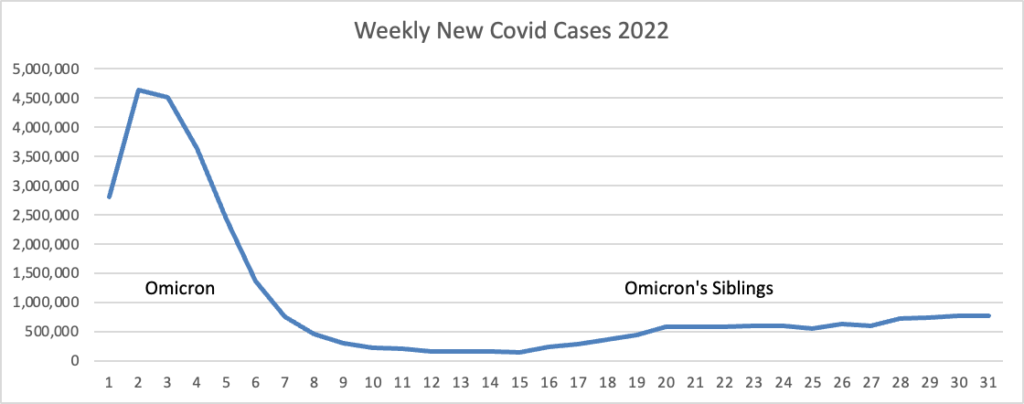
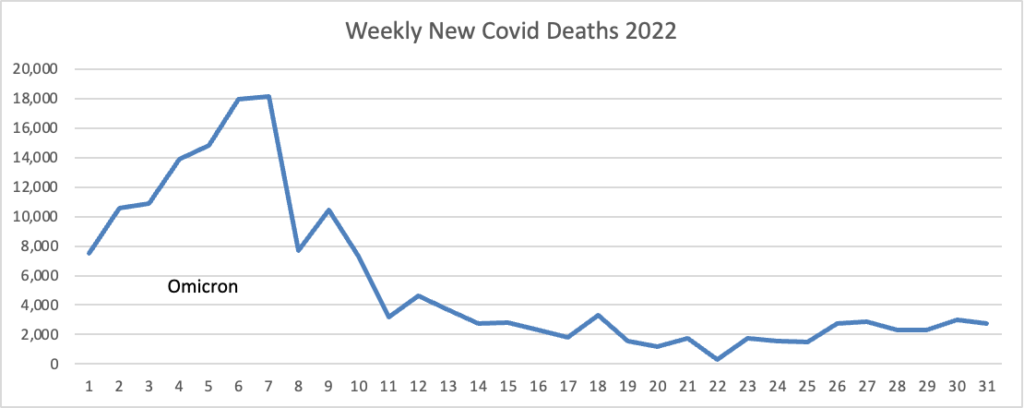
Based on the Centers for Disease Control’s Covid data tracker and using Thursday as the first day of the week, here are the FEHBlog weekly charts of new Covid cases and deaths from the 27th week of 2021 through the 13th week of 2022:

The CDC weekly review of its Covid data adds

Currently, there are 19 (0.59%) counties with a high COVID-19 Community Level, 146 (4.53%) counties with a medium Community Level, and 3,059 (94.88%) counties with a low Community Level. This represents a slight (−0.84%) decrease in the number of high-level counties, a moderate (−2.73%) decrease in the number of medium-level counties, and a corresponding (+3.57%) increase in the number of low-level counties. Twenty-seven (48.21%) of 56 jurisdictions had no high- or medium-level counties this week. To check your COVID-19 community level, visit COVID Data Tracker.

* * *

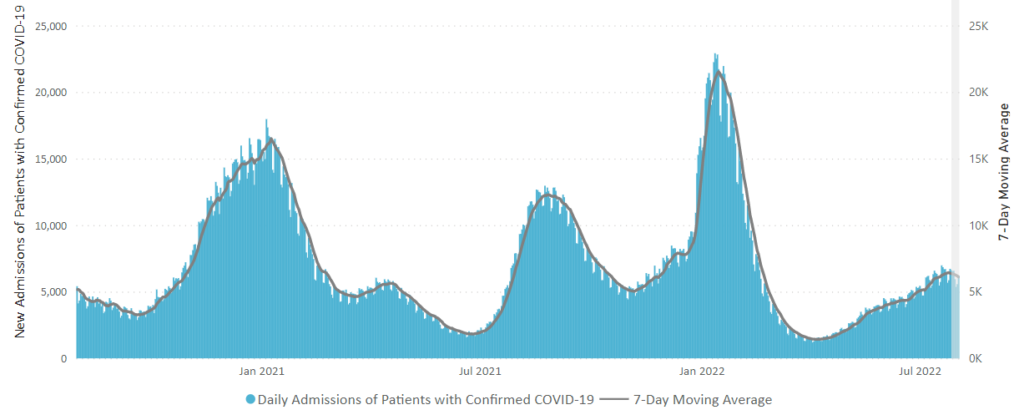
The current 7-day daily average [of new Covid hospital admissions] for March 23–29, 2022, was 1,564. This is a 15.8% decrease from the prior 7-day average (1,858) from March 16–22, 2022. * * *

The current 7-day moving average of new [Covid] deaths (627) has decreased 14.4% compared with the previous 7-day moving average (732).

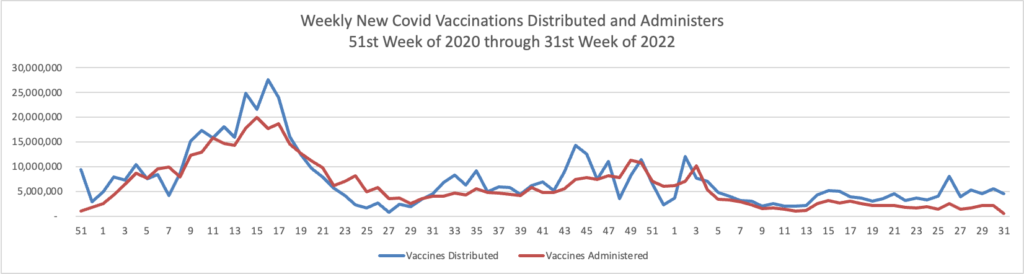
Here’s a link to the FEHBlog’s weekly chart of new Covid vaccinations distributed and administered from the beginning of the Covid vaccination era until last Wednesday.

The CDC’s weekly review notes

As of March 30, 2022, the 7-day average number of adhttps://www.cdc.gov/coronavirus/2019-ncov/covid-data/covidview/index.htmlministered vaccine doses reported (by date of CDC report) to CDC per day was 214,405, a 17.8% increase from the previous week.

CDC’s COVID Data Tracker displays vaccination trends by age group, race/ethnicity, and urban/rural status. To see trends by age group and race/ethnicity, visit the Vaccination Demographic Trends tab. To see trends by urban/rural status, visit the COVID-19 Vaccination Equity tab.

The American Medical Association offers guidance to physicians concerning the FDA’s emergency authorization of a second Covid booster for Americans aged 50 and older.

HR Dive discusses what employers should take away from the Biden Administration’s updated approach to Omicron.

Here’s a link to the CDC’s weekly flu surveillance report or Fluview.

From the “and more” department —

  • HR Dive discusses what employers can do to help employees with adolescent children suffering from behavioral health issues. For example, because a shortage of child psychiatrists exists,

Telemental health programs offer convenient access (often at lower cost than in-person care) for many services—and some, like Brightline, are designed specifically for families of children with mental health needs. However, recent studies have shown that telehealth offerings are not being utilized as much for children as they are for adults, for rural populations as they are for urban ones, or for low-income communities as they are for wealthier ones. Clearly, there is an opportunity for employers to make vulnerable populations aware of the telemental health services available to them. 

  • BioPharma Dive identifies “Five FDA decisions to watch in the second quarter. Between April and June, the agency will advance key regulatory reviews in ALS and gene therapy as well as host an advisory meeting on cancer drugs.”

Thursday Miscellany

Photo by Josh Mills on Unsplash

From Capitol Hill

Roll Call tells us

Senators negotiating a COVID-19 supplemental funding package have an “agreement in principle” to provide roughly $10 billion for the Department of Health and Human Services to stock up on waning domestic supplies for combating the virus, according to Sen. Roy Blunt, R-Mo.

Blunt, the top Republican on the Senate Labor-HHS-Education Appropriations Subcommittee, said both parties have tentatively agreed to offsets for the $10 billion that would repurpose unspent funds from prior pandemic relief laws.

The offsets negotiators agreed to include $2.2 billion from unused grant funds for venues like zoos and theaters and $2 billion in untapped assistance to the aviation and manufacturing industry, Blunt said. His comments to reporters came after a Republican Conference lunch in which lead GOP negotiator Sen. Mitt Romney of Utah briefed his colleagues on the agreement in principle. 

Fierce Healthcare informs us

The House [of Representatives] passed a bill on Thursday that caps the out-of-pocket cost of insulin at $35 a month for beneficiaries in Medicare Part D and for certain group and individual plans.

The Affordable Insulin Now Act, which passed the House via a 232 to 193 vote, comes as work in the Senate continues on a bipartisan alternative that could bring additional changes. * * *

Private plans would also be required to offer first-dollar coverage of insulin without any deductible, according to an analysis from the Congressional Budget Office. 

The cap on cost-sharing for private insurance plans would implement in 2023.

The Hill offers a related article explaining why insulin prices are so “troubling” high.

HR Dive reports

Among the provisions of this month’s $1.5 trillion omnibus spending bill, Congress included a revival of an exemption that allowed high-deductible health plans to cover telehealth before individuals meet their deductible.

The provision was originally created by the Coronavirus Aid, Relief, and Economic Security Act, which sunset at the end of 2021. The provision will resume April 1 but will again sunset at the end of this year.

From the Omicron and siblings front, the Wall Street Journal discusses the state of Covid treatments and offers its advice on who should seek out a second Covid booster besides the immunocompromised.

From the OPM front, Govexec projects OPM’s actions over the next 18 months based on the FY 2022 to FY 2026 strategic plan released last Monday. In short, “Hire, Hire, Hire.”

Govexec also discusses efforts underway by OPM, the Social Security Administration and the Thrift Savings Plan to improve the customer service experience of federal employees and retirees. Good luck with that.

From the research front the National Institutes of Health announced

Scientists have published the first complete, gapless sequence of a human genome, two decades after the Human Genome Project produced the first draft human genome sequence. According to researchers, having a complete, gap-free sequence of the roughly 3 billion bases (or “letters”) in our DNA is critical for understanding the full spectrum of human genomic variation and for understanding the genetic contributions to certain diseases. The work was done by the Telomere to Telomere (T2T) consortium, which included leadership from researchers at the National Human Genome Research Institute (NHGRI), part of the National Institutes of Health; University of California, Santa Cruz; and University of Washington, Seattle. NHGRI was the primary funder of the study.

Analyses of the complete genome sequence will significantly add to our knowledge of chromosomes, including more accurate maps for five chromosome arms, which opens new lines of research. This helps answer basic biology questions about how chromosomes properly segregate and divide. The T2T consortium used the now-complete genome sequence as a reference to discover more than 2 million additional variants in the human genome. These studies provide more accurate information about the genomic variants within 622 medically relevant genes. * * *

The now-complete human genome sequence will be particularly valuable for studies that aim to establish comprehensive views of human genomic variation, or how people’s DNA differs. Such insights are vital for understanding the genetic contributions to certain diseases and for using genome sequence as a routine part of clinical care in the future. Many research groups have already started using a pre-release version of the complete human genome sequence for their research.  

From the mental healthcare front, the American Hospital Association calls our attention to a new GAO report.

Consumers with health coverage experience challenges finding in-network mental health providers, who may not be accepting new patients or have long wait times to see them, according to a new report from the Government Accountability Office. Factors contributing to these challenges include low reimbursement rates for mental health services and inaccurate or out-of-date information on provider networks, GAO said. The report also looks at ongoing and planned federal efforts to address these challenges, for example by increasing the mental health workforce, mental health system capacity and oversight of health plan compliance with mental health parity laws.

This squib caused the FEHBlog to recall a comment that he heard at a conference — Four out of five doctors are in-network but only one out of five mental health providers are in-network with the notable exception of hub and spoke telemental services.

Yesterday the FEHBlog suggested that in return for three free primary care visits and three behavioral health visits, plan members should name and use their in-network primary care provider and primary mental health provider. The FEHBlog is sticking with this idea for the in-network primary care provider but he recognizes the idea may be premature for the in-network primary mental health provider. Of course, creating a looser standard for free mental health care compared to primary care is compliant with the federal health parity rule. The reverse would violate the often fuzzy non-quantitative treatment limitations created by the law.

From the miscellany department —

  • STAT News tells us “With Medicare expected to cover a projected 80 million people by 2030,He entrepreneurs and investors are cashing in on what analysts see as an inevitable shift in health care away from the hospital and into the homes of aging patients.” The publication identifies five related technology trends.
  • Fierce Healthcare reports “Virtual care startup Hims & Hers is teaming up with Carbon Health to offer patients in California with direct access to providers for in-person medical appointments at clinics. The collaboration will provide easy and comprehensive access to a broader range of care options through the Hims & Hers platform, company executives said.”
  • Health Payer Intelligence informs us “Large employers are investing more in their wellness program design in 2022 and their programs revolve around hybrid work environments, job satisfaction, and equity, the Business Group on Health found in a survey.”

Midweek update

Photo by Manasvita S on Unsplash

From the OPM front —

Here is a link to OPM’s 2023 Congressional Budget Justification for Fiscal Year 2023, which confirms on page 36

Beginning in plan year 2023, this proposal would require all plans and issuers, including FEHB carriers, to cover three primary care visits and three behavioral health visits each year without charging a copayment, coinsurance, or deductible-related fee. For High Deductible Health Plans, these services would be considered pre-deductible for meeting Health Savings Account requirements. This proposal would increase FEHB premiums by approximately 0.8 percent.

In the FEHBlog’s opinion, OPM should condition these “free” visits on requiring the plan member to identify and use an in-network primary care provider or in-network primary behavioral care provider. Members who develop relationships with their healthcare providers in this manner are more likely to undergo preventive care and otherwise follow medical advice. That’s common sense. It’s worth adding that the Affordable Care Act typically limits reduced cost-sharing to claims involving in-network care.

Meanwhile, Meritalk discusses OPM’s perspective on the President’s proposed budget, and Federal News Network explains why diversity goals are crucial to the success of OPM’s FY 2022 to FY 2026 strategic plan.

FedSmith.com discusses the impact of retirement on federal employee benefits.

From the Omicron (and siblings) front, the Wall Street Journal reports

President Biden on Wednesday said the nation was in a new phase of the Covid-19 pandemic as he marked the launch of a new federal website where Americans can identify virus risks in their areas and recommendations for mitigating the threat.

The website, COVID.gov, aims to be a one-stop shop to help people get information on measures that could help protect them from the virus, such as local guidance for mask wearing and where to find free masks, vaccines and clinics that offer tests and oral antiviral treatments, Mr. Biden said.

“We’re now in a new moment in this pandemic,” Mr. Biden said. “It does not mean that Covid-19 is over. It means that Covid-19 no longer controls our lives.”

The FEHBlog is pleased to see that the new site includes a link that allows you to find a test to treat program near you.

From the Rx coverage front, BioPharma Dive informs us

By a slim margin, advisers to the Food and Drug Administration have concluded that the agency should hold off approving a closely watched, experimental medicine for ALS until researchers generate more evidence that it works.

Composed of neuroscience and drug development experts, the 10-person advisory committee on Wednesday voted 6 to 4 against the medicine, named AMX0035 and developed by the Cambridge, Massachusetts-based biotechnology company Amylyx Pharmaceuticals. In a study of about 140 volunteers, AMX0035 appeared to show modest benefits on survival and day-to-day function for patients with rapidly progressing ALS, better known to some as amyotrophic lateral sclerosis or Lou Gehrig’s disease. * * *

The FDA isn’t required to follow its advisers’ recommendations. But it usually does, making approval of AMX0035 now more of a long shot. A final decision is expected by late June.

In other news —

RAC Monitor notes that the Consolidated Appropriations Act 2022 continues to prohibit federal funding for the national patient identifier otherwise required by HIPAA. That’s unfortunate for the country.

Healthcare Economist discusses its views on high deductible plans that are a prerequisite to funding health savings accounts.

Tuesday’s Tidbits

Photo by Patrick Fore on Unsplash

From Capitol Hill, Congress.gov informs us that Congress has sent the Postal Reform Act of 2022 (HR 3076) to the President for his signature.

MedPage Today discusses a Congressional hearing on Medicare for All held today. Democrats (for) and Republicans (against) remain split.

The FEHBlog finds the President’s budget proposal useful for identifying new Administration FEHB priorities, several of which were identified in yesterday’s post. What’s more, FedWeek tells us

[T]he FEHB program would be among programs affected by a broader proposal regarding mental health service coverage in health insurance. It would require coverage of three primary visits and three behavior health visits without cost-sharing.

In the FEHBlog’s opinion, this idea would drive up premiums for no reason because federal and postal employees already are offered employee assistance programs that offer free counseling sessions. OPM needs to do a better job coordinating its various benefit programs.

Fierce Healthcare identifies four other healthcare items from the President’s budget proposal that should be watched.

From the Omicron (and siblings) front —

The Wall Street Journal reports

The Omicron BA.2 variant represents more than half of new Covid-19 cases in the U.S., the latest federal estimates show, as signs suggest infections are edging higher again in parts of the Northeast.

The region has the highest BA.2 concentrations, including more than 70% in an area including New York and New Jersey, according to estimates the Centers for Disease Control and Prevention released Tuesday. BA.2 has been moving steadily higher for more than a month and represents an estimated 55% of national cases in the week ended March 26, the CDC said. * * *

“Predictions are hard, but I am expecting that the U.S. will have a surge in at least some locations,” said Aubree Gordon, an associate professor of epidemiology at the University of Michigan School of Public Health.

AHIP tells us

Today the Food and Drug Administration (FDA) authorized a second single Pfizer-BioNTech or Moderna COVID-19 vaccine booster dose for persons aged 50 and older at least 4 months after receipt of a first booster dose of any authorized or approved COVID-19 vaccine. A second booster dose of the Pfizer-BioNTech COVID-19 vaccine or Moderna COVID-19 vaccine may also be administered to certain immunocompromised individuals, for those 12 years of age and older or 18 years of age and older, respectively, at least 4 months after receipt of a first booster dose of any authorized or approved COVID-19 vaccine.

The FDA previously authorized a single booster dose for certain immunocompromised individuals following completion of a three-dose primary vaccination series. This action will now make a second booster dose of these vaccines available, for a total of five vaccine doses authorized for populations at higher risk for severe disease, hospitalization and death. Emerging evidence suggests that a second booster dose of an mRNA COVID-19 vaccine improves protection against severe COVID-19 and is not associated with new safety concerns. * * *

This authorization still requires the Centers for Disease Control and Prevention (CDC) Advisory Committee on Immunization Practices (ACIP) to formally recommend the vaccine for the specific populations.  No date for an ACIP meeting has yet been announced.

Health plans are not required to reimburse these authorized vaccines until ACIP makes its decision.

From the healthcare business front —

Healthcare Dive reports

Hospitals’ operating margins were negative in February for the second consecutive month even as cases of the omicron variant waned, according to Kaufman Hall’s National Hospital Flash report. Negative margins in January were the first seen in 11 months.

The median Kaufman Hall Operating Margin Index was -3.45%, up from -4.25% in January but still well below levels hospitals can sustain, the report said.

Volumes for inpatient services fell while outpatient volumes staggered with revenues in those categories falling 19.3% and 5%, respectively, from January, according to the report.

Healthcare Finance News reports

UnitedHealth Group subsidiary Optum will combine with in-home healthcare service provider LHC Group, with UHG purchasing the latter for about $5.4 billion.

LHC provides healthcare services in the home for a demographic of mostly older patients dealing with chronic illnesses and injuries. It will be melded with Optum, which manages drug benefits and offers data analytics services and works with more than 100 health plans.

From the tidbits department —

  • The CDC has posted a new, improved anti-biotic resistance website. The CDC explains that the site is “refreshed to better engage and share information on antibiotic resistance (AR) in the United States and around the world. We all have a role to play—from travelers, animal owners, and care givers to patients and healthcare providers—to fight this deadly threat and now you can quickly access CDC’s latest resources.”
  • MedPage Today reports “Prediabetes prevalence nearly doubled among U.S. youth from 1999 to 2018, national data indicated. According to National Health and Nutrition Examination Survey (NHANES) data on over 6,500 youth, the prevalence of prediabetes increased from 11.6% in 1999-2002 to 28.2% in 2015-2018, Junxiu Liu, PhD, of Icahn School of Medicine at Mount Sinai in New York City, and colleagues reported in JAMA Pediatrics.” Obesity is a common thread.
  • The Endocrinology Network informs us “Participation in a tele-mentoring program led by Robert Wood Johnson Medical School was associated with a 44% decrease in inpatient admissions and a more than 60% decrease in inpatient spending among Medicaid patients with diabetes.” Bravo.
  • The International Foundation of Employee Benefit Plans discusses evaluating high cost gene therapy financing programs.

Monday Roundup

Photo by Sven Read on Unsplash

The President released his Administration’s fiscal year 2023 proposed budget today. Here are links to OMB’s budget website and a Roll Call overview of the proposal.

Here is OPM’s budget wishlist (Budget at 130):

  • Amend administration of tribal FEHB enrollment system
  • Expand family member eligibility under FEDVIP (presumably increasing the age limit for eligible children from 22 to 26)
  • Expand FEDVIP to tribal employees
  • Expand FEHB to tribal colleges and universities.

OPM also released the agency’s FY 2022 to FY 2026 strategic plan today. Here is a link to OPM’s lookbook on that plan. The lookbook (p. 9) identifies one current agency priority goal related to the FEHBP (out of six in total)

Improve customer experience by making it easier for Federal employees, annuitants, and other eligible persons to make more informed health insurance plan selection. By September 30, 2023, complete user-centered design and develop a minimum viable product for a new, state-of-the-art FEHBP Decision Support Tool that will give eligible individuals the necessary information to compare plan benefits, provider networks, prescription costs, and other health information important to them and their families.

In other government reports, the Centers for Medicare and Medicaid Services issued

the 2021-2030 National Health Expenditure (NHE) report, prepared by the CMS Office of the Actuary, that presents health spending and enrollment projections for the coming decade. The report notably shows that despite the increased demand for patient care in 2021, the growth in national health spending is estimated to have slowed to 4.2%, from 9.7% in 2020, as supplemental funding for public health activity and other federal programs, specifically those associated with the COVID-19 pandemic, declined significantly.

From the Omicron and siblings front —

  • The Centers for Disease Control posted a new “Quarantine and Isolation Calculator — A tool to help determine how long you need to isolate, quarantine, or take other steps to prevent spreading COVID-19.”
  • The Institute for Clinicial and Economic Review issued an evidence report on four Covid outpatient treatments, including the Pfizer and Merck Covid pills.

This Evidence Report will be reviewed at a virtual public meeting of the Midwest CEPAC (Midwest England CEPAC) on April 12, 2022. The Midwest England CEPAC is one of ICER’s three independent evidence appraisal committees comprising medical evidence experts, practicing clinicians, methodologists, and leaders in patient engagement and advocacy.
Register here to watch the live webcast of the virtual meeting.

ICER’s evidence ratings for the treatments reviewed include:

Sotrovimab delivers at least a small net health benefit when compared to no active treatment, with the possibility of a substantial net health benefit (“B+”).

[Merck’s] Molnupiravir is at least comparable to no active treatment, with the potential of a small net health benefit (“C+”).

[Pfizer’s] Paxlovid delivers at least a small net health benefit when compared to no active treatment, with the possibility of a substantial net health benefit (“B+”).

Fluvoxamine is at least comparable to no active treatment, with the potential of a small net health benefit (“C+”).

From the health equity front, Health Leaders Media reports

Despite willingness to address social drivers of health, two-thirds of physicians report inadequate time or ability to act, according to a new survey report.

KEY TAKEAWAYS

Nearly all physicians reported that at least one social driver of health affected the health outcomes of all or some their patients.

Financial instability (34% of patients) and transportation problems (24% of patients) were the top two social drivers of health experienced by physicians’ patients.

A solid majority of physicians (80%) reported that addressing social drivers of health is essential to improve health outcomes and decrease healthcare costs.

From the Rx coverage front, the FEHBlog noticed today that GoodRx has added a telehealth option to its website.

Weekend Update

Photo by Thought Catalog on Unsplash

The House of Representatives and the Senate will be in session for Committee business and floor voting on Capitol Hill this week.

The President will send his fiscal year 2023 federal budget to Capitol Hill tomorrow. The Wall Street Journal offers an explanatory article about this process.

From the federal employment front, Federal News Network discusses the progress of recalling federal employees to their offices.

Also, the FEHBlog noticed that the Federal Times offers a 2022 Federal Benefits Guide — “Answers to commonly asked questions from federal employees, helpful resources, and more.”

From the vaccines front —

  • Precision Vaccines informs us “After decades of false starts, new research indicates four Respiratory Syncytial Virus (RSV) vaccine candidates are nearing the completion of late-stage trials. According to the U.S. CDC, RSV vaccines could drastically reduce hospital and intensive-care admissions for young children and seniors.” Fingers crossed.

[T]here is now a growing body of research that’s offering at least some reassurance for those who do end up getting infected — being fully vaccinated seems to substantially cut the risk of later developing the persistent symptoms that characterize long COVID.

While many of the findings are still preliminary, the handful of studies that have emerged in the past half year are telling a relatively consistent story.

“It may not eradicate the symptoms of long COVID, but the protective effect seems to be very strong,” says epidemiology professor Michael Edelstein, of Bar-Ilan University in Israel, who’s studying long COVID.

From the mental healthcare front —

  • The Wall Street Journal reports “Telemedicine startups make it easier to get ADHD Drugs. That made some [startup] workers anxious. Digital companies such as Cerebral and Done seized on looser pandemic rules for prescribing ADHD drugs like Adderall. Some workers said they felt pressure to provide the medications.”
  • Health Payer Intelligence points out

Employee mental healthcare spending rose, and employer mental healthcare spending fell after employers transitioned their workers from preferred provider organizations to high deductible health plans, a study from the Employee Benefit Research Institute (EBRI) found.

The researchers focused on individuals who had been diagnosed with one of three specific mental health conditions to assess the impact of transitioning from a preferred provider organization to a high-deductible health plan: anxiety, attention deficit hyperactive disorder (ADHD), and major depressive disorder (depression).

The study received funding from a handful of organizations, including the Blue Cross Blue Shield Association, the Independent Colleges and Universities Benefits Association (ICUBA), Pfizer, and PhRMA.

[T]he researchers indicated that high deductible health plans could be improved if employers apply value-based care to their high deductible health plan benefit design.

“Smarter deductibles accommodating services preventing the exacerbation of chronic conditions might be a natural evolution of health plans,” the study concluded. “Interventions that improve patient-centered outcomes while maintaining affordability may be found in the form of a clinically nuanced health plan that better meets workers’ clinical and financial needs.”

Because it remains National Kidney Month, the FEHBlog wishes to draw attention to this Fierce Healthcare article about how CVS Health offers personalized kidney care for health plan members.

CVS Kidney Care aims to provide an end-to-end experience to manage kidney care in the long term before it reaches chronic kidney disease or end-stage renal disease. It takes a home-first approach to its care model and is currently co-developing a hemodialysis device that is built specifically with home care in mind.

The device is co-developed by Deka Research & Development and is currently in clinical trials. [CVS Kidney Care President Lisa] Rometty said CVS expects to complete the trial by the end of this year, with anticipated approval and launch sometime in 2023.

CVS chose to get involved in developing the tool, she said, because the company saw an unmet need in the market for a device that’s built from the ground up for in-home dialysis rather than adapted to it. Existing tools are not designed to be easy for a senior patient to understand, for example, Rometty said.

“We did it because we really felt strongly at the time that there wasn’t at the time a device that would meet the unique experience and ease of use and also the safety and clinical aspects,” Rometty said.

Cybersecurity Saturday

Cyberscoop and Federal News Network discuss the history and next steps of the cyber incident reporting rules found in Division Y of the Consolidated Appropriations Act, 2022.

In other policy news, Healthcare Dive offers an interview with National Coordinator for Health IT Micky Tripathi in which he “shared his thoughts on the scope and content of the interoperability complaints, when industry can expect penalties for providers found information blocking and how the government plans to build on TEFCA moving forward.”

Health IT Security informs us

The Biden-Harris Administration recently called on all private sector organizations to immediately harden their cyber defenses in preparation for potential Russian cyberattacks.  

“My Administration will continue to use every tool to deter, disrupt, and if necessary, respond to cyberattacks against critical infrastructure,” Biden stated publicly.

While there have been no direct threats against healthcare, the sector is known to be a top target for cyberattacks. The Health Sector Cybersecurity Coordination Center’s (HC3) most recent threat brief outlined a detailed history of Russian attacks on US healthcare entities.

Conti ransomware group, which has ties to Russia, was connected to at least 300 cyberattacks against US-based organizations. Conti claimed responsibility for at least 16 US healthcare sector cyberattacks.

HC3 listed past attacks committed by NotPetya, FIN12, and Ryuk, all of which have ties to Russia. In addition, the government identified two new forms of disk-wiping malware, HermeticWiper and WhisperGate, which threat actors used to attack Ukrainian organizations shortly before Russia’s invasion.

Echoing the President’s sentiments, HC3 and Health-ISAC released a statement warning the healthcare sector to take the Administration’s advice and tighten security controls.

Health IT Security adds

Of all critical infrastructure sectors, the healthcare sector faced the most ransomware attacks in 2021, the Federal Bureau of Investigation’s (FBI) 2021 Internet Crime Report revealed. The FBI’s Internet Crime Complaint Center (IC3) also observed a 7 percent increase in total internet crime complaints in 2021 compared to 2020.  

Phishing scams, non-payment or non-delivery scams, and personal data breaches were the most reported cybercrimes in 2021, the report continued. The victims tracked by the IC3 in 2021 lost over $6.9 billion in total, thanks to a multitude of cyber threats. Many of those cyber threats hid in plain sight, disguising themselves as legitimate investment opportunities, tech support, and real estate prospects.

The IC3 received 148 complaints of healthcare ransomware attacks. The next-highest number came from the finance sector, with just 89 complaints.

Looking at the issue from the perspective of a different data source, Politico reports

Nearly 50 million people in the U.S. had their sensitive health data breached in 2021, a threefold increase in three years, according to a POLITICO analysis of the latest HHS data.

Health care organizations including providers and insurers in every state except South Dakota reported such incidents last year. About half of states and Washington, D.C., saw more than 1 in 10 of their residents directly impacted by unauthorized access to their health information, according to the analysis. And hacking accounted for nearly 75 percent of all such breaches — up from 35 percent in 2016.

Experts say the increased hacking can be attributed to the health care industry’s rapid move to digital, particularly amid the Covid-19 pandemic; an increase inremote work, which allows more avenues for attacks with employees using more personal devices; the financially lucrative information for cybercriminals in health care; and greater awareness of attacks across the industry, thus more reporting.

Also from the cyberthreat front —

  • “The Cybersecurity and Infrastructure Security Agency (CISA), the Federal Bureau of Investigation (FBI), and the Department of Energy (DOE) published a joint Cybersecurity Advisory [on March 24] with information on multiple intrusion campaigns targeting U.S. and international energy sector organizations conducted by indicted Russian state-sponsored cyber actors from 2011 to 2018. In conjunction with the U.S. Department of Justice unsealed indictments today, this advisory provides the technical details of a global energy sector intrusion campaign using Havex malware, and the compromise of a Middle East-based energy sector organization using TRITON malware.”  
  • CISA added “66 new vulnerabilities to its Known Exploited Vulnerabilities Catalog, based on evidence of active exploitation. These types of vulnerabilities are a frequent attack vector for malicious cyber actors and pose significant risk to the federal enterprise. Note: to view the newly added vulnerabilities in the catalog, click on the arrow on the of the “Date Added to Catalog” column, which will sort by descending dates.”
  • TechRepublic reports “A relatively new cybercriminal group has quickly gained an infamous reputation for its unique tactics and successful attacks against several major organizations. Known as Lapsus$, the gang uses social engineering to target its victims and has reportedly hit such companies as Samsung, Okta, NVIDIA and Microsoft. In a blog post published Tuesday, Microsoft provides insight into the group’s tactics and techniques and offers tips on how to protect your organization from these attacks.”
  • The FBI and Treasury’s FinCen released “a joint Cybersecurity Advisory identifying indicators of compromise associated with AvosLocker ransomware. AvosLocker is a ransomware-as-a-service affiliate-based group that has targeted victims across multiple critical infrastructure sectors in the United States including, but not limited to, the Financial Services, Critical Manufacturing, and Government Facilities sectors.”
  • Here is a link to Bleeping Computer’s The Week in Ransomware.

From the cyber defense and responsibilities front —

  • The Department of Health and Human Services released “guidance to clarify covered entities’ obligation to require that business associates comply with HIPAA regulations, as specified by 45 Code of Federal Regulations (C.F.R.) § 162.923(c).”
  • Cybersecurity Dive discusses “how to keep business operations running after a cyber incident.”
  • ZDNet offers small business and individuals Windows 11 security advice.