From Capitol Hill, Roll Call reports that Congress is not making much progress toward replacing the current continuing resolution funding the federal government with an omnibus bill resolving FY 2022 appropriations. The deadline for Congressional action is February 18. It is starting to look like Congress is headed toward passing another short-term continuing resolution according to the article. Time will tell.
From the Covid testing front, the Biden administration announced today that Medicare will begin direct coverage of over-the-counter Covid tests in the early Spring of this year.
Health Payer Intelligence informs us that America’s Health Insurance Plans wrote a statement to Congress describing the numerous administrative problems created by the “free” Covid test coverage mandates that started nearly two years ago with the CARES Act.
MedPage Today tells us about a human challenge study of the Covid incubation period conducted in London which found that the Covid incubation is only two rather than five days after exposure. Instead the symptoms tend to peak at five days and the virus remains detectable 10 days after exposure.
The Institute for Clinical and Economical Review released a draft assessment of outpatient treatments for Covid including the Pfizer and Merck pills, an intravenously administered recombinant monoclonal antibody (Sotrovimab), and an off-label use of an obsessive-compulsive SSRI drug (Fluvoxamine) for which researchers are seeking an emergency use authorization for Covid. The draft conclusion is that
Our analyses suggest that each outpatient intervention produces improved clinical outcomes. At their current prices, each intervention is estimated to meet standard cost-effectiveness levels in the US health care system, even under a scenario with a lower hospitalization risk that may reflect the current Omicron wave. The cost-effectiveness findings are primarily driven by a treatment’s ability to reduce hospitalization and the baseline probability of hospitalization.
From the No Surprises Act front, the Labor Department helpfully released a transcript of the January 19, 2022, listening session regarding provider nondiscrimination under Section 2706(a) of the Public Health Service Act. The NSA requires the ACA regulators to issue implementing rules for this law which has been in force since 2014.
Also, Kaiser Health News discusses mental health therapist concerns about the good faith pricing estimate for healthcare services that the NSA applies across the board. The law also requires health plans to issue advance explanations of benefits in response to a good faith estimate from a provider. The FEHBlog will never understand why Congress failed to direct HHS to create HIPAA standard transactions for the GFE and the AEOB. In any event, providers and health plans await implementing rules from the ACA regulators.
From the Rx coverage front, Biopharma Dive provide us with two insights
“Biogen recorded $1 million in revenue from its new treatment for Alzheimer’s disease in the last quarter of 2021, offering the latest evidence that the drug, which came to market with multi-billion dollar sales expectations, continues to struggle commercially.”
“AbbVie may soon face competition for its top-selling eye drug Restasis after the Food and Drug Administration on Wednesday approved a generic version.”
From the healthcare business front, Fierce Healthcare fills us in on Cigna’s fourth quarter 2021 financial report.
Happy Groundhog Day! The Pittsburgh Post Gazette informs us that “There will be six more weeks of winter, Punxsutawney Phil predicted as he emerged from his burrow Wednesday morning to perform his Groundhog Day duties.”
From the White House, we have the President’s fact sheet on his Cancer Moonshot initiative. Federal Times also has a report on today’s announcement.
A STAT News article on cancer markers suggests that the President’s timing may be right
Back in 2000, when President Clinton called a tie in the race to map the human genome, scientists forecasted a medicinal revolution, one in which scientists could ferret out the genetic roots of every known cancer and match patients with personalized treatments.
That did not happen, for reasons of biological complexity, technological immaturity, and perhaps a little scientific hubris. But after two decades of mapping the kaleidoscopic details of human DNA, researchers believe they finally have the tools and techniques to live up to those lofty promises.
“It’s almost like back to the future,” said Anna Barker, an oncologist who serves as chief strategy officer at the Ellison Institute for Transformative Medicine of USC. “Where we would like to have been 21 years ago is where we are now.” * * *
But many cancers don’t fit neatly into the field’s existing paradigm, said Suzanne Topalian, professor of surgery and oncology at Johns Hopkins University School of Medicine. Improving outcomes for those tumors will rely on multidimensional biomarkers, measurements that can take a systematic look at how cancer evolves rather than providing a snapshot.
To Barker, the field’s next major challenge is to find better biomarkers for “the big killers,” diseases including pancreatic cancer and glioblastoma.
“These are the cancers that — what are the unknown unknowns here? What are we missing?” she said. “We can’t seem to detect them early enough to stop them.”
From the opioid epidemic front, the National Institutes of Health informs us that
A new study of intentional drug overdose deaths, or suicides by an overdose of a medication or drug, found an overall decline in recent years in the United States, but an increase in young people aged 15-24, older people aged 75-84, and non-Hispanic Black women. The study also found that women were consistently more likely than men to die from intentional drug overdoses, with the highest rates observed in women ages 45 to 64. In addition, factors such as time of year, length of day, and day of the week appeared to be associated with intentional overdose death rates. The study published today in the American Journal of Psychiatry and was led by investigators at the National Institute on Drug Abuse (NIDA), part of the National Institutes of Health.
Nearly 92,000 people died from drug overdoses overall in the U.S. in 2020. This represents the largest increase ever recorded in a calendar year and reflects a nearly five-fold increase in the rate of overdose deaths since 1999. About 5% to 7% of these overdose deaths are recorded as intentional. Because it can be difficult to determine whether overdose deaths are intentional, the actual numbers are likely even higher. Many people who have a substance use disorder also develop other mental illnesses, such as mood and anxiety disorders, which are independently associated with increased suicide risk. In addition, many people who are diagnosed with other mental illnesses are often diagnosed with a substance use disorder, emphasizing the need to address co-occurring mental health conditions holistically.
“The distinction between accidental and intentional overdose has important clinical implications, as we must implement strategies for preventing both,” said Nora Volkow, M.D., senior author on the study and director of NIDA. “To do so requires that we screen for suicidality among individuals who use opioids or other drugs, and that we provide treatment and support for those who need it, both for mental illnesses and for substance use disorders.”
From the antibiotic resistance (“AR”) front, we learn that the CDC has updated its AR investment map.
“Highlights of this year’s AR Investment Map release include:
An interactive map showcasing CDC’s antibiotic resistance funding to support activities in every U.S. health department and across hundreds of public health partners
An updated fact sheet featuring CDC’s global investments with partners in more than 50 countries to improve detection, prevention, and response to AR threats internationally
An updated fact sheet showing how CDC’s COVID-19 efforts have also worked to address antibiotic resistance, including investments in infection prevention and control, training, surveillance, and public health personnel.”
Obviously, this is an important government initiative.
Anthem is betting on a different strategy than some of its competitors as it looks to transition to value-based care.
The payer is partnering with many value-based clinical platforms like Privia and CareMax to bring physicians into alternative payment models aiming to reimburse for the quality of care delivered, as opposed to pure volume. That’s a different tack on value-based primary care than its peers like UnitedHealth and Humana, which have mostly acquired and built their own clinical networks.
But Anthem is betting its capital-light strategy is more sustainable and flexible as the payer looks to push deeper into capitation to really bend the cost curve.
Walmart has partnered with a healthcare machine intelligence company to offer a personalized provider recommendation tool to associates who receive healthcare coverage through the retail giant’s health plan.
The company, Health at Scale, will provide the technology that Walmart intends to integrate into its health plan administrator’s search engine and virtual care referrals, according to the press release.
Associates and their families who are enrolled in Walmart’s health plan and work at select locations will have access to the resource, which aims to facilitate the process of finding a healthcare provider that fits a member’s health needs.
From the Rx coverage front, the always thought provoking Drug Channels opines that
The boffins at the Centers for Medicare & Medicaid Services (CMS) recently dropped the latest National Health Expenditure (NHE) data, which measures all U.S. spending on healthcare. (See links below.) These data provide our first official look at how the pandemic has affected U.S. healthcare spending.
Today, I examine the key insights from these latest figures.
As you will see, outpatient drug spending remains a small—and shrinking—share of the $4.1 trillion spent on U.S. healthcare. What’s more, drug spending again grew more slowly than overall healthcare spending.
Meanwhile, consumers shoulder a much higher portion of this spending compared with their share of hospital spending.
Speaking of CMS that agency today released “the Calendar Year (CY) 2023 Advance Notice of Methodological Changes for Medicare Advantage (MA) Capitation Rates and Part C and Part D Payment Policies (the Advance Notice). CMS will accept comments on the CY 2023 Advance Notice through Friday, March 4, 2022, before publishing the final Rate Announcement by April 4, 2022.” Here’s a link to the CMS fact sheet.
The FEHBlog wishes that OPM would release a draft call letter for carrier comment before finalizing it. In fairness OPM does solicit carrier input before it draft the call letter. Nevertheless, it would be more collaborative for OPM to seek carrier comment before drafting and then on the first draft.
From the HR front, Federal News Network reports that
A new memo from the Office of Personnel Management released today, offers them performance management tips for a hybrid workplace.
“Effective performance management requires engagement and commitment from individuals at all levels of an agency,” the memo says. “As such, these performance management tips have been uniquely tailored to assist Non-supervisory Employees, Supervisors, and Leadership throughout the various phases of the performance management cycle.”
And now with agencies expected to begin returning employees to the office in the coming months, OPM wants to make sure managers are “equipped to manage employee performance equitably and effectively—regardless of whether the employees are in the office or not.”
The FEHBlog nearly fell off his office chair when he noticed a Govexec headline this afternoon reading “The House finally plans to vote on Postal reform [HR 3706] next week. The long sought after bill could make it to the President’s desk by the end of the month.” This Postal reform saga has been going on for over a decade.
The Postal reform act (HR 3706) would relieve the Postal Service of the obligation to prefund the cost of FEHB coverage in retirement for its employees. The bill also would create a Postal Service Health Benefits Program (“PSHBP”) within the FEHB Program. The PSHBP would tightly integrate Medicare annuitant coverage with primary Medicare A, B, and D. Medicare Part A (hospital care) is premium free while Medicare Part B (medical care) and Part D (prescription drugs) charge premiums.
OPM encourages Medicare age annuitants to pick up Part B but it prohibits FEHB carriers from using integrated Part D arrangements knowsn as EGWPs even though every other U.S. employer that provides drug coverage to its retirees uses a Part D EGWP or takes the retiree drug subsidy. What’s more Congress in the Medicare Modernization Act of 2003 expressly authorized FEHB plans to use Medicare EGWPs. Go figure.
In any event, all enrollee costs are included in FEHB risk pools which is an important feature of the FEHB Plan and its constituent PSHBP. The cost of Medicare Prime annuitants in the PSHBP will be much lower than those in legacy FEHB, and Medicare Prime annuitants are a signficant cadre of enrollment, PSHBP premiums will be noticeably lower than legacy FEHB premiums.
The CBO has projected that 3/5s of the Medicare integration savings for the PSHBP will come from the Part D EGWPs. The FEHBlog looks forward to the day later this decade when OPM finally permits legacy FEHB carriers to offer Medicare Part D EGWPs.
From the Covid vaccine front —
Pfizer and BioNTech have a submitted an emergency use authorization request for an mRNA Covid vaccine for little children aged six months through four years. The FDA and CDC are likely to approve the application by the end of February according to Medscape.
Novavax announced Monday that it has formally submitted a request to the FDA for emergency use authorization of its COVID-19 vaccine for ages 18 and older.
The request includes results from two large clinical trials that showed an overall efficacy of about 90% and a “reassuring safety profile,” the company said.
“We believe our vaccine offers a differentiated option built on a well-understood protein-based vaccine platform that can be an alternative to the portfolio of available vaccines to help fight the COVID-19 pandemic,” Stanley Erck, the president and CEO of Novavax, said in the statement.
From the COVID treatment front, the Wall Street Journal reports that providers are having difficulty obtaining the drugs need to treat Omicron because the treatments typically are available under emergency use authorizations and each State makes its own decison on how to distribute EUA treatments. On the brighter side,
Antiviral-pill manufacturers are ramping up production to meet demand. Supplies of Pfizer Inc.’s Paxlovid are expected to increase in the spring, according to Pfizer and state officials. Merck & Co., which manufactures molnupiravir with partner Ridgeback Biotherapeutics LP, said it has delivered two million courses to the U.S. and will deliver the rest of the 3.1 million courses under its contract by the end of this week.
From the healthcare cost front, Healthcare Dive reports that
The omicron variant walloped hospitals in the final month of 2021, driving up both adjusted patient volumes and expenses as the number of COVID-19 cases surged to new highs for the pandemic, according to Kaufman Hall’s latest flash report.
Patient days rose nearly 4% in December compared to November, while emergency department visits jumped more than 7% as patients came in with COVID-19 symptoms. Omicron’s rapid spread drove a 98% jump in COVID-19 hospitalizations over the course of the month, Kaufman Hall said, citing Centers for Disease Control and Prevention data.
The second full year of the pandemic was marked by an increase in severely ill patients requiring longer hospital stays compared to the first year, the report also found.
From the No Surprises Act front, Healthcare Dive examines healthcare provider association legal challenges to the federal regulators’ use as the qualifying payment amount in NSA arbitrations. The FEHBlog has described those cases now pending in federal district courts in Texas and Washington DC as exercises in futility. For example,
Since the qualifying payment amount represents the median in-network rate, it by definition means that half of providers are below the QPA and half are above, according to Chris Garmon, a professor at University of Missouri – Kansas City, who has studied surprise billing. Not all providers are set to see payments decline and some may even see them increase if the QPA is used, he said.
The good professor overlooks the fact that in 2021 out of network doctors caring for patient at in-network facilities were reimbursed at out-of-network rates typically two or perhaps three times the Medicare RBRVS reimbursement. For that reason, the FEHBlog expects that in most cases the QPA will be noticeably higher than pre-NSA reimbursements. Time will tell, but the regulators’ approach is reasonable, and patient advocacy groups have been supporting the regulators in these cases.
From the mental health parity front, Health Payer Intelligence compares provider and payer reactions to the government’s recent report to Congress on payer compliance with complex federal health parity act rules.
From the healthcare business front, Fierce Healthcare tells us that
GuideWell, the parent company of Blue Cross and Blue Shield of Florida, has closed its acquisition of Triple-S Management Corporation, a Puerto Rico-based health services company.
GuideWell acquired all shares of Triple-S at $36 per share in cash, according to an announcement from the company. Triple-S will now operate under its existing branding as a wholly owned subsidiary of GuideWell.
From the FDA front, check out this FDA news roundup.
From Capitol Hill, Govexec reports on OMB acting director’s Shalonda Young’s confirmation hearings to be the Presidentially nominated OMB director. Ms. Young appears on her way to confirmation.
It has been quite a day in COVID vaccine news. This morning, the New York Times reported that
The C.D.C. has begun to publish data on Covid outcomes among people who have received booster shots, and the numbers are striking:
As you can see, vaccination without a booster provides a lot of protection. But a booster takes somebody to a different level.
This data underscores both the power of the Covid vaccines and their biggest weakness — namely, their gradual fading of effectiveness over time, as is also the case with many other vaccines. If you received two Moderna or Pfizer vaccine shots early last year, the official statistics still count you as “fully vaccinated.” In truth, you are only partially vaccinated.
Once you get a booster, your risk of getting severely ill from Covid is tiny. It is quite small even if you are older or have health problems.
The average weekly chance that a boosted person died of Covid was about one in a million during October and November (the most recent available C.D.C. data). Since then, the chances have no doubt been higher, because of the Omicron surge. But they will probably be even lower in coming weeks, because the surge is receding and Omicron is milder than earlier versions of the virus. For now, one in a million per week seems like a reasonable estimate.
Later in the day, AHIP informed us that
Today, the U.S. Food and Drug Administration (FDA) approved a second COVID-19 vaccine. The Moderna COVID-19 vaccine has been approved for the prevention of COVID-19 in individuals 18 years of age and older. The vaccine will be marketed as Spikevax.
Spikevax meets the FDA’s standards for safety, effectiveness, and manufacturing quality required for approval. Spikevax has the same formulation as the Moderna COVID-19 Vaccine which held emergency use authorization (EUA) and is administered as a primary series of two doses, administered one month apart. Spikevax can be used interchangeably with the EUA Moderna COVID-19 Vaccine to provide the COVID-19 vaccination series.
The Moderna vaccine has been available under EUA for individuals 18 years of age and older since December 18, 2020. The Moderna COVID-19 Vaccine remains available under EUA as a two-dose primary series for individuals 18 years of age and older, as a third primary series dose for individuals 18 years of age and older who have been determined to have certain kinds of immunocompromise, and as a single booster dose for individuals 18 years of age and older at least five months after completing a primary series of the vaccine. It is also authorized for use as a heterologous (or “mix and match”) single booster dose for individuals 18 years of age and older following completion of primary vaccination with a different available COVID-19 vaccine.
Please send any comments or questions to Chris Regal (cregal@ahip.org).
Now both the Pfizer and Moderna mRNA vaccines have FDA marketing approval which allows for wider distribution.
Notwithstanding these advances, the Wall Street Journal calls to our attention the unfortunate fact that
Two years into the Covid-19 pandemic, America’s death toll is closing in on one million.
Federal authorities estimate that 987,456 more people have died since early 2020 than would have otherwise been expected, based on long-term trends. People killed by coronavirus infections account for the overwhelming majority of cases. Thousands more died from derivative causes, like disruptions in their healthcare and a spike in overdoses.
Covid-19 has left the same proportion of the population dead—about 0.3%—as did World War II, and in less time.
Unlike the 1918 flu pandemic or major wars, which hit younger people, Covid-19 has been particularly hard on vulnerable seniors. It has also killed thousands of front-line workers and disproportionately affected minority populations.
It robbed society of grandparents, parents, spouses, sons and daughters, best friends, mentors, loyal employees and bosses. Those lost include a 55-year-old Rhode Island correctional officer; a 46-year-old Texas dental-office receptionist who helped care for her granddaughter; a 30-year-old Iowan who fatally overdosed; and an active 72-year-old and grandmother of 15 who was Nashville’s first female city bus driver.
“It’s catastrophic,” said Steven Woolf, director emeritus at the Center on Society and Health at Virginia Commonwealth University. “This is an enormous loss of life.”
Unquestionably so.
From the Covid vaccine mandate front, Govexec.com reminds us that the federal District Court’s nationwide stay of the President’s September 2021 executive order does not apply to agency mandates that were implemented before the President’s executive order. For example,
The Veterans Affairs Department * * * is keeping its vaccine mandate in place for the vast majority of its workers. All employees of the Veterans Health Administration—about 380,000 workers—will still be subject to a vaccine requirement. VA issued its own mandate for those employees in July, prior to Biden’s executive order for the rest of the federal workforce. * * *
While 98% of the VA workforce was already in compliance with Biden’s order prior to the pandemic, only 89% had been vaccinated—one of the lowest rates of any large federal agency. McDonough had warned in certain medical settings the department would reject exemption requests, meaning those employees would have to get their shots or face discipline. VA is still sorting through those requests for Veterans Health Administration personnel.
In healthcare business news, Healthcare Dive tells us that
The Cleveland Clinic had its strongest financial performance ever in 2021, as the pandemic drove record levels of clinical activity — and subsequent revenue.
The Ohio-based academic medical giant’s total operating revenue reached $12.4 billion last year, up 17% from 2020’s topline. Operating income was $746 million, more than three times 2020’s operating income of $232 million. Both metrics, released last week by CEO Tom Mihaljevic in an annual address, were also notably higher than the system’s pre-pandemic performance in 2019.
Cleveland Clinic conducted 10.4 million outpatient visits — the nonprofit’s first time exceeding 10 million patient visits in a year — and had more than 22,800 COVID-19 admissions.
“Employers are beefing up benefits packages to lure workers in a tight labor market, and many are adding pricey fertility benefits — such as in-vitro fertilization and egg freezing — to their offerings.
“Why it matters: Benefits around fertility and family-building have long been overlooked by employer health care plans, but that’s rapidly changing.
“You see couples today that are living child-free, and a lot of times that’s their decision, but a lot of times it’s not,” says Gina Bartasi, founder and CEO of the fertility clinic Kindbody.
Employers can play a vital role in helping people find alternative options to grow their families, she says.
“What’s happening: “Earlier in my career, it was so rare for companies to offer this,” says Alice Vichaita, head of global benefits at Pinterest, which covers fertility services for its global workforce. “More and more companies are becoming aware that this is really an inadequacy in our health care system.”
In the past, many companies have avoided offering fertility benefits due to concerns about the cost, according to a Mercer report. But the rise in the number of fertility clinics — and growing demand for their services — is driving down the price, Bartasi says.
97% of employers who provide this coverage say it has not resulted in a significant increase in medical plan costs, per a Mercer survey.”
From the Rx coverage front, Fierce Healthcare lets us know that
While much of the energy in the drug pipeline has centered on orphan drugs, novel therapies in more crowded markets have also been marching toward approval, according to a new report from Optum.
Analysts at OptumRx released the pharmacy benefit manager’s quarterly drug pipeline report, which highlights therapies in the pipeline insurers should be keeping an eye on. All three drugs mentioned in this quarter’s report would enter hot markets should they be approved.
“Even in these competitive landscapes, we do see novel therapies approved,” Arash Sadeghi, clinical pharmacist at OptumRx, told Fierce Healthcare.
The report includes three drugs: tezepelumab—which was approved in December under the brand Tezspire [an asthma treatment] —cabotegravir [an injectable for pre-exposure prophylaxis (PrEP) to reduce the risk of sexually acquired HIV] and vadadustat [a pill to treat anemia in adults with chronic kidney disease].
Both Houses of Congress are in session this week for Committee business and floor voting.
The FEHBlog notes that the President’s nominee for Office of Management and Budget, acting Director Shalonda Young, and her designated replacement to serve as Deputy OMB Director, Nani Coloretti, will be attending their Senate confirmation hearings this week.
The current continuing resolution funding the federal goverment expires on February 18, 2022. The Hill reports that
Congressional negotiators are in danger of missing the Feb. 18 deadline for passing an omnibus package of the annual appropriations for fiscal 2022.
A shutdown is unlikely, but members of the Senate Appropriations Committee from both parties warn that if negotiators blow through the mid-February deadline, it increases the likelihood that Biden will have to settle for a yearlong stopgap funding measure to keep the government open.
At this point the budget ball is in the Senate’s hands. The Hill further states
Spokespeople for the two senior negotiators [at the Senate] declined to comment in detail on the talks.
“The negotiations are ongoing, and it remains the chairman’s goal to complete those negotiations by Feb. 18,” said Jay Tilton, a spokesman for Leahy.
Blair Taylor, a spokeswoman for Shelby, said, “We are working diligently to create a product that is palatable to everyone — bills that can advance through Congress and be signed into law by the president.”
From the Omicron front, the Wall Street Journal reports that
The Omicron variant spreads so quickly and generally causes such a mild form of illness among vaccinated populations that countries are tolerating greater Covid-19 outbreaks, willingly letting infections balloon to levels that not long ago would have been treated as public-health crises.
From different starting points, authorities in North America, Europe, and the Asia-Pacific are moving in the same direction, offering a glimpse into a future in which Covid-19 becomes accepted as a fact of everyday life, like seasonal flu.
Health officials everywhere, many for the first time, are forgoing some of the sharpest tools they have to combat Omicron—even as infections soar. They are accepting the virus-like never before to minimize disruptions to economies, education, and everyday life.
At the moment, deaths and hospitalizations are at highs in many countries, and in some, hospitals are overwhelmed. But they are a much lower percentage of total cases than earlier waves. Vaccines have made the disease less deadly, and treatments hold a greater promise of recovery for those who are infected and get seriously ill.
That improving outlook, coupled with the reality that the measures taken to contain earlier surges of the virus don’t work as well against the more-contagious Omicron, is informing the decision by policymakers to abandon restrictive steps aimed at containment amid growing public fatigue over restrictions.
The omicron subvariant, BA.2, appears to be more contagious but data so far doesn’t show it’s more dangerous or that it evades protection from vaccines, said Scott Gottlieb, the former commissioner of the U.S. Food and Drug Administration.
At worst, the strain could slow down the decline in omicron infections in the U.S., Gottlieb, a Pfizer Inc. board member, said on CBS’s “Face the Nation.” The subvariant has been found in small numbers in about half of U.S. states.
“I don’t think it really changes the narrative,” he said. “I don’t think this is going to create a huge wave of infection.”
From the Covid pill front, ABC News informs us that “Promising COVID-19 antiviral pill, Paxlovid, in scarce supply, as doctors, patients compete for access.”
[Due to manufacturing issues,] [t]he current plan calls for 265,000 courses of treatment in January, gradually ramping up to 10 million by the end of June and 20 million by the end of September.
[However, s]carcity isn’t the only problem. Doctors and pharmacists told ABC News the process of obtaining the drug is opaque, even arbitrary.
In Nevada, for example, Paxlovid primarily goes to long-term care facilities like nursing homes. But in neighboring California, state officials use a complex formula that factors in rising case numbers with other risk factors. In the District of Columbia, a few Safeway grocery stores are the primary distributors, although city health officials have asked doctors to give priority to high-risk individuals.
New York City will provide free antiviral pills, home-delivered, to people who test positive and are at higher risk from Covid-19, Mayor Eric Adams announced on Sunday. * * * Both oral anti-viral medications approved by the U.S. Food and Drug Administration — paxlovid from Pfizer Inc. and molnupiravir from Merck Inc. — will be available though in limited quantities, according the a City Hall press release. They will be delivered in partnership with Alto Pharmacy.
Cyberscoop reports that cybermeasures are gaining momentum at federal agencies in response to the President’s May 2021 executive order and increased funding from Congress.
The White House on Wednesday released its federal zero trust strategy, requiring agencies to meet certain cybersecurity standards and objectives by the end of fiscal year 2024. * * *
When a zero trust model is implemented, no user, system, network or service operating inside or outside the security perimeter is trusted, and every access attempt is verified.
The latest memorandum from the Office of Management and Budget (OMB) requires agencies to achieve certain goals by the end of 2024. These goals focus on identity, devices, networks, applications and workloads, and data — these are the five pillars described by the zero trust model of the DHS’s Cybersecurity and Infrastructure Security Agency (CISA).
From the Log4j vulnerability front, ZDnet warns that the threat is not over yet.
Despite the absence of immediate mass exploitation, Sophos security’s Chester Wisniewski backs the view that it will be a target for exploitation for years to come.
Microsoft continues to rate the Log4j vulnerabilities as a “high-risk situation” for companies across the globe and reckons there is high potential for their expanded use. But for now, Wisniewski believes an immediate crisis has been swerved.
“[T]he immediate threat of attackers mass exploiting Log4Shell was averted because the severity of the bug united the digital and security communities and galvanised people into action. This was seen back in 2000 with the Y2K bug and it seems to have made a significant difference here,” says Wisniewski. * * *
As for the duration of Log4Shell, Wisniewski reckons internet-facing applications will be found and patched or taken offline. But that still leaves a ton of internally vulnerable systems that might never be discovered, hence Log4Shell will live on for years as a favorite target for penetration testers and state-backed threat actors.
From the cyber-agency front —
HC3 released an analyst note “with updated information regarding the BlackMatter ransomware-as-a-service (RaaS) program. While HC3 previously identified multiple healthcare and public health (HPH) sector or health sector- affiliated organizations impacted by this malware, the group has not claimed a victim since October 31, 2021 and appears to have shut down operations. HC3 is reducing the threat level posed by BlackMatter to BLUE or GUARDED.”
This publication provides a methodology and set of procedures for conducting assessments of security and privacy controls employed within systems and organizations within an effective risk management framework. The assessment procedures, executed at various phases of the system development life cycle, are consistent with the security and privacy controls in NIST Special Publication 800-53, Revision 5. The procedures are customizable and can be easily tailored to provide organizations with the needed flexibility to conduct security and privacy control assessments that support organizational risk management processes and are aligned with the stated risk tolerance of the organization. Information on building effective security and privacy assessment plans is also provided with guidance on analyzing assessment results.
From the ransomware front, Cyberscoop reports that
The REvil (Sodinokibi) ransomware cooperative’s activity has not slowed down following Russia’s recent move to arrest several alleged members of the group, according to threat intelligence company ReversingLabs.
Two weeks have passed since Russia’s law enforcement agency FSB announced the takedown of the REvil group “at the request of US authorities,” but the ransomware-as-a-service (RaaS) enterprise remains as active as before.
After long being accused of allowing cybercriminals to proliferate within its borders – as long as Russian nationals or organizations are not hurt – Russia appeared set to send a different message with the arrest of 14 members of the REvil gang, even if some saw it as a political move – amidst the increasing tensions at the Ukraine border.
However, as ReversingLabs points out, the high-profile arrests of affiliates did not put a dent in REvil operations. In fact, the group is continuing operations at the very same pace as just before the arrests.
What’s more, here’s a link to the latest edition of Bleeping Computer’s the Week in Ransomware.
This week’s biggest news is about a new ransomware operation called DeadBolt encrypted QNAP [storage] devices worldwide, illustrating how threat actors can still earn a lot of money by targeting consumers and small businesses.
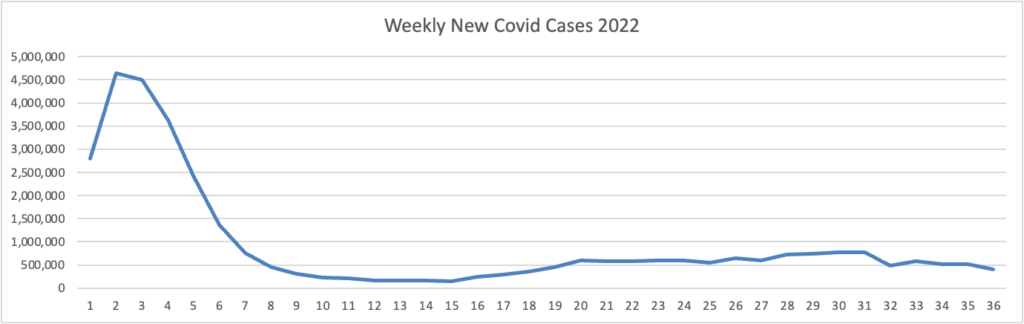
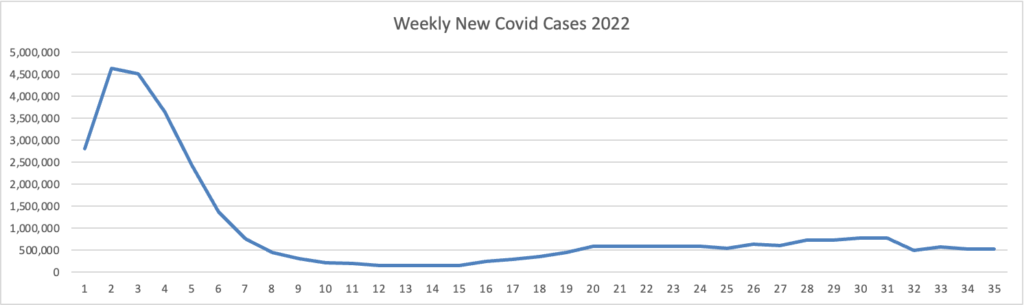
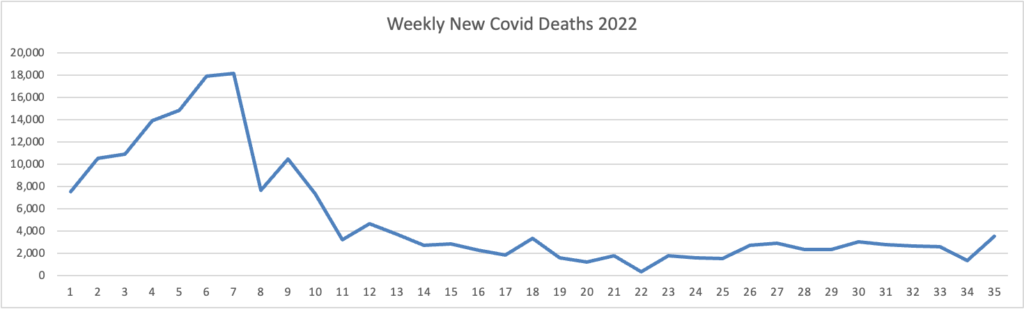
Based on the CDC’s Covid Data Tracker and using Thursday as the first day of the week, here is the FEHBlog’s weekly chart of new Covid cases from the 27th week of 2021 through the 4th week of 2022.
The Omicron surge clearly has peaked. However, the weekly new Covid deaths chart continues to rise as deaths are a lagging indicator.
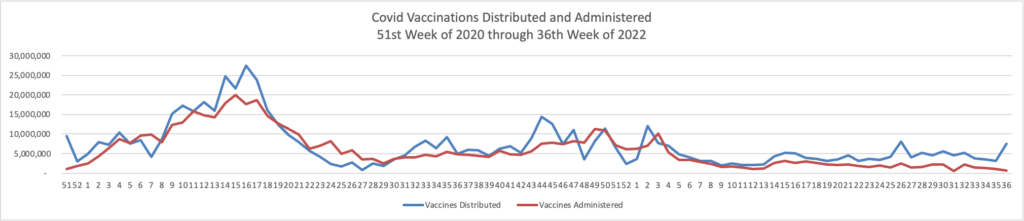
Here’s the FEHBlog’s chart of Covid vacciniations, including boosters, distributed and administered from the 51st week of 2020 through the 4th week of 2022.
The CDC’s Covid Data Tracker Weekly Review sums it up as follows:
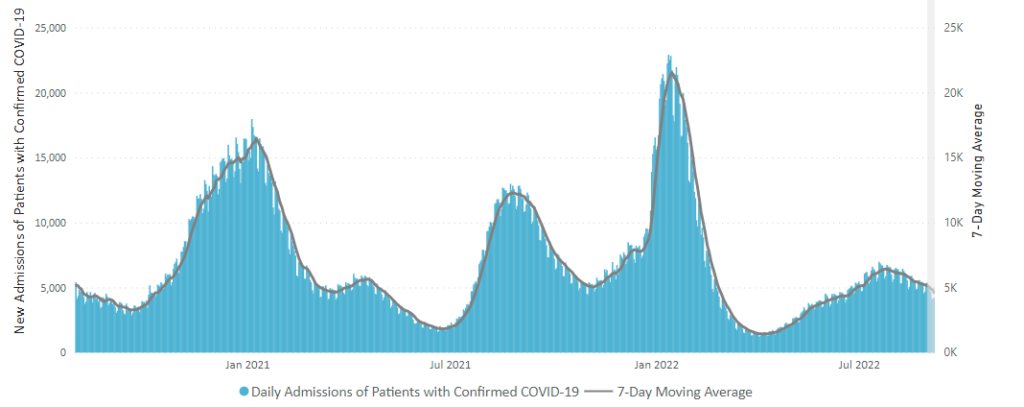
COVID-19 cases and hospitalizations are starting to decline across the United States. However, deaths are still rising, and community transmission is still high nationwide. As of January 27, 2022, more than 211 million people in the United States have received a primary series of a COVID-19 vaccine and are considered fully vaccinated. More than 86 million people are up to date with their COVID-19 vaccines, which means they have received all recommended COVID-19 vaccine doses, including boosters.
Two new CDC reports show that people who are up to date with their COVID-19 vaccines have the highest amount of protection against both the Delta and Omicron variants.
New data show that vaccines still protect against a spinoff of the Omicron variant, a welcome sign as the world keeps a close eye on the latest coronavirus iteration.
BA.2, as the sublineage is known, is part of the broader Omicron umbrella. Scientists are paying more attention to it as it begins to eat into the dominance of the more common Omicron strain, which is technically called BA.1.
Here’s a link to the CDC’s latest Fluview whose key update is as follows:
The percent of specimens testing positive for influenza remains stable, indicating that influenza virus circulation has remained at similar levels during the past two weeks, even while overall levels of respiratory illness have declined.
WIRED Magazine informs us that the goverment’ covidtests.com has been working smoothly to distribute sixty million rapid antigen tests to American thanks to sound planning from the U.S. Digital Service supported by the U.S. Postal Service.
At one time, a presidential announcement like that would have caused a mad scramble in the agencies involved. But hard and bloody experience has changed the way the executive branch works. This time, even before Biden made his public promise, the people charged with actually building the site had, as Hsiang says, “a seat at the table” and were able to shape expectations from the beginning. “We did a bunch of work to make sure that it was technically feasible before we decided how we were going to implement it,” says Natalie Kates, who is the Covid lead for USDS.
They decided that the project should be sited and built at the United States Postal Service, which not only had the national database of valid addresses, but would ultimately deliver the packages. When the Postal Service’s CIO, Pritha Mehra, learned about the project in December, she was given estimates that demand might peak at a million users an hour. Mehra, a 31-year veteran of the service, concluded that was a lowball prediction and multiplied the number by 20, striving for a fail-safe capability. “Think about it—free Covid tests,” she says. “Look at the numbers of people that are trying to buy them. And so we read 20 times the demand that had been projected, and I told my team that’s what we’re going to build to.” She had no problem recruiting that team. “This is a technologist’s dream, to be able to do this,” she says.
Mehra knew it would be a challenge to the service’s architecture, which involved a combination of its own data centers and outside cloud providers. Her team set up a system with triple redundancy, beefing up the architecture, separating the customer experience process from the order fulfillment, and caching data multiple times in the process. And doing endless load testing. “Believe me, there was a lot of work behind what seemed like a very simple site,” she says.
Mazaal tov.
Health Payer Intelligence reviews insurer association comments on the HHS proposed 2023 Notice of Benefit and Payment Parameters which principally focuses on the ACA marketplace.
The proposed rule addressed a broad range of issues on the individual health insurance marketplace, from medical loss ratios to health equity data.
AHIP and the Alliance for Community Affiliated Plans (ACAP) have both responded to the proposed rule with mixed reactions. Some elements they strongly applauded, such as the return to pre-2020 language around discrimination, web-broker display requirements, standards of conduct for brokers and agents, special enrollment period verification, and quality improvement strategy (QIS).
AHIP and ACAP highlighted a couple of key areas of the proposed rule that they would like to see changed in the finalized version [including risk adjustment, offering standardized plans, network adequacy, and medical loss ratio.
On the hand, the American Hospital Association also submitted comments on the proposed Notice.
The AHA yesterday voiced support for many of the policies proposed in the Centers for Medicare & Medicaid Services’ Notice of Benefit and Payment Parameters for 2023, including clarifications to the Medical Loss Ratio calculations, reestablishment of standardized health plan option requirements, changes to the essential health benefit nondiscrimination policy, and new requirements and standards of conduct for agents, brokers and web-brokers.
“In particular, we commend CMS on the proposed updates to the network adequacy standards, which are critical to ensuring that patients have access to the care they need,” AHA wrote. “We also strongly support CMS’ attention to advancing health equity throughout the proposed polices.”
Finally and considering its the beginning of the weekend, here is a link to the American Medical Association’s What Doctors Wish Their Patients Knew about sodium consumption.
From the Omicron front, MedPage Today reports that
While a large meta-analysis of studies on convalescent plasma use early in the pandemic turned up no survival advantage for the typical patient hospitalized for COVID-19, researchers have mined the dataset to predict who may benefit.
Eva Petkova, PhD, of NYU Grossman School of Medicine in New York City, and colleagues devised a simple and freely available tool called the Convalescent Plasma Benefit Index Calculator that allows doctors to input certain patient criteria to determine if their patient may benefit from convalescent plasma (age, oxygen need, blood type, and history of either diabetes, heart disease, or pulmonary disease).
Note: The FEHBlog has been intrigued by convalescent plasma treatments since reading John Barry’s The Great Influenza in early 2020. The FEHBlog currently is reading Gregory Zuckerman’s A Shot to Save the World which is equally fascinating.
The Wall Street Journal’s personal technology reporter Joanna Stern reviews the latest in at home Covid testing.
It’s Friday and you’ve got a scratchy throat and a mild headache. Time to play “Cold? Covid? Or Just Crazy?”—the only game more popular than Wordle.
Or you could open up your medicine cabinet and power-on a small white box. Swab your nose with a Lego-like stick, then slide that into the illuminated gadget. About 20 minutes later, your iPhone buzzes: “COVID-19 Positive.”
The future? Nope, it’s already here. For the past few weeks, I’ve been testing the Cue Health Monitoring system and the Detect Covid-19 Test, two systems from health-tech startups that put lab-like molecular testing right on your bathroom counter. No driving to the testing center. No waiting in line. No anticipating the results for days.
* * *
Molecular tests’ biggest benefit: They can spot Covid earlier—anywhere from 6 hours to two days, depending on the variant and other factors. Dr. Mina, who previously served as an adviser to Detect, said they’re good “if you’re really symptomatic and you definitely want to know, ‘Is this Covid?’ ”
However, if you’re using a test to determine whether you can safely go out into the world—back to work, back to school—the cheaper rapid antigen test would be best. “The problem with a molecular test is that it’s so sensitive that it may detect dead fragments and not live virus,” said Peter Chin-Hong, an infectious-disease specialist at the University of California, San Francisco.
Ms. Stern also explains in the article that the molecular test cost singificantly more than the rapid antigen tests.
Bloomberg released its latest Covid resilence ranking for 53 countries around the world.
The Covid Resilience Ranking is a monthly snapshot of where the virus is being handled the most effectively with the least social and economic upheaval. Drawing on 12 data indicators spanning virus containment, quality of healthcare, vaccination coverage, overall mortality and progress toward restarting travel, it captures how the world’s biggest 53 economies are responding to the same once-in-a-generation threat.
The United Arab Emirates and Saudi Arabia rank one and two. The U.S. ranks 23 down 11 ranks since last month. The FEHBlog recalls that last Spring before Delta hit us, the U.S. ranked number 1 in this index. How the mighty have fallen.
From the No Suprises front
The Affordable Care Act regulators today released 37 pages of helpful guidance about the No Suprises Act’s new federal independent dispute resolution process.
Healthcare Leaders tells us that “The U.S. Department of Health and Human Services (HHS), Office of Inspector General, plans to conduct a nationwide audit to determine whether hospitals that received Provider Relief Funding complied with the billing requirements for COVID patients. This requirement stipulates that those hospitals must not pursue out-of-pocket payments from COVID patients whose bill exceeded “what the patients otherwise would have been required to pay” for in-network care. This audit will be based on the various federal Covid relief acts, not the No Surprises Act
From the Affordable Care Act front, the FEHBlog diligently has been on the lookout for the HHS announcement of 2023 out-of pocket cost-sharing limits for in-network care. The 2023 ACA Notice of Benefit and Payment Parameters released December 28, 2021, advised that the announcement would be released in January. The regulators must have meant that future announcements would be released beginning in January 2024 because the FEHBlog discovered yesterday that the 2023 announcement was released on December 28, 2021.
The announcement reads in pertinent part that
Under 45 CFR 156.130(a)(2), for the 2023 calendar year, cost-sharing for self-only coverage may not exceed the dollar limit for calendar year 2014 increased by an amount equal to the product of that amount and the premium adjustment percentage for 2023. For other than self-only coverage, the limit is twice the dollar limit for self-only coverage. Under § 156.130(d), these amounts must be rounded down to the next lowest multiple of $50. Using the premium adjustment percentage for 2023 of 1.4408219719, and the 2014 maximum annual limitation on cost-sharing of $6,350 for self-only coverage, which was published by the Internal Revenue Service on May 2, 2013, the 2023 maximum annual limitation on cost-sharing is $9,100 for self-only coverage and $18,200 for other than self-only coverage. This represents an approximately 4.6 percent increase above the 2022 parameters of $8,700 for self-only coverage and $17,400 for other than self-only coverage.
And there you are, dear readers.
From the healthcare business front, Healthcare Dive informs us that
— HCA [Healthcare] announced plans to build five new hospitals in Texas in response to the growing population there, executives said Thursday during a call with investors.
— The hospitals will serve as primary- and secondary-type hospitals with basic inpatient and outpatient services that will refer patients needing higher-acuity services to HCA’s other campuses. These new hospitals will be smaller facilities with about 50 to 75 beds, executives said Thursday.
— The new hospitals will be located in the areas of Dallas Fort-Worth, Houston, San Antonio, and Austin.
Nashville, Tenn.-based HCA Healthcare saw its revenue and profit grow year over year in the fourth quarter of 2021.
The 182-hospital system reported revenue of $15.1 billion in the fourth quarter of last year, up from $14.3 billion in the same period of 2020. The for-profit hospital operator said same-facility admissions, emergency room visits and outpatient surgeries increased year over year, while inpatient surgeries declined.
After factoring in expenses and nonoperating items, HCA’s net income in the fourth quarter of 2021 totaled $1.8 billion, up from $1.4 billion in the same quarter a year earlier.
From the telehealth front, Fierce Healthcare reports that
As telehealth companies increasingly turn to chronic care management, Cigna’s MDLive is launching its own remote patient monitoring program.
The digital-first program will allow patients with chronic conditions to track biometrics like blood pressure and glucose levels, recording daily health information that they can review with MDLive providers during their visits.
* * *
Cigna expanded access to MDLive’s network of virtual primary care providers to all members of the insurer’s employer plans beginning January 2022.
The new patient health monitoring program will be available to all health plan clients of MDLive.
From the Omicron front, Live Science informs us about the so-called stealth Omicron variant.
A stealthy version of the omicron variant has been detected in the U.S., but so far, it makes up a very low proportion of the overall cases in the country.
This version of the variant, called BA.2, bears some genetic mutations not seen in the original omicron lineage, and some of these mutations lie in the spike protein, according to the World Health Organization (WHO). Some preliminary data hint that BA.2 may be slightly more transmissible, but not more severe, than the original omicron, but it’s too early to interpret that data with any confidence.
In December, scientists reported that the original version of omicron had split into multiple sublineages, one of these being BA.2, Live Science previously reported. BA.2 bears a genetic quirk that makes it harder to track using PCR tests, so it’s been nicknamed “stealth omicron.”
The New York Times tells us about a new study identifying four factors that may lead to “Long Covid“.
The researchers said they had found that there was an association between these factors and long Covid (which goes by the medical name post-acute sequelae of Covid-19, or PASC) whether the initial infection was serious or mild. They said that the findings might suggest ways to prevent or treat some cases of long Covid, including the possibility of giving people antiviral medications soon after an infection has been diagnosed. * * *
One of the four factors researchers identified is the level of coronavirus RNA in the blood early in the infection, an indicator of viral load. Another is the presence of certain autoantibodies — antibodies that mistakenly attack tissues in the body as they do in conditions like lupus and rheumatoid arthritis. A third factor is the reactivation of Epstein-Barr virus, a virus that infects most people, often when they are young, and then usually becomes dormant.
The final factor is having Type 2 diabetes, although the researchers and other experts said that in studies involving larger numbers of patients, it might turn out that diabetes is only one of several medical conditions that increase the risk of long Covid.
The COVID-19 booster drive in the U.S. is losing steam, worrying health experts who have pleaded with Americans to get an extra shot to shore up their protection against the highly contagious omicron variant.
Just 40% of fully vaccinated Americans have received a booster dose, according to the Centers for Disease Control and Prevention. And the average number of booster shots dispensed per day in the U.S. has plummeted from a peak of 1 million in early December to about 490,000 as of last week.
Also, a new poll from The Associated Press-NORC Center for Public Affairs Research found that Americans are more likely to see the initial vaccinations — rather than a booster — as essential.
“It’s clear that the booster effort is falling short,” said Jason Schwartz, a vaccine policy expert at Yale University. * * *
As for why an estimated 86 million Americans who have been fully vaccinated and are eligible for a booster have not yet gotten one, Schwartz said public confusion is one important reason.
“I think the evidence is now overwhelming that the booster is not simply an optional supplement, but it is a foundational part of protection,” he said. “But clearly that message has been lost.”
The need for all Americans to get boosters initially was debated by scientists, and at first the government recommended only that certain groups of people, such as senior citizens, get additional doses. The arrival of omicron, and additional evidence about falling immunity, showed more clearly a widespread need for boosters.
But the message “has been lost in the sea of changing recommendations and guidance,” Schwartz said.
Speaking of confusion over boosters, Kaiser Health News reports that
The Centers for Disease Control and Prevention reached out to pharmacists Wednesday to reinforce the message that people with moderate to severe immune suppression are eligible for fourth covid shots.
The conference call came a day after KHN reported that immunocompromised people were being turned away by pharmacy employees unfamiliar with the latest CDC guidelines.
If you thought that the idea of mixing and matching Covid boosters was confusing, the National Institutes of Health reassureed us that
In adults who had previously received a full regimen of any of three COVID-19 vaccines granted Emergency Use Authorization (EUA) or approved by the U.S. Food and Drug Administration, an additional booster dose of any of these vaccines was safe and prompted an immune response, according to preliminary clinical trial results reported in The New England Journal of Medicine. The findings served as the basis for recommendations by the FDA and the Centers for Disease Control and Prevention in late fall 2021 to permit mix-and-match COVID-19 booster vaccinations in the United States. Additional data from the ongoing Phase 1/2 trial, sponsored by the National Institute of Allergy and Infectious Diseases (NIAID), part of the National Institutes of Health, are expected in the coming months.
From the Postal Service front, Govexec reports that
USPS, like the rest of the nation, has experienced a surge in COVID-19 cases from the omicron variant and thousands of workers are sick or quarantining each day. Still, the agency oversaw a largely successful holiday period and continues to ramp up its delivery of COVID-19 rapid tests on behalf of the administration. The Health and Human Services Department is reimbursing USPS for its costs, but the Postal Service has declined to disclose the terms of that arrangement. The mailing agency has kept on thousands of temporary staff to support the effort and is using its own facilities to stage the shipments. Tens of millions of tests have already gone out, White House Coronavirus Response Coordinator Jeff Zients said on Wednesday.
Zients added the administration opted against using USPS to distribute 400 million N95 masks from the National Stockpile because its alternative approach—sending them to pharmacies and other locations to give to customers for free—is quicker. The masks have already reached many facilities and Americans are picking them up.
From the hearing aid front, Roll Call reports on the state of the Food and Drug Administration’s efforts to craft a rule allowing hearing aids to be sold over the counter, a Biden Administration initiative. Suffice it to say that nothing is simple.
From the healthcare business front, Healthcare Dive tells us that
The fourth quarter results for Indianapolis-based Anthem were mixed, analysts said. The financial results released premarket Wednesday beat Wall Street expectations on earnings, but missed on operating revenue.
Higher-than-expected coronavirus-related costs driven by the omicron variant — most notably in December — were “more than offset” by lower utilization of non-COVID-19 care, CFO John Gallina told investors on a Wednesday morning call.
Anthem’s commercial business had the highest costs relative to baseline, driven by factors like children becoming eligible for COVID-19 vaccines and the omicron surge. Medicare was next in line, followed by Medicaid, which actually ended the quarter slightly below baseline, Gallina said. The CFO noted he expects that theme to continue in 2022.
The payer’s medical loss ratio, the percentage of premiums invested back into patient care, was 89.5% in the quarter, in line with analyst forecasts and up sequentially from the third quarter’s 87.7%, which was much lower than analysts had expected. The fourth quarter of the year typically has a higher MLR, even notwithstanding pandemic pressures.
The number of accountable care organizations participating in the Medicare Shared Savings Program (MSSP) modestly increased to 483 this year compared with 477 for 2021, sparking new worries from advocates over the future of the program.
The Centers for Medicare & Medicaid Services released new figures Wednesday that show the patient population being served by ACOs has slightly grown. The new data come as the Biden administration released a strategic refresh last year for its payment models with the intent of getting every Medicare beneficiary in an accountable care relationship by 2030. * * *
ACO advocates have been concerned about a decline in overall participation that has been occurring in the MSSP in recent years. There were 517 ACOs participating in 2020, which was up from the 519 that operated in 2019. However, that’s down significantly from the 561 that participated in 2018.
The National Association of ACOs (NAACOS) has previously called for CMS to make it easier for organizations to take on financial risk. The group criticized a Trump-era program called “Pathways to Success” that requires ACOs to take on financial risk much earlier in the process.
NAACOS has also called for greater predictability in ACO benchmarks that set the spending and quality targets ACOs must meet to qualify for shared savings as well as increases in such shared savings rates.
From the mental health parity front, Health Payer Intelligence digs into yesterday’s government report on health plan compliance with the federal mental health parity law.
Out of all of the comparative analyses that EBSA received, not a single payer provided all of the information that the review requested in the initial submission.
As a result, the administration sent out 80 letters to payers requesting more information. Twelve of the letters went to payers that had already received a letter from EBSA notifying them that they had submitted insufficient information and seeking the requested details.
EBSA still has not announced any final determinations. However, after this back and forth with payers, EBSA accrued enough information to find 30 health plans in non-compliance on a total of 46 NQTLs.
Three major issues stood out to EBSA as the administration assessed NQTL compliance.
First, the administration found that many health plans and issuers were not prepared for compliance. * * *
Second, the initial comparative analyses perpetuated a historic trend of providing insufficient data due to five types of errors. * * * [For example] payers did not perform a comparative analysis before designing their NQTLs, so the NQTLs were unlikely to meet EBSA’s standards. * * *
Finally, despite lack of preparation and a range of errors that led to a fragmentary picture of the NQTLs and their applications, EBSA found that some plans could receive an initial determination even for an incomplete analysis. Hence, 30 plans have already received initial determinations of non-compliance.
As EBSA continues the determinations, the administration recommended changes to Congress that would enhance enforcement of the mental health parity compliance law, promote access to coverage, and standardize compliance regulations.
The FEHBlog recommends reading the entire article. As the FEHBlog mentioned yesterday, the mental health parity law could be made simpler and more effective but that outcome is just not in the cards at least currently.
From the Omicron front, the Wall Street Journal reports that
Covid-19 deaths in the U.S. have reached the highest level since early last year, eclipsing daily averages from the recent Delta-fueled surge, after the newer Omicron variant spread wildly through the country and caused record-shattering case counts.
The seven-day average for newly reported Covid-19 deaths reached 2,191 a day by Monday, up about 1,000 from daily death counts two months ago, before Omicron was first detected, data from Johns Hopkins University show. While emerging evidence shows Omicron is less likely to kill the people it infects, because the variant spreads with unmatched speed the avalanche of cases can overwhelm any mitigating factors, epidemiologists say.
“You can have a disease that is for any particular person less deadly than another, like Omicron, but if it is more infectious and reaches more people, then you’re more likely to have a lot of deaths,” said Robert Anderson, chief of the mortality-statistics branch at the National Center for Health Statistics, which is part of the Centers for Disease Control and Prevention.
Covid-19’s deadly effects manifest long after some patients leave the hospital, according to a new study that points to the pandemic’s grave aftermath.
Hospitalized patients who survived at least a week after being discharged were more than twice as likely to die or be admitted again within months, scientists from the London School of Hygiene and Tropical Medicine and the University of Oxford found. The Covid survivors also had an almost five times greater risk of dying in the following 10 months than a sample taken from the general population.
The findings, published Tuesday in the journal PLOS Medicine, add to evidence that the pandemic’s effects on health and wellbeing extend well beyond an initial infection. A Dutch study on Monday showed that three-quarters of Covid patients treated in intensive care were still suffering fatigue, impaired fitness and other physical symptoms a year later, and one in four reported anxiety and other mental symptoms.
“Covid-19 isn’t just an acute respiratory viral illness — like a cold or some other inconsequential infection — that goes away in a few days or a few weeks,” said Ziyad Al-Aly, director of the clinical epidemiology center at the Veterans Affairs St. Louis Health Care System in Missouri, who has led similar studies in the U.S. “It carries serious long-term consequences, including higher risk of death.” * * *
Needless to stay these articles illustrate the importance of being vaccinated with a booster against Covid.
From the free COVID tests front, MedCity News reports that
In the days since the Biden Administration announced on January 15 that insurers would be required to cover eight over-the-counter Covid-19 tests per month for members, digital health company Truepill has been busy developing a platform to help health plans meet that mandate.
In May, the San Mateo, California-based startup, which provides pharmacy fulfillment and telehealth services for brands like Hims, Nurx and Lemonaid, added home testing. Co-founder and President Sid Viswanathan said in an earlier interview that the company had planned to also offer diagnostics from the beginning.
The Covid-19 test coverage platform will give clients a behind-the-scenes partner who can assist with everything from checking member eligibility for coverage of tests to delivering those tests to their homes and providing shipping updates en route.
“We found a lot of plans are having to react to this on very short timelines, and so we’re building out a white-labeled, e-commerce experience that a plan can utilize,” said Varun Boriah, senior vice president of diagnostics at Truepill, in a phone interview. “We can put any plan’s logo on that asset and manage their patient experience for them.”
Cool.
From the OSHA vaccinate or test mandate front, the Society for Human Resource Management informs us
The Occupational Safety and Health Administration (OSHA) is withdrawing its emergency temporary standard (ETS) that would have required by Feb. 9 that large businesses ensure employees are vaccinated against the coronavirus or undergo weekly COVID-19 testing. Nonetheless, the agency is moving forward with its proposal to make the temporary directive a permanent standard.
On Jan. 13, the U.S. Supreme Court halted the ETS while the 6th U.S. Circuit Court of Appeals considered the merits of the challenge against the vaccination-or-testing directive. OSHA announced on Jan. 25 that it will no longer seek to enforce the ETS, which will end the lawsuit, but the temporary directive served a dual purpose. The ETS also acts as a proposal for a permanent standard, which is separate from the litigation. “OSHA is not withdrawing the ETS to the extent that it serves as a proposed rule,” according to the agency. * * *
OSHA said in a statement that it is prioritizing a proposal for a permanent COVID-19 safety standard for health care workers.
“Notwithstanding the withdrawal of the [ETS], OSHA continues to strongly encourage the vaccination of workers against the continuing dangers posed by COVID-19 in the workplace,” the agency said.
The FEHBlog noticed that the Justice Department has asked the U.S. Court of Appeals for the Sixth Circuit to dismiss the consolidated challenge to the OSHA ETS as moot citing this OSHA action.
From the mental health parity front, the Department of Health and Human Services announced the release of the government’s
2022 Report to Congress on the Paul Wellstone and Pete Domenici Mental Health Parity and Addiction Equity Act of 2008 – PDF. The report includes information that suggests health plans and health insurance issuers are failing to deliver parity for mental health and substance-use disorder benefits to those they cover. The report also highlights the departments’ recent emphasis on greater MHPAEA enforcement in addition to guidance to correct those failures, and makes recommendations to strengthen MHPAEA’s consumer protections and enhance the departments’ enforcement abilities.
The FEHBlog is not surprised at allegations on non-compliance because this is a very complicated. The law requires carriers to build walls between physical and mental health benefits and then ensure parity in quantitative and nonquantitative treatment limits. Why not break down the wall and define general coverage rules to embrace mental and substance use disorder care? Simply put, establish one set of rules for both types of care.
From the healthcare business front, Bloomberg reports that
Change Healthcare Inc. is considering selling some assets to clear the way for its $8 billion acquisition by UnitedHealth Group Inc., according to people with knowledge of the matter.
The company is working with advisers on a possible divestiture of its payment integrity business, ClaimsXten, said the people, who asked not to be identified because the information is private. ClaimsXten could fetch a value of more than $1 billion, the people said. The business generates $130 million to $150 million in annual earnings before interest, taxes, depreciation and amortization, they said.
There’s no certainty a deal for ClaimsXten will be reached or that it will be enough to satisfy regulators, the people said.
A representative for Change Healthcare didn’t immediately respond to requests for comment. A spokesperson for UnitedHealth declined to comment.
UnitedHealth and Change Healthcare have been caught in a regulatory limbo over their proposed merger since the U.S. Justice Department opened an investigation into the deal in March, two months after it was announced.
Can’t blame Change for trying.
From the benefit design front, Govexec offers a helpful article about the advantage of enrolling in a high deductible plan which permits funding a health savings account. Contributions to an HSA are tax deductible when contributed; grow tax free, and tax exempt when withdrawn for healthcare purposes. You can’t beat that.
Drug Channels offers a January news roundup featuring an Insulin G2N Update; OptumRx “Data,” HDHPs, 340B Projections, and Fun with the CDC. What’s not to like?
We use cookies on our website to give you the most relevant experience by remembering your preferences and repeat visits. By clicking “Accept”, you consent to the use of ALL the cookies.
This website uses cookies to improve your experience while you navigate through the website. Out of these, the cookies that are categorized as necessary are stored on your browser as they are essential for the working of basic functionalities of the website. We also use third-party cookies that help us analyze and understand how you use this website. These cookies will be stored in your browser only with your consent. You also have the option to opt-out of these cookies. But opting out of some of these cookies may affect your browsing experience.
Necessary cookies are absolutely essential for the website to function properly. These cookies ensure basic functionalities and security features of the website, anonymously.
Cookie
Duration
Description
cookielawinfo-checbox-analytics
11 months
This cookie is set by GDPR Cookie Consent plugin. The cookie is used to store the user consent for the cookies in the category "Analytics".
cookielawinfo-checbox-functional
11 months
The cookie is set by GDPR cookie consent to record the user consent for the cookies in the category "Functional".
cookielawinfo-checbox-others
11 months
This cookie is set by GDPR Cookie Consent plugin. The cookie is used to store the user consent for the cookies in the category "Other.
cookielawinfo-checkbox-necessary
11 months
This cookie is set by GDPR Cookie Consent plugin. The cookies is used to store the user consent for the cookies in the category "Necessary".
cookielawinfo-checkbox-performance
11 months
This cookie is set by GDPR Cookie Consent plugin. The cookie is used to store the user consent for the cookies in the category "Performance".
viewed_cookie_policy
11 months
The cookie is set by the GDPR Cookie Consent plugin and is used to store whether or not user has consented to the use of cookies. It does not store any personal data.
Functional cookies help to perform certain functionalities like sharing the content of the website on social media platforms, collect feedbacks, and other third-party features.
Performance cookies are used to understand and analyze the key performance indexes of the website which helps in delivering a better user experience for the visitors.
Analytical cookies are used to understand how visitors interact with the website. These cookies help provide information on metrics the number of visitors, bounce rate, traffic source, etc.
Advertisement cookies are used to provide visitors with relevant ads and marketing campaigns. These cookies track visitors across websites and collect information to provide customized ads.