Travel Vaccinations

Travel Vaccinations

The Saturday edition of the Wall Street Journal (a wonderful addition to my reading) includes an article on vaccinations required for travel to exotic foreign locales (warning – subscription wall). The article recommends that a traveler check a U.S. Centers for Disease Control website for required or recommended vaccinations and then check out their health plan coverage for those immunizations (FEHB plans generally provide good vaccination coverage.) The article also provides consumer tips on how to negotiate vaccination charges with the provider, e.g., group discounts at nurse practitioner travel clinics. I googled travel clinics and found several in DC, which I guess is not surprising.

HIT Developments

Rep. Nancy Johnson’s (R-CT) House Ways and Means Health subcommittee endorsed her Health Information Technology Promotion Act, H.R. 4157, by an 8-5 vote yesterday. (Hat tip to my colleague Theresa Defino. This bill would enshrine in law various HHS HIT initiatives such as ONCHIT. It also would fast track transition to a new electronic claims format (X12 5010 837 – April 1 2009) and the ICD-10 diagnosis and hospital procedure coding system (October 1, 2009). I understand that these are expensive IT projects for health plans. The House leadership may be planning to have the House vote on this bill during the body’s Health Week which reportedly begins June 18.

Sen. Ensign’s Commerce Committee will be holding an HIT acceleration hearing on June 21.

Take Your Vitamins?


In March, 2006, Wall Street Journal Tara Parker-Pope wrote a counter-intuitive article titled “The Case Against Vitamins.” (I found a copy that is not behind the subscription wall.) She writes

“Over the past several years, studies that were expected to prove dramatic benefits from vitamin use have instead shown the opposite. Beta carotene was seen as a cancer fighter, but it appeared to promote lung cancer in a study of former smokers. Too much vitamin A, sometimes taken to boost the immune system, can increase a woman’s risk for hip fracture. A study of whether vitamin E improved heart health showed higher rates of congestive heart failure among vitamin users. And there are growing concerns that antioxidants, long viewed as cancer fighters, may actually promote some cancer and interfere with treatments.”

The Washington Post’s health section featured an article titled “Multi Vitamins, Multi Questions” about a recent conclusion by “a federal panel that there’s no evidence to recommend for or against these dietary supplements.” The article is worth reading because it seeks to put the findings in context.

These articles remind me of a scene from Woody Allen’s 1973 movie “Sleeper” in which Woody awakes from a Rip Van Winkle length nap to find that eating red meat and smoking are now endorsed by the American Medical Association.

When I was a senior in college many years ago, I took a course on the future of the world. It was very Malthusian — warning of the coming population explosion. (My word, the 1970’s were a very depressing time.) Thirty years provides one with perspective. I therefore enjoyed reading my friend Robert Samuelson’s column in today’s Washington Post titled “Behind the Birth Dearth.” I commend it to you.


A Big Bowl of Wrong

Several news sources report, and the Veterans Affairs (VA) Department has confirmed, that an electronic data file containing the the names, birthdates, and Social Security Numbers of all living U.S. veterans (26.5 million in all) was stolen earlier this month from the home of VA analyst, who should not have taken the data from his office. Such major security breaches are not going to help the ongoing effort to create a national health information network.

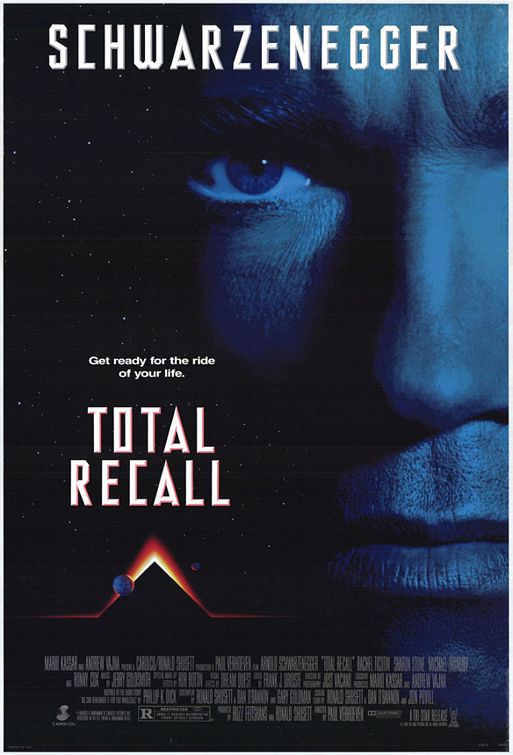
Total Recall


I found a fascinating HIT article buried in the Metro section of today’s Washington Post that minded me of the excellent Arnold Schwarzenegger movie from 1990 — Total Recall.

Evidently a company called Verichip is selling an implantable chip carrying a 16 digit patient ID number. The chip is implanted in a person, usually someone suffering from dementia, in a particular place on the body. When patients arrive unconscious or with dementia at an emergency room with a Verichip scanner (according to this article three DC area ERs now have one), the facility will scan the patient for the chip. If the ER finds the chip, ER personnel will use the patient ID scanned from the chip to log into a Verichip web site where the patient’s medical history is stored. Wow.

The sky is falling!!?

Former HHS Secretary Tommy Thompson is predicting that the U.S. health care system stressed by an aging population will collapse under its own weight by 2013. To avoid this outcome, he recommends increasing the cigarette tax by $1, somehow convincing Americans to eat less/better, and improving patient safety through health information technology.

Mark Your Calendars!

June 7 is National Health IT Day. I will celebrate the day by attending the keynote speeches by Former Speaker Newt Gingrich, Dr. David Brailer, and others.

June 13 is the date for the House Federal Agency and Workforce Organization Subcommittee’s hearing on H.R. 4859, the Family Friendly Health Information Technology Act of 2006. The lead article in this week’s issue of the Federal Times discusses this bill and OPM’s HIT issues described in the 2007 benefit and rate proposal call letter.

Supreme Court musings

Yesterday, the U.S. Supreme Court unanimously handed the ERISA-governed health plan community a major victory. Chief Justice Roberts’ opinion in Sereboff v. Mid Atlantic Medical Services, Inc., — U.S. –, No. 05-260, now permits ERISA-governed plans to enforce in federal court equitable liens on judgments and settlements that are subject to the plan’s contractual subrogation rights. I believe that this opinion undoes much of the damage to legitimate ERISA plan subrogation efforts created by the Supreme Court’s 2002 opinion in Great-West Life & Annuity Ins. Co. v. Knudson, 534 U. S. 204.

If private sector ERISA plans can enforce their subrogation rights in federal court, why shouldn’t the Court similarly rule in the McVeigh case (argued April 25) that FEHB plans have the same right, particularly when the funds which they recover are deposited in the U.S. Treasury. Sereboff adds support to my prediction that the Supreme Court will rule in Empire Blue Cross’s favor in the McVeigh case (see April 26 post).

Senate Health Week Ends Anticlimatically


I am in rainy Madison Wisconsin, attending my daughter’s graduation (ON WISCONSIN!) from the University of Wisconsin so I am a little delinquent in reporting that the Senate Health Week ended anticlimatically. On Thursday night, the Senate Republican majority was only able to round up 55 votes — five short of the 60 votes needed to end the filibuster over Sen. Enzi’s small business health care reform bill. I think that’s no great surprise.

My family and I visited the Mustard Museum in nearby Mount Horeb, Wisconsin today. Much fun!

Bill Reflecting President’s HSA Proposals is Introduced

On May 3, 2005, Rep. Eric Cantor (R-VA), the Chief Deputy Majority Whip in the House, introduced a bill (HR 5262) that embraces the Health Savings Account / High Deductible Health Plan improvements that President Bush proposed in the year’s State of the Union address:

  • Increasing HSA contribution limits to the plan’s out-of-pocket maximum;
  • Making premiums for HSA-compatible insurance tax-deductible;
  • Providing a low-income tax credit the purchase of HSA-compatible insurance;
  • Allowing employers to make greater HSA contributions for chronically ill employees;
  • Allowing flexibility to coordinate HSAs with existing health coverage options like Flexible Spending Accounts (FSAs) and Health Reimbursement Arrangements (HRAs);
  • Allowing early retirees to use HSA savings to pay for insurance coverage premiums;
  • Providing an income tax credit equal to amount of payroll taxes paid on HSA-compatible insurance premiums;
  • Providing an income tax credit equal to the amount of payroll taxes paid on HSA contributions, and
  • Providing pre-tax treatment of health care expenses incurred under HSA-compatible health plans before an individual establishes an HSA.

The bill was referred to the House Ways and Means Committee whose chairman, Bill Thomas (R-CA) reportedly supports the bill. Rep. Cantor, who sits on that Committee, would like for the full House to vote on the bill during its Health Week scheduled for the week of June 18th. The stumbling block for this bill may be the Senate.