Rate charts

Rate charts

Yesterday I received comments that the link on opm.gov to the 2016 fee for service plan / non-postal rate chart was broken so the FEHBlog’s own link to the chart.  The FEHBlog just received similar comments about the other rate charges so here they are

Last year there was a big problem with the Postal rates posted on these charts. The FEHBlog has confirmed with his Postal Service union amigos that the published 2016 Postal rates are accurate.  

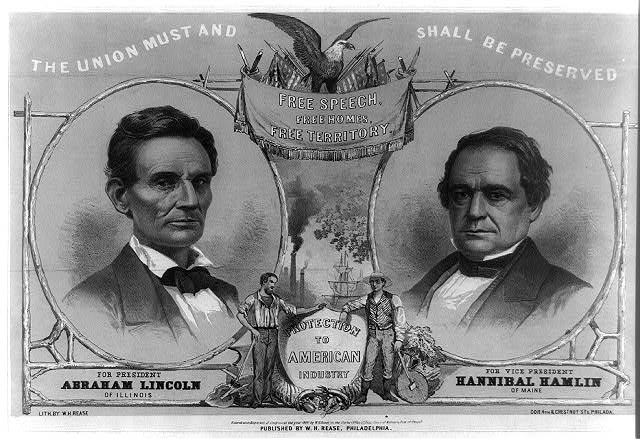
The Union is Preserved

The Washington Post reports that both Houses of Congress have approved a continuing resolution funding the federal government through December 11, 2015.

If you are an FEHB Program enrollee, check your plan’s website for information about 2016 benefit changes. Blue Cross FEP was first out of the box on that front.

The premium announcement

Here are links to the Washington Post, Federal Times, Govexec, and Business Insurance reports  on the OPM announcement of 2016 FEHBP premiums made early this afternoon.

The FEHBlog has received a few comments from readers who are dismayed over the fact that the enrollee contribution for the new self plus one coverage is more than the enrollee contribution for self plus family coverage in certain plans. There is no such thing as a good surprise. The Washington Post advises that

[E]nrollees should check premiums carefully before electing self plus one, officials said. While the total premium costs are capped at the amount for family enrollments, because of the way the premium sharing formula works, in about 5 percent of plans the enrollee share for a self plus one enrollment will be higher than that for a family enrollment.  

The Business Insurance article notes that

Escalating prescription drug costs, as has been the case for many private-sector employers, are a key factor in the sharp rise in premiums.  “One contributing factor to the somewhat higher FEHB premium increase than in the past several years is an uptick in the growth of drug costs. Drug costs are a much larger factor for the FEHB compared to most other employer-sponsored programs because annuitants, for whom drugs are the majority of benefits, are included in the FEHB risk pool. Drugs represent 26.5% of program costs versus 10% for a typical employer,” OPM said in a statement.

FEHBlog readers should know that rising drug costs are a real problem for all health plans inside and outside the FEHBP. The major actuarial consulting firm Milliman reports that “Prescription drug costs spiked significantly, growing by 13.6% from 2014 to 2015.” However, pooling employees and annuitant medical costs together is a saving grace of the FEHBP.  The FEHBP’s percentage of drug benefit costs in relation to total costs would be in line with other employer plans if it weren’t for the fact that Medicare pays the bulk of hospital costs for Medicare eligible FEHBP annuitants.

Non-postal FFS plan rates

OPM’s website must be hiccoughing as the FEHBlog is getting comments from clients and readers that the fee for service plan non-postal rates link does not work on OPM.gov. The FEHBlog was able to download that chart. Here is a better link.

Weekend update

The month of October starts this week. That means

  • A new federal fiscal year starts Thursday.  Congress is working on a continuing resolution to fund the federal government past Wednesday.  Here is a link to the Week in Congress’s report on last week’s activities on the Hill. 
  • The ICD-10 coding set compliance date also is October 1.  Government Health IT reports that according to GAO the implementation outcome is impossible to predict.  This is a big change for providers and payers. The FEHBlog expects that it will be a mess at least over the next six months despite best efforts.   
  • The U.S. Supreme Court returns to work this week. It’s first session of the new term will be a week from tomorrow. 
  • The 2016 FEHBP rates likely will be released this week. 
Late last week, The Segal Company, a large benefit consulting firm, issued its 19th annual survey on health care costs for the coming year 2016.  Segal’s key findings are as follows:
  • Trend rates for health maintenance organizations (HMOs) and open-access preferred provider organization (PPO)/point-of-service (POS) plans — the two most common medical plan types offered — are projected to differ by 1 percentage point: 6.8 percent for HMOs and 7.8 percent for PPO/POS plans.
  • Trend rates for prescription drug coverage are expected to be significantly higher in 2016: 11.3 percent for carve-out coverage for actives and retirees under age 65 and 10.9 percent for retirees age 65 and over. Both projections are roughly 3 percentage points greater than projections for 2015.
  • The projected specialty drug/biotech drug cost trend rate is expected to remain extremely high at 18.9 percent, but slightly lower than the projection for 2015.
  • Price inflation for prescription drugs and hospital stays are the overwhelming driver of cost increases, especially for prescription drugs, where trend is approaching double digits (9.8 percent), well above the current Consumer Price Index for all goods and services (0.1 percent).
Speaking of prescription drug price trends, get a load of this article on Kaiser Health News — 

Many doctors are choosing a better-safe-than-sorry approach to heading off heart trouble in very elderly patients. Inexpensive statin drugs are given to millions of people to reduce cholesterol, even many who do not show signs of heart disease. But a recent study has found that seniors with no history of heart trouble are now nearly four times more likely – from 9 percent to 34 percent – to get those drugs than they were in 1999.
Here’s the catch: For patients of that age, there is little research showing statins’ preventive heart benefits outweigh possible risks, which can include muscle pain and the onset of diabetes.  * * * With the average life expectancy at 76 for men and 81 for women in the U.S., drug companies haven’t funded such studies in people above 79. 

Also, the FEHBlog noticed this  thought-provoking article about electronic data encryption on the Federal News Radio site. The point of the article is that “data encryption should be done in such a way as to make it separate from the operating system or the application doing the encryption.”

HHS’s Office for Civil Rights has posted a lengthy FAQ on its even lengthier proposed rule on Public Health Service Act Section 1557, an ACA provision prohibiting various forms discrimination against individuals receiving services or coverage under federally funded programs such as the FEHBP.  The proposed rule applies only to HHS funded programs such as qualified health plans, Medicare, and Medicaid.

Enjoy the super moon eclipse / blood Moon tonight

TGIF

The FEHBlog expected that there would be no government shutdown on October 1, and mark the tape the Washington Post reports today follow the Speaker of the House John Boehner’s unexpected resignation,  “House Republicans said there was agreement to pass a clean spending bill to avert a government shutdown.” Presumably this decision is aligned with the Senate Republican leadership’s plan to vote for a continuing resolution that would expire on December 11 as reported by Federal News Radio.  House Majority Leader Kevin McCarthy (R Calif) is expect to be the new Speaker on November 1.

The Wall Street Journal reminded the FEHBlog that there finally is a biosimilar drug on sale in the U.S. — Zarxio which can be used in place of Amgen’s blockbuster Neupogen anti-infection drug for cancer patients. Zarxio has been sold in Europe since 2009 but this is the first year that Zarxio has outsold Neupogen across the pond. The Journal strikes a hope chord:

[T]here is reason to believe that the uptake of biosimilars could follow a smoother trajectory in the U.S. Kate Keeping, senior director of biosimilars research at Decision Resource Group, a health-care research firm, said U.S. physicians she had surveyed were more familiar with biosimilars than European physicians were before biosimilars were launched there. “It’s less likely that you’re going to see restrictions on uptake due to physicians being hesitant,” she said.

OPM did not announced the FEHBP 2016 premiums this week (as of 12:40 pm).  The FEHBlog can’t remember when the new rates were announced in October but here are a few days left in September.    

Mid-week update

OPM has posted a recent benefits administration letter providing helpful details on the self plus one enrollment type roll out.

Last August 19 marked the 19th anniversary of the Health Insurance Portability and Accountability Act or HIPAA.  HHS still has not released all of the transaction standards, e.g., the claims attachment standard, or code sets, e.g., the patient identifier. Congress has blocked HHS from issuing a patient identifier which is wrongheaded because a patient identifier is needed for interoperable medical records. Also the claims attachment standard may just be a bridge too far.  In any event, the FEHBlog thinks that the industry would have worked out the standards and code sets without a law. But the law remains there and Congress doubled down on that law in the ACA by coopting CAQH’s effort to create operating rules for the standard transactions. Today CAQH announced the released of its fourth round of operating rules. By HHS regulation, these CAQH rules will apply to all HIPAA covered entities and business associates.  The operating rules fill in gaps in the transaction standards in a uniform way.

Speaking of HIPAA and the 2009 HITECH Act, CMIO reports that the HHS Office for Civil Rights which enforces the HIPAA Privacy and Security Rules plans to start engaging in proactive desk audits of HIPAA covered entity and business association privacy and security policies and procedures. These audits will supplement the existing practice of auditing HIPAA covered entities and business associates that report large unsecured protected health information breaches in accordance with federal law.

The trade association AHIMA, which supports the ICD-10 implementation, has announced ten metrics that health information management professionals should be monitoring in the immediate wake of the looming ICD-10 code set compliance date next Thursday October 1.  Good idea.

Weekend Update

The Washington NFL and Major League Baseball teams won today so it has been a good weekend. Congress continues its work on Capitol Hill this week. The federal fiscal year ends in a week and a half on Wednesday September 30.  The FEHBlog expects Congress to enact a temporary continuing resolution before then.  Of course, the following day October 1 is the initial compliance date for the new ICD-10 coding system.  The ICD-10 system could rival the October 2013 healthcare.gov launch in terms of technological trainwrecks. It will take a few weeks to tell.

Following up on Friday’s post, Govexec reports that there is a lot of serious opposition to Sen. Carper’s recently introduced postal reform bill. The FEHBlog follows the legislation because it would create a separate Postal Service Health Plan within the FEHBP. That’s not the controversial provision. 

The Sacramento Business Journal reports on more impending ACA confusion for employers.  Only under the ACA can employers with 50 to 99 employees be subject to the ACA’s employer mandate as large employers and also subject to the ACA’s premium rules for small employers, like the FEHBlog’s law firm.  The FEHBlog can tell you that the small employer rating rules are costly because every family member is charged an age rated premium. The ACA fortunately for the FEHBP permits large groups to compositely rate.

OPM announced to benefit officers on Friday (but the FEHBlog can’t find any press release) that ADP is withdrawing the Plan Smart Choice internet based plan comparison tool from the FEHBP marker for the upcoming open season.  OPM explains that

For the 2015 Open Season, resources to assist FEHB and FEDVIP subscribers in choosing an insurance plan include:

The OPM Plan Comparison Tool:

▪   FEHB:            www.opm.gov/fehbcompare

▪   FEDVIP:        www.opm.gov/fedvipcompare

·   Consumer’ Checkbook’s “Guide to Health Plans for Federal Employees & Annuitants – An FEHBP Plan Comparison Tool” www.checkbook.org/newhig2/hig.cfm.  Please note that many Agencies make the electronic version of Consumers’ Checkbook available to employees on their intranet.

If history is any guide, OPM should be announcing 2016 premiums this week. The timing could slip due to the complicating factor of the new self plus one enrollment type.