From the Affordable Care Act front, the International Foundation of Employee Benefit Plans explains
The Internal Revenue Service (IRS) issued final regulations on affordability of employer coverage for family members of employees.
The final regulations under section 36B of the Internal Revenue Code (Code):
* Amend the regulations regarding eligibility for the premium tax credit (PTC) to provide that affordability of employer-sponsored minimum essential coverage (employer coverage) for family members of an employee is determined based on the employee’s share of the cost of covering the employee and those family members, not the cost of covering only the employee;
* Add a minimum value rule for family members of employees based on the benefits provided to the family members; and
* Affect taxpayers who enroll, or enroll a family member, in individual health insurance coverage through a Health Insurance Exchange (Exchange) and who may be allowed a PTC for the coverage.
The final regulations are effective 60 days after publication in the Federal Register.
IRS issued Notice 2022-41 in conjunction with regulations under section 36B.
The notice expands the application of the permitted change-in-status rules for health coverage under a section 125 cafeteria plan (cafeteria plan). In particular, the notice addresses the situation in which, during a period of coverage (typically a plan year), a cafeteria plan participant may wish to revoke the employee’s election under the cafeteria plan for other than-self-only (family) coverage under a group health plan (other than a flexible spending arrangement (FSA)) in order to allow one or more family members to enroll in a Qualified Health Plan (QHP) through a Health Insurance Exchange (Exchange) in the individual market.
Under the notice, the employee will be able to elect out of family coverage and into self-only coverage (or family coverage including one or more already-covered related individuals) under that health plan prospectively during a period of coverage, provided specific conditions are satisfied.
The Department of the Treasury and IRS intend to modify the Income Tax Regulations under section 125 of the Code consistent with the provisions of the notice.
Taxpayers may rely on the guidance in the notice for plan amendments allowing elections effective on or after January 1, 2023.
These rules are intended to fix the so-called “family glitch” in the ACA. Responsibility for implementing this rule in the FEHB Program falls on the employer, here OPM. More to follow on Wednesday because the FEHBlog needs to understand this change better.
Speaking of ACA changes, the U.S. Preventive Task Force gave a B grade to a modified description of its recommendation for primary care physicians to screen asymptomatic adolescents aged 12 to 18 for major depressive disorder and suicide risk. The USPSTF also expanded its new B grade anxiety screening recommendation for adults to asymptomatic adolescents and children aged 8 to 18.
Access to and availability of mental health providers must be expanded as well. Healthcare IT News reports on “how telehealth can help curb the mental health staffing shortage. A physician and virtual care expert discusses how demand for behavioral health services is increasing and what telemedicine can do to meet these needs. He shows how the tech can help serve vulnerable populations.”
In the U.S healthcare business news, Healthcare Dive informs us
Walgreens is buying the remaining 45% stake in post-acute and home care services provider CareCentrix for roughly $392 million, the pharmacy giant said Tuesday.
Walgreens acquired a 55% majority stake in CareCentrix, which coordinates home care for health plans, patients and medical providers, for $330 million in a deal that closed earlier this year.
The Illinois-based retailer has said the buy will expand its reach in the health sector, especially in the fast-growing areas of primary.
Congress remains on the campaign trail this coming.
The Medicare Open Enrollment period begins on Saturday, October 15. The New York Times adds
Social Security will soon announce the largest inflation adjustment to benefits in four decades — a welcome development for millions of older Americans struggling to keep up with fast-rising living costs.
The cost-of-living adjustment for 2023 is likely to be around 8.7 percent, based on the latest government inflation figures. The final COLA, as the adjustment is known, will be released Thursday, when the federal government announces inflation figures for September. Medicare enrollees can anticipate some additional good news: The standard Part B premium, which is typically deducted from Social Security benefits, will decline next year.
The COLA, one of Social Security’s most valuable features, will give a significant boost to more than 70 million Americans next year. While retirement comes to mind when most people think about Social Security, the program plays a much broader role in providing economic security.
In August, the program paid benefits to 52.5 million people over age 65, but younger beneficiaries — survivors of insured workers and recipients of disability benefits and Supplemental Security Income, the program for very low income people — added 17.9 million people to the total, according to Social Security Administration data.
The Federal Times discusses the upcoming open enrollment for the Federal Employee Dental and Vision Programs.
Twelve dental carriers provide 23 dental plan options available across the program. Seven dental carriers offer fourteen nationwide dental plan options available to all potential enrollees. Five vision carriers provide 10 nationwide vision plan options available to all potential enrollees.
The FEHB, FEDVIP, and FSAFeds Programs share the same open enrollment season, which this year will run from November 14 to December 12.
The health insurance marketplace open enrollment period begins on November 1, 2022, and ends on January 23, 2023.
From the public health front —
The New York Times discusses why Americans need a flu shot. As to timing
Immunity against the flu tends to wane over the course of a season. You have higher protection a couple of weeks after receiving the shot, compared with four or five months later, so it is a good idea to schedule your vaccine appointment close to the beginning of flu season, and not too early, Dr. Martin said. “I tend to get vaccinated in October so my antibodies are ramped up by the time holiday travel begins,” she said.
Some people wait longer, until November or December, especially if they are keeping a close eye on cases. But experts agree that it is important to receive the vaccine before cases start to surge. Your body needs at least two weeks after the shot to ramp up its defenses against the flu. People who are more susceptible to severe flu — especially older adults, pregnant women and very young children — should not delay their shots.
MedPage Today reports “Long COVID Persists in People With Symptomatic SARS-CoV-2 Infection — At one year, 15% of long COVID patients had ongoing cognitive or respiratory problems or fatigue.” Fierce Healthcare delves into health plan coverage of this tricky disease.
The New York Times offers expert opinions about various aspects of monkeypox.
From the healthcare personnel front, Healthcare Dive reports
Effective Oct. 17, [Amar] Desai who [currently is President and Chief Executive Officer, Optum Pacific West] will lead CVS’ newly created health care delivery division, overseeing implementation of CVS’ health services and care delivery strategy, according to a release from the Woonsocket, Rhode Island-based company. That includes CVS’ clinical delivery strategy in retail health, chronic disease management and behavioral health.
The division will work to link different aspects of CVS’ portfolio to develop payer-agnostic products and services, according to CEO Karen Lynch.
Good luck, Mr. Desai.
From the medical research front —
STAT News tells us about a large “gold-standard” European study concluding that colonoscopies are not all they have been cracked up to be in the U.S.
The trial’s primary analysis found that colonoscopy only cut colon cancer risk by roughly a fifth, far below past estimates of the test’s efficacy, and didn’t provide any significant reduction in colon cancer mortality. Gastroenterologists, including Bretthauer, reacted to the trial’s results with a mixture of shock, disappointment, and even some mild disbelief.
It’s the first randomized trial showing outcomes of exposing people to colonoscopy screening versus no colonoscopy. And I think we were all expecting colonoscopy to do better,” said Samir Gupta, a gastroenterologist at the University of California, San Diego and the VA who didn’t work on the trial. And, he said, it raises an uncomfortable question for doctors. “Maybe colonoscopy isn’t as good as we always thought it is.”
He stressed that the study does not invalidate colonoscopies as a useful screening tool. Colonoscopies are still a good test, Gupta said, but it may be time to reevaluate their standing as the gold standard of colon cancer screens. “This study provides clear data,” he said, “that it’s not as simple as saying, ‘Colonoscopy is the most sensitive test, and therefore it is the best.’ It still prevented cancers.”
The study has not shattered the FEHBlog’s confidence in the procedure, but it’s worth discussing the study with your physician down the line.
Bloomberg prognosis reports, “AstraZeneca Plc’s nasal spray vaccine failed to elicit a strong immune response to Covid-19 in a [small] early trial, a blow to the U.K. drU.K. giant’s ambitions for developing an alternative approach to preventing the disease.”
From the cybersecurity policy front, Cyberscoop reports
The Cybersecurity and Infrastructure Security Agency announced a Binding Operational Directive on Monday ordering federal civilian agencies to enhance efforts to detect vulnerabilities in their networks, a move that CISA Director Jen Easterly hopes the private sector will emulate.
The Improving Asset Visibility and Vulnerability Detection on Federal Networks, or BOD 23-01, directive is designed to improve “asset visibility and vulnerability detection on federal networks,” Easterly told reporters during a CISA roundtable discussion on Monday. Federal civilian agencies now will be expected to report detailed data about vulnerabilities to CISA at timed intervals using automated tools, she said.
“We have said consistently that we are on an urgent path to gain visibility into risks facing federal civilian networks,” Easterly told reporters. “This is a movement essentially to allow CISA, in its role as operational lead for federal cybersecurity, to manage federal cybersecurity as an enterprise.”
The congressional commission charged with bolstering U.S. cyber defenses has already seen plenty of its recommendations realized: the appointment of a national cyber director, increased CISA funding and a State Department cyber ambassador.
And a new report released Wednesday shows the Cyberspace Solarium Commission is on track to have 85% of all of its recommendations implemented with the remaining either facing some hurdles or “significant barriers.”
The commission progress report shows that nearly 60% of its original 82 recommendations have been fully or nearly implemented and more than 25% are on track to be realized.
An “IT security incident” reported this week by CommonSpirit Health, one of the nation’s largest health systems, is likely a cyberattack, security experts said.
CommonSpirit announced on Tuesday that an unspecified security incident was affecting multiple regions and interrupting access to electronic health records. As a precautionary step, some systems were taken offline as a result of the incident, the system said. * * *
While few details have left some to speculate on the nature of security incident at Chicago-based CommonSpirit Health, moving systems offline and interrupting access to electronic health records is viewed as a defensive move, security experts told Healthcare Dive.
It’s possible that an “an attacker has access or is trying to get access to their system and they want to do whatever they can to prevent that. So what’s the easiest way to do that? Unplug everything,” said Allie Mellen, senior analyst of security and risk at Forrester, a research and advisory firm for various industries.
The Health Sector Cybersecurity Coordination Center released a presentation on “Abuse of Legitimate Security Tools and Health Sector Cybersecurity.” The presentation discusses how bad actors can turn “tools used to operate, maintain and secure healthcare systems and networks ” against that infrastructure.”
From the ransomware front
The Government Accountability Office released a report on the topic. “Homeland Security, FBI, and Secret Service help state, local, and other governments prevent or respond to ransomware attacks on systems like emergency services. Most government entities said they were satisfied with the agencies’ prevention and response efforts. But many cited inconsistent communication during attacks as a problem. We recommended that the federal agencies address cited issues and follow key practices for better collaboration.”
ZDNet informs us, “Over half of ransomware attacks now begin with criminals exploiting vulnerabilities in remote and internet-facing systems as hackers look to take advantage of unpatched cybersecurity issues. According to the analysis of ransomware incidents during the past year by researchers at security company Secureworks, 52% of attacks started with malicious hackers exploiting remote services.”
As almost always, Bleeping Computer offers us The Week in Ransomware.
From the cyber defenses front
CISA kicked off National Cybersecurity Awareness Month last Monday. “This year’s campaign theme — “See Yourself in Cyber” — demonstrates that while cybersecurity may seem like a complex subject, ultimately, it’s really all about people.” Here’s CISA’s event page.
The National Cybersecurity Alliance joins CISA in sponsoring this awareness event. The Alliance shared four points (plus one) on staying safe online.
Cybersecurity Dive cautions that multifactor authentication is a cybersecurity tool, not a solution.
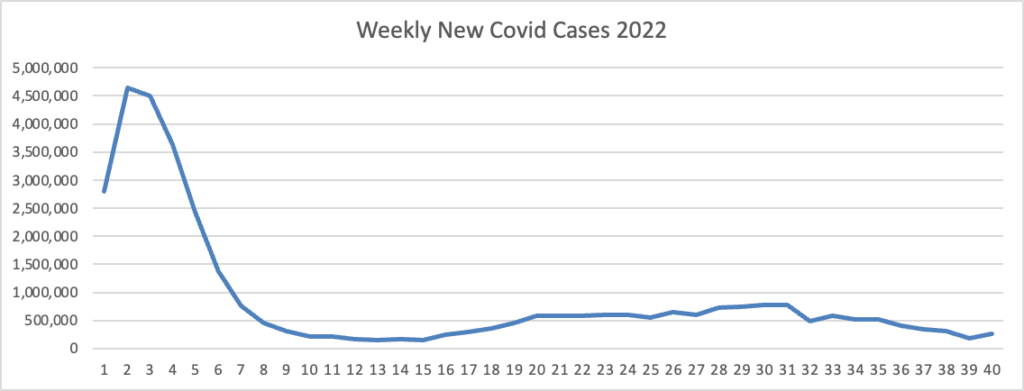
Based on the Centers for Disease Control’s Covid Data Tracker and using Thursday as the first day of the week, here is the FEHBlog’s latest weekly chart of new Covid cases.
The CDC’s Covid Data Tracker Weekly Review was not issued today because Monday is a federal holiday.
The Covid Weekly Tracker tells us that the daily average of new Covid hospital admissions is 3,35.
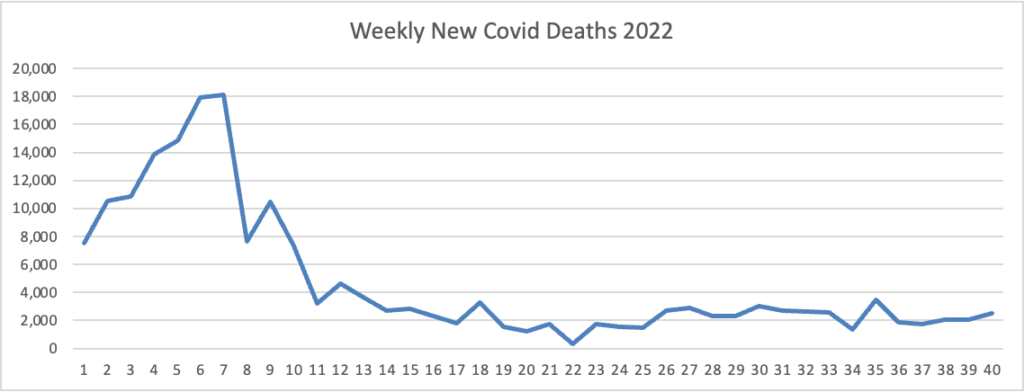
Here is the FEHBlog’s latest weekly chart of new Covid deaths.
New York Times columnist David Leonhardt, who is going on a book tour that ends in late January 2023, reports
“A large chunk of deaths are preventable right now with Paxlovid alone,” Dr. Ashish Jha, the White House Covid response coordinator, told me. He predicted that if every American 50 and above with Covid received a course of either Paxlovid or a treatment known as monoclonal antibodies, daily deaths might fall to about 50 per day, from about 400 per day in recent months. * * *
A recent analysis of about 568,000 patients by Epic Research found that 0.016 percent of Covid patients over 50 who received Paxlovid died. The death rate for patients who did not get the drug was more than four times higher, or 0.070 percent. And yet the Epic data showed that only about 25 percent of patients eligible to receive Paxlovid actually did, even though the drug is widely available and free for patients.
Perhaps the most shocking statistic about Paxlovid’s underuse — and Jha used the word “shocking” when describing it to me — is that a smaller share of 80-year-olds with Covid in the U.S. is now receiving the drug than 45-year-olds with Covid, according to data he has seen. Many doctors are evidently worried about side effects or rebound cases among their more vulnerable patients.
Even in rebound cases, however, symptoms tend to be milder than they would have been without Paxlovid. After Dr. Anthony Fauci, another White House adviser, who’s 81, contracted Covid in June and then took Paxlovid, he experienced a rebound — and also believed that the drug kept him out of the hospital.
“Medicine is about weighing costs and benefits,” Wachter said. “The recommendation should be clear and unambiguous for people at high risk: The benefits of the drug outweigh the downsides.”
A Merck pill used to combat Covid-19 failed to demonstrate it can lower the risk of hospitalization compared with a placebo among adults at a higher risk from the disease, according to the results of a large study conducted in the U.K.
The preliminary results of the randomized trial, which involved more than 25,000 participants, showed that taking molnupiravir did speed time to recovery by about six days, which means that patients did get some relief. Otherwise, though, the study failed to reach an outcome that had been used late last year by regulators — such as those in the U.S. and U.K. — to authorize the medicine to thwart the pandemic.
The findings also contradict the results of a much smaller study conducted by Merck and its partner, Ridgeback Therapeutics, which found a lower risk of hospitalization or death in high-risk patients by roughly 30%, after initially showing a 50% lower risk. Unlike the latest trial, which is called Panoramic, the Merck trial called Move-Out excluded patients who had been vaccinated against the coronavirus.
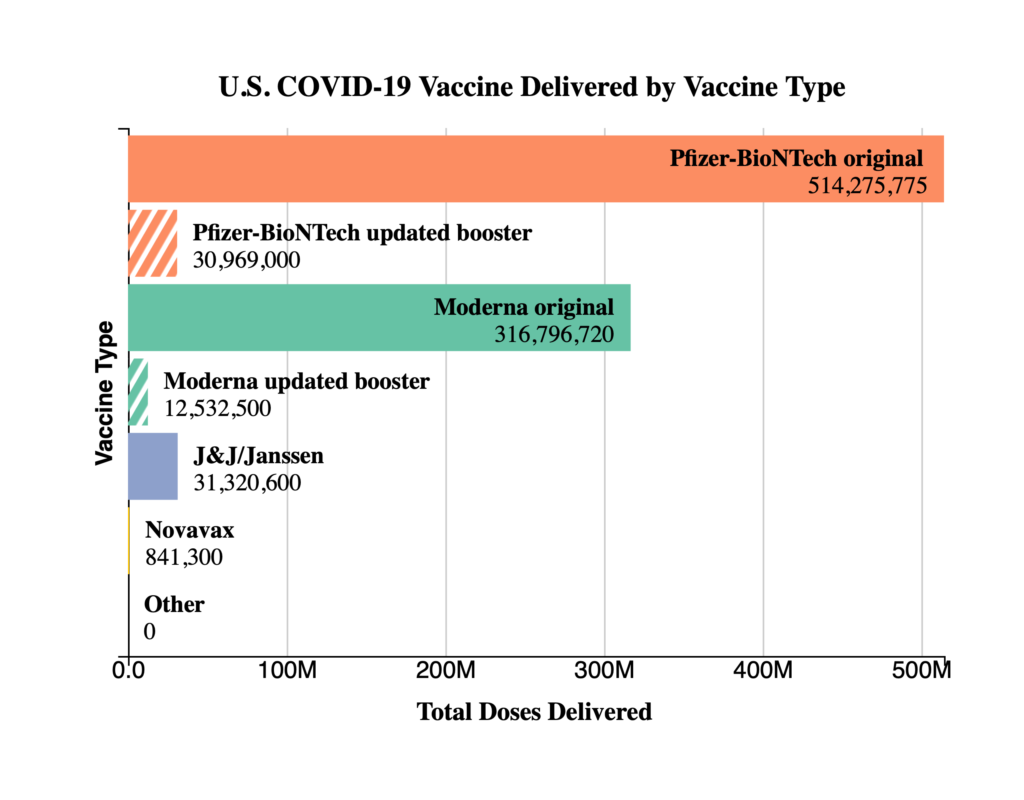
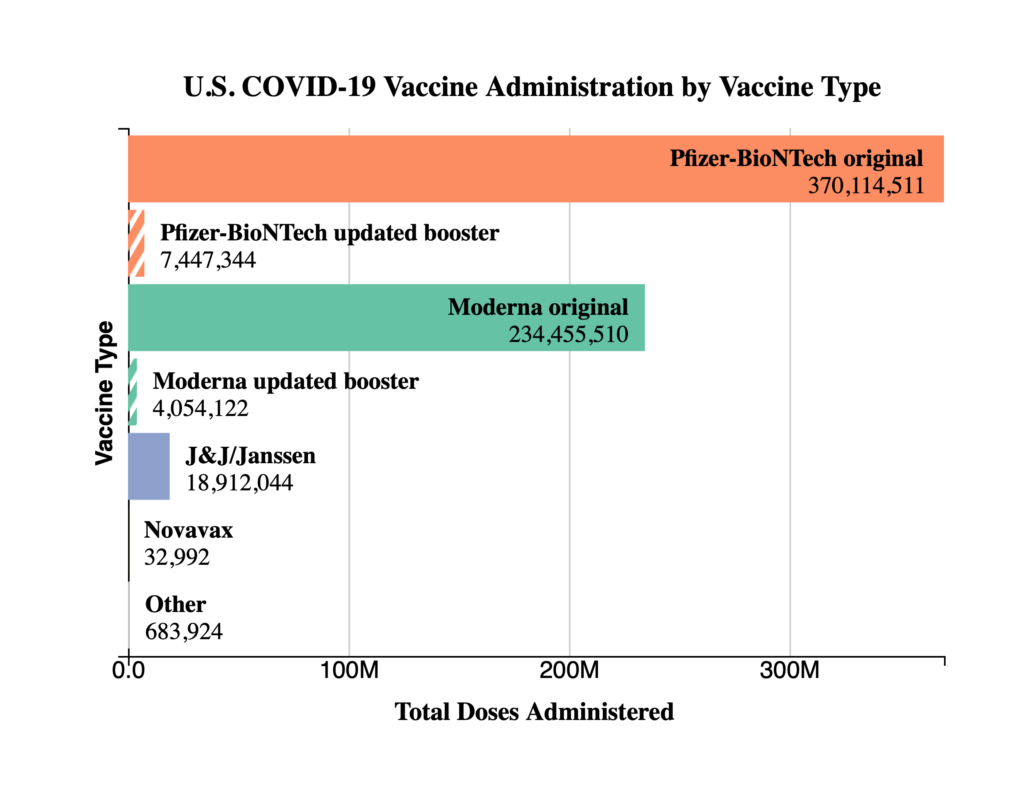
Here is the FEHBlog’s chart of Covid vaccinations distributed and administered from the beginning of the Covid vaccination era in December 2020 through the 40th week of 2022:
In addition, here are two related CDC charts.
The American Hospital Association adds
COVID-19 vaccinations are associated with over 650,000 fewer hospitalizations and 300,000 fewer deaths in the Medicare population through December 2021, saving an estimated $16 billion in direct medical costs, the Department of Health and Human Services reported today.
“This report reaffirms what we have said all along: COVID-19 vaccines save lives and prevent hospitalizations,” said HHS Secretary Xavier Becerra. “We now have updated COVID vaccines designed to protect you against the Omicron strain of COVID that makes up almost all COVID cases in the U.S. … Over 90 percent of Americans live within 5 miles of where they can access these vaccines for free. I urge everyone eligible to get an updated COVID vaccine to protect yourself ahead of the fall and winter.”
Govexec tells us The Office of Personnel Management on Thursday announced that it authorized paid leave for federal workers to obtain the latest round of boosters for the COVID-19 vaccine.
From the FEHB front, Health Payer Intelligence reviews 2023 Blue Cross FEP benefit changes and makes other Open Season observations.
In OPM news, the GSA announced that its Technology Modernization Fund will be investing in OPM’s website.
OPM.gov Modernization
It can be challenging for federal employees, job seekers, and HR professionals to navigate OPM.gov’s 20,000 pages to find what they need. With a $6 million TMF investment, OPM will update both the technology behind and the content on the OPM.gov website. This will allow OPM to implement an updated and more secure Content Management System (CMS) hosted on OPM’s cloud environment, ensuring that users have intuitive and accessible web tools.
“A user-friendly website plays a critical role in OPM’s mission to communicate the federal government’s policies, services, and benefits more clearly and effectively,” saidOPM Director Kiran Ahuja. “This investment will improve the government’s ability to recruit job seekers, supply the federal workforce with relevant career-related information, and make it easier for public servants to manage their benefits.”
Hope springs eternal.
From the mental healthcare front, Fierce Healthcare informs us
A mental health crisis besets young adults in the United States to such an extent that more than a third (35%) of individuals ages 18 through 29 years old said that they could not work nor engage in other activities of daily living, according to a new survey by the Kaiser Family Foundation (KFF) and CNN.
Meanwhile, 90% of all Americans believe that the country faces a mental health crisis.
Age 30 seems to be the cutoff separating severe crisis caused by mental health problems, and conditions not as dire. For instance, 34% of those 18 through 29 consider their mental health to be “only fair” or “poor”; 19% of those 30 and over feel that way. Fifty-two percent of young adults said that they’d always or often felt anxious in the last year, while 28% of older adults felt that way.
A third of young adults felt depressed (33%) or lonely (32%) in the last year; for older adults it was 18% for both depressed and lonely.
These survey figures, particularly the first one, are hard to believe, but undoubtedly our country needs more mental health therapists and better treatments.
From the Rx coverage front, the Food and Drug Administration announced that the agency has
approved Boostrix (Tetanus Toxoid, Reduced Diphtheria Toxoid and Acellular Pertussis Vaccine, Adsorbed [Tdap]) for immunization during the third trimester of pregnancy to prevent pertussis, commonly known as whooping cough, in infants younger than two months of age.
“Pertussis disease is a highly contagious respiratory illness affecting all age groups. However, babies are at highest risk for getting pertussis and having serious complications from it,” said Peter Marks, M.D., Ph.D., director of the FDA’s Center for Biologics Evaluation and Research. “While vaccination is the best method for providing protection, infants younger than two months of age are too young to be protected by the childhood pertussis vaccine series. This is the first vaccine approved specifically for use during pregnancy to prevent a disease in young infants whose mothers are vaccinated during pregnancy.”
Pertussis is a common respiratory disease in the United States, resulting in frequent outbreaks. It is also called whooping cough because of the “whooping” sound that someone makes when gasping for air after a fit of coughing. Most serious pertussis cases, hospitalizations and deaths occur in infants younger than two months of age who are too young to be protected by the childhood pertussis vaccine series. According to the Centers for Disease Control and Prevention (CDC), 4.2% of the total cases of pertussis reported in the United States in 2021 were in infants younger than 6 months of age and approximately 31% required hospitalization. When the Boostrix vaccine is given during pregnancy, it boosts antibodies in the mother, which are transferred to the developing baby.
Good news.
From the healthcare business front, Fierce Healthcare reports
Yale New Haven Health has signed an agreement to acquire two Connecticut health systems, Waterbury HEALTH and Eastern Connecticut Health Network), from Prospect Medical Holdings.
The deal would give Connecticut’s largest health system the businesses, real estate, physician clinic operations and outpatient services of three hospitals: 357-bed Waterbury Hospital, 249-bed Manchester Memorial Hospital and 102-bed Rockville General Hospital. Also included are Prospect Provider Group of Connecticut and Visiting Nurse and Health Services of Connecticut, according to a release.
The Office of Personnel Management (OPM) migrated from the legacy application responsible for the financial management activities of over $1.1+ trillion-dollar trust fund assets to a modernized financial system platform that is managed and maintained by the Department of the Treasury, Bureau of the Fiscal Service’s Administrative Resource Center (ARC).
The partnership between OPM and ARC will result in millions of taxpayer dollars saved, and enable a modernized, secure financial management solution and re-engineered processes to support the administration of the earned benefits program which includes retirement, health, and life insurance. As a result, millions of federal employees, retirees, and their families should have increased confidence in the programs that ensure they can meet their retirement and healthcare and life insurance needs.
Here’s the related ARC press release. ARC is a federal government center of excellence. The FEHBlog is interested in reading more details on the benefits of this new system.
A regulatory deadline kicked in Thursday requiring providers and other healthcare entities to be able to share a significantly larger scope of data with patients, despite major provider groups arguing they’re not ready to comply.
As of Thursday, information blocking regulations apply to all electronic health information in a record that qualifies as protected health information under the Health Insurance Portability and Accountability Act.
Previously, providers only had to make available data elements in a specific dataset called United States Core Data for Interoperability.
Time will tell us about the rule’s effect.
From the Medicare front, Forbes offers a deep dive into 2023 adjustments to the Medicare Parts B and D beneficiary income premium adjustments known as IRMMA. IRMAA impacts many federal annuitants, which causes an ongoing material reduction in new federal annuitants signing in for Part B. The kick in the pants is that when an annuitant’s income declines below that IRMMA level which typically happens over time, the Part B premium is unaffordable due to the late enrollment penalty.
From the public health front —
The Centers for Disease Control is calling attention to its patient and provider education materials on sepsis.
The American Hospital Association informs us
More than 2.5 million students in grades 6-12 reported using electronic cigarettes in the past 30 days when surveyed this year, including 14% of high school students and 3% of middle school students, the Centers for Disease Control and Prevention reported today. One in four students who used e-cigarettes used them daily, 8 in 10 used flavored e-cigarettes and over half used disposable e-cigarettes. Since 2014, U.S. youth have used e-cigarettes more than any other tobacco product.
“It’s critical that we work together to prevent youth from starting to use any tobacco product — including e-cigarettes — and help all youth who do use them, to quit,” said Deirdre Lawrence Kittner, director of CDC’s Office on Smoking and Health.
A new medication for A.L.S., the devastating neurological disorder that causes paralysis and death, will have a list price of $158,000 a year, its manufacturer disclosed Friday.
The treatment, to be marketed as Relyvrio, is a combination of two existing drugs and will be available to patients in the United States in about four to six weeks, according to officials of the company, Amylyx Pharmaceuticals.
The Institute for Clinical and Economic Research has observed
Last week, the FDA approved Relyvrio, Amylyx Pharma’s therapy for amyotrophic lateral sclerosis. Even in the absence of definitive proof of efficacy, there are clear benefits to ensuring patients with a rapidly fatal disease have early access to a safe therapy. In a situation like this, we believe the manufacturer has an obligation to price responsibly. ICER concluded that an annual price of $9,100 to $30,700 would be reasonable if the therapy actually works. While awaiting proof, we believe that patients would benefit from a price closer to the price of production of Relyvrio.
Beginning this month, the Pennsylvania-based plan and Mark Cuban’s drug company (MCCPDC) will begin to let members and community organizations know about their collaboration and how they can access low-cost drugs, according to a press release. In 2023, Capital Blue Cross members will be able to use their insurance cards at the company’s online pharmacy.
The online pharmacy launched earlier this year, aiming to disrupt skyrocketing prescription drug prices in the U.S. It currently offers nearly 1,000 generic prescription drugs that it says reflect manufacturer prices plus a 15% fee. * * *
While initially, MCCPDC was planning to launch its own pharmacy benefit manager, it then scrapped those plans, announcing its first PBM partnership last week. The PBM has no rebates and no spread pricing. Some experts have cautioned that while the company’s effort is effective, it isn’t tackling a more pressing problem—brand-name drug prices, given generic drugs are up to 85% less expensive. The company is hoping to offer brand-name drugs down the line, CNBC reports.
From the OPM front, Federal News Network reports on the Senate Homeland Security and Governmental Affairs September 29, 2022, confirmation hearing for Robert Shriver, whom the President has nominated to serve as OPM Deputy Director.
From the Fourth Quarter 2022 front
STAT News provides “The Q4 health tech tracker: 17 key industry events and milestones to watch.”
The Society for Human Resource Management offers “4th Quarter 2022 ‘Quick Hits’ for Plan Sponsors.” This quick hit grabbed the FEHBlog’s attention:
Making a splash across the headlines was the Inflation Reduction Act of 2022(IRA), which President Biden signed on Aug. 16, 2022. The 273 pages of text make sweeping changes. However, few will affect employer-sponsored benefit plans, and most of those will have only indirect effects.
One change that does directly affect a High Deductible Health Plan (HDHP) is the exception added to Section 223 of the Internal Revenue Code effective for plan years beginning after Dec. 31, 2022, to enable HDHPs to cover the cost of insulin without first meeting the deductible. This first dollar coverage for insulin will protect Health Savings Account (HSA) eligibility for those who require an insulin regimen. Employers should determine if their plan requires an amendment to implement this change.
On a related note, TRI-AD calls to our attention the “2022 FSA relief provisions will no longer apply in 2023.”
From the public health front —
The American Hospital Association informs us that “Increasing bivalent COVID-19 booster vaccinations this year to 2020-2021 flu vaccination rates could prevent an additional 75,000 deaths and 745,000 hospitalizations and avert $44 billion in medical costs over the next six months, researchers estimate in a Commonwealth Fund blog post. Increasing COVID-19 booster coverage to 80% of eligible Americans aged five and older this year could prevent about 90,000 deaths and over 936,000 hospitalizations and avert $56 billion in medical costs, they add.”
CNBC reports
* The CDC, in a report, said monkeypox could spread indefinitely at a low level in the U.S.
* Monkeypox is unlikely to be eliminated from the U.S. in the near future, according to the CDC.
* The outbreak is slowing as the availability of vaccines have increased and people have become more aware of how to avoid infection.
The New York Times gives us a briefing and advice on the upcoming flu season.
Beckers Hospital Review discusses patient safety wins obtained this year by five health systems.
From the innovations front, the American Hospital Association tells us
The Centers for Medicare & Medicaid Services seeks comments through Dec. 6 on creating a National Directory of Healthcare Providers and Services to help patients locate providers and compare health plan networks, and reduce directory maintenance burden on providers and payers.
CMS seeks feedback on the concept and potential benefits; provider types and data elements to include; the technical framework for a national directory; priorities for a possible phased implementation; and prerequisites and actions CMS should consider to address potential challenges and risks.
From the Federal Employee Benefits Open Season front, OPM released its Open Season press announcement today. Its lede is
Thousands of Enrollees Are Leaving Valuable Savings on the Table During Open Season Enrollees should use Open Season as a period to conduct a wellness or financial check-up and reassess their health needs and coverage
Among other guidance, OPM recommends
Below we’ve provided sample questions to help you assess how you can utilize Open Season to review your benefits and needs to make an informed decision on coverage:
What are my and/or my family’s expected health care needs for 2023?
* Questions while reviewing your FEHB plan: Am I expecting a new baby? Do I need surgery? Will my medication need change? Does my plan provide a pharmacy mail order option for prescriptions?
* Questions while reviewing FEDVIP: Do I want coverage for my routine dental care? Will I need a crown or root canal? Does my child need braces? Do I need glasses and/or contact lenses? Am I considering laser vision correction surgery?
* Questions while reviewing FSAFEDS: Do I have out-of-pocket expenses I need to consider, such as deductibles, copays, day care, elder care, or over-the-counter drugs and medicines? Do I have medical expenses that may not be covered by my FEHB plan? Do I plan to send my children (under 13) to in-home care or summer camp?
OPM does not mention the availability of the FEHB plan’s summary of benefits and coverage (“SBC”), an Affordable Care Act requirement. The FEHBlog recalls visiting friends in Denver who were preparing for their employers’ open season by comparing these short but comprehensive SBCs. For example, the SBCs include a broken-out estimate of the plan’s cost-sharing for having a baby, receiving diabetes treatment for a year, and fixing a broken bone. In addition, the federal government consumer tested the SBCs.
FEHB plans update their SBCs annually in advance of Open Season and post them on their websites, usually on the page with forms and brochures.
The Washington Post has an article on the 2023 Open Season, and Federal News Network offers “a few” other expert views on the 2023 Open Season. Fierce Healthcare adds
Open enrollment is coming soon, and foremost on everybody’s mind as these windows draw nearer is just how much health insurance will cost, according to a survey by Gravie and Wakefield Research.
“Consumers are concerned about the high costs of health coverage impacting their access to healthcare, increasing medical debt and the lack of mental health coverage,” according to a press release from the two companies.
The CDC revised its “up to date” COVID-19 vaccination term Sept. 30 to include the primary series and the recently authorized omicron-targeting booster. * * *
The CDC’s website still deems people who are not immunocompromised as “fully vaccinated” two weeks after their second dose of Moderna or Pfizer’s series or two weeks after receiving J&J’s COVID-19 vaccine.
[However, last Friday’s] decision could update the “fully vaccinated” term that experts have urged regulators to update.
HealthLeaders Media reports “Treating COVID-19 patients with Paxlovid significantly reduces hospitalizations and deaths, according to a recent large-scale study by Epic Research.”
AstraZeneca’s Covid-19 pre-exposure prophylactic Evusheld has managed to remain relevant for immunocompromised and other patients when many of its therapeutic peers haven’t with each new Omicron subvariant.
But that win streak may slowly come to a close as the FDA told healthcare providers on Monday that one of the emerging subvariants, BA.4.6, renders Evusheld almost completely useless.
Nationally, BA.4.6 currently makes up about 13% of new cases, compared to just 1% of cases at the beginning of July, according to the CDC. But in some regions, like in Iowa, Missouri, Kansas and Nebraska, the BA.4.6 subvariant makes up more than 20% of all Covid-19 cases.
David Leonhardt writing in the New York Times Morning column discusses “A Public Health Success Story; We revisit the subject of Covid and racial inequities”. Check it out.
The NIH Directors Blog considers “Understanding Long-Term COVID-19 Symptoms and Enhancing Recovery.”
From the mental healthcare front, MedPage Today reports
Suicide risk was higher in people recently diagnosed with dementia, especially younger patients, a case-control study in England showed.
Compared with people who didn’t have dementia, suicides rose in people who received a dementia diagnosis in the past 3 months (adjusted OR 2.47, 95% CI 1.49-4.09), according to Danah Alothman, BMBCh, MPH, of the University of Nottingham in England, and colleagues.
For people under age 65, suicide risk within 3 months of diagnosis was 6.69 times (95% CI 1.49-30.12) higher than in patients without dementia, the researchers reported in JAMA Neurology
From the U.S. healthcare business front, Bloomberg reports on giant drug manufacturer Pfizer’s future
Pfizer Inc. emerged from the Covid-19 pandemic as the world’s most visible drugmaker, but its success has left investors impatient for an encore.
The windfall from the pharmaceutical giant’s Covid vaccine almost doubled its revenue in just one year. And now the shot, coupled with Pfizer’s Covid antiviral pill, is poised to make up more than half of its expected $100 billion of sales in 2022. That’s left Pfizer flush with cash — $28 billion it could spend on the kinds of deals that for decades fueled its growth into an American colossus.
The pressure is clearly on for Pfizer to show that the muscle it built during the pandemic won’t atrophy. Big Pharma companies don’t normally double revenue so quickly, and nobody expects that kind of growth to continue. But one thing’s clear: Pfizer can’t go back to the sluggish path it was on for years.
The American Hospital Association informs us
Operating margins for U.S. hospitals and health systems were down 24% in August compared to a year ago, driven in large part by a 7.2% increase in labor expenses, according to data from over 900 hospitals reported yesterday by Kaufman Hall.
“Nine months into a challenging year, margins have fluctuated wildly,” the report notes. “Although most metrics improved from July to August, organizations are still operating with negative margins and well below pre-pandemic levels.”
From the Medicare front, the American Hospital Association adds
Effective Oct. 1 for five years, the Centers for Medicare & Medicaid Services will pay average sales price plus 8%, rather than ASP plus 6%, for biosimilars whose average sales price does not exceed the price of the reference biological product. The payment increase was included in the Inflation Reduction Act of 2022. For new biosimilars that qualify, the five-year period will begin on the first day of the calendar quarter for which ASP payment for that biosimilar begins under Medicare Part B.
From the electronic health records front, STAT News reports
Epic Systems has revamped its widely criticized sepsis prediction model in a bid to improve its accuracy and make its alerts more meaningful to clinicians trying to snuff out the deadly condition.
Corporate documents obtained by STAT show that Epic is now recommending that its model be trained on a hospital’s own data before clinical use, a major shift aimed at ensuring its predictions are relevant to the actual patient population a hospital treats. The documents also indicate Epic is changing its definition of sepsis onset to a more commonly accepted standard and reducing its reliance on clinician orders for antibiotics as a way to flag the condition.
The changes follow the publication of a series of investigations by STAT that found an earlier version of Epic’s tool resulted in high rates of false alarms at some hospitals and failed to reliably flag sepsis in advance. One of the investigations found that the model’s use of antibiotics as a prediction variable was particularly problematic, resulting in late alarms to physicians who had already recognized the condition and taken action to treat it.
Fierce Healthcare looks into “How Google, Mayo Clinic and Kaiser Permanente tackle AI bias and thorny data privacy problems.”
From the telehealth front, Healthcare Dive reports
Telehealth utilization varied by region from June to July of 2022 and rose 1.9% nationally, according to Fair Health’s monthly tracker data out Monday.
In the West, Midwest and South, telehealth utilization rose 5.7%, 2.5% and 4.9%, respectively, from June to July. In the Northeast, telehealth use fell 3.3% during that period.
Mental health conditions remained the top diagnoses nationally, and psychiatrists also delivered more virtual care in some regions.
From the Federal Employee Benefits Open Season front, the FEHBlog has noticed that OPM expanded the number of FEHB and FEDVIP public use files available on its website. “The purpose of the OPM FEHB and FEDVIP Plan and Benefits Information (PBI) Public Use Files (PUFs) is to provide information to the public on FEHB and FEDVIP plans, including information on rates and benefits.” Check it out.
The FEHBlog also has noticed that many FEHB plans promptly posted Open Season information on their websites. In particular, the three largest FEHB carriers, Blue Cross FEP, GEHA, and Kaiser Permanente have done so. That’s a heavy, yet helpful, lift so kudos to the carriers.
From the public health front
The New York Times brings us up to date on the polio vaccination campaign in New York State.
The specter of polio becoming endemic in America again was once unthinkable. But as state public health officials embark on an urgent campaign to get more people vaccinated, the low rates among preschoolers in some pockets are evidence of both the challenges they face and the threat to the state’s youngest children — the very age group among whom polio is most likely to spread.
This gap stems from the fact that the polio vaccine is required for school admission.
A bipartisan group of lawmakers has proposed legislation to help create drugs that can fight drug-resistant pathogens as the treatments for life-threatening problems from respiratory infections to sepsis stop working.
But a classic end-of-year congressional quagmire — a tight calendar, a heated election season, fights over spending, and inertia — threatens to stymie progress before the end of the year.
Fingers crossed for passage in the lame duck session.
The National Institutes of Health released its monthly NIH News in Health, which is worth a click.
Fierce Healthcare relates “Francisco Partners, an investment firm, signed a definitive agreement to acquire bSwift from CVS Health.” The acquistion agreement is expected to close by year end and “bSwift will continue to partner with CVS Health and its subsidiary Aetna, an insurance provider, by sharing benefits solutions with its employees and clients.”
From the telehealth front, we have another positive survey report from mHealth Intelligence. “ccording to new research findings from the JD Power 2022 US Telehealth Satisfaction Study, telehealth has become more than a temporary replacement for in-person care due to high consumer preference and its role in expanding access to mental health treatment.”
From the Monday miscellany front —
BioPharma Dive identifies five Food and Drug Administration decisions to watch out for this quarter. “The regulator could soon approve medicines from Apellis, Gilead and GSK, as well as decide on whether to pull a controversial preterm birth drug from the market.”
The Office of National Coordinator for Health Information Technology issued eight information blocking regulatory reminders for October 6, the end of the phase in period for that rule.
Medscape reports on an HHS Office of Inspector General report criticizing the efficiency of the FDA’s accelerated drug approval program.
In granting accelerated approvals, the FDA sets timelines for drugmakers to carry out confirmatory trials. But these target dates are often missed. OIG staff evaluated 104 cases of accelerated approvals for which confirmatory trials have not been completed and found that as of May 5, 2022, 35 drug studies had missed their original target completion dates. * * *
In its report, the OIG staff offered a deep look at the four drugs in which confirmatory trials were furthest past their original completion deadlines:
* Mafenide acetate (Sulfamylon), a topical antimicrobial treatment for burns that was approved in 1998. The trial is 140 months past its original deadline.
* Midodrine hydrochloride (Proamatine), a treatment for postural hypotension that was approved in 1996. The trial is 85 months past its original deadline.
* Pralatrexate (Folotyn), a treatment for T-cell lymphoma that was approved in 2009. The trial is 72 months past its original deadline.
When the justices return to the bench next week to begin the 2022-23 term, members of the public will be able to attend oral arguments for the first time since the COVID-19 pandemic began in 2020. The court also announced on Wednesday that it will continue to provide a live audio feed of oral arguments, a practice that it began during the pandemic.
Masking will be optional at oral arguments, the court said in a press release, and the court’s building will otherwise remain closed to the public.
From the Omicron and siblings front, Forbes reports
As COVID-19 regulations continue to ease across the U.S., some Americans want more protection. Nearly two-thirds (63%) of adults familiar with the recently updated booster shot, which specifically targets the virus’ Omicron variant, say they are likely to get one.
That’s according to the latest Forbes Health-Ipsos Monthly Health Tracker, which polled 1,120 adults between Sept. 27 and 28, 2022. Of those in favor of the new shot, 25% say they are “somewhat likely” to get it, while 38% indicate they are “very likely” to get the booster.
Additionally, about 9% of polled individuals have already received the latest booster, and 28% say they aren’t likely to get this particular booster at all.
Perhaps it’s time for health plans to reach out to members on the bivalent booster.
From the healthcare costs front, the Congressional Budget Office offers “Policy Approaches to Reduce What Commercial Insurers Pay for Hospital and Physician Services.” How timely!
A new report finds that 1,216 pharmaceuticals increased their prices past the inflation rate of 8.5% from July 2021 to July 2022, with an average hike of 31.6%.
NPR shots provides patient and expert reaction to the FDA’s decision to approve a new drug to treat amyotrophic lateral sclerosis (“ALS”).
The Food and Drug Administration has approved a controversial new drug for the fatal condition known as ALS, or Lou Gehrig’s disease.
The decision is being hailed by patients and their advocates, but questioned by some scientists.
Relyvrio, made by Amylyx Pharmaceuticals of Cambridge, Mass., was approved based on a single study of just 137 patients. Results suggested the drug might extend patients’ lives by five to six months, or more. * * *
A much larger study of Relyvrio, the Phoenix Trial, is under way. But results are more than a year off.
The Institute for Clinical and Economic (ICER) review adds
Yesterday, the FDA approved Relyvrio, Amylyx Pharma’s therapy for amyotrophic lateral sclerosis (ALS). According to ICER’s analysis, the therapy would only achieve traditional thresholds of cost-effectiveness if priced between $9,100 to $30,700 per year.
We also recommended that manufacturers should seek to set prices of new medications that will foster affordability and access for all patients by aligning prices with the patient-centered therapeutic value of their treatments, and not based on the price of existing ALS medications. This is especially important for ALS since new drugs are anticipated to be used in combination with other very expensive drugs, creating the highest risk for financial toxicity due to health care costs.
From the telehealth front, mHealth Intelligence informs us
While researching the effects of telehealth and in-person care within a large integrated health system, a study published in JAMA Network Open found that virtual care methods can expand healthcare capabilities, performing on par or better than in-person care on most quality measures evaluated.
Researchers conducted a retrospective cohort study that included 526,874 patients, 409,732 of whom received only in-person care, and 117,142 participated in telehealth visits. Of those who received only in-person care, 49.7 percent were women, 85 percent were non-Hispanic, and 82 percent were White. Of those who received care via telehealth, 63.9 percent were women, 90 percent were non-Hispanic, and 86 percent were White.
Researchers noted that patients in the in-person-only group performed better on medication-based measures. But only three of the five measures had significant differences: patients with cardiovascular disease (CVD) receiving antiplatelets, those with CVD receiving statins, and those with upper respiratory infections avoiding antibiotics.
Researchers also noted that patients participating in telehealth performed better than those in the -person-only group on four testing-based measures. These four measures included patients with CVD with lipid panels, patients with diabetes with hemoglobin A1c testing, patients with diabetes with nephropathy testing, and blood pressure control.
Further, those participating in telehealth performed better than their counterparts on seven counseling-based measures, including cervical cancer screening, breast cancer screening, colon cancer screening, tobacco counseling and intervention, influenza vaccination, pneumococcal vaccination, and depression screening.
Based on these study findings, researchers concluded that telehealth could augment care for various conditions, especially chronic diseases. The study also supplies information that could assist providers in determining an ideal ratio of in-person and telehealth visits.
But researchers also noted several limitations associated with the study. These included their inability to control for the number of in-person and telehealth visits, potential inaccuracies associated with the EMR data used, and sampling limitations.
From the cyberpolicy front, let’s remember, “Cybersecurity Awareness Month, every October, is a collaboration between government and private industry to raise awareness about digital security and empower everyone to protect their data from digital forms of crime.”
CISA adds that the agency “postpone[d] the 5th Annual National Cybersecurity Summit due to the mission-critical work of preparing for the potential impact of Hurricane Ian in the region. The summit was originally scheduled to occur on October 4. Visit CISA’s National Cybersecurity Summit webpage and follow CISA on social media for the latest news and updated registration information when it’s available.”
From the cyber vulnerabilities front —
Cybersecurity Dive informs us in an article posted on September 30
Microsoft is investigating reports of two zero-day vulnerabilities affecting Microsoft Exchange Server 2013, 2016 and 2019, according to a blog post issued Friday. The vulnerabilities do not affect Microsoft Exchange Online Customers.
The first vulnerability, CVE-2022-41040, is a server-side request forgery vulnerability, Microsoft said. The second, CVE-2022-41082, allows remote-code execution when a threat actor has access to PowerShell.
Microsoft confirmed it was aware of limited targeted incidents with attackers using the two vulnerabilities to compromise systems. During the incidents, an attacker can use CVE-2022-41040 to allow an authenticated attacker to remotely trigger CVE-2022-41082.
The Health Sector Cybersecurity Coordination Center issued an alert on the Microsoft zero day vulnerabilities.
Currently, the full impact to the Healthcare and public health (HPH) sector is unknown; however, the threat actors actively exploiting these vulnerabilities make the HPH sector a potential target.
CISA issued an alert titled “Microsoft Releases Guidance on Zero-Day Vulnerabilities in Microsoft Exchange Server.”
CISA’s other vulnerability advisories issued last week include the following
From the ransomware front, Cybersecurity Dive reports
U.S. businesses were targeted by nearly half of all publicly acknowledged ransomware attacks globally between January 2020 and July 2022, according to data collected by NordLocker and published Tuesday in a report.
Of the 5,200 cases recorded on ransomware groups’ sites, U.S. organizations accounted for almost 2,400 incidents. Businesses in California, Texas, Florida and New York suffered the greatest number of ransomware attacks, but Michigan businesses were hit hardest when the rate is adjusted by the number of active businesses in each state.
Small- and medium-sized businesses with two to 200 employees suffered the most attacks during the period, accounting for 46%, or 2,300 ransomware attacks total, according to the report.
Another interesting research is the prediction that ransomware gangs may move away from encrypting altogether and switch to pure data exfiltration and file deletion to cut out the ransomware developer. This idea stems from a new file deletion/corruption feature in a data theft tool used by a BlackMatter affiliate.
From the cyberdefenses front —
Health IT Security offers six healthcare cybersecurity strategies for successful CISOs; Mastering effective communication, implementing a risk-based healthcare cybersecurity approach, and attracting top cyber talent are all parts of a CISO’s job description.”
The Wall Street Journal reports “Heightened Cyber Threat Brings CIOs, CISOs Closer; The work dynamic between IT and cyber leaders is changing as digital fortification becomes more urgent. ‘Everybody’s top of mind is cybersecurity,’ says one CISO.”
The Journal adds “A mix of regulation, investor demands and insurance requirements is pushing companies to elevate the oversight of cybersecurity, officials from the U.S. and other countries say.”
Cybersecurity Dive tells us about “six things that businesses need to know about the changing privacy landscape. New bills are proposed every day, and while only a few will become official policy, there may be important trends that impact businesses.”
We use cookies on our website to give you the most relevant experience by remembering your preferences and repeat visits. By clicking “Accept”, you consent to the use of ALL the cookies.
This website uses cookies to improve your experience while you navigate through the website. Out of these, the cookies that are categorized as necessary are stored on your browser as they are essential for the working of basic functionalities of the website. We also use third-party cookies that help us analyze and understand how you use this website. These cookies will be stored in your browser only with your consent. You also have the option to opt-out of these cookies. But opting out of some of these cookies may affect your browsing experience.
Necessary cookies are absolutely essential for the website to function properly. These cookies ensure basic functionalities and security features of the website, anonymously.
Cookie
Duration
Description
cookielawinfo-checbox-analytics
11 months
This cookie is set by GDPR Cookie Consent plugin. The cookie is used to store the user consent for the cookies in the category "Analytics".
cookielawinfo-checbox-functional
11 months
The cookie is set by GDPR cookie consent to record the user consent for the cookies in the category "Functional".
cookielawinfo-checbox-others
11 months
This cookie is set by GDPR Cookie Consent plugin. The cookie is used to store the user consent for the cookies in the category "Other.
cookielawinfo-checkbox-necessary
11 months
This cookie is set by GDPR Cookie Consent plugin. The cookies is used to store the user consent for the cookies in the category "Necessary".
cookielawinfo-checkbox-performance
11 months
This cookie is set by GDPR Cookie Consent plugin. The cookie is used to store the user consent for the cookies in the category "Performance".
viewed_cookie_policy
11 months
The cookie is set by the GDPR Cookie Consent plugin and is used to store whether or not user has consented to the use of cookies. It does not store any personal data.
Functional cookies help to perform certain functionalities like sharing the content of the website on social media platforms, collect feedbacks, and other third-party features.
Performance cookies are used to understand and analyze the key performance indexes of the website which helps in delivering a better user experience for the visitors.
Analytical cookies are used to understand how visitors interact with the website. These cookies help provide information on metrics the number of visitors, bounce rate, traffic source, etc.
Advertisement cookies are used to provide visitors with relevant ads and marketing campaigns. These cookies track visitors across websites and collect information to provide customized ads.